HOW FAR WOULD YOU GO FOR THE TRUTH? Ball lightning. Weather balloons. Secret military aircraft. Ryan knows all the justifications for UFO sightings. But when something falls out of the sky on the hills near his small Scottish town, he finds his cynicism can't identify or explain the phenomenon. And in a future where nothing is a secret, where everything is recorded on CCTV or reported online, why can he find no evidence of the UFO, nor anything to shed light on what occurred? Is it the political revolutionaries, is it the government or is it aliens themselves who are creating the cover-up? Or does the very idea of a cover-up hide the biggest secret of all?
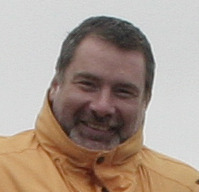
Ken MacLeod is an award-winning Scottish science fiction writer.
His novels have won the Prometheus Award and the BSFA award, and been nominated for the Hugo and Nebula Awards. He lives near Edinburgh, Scotland.
MacLeod graduated from Glasgow University with a degree in zoology and has worked as a computer programmer and written a masters thesis on biomechanics.
His novels often explore socialist, communist and anarchist political ideas, most particularly the variants of Trotskyism and anarcho-capitalism or extreme economic libertarianism.
Technical themes encompass singularities, divergent human cultural evolution and post-human cyborg-resurrection.
Can you imagine a wonderful, light science-fiction novel set in Scotland, with delightful Scottish accents, spaceships (possibly) landing in the moor, and unruly Scottish boys with very wild imaginations? Well guess what, as lovely as it sounds, you don’t have to imagine it, Ken MacLeod already did it for us.
The charm of this lovely science fiction work is twofold. A part of it is certainly the setting, especially for those of us who are mostly used to reading American fiction. Scotland is very much alive in this book, brought to life by someone who knows (and apparently loves) its every rock. Ryan’s best friend Calum, as well as many other characters, speaks with this lovely Scottish accent that was transferred beautifully in writing. Another huge part of this book’s charm stems from MacLeod’s wry sense of humor, the laugh-out-loud variety, and a lot of it.
Set in a very near, very believable future, Descent is part super-light sci-fi, part coming of age story, part political thriller and part conspiracy theory. It follows Ryan through various stages of his life, all at least somewhat affected by the strange event in his youth. It doesn’t follow the usual narrative line and it never really becomes a cohesive whole. It’s quite an unusual read, but all the more charming for it.
Read this if you want something different, outside of any one genre, but speculative and wildly interesting nevertheless. It is the perfect break from conventional stories with overused plotlines and stock characters. Nothing about this story is conventional, and yet everything is perfect just the way it is.
Let's do this one quickly. I liked the little incidental details of Macleod's imagining of a near future Scotland. I was interested, up to a point, by the rivalrous friendship between the main character, Ryan, and his more worldly-wise friend, Calum. I wonder in passing if this is based on the friendship between MacLeod and his old schoolfriend to whom the book is dedicated, the late Iain Banks.
The scene towards the end of the book about Ryan being in trouble for owning banned DVDs of the TV series Anachron - "a niche television series whose high concept or inspiration must have flashed into the mind of its maker while he was watching a re-run of the genuinely classic 1976 BBC TV Series, I Claudius and it struck him that what was missing from the frequent banqueting scenes were cigarettes and smart-phones" made me smile and the question of whether the people being executed at the end of the show within a show I'm a martyr, get me out of here were really being killed or whether this was just hype sown by the show's creators struck me as darkly plausible, or at least, like something from Black Mirror.
And I'm a sucker for scenes which feature the local landmarks, so the description of the Barclay Church at the end of my road (at least I think that must be what they are talking about) brought a smile to my face:
"The spire of every church" said Gabrielle, stabbing a sausage and mangling a quote, "is a dagger aimed at the heart of humanity". She cocked her head and peered sideways and up, through the cafe's rain-smeared window. "Though that one always reminds me of a ray-gun with a grip designed for an alien's claw."
But the problem I had with the book was that the ending didn't really tie up any of the various loose threads left dangling during the book. Perhaps it is meant to be the first in ta series of books like Cosmonaut Keep or the Star Fraction, but I couldn't help thinking at the end: "OK, ok. But what was that really about?"...
This book did a few things well and a few things badly. Starting with the good... This is a very mild sci fi novel set in the near future in Scotland.
We follow the main character Ryan over the period of about 10 years,starting when he is a teenager, and we drop into this life every few years. The first section deals with what really is a defining event in Ryan's life- a run in with a UFO, and a subsequent dream about aliens. The book does a good job building intrigue throughout the story as we and Ryan try to rationalise the encounter, and his subsequent meetings with a suspected "Man In Black" Jamie Baxter. Ryan himself is a flawed and well developed character and I felt he was realistic throughout.
The near-future world he inhabits is very interesting. When Ryan is a teen, we get the sense there has been some terrible event that has resulted in a lot of poverty. Although everybody seems technologically rich, with very advanced phones etc, they also need to eat nettle soup from the back garden, and meat and coffee have seemingly become rare commodities. The author did a great job in making me genuinely interested about this world but unfortunately fell short in giving much info about what happened, and what changed between then and our subsequent meetings with Ryan over the next few years.
This leads me into the larger downside of this novel, the ending. Similar to the above sparcely developed world, we also didn't get much explanation into the "supernatural" events towards the end. The whole story felt it was building up to a reveal we never received. There were a few hints but I think the author could have done with spelling everything out a lot more. I think it could be that I just wasn't compatible with the author's less is more approach, but either way I left the book feeling let down.
3.5 stars for me, but it really could have been a 4/4.5 if it had been more clearly explained.
Set in a near future Scotland, Ryan is a schoolboy who has a thing for conspiracy theories, secret jets, weather balloons and so on. But one day when a silver object drops out of the sky knocking him and his friend out for a couple of hours, he really isn't sure just what he has seen. On returning a couple of days later, the are has been sealed off and it is being cleared. He is having weird abduction dreams and a visit from a Reverend who seems to have no record on the internet, he starts to think he is deep with in a conspiracy himself now.
Fast forward a few years and Ryan is now working as a hack journalist; he has met Gabrielle and they are living together, when he catches up with Callum his friend at the UFO incident, and a girl called Sophie, a girl from school and university. Shortly after the guy he met after the event appears again, this time he is not a priest, but a politician. His personal life becomes every more complicated, and the paranoia starts to rise again and he thinks that he may never get to the bottom of this.
The book is dedicate to Iain Banks, and it feels like and has been written as a tribute to the fiction that Banks used to write, but with some of the magic that MacLeod is capable of. There are complex and dysfunctional characters, it is a brilliant dystopian world, with pervasive surveillance using tiny insect sized drones. The world is in some sort of turmoil too, with revolutionary groups and change in the air.
Whilst it feels like a Banks book, and there is plenty of complexity to the plot, it sadly doesn't have a similar dramatic ending that a Banks book has. Still worth a read though.
Bit of a mess. Some interesting SF ideas, wrapped up in an attempt at an Iain (non-M) Banks feel, but falling down on Banks staples like party scenes, big bits of machinery, characters...
This is a distinctly thought-provoking near-future science fiction novel concerned with conspiracy theories. I was very keen on one of Macleod’s previous novels, Intrusion, for its world-building. Here, again, the world portrayed is fascinating and convincing. The politics are especially notable. Although they occur in the background, it’s clear that neoliberal capitalism becomes lethally destabilised by inequality. At which point, China apparently intervenes in UK (EU?) politics and a new social contract is negotiated, known as the Big Deal. I liked the implications of this for the so-called ‘revolutionaries’, whilst the blasé manner in which the main characters went along with it rang all too true.
The less appealing element of the book was the narrator and constant point of view character, Ryan. He is not painted as a hero and his flaws are not treated as virtues, nonetheless I struggled to take a great interest in the man. Funnily enough, he is more sympathetic as a teenager, whereas in adulthood he becomes a tedious wastrel. His obsession with conspiracy theories could be interpreted as his need to be at the centre of significant events, when it is clear that he is just some guy. His relationship with Gabrielle is especially off-putting. In fact, both of the main female characters are worryingly close to being two-dimensional love interests. I have to knock off at least one star for that. Intrusion demonstrated that MacLeod can write excellent, interesting ladies. Perhaps the intention is to show Ryan’s misogyny? He certainly seems to perceive the women around him almost exclusively in terms of their physical attractiveness. Plus, he is a creepy stalker, which is just not acceptable. The heteronormative happy ending thus got on my nerves.
Despite Ryan, I did like this novel as the setting is well thought out and the plot an original twist on conspiracy theorising. Plenty of red herrings are sprinkled about, which kept me intrigued. The extrapolation from current technologies is effectively done and unsettling, especially SkEye. I also love the premise of the TV show ‘Anachron’. Someone really ought to commission that.
Read the description of this book, gaze off into the middle distance and imagine what this book may hold based on that, and you'll come up with something, no matter how mundane, infinitely more satisfying than what lies between these pages.
I can't even begin to fathom how they came up with the jacket description for this book based on it's contents. It's not about UFO's, well not after the first few pages, it's really not much about science fiction, unless you wish to count that it does take place in a near future with slightly more interesting versions of what we have now. The conspiracy isn't much more than some generic hand waving about stuff that takes place mainly as a backdrop to the story.
This boils down to being nothing more than a novel about a lad growing up who's affected by an event in his teens, who just ambles around where everything interesting takes place off screen. What we're left to read are vignettes at time points in his life that seem to be not much more than reaction shots to the things that haven taken place around him.
I expected some intrigue, some insight, something possibly conspiratorial, and what I got was a growing up/older story that doesn't even garner the same amount of interest as, again, the book jacket description inspires.
Dedicated to the memory of Iain Banks, and indeed Banksian, with Sinky and Calum as lads who would be utterly at home in a Banks novel, but the ending felt rushed, compared to the relaxed pace of the previous 90+ percent of the book. Still, a great read.
Heuh, comment dire ? un mixte entre une conspiration politique ou un délire schizophrènique ?
on ne sait pas trop où on va mais on y va avec donc Ryan qui a vécu (ou pas) une rencontre du 3e type dans un futur proche plutôt étrangement angoissant ... le blabla sur l'organisation politique de cette société dystopique ne m'a pas intéressé et l'intrigue n'est pas assez (sur)prenante à mon goût pour que je m'y obstine jusqu'à la fin Clap clap : application de ma nouvelle politique de lecture : laisser tomber si pas de réel intérêt ou ennui prolongé !
je précise que je conserve ce livre, plutôt très bien écrit dans ma PAL
Je reste persuadé qu'il m'intéressera beaucoup plus dès que l'été et ses grosses chaleurs qui réduisent mon cerveau et son pauvre neurone à l'état de purée, seront passés
I was skeptic about this combination between the conspiracy theory and political meditation, but Ken MacLeod is the ideal writer to create such an unusual hybrid.
I will unfortunately be adding this to the DNF pile because, as some reviewers have already pointed out, this book is NOT what the dusk jacket promises to be. Yes, technically there is a UFO abduction, but it is only in service of an obnoxious philosophical pontification about our place in the universe mixed with a clearly quite personal coming of age story that the author fully indulges in by revealing his stupid fetishes and creating scenarios that he clearly fantasizes about on a daily basis (my favourite example of this is when the main character is able to launch into an obnoxious philosophical debate with a female character who is all too eager to join in, even though they’ve only just reunited after two years of no contact.)
The thing is I can’t deny that Macleod is very smart and this kind of book will definitely appeal to people who are looking for that kind of story. But this book is unlikely to reach those kinds of people because instead it reached someone like me, someone who actually wanted to read a story, not a dissertation with a weak narrative slapped onto it. Shame on the publishers for essentially falsely advertising this book with its misleading book cover and blatantly disingenuous blurb.
Ken Macleod returns to the themes of flying saucers and UFO abduction that he touched upon in the Engines of Light novels, but mixed in with his recent more pressing concerns of surveillance society and indeed of society that have run through Intrusion, The Execution Channel and his other recent works.
This is a novel of layered conspiracy theories, which questions what is real and what is deception and what if some deceptions are only there to cover up older, bigger deceptions, and so on. I'm finding it hard to say much about it without giving the game away, or exposing one of the layers of deception, or...
Dammit. It's superb. Go read it. You won't be sorry. I loved it. To be honest, I've loved all Ken's books, although I am torn between preferring the more space-operatic ones and feeling that the real-world-or-is-it near-future more thrillery ones have far more important things to say.
A deeply average novel, unfortunately. I wanted to enjoy this far more than I did; the premise is original and the praise of the late, great Iain Banks adds a level of kudos most other authors would commit small to medium sized crimes to get. But the book itself falls flat.
While the plot is a very clever take on the UFO close encounter genre, the execution is poor. Characters aside from the protagonist are barely functional, any woman is either a partner or mother and, frankly, the whole thing is just flat. There's a great idea in here that would do much better in more talented hands.
Also the cover art is awful. It makes the book look like something self-published on Kindle.
Reads like an Iain Banks tribute novel, which I suppose it is supposed to be. As others have said, a lot like the Crow Road, but with a much less likeable main character. Starts off ok, gets more and more convoluted. The later parts require a lot of concentration to follow, but sadly it gets so uninteresting and forced that I wasn't motivated to concentrate and instead fell more and more into speed reading. Disappointing.
Oh, and while I get that the author and the setting are Scottish, honestly have one character's lines written in "Scottish" gets intensely irritating after a while, and really breaks the flow. Seems totally unnecessary.
If the promise of the first few chapters had been fulfilled - or even vaguely followed, this could have been an excellent book. Instead, we get dragged along in the mind of an unpleasant lad, and his encounters with a character whose bizarre and contradictory behaviour serves as nothing more than a way to drive the journey of the protagonist. It's like MacLeaod took all the possible ways the story could go, finds some fun conspiracy theories that would make an interesting story, and he chose the most boring possible resolution to all the mysteries presented in the first act. The extra star, and what kept me reading, was the interesting near-future world painted. But that's it.
We mooched on, agreeing that the country was in a terrible state and that something should be done about it. In the light of what was to be done, and so soon, you might imagine us quivering with radical zeal. You would be wrong. Sixteen years old, smack in the middle of the pissed-off mid -to-late teens demographic, our generational rebelliousness consisted of a yearning for order. We'd had years of what seemed like it's endless, pointless opposite.
There is a scientific discovery underlying some of the events of the book that is an open secret among scientists but unknown to the public, and its ramifications could have been the focus of a really interesting plot. Unfortunately it is lost in an uninteresting tale of boy meets girl, boy loses girl, boy spies on girl using drone technology, which fizzles out rather than ending satisfactorily.
Overall, I liked Descent although I do have some reservations. Generally, when I get to the end of a novel, one of the things I ask myself is whether I have gained deeper insight, acquired an alternative view, or have found something challenging enough to merit coming back to the content and chewing over some of the ideas. The answer for Descent is a resounding: 'Yes'. Ken MacLeod has researched many of the evolving developments in technology, science and society and has incorporated them, with some ingenuity, into a down-to-earth, late 21st C world (I'm guessing the date, it is never specified in the novel). He's envisaged the impact of camera-toting drones infiltrating our cities in the coming decades, smart fabrics, genetics, vaping (the replacement for cigarettes) and other stimulants, future aerospace and the kind of jobs that might await coming generations as the current ones become defunct. Although MacLeod modestly said, at a recent SF event, that his 'predictions' rarely come true, I for one was impressed at the vision of new technology layered upon and upgrading our existing world. I would have imagined a stronger presence of humanoid robots than in The Descent, but who knows? AI with legs may get outlawed; we may never actually encounter them in the streets. The location is Scotland, central belt, and some of the characters use fairly old-fashioned Scottish turns of phrase, swearing and so on. Being a Scot, the dialogue was very recognizable. I'd have thought, however, that the strong dialects used here would have been homogenized out of existence with the current global exposure to English via the media, but perhaps there'll be a cultural resurrrgence (the extra rrrr's in there are just my Scottish accent kicking in).
As I see it, the above were the best and most interesting aspects; now for the bits that didn't work for me [warning, I admit, unreservedly, to being a very picky reader]:-
A. There were sections that were confusing or didn't work. I felt the scene setting at the start was messy: was what was being described an augmented reality overlay of the city or the city itself? Remember this is set in a future world; describing fabricated overlays of the world when the reader doesn't yet know what the real future world looks like, was, in my view, a bad move.
B. Various political and social strands are woven through the plot. Ken MacLeod is known for his strong political views, which I respect. That aspect, for me, was generally interesting and should have been a plus. The novel describes a political situation in society that had become complex . . . which was fine (competing interests fudged and overlapped). I fully accept this is a premise, but I didn't benefit from the level of detail and unravelling of the various character's possible angles and positions, especially, when, in my understanding, most of it didn't actually matter.
C. Motivation of some characters, at times, seemed inconsistent and difficult to follow.
D. Finally, the last section of the novel was heavy on the much dreaded 'infodump' (one character explaining what had been happening all along, and at some length, to another character, and, of course, to the eaves-dropping reader). Every author does this to some extent. I do it too, and I fully expect to get pulled up on it . . . but haven't so far. I felt that in the later chapters, however, it had gone well beyond the excusable, moderate, reasonably digestible, soupçon of infodump into a vast, lower-the-life-rafts, ocean of verbal disclosure.
Summary. That's about it. I am glad I read this book. I feel I benefited from the time spent reading it. Writing about the near future is a precarious and brave thing to do, especially when it includes politics. I have a high regard for Ken MacLeod's creation of this near-future Scotland, and am impressed that he managed to do so with such vision. I hope to read more of his work.
I find Ken Macleod to be something if an inconsistent writer. When I first read the Fall Revolution novels they blew me away, with their mixture of hard science fiction and a very Scottish combination of politics and wry cynical humour. The Engines of Light series, on the other hand, did nothing for me, I just found it a bit dull. The Night Sessions I found to be a curate's egg in the true meaning of the phrase, basically bad, but with some good bits.
The good news is that descent is definitely at the Fall Revolution end of the range. It is set in Scotland (where else) in the very near future, and tells the story of a young man, Ryan, between his late teenage, and becoming a father in his late twenties.
Bunking off from exam revision, Ryan, and friend Callum walk up a nearby hill where they have a close encounter with a mysterious flying object which leaves them unconscious for several hours. This is the cue for Macleod and the reader to have tremendous fun as conspiracy theories, apparent alien abductions , and X-files plot lines twist around each other in what is basically a political and economic thriller. Add in neanderthal bloodlines, the ongoing evolution if the human race, and mysterious bibles which seem to describe extraterrestrial life and you get some idea of the intricacy of the plot.
Of course his sadly departed fellow scot is a clear reference point, but while this is a science fiction novel, it is probably closer to the works of Iain Banks, without the "M", being as it is a very male coming of age story. Indeed, Macleod could be accused of lifting the Prentice/Ash love story from the Crow Road. That isn't a problem as Banks himself stole it from David Copperfield.
Overall, this is just great fun. It is one of those novels where it is easy to believe one can sense the novelist enjoying himself, and that sense of enjoyment was certainly passed on to this reader.