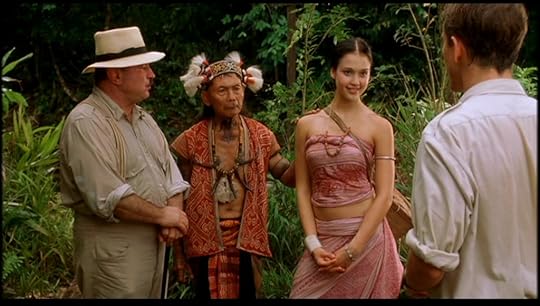
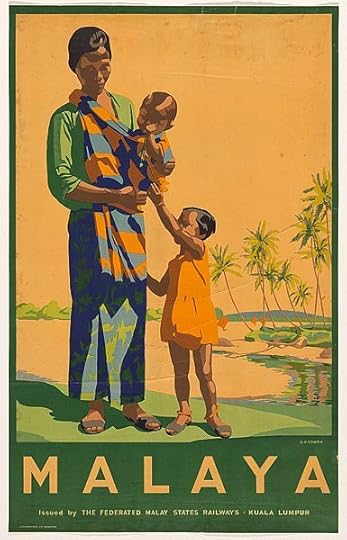
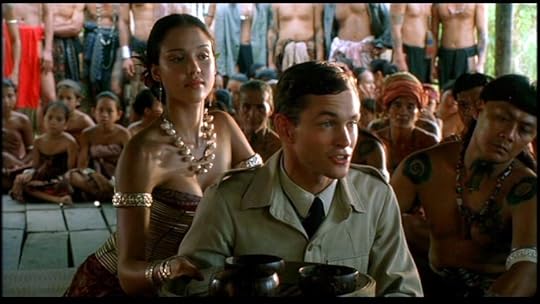
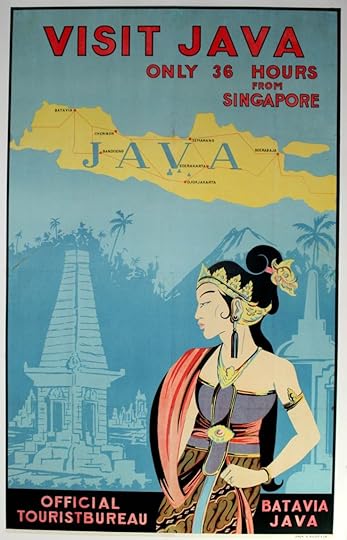
This work chronicles the adventures of the last generation of British men and women who went East to seek their fortunes. Drawn into the colonial territories scattered around the South China Sea, they found themselves in an exotic, intoxicating world. It was a land of rickshaws and shanghai jars, sampans and Straits Steamers, set against a background of palm-fringed beaches and tropical rain-forests. But it was also a world of conflicting beliefs and many races, where the overlapping of widely differing moral standards and viewpoints created a heady and dangerous atmosphere.
Charles Allen is a British writer and historian. He was born in India, where several generations of his family served under the British Raj. His work focuses on India and South Asia in general. Allen's most notable work is Kipling Sahib, a biography of Rudyard Kipling. His most recent work, Ashoka: the Search for India's Lost Emperor, was published in February 2012.
Selected works:
Plain Tales from the Raj: Images of British India in the Twentieth Century (1975) Raj: A Scrapbook of British India 1877–1947 (1977) Tales from the Dark Continent: Images of British Colonial Africa in the Twentieth Century (1979) A Mountain in Tibet: The Search for Mount Kailas and the Sources of the Great Rivers of India (1982) Tales from the South China Seas: Images of the British in South-East Asia in the Twentieth Century (1983) Lives of the Indian Princes, with co-author Sharada Dwivedi (1984) Kipling's Kingdom: His Best Indian Stories (1987) A Glimpse of the Burning Plain: Leaves from the Journals of Charlotte Canning (1986) A Soldier of the Company: Life of an Indian Ensign 1833–43 (1988) Architecture of the British Empire, Ed. R. Fermor-Hesketh (1989) The Savage Wars of Peace: Soldiers' Voices 1945–1989 (1990) Thunder and Lightning: The RAF in the Gulf War (1991) The Search for Shangri-La: A Journey into Tibetan History (1999) India Through the Lens: Photography 1840–1911, Ed. Vidya Dehejia (2000) Soldier Sahibs: The Men who Made the North-west Frontier (2000) The Buddha and the Sahibs: The Men who Discovered India's Lost Religion (2002) Duel in the Snows: The True Story of the Younghusband Mission to Lhasa (2004) Maharajas: Resonance from the Past (2005) God's Terrorists: The Wahhabi Cult and the Hidden Roots of Modern Jihad (2006) Kipling Sahib: India and the Making of Rudyard Kipling (2007) The Buddha and Dr Führer: An Archaeological Scandal (2008) The Taj at Apollo Bunder: The History of the Taj Mahal Palace, Mumbai, with co-author Sharada Dwivedi (2011) Ashoka: The Search for India's Lost Emperor (2012)
Charles Allen, based on memoirs and taped recollection of fifty men and women, pulls together an anecdote based explanation of all things ex-pat British in the South China Seas. This loose description covers primarily Malaya and the Sarawak / North Borneo areas of the island of Borneo, with other lesser contributions from Singapore, Indonesia, Ceylon (Sri Lanka) and China.
For me the format didn't suit my reading. I found the anecdotes or quoted explanation too bitsy and they felt heavily edited. There was certainly enough of interest in the book, it did a good job of covering the entire scope of life in the colonies.
It covers the government officials, district officers, the rubber estate men, tin miners and their families. It explains the arrangements when signing on, involving a prescribed period of years before a man can consider being wed and bringing his bride to the colonies. It explains the transplanted British way of life, and how it varies from actual life in Britain. The many varied interactions with the locals are well described, including how the ex-pat ladies coped with life in the tropics. Right at the end the anecdotes turn to the time of the British return after Japanese occupation.
The book also provides a glossary of terms and a paragraph on each of the contributors.
The adventures of the last generation of British men and women who went East to seek their fortunes. True stories told with a gentle air of reminiscence.
The alure of the East. While as a teenager Edward Tokeley found himself torn between India and China. "I had to make up my mind what I was going to do and was introduced to a lovely old man who was a retiring partner in Bousteads in Malaya. I was sent out to dinner with him one night and when he'd finished telling me about these gin-clear seas and golden sands, and the waving casuarina trees, and the gorgeous, dusky girls with their sarongs kebayas, I said, "Where is this place?"
Which would the career choice be - The Indian Civil Service or the Eastern Cadetships? "My uncles and friends who had been or were in the Indian Civil Service said: 'Don't join the ICS, old boy, because it'll be Indianized a considerable time before you're due for retirement.' I said, "Well, what about the Eastern Cadetships?' Their eyes brightened at once. They said, 'Good god, if you're offered that, take it. The great island empires of the East. The Eastern archipelago, Malaya, half unexplored; a land of adventure: beautiful people, charming surroundings, tigers, elephants. And further east those wonderful islands; Bali, Sumatra, Java. All the riches of the East, loaded with romance and with things still worth doing. Take it if you get the chance.'
Don't look at the man behind the curtain. But one day there was no curtain! Cunynham-Brown became a Magistrate in Singapore with court cases held in great formality. "I remember particularly one morning after a long weekend spent sailing my little boat across the Malacca Strait when I'd got abominably sunburnt, and so in the absolute saftey and security of my seat, knowing that I had a baize curtain hanging down over the table's edge so that nobody could see what I did, I undid my belt; what a relief! I then listened to a long discourse on the part of the defendant and opened a few buttons. And, when it came to a little further cross-examination with the plaintiff's lawyer, I took a bold step: I slipped off my trousers, lifted my shirt and gave myself a really good and satisfying scratch. I couldn't understand what was happenening in the court. There had been a certain murmuring from earlier on but now a positive uproar suddenly broke out. I saw small boys standing on tables at the back pointing and screaming, as the three uniformed police were banging the floor, shouting 'Diam! Diam! everybody!' And Mr Surettee, turning around to see why there was all this fuss, jumped up with a face of horror, opening his jacket like wings, and said,'Sir, they've taken the baize away to be cleaned!"
Bathe yourself in images of the British in South-East Asia in the early twentieth century.
Excellent book covering British expat life in Southeast Asia during the first 50-or-so years of the 20th Century. Unlike semi-similar books by the likes of Harold Stephens (Asian Portraits, At Home in Asia: Expatriates in Southeast Asia and Their Stories) whose chapters each focus on the life of a single individual, Allen arranges his larger story topically, so that you get chapters focusing on things like recruitment to and arrival in the East; British colonial administration; up-country rubber plantations and tin mines; regional shipping companies and their captains/crews; district policemen and other officialdom; life in the Borneo jungles; etc. — far too many tales of which end with the phrase "until we became guests of the Japanese." And indeed, the last 20% of the book focuses on the 1942 invasion of Malaya/Singapore, prison life under the Japanese (including the building of the railroads that inspired "The Bridge on the River Kwai," and the subsequent Malayan Communist "Emergency" ("the only anti-Communist war ever won by the West") leading up to Malayan/Malaysian independence. And while this is well and good as far as overall storytelling goes, Allen's cobbled-together oral history approach makes it difficult to keep the various characters straight, since the same people keep popping up in multiple chapters as their lives weave in and out of Allen's overall narrative.
Still, a minor criticism of an otherwise delightful experience. I first read this book when it came out in the early '80s, while I was living in Taiwan and it was of general regional interest to me. But I enjoyed it much more this time around, having since lived an additional seven years in Malaysia & Singapore, and so many of the places, customs, peoples, etc., brought back highly personal memories.
Indeed, the mid-'70s to mid-'80s were a "golden era" of sorts for this type of writing, including not only writers/reporters like Allen and Stephens, but also things like the excellent but short-lived "Oxford in Asia" series, which reprinted earlier travel classics by authors like Somerset Maugham, Peter's Fleming and Hopkirk, Albert von le Coq, Reginald Johnson (tutor to the "Last Emperor") and Francis Younghusband, all of which catered to a small but growing market of adventurous expats and tourists who were just starting to discover Asia — back when you could still have an entire row of airplane seats to yourself, and before every Asian variety show had it's own "talking monkey" orang puti/waiguoren/gaijin as comic relief.
PERSONAL NOTE, PROBABLY TO BE DELETED AT SOME FUTURE TIME: In light of yesterday's U.S. election results, I'll probably be reading a lot more history and fiction for a while…because, well, fuck current events.
Apparently, the characters that people Somerset Maugham’s South-East Asian stories are in no way representative examples of Europeans living in that part of the world between the wars and the contributors to Charles Allen’s book wish to set the record straight and show “what life was really like in the Malayan archipelago and Borneo for the seafarers, traders, planters, tin-miners and government servants, and for their wives and children.”
I was quite surprised to read how different their lives were from those of the British in India during the Raj. What stands out most is the apparent racial harmony and the total lack of political trouble. Relations between Whites, Malays, Chinese, Iban, Dayaks and Tamils seem to have been marked by respect and an easy and relaxed way of living together which apparently also applied to the relationship between employers and their servants. Society seems in no way to have been as formal, hierarchical, straight-laced and intolerant as in India and even the notorious “Mems” were happy to ignore differences in status between each other and going as far as learning the local languages and establishing friendships with their malis, amahs, cookies, etc. It goes without saying that they took tigers, snakes and scorpions in their stride.
Despite the inevitable hardships, isolation, diseases, the hot and humid climate, separation from families, etc. most of those interviewed by Allen describe their lives in the archipelago as a gloriously happy and rewarding time in a totally unspoilt country with its impenetrable jungle, mighty rivers and rich wildlife (which, unfortunately, they were in the habit of killing off).
All in all, a totally enjoyable account of a lost paradise that came to an abrupt end with the Japanese invasion and was later marred by the years of terror of the “Malayan Emergency”. At times it sounds almost too good to be true and its content clashes with that of a book I once read called “Murder on the Verandah” by Erich Lawlor which claims to describe the abject cruelty committed by the rubber planters against their indentured labourers and to ”reveal the suffocating nature of expatriate life in Malaya, where the British ruled with an unhealthy blend of suburban aspiration and gross insensibility to the native population. Petty, hypocritical and terribly unhappy, the British never counted Malaya as home and spent their time wishing they weren’t there."
When I bought this book, I thought it was folk tales from the South China seas (my mistake, I had just read Stevenson's from the Pacific and the title misled me), so I was surprised to find that it was a recollection from the lives of british people in the area of Malay and Singapore between the end of XIX century and WWII. At first, I did not expect much, but it has been a delightful surprise, up to the point that I'm going to find the other books by the author and see how it goes. Allen is an excellent story teller, and it's not an easy feat, considering that the book is based on many interwoven interviews with people that we keep seeing again and again.
Revisiting an old favourite for about the fourth or fifth time. Amazingly evocative and atmospheric portrayal of colonial life in Malaya and Sarawak in the interwar years. Originated from a wonderful series of personal interviews on BBC Radio 4 many years ago, enhanced by incredible Gamelan music. Most moving of all, the colonial officer who stayed on and never came back to Britain. He became a Muslim, a Malaysian citizen and a clove merchant - the stuff of dreams!
Totally enjoyed the book. Helped me understand so much of Colonial South East Asian history and the region in general. Short accounts of British colonists take us back to a beautiful, intoxicating and exotic past of the region. The experiences of the British pioneers and how they settled and lived with the local tribes and kings is a compelling read. Loved it.
loved this book. the author evokes the atmosphere brilliantly. The "in-their-own-words" format of the participants gives it great credibility and makes a compelling introduction to the colonial history of the region.
Defining experience. This book made a huge impact, and set me off on decades of travelling in the Far East, and continues to inform my experiences there.
Loved this book! The author collected stories and recollections of British people's experiences in Malaysia and Singapore back in the 1900s when they had gone over to manage the rubber plantations, tin mines and administrative offices. This was before the countries became independent from Britain, - and it was a great insight into what they thought of the native people and the land; how so many fell in love with the countries; and the hard work on the land. I was very interested to see the accumulation of decades of British rule and power being gradually and purposefully handed back to the countries - what an incredible project and feat! With my direct ancestors from this region, this book was extra special to me.
Around 30 years ago I came across a fascinating BBC radio series - "Tales from the South China Seas". This covered the last generation of British men and women who went East to seek their fortunes. Drawn into the colonial territories scattered around the South China Sea, they found themselves in an exotic, intoxicating world. It was a land of rickshaws and shanghai jars, sampans and Straits Steamers, set against a background of palm-fringed beaches and tropical rain-forests. But it was also a world of conflicting beliefs and many races, where the overlapping of widely differing moral standards and viewpoints. The title itself inspired me to produce my own radio documentary "Tales from Kai Tak" the story of the old Hong Kong Airport. This is actually available on YouTube in a sound only version. I wanted to read more about this area of colonial development so I ordered the book. It's a collection of individual stories of successes and failures of folk who tried to seek their fortune and the effect they had on the native population. It's not a continuous read but more a collection of tales which you can dip in and out of.