

What do you think?

War of the Roses Trilogy #1
Succession
Succession tells the extraordinary tale of Margaret Beaufort, mother of Henry VII, and how she became one of the most formidable women of her age. 1444. Henry VI is married by proxy to Margaret of Anjou: an unpopular choice that causes national uproar. At the same time, the infant Margaret Beaufort is made a great heiress after her father, the Earl of Somerset's, death. Everyone at court is competing to be her guardian: she brings with her the Beaufort fortune and an advantageous alliance with her uncle. In the years that follow, English rule in France collapses, Henry VI goes insane, civil war erupts, and families are pitted against each other. And though Margaret Beaufort is still little more than a child, by the age of thirteen she has married twice and given birth to her only son - the future King of England. Succession tells the thrilling, bloody story of the fall of the House of Lancaster and the rise of the Tudor dynasty.
347 pages, Hardcover
First published June 26, 2014
Ratings & Reviews
Friends & Following
Create a free account to discover what your friends think of this book!
Community Reviews
Displaying 1 - 30 of 91 reviews

May 24, 2016
Superior historical fiction and another talented new author I'm pleased to have discovered.
King Henry VI has suffered a mental collapse leaving his French Queen, Margaret of Anjou, to rule in his stead. The young, impetuous (and not very wise) Margaret is served by self seeking, untalented men who lead the country from one disaster to another. The populace has arisen demanding their removal but the extremely loyal Margaret refuses to punish them much less remove them from her council.
The competent Duke of York has served England well during the Hundred Years War from his base in Rouen. The Queen's henchmen, the Dukes of Somerset (Beaufort) and Suffolk, are suitably threatened by his success and have York removed from his duties in France and sent to Ireland.
Once more the Duke of York capably handles the Irish situation and soon has loyal friends and supporters in that country, thankful for his skillful administration.
The Duke of Somerset takes York's place in France hoping to become a war hero but yet more failure follows the untalented Beaufort clan and Rouen is lost.
England is soon flooded with English soldiers arriving home from the lost French war who are without food or pay. Anarchy reigns as the English can no longer travel the roads safely with the citizens of London arising against the Queen's men. Once again the loyal Queen refuses to punish or remove from office her incompetent advisors as she continues to alienate the House of York.
The Duke of York, his brother in law Neville, and Neville's son, the Earl of Warwick have had enough. Somerset and Suffolk continue to plot York's ruin in a power struggle that will lead to the Wars of the Roses.
Margaret Beaufort, the Beaufort heiress, fortunately proves to be much more talented than her male Beaufort relatives as her story alternates with Queen Margaret of Anjou's.
Margaret Beaufort keeps the Lancastrians hope alive with the birth of her son Henry Tudor, when she is only 13. Miraculously she survives this difficult birth but will never again be able to have more children.
Thankfully, Margaret Beaufort is given a fair and more accurate portrayal than some current authors of HF have delivered; such as the crazed, religious fanatic, possibly lunatic, Margaret Beaufort in books by Gregory. I can see much of her future great-granddaughter, Elizabeth Tudor present in Margaret as well. If you're curious to know how Elizabeth Tudor would've fared in medieval times, during the Wars of the Roses you should find the wily Margaret Beaufort a fascinating character to learn more about.
For anyone interested in learning more about the beginning of the Wars of the Roses this book is meticulously researched and well written by this talented author. I look forward to reading her next book as well.
King Henry VI has suffered a mental collapse leaving his French Queen, Margaret of Anjou, to rule in his stead. The young, impetuous (and not very wise) Margaret is served by self seeking, untalented men who lead the country from one disaster to another. The populace has arisen demanding their removal but the extremely loyal Margaret refuses to punish them much less remove them from her council.
The competent Duke of York has served England well during the Hundred Years War from his base in Rouen. The Queen's henchmen, the Dukes of Somerset (Beaufort) and Suffolk, are suitably threatened by his success and have York removed from his duties in France and sent to Ireland.
Once more the Duke of York capably handles the Irish situation and soon has loyal friends and supporters in that country, thankful for his skillful administration.
The Duke of Somerset takes York's place in France hoping to become a war hero but yet more failure follows the untalented Beaufort clan and Rouen is lost.
England is soon flooded with English soldiers arriving home from the lost French war who are without food or pay. Anarchy reigns as the English can no longer travel the roads safely with the citizens of London arising against the Queen's men. Once again the loyal Queen refuses to punish or remove from office her incompetent advisors as she continues to alienate the House of York.
The Duke of York, his brother in law Neville, and Neville's son, the Earl of Warwick have had enough. Somerset and Suffolk continue to plot York's ruin in a power struggle that will lead to the Wars of the Roses.
Margaret Beaufort, the Beaufort heiress, fortunately proves to be much more talented than her male Beaufort relatives as her story alternates with Queen Margaret of Anjou's.
Margaret Beaufort keeps the Lancastrians hope alive with the birth of her son Henry Tudor, when she is only 13. Miraculously she survives this difficult birth but will never again be able to have more children.
Thankfully, Margaret Beaufort is given a fair and more accurate portrayal than some current authors of HF have delivered; such as the crazed, religious fanatic, possibly lunatic, Margaret Beaufort in books by Gregory. I can see much of her future great-granddaughter, Elizabeth Tudor present in Margaret as well. If you're curious to know how Elizabeth Tudor would've fared in medieval times, during the Wars of the Roses you should find the wily Margaret Beaufort a fascinating character to learn more about.
For anyone interested in learning more about the beginning of the Wars of the Roses this book is meticulously researched and well written by this talented author. I look forward to reading her next book as well.

July 3, 2014
This is a furious gallop through the earlier years of the Wars of the Roses. Henry VI is a weak leader - nothing like his father. He marries a French woman, Marguerite d'Anjou, and trades off lands for her. His soldiers then lose more lands in France and they come home angry at not being supplied or paid. Meanwhile the Duke of York Richard Neville and his wife Cecily are not impressed by Henry's bouts of madness and want to rule in his stead as they see the country plunging into mayhem. Marguerite wants to secure the kingdom for her son, Edward.
Another young girl, Margaret Beaufort, is married off to Edmund Tudor - the king's half-brother.
As the tensions rise war breaks out. We have Marguerite waiting to hear if her son's inheritance is secure, Cecily sending off her husband, sons and brother to war and little Margaret Beaufort, pregnant and alone in Wales as she waves goodbye to her husband.
Henry is repeatedly mad. His advisors and cousins are all out to power-grab for themselves and the country is plunged into war.
This book is similar to other books written about this period but where it differs is in its use of chronicles and commentaries written at the time. Each chapter ends with these snippets of insight. This has the effect of chopping up the narrative a little so takes a bit of getting used to but is an interesting addition to the novel. It's like watching a sumptuous historical drama, with costumes, battles, intrigue and betrayal and then suddenly it stops and a documentary starts - like Simon Schama or David Starkey doing a 'piece to camera' explaining all the impact of the politics, the effect on the economy and the nature of the betrayals - then we are thrown back into the middle of the action as the novel continues.
Worth a read!
This was a free book sent to me via Goodreads - thank you!
Another young girl, Margaret Beaufort, is married off to Edmund Tudor - the king's half-brother.
As the tensions rise war breaks out. We have Marguerite waiting to hear if her son's inheritance is secure, Cecily sending off her husband, sons and brother to war and little Margaret Beaufort, pregnant and alone in Wales as she waves goodbye to her husband.
Henry is repeatedly mad. His advisors and cousins are all out to power-grab for themselves and the country is plunged into war.
This book is similar to other books written about this period but where it differs is in its use of chronicles and commentaries written at the time. Each chapter ends with these snippets of insight. This has the effect of chopping up the narrative a little so takes a bit of getting used to but is an interesting addition to the novel. It's like watching a sumptuous historical drama, with costumes, battles, intrigue and betrayal and then suddenly it stops and a documentary starts - like Simon Schama or David Starkey doing a 'piece to camera' explaining all the impact of the politics, the effect on the economy and the nature of the betrayals - then we are thrown back into the middle of the action as the novel continues.
Worth a read!
This was a free book sent to me via Goodreads - thank you!

October 23, 2015
There was some self-dispute in this rating. It's 3.5 star rounded up. Primarily rounded up because this is a fiction book that in large parts reads as non-fiction and has large quantity of insert. It's difficult and complex in the telling and includes pages of quotes and research of italicized sections before and after the fictional continuances of conversation or event description. Yet, there are sections narrated completely within the eyes and voices of the two Margarets. Margaret of Anjou and Margaret Beaufort, our two characters of biography and linkage to the changing English dynasty and influences of their lifetimes. The War of the Roses and eventual kingship of Edward IV ends the book. This is not the end of either Margaret's life.
There is a complex and difficult Lancaster/York chart in the first pages of the book graphing the lines of succession from Edward III's death in 1377.
It's beyond the farthest reaches of possibility that Margaret Beaufort's only child who she delivered at 13 years of age, would begin a Tudor dynasty, IMHO. There were branches less removed from kingship and more numerous in both strength in wealth and in numbers. And bloodline was everything. But Henry VI's mental illness, like the former Charles' insanity in France decimated the English government during this entire middle 50 year period of the 15th century. Unhappiness with power uses of dictatorial religion and of a whimsical government which did not work seeped down throughout the entire society and within nearly every aspect of class and occupation instilled groups for desired dissolution. This in the noble classes too; no less a desire for change repeatedly arose from such decades of incompetence and ineptitude.
Margaret of Anjou's story is such to raise the hair on your hairs. But little Margaret Beaufort's! Hers is in some ways abomination and in others a tribute to the strength of her mind and emotional core. For me, she is the ultimate survivor. So often married, so often pawned, so often sacrificed. So little choice. So often left in damp towers or hidden stone cellars at Pembroke. Yet a triumphant Grandmother at her end. Two marriages by 12 years of age, four by 28.
She lived to see her only son buried, but not before he was a King. But then she was only 13 years older than he. Her life and fortitude are quite worth the read. Small person with a steel spine.
There is a complex and difficult Lancaster/York chart in the first pages of the book graphing the lines of succession from Edward III's death in 1377.
It's beyond the farthest reaches of possibility that Margaret Beaufort's only child who she delivered at 13 years of age, would begin a Tudor dynasty, IMHO. There were branches less removed from kingship and more numerous in both strength in wealth and in numbers. And bloodline was everything. But Henry VI's mental illness, like the former Charles' insanity in France decimated the English government during this entire middle 50 year period of the 15th century. Unhappiness with power uses of dictatorial religion and of a whimsical government which did not work seeped down throughout the entire society and within nearly every aspect of class and occupation instilled groups for desired dissolution. This in the noble classes too; no less a desire for change repeatedly arose from such decades of incompetence and ineptitude.
Margaret of Anjou's story is such to raise the hair on your hairs. But little Margaret Beaufort's! Hers is in some ways abomination and in others a tribute to the strength of her mind and emotional core. For me, she is the ultimate survivor. So often married, so often pawned, so often sacrificed. So little choice. So often left in damp towers or hidden stone cellars at Pembroke. Yet a triumphant Grandmother at her end. Two marriages by 12 years of age, four by 28.
She lived to see her only son buried, but not before he was a King. But then she was only 13 years older than he. Her life and fortitude are quite worth the read. Small person with a steel spine.

July 17, 2014
I LOVE novels about the Wars of the Roses. So I was delighted when the publisher, Penguin, sent me a copy of this book in return for an honest review. And I am all for promoting Medieval-set fiction because I want to read more of it. So here goes.
Succession is about the early years of the Wars of the Roses and focuses on the lives of two women of the House of Lancaster, Margaret of Anjou and Margaret Beaufort. Both were married young, Margaret of Anjou to the gentle but weak King Henry VI and Margaret Beaufort to the king's half-brother Edmund Tudor. Queen Margaret struggles against the hostility of her new subjects to fight for her husband's position and ultimately right to the crown itself as Henry's weakness becomes madness, the Hundred Years War ends in humiliation for England and overmighty nobles compete for greater power, and ultimately the crown itself. Her struggle develops into an effort to secure the crown for her son Prince Edward. Margaret Beaufort is a considerable heiress, married twice before she reaches her teenage years and the mother of the future Henry VII.
The chapters tend to be very short and do use other narrators also, so I recommend always reading the chapter title as they often clue you in on who is narrating that particular chapter. We hear from a variety of voices from notables like the First Duke of Suffolk to a common recruit in Edward IV's army before the battle of Towton. Honestly, I am not sure why this works, but it does.
Another distinguishing feature of this book is the use of extracts from chronicles of the time. These extracts are key to the narrative and very well chosen. They are used both to forward time in the novel, so that we are kept up to date with what has been happening off the page, and also primarily as a linking device between chapters, often pointing to the events that will follow. This is a fantastic idea, very creative and it works really well, particularly when they describe events neither woman would have witnessed.
My favourite part of the book was the long third part of the novel -"Margaret Beaufort Travels to Wales". It is the longest chapter and we consequently come to get to know Margaret Beaufort better than any other character in the book.
I have to quibble with the description of both Margarets as the "women who gave birth to the Tudor dynasty" from the inside cover though. This is a book about two key Lancastrian women in the early years of the Wars of the Roses. There is more story to tell for each of them,in their struggles to ensure the succession for their sons, so I hope this is not a stand-alone book as it finishes just after the Battle of Towton. There are hints about the future succession but the story does not go through to describe the fates of Edward of Lancaster and Henry Tudor, and the latter was no immediate relation of Margaret of Anjou. The phrase would be more appropriately used of Elizabeth Woodville, who we meet in the closing chapters.
Overall, I really enjoyed this book. I realise I may have made it sound heavy-going when I state that the author has quoted from Medieval chronicles, but this was not my experience at all. I recommend "Succession" for anyone with an interest in well-researched historical fiction.
Succession is about the early years of the Wars of the Roses and focuses on the lives of two women of the House of Lancaster, Margaret of Anjou and Margaret Beaufort. Both were married young, Margaret of Anjou to the gentle but weak King Henry VI and Margaret Beaufort to the king's half-brother Edmund Tudor. Queen Margaret struggles against the hostility of her new subjects to fight for her husband's position and ultimately right to the crown itself as Henry's weakness becomes madness, the Hundred Years War ends in humiliation for England and overmighty nobles compete for greater power, and ultimately the crown itself. Her struggle develops into an effort to secure the crown for her son Prince Edward. Margaret Beaufort is a considerable heiress, married twice before she reaches her teenage years and the mother of the future Henry VII.
The chapters tend to be very short and do use other narrators also, so I recommend always reading the chapter title as they often clue you in on who is narrating that particular chapter. We hear from a variety of voices from notables like the First Duke of Suffolk to a common recruit in Edward IV's army before the battle of Towton. Honestly, I am not sure why this works, but it does.
Another distinguishing feature of this book is the use of extracts from chronicles of the time. These extracts are key to the narrative and very well chosen. They are used both to forward time in the novel, so that we are kept up to date with what has been happening off the page, and also primarily as a linking device between chapters, often pointing to the events that will follow. This is a fantastic idea, very creative and it works really well, particularly when they describe events neither woman would have witnessed.
My favourite part of the book was the long third part of the novel -"Margaret Beaufort Travels to Wales". It is the longest chapter and we consequently come to get to know Margaret Beaufort better than any other character in the book.
I have to quibble with the description of both Margarets as the "women who gave birth to the Tudor dynasty" from the inside cover though. This is a book about two key Lancastrian women in the early years of the Wars of the Roses. There is more story to tell for each of them,in their struggles to ensure the succession for their sons, so I hope this is not a stand-alone book as it finishes just after the Battle of Towton. There are hints about the future succession but the story does not go through to describe the fates of Edward of Lancaster and Henry Tudor, and the latter was no immediate relation of Margaret of Anjou. The phrase would be more appropriately used of Elizabeth Woodville, who we meet in the closing chapters.
Overall, I really enjoyed this book. I realise I may have made it sound heavy-going when I state that the author has quoted from Medieval chronicles, but this was not my experience at all. I recommend "Succession" for anyone with an interest in well-researched historical fiction.

December 12, 2015

The Wars of the Roses - the dynastic and political struggle for the throne of England in the 15th century between the rival houses of York and Lancaster - has been retold, re-imagined and re-shown a thousand and one times and beyond.
The success of the infamous Game of Thrones series and the books, A Song of Ice and Fire, has inspired countless copycats in both the book and TV world. Eager to exploit the worldwide enthusiasm and delight for medieval intrigue in all its pragmatic and vicious manifestations, authors have been quick to take notice. This upsurge in all things Middle Ages has resulted in a major boost for historical fiction and its safe to say that Succession has been made to sate that growing interest.
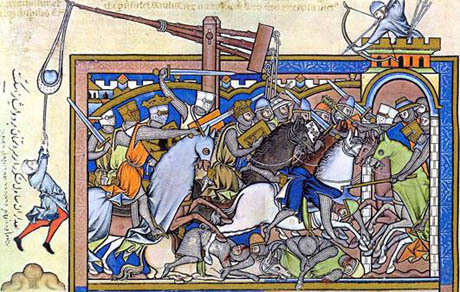
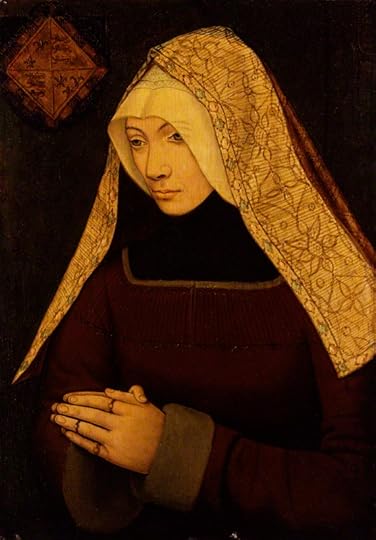
Succession tells the intertwined tales of the two Margarets of House Lancaster - Margaret of Anjou, Queen of England, wife to the inept Henry VI and mother to the unlucky Prince of Wales, Edward of Westminster and Margaret Beaufort, Countess of Richmond, 12 year old wife to Edmund Tudor and teenage mother to Henry Tudor, founder of the Tudor Dynasty. Succession follows both characters as they grow into up in a dangerous and volatile medieval England - where women are looked up as marriage pawns or brood mares and where the King of England, after the disastrous Hundred Years War with France, can no longer rule over his magnates. It is chaotic time and both Margarets are thrown to the dogs.
Succession, for me, was a fast-paced, enjoyable and well-written novel detailing the trials and triumphs of two young noblewomen during a tumultuous and bloody epoch in English history.
Margaret of Anjou arrives in England aged 15, is married to Henry VI and crowned Queen of England. Throughout her years as Queen, Margaret is forced to contend with her subjects hating her for being French, her husbands madness, the unruly English magnates challenging his crown and the fact that her own gender cripples her ability to safeguard England as the inheritance of House Lancaster.
Margaret Beaufort begins the story aged four and in the ward-ship of William de la Pole, Duke of Suffolk. A wealthy heiress and the only child of her father John Beaufort, Duke of Somerset, Margaret is a prize in the dog-eat-dog world of medieval marriage. Married at 6, her first marriage is annulled and she is carted off to mysterious Wales to marry the King's half brother Edmund Tudor. Widowed and pregnant aged 12, Margaret gives birth to her only child at 13 the future Henry VII. And that's when her fight truly begins.

Throughout Succession, there are regular and illuminating snippets of contemporary English and foreign chronicles which add to the air of the novel a firm grounding in historical accuracy and foundation. Its certainly something I've never seen before in a historical novel and works beautifully in Succession. Reading the historical impact of the Wars alongside the emotional, personal influence that they wrought on their players is quite brilliantly portrayed.
This was furious and fast-paced book with a lively, thoughtful and energetic writing style. Medieval England and all is bizarre and confusing customs, beliefs, morals and actions are vividly portrayed. The characters are boisterous, intriguing and morally ambiguous - neither York or Lancaster are demonized or sanitized at the expense of the other. Such objectivity is refreshing in a world where historical fiction takes side all too often. It was a thoroughly engrossing and absorbing read.
Character wise, I thought Succession went above and beyond. Both Margarets were portrayed with shrewdness and a touch of pragmatism. There was nothing Mary-Sue about their characterization. Each had their individual strengths and weaknesses which sometimes had a catastrophic impact on history itself. One thing that shines through both women is their deep and enduring love for their sons. Margaret of Anjou adores her son and it is for him that she fights so tenaciously, not her shadow of a husband. Margaret Beaufort, despite the agony of giving birth at such a young age, is devoted to her son and tries her hardest to be close to him.
Succession did have a few problems. The name of Betsy for Margaret's wet nurse struck me as anachronistic and put me in mind of a good time girl from World War Two. I also thought that the wide range of characters and events, at the rare time diluted the story. And perhaps due to the massive amount of history, this may not be the best book for a beginner as it may become overwhelming on occasion.
I would wholeheartedly recommend Succession as it is a fun and enlightening read with excellent characters and a spirited writing style.

August 12, 2014
I felt this text was very interesting and loved the way the author cleverly wove primary sources pertaining to the War Of The Roses into the story in skillful and inventive ways. It was, without doubt, well written and fascinating.
However, I know the bulk of the text is essentially historical fiction and the author isn't claiming her interpretation to be true and it is totally fair enough for her to put her own spin on events, but certain aspects were not to my taste. I have always been very interested in Margaret Beaufort and have read her two most recent biographies "and was looking forward to Margaret's Travels to Wales." I completely accept that elements of Margaret's history (such as concieving at the dangerously early age of twelve) are going to be an uncomfortable read, but was surprised by parts of Michael's interpretation. A very unlikely and coincidental scenario is alluded to and bearing in mind some personal and intimate details will never be definitively known, I felt Michael could have been more circumspect in her conjectures.
I was also surprised by the way Michael chose to portray Jasper Tudor as unpleasant and lecherous; jealous of his brother and as Betsey asserts "wanting Margaret for himself." He is even openly violent towards Margaret and refuses to reply to her anxious letters about her son during her marriage to Henry Stafford. Of course it is entirely Michael's perogative to depict her characters as she wants, but was bewildered by this as it completely deviates from everything I have read about Jasper, who is usually considered / displayed as a man of great integrity, devoted to Henry and indeed intrinsic to his safety and later succession to the throne. Two biographies of Jasper just published (both using a range of highly reputable sources) refute Livi Michael's very unflattering portrayal. Alison Weir in her book on The Wars of The Roses comments on the close relationship between Margaret and Jasper stating that he was a "tower of strength" for her for many years. I can't understand why Michael chose to malign him so completely. Plus in her sequel how on earth will she approach the fact that Margaret Beaufort herself begged Jasper to take Henry into exile after the Battle of Tewkesbury in 1471.
In contrast, Edmund is portrayed in a heroic manner; a tragic and handsome young hero who unexpectedly dies in his prime. Bearing in mind Jones and Underwood consider him to be "brutal and exploitative" in his interaction with Margaret, again this was an unusual interpretation. In his recent book on the Wars of the Roses, Dan Jones considers Edmund to have greatly "traumatised" Margaret by his actions. Elizabeth Norton states similar; asserting that Edmund wanted an heir as soon as feasibly possible, so exploited Margaret to this end, getting her pregnant at a very young age and disregarding the dangers to her health. Through Edmund's reluctance Michael has certainly put forward a very different interpretation to these events. However, the brutality of the actual encounter is also difficult to read.
Finally, Michael chooses to give Margaret an eating disorder. (Not saying this didn't happen) but it didn't ring true that she would have been able to become the mother of a healthy baby at such a young age if this were the case. Livi Michael's Margaret is a girl who would regularly eat nothing for five days and at one time fasts so excessively her lips "had a bluish tinge." Surely it is highly unlikely that a young woman who went to such extremes would have been fertile at twelve, let alone capable of sustaining a full term pregnancy? Plus Margaret (for the time) had a long life, out living all her husbands, contemporaries and even her son, surely unlikely if she had suffered from such a debilitating condition from childhood.
I don't want to sound too negative and of course it is Michael's choice and perogative to give her own spin on events, but for me I was unsettled by this text and her interpretation. A very good book, but for me personally there were issues.
However, I know the bulk of the text is essentially historical fiction and the author isn't claiming her interpretation to be true and it is totally fair enough for her to put her own spin on events, but certain aspects were not to my taste. I have always been very interested in Margaret Beaufort and have read her two most recent biographies "and was looking forward to Margaret's Travels to Wales." I completely accept that elements of Margaret's history (such as concieving at the dangerously early age of twelve) are going to be an uncomfortable read, but was surprised by parts of Michael's interpretation. A very unlikely and coincidental scenario is alluded to and bearing in mind some personal and intimate details will never be definitively known, I felt Michael could have been more circumspect in her conjectures.
I was also surprised by the way Michael chose to portray Jasper Tudor as unpleasant and lecherous; jealous of his brother and as Betsey asserts "wanting Margaret for himself." He is even openly violent towards Margaret and refuses to reply to her anxious letters about her son during her marriage to Henry Stafford. Of course it is entirely Michael's perogative to depict her characters as she wants, but was bewildered by this as it completely deviates from everything I have read about Jasper, who is usually considered / displayed as a man of great integrity, devoted to Henry and indeed intrinsic to his safety and later succession to the throne. Two biographies of Jasper just published (both using a range of highly reputable sources) refute Livi Michael's very unflattering portrayal. Alison Weir in her book on The Wars of The Roses comments on the close relationship between Margaret and Jasper stating that he was a "tower of strength" for her for many years. I can't understand why Michael chose to malign him so completely. Plus in her sequel how on earth will she approach the fact that Margaret Beaufort herself begged Jasper to take Henry into exile after the Battle of Tewkesbury in 1471.
In contrast, Edmund is portrayed in a heroic manner; a tragic and handsome young hero who unexpectedly dies in his prime. Bearing in mind Jones and Underwood consider him to be "brutal and exploitative" in his interaction with Margaret, again this was an unusual interpretation. In his recent book on the Wars of the Roses, Dan Jones considers Edmund to have greatly "traumatised" Margaret by his actions. Elizabeth Norton states similar; asserting that Edmund wanted an heir as soon as feasibly possible, so exploited Margaret to this end, getting her pregnant at a very young age and disregarding the dangers to her health. Through Edmund's reluctance Michael has certainly put forward a very different interpretation to these events. However, the brutality of the actual encounter is also difficult to read.
Finally, Michael chooses to give Margaret an eating disorder. (Not saying this didn't happen) but it didn't ring true that she would have been able to become the mother of a healthy baby at such a young age if this were the case. Livi Michael's Margaret is a girl who would regularly eat nothing for five days and at one time fasts so excessively her lips "had a bluish tinge." Surely it is highly unlikely that a young woman who went to such extremes would have been fertile at twelve, let alone capable of sustaining a full term pregnancy? Plus Margaret (for the time) had a long life, out living all her husbands, contemporaries and even her son, surely unlikely if she had suffered from such a debilitating condition from childhood.
I don't want to sound too negative and of course it is Michael's choice and perogative to give her own spin on events, but for me I was unsettled by this text and her interpretation. A very good book, but for me personally there were issues.

August 24, 2015
I really wanted to love this!!!! Equally want chance to explain my rating. Parts were great. Loved how Margaret of Anjou was presented in a more sympathetic way. Loved the chronicles, reminded me of Karen Maitland. However, didn’t like some sections. By far for me, the most controversial part is Margaret Beaufort’s long chapter in Wales. I am very interested in Margaret and the Beauforts and have read many non fiction books, and yeah, I do agree this may be part of the problem. Loved “The Red Queen” though and the depiction of Margaret as a feisty heroine. Didn’t like here how the author kept banging on that Margaret was extremely unattractive to put it mildly?? This isn’t especially positive. Totally contrasting is her guy Edmund who is drop dead gorgeous and so heroic he takes no interest in consummating his marriage to young Margaret. Thus begging the question, what was she doing there for months and months? I mean why make the guy a hero?? When the consummation (very graphic) eventually occurs, the interpretation of it is very different. When dealing with very sensitive subject matter, it is better to be more subtle, I feel, as these are real people Olivia Michael is talking about. It is assumed Margaret took pleasure from parts (not all) of the event, and her love of his intimate parts was reminiscent of “Fifty Shades Of Grey." I felt that if the writer wanted to go down the soft porn route – she could have tried to make the scene less creepy and nasty. Of course, we will never know how Margaret actually felt about this, so it is rather a bold interpretation.
Also Margaret never had any other children after Henry – no one definitely knows why . Henry’s birth is full of yucky detail and poor Margaret is totally stripped of any dignity, (ie thinking she has “pissed herself” and braying like a “farmyard animal.”) It bad enough the poor young woman had to endure childbirth at barely 13, never mind all this… Also scenario relating to Henry’s birth is graphically explained that would have resulted in her having a crippling gynecological condition for life. And maybe she did. But the point is we do not know! In this case, the damage done by such extreme surgical intervention would have been immense, and Olivia Michael has simply not looked ahead and considered the impact this would have had on Margaret's life. This is obviously not compatible with the fact she had a long life for the time, outliving all her husbands and many of her contemporaries by several years. I just don't know why Michael had to be so extreme in her interpretations. Also I don’t get why the writer chose to make Margaret Anorexic (???) She deliberately starves herself and apparently (so I have heard) this is seen in the second book where she “rejects food” constantly. You wouldn’t have to be a medical expert to work out that this condition in a pre-pubescent girl would interfere with her maturation, yet despite this, overlapping with fact, Livi Michael puts forward that she was fertile at 12 in 1456? This is an age that is consistent mainly with the average in the States today!! So her interpretation just didn’t stack up, period. The strange thing is, Margaret’s nurse, Betsey, is in the know as to how this starvation and lack of nutrition is affecting her badly, cajoling her to eat so that her hair (that is “ratty” and won’t grow below her shoulders) will improve and she will blossom into a woman. It was also a bit of a stretch that such a young woman, who starved herself throughout pregnancy, would give birth to a full term healthy baby, - “sure to live.” Also surely such extreme starvation would have affected her life span? Again not compatible with points already made. And why did Olivia Michael feel the need to make Margaret’s complexion “yellowish?” Too many unflattering assumptions are made, and this is not a positive representation of a very admirable woman.
To be fair though, this is fiction and these assumptions / interpretations are the writer’s choice.
Also Margaret never had any other children after Henry – no one definitely knows why . Henry’s birth is full of yucky detail and poor Margaret is totally stripped of any dignity, (ie thinking she has “pissed herself” and braying like a “farmyard animal.”) It bad enough the poor young woman had to endure childbirth at barely 13, never mind all this… Also scenario relating to Henry’s birth is graphically explained that would have resulted in her having a crippling gynecological condition for life. And maybe she did. But the point is we do not know! In this case, the damage done by such extreme surgical intervention would have been immense, and Olivia Michael has simply not looked ahead and considered the impact this would have had on Margaret's life. This is obviously not compatible with the fact she had a long life for the time, outliving all her husbands and many of her contemporaries by several years. I just don't know why Michael had to be so extreme in her interpretations. Also I don’t get why the writer chose to make Margaret Anorexic (???) She deliberately starves herself and apparently (so I have heard) this is seen in the second book where she “rejects food” constantly. You wouldn’t have to be a medical expert to work out that this condition in a pre-pubescent girl would interfere with her maturation, yet despite this, overlapping with fact, Livi Michael puts forward that she was fertile at 12 in 1456? This is an age that is consistent mainly with the average in the States today!! So her interpretation just didn’t stack up, period. The strange thing is, Margaret’s nurse, Betsey, is in the know as to how this starvation and lack of nutrition is affecting her badly, cajoling her to eat so that her hair (that is “ratty” and won’t grow below her shoulders) will improve and she will blossom into a woman. It was also a bit of a stretch that such a young woman, who starved herself throughout pregnancy, would give birth to a full term healthy baby, - “sure to live.” Also surely such extreme starvation would have affected her life span? Again not compatible with points already made. And why did Olivia Michael feel the need to make Margaret’s complexion “yellowish?” Too many unflattering assumptions are made, and this is not a positive representation of a very admirable woman.
To be fair though, this is fiction and these assumptions / interpretations are the writer’s choice.

October 21, 2015
At first, I wasn't quite sure what to make of this novel. Why would a writer choose to quote extensively from the primary source material instead of describing battles, Parliament meetings, and executions herself? But as the book went on, I started to realize how brilliant this choice is. Though Livi Michael does occasionally follow a character through an event, she focuses her novel on the spaces between what was reported in the chronicles -- conversations, discussions, doubts, worries, decisions. Michael allows the chronicles to report the actions of Margaret of Anjou or the Duke of York, leaving herself free to imagine and examine the fears and desires that led to their decisions. And she does it brilliantly, with intelligence and compassion.
The cast of characters is vast, and I found myself referring to the family tree and list of principals during almost every chapter. Despite the plethora of kings, dukes, and earls, it's the women who are the stars of this show -- Margaret of Anjou, Margaret Beaufort, and to a lesser degree, duchesses Cecily Neville and Alice Chaucer. Whether they crave power, security, or a better future for their children, they are unafraid to join (and often lead) their spouses in achieving those goals by any means possible. In fact, the men of the story often seem fragile and uncertain next to their strong-willed and self-aware wives.
And now I really, really need to seek out a history of the Wars of the Roses, because I still don't know the Earl of March from the Duke of Buckingham. Any recommendations?
The cast of characters is vast, and I found myself referring to the family tree and list of principals during almost every chapter. Despite the plethora of kings, dukes, and earls, it's the women who are the stars of this show -- Margaret of Anjou, Margaret Beaufort, and to a lesser degree, duchesses Cecily Neville and Alice Chaucer. Whether they crave power, security, or a better future for their children, they are unafraid to join (and often lead) their spouses in achieving those goals by any means possible. In fact, the men of the story often seem fragile and uncertain next to their strong-willed and self-aware wives.
And now I really, really need to seek out a history of the Wars of the Roses, because I still don't know the Earl of March from the Duke of Buckingham. Any recommendations?

May 23, 2014
3.75pts rounded up to 4 stars
First of all Thank you to Penguin Ireland for an advanced & free copy in return for a review, appreciated.
A lot of detailed & succinct reviews have been written already which i would fully endorse as it's a very good read. I have to say it wasn't quite what i expected (thought it would be too much about the women only) & was very pleasantry surprised & won-over by the style.
A tale of Two Margaret's - One a Queen, the other a mother to the heir apparent. The story starts with a young Margaret "Little peg" Beaufort, who is for the most part the centre of attention due to her inherited estates & her story unfolds at a fast pace. A story well written, simplistic enough to follow for anybody in what was a complex part of our history, all interspliced with extracts from chronicles of the time which are woven excellently within the evolving & fast moving story. The short chapters work well & pull the reader forward into the intricies & politics of the era.
The author has written children’s books in the past & this comes across in the chapters where little peg is involved to great effect, very endearing it is.
The only part I found a little heavy was the Margaret Beaufort in Wales part which although very well done wasn't really for me but no doubt will appeal to many wanting to read about womanly things (that sounds sexist no doubt....but there yer go)
I really enjoyed it & look forward to more writing from Livi Michael especially if there is a follow-on book for this period.
First of all Thank you to Penguin Ireland for an advanced & free copy in return for a review, appreciated.
A lot of detailed & succinct reviews have been written already which i would fully endorse as it's a very good read. I have to say it wasn't quite what i expected (thought it would be too much about the women only) & was very pleasantry surprised & won-over by the style.
A tale of Two Margaret's - One a Queen, the other a mother to the heir apparent. The story starts with a young Margaret "Little peg" Beaufort, who is for the most part the centre of attention due to her inherited estates & her story unfolds at a fast pace. A story well written, simplistic enough to follow for anybody in what was a complex part of our history, all interspliced with extracts from chronicles of the time which are woven excellently within the evolving & fast moving story. The short chapters work well & pull the reader forward into the intricies & politics of the era.
The author has written children’s books in the past & this comes across in the chapters where little peg is involved to great effect, very endearing it is.
The only part I found a little heavy was the Margaret Beaufort in Wales part which although very well done wasn't really for me but no doubt will appeal to many wanting to read about womanly things (that sounds sexist no doubt....but there yer go)
I really enjoyed it & look forward to more writing from Livi Michael especially if there is a follow-on book for this period.

Read
August 11, 2014Didn't really enjoy this. I dislike books that change character perspective as often as this one did. Made it impossible for me to form any sort of rapport with the characters.

October 5, 2019
I really wanted this to be a good reason because I absolutely adore Tudor the fiction, but this has been a dry read.
I think that’s because the author has tried to do fiction meet fact and it hasn’t combined well. Margaret Beaufort makes a great heroine and have a always found her fascinating to read about, But this book didn’t really tell her story very well.
Reason I have given it three stars, is that it did have very good historical content. I just feel that the characters needed more definition.
I think that’s because the author has tried to do fiction meet fact and it hasn’t combined well. Margaret Beaufort makes a great heroine and have a always found her fascinating to read about, But this book didn’t really tell her story very well.
Reason I have given it three stars, is that it did have very good historical content. I just feel that the characters needed more definition.

April 30, 2015
To start with I loved this book and it would have been happy to give it 5 stars. However, I wanted to explain why I have ultimately given it such a low rating. Obviously, in historical fiction, writers can do what they want (and maybe I should just not read this genre) but did not like a very unusual interpretation of events that was put forward here.
Jasper Tudor, who Alison Weir refers to as “ a tower of strength” for Margaret Beaufort for many years is utterly maligned. I have never read a novel where the author has gone so against what is actually established about historical characters. As another reader commented, there are two very recent biographies out about Jasper. Both (though conceding material is thin on the ground) are united (as are other historians) that Jasper was an honourable man of great integrity. However, Jasper here is portrayed as lecherous, sickeningly brutal, extremely unattractive and old looking (!!) I just don’t get why Michael chose to portray him this way? Maybe for a good story? Or to go in the opposite direction of Philippa Gregory’s “The Red Queen?” This is of course her choice, but I think authors should be careful when writing about actual people from history. I apologise if I sound too critical, but feel strongly about this and want the opportunity to explain my rating. Trying to inject a bit of humour, I am Welsh, so I guess I am biased, but seriously the portrait of Jasper was unflattering in the extreme and goes against everything known about him.
Edmund on the other hand is the ultimate handsome, irresistible, sexy hero and Margaret loves everything about him (she even, through third person narrative refers to his "assets" and how much she likes them!!!!!) Generally thought of as exploitative and wanting an heir as soon as feasibly possible, this is a radically different interpretation. Also his rationale (albeit sickening for modern readers) for pursuing sexual relations with twelve year old Margaret is somewhat differently presented. It just didn’t make sense, which, to reiterate, is such a shame because I loved the book up until Margaret’s long section. Also historians have suggested that Edmund possibly raped Margaret in his pursuit for an heir, and I am not sure it is a wise decision to put forward a perspective that so alternates from this view, when actually we will never know what definitely occurred. Livi Michael had gone to great pains to bring history to life in a sensitive manner previously (Henry VI’s interactions with Margaret of Anjou for instance are extremely touching,) but sensitivity was lacking here.
Finally (agree with Katherine here) I don’t understand why Livi Michael decided to give young Margaret an eating disorder, as this made her being fertile at the early age of 12 practically impossible. I am a nurse and often counsel young women with eating disorders and know first hand the effect of these conditions on fertility. Menstruation, not to mention ovulation, is dependent on body weight and nutrition, and Margaret starves herself, barely keeping herself alive. After one long period of starvation, she decides just to eat a pear!! Baby Henry in this version is strong and thriving, surely again very unlikely with a mother so young who is depicted to have a major eating disorder. The author also gives the characters bewilderingly modern medical knowledge, pertaining to the menstrual / fertility cycle (which was just not understood at this time) and modern gynaecological conditions such as Endometriosis and Asherman’s Disease.
In short, was so disappointing that such a promising book de-railed in this section. I do not seek to offend, and it is highly the writer's prerogative to put her interpretation forward, but sadly not for me, (hence 1 star,) which is such a shame as I loved it initially. Think I will avoid this genre in future, lol!!! :-/
Jasper Tudor, who Alison Weir refers to as “ a tower of strength” for Margaret Beaufort for many years is utterly maligned. I have never read a novel where the author has gone so against what is actually established about historical characters. As another reader commented, there are two very recent biographies out about Jasper. Both (though conceding material is thin on the ground) are united (as are other historians) that Jasper was an honourable man of great integrity. However, Jasper here is portrayed as lecherous, sickeningly brutal, extremely unattractive and old looking (!!) I just don’t get why Michael chose to portray him this way? Maybe for a good story? Or to go in the opposite direction of Philippa Gregory’s “The Red Queen?” This is of course her choice, but I think authors should be careful when writing about actual people from history. I apologise if I sound too critical, but feel strongly about this and want the opportunity to explain my rating. Trying to inject a bit of humour, I am Welsh, so I guess I am biased, but seriously the portrait of Jasper was unflattering in the extreme and goes against everything known about him.
Edmund on the other hand is the ultimate handsome, irresistible, sexy hero and Margaret loves everything about him (she even, through third person narrative refers to his "assets" and how much she likes them!!!!!) Generally thought of as exploitative and wanting an heir as soon as feasibly possible, this is a radically different interpretation. Also his rationale (albeit sickening for modern readers) for pursuing sexual relations with twelve year old Margaret is somewhat differently presented. It just didn’t make sense, which, to reiterate, is such a shame because I loved the book up until Margaret’s long section. Also historians have suggested that Edmund possibly raped Margaret in his pursuit for an heir, and I am not sure it is a wise decision to put forward a perspective that so alternates from this view, when actually we will never know what definitely occurred. Livi Michael had gone to great pains to bring history to life in a sensitive manner previously (Henry VI’s interactions with Margaret of Anjou for instance are extremely touching,) but sensitivity was lacking here.
Finally (agree with Katherine here) I don’t understand why Livi Michael decided to give young Margaret an eating disorder, as this made her being fertile at the early age of 12 practically impossible. I am a nurse and often counsel young women with eating disorders and know first hand the effect of these conditions on fertility. Menstruation, not to mention ovulation, is dependent on body weight and nutrition, and Margaret starves herself, barely keeping herself alive. After one long period of starvation, she decides just to eat a pear!! Baby Henry in this version is strong and thriving, surely again very unlikely with a mother so young who is depicted to have a major eating disorder. The author also gives the characters bewilderingly modern medical knowledge, pertaining to the menstrual / fertility cycle (which was just not understood at this time) and modern gynaecological conditions such as Endometriosis and Asherman’s Disease.
In short, was so disappointing that such a promising book de-railed in this section. I do not seek to offend, and it is highly the writer's prerogative to put her interpretation forward, but sadly not for me, (hence 1 star,) which is such a shame as I loved it initially. Think I will avoid this genre in future, lol!!! :-/

February 1, 2016
Apologies in the delay posting this!! Got to be honest here – want to explain my low grade. Some parts of the book are innovative and really good: but I was very unsure about one of the long major sections - which does color my review. So, I want to explain why I have given such a promising book (that I had been looking forward for like ages, a low score.) My issue with it is that the interpretations of some characters from history are way too uncomplimentary (and this is an understatement.) Jasper Tudor, for one, is shown as the most brutal, ugly and nasty guy anyone could meet. I think the writer did this on purpose to go the other way than other books –but STILL. I think here the highly subjective issue of interpretation is important and I guess my knowledge of non fiction hasn't helped. From what is known of Jasper he was considered to be a man of great integrity - intrinsic to Henry's survival. Livi Michael puts forward a radically different version of his personality, which is of course entirely her choice, but I personally didn't like it. Also Margaret Beaufort is portrayed in a dreadfully unflattering light in every respect, genuinely was quite shocked as she is like my favourite woman in history. As well as having a childish, petulant personality - she is very annoying, moaning constantly about being treated like a child - she is also totally unattractive physically with zero redeeming features (like Jasper) – with (no joke – a “yellowish face” and “ratty hair.”) Even in Starz’s “The White Queen” when Margaret was directed to be the antagonist she was still played by an attractive enough actress. Not fair to be so personal about characters as Livi Michael is here. If this wasn’t bad enough, the author also decided to give her a real bad eating disorder. Really I am bewildered – in what way is it a good thing to put forward that Margaret suffered from such a life limiting condition, which would have affected her throughout her life?? Plus, believe me, a girl with such a problem would NOT be able to get pregnant at 12 –which is a real young age even today to actually conceive. I am a Nurse at an Eating Recovery Centre so speak from experience. It just isn’t fair to assume Margaret had such a terrible condition. Also this hatred between Jasper and Margaret (Jasper is even – violent towards Margaret and bellows barbaric instructions to the Dr when Henry is being born {since when were guys hanging out in the medieval birthing room??}) – is just not right … Non-fiction books (Alison Weir, Dan Jones, Elizabeth Norton and Jones & Underwood) comment on their close relationship and mutual dedication to Henry, I believe Margaret herself urged Jasper to take Henry abroad after Tewkesbury in 1471 so how does this work????? Last point, can’t reveal much, but Livi Michael also puts forward a new interpretation for Margaret’s early pregnancy – and it is deeply creepy,(tbh ) Sorry to be negative but didn’t like it.

June 17, 2014
It is not hard to contract medieval fatigue particularly concerning The Wars of the Roses. I enjoy historical fiction but even I do find it repetitive on occasion. Either it's the frothy and ultimately nauseating Philippa Gregory-esque frolics through the boudoirs of the court or we have the bloodied battlefields of Conn Iggulden and his ilk. Now and again though an author is able to offer an entirely fresh perspective and that is what Livi Michael offers here. Succession was a riveting read and breathed new life into the more ignored moments of the conflict - this is historical fiction with an emphasis on the history and a clear eye for the minds and motives of the people who lived through it.
Michael focuses on the experiences of the two Margarets of the conflict; Margaret of Anjou, queen to Henry VI and then Margaret Beaufort, mother to Henry Tudor who went on to be Henry VII. The narrative shifts between the two but also steps into the shoes of many of the other major players of the era. What truly sets Succession apart however is the way it weaves in contemporary chronicles between each chapter. The action is portioned into fragments, each section no more than a single scene from the drama, giving a vivid and far-reaching impression of the disintegrating Plantagenet empire. As Henry VI's authority crumbled I was reminded of Edward Grey's famous comment on the outset of World War I, that the lamps were 'going out all over Europe'. Succession gave a similar impression of the beginning of a war which also ended peace. The Plantagenets had ruled Britain Henry II. After the fall of Henry VI, they were wiped out within a generation. That crucial issue of succession was no longer about the birth of a new heir but became instead the eradication of a bloodline.
My full review is posted here: http://girlwithherheadinabook.blogspo...
Michael focuses on the experiences of the two Margarets of the conflict; Margaret of Anjou, queen to Henry VI and then Margaret Beaufort, mother to Henry Tudor who went on to be Henry VII. The narrative shifts between the two but also steps into the shoes of many of the other major players of the era. What truly sets Succession apart however is the way it weaves in contemporary chronicles between each chapter. The action is portioned into fragments, each section no more than a single scene from the drama, giving a vivid and far-reaching impression of the disintegrating Plantagenet empire. As Henry VI's authority crumbled I was reminded of Edward Grey's famous comment on the outset of World War I, that the lamps were 'going out all over Europe'. Succession gave a similar impression of the beginning of a war which also ended peace. The Plantagenets had ruled Britain Henry II. After the fall of Henry VI, they were wiped out within a generation. That crucial issue of succession was no longer about the birth of a new heir but became instead the eradication of a bloodline.
My full review is posted here: http://girlwithherheadinabook.blogspo...

July 1, 2014
Succession is an illuminating chronicle of the Wars of the Roses, interweaving excerpts of documented writings with a sometimes thrilling, sometimes beautifully naïve narration that allows us to peer into the minds of royalty and aristocracy and further accentuates the brutal significance of their actions. The thirst for power and sovereignty, and the necessity for war and bloodshed, dominate this vivid account of England in her fifteenth century. The desire to fulfil the interpreted ‘will of God’ drives history forward into a new era that will ultimately be reigned by Henry VII.
Great pits were overflowing with hundreds of thousands of slaughtered bodies, disease swept through the squalid remains of civilisation, the land and her animals neglected, and its women and children left to fend for themselves. Any animosity will have to be suppressed while the country is threatened by starvation and a united front, however temporary or pock-marked with falsities, the battles have ceased as they have a rightful male heir on the throne of England and the king’s mother who will stop at nothing.
Despite the fact that the new king is merely four years old, it never ceases to amaze that age is no deterrent to the loyalty and devotion of his family and the support of his noblemen. Morals are outweighed and outnumbered by the cloak of the faith in God and the clever manipulations of the divinely chosen few.
Michael’s book is not one to easily pick up and put down again. Time is required to savour the details and to hurl your imagination into this game of thrones. Personally, I found this read a bit heavy at times, but nevertheless, an intense tale of old with a flare of feminist brilliance as demonstrated by the Warrior Queen and Margaret Beaufort, each fighting on opposite sides of the field. This is a perfect book to get stuck into by the fire on a cold winter’s day.
Great pits were overflowing with hundreds of thousands of slaughtered bodies, disease swept through the squalid remains of civilisation, the land and her animals neglected, and its women and children left to fend for themselves. Any animosity will have to be suppressed while the country is threatened by starvation and a united front, however temporary or pock-marked with falsities, the battles have ceased as they have a rightful male heir on the throne of England and the king’s mother who will stop at nothing.
Despite the fact that the new king is merely four years old, it never ceases to amaze that age is no deterrent to the loyalty and devotion of his family and the support of his noblemen. Morals are outweighed and outnumbered by the cloak of the faith in God and the clever manipulations of the divinely chosen few.
Michael’s book is not one to easily pick up and put down again. Time is required to savour the details and to hurl your imagination into this game of thrones. Personally, I found this read a bit heavy at times, but nevertheless, an intense tale of old with a flare of feminist brilliance as demonstrated by the Warrior Queen and Margaret Beaufort, each fighting on opposite sides of the field. This is a perfect book to get stuck into by the fire on a cold winter’s day.

June 18, 2014
Set in the earlier period of the Wars of the Roses, SUCCESSION tells the stories of two of the most influential women of that time - Margaret of Anjou, Henry VI’s queen and Margaret Beaufort, the mother of Henry VII. My first reaction on finishing the book was a sense of enormous pleasure that at last I had gained a better understanding of this complex, but fascinating period. Once I’d started reading I found the book hard to put down.
Livi Michael’s prose is clear and unfussy; the chapters short, making it an easy read. The fiction is interspersed with brief extracts from contemporary chronicles, which gives a sense of keeping close to known history. I’m not aware that this innovative approach has been used before in a historical novel and I loved it. In places the author picks out from the chronicles a few bizarre and quirky references to the common man and woman, and uses these to expand on the effect that the constant warring of the aristocracy had on the wider population – an aspect that is often ignored in novels set in this period - I would have enjoyed even more of this.
Both Margarets are portrayed as fully rounded characters with all their strengths and weaknesses, their stories are told without any sense of bias. The vulnerability of young women (children we would say) sent to marry strangers at such an early age, is described with touching clarity - as are struggles with old age, ill-health and disability. As an enormous fan of Anya Seton’s KATHERINE, I delighted in the detailed depictions of many of Katherine Swynford’s descendents. I very much appreciated the list of key characters at the beginning of the book and also the family tree, which I found myself repeatedly making reference to. I look forward to a second book in this series, which I understand to be in preparation. Bring it on!
Livi Michael’s prose is clear and unfussy; the chapters short, making it an easy read. The fiction is interspersed with brief extracts from contemporary chronicles, which gives a sense of keeping close to known history. I’m not aware that this innovative approach has been used before in a historical novel and I loved it. In places the author picks out from the chronicles a few bizarre and quirky references to the common man and woman, and uses these to expand on the effect that the constant warring of the aristocracy had on the wider population – an aspect that is often ignored in novels set in this period - I would have enjoyed even more of this.
Both Margarets are portrayed as fully rounded characters with all their strengths and weaknesses, their stories are told without any sense of bias. The vulnerability of young women (children we would say) sent to marry strangers at such an early age, is described with touching clarity - as are struggles with old age, ill-health and disability. As an enormous fan of Anya Seton’s KATHERINE, I delighted in the detailed depictions of many of Katherine Swynford’s descendents. I very much appreciated the list of key characters at the beginning of the book and also the family tree, which I found myself repeatedly making reference to. I look forward to a second book in this series, which I understand to be in preparation. Bring it on!

June 5, 2014
An intriguing take on the Wars of the Roses which uses contemporary chronicles to bring events to the page, especially those which focus on two young women: Henry VI's queen Margaret and the child-woman Margaret Beaufort, mother of Henry VII. The narrative technique isn't for everyone and so I would give this 3.5 stars.

December 11, 2016
I have to agree with the Sunday Times that this is a very clever narrative. It combines actual entries from the various Chronicles from the time with a fictional account of two different - but very important to the history - Margarets. Also true is that relatively little is known about them, especially Margaret Beaufort. Original approach and well executed. I will read more from this writer :)

December 5, 2019
The first in a three-volume series about the Wars of the Roses that uses Margaret of Anjou and Margaret Beaufort as its focal points, Livi Michael’s Succession isn’t like any historical fiction novels I’ve read before. It uses excerpts from the various chronicles of the fifteenth century to structure and inform relatively brief chapters that depicts the events from Margaret of Anjou’s arrival in England to the Battle of Towton.
I found it hard to get into Succession, namely because the early chapters feel a little disjointed – we’re jumping from one main event to the next with little space in between to develop the characters. Individually, I found each chapter was an exquisite jewel – I just wish they were linked together better. This issue also disappeared later in the text as the narrative settled in.
I’ve often been wary of reading fiction about the Wars of the Roses as it often seems frighteningly partisan, with the author being so aligned to one ‘side’ of the conflict that they demonise the other side. Here, I’m happy to say, Michael is neither overtly Lancastrian, Tudor, Yorkist or Ricardian. We get a range of perspectives from across the board and neither is particularly sainted or vilified, all human. The closest to being vilified is Jasper Tudor but I was also acutely aware that we’ve seen him only through the eyes of a grieving twelve-year-old and, hopefully, this will change in the future instalments.
The characterisation of Margaret Beaufort is particularly well-done – she is traumatised and confused, relying on religion when she finds there is little else to comfort her. There are parts of her character that I thought verged onto the unrealistic, such as her extreme fasting, and parts of her story that were rendered in too much detail that the scenes become very, very uncomfortable to read, such as the consummation of her marriage at age twelve or the birth of her son. I wasn’t totally thrilled with the depiction of Edmund Tudor but we see him entirely through Margaret’s POV and that, again, is unreliable – I think that’s what helped me cope with his depiction. Margaret doesn’t really know him – he’s polite and respectful, but distant, and then he does something horrific to her and then disappears and dies and she’s left alone, becoming aware she can trust no one.
I don’t think Michael characterises the other Margaret – Margaret of Anjou – nearly as well as she characterises Margaret Beaufort and that’s disappointing. Part of this is that we don’t see Margaret of Anjou’s point-of-view often, we see her through the eyes of others instead, and the other part is that it doesn’t really move away from the characterisation of her as an ignorant, arrogant blood-thirsty queen. The scenes around the birth of her son, Edward of Westminster, are well-done, however. While Michael does give Henry VI more humanity than most other writers, he still sits in the novel as a void and Michael ignores the complexity that can be discerned in the historical Henry to present him as a pious and innocent fool and madman.
I did, however, enjoy the characterisations of almost everyone else. Michael’s Owen Tudor, although only briefly appearing in the novel, moved me to tears. The one-chapter cameo of Humphrey, Duke of Gloucester was also fantastic.
I won’t speak of historical accuracy, as I don’t know enough about the Wars of the Roses to do so properly. I did note that the chapter dealing with the arrest of Humphrey, Duke of Gloucester was staggeringly inaccurate and seemed more based on Shakespeare’s depiction than the work of historians. I also noted that Michael’s characterisation of Jasper Tudor doesn’t seem to mesh well with what I know of him. Perhaps a reader more familiar with the Wars of the Roses will find more serious issues as far as the historical accuracy is concerned.
I found it hard to get into Succession, namely because the early chapters feel a little disjointed – we’re jumping from one main event to the next with little space in between to develop the characters. Individually, I found each chapter was an exquisite jewel – I just wish they were linked together better. This issue also disappeared later in the text as the narrative settled in.
I’ve often been wary of reading fiction about the Wars of the Roses as it often seems frighteningly partisan, with the author being so aligned to one ‘side’ of the conflict that they demonise the other side. Here, I’m happy to say, Michael is neither overtly Lancastrian, Tudor, Yorkist or Ricardian. We get a range of perspectives from across the board and neither is particularly sainted or vilified, all human. The closest to being vilified is Jasper Tudor but I was also acutely aware that we’ve seen him only through the eyes of a grieving twelve-year-old and, hopefully, this will change in the future instalments.
The characterisation of Margaret Beaufort is particularly well-done – she is traumatised and confused, relying on religion when she finds there is little else to comfort her. There are parts of her character that I thought verged onto the unrealistic, such as her extreme fasting, and parts of her story that were rendered in too much detail that the scenes become very, very uncomfortable to read, such as the consummation of her marriage at age twelve or the birth of her son. I wasn’t totally thrilled with the depiction of Edmund Tudor but we see him entirely through Margaret’s POV and that, again, is unreliable – I think that’s what helped me cope with his depiction. Margaret doesn’t really know him – he’s polite and respectful, but distant, and then he does something horrific to her and then disappears and dies and she’s left alone, becoming aware she can trust no one.
I don’t think Michael characterises the other Margaret – Margaret of Anjou – nearly as well as she characterises Margaret Beaufort and that’s disappointing. Part of this is that we don’t see Margaret of Anjou’s point-of-view often, we see her through the eyes of others instead, and the other part is that it doesn’t really move away from the characterisation of her as an ignorant, arrogant blood-thirsty queen. The scenes around the birth of her son, Edward of Westminster, are well-done, however. While Michael does give Henry VI more humanity than most other writers, he still sits in the novel as a void and Michael ignores the complexity that can be discerned in the historical Henry to present him as a pious and innocent fool and madman.
I did, however, enjoy the characterisations of almost everyone else. Michael’s Owen Tudor, although only briefly appearing in the novel, moved me to tears. The one-chapter cameo of Humphrey, Duke of Gloucester was also fantastic.
I won’t speak of historical accuracy, as I don’t know enough about the Wars of the Roses to do so properly. I did note that the chapter dealing with the arrest of Humphrey, Duke of Gloucester was staggeringly inaccurate and seemed more based on Shakespeare’s depiction than the work of historians. I also noted that Michael’s characterisation of Jasper Tudor doesn’t seem to mesh well with what I know of him. Perhaps a reader more familiar with the Wars of the Roses will find more serious issues as far as the historical accuracy is concerned.
March 31, 2019
Not often I write a review - but feel it pertinent to do so here. To say this is a book that triggers mixed feelings is an understatement and wanted to qualify my views here - in a succinct way as possible! Amazing portrait of Margaret of Anjou, but very negative and unflattering interpretation of Lady Margaret Beaufort - yet another to join the list!!! But - parts of this novel are wonderful - so three stars seems meagre! Want to explain why. I love the chronicles idea and I love the depiction of Margaret Of Anjou - so often seen through a critical lens, but here brought to life so wonderfully and vividly! This is a real triumph by Livi Michael. If only she could have stopped there... Recently, there have been a spate of very negative fictional and media representations of Margaret Beaufort. The most recent was Starz's mini series "The White Princess" - this went far further than the less than flattering portrait that at times Gregory puts forward. Here, Margaret is not only responsible for killing the Princes directly, but for murdering Jasper Tudor (!!!) which was crass and horrifying. I think I will swerve Starz's next offering which continues the story.
But back to"Succession," I digress. Here we have yet another very negative portrait of Margaret Beaufort. So many unflattering assertions put forward and unwisely (I felt anyhow) Michael - drawn to the fact that Margaret, like many medieval women observed fasting for religious occasions later in life, puts forward an interpretation that this, far from being a religious observance, arose from an extreme childhood eating disorder. I felt this was unwise. Micheal was so good when she stuck to known facts, but I felt when she tried to fill in gaps that her assumptions were inappropriate and she went too far. She also puts forward a very different interpretation of events leading to Margaret's early pregnancy and this sadly suggests that this too, was partially Margaret's fault.
So impressed in parts, but not all!!
But back to"Succession," I digress. Here we have yet another very negative portrait of Margaret Beaufort. So many unflattering assertions put forward and unwisely (I felt anyhow) Michael - drawn to the fact that Margaret, like many medieval women observed fasting for religious occasions later in life, puts forward an interpretation that this, far from being a religious observance, arose from an extreme childhood eating disorder. I felt this was unwise. Micheal was so good when she stuck to known facts, but I felt when she tried to fill in gaps that her assumptions were inappropriate and she went too far. She also puts forward a very different interpretation of events leading to Margaret's early pregnancy and this sadly suggests that this too, was partially Margaret's fault.
So impressed in parts, but not all!!
December 14, 2020
I had a hard time keeping all the characters straight even with a directory in the book -- and referred to the family trees frequently. Not everyone in the book is on the trees, though most are.
The writing style makes the story a little hard to follow because so often the characters are referred to only by their titles, not by their names. Not that names would be a complete solution because the 15th century British nobility seemed to feel that the more often a name was used, the better. How many Henrys, Richards, Edwards, Margarets, Annes, and Elizabeths? The relief of an occasional Cecily or Jasper cannot be overstated.
I liked this book however I would recommend it for those who have some knowledge of the Wars of the Roses. This is not an introductory book!
The writing style makes the story a little hard to follow because so often the characters are referred to only by their titles, not by their names. Not that names would be a complete solution because the 15th century British nobility seemed to feel that the more often a name was used, the better. How many Henrys, Richards, Edwards, Margarets, Annes, and Elizabeths? The relief of an occasional Cecily or Jasper cannot be overstated.
I liked this book however I would recommend it for those who have some knowledge of the Wars of the Roses. This is not an introductory book!

July 31, 2020
among the better novels i've read in this genre; i wish i could give it 2 1/2 stars instead of just 2. compared to the other two novels in the series, this one sort of felt like the author was just starting to settle into her chosen medium, but it's a very cool one--letting the chronicles speak for themselves allows her to focus on the emotional inner lives of the characters. however, a couple of the margaret beaufort scenes have some quite triggering content that i thought was pretty unnecessary? it wasn't triggering to me personally, but still very uncomfortable, and i don't think the book would have suffered any if they simply...weren't there. you can guess what sort of content i'm talking about if you know anything about margaret b's early life, but it's described here in more detail than i expected.

September 22, 2015
I found the book to be an engaging and interesting read but I wasn't totally satisfied with it as a whole piece of work.
I like historical novels but don't read them exclusively. I'm generally interested in the Late Middle Ages to the Early Modern Period but somehow I knew absolutely nothing about the War of the Roses when I picked up this book. I ended up reading it with a lot of Wikipedia pages open, but I was happy to do a little extra reading. I ended up scribbling all over the family tree at the beginning of the book so I could keep track of who was doing what. I found this to be very helpful since everyone has the same names.
The book is broken down into sections by 3-6 year periods. Within each of these periods, the chapters are written from the perspective of various characters. Some appear only once while others come in and out. The chapters are interspersed with excerpts from contemporary chronicles explaining the political action going on in the background. The chapters themselves, however, provide more of an insight into the characters and their motivations, actions and reactions. I found that the distinction between the events and the characters' inner thoughts added a personal touch to the story without taking away historic credibility.
But then there were two things that ultimately disappointed me about this book.
***There are spoilers from here out, don't read unless you already know the history!***
The first was Margaret Beaufort's “seduction” of Edmund Tudor. That whole thing felt so hokey. She's annoyed at being treated like a child by her husband and brother-in-law, which I get, but I never really read anything showing me that she ever grew up and turned into a woman with a desire for her husband. She complains that her frustration at being ignored makes her whiny and sound like a child but reacting that way IS being childish. There's nothing that ever really explains why Edmund finally is seduced by her after all. It was really creepy to read that part. Reading the other reviews, which explain that the general accepted thought is that he was predatory and took advantage of her from the start only to produce an heir, make so much more sense to me.
The second was the overall choice of what was included and what wasn't included in the book. The start of the book makes enough sense; the first memories of Margaret Beaufort and Margaret of Anjou's journey to England. However, the book just kind of ended... in a place. Edward IV became king and Henry VI, Queen Margaret and Prince Edward ran to Scotland. The battle is over and Jasper Tudor is nowhere to be found. All Margaret of Beaufort knows is that her son, Henry, has just been handed over to the guys who probably killed her husband. There's no reason whatsoever to end the story there. That's basically where it starts to get interesting: Warwick defects, the Queen leads the Lancastrians in a minor comeback and even gets Henry VI crowned king again. Then Edward IV comes back, Henry VI and Prince Edward are killed and Queen Margaret gets sent to France. When Edward IV dies, the real fun of succession started; Margaret Beaufort switches to the Yorkists and her son ends up marrying Edward IV's daughter to start the House of Tudor. Anyway, I'm not entirely sure why the book stopped before any of that interesting stuff. The book as a whole didn't really have anything to say at all about succession itself, it was just kind of an interestingly written portion of some events of some of the women's lives.
Note on this review: I received a free copy of this book as part of a Goodreads Giveaway.
I like historical novels but don't read them exclusively. I'm generally interested in the Late Middle Ages to the Early Modern Period but somehow I knew absolutely nothing about the War of the Roses when I picked up this book. I ended up reading it with a lot of Wikipedia pages open, but I was happy to do a little extra reading. I ended up scribbling all over the family tree at the beginning of the book so I could keep track of who was doing what. I found this to be very helpful since everyone has the same names.
The book is broken down into sections by 3-6 year periods. Within each of these periods, the chapters are written from the perspective of various characters. Some appear only once while others come in and out. The chapters are interspersed with excerpts from contemporary chronicles explaining the political action going on in the background. The chapters themselves, however, provide more of an insight into the characters and their motivations, actions and reactions. I found that the distinction between the events and the characters' inner thoughts added a personal touch to the story without taking away historic credibility.
But then there were two things that ultimately disappointed me about this book.
***There are spoilers from here out, don't read unless you already know the history!***
The first was Margaret Beaufort's “seduction” of Edmund Tudor. That whole thing felt so hokey. She's annoyed at being treated like a child by her husband and brother-in-law, which I get, but I never really read anything showing me that she ever grew up and turned into a woman with a desire for her husband. She complains that her frustration at being ignored makes her whiny and sound like a child but reacting that way IS being childish. There's nothing that ever really explains why Edmund finally is seduced by her after all. It was really creepy to read that part. Reading the other reviews, which explain that the general accepted thought is that he was predatory and took advantage of her from the start only to produce an heir, make so much more sense to me.
The second was the overall choice of what was included and what wasn't included in the book. The start of the book makes enough sense; the first memories of Margaret Beaufort and Margaret of Anjou's journey to England. However, the book just kind of ended... in a place. Edward IV became king and Henry VI, Queen Margaret and Prince Edward ran to Scotland. The battle is over and Jasper Tudor is nowhere to be found. All Margaret of Beaufort knows is that her son, Henry, has just been handed over to the guys who probably killed her husband. There's no reason whatsoever to end the story there. That's basically where it starts to get interesting: Warwick defects, the Queen leads the Lancastrians in a minor comeback and even gets Henry VI crowned king again. Then Edward IV comes back, Henry VI and Prince Edward are killed and Queen Margaret gets sent to France. When Edward IV dies, the real fun of succession started; Margaret Beaufort switches to the Yorkists and her son ends up marrying Edward IV's daughter to start the House of Tudor. Anyway, I'm not entirely sure why the book stopped before any of that interesting stuff. The book as a whole didn't really have anything to say at all about succession itself, it was just kind of an interestingly written portion of some events of some of the women's lives.
Note on this review: I received a free copy of this book as part of a Goodreads Giveaway.
This entire review has been hidden because of spoilers.

June 2, 2014
The first half of the Wars of the Roses is covered in a remarkably fresh way, in this marvellous book that I couldn’t recommend more highly to historical fiction enthusiasts.
The novel centres on Margaret of Anjou and Margaret Beaufort. When I found this out, I was concerned that the plot may become confused because of the historical figures having the same first name and those unfamiliar with the history becoming lost. However, this is not the case; the distinction is clear and understandable to any unfamiliar with the Wars of the Roses.
Margaret of Anjou, the unfortunate wife of the weak king, Henry VI, must take upon the mantel of ruling whilst her husband enters a comatose like state. Whereas the young Margaret Beaufort is a porn in the Tudor’s political schemes; a game in which she will one day master as The King’s Mother.
The way in which this novel is set out is comparable to a timeline. The chapters are short and centre around one specific event, for the most part. I find, giving the type of novel this is, it works extraordinarily well; they are so many events that occurred in this period and the author tries to cover all the important ones and the aristocracy’s reaction to them. The intertwining of fact and fiction is deft and masterfully achieved in a truly believable fashion.
The footnotes and the end of the chapters, and sometimes the beginnings, help create the feel of the period. These are comprised of quotes from scholars, or snippets of speeches and even a couple of letters. The author states that the chronicles in themselves aren’t definitive but regardless, in my opinion, they do wonders for the book and what gives the book its uniqueness.
“From time to time, it seemed, God did choose entirely unsuitable men to be king, but that was the mystery of His will and His divine right. Only God had the right to determine who was king.”
I get so annoyed about Henry VI reign, only if he’d had the sense to abdicate and give the throne to Richard Duke of York before he went into his catatonic state. He would have been more suited as a cardinal or head of the church in England. But that is a case for historic speculation and not a criticism of the novel. Henry the pious, your weakness caused the cousins war!
Also a minor point to make, not about the novel, but the synopsis at the top of this page; it states that, “Succession tells the thrilling, bloody story of the fall of the House of Lancaster and the rise of the Tudor dynasty.” The book doesn’t do that, we have the fall of Lancaster but before the Tudor dynasty rises we have two Yorkist Kings. The book ends with Edward IV on the throne not Henry Tudor; we still have around twenty-five years of Yorkist rule before the house of Tudor takes the crown and even a brief period where Henry VI is a puppet monarch of the Kingmaker; Earl Warwick. I have librarian status, but I did not want to change the synopsis at the top because I believe it has been done by the book publisher, themselves.
To conclude this review, I will simply state that I would love to read a sequel covering the second half of the War of the Roses and the House of Tudor’s rise to power.
I won this copy as a giveaway, here on goodreads.
The novel centres on Margaret of Anjou and Margaret Beaufort. When I found this out, I was concerned that the plot may become confused because of the historical figures having the same first name and those unfamiliar with the history becoming lost. However, this is not the case; the distinction is clear and understandable to any unfamiliar with the Wars of the Roses.
Margaret of Anjou, the unfortunate wife of the weak king, Henry VI, must take upon the mantel of ruling whilst her husband enters a comatose like state. Whereas the young Margaret Beaufort is a porn in the Tudor’s political schemes; a game in which she will one day master as The King’s Mother.
The way in which this novel is set out is comparable to a timeline. The chapters are short and centre around one specific event, for the most part. I find, giving the type of novel this is, it works extraordinarily well; they are so many events that occurred in this period and the author tries to cover all the important ones and the aristocracy’s reaction to them. The intertwining of fact and fiction is deft and masterfully achieved in a truly believable fashion.
The footnotes and the end of the chapters, and sometimes the beginnings, help create the feel of the period. These are comprised of quotes from scholars, or snippets of speeches and even a couple of letters. The author states that the chronicles in themselves aren’t definitive but regardless, in my opinion, they do wonders for the book and what gives the book its uniqueness.
“From time to time, it seemed, God did choose entirely unsuitable men to be king, but that was the mystery of His will and His divine right. Only God had the right to determine who was king.”
I get so annoyed about Henry VI reign, only if he’d had the sense to abdicate and give the throne to Richard Duke of York before he went into his catatonic state. He would have been more suited as a cardinal or head of the church in England. But that is a case for historic speculation and not a criticism of the novel. Henry the pious, your weakness caused the cousins war!
Also a minor point to make, not about the novel, but the synopsis at the top of this page; it states that, “Succession tells the thrilling, bloody story of the fall of the House of Lancaster and the rise of the Tudor dynasty.” The book doesn’t do that, we have the fall of Lancaster but before the Tudor dynasty rises we have two Yorkist Kings. The book ends with Edward IV on the throne not Henry Tudor; we still have around twenty-five years of Yorkist rule before the house of Tudor takes the crown and even a brief period where Henry VI is a puppet monarch of the Kingmaker; Earl Warwick. I have librarian status, but I did not want to change the synopsis at the top because I believe it has been done by the book publisher, themselves.
To conclude this review, I will simply state that I would love to read a sequel covering the second half of the War of the Roses and the House of Tudor’s rise to power.
I won this copy as a giveaway, here on goodreads.
July 31, 2014
Succession cleverly combines passages from contemporary 15th century chronicles with a fictional depiction of the book’s main characters, in particular Margaret of Anjou and Margaret Beaufort. These 2 very young women are completely focused on their sons’ interests even though, in the case of Margaret Beaufort, she has been forcibly separated from her infant son (who will eventually become Henry V11). The book portrays the women as rounded real people who have the capacity for great sensitivity and affection but also for ruthlessness in both public and personal dealings. It shows the women developing and evolving as they grow older and learning how they might influence destinies rather than remaining passive pawns in a male dominated medieval power struggle.
Succession describes the battles of the Wars of the Roses vividly and I was left in no doubt about the utter carnage and devastation these wars must have wrought. However, by concentrating on some of the incidentals in an accessible way rather than merely giving a graphic chronological account of dreadful injuries and violence, Michael has somehow managed to give me an insight and understanding into how those involved must have felt while going through the horrors of these wars. The fictional description of the mad woman washing and combing Owen Tudor’s decapitated head - elaborated from a chronicle description – and the account of snow falling in the silent aftermath of the Battle of Towton were particularly moving.
Interspersed between descriptions of the great upheavals surrounding the wars, there are touching, very human and humorous domestic scenes such as between the Duchess of York and her sister when, despite their estrangement, they start remembering their father..............
The book is divided into short chapters. Clear chapter headings along with the chronicle extracts mean that the book hangs together well and is easy to follow. The Chronicle extracts are a great way of showing that the novel is grounded within the commentaries of observers recording events as they happened.
It is clear that Livi Michael has researched meticulously, knows the historical characters in the book well and has the literary skill to pass on a true understanding and feeling for them.
Succession describes the battles of the Wars of the Roses vividly and I was left in no doubt about the utter carnage and devastation these wars must have wrought. However, by concentrating on some of the incidentals in an accessible way rather than merely giving a graphic chronological account of dreadful injuries and violence, Michael has somehow managed to give me an insight and understanding into how those involved must have felt while going through the horrors of these wars. The fictional description of the mad woman washing and combing Owen Tudor’s decapitated head - elaborated from a chronicle description – and the account of snow falling in the silent aftermath of the Battle of Towton were particularly moving.
Interspersed between descriptions of the great upheavals surrounding the wars, there are touching, very human and humorous domestic scenes such as between the Duchess of York and her sister when, despite their estrangement, they start remembering their father..............
The book is divided into short chapters. Clear chapter headings along with the chronicle extracts mean that the book hangs together well and is easy to follow. The Chronicle extracts are a great way of showing that the novel is grounded within the commentaries of observers recording events as they happened.
It is clear that Livi Michael has researched meticulously, knows the historical characters in the book well and has the literary skill to pass on a true understanding and feeling for them.

November 15, 2015
The battle between York and Lancaster is well trodden material for readers of historical fiction. Ms. Michael’s book purports to be about the two Margarets in the middle of the fray; Margaret of Anjou – Henry VI’s wife and Margaret Beaufort – mother to the eventual Henry VII. I would put the book at 3/4 Margaret of Anjou for in reality when writing about events taking place up just the crowning of Edward IV, Henry VII is hardly in play. Her manner of telling her story is somewhat unique from other books I have read in the period – she writes (for the most part) in very short chapters that use dialog and bits of additional information to expound on the chronicles of the day. The only exception really is the one long section detailing Margaret Beaufort’s move and marriage to Edmond Tudor.
This manner of storytelling leads to a somewhat choppy experience for the reader. It took a bit to figure out exactly what the author was doing. I also think the fact that I was rather familiar with the time period helped me in reading the book. It’s not that the author wrote it poorly it’s just a very confusing time period and this book is just not very in depth. It just skims the surface of what is a multi decade time period. It will certainly give a reader new to the War of the Roses a taste of the conflict and certainly either a desire to delve further into it or it will confuse them. It will depend on just how interested that person is in the history of England.
I was also a little disappointed in the book given the title, that it did not focus more on the women. I realize that history leaves far less in the written record about women – even those that were remarkable for their time – but given that the book was purported to be about these two most remarkable women it did not offer me as a reader that much about them but more about the men in their lives. I suppose that is the way it will always be.
Overall this was an interesting take on the reign of Henry VI but I really didn’t learn anything new. I did enjoy reading all of the quotes from the chroniclers of the time. The writing style is easy to read and the section on Margaret Beaufort was the more interesting part of the book for me.
This manner of storytelling leads to a somewhat choppy experience for the reader. It took a bit to figure out exactly what the author was doing. I also think the fact that I was rather familiar with the time period helped me in reading the book. It’s not that the author wrote it poorly it’s just a very confusing time period and this book is just not very in depth. It just skims the surface of what is a multi decade time period. It will certainly give a reader new to the War of the Roses a taste of the conflict and certainly either a desire to delve further into it or it will confuse them. It will depend on just how interested that person is in the history of England.
I was also a little disappointed in the book given the title, that it did not focus more on the women. I realize that history leaves far less in the written record about women – even those that were remarkable for their time – but given that the book was purported to be about these two most remarkable women it did not offer me as a reader that much about them but more about the men in their lives. I suppose that is the way it will always be.
Overall this was an interesting take on the reign of Henry VI but I really didn’t learn anything new. I did enjoy reading all of the quotes from the chroniclers of the time. The writing style is easy to read and the section on Margaret Beaufort was the more interesting part of the book for me.

June 28, 2014
The countrywide division during the War of the Roses has been well documented and yet there is such endless fascination between these two warring factions that every book written seems to take the reader on an entirely different journey. In Succession, the author has used considerable research to add new weight to the old argument and uses this book to focus; not just on the two women caught up in conflict, namely Margaret of Anjou and Margaret Beaufort, but also focuses on witness accounts from the chroniclers of the time, whose charming unreliability adds an interesting dimension to the narrative.
I found the writing style to be quite unique; the short and snappy chapters feel remarkably intimate, which adds a refreshing authenticity to those characters who seem to come alive in quite a distinctive way. In the past, I haven’t felt much of a rapport with either Margaret of Anjou or Margaret Beaufort, as history paints a Machiavellian picture of both of them, and yet in Succession, the author succeeds in giving both women a poignant vulnerability, which has, perhaps, in the wider picture of the War of the Roses, all too often been overlooked.
Everything is recounted with skill and precision, the writing is confident and beautifully researched and whilst there are ultimately no great surprises in this powerful game of thrones, it is refreshing to have a slightly different approach to history. The ending of the book lends itself nicely to a promised sequel and I am sure that those who have been as impressed as I was with this opening gambit will go on to read part two whenever it’s published , hopefully sometime soon.
I found the writing style to be quite unique; the short and snappy chapters feel remarkably intimate, which adds a refreshing authenticity to those characters who seem to come alive in quite a distinctive way. In the past, I haven’t felt much of a rapport with either Margaret of Anjou or Margaret Beaufort, as history paints a Machiavellian picture of both of them, and yet in Succession, the author succeeds in giving both women a poignant vulnerability, which has, perhaps, in the wider picture of the War of the Roses, all too often been overlooked.
Everything is recounted with skill and precision, the writing is confident and beautifully researched and whilst there are ultimately no great surprises in this powerful game of thrones, it is refreshing to have a slightly different approach to history. The ending of the book lends itself nicely to a promised sequel and I am sure that those who have been as impressed as I was with this opening gambit will go on to read part two whenever it’s published , hopefully sometime soon.

May 11, 2014
I was very lucky to sent this lovely book from Penguin to review and I glad they did this is the first book I have read by this author and I was hooked from page one if you like the White Queen and the Game of Thrones then you love this book.
This book is based round the war of the roses and two strong female characters which make this story easy to read and fall into .
The first is Margaret of Aryou a French princess sent across the waters to marry Henry VI I really felt for this character being young and sent away stripped from family, friends and everything she has know into a world of the unknown, I felt the author had wrote this with great feeling and understanding of the time .
The second character is Margaret Beaufort is the strongest character by the age of thirteen and before her death is married one more time !!!!! Margaret's Beaufort is the mother of Herry VII.
Through out the book both women fight for position and they sons to become king if England.
I loved this book from start to finish and is another book that has open my eyes to a different gene.
This book is based round the war of the roses and two strong female characters which make this story easy to read and fall into .
The first is Margaret of Aryou a French princess sent across the waters to marry Henry VI I really felt for this character being young and sent away stripped from family, friends and everything she has know into a world of the unknown, I felt the author had wrote this with great feeling and understanding of the time .
The second character is Margaret Beaufort is the strongest character by the age of thirteen and before her death is married one more time !!!!! Margaret's Beaufort is the mother of Herry VII.
Through out the book both women fight for position and they sons to become king if England.
I loved this book from start to finish and is another book that has open my eyes to a different gene.
September 6, 2015
A well-researched, well-written and highly readable historical novel about the tumultuous events leading up to the Wars of the Roses. Succession's primary points of view are those of Margaret of Anjou and Margaret Beaufort, although there are other character's points of view included. I enjoyed the multiple perspectives and the way in which the author tried to imagine what people were thinking and feeling almost 600 years ago. I enjoyed, as well, the historical accounts interspersed throughout the book. The family tree and key characters list at the front of the book were very useful. There is a need for a sequel. I'd love to see Livi Michael take on the rest of the 15th century.
I received this book through a Goodreads giveaway. Thank you!
I received this book through a Goodreads giveaway. Thank you!

June 8, 2014
I had this as a free copy from Penguin. I've read a number of other books about this period of history so already had some knowledge of what was going on but I did enjoy the addition of extracts from chronicles of the time which brought the story alive for me and set it in the context of the time it describes.
Displaying 1 - 30 of 91 reviews