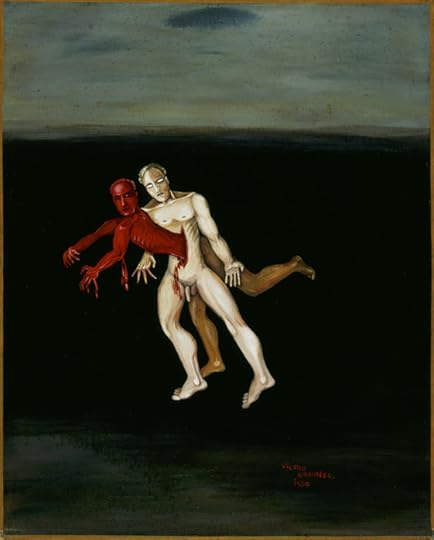
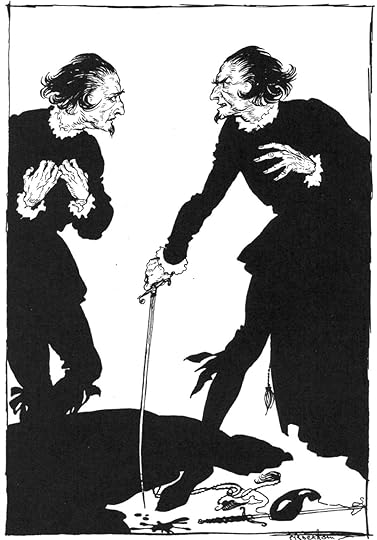
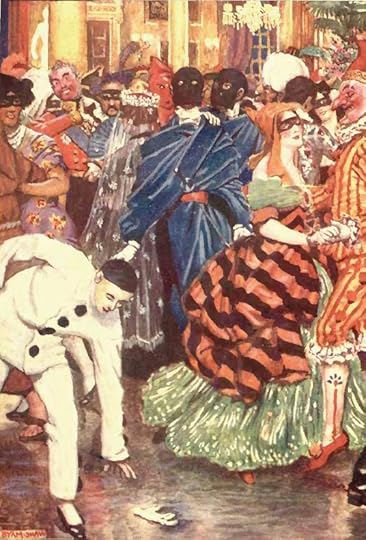
Poe's Gothic and dark-academiaesque short story “William Wilson” is a character study of the themes of “the doppelgänger” and “the double”, which, actually anticipated the major theories developed by Sigmund Freud, the founder of psychoanalysis (beginning of 20th century, while Poe published “William Wilson” in the 1830's). Poe's notion of the rivalrous double predates Freud's concept of the repressed and unconscious alter ego and could even be analysed in connection to Derida's theory on “Hauntology”. Edgar Poe's focus in this Gothic short story lies on the alter ego, meaning the part of the self that haunts us against our will (across temporal and spatial boundaries), which is a psychological condition that he portrays through the manifestation of another body next to the one of the first-person narrator (called William Wilson). This “Other” is a look-alike and pretty much identical copy of our narrator William Wilson and even shares his name, birthday date and so on. Suspicious... Am I right ;) While they are basically 1:1 the same visually speaking, their manners are quite different from one another: the actual William Wilson is hot-tempered and participates in dubious morally-corrupting activities, while this “Other” can almost be seen as the “voice of reason” who gives him (unsolicited) advice, which I, personally, interpret as the corporeal manifestation of his inner self and moral compass.
Honestly, this was probably my favourite short story of Poe so far... Very thought-provoking and captivating reading experience with a strong and striking ending: “[H]enceforward art thou also dead — dead to the World, to Heaven and to Hope! In me didst thou exist…”