

What do you think?

Hungry Ghosts: Mao’s Secret Famine
In the late 1950s and early 1960s, the Chinese people suffered what may have been the worst famine in history. Over thirty million perished in a grain shortage brought on not by flood, drought, or infestation, but by the insanely irresponsible dictates of Chairman Mao Zedong's "Great Leap Forward," an attempt at utopian engineering gone horribly wrong. Journalist Jasper Becker conducted hundreds of interviews and spent years immersed in painstaking detective work to produce Hungry Ghosts, the first full account of this dark chapter in Chinese history. In this horrific story of state-sponsored terror, cannibalism, torture, and murder. China's communist leadership boasted of record harvests and actually increased grain exports, while refusing imports and international assistance. As reviewer Richard Bernstein wrote in the New York Times, "Mr. Becker's remarkable book...strikes a heavy blow against willed ignorance of what took place."
About the Author
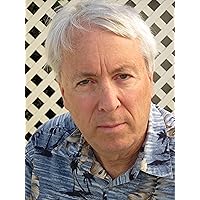
Jasper Becker worked in China as a correspondent for 18 years and is the author of 10 books on Asia.
About the Author
Jasper Becker worked in China as a correspondent for 18 years and is the author of 10 books on Asia.
452 pages, Kindle Edition
First published June 13, 1996
About the author
Jasper Becker
11 books29 followers Jasper Becker is a British journalist who spent 30 years covering Asia including 18 years living in Beijing. His reporting on uprisings, refugees and famine in China, Tibet and North Korea garnered him many awards and he is a popular speaker and commentator on current events in Asia. He now lives in England and has just finished his tenth book, tentatively called The Fatal Flaw. Earlier books such as Travels in an Untamed Land, Hungry Ghosts or Rogue Regime had described the devastating impact of Communism on the peoples of Mongolia, China and North Korea. In City of Heavenly Tranquility, he laments the destruction of old Peking and the building of the new Beijing while The Chinese and Dragon Rising set out to portray the different sides of contemporary China. In Hungry Ghosts, the author had exposed for the first time the true madness and horrors of Mao’s secret famine during the Great Leap Forward. The new work digs into the flawed economic theories which lay behind Communism’s collapse and describes the economic theorists who got it right and the Western economists who believed the bogus statistics put out by Moscow and Beijing. He has also researched family histories of the early Shanghai capitalists who became textile magnates in Hong Kong. Under the pen name Jack MacLean, he has published an engrossing thriller set amid the drone wars in Pakistan and Afghanistan called Global Predator. Four of his earlier books on Asia have just been updated and re-released as kindle books.
Ratings & Reviews
Friends & Following
Create a free account to discover what your friends think of this book!
Community Reviews
Displaying 1 - 30 of 75 reviews

July 6, 2013
Malthusian Catastrophe
"The power of population is so superior to the power of the earth to produce subsistence for man, that premature death must in some shape or other visit the human race. The vices of mankind are active and able ministers of depopulation. They are the precursors in the great army of destruction, and often finish the dreadful work themselves. But should they fail in this war of extermination, sickly seasons, epidemics, pestilence, and plague advance in terrific array, and sweep off their thousands and tens of thousands. Should success be still incomplete, gigantic inevitable famine stalks in the rear, and with one mighty blow levels the population with the food of the world."
Thomas Malthus, "An Essay on the Principle of Population" (1798)
Preamble
I would like to assess the intellectual honesty of this book when I read it.
It is difficult to fathom the horror of a famine in which between 15 and 43 million people might have perished.
It is clear that the ideological goal of collectivisation had some, perhaps a significant or even dominant, role in the famine and the severity of the loss of life.
However, is it credible to suggest that this is the only reason for both?
Even the Wiki article makes the following statement:
"The great Chinese famine was caused by social pressure, economic mismanagement, and radical changes in agriculture."
Elsewhere, Wiki states that, "between 108 BC and 1911 AD, there were no fewer than 1828 famines in China, or one nearly every year in one province or another."
Collectively over four major famines during the nineteenth century (pre-Communism), over 40 million peasants lost their lives.
The scale of human loss is unfathomable.
I don't wish to excuse anything the Chinese Government did.
However, I do want to understand the extent to which natural causes contributed to the disaster and the loss of life.
What would have occurred if any natural famine of these proportions had occurred under a feudal or capitalist regime? What would the loss of life have been?
I read one article that suggested that there are now 800M "peasants" in China (I assume that this means agricultural workers and their families).
What would the fate of these people be, if a famine of similar proportions occurred now?
In January 2013, the Chinese Government stated that the population of China was 1,354,040,000. (This is over four times the population of the USA, which is about 314M.)
How do you logistically guarantee that 800M workers, let alone 1.354BN people, get between one and three meals per day, whether or not there are famine conditions?
How would the world deal with a repetition of this level of famine if it occurred today?
What level of stockpiles of rice and other grains does the world currently have? How long would it take to mobilise them? How long would they last? What would be the impact on other famines that might occur within the foreseeable future?
What is the potential for more and worse famines in the context of global warming? What fertiliser use is necessary to sustain the fertility of farm land, so that it can feed people?
Who can we go to for answers?
I know who we can't go to. When I asked just a few of these questions in a thread on a GR review, the reviewer deleted my posts and unfriended me.
It's not fair to attribute the motives of a reviewer to the author of this book.
However, I would like to see some intellectual honesty in this field of food politics.
Mao-bashing might be all the rage, and he might have deserved to be bashed. However, if it's all about selling books and propping up ideologies (whether Left or Right), I think the world deserves better.
I've put down these notes to remind me of my questions. I don't question the right of a reviewer to delete comments in a GR thread. However, it is an act of censorship and can be used to stifle debate and the free flow of information and opinion.
Towards a Methodology for Determining Historical Causation
Whether 15 or 43 million people died in the Great Famine, many historians and writers wish to allocate blame for the loss of life to Mao and his Government, some of them exclusive blame, as if natural causes made no contribution.
How can the cause be determined? What methodologies are available? Are they arbitrary, biased or opinionated? Are they scientific?
Causation is a concept of both science and philosophy. However, it is also a vital element of the law, particularly the law of negligence.
The Choice of Framework
Before I suggest a methodology, I'd like to suggest a framework within which the methodology might be used.
In order to do so, I'd like to treat the historical inquiry as analogous to a legal or judicial inquiry.
The French judicial system uses an "inquisitorial system", under which the Judge takes an active role in investigating and determining the facts. In a way, this makes the Judge responsible for both the investigation and the judgement.
In contrast, many other judicial systems use an "adversarial system", under which the Judge presides over two or more advocates who might submit different facts or interpretations of the facts to the Judge for determination. It is expected that the advocates might be partial, but it is expected that the Judge's decision will be impartial.
An historian or author writing a book on the Great Famine might purport to be an impartial Judge of the facts. However, as far as a reader is concerned, they are choosing the evidence to submit to us and ultimately asking us to make up our mind or, at the very least, to agree with their decision. To the extent that they might make a decision, then we might be placed in the position of a Court of Appeal.
Either way, I think the typical role of an historian is more an inquisitorial role than that of a Judge presiding over two or more adversary advocates.
I think that the truth with respect to the Great Famine can only be determined by an adversarial process, whereby the competing facts and interpretations can be submitted as persuasively as possible by partial advocates whose credibility is assessed by an impartial judicial process.
The Methodology
The law of negligence has to determine whether a person was legally responsible for the injury or damage suffered by another person.
I say "legally" in order to differentiate from mere "factual" responsibility. Not all factual causation will result in a legal liability.
However, I think that the tests used by the law of negligence are useful tests to determine historical causation, because both are or should be concerned with determining the truth.
The Wrong
To start with, there must be a wrong, the death or injury.
The dispute as to whether there were 15 or 30 or 43 million dead is neither here nor there in the context of causation. We are concerned with the cause, not the number.
The Chinese Government only has itself to blame if its statistics are wrong. Either they were erroneous or deliberately misleading.
The Duty of Care
The second step is to determine whether there was a duty of care.
Having established that there was, the process will then attempt to establish that a breach of that duty of care caused the wrong.
It's possible that there could be a dispute about the nature of the duty of care. However, in this context, it really comes down to the duty of a government to ensure that its people are adequately fed.
Here, the duty might differ between capitalist nations and communist nations.
Arguably, a Capitalist Government has no moral obligation to feed its own people. The people must be fed as a result of their own effort or by social security benefits.
In contrast, a Communist Government is by definition a command economy that assumes responsibility for the welfare of its people.
Personally, I don't think that Mao's Government could escape liability on this ground, although you might disagree.
A Breach of the Duty of Care
This element is concerned with establishing a fault in some way. It is not yet concerned with causation, because that is the next element in the process.
In a way, the questions are: what did the Government do (in which case its actions might have been wrong); and what did it not do (in which case its inaction or failure to act might have been wrong)?
Let's assume that x million tons of rice was required to feed the entire population of China at the time.
If that amount was produced, then it was adequate to avoid death by starvation, unless it was not distributed adequately.
As far as I am aware, most of the deaths are alleged to have been peasants who lived and worked in the areas where the rice was grown.
Therefore, the argument must imply that the rice was improperly removed from the area in which it was grown and improperly distributed somewhere else.
If on the other hand we assume that there was an underproduction (one suggestion is that the Great Famine involved a 20% under-supply), then the question becomes one of how a command economy should deal with an under-supply.
Should everybody get 20% less? Should 20% of the population get nothing and the rest their full quota? Who should make the decision?
You can see that the underproduction creates a new administrative challenge: how to deal with a lesser product. Who misses out?
However, whatever decision is made (whether fair or not), has ceased to be the sole cause of the Great Famine and is now a response to another cause (i.e., the natural cause that reduced the production by 20%).
We now have multiple contributory causes.
With more than one cause, we have now entered the arena of apportionment of blame or assessment of the relative causes.
Causation
If 100% of the required production occurred, any deaths would presumably have been a result of the administrative decisions with respect to distribution.
Natural causes could not have been a substantive cause.
However, if under-production occurred, then we have to assess multiple causes.
It has to be asked how a capitalist economy would have dealt with a similar challenge.
Could a government have temporarily overridden the normal operation of supply and demand factors, and resulted in adequacy for all?
Who would have paid for the operation? Would this operation effectively have constituted an internal aid program? Would the government have temporarily adopted a collectivist facade? Would increased taxes have been necessary? Would there have been adequate existing reserves? How quickly could these funds have been accessed?
If we return to China and assume that it was not an international pariah state, could it have accessed international aid programs? Did the rest of the world know about the Great Famine? Was it requested to give aid? Did it refuse to grant aid? Did such a refusal contribute to the deaths?
One of the colloquial explanations of the cause of the rice shortages was that local authorities committed to supply, say, one million tonnes of rice to the central authorities. In effect, the suggestion is that they were over-promising their capacity to supply. If they had grown two million tonnes, they could have retained one million tonnes. However, if their total production was one million tonnes and they satisfied their obligation to supply this amount, none would have been available for local consumption.
What has really occurred here? If two million tonnes was required as a contribution to the entire economy, then there has been an under-production, presumably as a result of natural causes.
If a below budgeted production in a capitalist economy had occurred in similar circumstances, who would have been blamed? Is blame appropriate? Would everybody have agreed that the underlying cause was a natural cause.
The temptation with respect to a command economy is to assume that every failure is a failure of command.
Therefore, the Government is to blame.
On the other hand, in a capitalist economy, the responsibility for a parallel under-production would not have been attributed to the Government or any other participant in the economy, let alone the "invisible hand" of the market.
I suspect that the reality is that there were multiple causes of the Great Famine.
Responsibility therefore comes down to an assessment of relative contributions within the particular economy (command or otherwise).
However, to be fair, it also has to be asked how another economy (i.e., a capitalist, non-command economy) would have dealt with a parallel problem.
Prevention is Better than Cure
I don't think it is sufficient to address these historical issues on the basis of oral histories that state in the most eloquently crafted and quotable metaphors that Mao grew fat in Beijing, while 43 million peasants died in the countryside.
As with any question of fault in public administration, the purpose is not so much to punish past breaches, but to design systems that avoid future breaches.
To approach the issue with an ideologically-determined bias, to allow a partial Judge to preside over an inquisitorial process, is to hide the truth and risk repetition of a natural disaster or poor administration, whatever the original fault.
The reality is that sensible public policy and administration must occur under any system of government. The principles upon which these decisions are formed must be taught and learned, as far as possible, in a non-ideological manner.
To the extent that all public policy depends on history, it's the role of history to develop an honest methodology of determining causation.
If history fails us, all manner of governments will fail us.
"The power of population is so superior to the power of the earth to produce subsistence for man, that premature death must in some shape or other visit the human race. The vices of mankind are active and able ministers of depopulation. They are the precursors in the great army of destruction, and often finish the dreadful work themselves. But should they fail in this war of extermination, sickly seasons, epidemics, pestilence, and plague advance in terrific array, and sweep off their thousands and tens of thousands. Should success be still incomplete, gigantic inevitable famine stalks in the rear, and with one mighty blow levels the population with the food of the world."
Thomas Malthus, "An Essay on the Principle of Population" (1798)
Preamble
I would like to assess the intellectual honesty of this book when I read it.
It is difficult to fathom the horror of a famine in which between 15 and 43 million people might have perished.
It is clear that the ideological goal of collectivisation had some, perhaps a significant or even dominant, role in the famine and the severity of the loss of life.
However, is it credible to suggest that this is the only reason for both?
Even the Wiki article makes the following statement:
"The great Chinese famine was caused by social pressure, economic mismanagement, and radical changes in agriculture."
Elsewhere, Wiki states that, "between 108 BC and 1911 AD, there were no fewer than 1828 famines in China, or one nearly every year in one province or another."
Collectively over four major famines during the nineteenth century (pre-Communism), over 40 million peasants lost their lives.
The scale of human loss is unfathomable.
I don't wish to excuse anything the Chinese Government did.
However, I do want to understand the extent to which natural causes contributed to the disaster and the loss of life.
What would have occurred if any natural famine of these proportions had occurred under a feudal or capitalist regime? What would the loss of life have been?
I read one article that suggested that there are now 800M "peasants" in China (I assume that this means agricultural workers and their families).
What would the fate of these people be, if a famine of similar proportions occurred now?
In January 2013, the Chinese Government stated that the population of China was 1,354,040,000. (This is over four times the population of the USA, which is about 314M.)
How do you logistically guarantee that 800M workers, let alone 1.354BN people, get between one and three meals per day, whether or not there are famine conditions?
How would the world deal with a repetition of this level of famine if it occurred today?
What level of stockpiles of rice and other grains does the world currently have? How long would it take to mobilise them? How long would they last? What would be the impact on other famines that might occur within the foreseeable future?
What is the potential for more and worse famines in the context of global warming? What fertiliser use is necessary to sustain the fertility of farm land, so that it can feed people?
Who can we go to for answers?
I know who we can't go to. When I asked just a few of these questions in a thread on a GR review, the reviewer deleted my posts and unfriended me.
It's not fair to attribute the motives of a reviewer to the author of this book.
However, I would like to see some intellectual honesty in this field of food politics.
Mao-bashing might be all the rage, and he might have deserved to be bashed. However, if it's all about selling books and propping up ideologies (whether Left or Right), I think the world deserves better.
I've put down these notes to remind me of my questions. I don't question the right of a reviewer to delete comments in a GR thread. However, it is an act of censorship and can be used to stifle debate and the free flow of information and opinion.
Towards a Methodology for Determining Historical Causation
Whether 15 or 43 million people died in the Great Famine, many historians and writers wish to allocate blame for the loss of life to Mao and his Government, some of them exclusive blame, as if natural causes made no contribution.
How can the cause be determined? What methodologies are available? Are they arbitrary, biased or opinionated? Are they scientific?
Causation is a concept of both science and philosophy. However, it is also a vital element of the law, particularly the law of negligence.
The Choice of Framework
Before I suggest a methodology, I'd like to suggest a framework within which the methodology might be used.
In order to do so, I'd like to treat the historical inquiry as analogous to a legal or judicial inquiry.
The French judicial system uses an "inquisitorial system", under which the Judge takes an active role in investigating and determining the facts. In a way, this makes the Judge responsible for both the investigation and the judgement.
In contrast, many other judicial systems use an "adversarial system", under which the Judge presides over two or more advocates who might submit different facts or interpretations of the facts to the Judge for determination. It is expected that the advocates might be partial, but it is expected that the Judge's decision will be impartial.
An historian or author writing a book on the Great Famine might purport to be an impartial Judge of the facts. However, as far as a reader is concerned, they are choosing the evidence to submit to us and ultimately asking us to make up our mind or, at the very least, to agree with their decision. To the extent that they might make a decision, then we might be placed in the position of a Court of Appeal.
Either way, I think the typical role of an historian is more an inquisitorial role than that of a Judge presiding over two or more adversary advocates.
I think that the truth with respect to the Great Famine can only be determined by an adversarial process, whereby the competing facts and interpretations can be submitted as persuasively as possible by partial advocates whose credibility is assessed by an impartial judicial process.
The Methodology
The law of negligence has to determine whether a person was legally responsible for the injury or damage suffered by another person.
I say "legally" in order to differentiate from mere "factual" responsibility. Not all factual causation will result in a legal liability.
However, I think that the tests used by the law of negligence are useful tests to determine historical causation, because both are or should be concerned with determining the truth.
The Wrong
To start with, there must be a wrong, the death or injury.
The dispute as to whether there were 15 or 30 or 43 million dead is neither here nor there in the context of causation. We are concerned with the cause, not the number.
The Chinese Government only has itself to blame if its statistics are wrong. Either they were erroneous or deliberately misleading.
The Duty of Care
The second step is to determine whether there was a duty of care.
Having established that there was, the process will then attempt to establish that a breach of that duty of care caused the wrong.
It's possible that there could be a dispute about the nature of the duty of care. However, in this context, it really comes down to the duty of a government to ensure that its people are adequately fed.
Here, the duty might differ between capitalist nations and communist nations.
Arguably, a Capitalist Government has no moral obligation to feed its own people. The people must be fed as a result of their own effort or by social security benefits.
In contrast, a Communist Government is by definition a command economy that assumes responsibility for the welfare of its people.
Personally, I don't think that Mao's Government could escape liability on this ground, although you might disagree.
A Breach of the Duty of Care
This element is concerned with establishing a fault in some way. It is not yet concerned with causation, because that is the next element in the process.
In a way, the questions are: what did the Government do (in which case its actions might have been wrong); and what did it not do (in which case its inaction or failure to act might have been wrong)?
Let's assume that x million tons of rice was required to feed the entire population of China at the time.
If that amount was produced, then it was adequate to avoid death by starvation, unless it was not distributed adequately.
As far as I am aware, most of the deaths are alleged to have been peasants who lived and worked in the areas where the rice was grown.
Therefore, the argument must imply that the rice was improperly removed from the area in which it was grown and improperly distributed somewhere else.
If on the other hand we assume that there was an underproduction (one suggestion is that the Great Famine involved a 20% under-supply), then the question becomes one of how a command economy should deal with an under-supply.
Should everybody get 20% less? Should 20% of the population get nothing and the rest their full quota? Who should make the decision?
You can see that the underproduction creates a new administrative challenge: how to deal with a lesser product. Who misses out?
However, whatever decision is made (whether fair or not), has ceased to be the sole cause of the Great Famine and is now a response to another cause (i.e., the natural cause that reduced the production by 20%).
We now have multiple contributory causes.
With more than one cause, we have now entered the arena of apportionment of blame or assessment of the relative causes.
Causation
If 100% of the required production occurred, any deaths would presumably have been a result of the administrative decisions with respect to distribution.
Natural causes could not have been a substantive cause.
However, if under-production occurred, then we have to assess multiple causes.
It has to be asked how a capitalist economy would have dealt with a similar challenge.
Could a government have temporarily overridden the normal operation of supply and demand factors, and resulted in adequacy for all?
Who would have paid for the operation? Would this operation effectively have constituted an internal aid program? Would the government have temporarily adopted a collectivist facade? Would increased taxes have been necessary? Would there have been adequate existing reserves? How quickly could these funds have been accessed?
If we return to China and assume that it was not an international pariah state, could it have accessed international aid programs? Did the rest of the world know about the Great Famine? Was it requested to give aid? Did it refuse to grant aid? Did such a refusal contribute to the deaths?
One of the colloquial explanations of the cause of the rice shortages was that local authorities committed to supply, say, one million tonnes of rice to the central authorities. In effect, the suggestion is that they were over-promising their capacity to supply. If they had grown two million tonnes, they could have retained one million tonnes. However, if their total production was one million tonnes and they satisfied their obligation to supply this amount, none would have been available for local consumption.
What has really occurred here? If two million tonnes was required as a contribution to the entire economy, then there has been an under-production, presumably as a result of natural causes.
If a below budgeted production in a capitalist economy had occurred in similar circumstances, who would have been blamed? Is blame appropriate? Would everybody have agreed that the underlying cause was a natural cause.
The temptation with respect to a command economy is to assume that every failure is a failure of command.
Therefore, the Government is to blame.
On the other hand, in a capitalist economy, the responsibility for a parallel under-production would not have been attributed to the Government or any other participant in the economy, let alone the "invisible hand" of the market.
I suspect that the reality is that there were multiple causes of the Great Famine.
Responsibility therefore comes down to an assessment of relative contributions within the particular economy (command or otherwise).
However, to be fair, it also has to be asked how another economy (i.e., a capitalist, non-command economy) would have dealt with a parallel problem.
Prevention is Better than Cure
I don't think it is sufficient to address these historical issues on the basis of oral histories that state in the most eloquently crafted and quotable metaphors that Mao grew fat in Beijing, while 43 million peasants died in the countryside.
As with any question of fault in public administration, the purpose is not so much to punish past breaches, but to design systems that avoid future breaches.
To approach the issue with an ideologically-determined bias, to allow a partial Judge to preside over an inquisitorial process, is to hide the truth and risk repetition of a natural disaster or poor administration, whatever the original fault.
The reality is that sensible public policy and administration must occur under any system of government. The principles upon which these decisions are formed must be taught and learned, as far as possible, in a non-ideological manner.
To the extent that all public policy depends on history, it's the role of history to develop an honest methodology of determining causation.
If history fails us, all manner of governments will fail us.

February 14, 2012
Mao said that the peasant who owned his own land was inherently capitalistic, and he forced four hundred million Chinese peasants to join collective farms. Khrushchev counseled Mao not to repeat Stalin’s mistake of rushing into collectivization too quickly, but Mao ignored his advice. Mao named his next step in the collectivization of agriculture “The Great Leap Forward” after the German philosopher Hegel’s assertion that progress comes in sudden leaps and bounds. In 1958 peasants replaced scientists in the practice of agricultural research, and the real scientists were sent to prison, or to the fields to do manual labor. The Communists said that the intuition of the peasants and the fervor of party officials were better than the mathematics of bourgeois scientists. When the winter of 1958-59 arrived, the food began running out and people began starving. When Mao heard reports of famine, he refused to believe them, and instead accused the peasants of lying and hiding grain. The Communists went around the countryside beating peasants for the imaginary crime of hiding grain. At a Communist Party meeting during the summer of 1959 Peng Dehuai spoke out against the Great Leap Forward, stating that it was responsible for creating a famine. He was put under house arrest. Mao then instituted a purge of officials who criticized the Great Leap Forward. During the Great Leap Forward, foreign journalists and diplomats were restricted to the cities, so they could not obtain any first-hand knowledge of what was happening in the countryside. The French Socialist politician Françoise Mitterand was given a three-week guided tour of China in 1961 and came back proclaiming that there was no famine and that Mao was a humanist, not a dictator. The famine was brought to an end in 1962, when Mao's more moderate political opponents managed to grab power away from him. Mao blamed the famine on bad weather, but the weather during the famine was no worse than usual. Reliable estimates for the number of people who died because of the Great Leap Forward vary between 30 and 48 million. The Great Leap Forward is a prime example of utopian thinking needing a reality check.
October 21, 2009
Jasper Becker in Hungry Ghosts: "North Korea seems in the grip of a death-cult psychosis that leaves it impervious to rational notions of self-interest" (339).
Bruce Cumings on the kind of racism that is allowed to run free when talking about North Korea: "Prominent Americans lose any sense of embarrassment or self-consciousness about the intricate and knotty problems of racial difference and Otherness when it comes to North Korea and its leaders" (49).
I'm sure there are better books about the Great Leap Forward out there. The author doesn't even try to hide his pro-West, anti-Communist, orientalist biases.
Bruce Cumings on the kind of racism that is allowed to run free when talking about North Korea: "Prominent Americans lose any sense of embarrassment or self-consciousness about the intricate and knotty problems of racial difference and Otherness when it comes to North Korea and its leaders" (49).
I'm sure there are better books about the Great Leap Forward out there. The author doesn't even try to hide his pro-West, anti-Communist, orientalist biases.

June 17, 2015
One of the most compelling history books I've ever read, period. I'm a lover of history who recognizes that 90% of the books I read make most people fall to sleep - but with 'Hungry Ghosts', I recommend it even to those who typically would never pick up a history book at all.
The modern and recent scholarship of 'Hungry Ghosts' provides a perspective on Maoist China which has only recently been revealed. After reading this book, I must seriously reconsider the conventional wisdom that "Hitler was the most evil historical actor of the 20th century." But its even more than that, though: the megalomania of Mao, and the wild, collective mass-delusion of hundreds of millions of ideologically brainwashed Chinese is truly breathtaking to read about; nothing short of astonishing, even in the context of a century that was filled with many instances of insane atrocities.
Read this book.
The modern and recent scholarship of 'Hungry Ghosts' provides a perspective on Maoist China which has only recently been revealed. After reading this book, I must seriously reconsider the conventional wisdom that "Hitler was the most evil historical actor of the 20th century." But its even more than that, though: the megalomania of Mao, and the wild, collective mass-delusion of hundreds of millions of ideologically brainwashed Chinese is truly breathtaking to read about; nothing short of astonishing, even in the context of a century that was filled with many instances of insane atrocities.
Read this book.

July 31, 2016
A horrifying and well-researched history of how Mao's "Great Leap Forward" became the worst famine in history, killing perhaps 30 million Chinese (1958 - 1960) -- it appears unlikely an exact fatality figure will ever be known. Which adds to the horror: that millions of people, with hopes and dreams like our own, could vanish without leaving a trace, not even a number, in the world outside their homes. Not to mention uncounted millions of children whose lives were blighted by brain-damage from malnutrition.
Becker concludes that Mao's Great Famine was more omission than commission (in contrast to Stalin's): Mao's absurd ideas of backyard industrialization, plus turning loose the Red Guards chaos, ruined the harvests. Then Communist Party officials simply denied the problem, and concocted elaborate coverups -- even painting the tree trunks to hide that the bark had been eaten by starving people -- when Mao or senior officials were to visit famine areas. And a smiling-peasants "Big Lie" for foreigners, which worked for years.
It's a remarkable (& depressing) account, highly recommended. Not for the faint of heart!
Becker concludes that Mao's Great Famine was more omission than commission (in contrast to Stalin's): Mao's absurd ideas of backyard industrialization, plus turning loose the Red Guards chaos, ruined the harvests. Then Communist Party officials simply denied the problem, and concocted elaborate coverups -- even painting the tree trunks to hide that the bark had been eaten by starving people -- when Mao or senior officials were to visit famine areas. And a smiling-peasants "Big Lie" for foreigners, which worked for years.
It's a remarkable (& depressing) account, highly recommended. Not for the faint of heart!

January 15, 2012
*I wrote this review over a year ago and found it in a notebook and realized I had never typed it out.
This book was fascinating, dark and heartbreaking. I found it almost impossible to read at times. It may be the most depressing book I have ever read, and it is true.
China has had alot of famines. The climate lends itself to droughts, flooding and crops being infested by insects. The difference with Mao's famine was that is was not inflicted by nature, but by man. Mao was evil, manipulative and brillant. He promised fairy tales and overnight prosperity. Instead he created the torture and deaths of over 30 million Chinese.
As I read this book, I had so many emotions. I felt anger, disgust, deep sadness, helplessness, and hunger. Yes, I actually felt hunger! All I could think about for weeks after finishing this book was how I NEVER want me or my family to have to experience true starvation. What a devastating era in the history of China.
This book was fascinating, dark and heartbreaking. I found it almost impossible to read at times. It may be the most depressing book I have ever read, and it is true.
China has had alot of famines. The climate lends itself to droughts, flooding and crops being infested by insects. The difference with Mao's famine was that is was not inflicted by nature, but by man. Mao was evil, manipulative and brillant. He promised fairy tales and overnight prosperity. Instead he created the torture and deaths of over 30 million Chinese.
As I read this book, I had so many emotions. I felt anger, disgust, deep sadness, helplessness, and hunger. Yes, I actually felt hunger! All I could think about for weeks after finishing this book was how I NEVER want me or my family to have to experience true starvation. What a devastating era in the history of China.

October 8, 2012
Excellent book to read along with Lisa See's Dreams Of Joy. This is a real account of what happened in China during Mao's reign. After I read Dreams of Joy, I wanted to know more about that time period and this explained the horror.

June 9, 2020
Marxist communism in all its gory horror. This is a fascinating and very readable account of Mao's Great Leap Forward and its aftermath, which cost ultimately tens of millions of lives. Starvation was used as the weapon of choice to destroy the landlords and aristocracy class, as well as to force the peasants to submit to Mao and idolize him without question, even as they were dying and Mao did not care.
The many descriptions of torture and the physical effects of starvation are very graphic, too graphic, I think. There is too much dwelling here on the things a body will do to survive. I don't mean these things didn't happen, but what is the purpose of describing starving political prisoners digging into horse manure looking for worms to eat.
Considering these events happened between 1958-65, there must currently be millions of survivors who endured these horrors firsthand, who are now in their 60s and 70s. They've had to live with these nightmares all their lives. When this book was written in the 90s, the author points out that it was illegal to mention the famine in China. It may still be, I don't know.
The many descriptions of torture and the physical effects of starvation are very graphic, too graphic, I think. There is too much dwelling here on the things a body will do to survive. I don't mean these things didn't happen, but what is the purpose of describing starving political prisoners digging into horse manure looking for worms to eat.
Considering these events happened between 1958-65, there must currently be millions of survivors who endured these horrors firsthand, who are now in their 60s and 70s. They've had to live with these nightmares all their lives. When this book was written in the 90s, the author points out that it was illegal to mention the famine in China. It may still be, I don't know.

December 10, 2012
"Hungry Ghosts" sets out to explain one of the greatest tragedies of the 20th century, and as a benefit, helps explain present-day China. Whether the specific numbers are accurate or whether Mao can be held personally responsible for the millions of starvation deaths is something that will be debated for years. However, books written about or by Ch'an monks who lived during that era support much of what Becker asserts (see George Crane's "Bones of the Master" as an example). After reading this, now I know my mother wasn't kidding me when she used to chide me for not eating my vegetables when she said "Don't you know there are starving people in China?"
"Hungry Ghosts" also provides insight into present day Communist Party behavior, particularly in the provinces. The recent AIDS epidemic in China is a good example. How is it local officials can round up thousands of villagers to collect their blood, using the same non-sterile needle on hundreds of people, without having any concern for the potential of blood-borne pathogens, let alone HIV? And then mix all that blood together, spin off the plasma, then re-inject the mixed blood back into the villagers! That is what is happening now in China, the birth of an AIDS epidemic that may put the one in Africa to shame.
Read "Hungry Ghosts" and you will see the same bureaucratic malfeasance at work today trying to deny an entire new generation of orphans being created -- not by famine as during the Great Leap Forward, but by an institutionalized silence over government initiated mass HIV infection.
Sadly, some things never change. China is making great strides economically, but the government is dragging its feet with meaningful reform.
"Hungry Ghosts" also provides insight into present day Communist Party behavior, particularly in the provinces. The recent AIDS epidemic in China is a good example. How is it local officials can round up thousands of villagers to collect their blood, using the same non-sterile needle on hundreds of people, without having any concern for the potential of blood-borne pathogens, let alone HIV? And then mix all that blood together, spin off the plasma, then re-inject the mixed blood back into the villagers! That is what is happening now in China, the birth of an AIDS epidemic that may put the one in Africa to shame.
Read "Hungry Ghosts" and you will see the same bureaucratic malfeasance at work today trying to deny an entire new generation of orphans being created -- not by famine as during the Great Leap Forward, but by an institutionalized silence over government initiated mass HIV infection.
Sadly, some things never change. China is making great strides economically, but the government is dragging its feet with meaningful reform.

August 22, 2019
One of the most tragic works of literature I have ever read. "The Great Leap Forward" is estimated to have produced 30 million deaths in China between 1958-1961. Jasper Becker invites readers into both the macro and the micro levels of analyzing this catastrophe. He discusses the cultural context of China, the personality of Mao Zedong, and how the famine came to happen. The chapters chronicling the anatomy and physiology of starvation are particularly insightful but rather sobering. Two conclusions stand out to me: 1) This famine was entirely preventable and only came about because of insane political policy. China exported grain and maintained full state-granaries while her citizens starved. 2) China's leaders failed to stand-up to Mao. The cowardice of Deng Xiaoping, Zhou Enlai, Liu Shaoqi, Chen Yun, and the Party's political elite cost the nation too many lives. Had these men courageously banded together and stood up to Mao, they could have saved millions of lives. Their silence was deafening, and they knew what was happening. Even respected Second Generation leaders such as Zhao Ziyang and Hu Yaobang knew and did nothing. These same men who heralded economic and political reform in the 1970s and 1980s were complict in aiding Mao by falsifying information and passing lies up and down the Party's internal communications structure.

May 12, 2020
Hard to read at times, but this book certainly gives some perspective on the dietary habits of people in China. For a country that has been only too familiar with the suffering brought on by natural and man-made famines over millennia, the 1959-62 famine was catastrophic, preventable and hidden from the world; and affected almost everyone living outside the major cities. Communist sympathisers would no doubt state that 'you can't make an omelette without breaking eggs!' But 40million is a lot of eggs to break!

October 9, 2008
The most depressing book I've ever read, but also the most shocking because a tragedy of such epic proportions is barely known in the western world and conveniently ignored in the eastern where the Chinese government was directly and knowingly responsible for the deaths of over 30 million of their own citizens during their efforts to implement the perfect Communist society during the late 1950s and 1960s.
July 14, 2013
An incredible story that few people in this country (or, apparently in China) know about. The chapter on cannibalism is hair-raising. Becker writes well, provides lots of ''in the trenches'' accounts as well as providing a narrative that unfolds in horrifying detail the evil that Mao perpetrated upon the peasants he had depended upon to bring him to power. Should be a part of every high school history class.

October 22, 2020
After the initial shocking narrative about starvation in China in the not-so-distant past, the book delves right into a fact-heavy discussion about Mao's propaganda machine that resonates pretty close to home. "My fields are growing grain faster than fields have ever grown..." Oh boy. So, while this was an interesting and informative read, it was also frightening. The writing became more and more dense as the book progressed, so I'm giving it 3 stars.

December 3, 2012
very good depiction of the cost of communism. so compelling and harrowing in it's illustration of the consequences of personality cults. reinforces the belief that humans are meant to have freedom of conscience about all.

January 13, 2014
Really interesting details on how a man made famine comes about, but can't help but wonder how the age/whiteness/outsider-ness of the author influences his perspective.

June 20, 2013
Being an account of the Great Leap Forward famine. Which means that it is, often enough, not pleasant reading. It is, however, thorough and extensive in detail.
It opens with an overview of famine in China, the Communist takeover and plans for the peasantry, and an account of the infamous Ukrainian famines, which he presents as the closest analogue to the Great Leap Forward.
It then goes through the collectivizations and the nonsense science that led to the famine. Ludicrous farming practices. The rejection of the notion of inherited traits as "fascist." Absurd claims of cross-breeding: tobacco with cotton to produce red cotton. Even when the cross-breeding was feasible, the results were not good; Chinese pigs, after cross-breeding with Soviet pigs that had larger litters, had the litters without having milk enough, so all the piglets died. Fantastical high claims of yields -- even in the famine, the government exported grain, and stored grain in places where it unquestionably rotted, uneaten.
Then into the famine itself. After an overview, it discusses the different conditions in various regions, and prison camps and cities, and the physical effects and the cannibalism that ensued. Some families, having decided to starve a daughter, would trade the corpse with a neighbor so they ate the neighbor's daughter rather than their own; the famine was particularly hard on girls, with his estimate being about a quarter of the victims, and telling how some villages had dozens of men who never married for the lack of women of the right age.
Mao's hearty resistance to the notion of famine, the cracking of his power that let some Communists act to stop the famine -- and the Cultural Revolution, which, he argues, was aiming precisely at those who stopped the famine and saved lives by the thousands. (He also argues that the Stalinist purges were targeted at those who stopped the Ukrainian famine. It's a good argument insofar as I can judge it.)
Oh, and here's an alternate history suggestion for any writer who wants to run with it: Taiwan heard enough to make them think of trying to invade, but they never managed to swing American support. Becker wrote that it might really have been possible. So, if they decided to forgo the American aid, or got it. .
It opens with an overview of famine in China, the Communist takeover and plans for the peasantry, and an account of the infamous Ukrainian famines, which he presents as the closest analogue to the Great Leap Forward.
It then goes through the collectivizations and the nonsense science that led to the famine. Ludicrous farming practices. The rejection of the notion of inherited traits as "fascist." Absurd claims of cross-breeding: tobacco with cotton to produce red cotton. Even when the cross-breeding was feasible, the results were not good; Chinese pigs, after cross-breeding with Soviet pigs that had larger litters, had the litters without having milk enough, so all the piglets died. Fantastical high claims of yields -- even in the famine, the government exported grain, and stored grain in places where it unquestionably rotted, uneaten.
Then into the famine itself. After an overview, it discusses the different conditions in various regions, and prison camps and cities, and the physical effects and the cannibalism that ensued. Some families, having decided to starve a daughter, would trade the corpse with a neighbor so they ate the neighbor's daughter rather than their own; the famine was particularly hard on girls, with his estimate being about a quarter of the victims, and telling how some villages had dozens of men who never married for the lack of women of the right age.
Mao's hearty resistance to the notion of famine, the cracking of his power that let some Communists act to stop the famine -- and the Cultural Revolution, which, he argues, was aiming precisely at those who stopped the famine and saved lives by the thousands. (He also argues that the Stalinist purges were targeted at those who stopped the Ukrainian famine. It's a good argument insofar as I can judge it.)
Oh, and here's an alternate history suggestion for any writer who wants to run with it: Taiwan heard enough to make them think of trying to invade, but they never managed to swing American support. Becker wrote that it might really have been possible. So, if they decided to forgo the American aid, or got it. .

March 5, 2015
Both essential and sickening. Must be read to understand the power of cult thought in politics to destroy the mind, soul, and body of the people. How can people allow themselves to be starved, beaten, raped, humiliated and de-humanized? How can leaders say they would rather a large percent of their population be starved to death as long as the remaining population remains loyal? How can an entire country willingly participate in the deceit that is killing them? Clearly, communism is a tragic, lethal fraud. Yet, humans continue to embrace it. One thing that really sickened me when reading this book is the idea that starvation and deprivation is fine if everyone is starving and suffering to the same degree. This seems to be an idea encouraged by the international aid community. It stuns me! This entire book stuns me. Then you realize that the famine in China is only a repeat of other famines in the Soviet Union and then replicated in Cambodia and Africa and North Korea. Yet the talking heads of the world get so much air time crying for communism and redistribution of wealth. The results are inevitable. The majority starve and become less- then human. The elite deny the suffering and produce elaborate sham stage craft for the willing world. There are many forms of cannibalism...many ways to consume human flesh. Please read this book.
May 6, 2026
Hungry Ghosts: Mao’s Secret Famine by Jasper Becker was a history of the devastation that plagued China over the four years of the Great Leap Forward, a nationwide initiative to boost agriculture and industry to unprecedented heights. Mao Tse-Tung, the Chairman of the Chinese Communist Party, wanted to develop agriculture by introducing modern industrialization to the fields. The focus of this book was how the mass collectivization of land and questionable farming policies led to the deaths of millions.
From 1958 to 1962 rural life was uprooted and people forced out of their homes, dispossessed of everything they owned. They worked around the clock to the point of exhaustion and collapse. In spite of the proven success of farming expertise passed down through generations from people who knew the land and how to care for it, the authorities made them adopt new techniques that promised miraculous yields.
It didn’t take long for the Great Leap to fall backward. By the end of 1958 the peasants were starving. Believing its own propaganda, the government expected the crops to deliver up to ten times what they produced in previous harvests, and they were determined to find it when it came time to collect. The crops didn’t even produce what they had in the past, much less doubling or trebling the output, because of the bogus Soviet Lysenko agricultural policies which seemed based more on witchcraft than actual science. The cult of Mao meant that no one was to doubt much less contradict him, so seed was wasted and soil bled dry. Some crops that did grow were left to rot, as Mao’s focus on mass industrialization removed the peasants from the fields and forced them into construction projects such as dam building and digging irrigation canals. No one could see the forest for the trees as they were all blindly focussed on Mao’s edicts and enforcing the policies of the Great Leap Forward–with no exceptions. Entire crop yields were taken, leaving the peasants with nothing. Fearing the peasants were hiding grain, as no one was producing the numbers expected of them, the government launched a campaign of terror, ransacking homes, tearing up floors, and removing anything that could serve as a substitute.
Before I read this book I was put off by the idea that Becker might be heavy on Chinese policy and the goings-on at government meetings. In other words, I hoped this book wasn’t going to quote official Chinese Communist Party minutes verbatim. This was an oversize paperback of 344 pages of dense text. In spite of the unappealing page layout I could not put this book down, reading it for hours at a time. Becker captured the overall sense of unquestioning devotion and cultlike fervour that possessed Mao’s cabinet. Mao was not the first Chinese megalomaniac, and the author delved into Chinese history to show how past dynasties and emperors elicited the same godlike power over their people. It was rare but some people in high places did alert Mao to the famine going on right under their noses. By exposing the contradictions to Mao’s official policies as catastrophic failures, these people were executed or exiled.
Becker did not sensationalize the repercussions of the famine, and let history speak for itself. As food dwindled people sought food substitutes: tree bark, leaves, grasses and roots. They even looked through animal feces for undigested grains. The greatest taboo, cannibalism, was widespread. Becker wrote a chapter on The Anatomy of Hunger, describing how the body reacts and shuts down when deprived of food for an extended period. What I learned from the Holodomor is that people in the most extreme cases of starvation won’t suddenly jump at the sight of food and gobble it all down. Their stomachs are unable to absorb anything and Becker wrote of people who, near death, did in fact die after eating their first solid food in weeks. This explains why those who are being treated for starvation need IV hookups and not steaming plate after plate of dinner. I read the chapters on the decimation of some entire villages with such profound sadness. Families derived hierarchies of death, saving whatever was edible for the strong and leaving the children and elderly to die. Thirty million died, at least. Although I wrote that I could not put this book down, when I had to stop reading for the day I did so each time with a heavy heart. I can’t recall a book that has ever left me with such a sense of depression.
February 9, 2011
Somehow I've been reading this mostly at lunch. Well researched, covers the Great Leap Forward and the deadliest famine in recorded history, with estimates ranging from 30-80million Chinese starved, killed, or not born as a result of Mao's vainglorious policies. Also examines the roots of the Cultural Revolution within the Great Leap Forward and examines reasons why the former is well-documented while the latter remains shrouded in secrecy to an extent that many still deny it ever happened.
Also makes me think about something Dr. Pease said the last time we met, when I expressed some admittedly elitist views about preferring to practice my Chinese speaking with educated people in cities. These same people were and to a frightening extent still are fairly ignorant about the humanitarian disaster happening right outside their little bubbles - perhaps it does behoove one to "go down to the countryside and learn from the peasantry." On a related note, the people of Guishandao were relocated by the Taiwan government to the town of Daxi, which is a few train stops up the beach from my beach house. That Dr. Pease...
Also makes me think about something Dr. Pease said the last time we met, when I expressed some admittedly elitist views about preferring to practice my Chinese speaking with educated people in cities. These same people were and to a frightening extent still are fairly ignorant about the humanitarian disaster happening right outside their little bubbles - perhaps it does behoove one to "go down to the countryside and learn from the peasantry." On a related note, the people of Guishandao were relocated by the Taiwan government to the town of Daxi, which is a few train stops up the beach from my beach house. That Dr. Pease...

December 30, 2011
Apparently this was the first book (in English) to chronicle what really happened during the Great Leap Forward in China (1958-1962), when 45 million people died during a time of peace and without natural disasters.
Mao wanted to surpass the Soviet Union in all ways possible, including grain and steel output. So to show the USSR it meant business, China exported more grain to the Soviet Union than it could afford to give up. Peasants slaved in the fields to work miracles, and as a result grew so weak that the grain died, as did tens of millions of people.
The striking images in this book included how the peasants ate food 'substitutes', plus tree bark, feces, and worms. And then many turned to cannibalism. If this isn't shocking enough, the author writes how no one China talks about the Great Leap Forward (as opposed to the Cultural Revolution) and how for the first twenty years after it happened, no one (in China and outside) was really sure it had even happened.
I've been studying China for a good 27 years, but after reading this book, I've realized the more I read about China, the less I really know about it.
Mao wanted to surpass the Soviet Union in all ways possible, including grain and steel output. So to show the USSR it meant business, China exported more grain to the Soviet Union than it could afford to give up. Peasants slaved in the fields to work miracles, and as a result grew so weak that the grain died, as did tens of millions of people.
The striking images in this book included how the peasants ate food 'substitutes', plus tree bark, feces, and worms. And then many turned to cannibalism. If this isn't shocking enough, the author writes how no one China talks about the Great Leap Forward (as opposed to the Cultural Revolution) and how for the first twenty years after it happened, no one (in China and outside) was really sure it had even happened.
I've been studying China for a good 27 years, but after reading this book, I've realized the more I read about China, the less I really know about it.
March 7, 2015
Journalist Jasper Becker, formerly the Beijing Bureau chief for the South China Morning Post, reconstructs the history of Mao Zedong's Great Leap Forward (1958-61) and the resulting famine that devastated China in this historical work. Drawing on interviews with survivors and Communist Party officials, government documents, memoirs, and secondary literature, Becker provides a detailed, panoramic account that includes China's past experiences with famine; the collectivization of agriculture under the Communists; and how the famine unfolded among the peasantry of Henan and Anhui provinces, the Tibetans, city dwellers, and prisoners in labor camps.
Hungry Ghosts paints a chilling picture how a combination of crackpot, unscientific economic and agricultural theories and draconian production quotas deprived millions of Chinese of the food necessary to survive. Toward the end of the book, Becker analyzes various estimates of how many people died because of the Great Leap Forward: a very conservative estimate is 15 million; the real number might be much higher. Utterly horrifying.
Hungry Ghosts paints a chilling picture how a combination of crackpot, unscientific economic and agricultural theories and draconian production quotas deprived millions of Chinese of the food necessary to survive. Toward the end of the book, Becker analyzes various estimates of how many people died because of the Great Leap Forward: a very conservative estimate is 15 million; the real number might be much higher. Utterly horrifying.

September 25, 2008
This book was fascinating, dark, and heartbreaking ! If anyone has questions about whether Communism is a great idea, this should put that question to rest. Mao turned his country upside down, inside out, and truly perverted the truth beyond recognition with his great Communist agricultural projects. He collectivized private property and then used junk science to force on China agricultural practices and programs that most KNEW were disastrous to the growing of food. When the programs began to backfire and food was SCARCE, he nevertheless forged ahead with his ideas ... at one point he was exporting tons of food while his own people were starving by the millions just so that it would APPEAR that all was thriving in China. This is not an easy read.

May 19, 2020
Journalist historical recounting of the Great Leap Forward in China (1955-59). Lays out the ideological mindset, the political climate in Beijing, Mao's goals, and the great losses in the aftermath of the Leap. The first part of the book lays out a general overview and the perspective from Beijing, and Mao's reasons for thinking up the GLF. The second part of the book examines provincial officials' reactions to Beijing's directive and how central policy was carried out at the provincial level. A secondary theme of the book was to lay out how officials' attention to the center (Mao) affected their carrying out of policy down to the local level. Managing up, no or little concern for the extreme measures and taxation inflicted upon the Chinese people. A must read.

October 25, 2007
I really enjoy Becker's writings. This is probably one of the few books that I could say changed my life and it began my interest in studying modern Chinese history. Mao was both evil and incredibly manipulative, but nonetheless brilliant. I especially enjoyed the postword on North Korea and how they are going through the exact same thing as China did forty years ago. And we are doing nothing about it.

January 24, 2016
I really liked this book. It tells the story of Mao Zedong and what he did to China during his reign. Mao kept anybody outside of China in ignorance of what was happening in the horrific famine. His man-made famine is something very few people know about, even now. As my daughter said"How could something like that happen (45 million dead in 3 years) and I never learned about that in school?" This book will open your eyes.

August 24, 2008
The so-called "Great Leap Forward" brought unmitigated disaster on China and a great leap backward. Mao forced new farming methods on his people and ignored reports of starvation. The result: 12 million died, a greater toll than that of the Cultural Revolution. The breaks the myth that communism brough a better life for most Chinese.

June 27, 2016
I was excited to get this book, because we were not taught about this in school. What I felt was missing from this book is more eyewitness accounts itnto Mao secret famine. I felt it dragged onto too much about the politics, like the author was trying to distract from the fact that there were not enough eyewitness accounts to actually make this book interesting.

March 2, 2008
A book i read in college. I took so many Asian history classes because their history is astounding and long! I love it and this book captures a darker side of the history. Not for the weak hearted, but for the truth seekers and realists.
July 6, 2011
Someone is to blame for the death of 30 million Chinese. That someone is Mao Zedong. I've never read such an exhaustively researched compulsively readable historical account. Becker makes no bones about it - he calls Mao "the architect of the famine." Highly recommended.
Displaying 1 - 30 of 75 reviews