

What do you think?

Inamorata
American artist Joseph Hannigan and his alluring sister, Sophie, have arrived in enchanting nineteenth-century Venice with a single-minded goal. The twins, who have fled scandal in New York, are determined to break into Venice’s expatriate set and find a wealthy patron to support Joseph’s work.
But the enigmatic Hannigans are not the only ones with a secret agenda. Joseph’s talent soon attracts the attention of the magnificent Odilé Leon, a celebrated courtesan and muse who has inspired many artists to greatness. But her inspiration comes with a devastatingly steep price.
As Joseph falls under the courtesan’s spell, Sophie joins forces with Nicholas Dane, the one man who knows Odilé’s dark secret, and her sworn enemy. When the seductive muse offers Joseph the path to eternal fame, the twins must decide who to believe—and just how much they are willing to sacrifice for fame.
But the enigmatic Hannigans are not the only ones with a secret agenda. Joseph’s talent soon attracts the attention of the magnificent Odilé Leon, a celebrated courtesan and muse who has inspired many artists to greatness. But her inspiration comes with a devastatingly steep price.
As Joseph falls under the courtesan’s spell, Sophie joins forces with Nicholas Dane, the one man who knows Odilé’s dark secret, and her sworn enemy. When the seductive muse offers Joseph the path to eternal fame, the twins must decide who to believe—and just how much they are willing to sacrifice for fame.
420 pages, Paperback
First published August 1, 2014
About the author
Megan Chance
32 books780 followersLibrarian Note: There is more than one author in the GoodReads database with this name. See this thread for more information.
Megan Chance is the bestselling, critically acclaimed author of several novels. Booklist calls her writing “Provocative and haunting.” Her books have been chosen by Amazon's Book of the Month, Borders Original Voices and IndieNext. A former television news photographer with a BA from Western Washington University, Megan Chance lives in the Pacific Northwest with her husband. Visit her at www.meganchance.com
Megan Chance is the bestselling, critically acclaimed author of several novels. Booklist calls her writing “Provocative and haunting.” Her books have been chosen by Amazon's Book of the Month, Borders Original Voices and IndieNext. A former television news photographer with a BA from Western Washington University, Megan Chance lives in the Pacific Northwest with her husband. Visit her at www.meganchance.com
Ratings & Reviews
Friends & Following
Create a free account to discover what your friends think of this book!
Community Reviews
Displaying 1 - 30 of 451 reviews

July 17, 2014
Before I begin my review, I just want to put out there a warning for any potential readers; a warning I wish I had had myself when I realized what was going on in this book. There is a very VC Andrews'esque Flowers in the Attic relationship that exists between the two main characters, brother and sister twins Sophie and Joseph. I do find it fairly annoying that this wasn't hinted at in the description of the book; while I understand that no experience is off-limits when it comes to writing, this particular controversial subject is not something some readers may be looking for when looking for a potential read.
That being said...
What in the world did I just read???
That best describes the feeling I came away with when I finished this book. I struggled between giving it two stars for how much I actually enjoyed the story, and giving it 4-5 stars because the writing is so beautifully done. I varied between being so caught up in the story that I couldn't put it down and being so frustrated with how slow it was moving and how much I didn't really like the story that I considered walking away and leaving it unfinished. The ending, while (again) beautifully written, left me personally unsatisfied (but then, I'm a sucker for a good happy ending). I give Megan Chance props for writing something completely original; I've not ever come across a book that I can accurately compare to Inamorata as far as subject matter goes.
I was glad to be done with this novel when I got to the end; relived to be free of the darkness of the world she created and the strange relationship that existed between Sophie, Joseph and Nick. So while I commend Megan Chance on how well written the book is, it will definitely not be on my list of books to read again and it's not something I will recommend to any of my friends just because it left me feeling a little sordid, personally.
That being said...
What in the world did I just read???
That best describes the feeling I came away with when I finished this book. I struggled between giving it two stars for how much I actually enjoyed the story, and giving it 4-5 stars because the writing is so beautifully done. I varied between being so caught up in the story that I couldn't put it down and being so frustrated with how slow it was moving and how much I didn't really like the story that I considered walking away and leaving it unfinished. The ending, while (again) beautifully written, left me personally unsatisfied (but then, I'm a sucker for a good happy ending). I give Megan Chance props for writing something completely original; I've not ever come across a book that I can accurately compare to Inamorata as far as subject matter goes.
I was glad to be done with this novel when I got to the end; relived to be free of the darkness of the world she created and the strange relationship that existed between Sophie, Joseph and Nick. So while I commend Megan Chance on how well written the book is, it will definitely not be on my list of books to read again and it's not something I will recommend to any of my friends just because it left me feeling a little sordid, personally.

August 31, 2014
Through writing both vivid and beautiful, the ancient city of Venice is brought to life. I could almost feel the water of the canals lapping at my toes. Stars are likened to glitterdust scattered across the dark skies. See the cats with their twitching, taunting tails.
Twins Joseph and Sophie Hannigan have always known they are destined for something special. Each one enhances the other with his/her 'twinning charisma'. Joseph is a painter, Sophie is a storyteller.
The year is 1879 and artistically inclined young men are dropping like flies, death by suicide. Poets, musicians, and painters alike - their talent flares up and burns intensely, but all too briefly. One may say that an artist's muse is irreplaceable, but at what price?
This was a Kindle First offering. The writing was a dream, the story itself comes in second here.
Twins Joseph and Sophie Hannigan have always known they are destined for something special. Each one enhances the other with his/her 'twinning charisma'. Joseph is a painter, Sophie is a storyteller.
The year is 1879 and artistically inclined young men are dropping like flies, death by suicide. Poets, musicians, and painters alike - their talent flares up and burns intensely, but all too briefly. One may say that an artist's muse is irreplaceable, but at what price?
This was a Kindle First offering. The writing was a dream, the story itself comes in second here.

July 13, 2014
Breathtakingly Beautiful...
Warning: I absolutely adored this book, so unabashed gushing follows. For recommendation, skip to the end.
Chance writes incandescent prose that engages all five of my senses. I could see, feel, touch, taste and hear everything that the characters did in 19th century Venice. The book is so lush, beautiful, intricate, colorful and mysterious that I read at a snail's pace to prolong the experience. That has happened about ten times in my life after reading thousands of books.
In this novel you get to experience historical Venice through the eyes of a painter, a storyteller, a poet and a mysterious patron. All are markedly different, yet equally fascinating. Chance makes transitioning between characters easy, as they switch with chapter headings and her prose is effortless to read, so I had no trouble. Each was equally important to the story, which worked on the theme of universal balance.
The plot is amazingly complex and layered; populated by these four magnificent characters that all have significantly challenging backstories which color all of their individual actions and interactions. This is as much a historical tale with a paranormal flavor, as it is a mystery - as much about love of family and lover, as it is about artistic inspiration, and immortal works of art.
There is enough foreshadowing throughout the pages to make a veteran reader feel that they have this puzzle in the bag, and you would be only partially correct. Chance sets her reader's up. She gives you a small part, but leaves you in dire straits. While I thought I knew what was going to happen at the end of the story, I was thoroughly surprised by the final scenes and resolution, as well as the impact and consequences as evidenced by the epilogue.
This is when I wish they ranked things on a 100 point basis - not 5 barely discernible stars. This would get 95 points. If you equated this book to food, it would be a seven course French feast with vintage wine, served in a Venetian palace by a huge professional staff. All the diners would be of like mind, witty, humorous and delightful. Elegant, satisfying, beautiful, thrilling and wonderful...
I was completely immersed in Venice, and lost an entire night of sleep because I just didn't want to leave the beautiful, mysterious world that Chance created. I am an artist, so colors, textures, composition, shadows, how things appear all mean a lot to me. I can see every single scene of this book in my mind without effort because Chance is such a singular writer that it makes it so very simple. Most writers not so much, or not at all. Cinematic is a word that gets tossed around a lot, but that is only two senses: hearing and vision. Chance gets all five. I call it Imagovision™.
Bottom Line: If you are a good person, have a close family relationship, love your spouse, ever gotten a creative urge, been inspired by something beautiful, YOU NEED TO READ THIS BOOK NOW! Top Book of 2014 by far...
Warning: I absolutely adored this book, so unabashed gushing follows. For recommendation, skip to the end.
Chance writes incandescent prose that engages all five of my senses. I could see, feel, touch, taste and hear everything that the characters did in 19th century Venice. The book is so lush, beautiful, intricate, colorful and mysterious that I read at a snail's pace to prolong the experience. That has happened about ten times in my life after reading thousands of books.
In this novel you get to experience historical Venice through the eyes of a painter, a storyteller, a poet and a mysterious patron. All are markedly different, yet equally fascinating. Chance makes transitioning between characters easy, as they switch with chapter headings and her prose is effortless to read, so I had no trouble. Each was equally important to the story, which worked on the theme of universal balance.
The plot is amazingly complex and layered; populated by these four magnificent characters that all have significantly challenging backstories which color all of their individual actions and interactions. This is as much a historical tale with a paranormal flavor, as it is a mystery - as much about love of family and lover, as it is about artistic inspiration, and immortal works of art.
There is enough foreshadowing throughout the pages to make a veteran reader feel that they have this puzzle in the bag, and you would be only partially correct. Chance sets her reader's up. She gives you a small part, but leaves you in dire straits. While I thought I knew what was going to happen at the end of the story, I was thoroughly surprised by the final scenes and resolution, as well as the impact and consequences as evidenced by the epilogue.
This is when I wish they ranked things on a 100 point basis - not 5 barely discernible stars. This would get 95 points. If you equated this book to food, it would be a seven course French feast with vintage wine, served in a Venetian palace by a huge professional staff. All the diners would be of like mind, witty, humorous and delightful. Elegant, satisfying, beautiful, thrilling and wonderful...
I was completely immersed in Venice, and lost an entire night of sleep because I just didn't want to leave the beautiful, mysterious world that Chance created. I am an artist, so colors, textures, composition, shadows, how things appear all mean a lot to me. I can see every single scene of this book in my mind without effort because Chance is such a singular writer that it makes it so very simple. Most writers not so much, or not at all. Cinematic is a word that gets tossed around a lot, but that is only two senses: hearing and vision. Chance gets all five. I call it Imagovision™.
Bottom Line: If you are a good person, have a close family relationship, love your spouse, ever gotten a creative urge, been inspired by something beautiful, YOU NEED TO READ THIS BOOK NOW! Top Book of 2014 by far...

July 28, 2014
Feel the ambiance!
Although Inamorata has gotten mostly good reviews, I couldn’t help but peek at some of the bad ones. Some people said the book was boring or the writing was poor; others were too uptight to deal with the subject matter; and still others thought it was too long.
Here’s the thing: They are all wrong!
First, this is a well-written book. I’m a professional writer—I know. Megan Chance is a talented author, and she put a lot of work into Inamorata.
Second, ambiance is big part of this book. Some books get right to the point and head straight for the climax. With Inamorata, how the author makes you visualize and feel the scene are just as important as the story line. It’s like the difference between quickie sex and a long romantic night where you take your time. Both have their place, but one is definitely more memorable than the other. If you’re in the mood for a quickie, find another book. This is a book to savor.
Third, if you are the type of person who is easily upset by subject matter that isn’t prim and proper, you should also skip this book. But please, don’t blame Megan Chance for that. You should have at least scanned the book description before reading. It’s rude for any reader to downgrade a book simply because he/she didn’t have some idea what the book was about before diving in.
The bottom line is that this is an excellent book for anyone who enjoys a story with lots of depth and detail. But be aware that this book is somewhat confusing at the beginning. Each chapter spoon-feeds more background information to clarify why the characters are like they are. That’s part of the fun.
For me, I was torn on just how fast I should read it. I so enjoyed being immersed in 1879 Venice that I didn’t want to suck down the book too quickly. And when I was done, I wished I had taken just a bit more time. But how do you do that when you are eager to know how the story ends?
All in all, this was one of the best novels I’ve read in years. Bravo!
Marty Essen, author of Cool Creatures, Hot Planet: Exploring the Seven Continents
Although Inamorata has gotten mostly good reviews, I couldn’t help but peek at some of the bad ones. Some people said the book was boring or the writing was poor; others were too uptight to deal with the subject matter; and still others thought it was too long.
Here’s the thing: They are all wrong!
First, this is a well-written book. I’m a professional writer—I know. Megan Chance is a talented author, and she put a lot of work into Inamorata.
Second, ambiance is big part of this book. Some books get right to the point and head straight for the climax. With Inamorata, how the author makes you visualize and feel the scene are just as important as the story line. It’s like the difference between quickie sex and a long romantic night where you take your time. Both have their place, but one is definitely more memorable than the other. If you’re in the mood for a quickie, find another book. This is a book to savor.
Third, if you are the type of person who is easily upset by subject matter that isn’t prim and proper, you should also skip this book. But please, don’t blame Megan Chance for that. You should have at least scanned the book description before reading. It’s rude for any reader to downgrade a book simply because he/she didn’t have some idea what the book was about before diving in.
The bottom line is that this is an excellent book for anyone who enjoys a story with lots of depth and detail. But be aware that this book is somewhat confusing at the beginning. Each chapter spoon-feeds more background information to clarify why the characters are like they are. That’s part of the fun.
For me, I was torn on just how fast I should read it. I so enjoyed being immersed in 1879 Venice that I didn’t want to suck down the book too quickly. And when I was done, I wished I had taken just a bit more time. But how do you do that when you are eager to know how the story ends?
All in all, this was one of the best novels I’ve read in years. Bravo!
Marty Essen, author of Cool Creatures, Hot Planet: Exploring the Seven Continents

July 24, 2014
The fatal muse. She inspires artists to create sublime masterpieces, but drains away their life force in exchange, driving them to madness or an early grave. This archetype lies at the heart of Inamorata, a new paranormal tale by Megan Chance, who has previously written a number of historical fiction and romance novels.
Inamorata is set in a gorgeously rendered nineteenth-century Venice, a city long past its heyday, now crumbling picturesquely into ruin. The captivating Odilé Leon has taken up residence there in the hopes of finding a new genius to inspire. Nicholas Dane, once Odilé’s lover and now determined to destroy her, follows her there. Drawn into their orbit are beautiful American twins Joseph and Sophie Hannigan, whose troubled past has forged a more than fraternal bond between them.
You will be transported to this decadent Venice by Chance’s wonderful descriptions. I’ve always wanted to travel there, and Inamorata only fed that desire. You will smell the food and the canals, hear the sounds that bounce strangely through the fogs, see the rippling light that makes everything appear underwater or not quite real. The city is as seductive as the story that plays out within it.
As for that story, it’s a darkly intriguing look at love, art, and what one might be willing to sacrifice to create something truly great. It’s given additional emotional resonance by the characters, who are not always sympathetic but always complex and layered. The ending doesn’t go where I thought it would, and I was surprised by how affecting it was. There’s a dash of feminism, too, in that the story asks what muses themselves might want — both the supernatural Odilé and all her mortal “sisters” who’ve been placed on pedestals, but not seen for their inner selves, over the centuries.
Inamorata is not going to be for everyone. If you’re trying to decide whether you’ll like it, ask yourself this: How do you feel about Anne Rice? Her older stuff, that is. This is a similar mix of beautiful old cities, lonely immortals, transgressive sexuality, and lush languid prose. If that’s the kind of spell you like to fall under, Inamorata is your kind of book.
www.fantasyliterature.com
Inamorata is set in a gorgeously rendered nineteenth-century Venice, a city long past its heyday, now crumbling picturesquely into ruin. The captivating Odilé Leon has taken up residence there in the hopes of finding a new genius to inspire. Nicholas Dane, once Odilé’s lover and now determined to destroy her, follows her there. Drawn into their orbit are beautiful American twins Joseph and Sophie Hannigan, whose troubled past has forged a more than fraternal bond between them.
You will be transported to this decadent Venice by Chance’s wonderful descriptions. I’ve always wanted to travel there, and Inamorata only fed that desire. You will smell the food and the canals, hear the sounds that bounce strangely through the fogs, see the rippling light that makes everything appear underwater or not quite real. The city is as seductive as the story that plays out within it.
As for that story, it’s a darkly intriguing look at love, art, and what one might be willing to sacrifice to create something truly great. It’s given additional emotional resonance by the characters, who are not always sympathetic but always complex and layered. The ending doesn’t go where I thought it would, and I was surprised by how affecting it was. There’s a dash of feminism, too, in that the story asks what muses themselves might want — both the supernatural Odilé and all her mortal “sisters” who’ve been placed on pedestals, but not seen for their inner selves, over the centuries.
Inamorata is not going to be for everyone. If you’re trying to decide whether you’ll like it, ask yourself this: How do you feel about Anne Rice? Her older stuff, that is. This is a similar mix of beautiful old cities, lonely immortals, transgressive sexuality, and lush languid prose. If that’s the kind of spell you like to fall under, Inamorata is your kind of book.
www.fantasyliterature.com

Want to Read
July 24, 2014I have somewhat a bit of a huge twin fetish, so WANT.

September 12, 2014
Inamorata by Megan Chance is a 2014 Lake Union Publishing release.
A succubus is a female demon or supernatural entity in folklore (traced back to medieval legend) that appears in dreams and takes the form of a woman in order to seduce men, usually through sexual activity. The male counterpart is the incubus. Religious traditions hold that repeated sexual activity with a succubus may result in the deterioration of health or even death.
I chose this book as part of the kindle first reads program. It was vague on the genre classifications so if you see the historical fiction category listed, be aware this is a paranormal fantasy set in a historical era in time and set in Italy. Purist of historical fiction could get the wrong idea based on Amazon's listings.
So, now that I've cleared that up...
Sophie and Joseph are twins bonded very strongly together, all alone in the world with a small inheritance which is dangerously running low. Joseph is a talented artist but for the fame he so longs for he needs a sponsor. He and Sophie work on those with deep pockets by having Sophie flirt and seduce the men who could help Joseph achieve notoriety. After a horrible scandal in New York the siblings travel to enchanting Venice and insert themselves among the bohemian types and immediately meet a man named Nicholas Dane.
Nicholas was once an aspiring poet but an all consuming relationship with a woman calling herself Odile Leon, he lost all his talent. He soon realizes Odile has done this to many men over hundreds of years. A muse in the beginning, but she soon drains the men of their talent. She even admits to being the muse of John Keats and inspired the poem “Lamia”.
"Lamia" is a narrative poem written by English poet John Keats in 1820.[1]
The poem was written in 1819, and comes within Keats' most brilliant period - it was written soon after "La belle dame sans merci" and his odes on Melancholy, on Indolence, to a Grecian Urn and to a Nightingale and just before "Ode to Autumn". The poem tells how the god Hermes hears of a nymph who is more beautiful than all. Hermes, searching for the nymph, instead comes across a Lamia, trapped in the form of a serpent. She reveals the previously invisible nymph to him and in return he restores her human form. She goes to seek a youth of Corinth, Lycius, while Hermes and his nymph depart together into the woods. The relationship between Lycius and Lamia, however, is destroyed when the sage Apollonius reveals Lamia's true identity at their wedding feast, whereupon she seemingly disappears and Lycius dies of grief.
Nicholas is consumed with anger and bitterness and becomes obsessed with finding Odile once again and preventing her from feeding , killing and draining others of their talent. So, it is he finds himself involved with Joseph and Sophie in Venice. However, he could never imagine the fate that awaited him.
I must admit the book got off to a very slow start for me. It was not until the half way mark I began to really piece together where we were going and the suspense began to build. I have not read a book quite like this one. The Venice backdrop is so romantic which makes a stark contrast to the evil that Odile represents. The all consuming desire for fame and recognition will cause many to make a misstep, making the proverbial deal with the devil to achieve their goal. In this case Odile has gotten to the point of desperation as Nicholas has made good on his promise to keep her in check. But when Nicholas and Sophie began to fall in love, Nicholas loses his focus leaving the door wide open for Odile to do her worst and of course Joseph is the one she wants above all others- THE one she has waited for. However, Joseph is not like all the others. There is a strength he has that prevents him from truly bonding with the succubus- his bond with Sophie. Now, some might not like this bond so well as it has an implied unnaturalness to it. The siblings grew up in an abusive situation and have leaned on each other heavily making their relationship stronger than is normal. This could be very off putting to some readers.
True love which triumphs over evil, love that makes the ultimate sacrifice makes this story special. A tip of the hat to the author for weaving such a deep story which really did remind me of Anne Rice's vampire saga, just because of the style of writing and the type of historical backdrop that gave the story a lushness and made it very atmospheric. However, it may have been too ambitions of an undertaking. It was absorbing once the story really to moving and is certainly outside the box! I would recommend this novel to those who like a dark fantasy with paranormal elements in a historical setting. 3.5 rounded to 4
A succubus is a female demon or supernatural entity in folklore (traced back to medieval legend) that appears in dreams and takes the form of a woman in order to seduce men, usually through sexual activity. The male counterpart is the incubus. Religious traditions hold that repeated sexual activity with a succubus may result in the deterioration of health or even death.
I chose this book as part of the kindle first reads program. It was vague on the genre classifications so if you see the historical fiction category listed, be aware this is a paranormal fantasy set in a historical era in time and set in Italy. Purist of historical fiction could get the wrong idea based on Amazon's listings.
So, now that I've cleared that up...
Sophie and Joseph are twins bonded very strongly together, all alone in the world with a small inheritance which is dangerously running low. Joseph is a talented artist but for the fame he so longs for he needs a sponsor. He and Sophie work on those with deep pockets by having Sophie flirt and seduce the men who could help Joseph achieve notoriety. After a horrible scandal in New York the siblings travel to enchanting Venice and insert themselves among the bohemian types and immediately meet a man named Nicholas Dane.
Nicholas was once an aspiring poet but an all consuming relationship with a woman calling herself Odile Leon, he lost all his talent. He soon realizes Odile has done this to many men over hundreds of years. A muse in the beginning, but she soon drains the men of their talent. She even admits to being the muse of John Keats and inspired the poem “Lamia”.
"Lamia" is a narrative poem written by English poet John Keats in 1820.[1]
The poem was written in 1819, and comes within Keats' most brilliant period - it was written soon after "La belle dame sans merci" and his odes on Melancholy, on Indolence, to a Grecian Urn and to a Nightingale and just before "Ode to Autumn". The poem tells how the god Hermes hears of a nymph who is more beautiful than all. Hermes, searching for the nymph, instead comes across a Lamia, trapped in the form of a serpent. She reveals the previously invisible nymph to him and in return he restores her human form. She goes to seek a youth of Corinth, Lycius, while Hermes and his nymph depart together into the woods. The relationship between Lycius and Lamia, however, is destroyed when the sage Apollonius reveals Lamia's true identity at their wedding feast, whereupon she seemingly disappears and Lycius dies of grief.
Nicholas is consumed with anger and bitterness and becomes obsessed with finding Odile once again and preventing her from feeding , killing and draining others of their talent. So, it is he finds himself involved with Joseph and Sophie in Venice. However, he could never imagine the fate that awaited him.
I must admit the book got off to a very slow start for me. It was not until the half way mark I began to really piece together where we were going and the suspense began to build. I have not read a book quite like this one. The Venice backdrop is so romantic which makes a stark contrast to the evil that Odile represents. The all consuming desire for fame and recognition will cause many to make a misstep, making the proverbial deal with the devil to achieve their goal. In this case Odile has gotten to the point of desperation as Nicholas has made good on his promise to keep her in check. But when Nicholas and Sophie began to fall in love, Nicholas loses his focus leaving the door wide open for Odile to do her worst and of course Joseph is the one she wants above all others- THE one she has waited for. However, Joseph is not like all the others. There is a strength he has that prevents him from truly bonding with the succubus- his bond with Sophie. Now, some might not like this bond so well as it has an implied unnaturalness to it. The siblings grew up in an abusive situation and have leaned on each other heavily making their relationship stronger than is normal. This could be very off putting to some readers.
True love which triumphs over evil, love that makes the ultimate sacrifice makes this story special. A tip of the hat to the author for weaving such a deep story which really did remind me of Anne Rice's vampire saga, just because of the style of writing and the type of historical backdrop that gave the story a lushness and made it very atmospheric. However, it may have been too ambitions of an undertaking. It was absorbing once the story really to moving and is certainly outside the box! I would recommend this novel to those who like a dark fantasy with paranormal elements in a historical setting. 3.5 rounded to 4

July 9, 2014
I got fifty percent of the way through this book before I couldn't take it anymore, and my ability to stick with it that long is due primarily to the premise that involves a type of succubus/muse (a succumuse?) for the villainess. I hadn't seen this used before and the idea of someone who can both inspire and then suck out the talent (fatally) was an appealing idea for its lack of ubiquity in paranormal stuff. The problem with this book is simple. Ninety-five percent of it is "tell" and not "show." It has rotating first person POVs which does not help the pace. And constant reminiscences that only exacerbate the boredom with the massive amount of things told to us rather than experienced. And the brother/sister thing was a distraction. The Borgias and I expect Game of Thrones has already covered this and in more interesting ways. The slow reveal of what had happened to the twins was distracting and annoying not titillating and suspenseful.

August 13, 2016
Inamorata is a haunting and sensual quartet about desire and inspiration, love(r)s and muses, and the bonds between people that are so strong they skirt the bounds of madness, periodically spilling over the edge... but more rarely still, granting sanctuary and salvation.
Author Megan Chance has challenged herself to do justice to a story which is at once as timeless and focused as a tale of grand passion, need, art, and obsession must be; and as complex as the story of two artists (one who has lost everything and one with all before him), a demon, and a lost human girl who are all dangerously entwined should be. On the plane of psychology and the human heart, she has done a spectacular job. Rarely have I read a four-character piece in which each of the characters has a nuanced, essential, and unique relationship with each of the others, and a full portrait of any of the characters is only achieved by piecing together all off the perspectives. Far more decorated authors fail to do this, and Chance has done it exquisitely.
Sadly, the writing craft is not typically at the level of the story, which does keep this powerful novel from entering the realm of Great Literature. I find it very uncomfortable to critique a writer who has at least one strength that meets or exceeds my own, but because this venue is specifically for thoughtful reviews, I will say briefly that the main problem is voice, with a corollary conceptual flaw. There are four main characters – who, as I said, are brilliantly balanced and intertwined – and three of them are narrators. The conceptual problem is obvious – why not the fourth, as well? I do not think there is a satisfying answer to that question. The craft problem is an objective one – the voice simply isn’t distinctive enough for each of the three characters. They have no unique vocabulary or speech patterns. They notice the same sorts of details in the world around them. They all tell a story in the same direct, no-nonsense way. Were this one attribute altered, Inamorata would be a great work. As it is, it tends to feel as though all of these characters used the same ghost writer for their autobiographies, which is certainly not ideal.
But from here on out, I will only describe and praise this astonishing novel so that you might determine whether you ought to read it yourself.
The four players in the quartet are Odilé (a muse, a demoness who seems immortal, but who must feed off the power of the artists inspires, brings to the heights of greatness, and then abandons, leaving them broken, mad, and often suicidal), Nicholas (a poet who once loved her and survived her abandonment, though he has not written a word since she left him. He remains obsessed with her and follows her through the world, attempting to deprive her of new victims, hoping that she will expire if he succeeds… and that if she dies, he will get his own soul back), Joseph (a brilliant young painter whom Nicholas identifies as Odilé’s most likely target in Venice when she is very near to death and needs a true genius to provide her with enough power to recover), and Sophie (Joseph’s twin sister and muse prior to the siblings’ arrival in Venice).
As you start to see the elaborate web of these four characters’ fates, and as they spiral closer and closer to the center, you feel yourself just as ensnared as they are. All of these characters are powerless in some way – to obsession, to desire, to pain, to love. Each of them could be dangerous to almost anyone; but to each other, they are all black widows. Even the ones who love each other. Especially the ones who love each other. A saner person might be able to identify the dangers posed by these genius-madmen-damaged beings and choose to extricate himself before losing his soul; but none of these characters has the strength, wisdom, or desire to do so. There is a terrifying inevitability to their convergence and the manner in which each of them is devastated.
There is a theme of balance (the necessity for balance in a world that cannot be all beautiful or good) throughout the book, and Chance has done an impressive job of mirroring that in the story. Time after time, each relationship between any pair of characters has a balance in another – sometimes very obviously, but other times, with an astute subtlety that amazed me.
Nicholas is obsessed with Odilé, of course, and his unceasing intention is to destroy her. Yet he still wants her and the manner in which he relives their lust and the state of being inspired by her has rendered him essentially impotent to any other woman for seven years. Odilé, meanwhile, is not indifferent to Nicholas, as you might expect of so powerful a creature who had discarded him as indifferently as she has hundreds of others. When the meet, they clash furiously, and she admits to the reader that he is the only man in the world that she fears.
Nicholas is aware of a “strange magic” between Joseph and Sophie, and meanwhile he is becoming confused with his own attraction to Sophie, even while his obsession with Odilé rages on. Because he is aware that Joseph would become Odilé’s next victim if she meets him, Joseph is the primary focus of his attention, as he seeks to keep the young artist moving in circles to which Odilé has no access. While he is aware or (and wary of) his physical attraction to Sophie, he has an altogether stranger attraction to Joseph, going so far as to call it “addictive.”
Meanwhile, Sophie and Joseph are also not quite the simple best-friend artist-muse twins that you might suppose. Sophie feels very strongly about being Joseph’s muse… in a way that is confusingly erotic for a sister. There is a scene where she comes back from an afternoon out in the city and she is sweating and uncomfortable in her restrictive clothing… Joseph, the only person there, helps her unlace her corset, and then suddenly becomes overcome with the need to sketch her. “Take it off,” he instructs, at which point Sophie tells the reader, “I felt a familiar shiver of excitement and longing as I obeyed him.” Well, then. Joseph proceeds to pose a naked Sophie, who lies there reminiscing about their history as artist and muse, until her thoughts take a dark turn to something in their past which she is not yet sharing with the reader… and Joseph, sensing her despair, leaves his canvas and lies down beside her, holding her hand and telling her a story to bring her back to the present.
Odilé and Joseph, when they finally meet, are taken with each other exactly as you would expect. The great artist and the Great Muse have a pull to one another that cannot be denied. But the existence of Sophie complicates it for both parties. When Sophie meets Odilé, she is not merely jealous or repulsed; she is also compelled and attracted. At the end of their first dinner together, she says, “The night seemed to close in on me, that heavy Venetian sea air, weighted with the things she’d spoken of, devil’s bargains and desire, a yearning that beckoned, that knew me by name, that laid my secrets bare.” Odilé, meanwhile, speaks of her obsession with Joseph in the shadow of his bond with Sophie with one of my favorite lines in the book: “I was used to desire… but I could not remember ever feeling any such as this. The power of it was a ravishment, twisting me about until I felt myself dissolve in its fury…” (Chance’s greatest gift as a writer is that she’ll write a line like that and not over-explain it. If you don’t understand the fury that can reside in desire, she’s not going to try to convince you; if you do, or if you choose to try, that is up to you.)
Really, the book comes into its full glory when all four characters have finally met, because only then is Chance able to unleash her depiction of the universe’s often violent and brutal methods of seeking balance, as the players in the quartet are often more played than playing, but struggle desperately to find and hold onto their own voices, their own souls.
As the book goes on, we find out Joseph and Sophie’s true history. It is a dark story, and has its own themes of damage, obsession and desire. I don’t wish to dwell on it here, as it centers around childhood abuse, but I will say that despite having no taste whatsoever for such plot elements, I appreciate that Chance has written an unflinchingly accurate portrayal of the complicated manner in which a victim of abuse may grow up to be particularly seductive, simultaneously desperate for love and ruthless in using desire to control others in an insatiable craving for security as well as worship.
Nicholas wants to be responsible for introducing Joseph to society and to the powerful patron who will allow him to gain the fame and immortality he deserves. In a way, Nicholas wants to be the same thing that Odilé wants to be, because she wants to facilitate immortal work, as well. Though the desire to be the subject of it certainly has a more selfish dimension than Nicholas’ desire, Nicholas can and does verbalize more than once that he likes the way people see him and think of him when they credit him with finding Joseph first.
Sophie doesn’t want Joseph to get close to Odilé, Joseph doesn’t want Sophie to get close to Nicholas. But all of the characters must see each other in the others’ presence, and they all have their own methods of dealing with the tension. At one point, Joseph draws Sophie in front of Odilé. Odilé: “I saw the tick in him when he began to draw, as if he couldn’t help himself, as if the simple fact of her presence fed him. The air felt charged with pleasure and surrender, arousal and denial.”
The first time Sophie and Nicholas are together is emotionally devastating in every way that the novel has set up, yet made you hope will not be so. Joseph has stayed the night at Odilé’s for the first time, and expressly asked Sophie to promise not to go to Nicholas at the same time, even though he will be bedding Odilé. She promises. But she goes to Nicholas anyway, because she feels so bereft and betrayed by Joseph. And she wants Nicholas, and Nicholas wants her… but virtually everything they do triggers some memory of Odilé. Sophie laughs and he hears Odilé’s laugh. Sophie strips and he sees Odilé stripping. He ends up abruptly “taking her from behind, shoving into her without finesse” trying the whole time to remind himself that she is Sophie, not Odilé. “It was no longer about pleasure, it was about not letting Odilé defeat me… helpless and frustrated, joyless and unsatisfying.”
And when Odilé is with Joseph for the first time, she finds that it is nothing like any experience she has ever had before. He says yes to everything, but she is not at peace. Finally she tells him to look at her. “He obeyed me. He opened his eyes and looked into mine, and I saw elation there, and freedom and relief. But I did not see Joseph Hannigan. It was as if he became someone else, something else, and suddenly the image of his sister was in my head, her own surrender to his drawing, the acceptance that seemed almost a release, as if she were not herself but something else entirely.”
That’s when I started crying.
So I’ll stop writing about the plot here and leave you to discover how Chance ends this story, for it is hers to tell. If you’re like me and you like to know whether you’re in for a happy ending before you commit to an emotional novel, however, I will warn you that the ending is bittersweet – as I think most tales of genius, madness, passion, and art are. Each character gets something that he or she wants… but none can have everything.
On an emotional level, this is a shockingly profound and affecting novel. As a meditation on art, inspiration, passion, and desire, it is one of the best I’ve ever read. And while there were times that I wished the story that moved me so much in its own right could be in the hands of one of the great prose writers of all time (ah, to read Alessandro Barrico’s adaptation… though it might actually kill me), there were many times that I thought Chance did a uniquely powerful job using a brutal simplicity and directness to tell a story about forces that cut through absolutely everything in their path. There was agony in reading this for me, and catharsis, and hope. I can’t even say that about most of the classic tragedies that seek to do exactly that, so I am unashamed to say that this seemingly unassuming work of historical fiction is a meaningful and special work that I will never forget.
Author Megan Chance has challenged herself to do justice to a story which is at once as timeless and focused as a tale of grand passion, need, art, and obsession must be; and as complex as the story of two artists (one who has lost everything and one with all before him), a demon, and a lost human girl who are all dangerously entwined should be. On the plane of psychology and the human heart, she has done a spectacular job. Rarely have I read a four-character piece in which each of the characters has a nuanced, essential, and unique relationship with each of the others, and a full portrait of any of the characters is only achieved by piecing together all off the perspectives. Far more decorated authors fail to do this, and Chance has done it exquisitely.
Sadly, the writing craft is not typically at the level of the story, which does keep this powerful novel from entering the realm of Great Literature. I find it very uncomfortable to critique a writer who has at least one strength that meets or exceeds my own, but because this venue is specifically for thoughtful reviews, I will say briefly that the main problem is voice, with a corollary conceptual flaw. There are four main characters – who, as I said, are brilliantly balanced and intertwined – and three of them are narrators. The conceptual problem is obvious – why not the fourth, as well? I do not think there is a satisfying answer to that question. The craft problem is an objective one – the voice simply isn’t distinctive enough for each of the three characters. They have no unique vocabulary or speech patterns. They notice the same sorts of details in the world around them. They all tell a story in the same direct, no-nonsense way. Were this one attribute altered, Inamorata would be a great work. As it is, it tends to feel as though all of these characters used the same ghost writer for their autobiographies, which is certainly not ideal.
But from here on out, I will only describe and praise this astonishing novel so that you might determine whether you ought to read it yourself.
The four players in the quartet are Odilé (a muse, a demoness who seems immortal, but who must feed off the power of the artists inspires, brings to the heights of greatness, and then abandons, leaving them broken, mad, and often suicidal), Nicholas (a poet who once loved her and survived her abandonment, though he has not written a word since she left him. He remains obsessed with her and follows her through the world, attempting to deprive her of new victims, hoping that she will expire if he succeeds… and that if she dies, he will get his own soul back), Joseph (a brilliant young painter whom Nicholas identifies as Odilé’s most likely target in Venice when she is very near to death and needs a true genius to provide her with enough power to recover), and Sophie (Joseph’s twin sister and muse prior to the siblings’ arrival in Venice).
As you start to see the elaborate web of these four characters’ fates, and as they spiral closer and closer to the center, you feel yourself just as ensnared as they are. All of these characters are powerless in some way – to obsession, to desire, to pain, to love. Each of them could be dangerous to almost anyone; but to each other, they are all black widows. Even the ones who love each other. Especially the ones who love each other. A saner person might be able to identify the dangers posed by these genius-madmen-damaged beings and choose to extricate himself before losing his soul; but none of these characters has the strength, wisdom, or desire to do so. There is a terrifying inevitability to their convergence and the manner in which each of them is devastated.
There is a theme of balance (the necessity for balance in a world that cannot be all beautiful or good) throughout the book, and Chance has done an impressive job of mirroring that in the story. Time after time, each relationship between any pair of characters has a balance in another – sometimes very obviously, but other times, with an astute subtlety that amazed me.
Nicholas is obsessed with Odilé, of course, and his unceasing intention is to destroy her. Yet he still wants her and the manner in which he relives their lust and the state of being inspired by her has rendered him essentially impotent to any other woman for seven years. Odilé, meanwhile, is not indifferent to Nicholas, as you might expect of so powerful a creature who had discarded him as indifferently as she has hundreds of others. When the meet, they clash furiously, and she admits to the reader that he is the only man in the world that she fears.
Nicholas is aware of a “strange magic” between Joseph and Sophie, and meanwhile he is becoming confused with his own attraction to Sophie, even while his obsession with Odilé rages on. Because he is aware that Joseph would become Odilé’s next victim if she meets him, Joseph is the primary focus of his attention, as he seeks to keep the young artist moving in circles to which Odilé has no access. While he is aware or (and wary of) his physical attraction to Sophie, he has an altogether stranger attraction to Joseph, going so far as to call it “addictive.”
Meanwhile, Sophie and Joseph are also not quite the simple best-friend artist-muse twins that you might suppose. Sophie feels very strongly about being Joseph’s muse… in a way that is confusingly erotic for a sister. There is a scene where she comes back from an afternoon out in the city and she is sweating and uncomfortable in her restrictive clothing… Joseph, the only person there, helps her unlace her corset, and then suddenly becomes overcome with the need to sketch her. “Take it off,” he instructs, at which point Sophie tells the reader, “I felt a familiar shiver of excitement and longing as I obeyed him.” Well, then. Joseph proceeds to pose a naked Sophie, who lies there reminiscing about their history as artist and muse, until her thoughts take a dark turn to something in their past which she is not yet sharing with the reader… and Joseph, sensing her despair, leaves his canvas and lies down beside her, holding her hand and telling her a story to bring her back to the present.
Odilé and Joseph, when they finally meet, are taken with each other exactly as you would expect. The great artist and the Great Muse have a pull to one another that cannot be denied. But the existence of Sophie complicates it for both parties. When Sophie meets Odilé, she is not merely jealous or repulsed; she is also compelled and attracted. At the end of their first dinner together, she says, “The night seemed to close in on me, that heavy Venetian sea air, weighted with the things she’d spoken of, devil’s bargains and desire, a yearning that beckoned, that knew me by name, that laid my secrets bare.” Odilé, meanwhile, speaks of her obsession with Joseph in the shadow of his bond with Sophie with one of my favorite lines in the book: “I was used to desire… but I could not remember ever feeling any such as this. The power of it was a ravishment, twisting me about until I felt myself dissolve in its fury…” (Chance’s greatest gift as a writer is that she’ll write a line like that and not over-explain it. If you don’t understand the fury that can reside in desire, she’s not going to try to convince you; if you do, or if you choose to try, that is up to you.)
Really, the book comes into its full glory when all four characters have finally met, because only then is Chance able to unleash her depiction of the universe’s often violent and brutal methods of seeking balance, as the players in the quartet are often more played than playing, but struggle desperately to find and hold onto their own voices, their own souls.
As the book goes on, we find out Joseph and Sophie’s true history. It is a dark story, and has its own themes of damage, obsession and desire. I don’t wish to dwell on it here, as it centers around childhood abuse, but I will say that despite having no taste whatsoever for such plot elements, I appreciate that Chance has written an unflinchingly accurate portrayal of the complicated manner in which a victim of abuse may grow up to be particularly seductive, simultaneously desperate for love and ruthless in using desire to control others in an insatiable craving for security as well as worship.
Nicholas wants to be responsible for introducing Joseph to society and to the powerful patron who will allow him to gain the fame and immortality he deserves. In a way, Nicholas wants to be the same thing that Odilé wants to be, because she wants to facilitate immortal work, as well. Though the desire to be the subject of it certainly has a more selfish dimension than Nicholas’ desire, Nicholas can and does verbalize more than once that he likes the way people see him and think of him when they credit him with finding Joseph first.
Sophie doesn’t want Joseph to get close to Odilé, Joseph doesn’t want Sophie to get close to Nicholas. But all of the characters must see each other in the others’ presence, and they all have their own methods of dealing with the tension. At one point, Joseph draws Sophie in front of Odilé. Odilé: “I saw the tick in him when he began to draw, as if he couldn’t help himself, as if the simple fact of her presence fed him. The air felt charged with pleasure and surrender, arousal and denial.”
The first time Sophie and Nicholas are together is emotionally devastating in every way that the novel has set up, yet made you hope will not be so. Joseph has stayed the night at Odilé’s for the first time, and expressly asked Sophie to promise not to go to Nicholas at the same time, even though he will be bedding Odilé. She promises. But she goes to Nicholas anyway, because she feels so bereft and betrayed by Joseph. And she wants Nicholas, and Nicholas wants her… but virtually everything they do triggers some memory of Odilé. Sophie laughs and he hears Odilé’s laugh. Sophie strips and he sees Odilé stripping. He ends up abruptly “taking her from behind, shoving into her without finesse” trying the whole time to remind himself that she is Sophie, not Odilé. “It was no longer about pleasure, it was about not letting Odilé defeat me… helpless and frustrated, joyless and unsatisfying.”
And when Odilé is with Joseph for the first time, she finds that it is nothing like any experience she has ever had before. He says yes to everything, but she is not at peace. Finally she tells him to look at her. “He obeyed me. He opened his eyes and looked into mine, and I saw elation there, and freedom and relief. But I did not see Joseph Hannigan. It was as if he became someone else, something else, and suddenly the image of his sister was in my head, her own surrender to his drawing, the acceptance that seemed almost a release, as if she were not herself but something else entirely.”
That’s when I started crying.
So I’ll stop writing about the plot here and leave you to discover how Chance ends this story, for it is hers to tell. If you’re like me and you like to know whether you’re in for a happy ending before you commit to an emotional novel, however, I will warn you that the ending is bittersweet – as I think most tales of genius, madness, passion, and art are. Each character gets something that he or she wants… but none can have everything.
On an emotional level, this is a shockingly profound and affecting novel. As a meditation on art, inspiration, passion, and desire, it is one of the best I’ve ever read. And while there were times that I wished the story that moved me so much in its own right could be in the hands of one of the great prose writers of all time (ah, to read Alessandro Barrico’s adaptation… though it might actually kill me), there were many times that I thought Chance did a uniquely powerful job using a brutal simplicity and directness to tell a story about forces that cut through absolutely everything in their path. There was agony in reading this for me, and catharsis, and hope. I can’t even say that about most of the classic tragedies that seek to do exactly that, so I am unashamed to say that this seemingly unassuming work of historical fiction is a meaningful and special work that I will never forget.

September 2, 2014

A-Z and PopSugar Challenge with Karly and Jess
A book with a one-word title - Inamorata - Chance, Megan
C = Chance, Megan
2.5 stars
What are you willing to sacrifice for fame?
For nearly three-hundred years Odile Leon has been the muse for countless painters, poets, and musicians, inspiring their greatest works and cementing their names throughout history. Canaletto, Byron, Keats, Schumann…they would have faded into history if not for her. But notoriety comes at a cost. “A price must be paid for great and lasting beauty. Art required sacrifice, and that was where I came in.”
This is a story about a succubus who feeds upon the creativity on men.
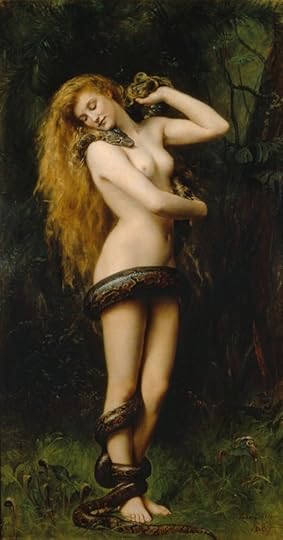
Venice, 1897
For 7 years Nicholas Dane has been in pursuit of Odile Leon, following her all over Europe in hopes to regain the words that she stole from him. Every time he hears of talk of artistic insurgence in a particular city, he knows that she must be there. After many years of this cat and mouse game, he has learned many of her secrets and has attempted to persuade her lovers to leave her before they make the bargain.
Fleeing a scandalous past in New York, twins Joseph and Sophie Hannigan arrive in Venice and propel themselves into the expatriate society in hopes of finding a patron who can support Joseph’s dream of becoming a famous painter. Unlike most twins, Joseph and Sophie share a unique and disturbingly intimate bond. A bond that proves hard to sever, in life and in death.
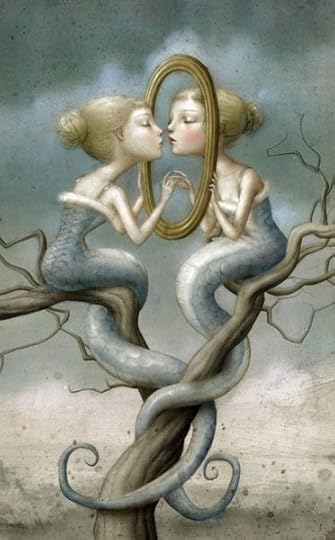
At this point, I’m guessing you can tell what happens…. Ok, I didn’t give much away, but for the most part, it’s pretty predictable.
So at this point, I should tell you how I feel about this, but I am not entirely sure. The story is rather intriguing; even if it wasn’t surprising, and the writing is quite beautiful...the problem is that it moves at a snail’s pace. This book is filled with flowery purple prose that could be considerably cut down to a make it more enjoyable.
“And she said in word made even more brutal by her gentleness and compassion, ‘You haven’t enough talent to change the world, cheri.’ The words resonated, I heard within them every review I’d ever received, my father’s criticisms. She told a truth I did not want to hear. When she pulled away and left me, I let her go. I went back to the artists gathered at the table I’d just left, the musicians, and the sculptor, the club of cast-offs. I’d somehow joined without knowing it. Hacks, I’d called them – and here I was one of them.”
“It was snowing. The marble angels of the Salute were faint and ghostly through the fog of snowflakes, and the usually translucent domes looked to be covered with the fallen wing feathers of the heavenly host trumpeting their glories. On either side of the church, the balconies and rooftops of the palazzos were sugared like iced confections.”
Don’t get me wrong, the writing is beautiful, but I was bored to tears through most of it.
I received an arc copy of this book from Netgalley in exchange for an honest review. Thank you NetGalley!

October 8, 2014
An engrossing yarn with a few minor problems, Inamorata is a page-turner of a thriller set in a beautifully wrought nineteenth century Venice. The writing is so detailed and luxurious that it transports you back, just like a book in this vein ought to.
Oh what a tangled web the succubus weaves: Odile, the embodiment of the muse, inspiration personified, drains artistically inclined men and feeds off their energy, leaving them to create one great epic masterpiece... and then in total shambles. Some go mad, some kill themselves, but it's never a happy ending for her victims. She must repeat this task every three years, or Very Bad Things happen to her and everyone around her.
And then there's the mysterious Hannigan twins, Sophie and Joseph, who have a slightly complicated relationship, to say the least. If you're squeamish about such things, full disclosure, this isn't the story for you. But it's done quite tastefully, it's not here for shock value, and it makes sense within the context of the story. The Hannigans find themselves in Venice in a desperate bid to escape a scandal in New York, to make social connections and make Joseph into the famous artist he so longs to be. Together, they seduce their way into Italy's artistic scene, but things aren't so easy. Joseph must make a hard decision about the cost of greatness; Sophie must allow him.
And Nicholas Dane, Odile's spurned ex-lover and archenemy, who has vowed to destroy her in order to save other men from his own fate: the creator drained of vitality and inspiration, unable to create ever again. He is many things: a shell of his former self, a hunter, a romantic, a protector.
I loved the complicated relationships; I loved the glimpses into the character's former lives before the present narrative, how they became the people they are; I loved Odile and her unapologetic nature, the tension and love between the twins, Dane going through a metamorphosis. Sometimes (and maybe it's because I read too fast), all the voices sounded a bit too similar for my liking, and it wasn't the ending I saw coming (which doesn't make it a bad ending, by any stretch of the imagination), but I surprisingly loved almost everything else about this book. I'll be picking up more of Chance's work ASAP.
Oh what a tangled web the succubus weaves: Odile, the embodiment of the muse, inspiration personified, drains artistically inclined men and feeds off their energy, leaving them to create one great epic masterpiece... and then in total shambles. Some go mad, some kill themselves, but it's never a happy ending for her victims. She must repeat this task every three years, or Very Bad Things happen to her and everyone around her.
And then there's the mysterious Hannigan twins, Sophie and Joseph, who have a slightly complicated relationship, to say the least. If you're squeamish about such things, full disclosure, this isn't the story for you. But it's done quite tastefully, it's not here for shock value, and it makes sense within the context of the story. The Hannigans find themselves in Venice in a desperate bid to escape a scandal in New York, to make social connections and make Joseph into the famous artist he so longs to be. Together, they seduce their way into Italy's artistic scene, but things aren't so easy. Joseph must make a hard decision about the cost of greatness; Sophie must allow him.
And Nicholas Dane, Odile's spurned ex-lover and archenemy, who has vowed to destroy her in order to save other men from his own fate: the creator drained of vitality and inspiration, unable to create ever again. He is many things: a shell of his former self, a hunter, a romantic, a protector.
I loved the complicated relationships; I loved the glimpses into the character's former lives before the present narrative, how they became the people they are; I loved Odile and her unapologetic nature, the tension and love between the twins, Dane going through a metamorphosis. Sometimes (and maybe it's because I read too fast), all the voices sounded a bit too similar for my liking, and it wasn't the ending I saw coming (which doesn't make it a bad ending, by any stretch of the imagination), but I surprisingly loved almost everything else about this book. I'll be picking up more of Chance's work ASAP.

July 8, 2014
I got this free with my Kindle Prime account; otherwise, I don't think I would have selected this. It was described as historical fiction, but I would have to say that defining it as fantasy/romance would have been a better choice.
The author did a great job describing the setting and the mythical background of Odile, the temptress of this story. The changing narrative between chapters also helped make the story more interesting, but the plot line still moved slow.
If I had been on some exotic beach or at some fabulous pool, this book would be perfect - a guilty pleasure. But, I wasn't. I wanted to read something with a bit more substance and more carefully crafted. If you need a good travel book, this might be the one.
The author did a great job describing the setting and the mythical background of Odile, the temptress of this story. The changing narrative between chapters also helped make the story more interesting, but the plot line still moved slow.
If I had been on some exotic beach or at some fabulous pool, this book would be perfect - a guilty pleasure. But, I wasn't. I wanted to read something with a bit more substance and more carefully crafted. If you need a good travel book, this might be the one.

July 26, 2014
One of the most beautifully written novels I have read in a long, long time.
This novel was ambitious in two areas that, I feel, are extremely challenging:
1) Describing the energy and beauty of visual art, such as frescos, paintings, and sketches that allows the reader to truly visualize their depth.
2) Writing about a very unique, and somewhat taboo, relationship between fraternal twins without getting creepy or tasteless.
To say Ms. Chance nailed those two challenges would be an understatement. She freakin' murdered them with elegant prose delivered by four very unique narrators.
But perhaps most impressive of all: She wrote a novel with a supernatural theme that was NOT about vampires, werewolves, or fairies. And, get this - it's not the first of a trilogy! It's a standalone
The Venice setting wasn't particularly unique and neither was the late nineteenth century, but everything else about this novel was fresh and new and beautiful. The art, the salons, the twins and their vague yet clearly disturbing relationship, the supernatural elements,... I could go on and on. I mean hell, even the hero being blonde was a refreshing change from the standard 'tall, dark, and handsome' male lead I read about in every single novel.
Inamorata was the summer novel I've been waiting for and my next task is to check out Ms. Chance's other stories, like, now.
This novel was ambitious in two areas that, I feel, are extremely challenging:
1) Describing the energy and beauty of visual art, such as frescos, paintings, and sketches that allows the reader to truly visualize their depth.
2) Writing about a very unique, and somewhat taboo, relationship between fraternal twins without getting creepy or tasteless.
To say Ms. Chance nailed those two challenges would be an understatement. She freakin' murdered them with elegant prose delivered by four very unique narrators.
But perhaps most impressive of all: She wrote a novel with a supernatural theme that was NOT about vampires, werewolves, or fairies. And, get this - it's not the first of a trilogy! It's a standalone
The Venice setting wasn't particularly unique and neither was the late nineteenth century, but everything else about this novel was fresh and new and beautiful. The art, the salons, the twins and their vague yet clearly disturbing relationship, the supernatural elements,... I could go on and on. I mean hell, even the hero being blonde was a refreshing change from the standard 'tall, dark, and handsome' male lead I read about in every single novel.
Inamorata was the summer novel I've been waiting for and my next task is to check out Ms. Chance's other stories, like, now.

July 31, 2014
What an awful book, I finished it because I felt I had to, just so I could throw it down in exasperation. I grabbed it from the free Amazon books, and I clearly chose wrong this time.
The story is so simplistic and obnoxious, it pretends to be incredibly serious and mysterious, when, if you are paying a bit of attention, you would figure out all the not-so-thinly veiled secrets. I hate books where horrifying secrets are hinted at, so much so that they are not at all shocking by the end.
The forbidden love between the twins Sophie and Joseph, Odalie being a succubus, no mystery there.
I was hoping that at least we would get a good description during the climax of the book, but again, a great opportunity was wasted. Odalie finally turns into a snake and it is given barely two sentences of description! Seriously? After all the build up, I get nothing? Argh!
Please don't read this book if you have any self respect. It's just ridiculous.
The story is so simplistic and obnoxious, it pretends to be incredibly serious and mysterious, when, if you are paying a bit of attention, you would figure out all the not-so-thinly veiled secrets. I hate books where horrifying secrets are hinted at, so much so that they are not at all shocking by the end.
The forbidden love between the twins Sophie and Joseph, Odalie being a succubus, no mystery there.
I was hoping that at least we would get a good description during the climax of the book, but again, a great opportunity was wasted. Odalie finally turns into a snake and it is given barely two sentences of description! Seriously? After all the build up, I get nothing? Argh!
Please don't read this book if you have any self respect. It's just ridiculous.
This entire review has been hidden because of spoilers.

July 7, 2014
I could not put this book down
This has been, by far, the best fictional story I've read in a long time. It is a fantasy, but is very well done. The idea behind the story was very original as were all of the characters.
I would definitely recommend this tale. The scenes in Venice are beautifully described as were the well developed characters. The story itself kept me guessing the entire time and as,such, I could not put it down for two days. The ending was perfect for a tale about demons, although the innocent part of me wanted it to end differently.
This has been, by far, the best fictional story I've read in a long time. It is a fantasy, but is very well done. The idea behind the story was very original as were all of the characters.
I would definitely recommend this tale. The scenes in Venice are beautifully described as were the well developed characters. The story itself kept me guessing the entire time and as,such, I could not put it down for two days. The ending was perfect for a tale about demons, although the innocent part of me wanted it to end differently.

July 5, 2014
Yes, she was his angel. But can’t you guess, my love? She was his demon too.
I received Inamorata through Amazon's Kindle First program several months ago. I finally decided to read it, and it wasn't quite what I expected.
In the summary, we're told that Joseph and Sophie Hannigan flee to Venice to escape some terrible scandal and find fame. Once there, Joseph falls under the spell of the terrible and beautiful Odilé, who promises Joseph fame -- if he's willing to give up everything.
This is true enough, I suppose, but it leaves out a couple very important plot points that would have been better to know from the beginning:
1. This is more of a paranormal fantasy than anything else. It's historical fiction only in the sense that it takes place mostly in 19th century Venice. I did not expect to find demons in this book.
2. The relationship between Sophie and Joseph is confusing at best, and at worst, there's more than a hint of incest. But it's important to remember that this is only hinted at, mostly by other characters' observations. Nothing remotely sexual happens between Sophie and Joseph in the book, and why they behave the way they do is explained on multiple occasions.
I've seen many people describe this book as "sleazy" and "crass." I would beg to disagree. This is not a book for children, and it doesn't claim to be. Would I lend this book to a teenage cousin? No. Would I lend it to an adult? Sure. Odilé is a courtesan. This actually is in the description. A courtesan, in case you're unfamiliar with the term, is an upper class prostitute. There are a handful of sex scenes, but nothing too explicit. Certainly not what you might expect in a book about a prostitute.
So from my review and how I've defended Inamorata's more controversial aspects, it probably sounds like I really liked this book, and you might wonder why I only gave it three stars.
I really struggled through the first hundred pages. The story builds very slowly at the start, and I nearly abandoned it a couple times. I forced myself to keep reading, though, and I found that I started really liking it about halfway through. The ending, though, left a little bit to be desired. It wasn't awful, but I feel like it could have ended better. I wanted a happy ending, and while the ending wasn't sad, exactly, it wasn't happy either.
I would also like to give a heads up to anyone planning to read this book: it begins with a main character slitting her wrists. Again, some warning would have been nice. There I was, expecting your typical historical fiction (because that's what Amazon billed this as in their Kindle First newsletter), and instead finding a blood-soaked bathtub. It's more or less irrelevant to the plot, so if you don't want to read it, you could skip the first chapter without missing anything much.
When Inamorata is good, it's really, really good. Those really good parts, mixed with the boring and slow parts, even out to about three stars.
[see more of my reviews at The Bibliophagist]
I received Inamorata through Amazon's Kindle First program several months ago. I finally decided to read it, and it wasn't quite what I expected.
In the summary, we're told that Joseph and Sophie Hannigan flee to Venice to escape some terrible scandal and find fame. Once there, Joseph falls under the spell of the terrible and beautiful Odilé, who promises Joseph fame -- if he's willing to give up everything.
This is true enough, I suppose, but it leaves out a couple very important plot points that would have been better to know from the beginning:
1. This is more of a paranormal fantasy than anything else. It's historical fiction only in the sense that it takes place mostly in 19th century Venice. I did not expect to find demons in this book.
2. The relationship between Sophie and Joseph is confusing at best, and at worst, there's more than a hint of incest. But it's important to remember that this is only hinted at, mostly by other characters' observations. Nothing remotely sexual happens between Sophie and Joseph in the book, and why they behave the way they do is explained on multiple occasions.
I've seen many people describe this book as "sleazy" and "crass." I would beg to disagree. This is not a book for children, and it doesn't claim to be. Would I lend this book to a teenage cousin? No. Would I lend it to an adult? Sure. Odilé is a courtesan. This actually is in the description. A courtesan, in case you're unfamiliar with the term, is an upper class prostitute. There are a handful of sex scenes, but nothing too explicit. Certainly not what you might expect in a book about a prostitute.
So from my review and how I've defended Inamorata's more controversial aspects, it probably sounds like I really liked this book, and you might wonder why I only gave it three stars.
I really struggled through the first hundred pages. The story builds very slowly at the start, and I nearly abandoned it a couple times. I forced myself to keep reading, though, and I found that I started really liking it about halfway through. The ending, though, left a little bit to be desired. It wasn't awful, but I feel like it could have ended better. I wanted a happy ending, and while the ending wasn't sad, exactly, it wasn't happy either.
I would also like to give a heads up to anyone planning to read this book: it begins with a main character slitting her wrists. Again, some warning would have been nice. There I was, expecting your typical historical fiction (because that's what Amazon billed this as in their Kindle First newsletter), and instead finding a blood-soaked bathtub. It's more or less irrelevant to the plot, so if you don't want to read it, you could skip the first chapter without missing anything much.
When Inamorata is good, it's really, really good. Those really good parts, mixed with the boring and slow parts, even out to about three stars.
[see more of my reviews at The Bibliophagist]

February 9, 2014
Evocative, well-written, unique.
September 4, 2014
Round up to 4.5 stars. Review to come at AAR.

January 8, 2015
This review was originally posted at https://freadomlibrary.wordpress.com
Critically
Plot – 3 out of 5 stars
This was just strange. I honestly still don’t know what to make of it. It was confusing a lot of the time and dark and creepy. The pace was really slow the entire time until the last few chapters toward the end when things picked up and finally got interesting. I was really disinterested most of the time and it took a while for the plot to engage me. Not my favorite definitely.
Writing Style – 3.5 out of 5 stars
The writing style shocked me straight from the beginning. I was under the impression that this was young adult until a certain graphic paragraph where I realized, nope just kidding, this is adult. It was nice, poetic, kind of hypnotic in a way. The descriptions were great, of the characters, the setting, and the situations, however peculiar they were. But it lacked something. It didn’t make up for the lack luster and strange plot and didn’t pull me in when the plot didn’t which I hoped would happen.
Characters – 4 out of 5 stars
This was probably the best part of the story but also the most mind boggling. The characters are all very weird. To be honest, this was the part that was most disturbing. The characters’ personalities and their relationships really bothered me, to the point where I’d have to stop reading but at the same time, were so complex and well crafted that I couldn’t not give it for stars. We start with Odilé who is disgustingly selfish and into herself. She is desperate and arrogant. Can you tell I didn’t like her? She’s the root of the story and I just did not care for her. I didn’t like her actions or her motivations. Then we have Nicholas, who has a history with Odilé and hates her. I liked him haha. He’s determined and compassionate and strong. His only problem is that he’s easily manipulated and it gets him in lots of trouble. Then we have the twins, Sophie and Joseph and I’m going to describe them as a unit because that’s what they are. They’re strange, incredibly so, but charismatic. They easily have everyone wrapped around their fingers. They’re passionate about a lot of things and manipulative to get what they want. But they have a deep vulnerability that is disturbing and endearing at the same time.
Emotionally
Critically
Plot – 3 out of 5 stars
This was just strange. I honestly still don’t know what to make of it. It was confusing a lot of the time and dark and creepy. The pace was really slow the entire time until the last few chapters toward the end when things picked up and finally got interesting. I was really disinterested most of the time and it took a while for the plot to engage me. Not my favorite definitely.
Writing Style – 3.5 out of 5 stars
The writing style shocked me straight from the beginning. I was under the impression that this was young adult until a certain graphic paragraph where I realized, nope just kidding, this is adult. It was nice, poetic, kind of hypnotic in a way. The descriptions were great, of the characters, the setting, and the situations, however peculiar they were. But it lacked something. It didn’t make up for the lack luster and strange plot and didn’t pull me in when the plot didn’t which I hoped would happen.
Characters – 4 out of 5 stars
This was probably the best part of the story but also the most mind boggling. The characters are all very weird. To be honest, this was the part that was most disturbing. The characters’ personalities and their relationships really bothered me, to the point where I’d have to stop reading but at the same time, were so complex and well crafted that I couldn’t not give it for stars. We start with Odilé who is disgustingly selfish and into herself. She is desperate and arrogant. Can you tell I didn’t like her? She’s the root of the story and I just did not care for her. I didn’t like her actions or her motivations. Then we have Nicholas, who has a history with Odilé and hates her. I liked him haha. He’s determined and compassionate and strong. His only problem is that he’s easily manipulated and it gets him in lots of trouble. Then we have the twins, Sophie and Joseph and I’m going to describe them as a unit because that’s what they are. They’re strange, incredibly so, but charismatic. They easily have everyone wrapped around their fingers. They’re passionate about a lot of things and manipulative to get what they want. But they have a deep vulnerability that is disturbing and endearing at the same time.
Emotionally

September 10, 2017
This one snuck to the front of the reading queue when I saw it on sale. A gothic romance / suspense tale set in mid-1800s Venice about a succubus and a dark and strange connection between twins? YES PLS. This genre-bender was deliciously dark and atmospheric, with a kind of hauntingly perfect end.
The tale centers on four characters: Odile, the succubus; Nick, one of her former targets now sworn to stop her; and the twins Sophie and Joseph - Joseph who's an up & coming artistic talent, and Sophie, who has a knack for storytelling but mostly lives in service to her brother's ambition, which is their shared ambition really.
The story is told in alternating chapters between Odile, Nick and Sophie, each of them mostly reflecting on the pursuit of their own goals and history rather than each other. In fact, it's rather late in the book that the four characters even come together or realize the connections between each other. In terms of story, ultimately that means this is a more reflective, suspense-building tale rather than action-packed.
I think it works because all that build-up allows the reader to understand what must be the *emotional* outcome of the four of them coming together. Yes, it does happen rather fast at the end, and perhaps there could have been more drawn out tension before the climactic choice, but for this reader, it's a small quibble.
Oh yeah, and the twin thing. Chance does a fantastic job of building up the connection and toeing - but not really crossing - the line into taboo. That will be ultimately reassuring or disappointing depending on where you're coming from, lol. Overall I felt it was perfectly done for the story. Poignant and tragic.
And can you believe I got this far without talking about the succubus element? Chance writes it as something that is attracted to and inspiring artistic talent, which is an unique take. Mostly I enjoyed it as an exploration of who gets credit for genius, which is a recurring theme throughout the book.
I can't believe I haven't read Megan Chance before - I'll be looking into some of her other books for sure after this.
The tale centers on four characters: Odile, the succubus; Nick, one of her former targets now sworn to stop her; and the twins Sophie and Joseph - Joseph who's an up & coming artistic talent, and Sophie, who has a knack for storytelling but mostly lives in service to her brother's ambition, which is their shared ambition really.
The story is told in alternating chapters between Odile, Nick and Sophie, each of them mostly reflecting on the pursuit of their own goals and history rather than each other. In fact, it's rather late in the book that the four characters even come together or realize the connections between each other. In terms of story, ultimately that means this is a more reflective, suspense-building tale rather than action-packed.
I think it works because all that build-up allows the reader to understand what must be the *emotional* outcome of the four of them coming together. Yes, it does happen rather fast at the end, and perhaps there could have been more drawn out tension before the climactic choice, but for this reader, it's a small quibble.
Oh yeah, and the twin thing. Chance does a fantastic job of building up the connection and toeing - but not really crossing - the line into taboo. That will be ultimately reassuring or disappointing depending on where you're coming from, lol. Overall I felt it was perfectly done for the story. Poignant and tragic.
And can you believe I got this far without talking about the succubus element? Chance writes it as something that is attracted to and inspiring artistic talent, which is an unique take. Mostly I enjoyed it as an exploration of who gets credit for genius, which is a recurring theme throughout the book.
I can't believe I haven't read Megan Chance before - I'll be looking into some of her other books for sure after this.

November 24, 2016
Probably more like 3.5 stars. A well-written, very original novel, infused with erotic longing. I'm not really sure how to describe it--the story concerns a brother and sister (twins) who have survived a horrible past by becoming inextricably entwined with each other, and a succubus on the prowl for her next victim. Set in Venice in the late 1800s, with lots of artists and gondoliers and descriptions of the crazy light. (OK, I will admit that synopsis will probably drive people away from the book and here I am recommending it, so don't listen to me, please. Read some of the more articulate positive reviews before deciding.) And did I say very well written? It would have been four stars, easy, if the ending hadn't seemed a bit weak.

July 2, 2014
This book is very different from the material I routinely consume. Megan Chance is a profoundly exceptional writer; I found myself engaged in this story from about the 2nd chapter once I became oriented. Her prose is elegant, descriptive, imaginative, and still approachable. The characters were clearly drawn and the dialogue sensible given the historical period and context. Without giving away the thrust of the novel, it required every bit of my willingness to suspend disbelief; however, once I submitted to Megan's imagination, I was captivated by the plot. As another reviewer noted, this book merits every bit of 4.5 stars, so I pushed it to 5.0 because it was that entertaining!

July 17, 2014
This was another ebook I got for free from Kindle First. The concept is great, the execution is so-so. For me, the mail flaw was that it told instead of showed. Three of these characters were supposedly fascinating, thrilling, enchanting blah blah blah but their actions and words never backed this up. We only had the thoughts of other characters emphasizing that this was apparently the case. This is definitely an issue when (1) your plot revolves around these people being so special and (2) you have multiple POVs.

August 5, 2014
Would you sell your soul to have the thing you desire the most? This story is set in Venice and centres around a brother and sister - twins - who come to Venice to seek fame and fortune for the brother who is an aspiring artist. Their fate becomes embroiled with that of a hunter and the man who hunts her. I found this to be a unique tale of love, passion, obsession, and characters with deep and dark secrets that kept me turning the pages. The story haunts me.

July 9, 2014
I had the hardest time rating this book! Part of me wanted to give it a 2 and part of me a 4. It's that kind of book: makes me feel very confused about what I thought of it. But it certainly was interesting, and the characters were extremely well developed. Although fascinating, I was repelled by some of them. Glad I read the book but if it were a movie I wouldn't have gone to see it!

January 30, 2016
Historical fiction taking place in I believe 1800's Italy. A succubus adding a paranormal factor. Some steamy sex scenes. A good tale of a painter and some other famous artists who sacrifice it all to leave their mark on the world.
February 9, 2021
*2.5 rounded to 3*
The reviews on this one are mixed, and to be honest, so am I. While Chance is certainly gifted in prose, her often beautiful descriptions sometimes merge on being too fluffy...obscuring what doesn't need to be obscured. In simpler words...sometimes simple=better. Sometimes a story with great potential, like this one, is muddled with all the effort the author puts in with words. So...yes, there were parts of this book I liked and I found the plot enticing to say the least. And while at times I enjoyed the writing, others times it simply felt like too much...and it all leaves me undecided.
The reviews on this one are mixed, and to be honest, so am I. While Chance is certainly gifted in prose, her often beautiful descriptions sometimes merge on being too fluffy...obscuring what doesn't need to be obscured. In simpler words...sometimes simple=better. Sometimes a story with great potential, like this one, is muddled with all the effort the author puts in with words. So...yes, there were parts of this book I liked and I found the plot enticing to say the least. And while at times I enjoyed the writing, others times it simply felt like too much...and it all leaves me undecided.

July 9, 2017
This book was not what I expected from the blurb at all. I've read and enjoyed plenty of Megan Chance's work so I don't know why I didn't think it was going to be as dark as it is. It's really not a happy funtimes book in any way. It was still very interesting but I think I would have enjoyed it more if it were less twincesty. The ending also kind of fell flat with me. As usual, however, Megan Chance does a great job of creating interesting, complex female characters who are somewhat sympathetic even when they are terrible.
This entire review has been hidden because of spoilers.

June 15, 2018
Great book very entertaning with turn of the plot so exciting and the end so beautifoul.

August 12, 2014
Originally published at Reading Reality
There is a hunger that lurks in the shadows, waiting impatiently to feast on its right and proper prey.
The hunger is monstrous, but is not necessarily evil. It bargains with its victims, and once struck, the bargain is fulfilled to the letter.
In return for providing an already talented artist with the inspiration and the vision to create on masterwork of towering genius, the muse takes, in return, everything that made the artist who he was.
The death that usually follows is not the monster’s fault. The bargain is kept.
There are a number of artistic geniuses, in art, in letters, in music, who produced one final towering masterpiece, and then died or faded. Keats, Byron, Schumann, Vivaldi, Canaletto, Shelley. Great artists who burned out young, whether they died or not.
What if their great inspirations came from a single source, despite the differences in time and place? What if John Keats’ Lamia was all too real?
The beautiful decay of 19th century Venice is the perfect backdrop for this story of love, corruption and inspiration.
Odile Leon has sold her soul for a chance to be remembered. Quite literally sold her soul. Once every three years, she must find an artistic genius, sung or unsung, and make him a legend. In return for artistic immortality, that artist must sell his own soul to her as his muse.
In Venice, Odile is brought to bay by one man she toyed with but did not consume, and an artist who has already found his muse, in the person of his twin sister.
Nicholas Dane is obsessed with stopping Odile, in the hopes that she will return his poetic talent. Joseph and Sophie Hannigan are bent on outrunning the salacious rumors that follow them, and finding the perfect showcase for Joseph’s magnificent artistic talent.
Odile needs a victim, before it is too late. But her long life has not prepared her to face that it is already too late, not just for her, but for all of those she has drawn into her web.
Escape Rating B: So much of this story operates in the shadows, and those shadows give it its sense of creeping horror and dark need.
In atmosphere, it reminds me a bit of Lauren Owen’s The Quick (reviewed here), but the motivations behind the monstrousness are different. In The Quick , the society only wants to make vampires out of the “right sort” of people, and others are pawns, toys or food. Their complete sort of self-centeredness feels evil on multiple levels.
Although both stories are set in the same era, the monstrousness of Odile is not necessarily evil. Many artists of all types would think their lives were a reasonable trade for otherworldly inspiration and artistic immortality. She offers a bargain, and she keeps it. Admittedly, her victims are often too much in her thrall to refuse.
Odile is a succubus, but a very particular one. She maintains her life by sucking out their talent. In return they live forever, or at least achieve immortal renown.
Nicholas Dane hounds her from city to city, believing that if he prevents her feeding, she will be destroyed. He is both right and wrong, in a way that he pays for dearly. Because Odile fixes her sights on the twin brother of the woman he loves.
And Sophie can’t live without her brother, or vice versa.
The relationship between Sophie and her brother Joseph both fascinates and repels everyone they meet, including Odile and Nicholas. We’re never 100% certain, but readers are intended to find more than a hint of V.C. Andrews’ Flowers in the Attic in the Hannigans’ backstory.
It’s obvious that they mean too much to each other, but nothing is ever confirmed. That background becomes part of the rotting decadence of Venice.
The story starts out slowly, and switches between multiple points of view with every chapter. But we still only explore each party’s surface thoughts, and not the secrets they keep from themselves as well as each other.
This story gets darker and darker as it leads to its conclusion. It haunts, and makes you want to brush off lingering traces of the web, both at the same time. The story is definitely a case of atmosphere over action, but I couldn’t go to sleep without finishing it. And had a difficult time sleeping afterwards.
There is a hunger that lurks in the shadows, waiting impatiently to feast on its right and proper prey.
The hunger is monstrous, but is not necessarily evil. It bargains with its victims, and once struck, the bargain is fulfilled to the letter.
In return for providing an already talented artist with the inspiration and the vision to create on masterwork of towering genius, the muse takes, in return, everything that made the artist who he was.
The death that usually follows is not the monster’s fault. The bargain is kept.
There are a number of artistic geniuses, in art, in letters, in music, who produced one final towering masterpiece, and then died or faded. Keats, Byron, Schumann, Vivaldi, Canaletto, Shelley. Great artists who burned out young, whether they died or not.
What if their great inspirations came from a single source, despite the differences in time and place? What if John Keats’ Lamia was all too real?
The beautiful decay of 19th century Venice is the perfect backdrop for this story of love, corruption and inspiration.
Odile Leon has sold her soul for a chance to be remembered. Quite literally sold her soul. Once every three years, she must find an artistic genius, sung or unsung, and make him a legend. In return for artistic immortality, that artist must sell his own soul to her as his muse.
In Venice, Odile is brought to bay by one man she toyed with but did not consume, and an artist who has already found his muse, in the person of his twin sister.
Nicholas Dane is obsessed with stopping Odile, in the hopes that she will return his poetic talent. Joseph and Sophie Hannigan are bent on outrunning the salacious rumors that follow them, and finding the perfect showcase for Joseph’s magnificent artistic talent.
Odile needs a victim, before it is too late. But her long life has not prepared her to face that it is already too late, not just for her, but for all of those she has drawn into her web.
Escape Rating B: So much of this story operates in the shadows, and those shadows give it its sense of creeping horror and dark need.
In atmosphere, it reminds me a bit of Lauren Owen’s The Quick (reviewed here), but the motivations behind the monstrousness are different. In The Quick , the society only wants to make vampires out of the “right sort” of people, and others are pawns, toys or food. Their complete sort of self-centeredness feels evil on multiple levels.
Although both stories are set in the same era, the monstrousness of Odile is not necessarily evil. Many artists of all types would think their lives were a reasonable trade for otherworldly inspiration and artistic immortality. She offers a bargain, and she keeps it. Admittedly, her victims are often too much in her thrall to refuse.
Odile is a succubus, but a very particular one. She maintains her life by sucking out their talent. In return they live forever, or at least achieve immortal renown.
Nicholas Dane hounds her from city to city, believing that if he prevents her feeding, she will be destroyed. He is both right and wrong, in a way that he pays for dearly. Because Odile fixes her sights on the twin brother of the woman he loves.
And Sophie can’t live without her brother, or vice versa.
The relationship between Sophie and her brother Joseph both fascinates and repels everyone they meet, including Odile and Nicholas. We’re never 100% certain, but readers are intended to find more than a hint of V.C. Andrews’ Flowers in the Attic in the Hannigans’ backstory.
It’s obvious that they mean too much to each other, but nothing is ever confirmed. That background becomes part of the rotting decadence of Venice.
The story starts out slowly, and switches between multiple points of view with every chapter. But we still only explore each party’s surface thoughts, and not the secrets they keep from themselves as well as each other.
This story gets darker and darker as it leads to its conclusion. It haunts, and makes you want to brush off lingering traces of the web, both at the same time. The story is definitely a case of atmosphere over action, but I couldn’t go to sleep without finishing it. And had a difficult time sleeping afterwards.
Displaying 1 - 30 of 451 reviews