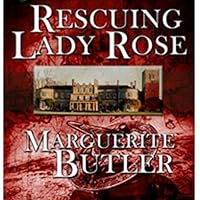
I hoped that this would be better than a number of the books of which I edited the reviews this morning. Unfortunately, it was not. Oh well, I shall have to think up another cutting review- that should not be too tricky!
It opens promisingly: we follow Moira, the governess of the titular character, and her charge, as they attempt to escape an unfortunate fate for Perdita- to marry an unpleasant elderly man. Moira, who narrates the story, has a dry wit which touches everything she recounts, and the beginning was very entertaining thanks to her. She has not only a quick tongue, but also a good deal of sense. Perdita, on the other hand, was almost just as dreadful as Tiffany in Georgette Heyer's The Nonesuch, being immature, naive, incredibly spoiled and very selfish to boot. It is she who involves her governess in a traveling theatre troupe, and it is from there that all their problems start.
The pair run afoul of Lord Stornway, who mistakes them for lightskirts (ie prostitutes). He longs to get his lustful hands on the stupid Perdita, despite being told numerous times that the two of them are ladies, and the result is a madcap chase to London and then on to Brighton as he tries to get them. Somewhere along the way, Moira's disgusted view of this disagreeable 'gentleman' changes, and the romance progresses from there.
It was a disappointing read to say the least. The hero had nothing redeeming to his character, unlike other rakes that appear in historical novels (take Sebastian from Stella Riley's The Wicked Cousin as an example) and he seems to be bird-brained too, as anything he does in the story is due to lust. Annoyingly, I did not feel that the author saved him enough in the end; to my mind he was unpardonable to the finish. Perdita did not endear herself to me either, and I thought I would have liked to give her a good shaking. Moira's retelling of events was the one thing that truly saved this novel, and I sincerely hope that she is happy with her rake in the end. Maybe she has truly tamed him.
I enjoyed parts of this book. Smith added in lots of interesting details of Regency theatre life and language, and there were humorous sections, but because this was supposed to be a romance, and what romance present was lacking, on finishing it I was left with a great sense of frustration.
The majority of Joan Smith's novels I have read so far I've enjoyed, but I'll give this one a miss.
Content: nothing explicit, but a good deal of talk of prostitution and a vulgar, immoral lifestyle