

What do you think?

Marching Home: Union Veterans and Their Unending Civil War
A groundbreaking investigation examining the fate of Union veterans who won the war but couldn’t bear the peace. For well over a century, traditional Civil War histories have concluded in 1865, with a bitterly won peace and Union soldiers returning triumphantly home. In a landmark work that challenges sterilized portraits accepted for generations, Civil War historian Brian Matthew Jordan creates an entirely new narrative. These veterans― tending rotting wounds, battling alcoholism, campaigning for paltry pensions― tragically realized that they stood as unwelcome reminders to a new America eager to heal, forget, and embrace the freewheeling bounty of the Gilded Age. Mining previously untapped archives, Jordan uncovers anguished letters and diaries, essays by amputees, and gruesome medical reports, all deeply revealing of the American psyche. In the model of twenty-first-century histories like Drew Gilpin Faust’s This Republic of Suffering or Maya Jasanoff ’s Liberty’s Exiles that illuminate the plight of the common man, Marching Home makes almost unbearably personal the rage and regret of Union veterans. Their untold stories are critically relevant today. 8 pages of illustrations
384 pages, Hardcover
First published November 3, 2014
Ratings & Reviews
Friends & Following
Create a free account to discover what your friends think of this book!
Community Reviews
Displaying 1 - 30 of 61 reviews

July 6, 2015
The Odyssey Of The Union Soldier
The Civil War is often referred to as the American Iliad. As shown in historian Brian Jordan's first book, "Marching Home: Union Veterans and their Unending Civil War" (2015), the story of Union veterans after the war deserves to be known as the American Odyssey. Jordan recently earned a PhD in History at Yale University and teaches at Gettysburg College. He prefaces each chapter in his moving, often heartrending story of the Union veterans with an apt quotation from Homer's Odyssey about the travails of the warrior Ulysses in returning home from Troy.
There is a massive literature on the American Iliad but a much smaller literature on the American Odyssey. Jordan has done an epic job in uncovering little used source material to let the soldiers speak for themselves. Jordan challenges the view held by some that the Union veterans somehow "hibernated" after the Civil War until, in the 1880s and 1890s, the efforts and remembrance, reconciliation, the establishment of Battlefield Parks, and the like began. His book describes the activities of the veterans beginning with Appomattox. Jordan argues that many veterans were angry with the defeated rebels and physically and emotionally broken in the aftermath of the War. He also claims that the veterans largely opposed the policy of reconciliation that developed with the defeated South and the ignoring of the rights of the Freedpeople. Here are two examples. Jordan writes of a parade of veterans in New York City in August, 1865, seeking employment:
"GIVE US EMPLOYMENT TO SUPPORT OUR FAMILIES
We represent thousands of discharged soldiers and
sailors now asking for bread
Our last employers were Grant, Sherman
Sheridan, Meade, Hancock, and Hooker
WE ARE NOW THE SOLDIER CITIZENS."
Jordan also quotes a little poem, in addition to the selections from Homer's Odyssey, to show the plight of the veterans and the fear held by some that reconciliation would make their sacrifices in vain. The following parody of reconciliation dates from 1867:
"You may sing of the Blue and the Gray
And mingle their hues in your rhyme, but the Blue that
we wore in the fray
It covered with glory sublime
Let the traitors all go if you may
But never confound with Gray The Blue, whether living or dead."
Jordan argues that after the War the North essentially wanted to put the veterans aside to get on with the businesses of reconciliation and commerce. The North had felt little of the horrors of the War. With the parades and the ballyhoo, the North did not attend to the needs of those who had saved the Union. The veterans all to often could not find work and lived economically marginal lives. They frequently suffered from severe wounds leading to further destitution and from addiction to alcohol or to substances. Not enough was done to help. The other broad theme of the book, in addition to the suffering and frequent ignoring of the veterans is the efforts the soldiers made to organize, stay in touch, and keep their memories and ideals alive.
Thus, Jordan shows soldiers and sailors returning home battle-weary and being largely ignored in their towns after the pomp of parades. They were often hungry and unemployed. Jordan describes well the controversy over soldiers' pensions in the decades after the war with the veterans struggling for what was sometimes giving begrudgingly and insufficiently. He describes as well the establishment of soldier's homes at both Federal and state levels for the infirm in the years following the war. These homes, originally called "asylums" were not pleasant places to reward the Union veterans.
In a chapter titled, "Living Monuments", Jordan describes in detail a "novel, unique, and interesting" exhibition held in Washington, D.C. in May 1866. Veterans who had lost their right arm in the War were invited to submit an essay or other example of their penmanship written with their left hand. Many soldier submitted original essays describing their War experience, and the exhibit drew large crowds, including, on one evening, U.S. Grant.
The story about how the veterans used self-help to organize and keep their stories alive is more heartening. Far from "hibernating" the veterans established newspapers, magazines, organizations, and other means of communication. Jordan gives an extensive history of the Grand Army of the Republic and its long history into nearly the mid-20th Century. He shows it was far more to the soldiers than a lobbying organization intended to secure pensions. He also discusses a myriad of smaller groups, including a group of survivors of the Battle of Shiloh which met regularly so that its participants could keep in touch and preserve their stories. I have been a student of the Battle of Shiloh and would be fascinated to learn more about the activities of the survivors' group. Jordan also discusses the survivors of the notorious Confederate prisons, including Andersonville. These survivors too formed their own groups to preserve their experiences and memories when the broader society was inclined to be skeptical of the horrors the soldiers endured in the prisons. It was feared that dwelling on the prison experiences would hinder reconciliation efforts between North and South. Jordan's account of the activities of the camp survivors also left me wanting to know more. He draws throughout heavily on letters and documentation by the veterans.
The book does not quantify the extent of poverty, homelessness, and suffering among the returning veterans. In addition, the book does not show enough to conclude that the veterans as a group differed markedly from others in the Union about the reconciliation policy. The book does not always fully show that some historical questions are difficult and painful with the people of the time making hard choices under unique circumstances. The strength of this study lies in its individual accounts, stories and anecdotes, in the thorough research, and in the heartfelt character of the writing.
I learned a great deal from Jordan's study about the Union veterans and perhaps about the veterans from America's other wars. This is an excellent, unusual book for readers interested in the Civil War and its aftermath.
Robin Friedman
The Civil War is often referred to as the American Iliad. As shown in historian Brian Jordan's first book, "Marching Home: Union Veterans and their Unending Civil War" (2015), the story of Union veterans after the war deserves to be known as the American Odyssey. Jordan recently earned a PhD in History at Yale University and teaches at Gettysburg College. He prefaces each chapter in his moving, often heartrending story of the Union veterans with an apt quotation from Homer's Odyssey about the travails of the warrior Ulysses in returning home from Troy.
There is a massive literature on the American Iliad but a much smaller literature on the American Odyssey. Jordan has done an epic job in uncovering little used source material to let the soldiers speak for themselves. Jordan challenges the view held by some that the Union veterans somehow "hibernated" after the Civil War until, in the 1880s and 1890s, the efforts and remembrance, reconciliation, the establishment of Battlefield Parks, and the like began. His book describes the activities of the veterans beginning with Appomattox. Jordan argues that many veterans were angry with the defeated rebels and physically and emotionally broken in the aftermath of the War. He also claims that the veterans largely opposed the policy of reconciliation that developed with the defeated South and the ignoring of the rights of the Freedpeople. Here are two examples. Jordan writes of a parade of veterans in New York City in August, 1865, seeking employment:
"GIVE US EMPLOYMENT TO SUPPORT OUR FAMILIES
We represent thousands of discharged soldiers and
sailors now asking for bread
Our last employers were Grant, Sherman
Sheridan, Meade, Hancock, and Hooker
WE ARE NOW THE SOLDIER CITIZENS."
Jordan also quotes a little poem, in addition to the selections from Homer's Odyssey, to show the plight of the veterans and the fear held by some that reconciliation would make their sacrifices in vain. The following parody of reconciliation dates from 1867:
"You may sing of the Blue and the Gray
And mingle their hues in your rhyme, but the Blue that
we wore in the fray
It covered with glory sublime
Let the traitors all go if you may
But never confound with Gray The Blue, whether living or dead."
Jordan argues that after the War the North essentially wanted to put the veterans aside to get on with the businesses of reconciliation and commerce. The North had felt little of the horrors of the War. With the parades and the ballyhoo, the North did not attend to the needs of those who had saved the Union. The veterans all to often could not find work and lived economically marginal lives. They frequently suffered from severe wounds leading to further destitution and from addiction to alcohol or to substances. Not enough was done to help. The other broad theme of the book, in addition to the suffering and frequent ignoring of the veterans is the efforts the soldiers made to organize, stay in touch, and keep their memories and ideals alive.
Thus, Jordan shows soldiers and sailors returning home battle-weary and being largely ignored in their towns after the pomp of parades. They were often hungry and unemployed. Jordan describes well the controversy over soldiers' pensions in the decades after the war with the veterans struggling for what was sometimes giving begrudgingly and insufficiently. He describes as well the establishment of soldier's homes at both Federal and state levels for the infirm in the years following the war. These homes, originally called "asylums" were not pleasant places to reward the Union veterans.
In a chapter titled, "Living Monuments", Jordan describes in detail a "novel, unique, and interesting" exhibition held in Washington, D.C. in May 1866. Veterans who had lost their right arm in the War were invited to submit an essay or other example of their penmanship written with their left hand. Many soldier submitted original essays describing their War experience, and the exhibit drew large crowds, including, on one evening, U.S. Grant.
The story about how the veterans used self-help to organize and keep their stories alive is more heartening. Far from "hibernating" the veterans established newspapers, magazines, organizations, and other means of communication. Jordan gives an extensive history of the Grand Army of the Republic and its long history into nearly the mid-20th Century. He shows it was far more to the soldiers than a lobbying organization intended to secure pensions. He also discusses a myriad of smaller groups, including a group of survivors of the Battle of Shiloh which met regularly so that its participants could keep in touch and preserve their stories. I have been a student of the Battle of Shiloh and would be fascinated to learn more about the activities of the survivors' group. Jordan also discusses the survivors of the notorious Confederate prisons, including Andersonville. These survivors too formed their own groups to preserve their experiences and memories when the broader society was inclined to be skeptical of the horrors the soldiers endured in the prisons. It was feared that dwelling on the prison experiences would hinder reconciliation efforts between North and South. Jordan's account of the activities of the camp survivors also left me wanting to know more. He draws throughout heavily on letters and documentation by the veterans.
The book does not quantify the extent of poverty, homelessness, and suffering among the returning veterans. In addition, the book does not show enough to conclude that the veterans as a group differed markedly from others in the Union about the reconciliation policy. The book does not always fully show that some historical questions are difficult and painful with the people of the time making hard choices under unique circumstances. The strength of this study lies in its individual accounts, stories and anecdotes, in the thorough research, and in the heartfelt character of the writing.
I learned a great deal from Jordan's study about the Union veterans and perhaps about the veterans from America's other wars. This is an excellent, unusual book for readers interested in the Civil War and its aftermath.
Robin Friedman

May 4, 2025
Throughout U.S. history, war veterans have received very different treatment upon returning home, depending on the era and the war. Consider the case of World War II veterans, who were hailed as heroes and benefited from programs like the G.I. Bill in their return to civilian life, as compared to Vietnam veterans, who typically did not receive similar acclaim or support.
The experiences of Union veterans of the Civil War were somewhere in between. Initially hailed as heroes, they were then expected to swiftly and seamlessly reintegrate into society on their own, by a grateful but war-weary public that was eager to simply move on.
Jordan considers their experiences in this short book (just over 200 pages of text) which is the result of thorough and impressive primary research. Yet I often found myself struck more by what was not included than what was.
The book begins with the postwar Grand Review of the Armies in Washington - a celebratory and triumphant moment for victorious Union soldiers that contrasts with the more complicated issues to come. This otherwise compelling opening is marred only by what I found to be a distracting overreliance on the thesaurus and an overuse of adjectives. There are “groaning shelves” and “bewhiskered men” and similar descriptors throughout the book, but the tendency toward verbosity is most notable in the first chapter, where we're told, to name but one example, that “perhaps the most impressive ensign was the panel adorning the thick marble walls of the stately columned Treasury Building.” Good writing or overwriting? You be the judge.
Back to the topic at hand, though. Demobilization was a long, complex process, and for the Union veterans, the process of reintegrating into society was even longer and more complex. Many veterans were young and aimless and initially tended toward rabble-rousing, quickly tarnishing their heroic image and trying civilians’ patience. At worst, over time, many descended into alcoholism, suffering the effects of PTSD and an inability to adjust to postwar life.
One standout anecdote involves a curious left-handed penmanship contest for veterans who had lost their right arms in combat, which illustrates just how many amputees were among the war’s survivors. And there’s a particularly strong chapter on former POWs, particularly from Andersonville, who, lacking the ability to extract revenge on the battlefield, felt an almost compulsive need to tell their tales to a public that didn’t necessarily want to hear it.
Many veterans even had to plead for pensions, an arduous and often undignified process, in an era when the very notion of veterans’ rights and benefits was largely foreign. Support was often perceived as a gift rather than an obligation and a payment-in-kind for veterans’ service.
Eager to forgive their foes, forget the war and move on, “Northern civilians remained stubbornly indifferent to the plight of Union veterans,” Jordan writes. “Americans had done so much to trumpet the common soldier’s courage that any veteran who begged for assistance was immediately perceived as less than manly.”
The centerpiece of the book, then, is not necessarily the veterans themselves, but the civilians and government leaders who failed them. And yet I was left wanting to know so much more about the veterans. What did Union veterans think about what they had accomplished? About their role in restoring the Union and ending slavery, when the latter is not necessarily what they had initially signed up for? Did they harbor hard feelings for the Southerners they fought? Were they as willing to forgive and forget as civilians? Were they demoralized by the failures of Reconstruction?
Some of this is touched on, briefly. We're told that some veterans “became especially committed to the cause of emancipation and racial equality,” but that's supported by just a few stray quotes from a few individuals. We're told of one veteran “who became one of reconciliation’s most outspoken opponents,” but we’re not told how or why.
And how did Union veterans’ experiences compare to their Confederate counterparts? What about Black veterans - what unique challenges did they face? What about veterans who did manage to successfully integrate into postwar society and lived fruitful lives - what did they do right, in avoiding the problems that plagued so many others?
I try to judge a book for what it is and what it aimed to accomplish, and not what I wished it had done instead. In this case, though, the book just felt incomplete to me. It may be that the topic was simply too complex to be told in just 200 pages. So I commend the work that went into the book, because what’s in it is interesting. But in the end, it may just leave you with far more questions than answers.
The experiences of Union veterans of the Civil War were somewhere in between. Initially hailed as heroes, they were then expected to swiftly and seamlessly reintegrate into society on their own, by a grateful but war-weary public that was eager to simply move on.
Jordan considers their experiences in this short book (just over 200 pages of text) which is the result of thorough and impressive primary research. Yet I often found myself struck more by what was not included than what was.
The book begins with the postwar Grand Review of the Armies in Washington - a celebratory and triumphant moment for victorious Union soldiers that contrasts with the more complicated issues to come. This otherwise compelling opening is marred only by what I found to be a distracting overreliance on the thesaurus and an overuse of adjectives. There are “groaning shelves” and “bewhiskered men” and similar descriptors throughout the book, but the tendency toward verbosity is most notable in the first chapter, where we're told, to name but one example, that “perhaps the most impressive ensign was the panel adorning the thick marble walls of the stately columned Treasury Building.” Good writing or overwriting? You be the judge.
Back to the topic at hand, though. Demobilization was a long, complex process, and for the Union veterans, the process of reintegrating into society was even longer and more complex. Many veterans were young and aimless and initially tended toward rabble-rousing, quickly tarnishing their heroic image and trying civilians’ patience. At worst, over time, many descended into alcoholism, suffering the effects of PTSD and an inability to adjust to postwar life.
One standout anecdote involves a curious left-handed penmanship contest for veterans who had lost their right arms in combat, which illustrates just how many amputees were among the war’s survivors. And there’s a particularly strong chapter on former POWs, particularly from Andersonville, who, lacking the ability to extract revenge on the battlefield, felt an almost compulsive need to tell their tales to a public that didn’t necessarily want to hear it.
Many veterans even had to plead for pensions, an arduous and often undignified process, in an era when the very notion of veterans’ rights and benefits was largely foreign. Support was often perceived as a gift rather than an obligation and a payment-in-kind for veterans’ service.
Eager to forgive their foes, forget the war and move on, “Northern civilians remained stubbornly indifferent to the plight of Union veterans,” Jordan writes. “Americans had done so much to trumpet the common soldier’s courage that any veteran who begged for assistance was immediately perceived as less than manly.”
The centerpiece of the book, then, is not necessarily the veterans themselves, but the civilians and government leaders who failed them. And yet I was left wanting to know so much more about the veterans. What did Union veterans think about what they had accomplished? About their role in restoring the Union and ending slavery, when the latter is not necessarily what they had initially signed up for? Did they harbor hard feelings for the Southerners they fought? Were they as willing to forgive and forget as civilians? Were they demoralized by the failures of Reconstruction?
Some of this is touched on, briefly. We're told that some veterans “became especially committed to the cause of emancipation and racial equality,” but that's supported by just a few stray quotes from a few individuals. We're told of one veteran “who became one of reconciliation’s most outspoken opponents,” but we’re not told how or why.
And how did Union veterans’ experiences compare to their Confederate counterparts? What about Black veterans - what unique challenges did they face? What about veterans who did manage to successfully integrate into postwar society and lived fruitful lives - what did they do right, in avoiding the problems that plagued so many others?
I try to judge a book for what it is and what it aimed to accomplish, and not what I wished it had done instead. In this case, though, the book just felt incomplete to me. It may be that the topic was simply too complex to be told in just 200 pages. So I commend the work that went into the book, because what’s in it is interesting. But in the end, it may just leave you with far more questions than answers.
October 6, 2014
Most Civil War books end at Appomattox and then have an epilogue talking about the last surrender by General Kirby Smith in the West. Some will have follow-up biographies of what happened to the major players like Grant, Lee and other generals or politicians. But no one has written about what happened to the conscripts and volunteers after the shooting stopped.
Jordan has gone back and researched how Northern (Union) veterans were treated after the Civil War. Sadly, they weren’t treated very well, much like those who fought in the Revolution, War of 1812 and Mexican Wars. Jordan divides the discussion into sections about wounded/disabled, amputees, and the mentally affected; and the fight over bonuses and pensions.
There were multiple organizations formed by veterans after the CV but the largest of them all was the Grand Army of the Republic (GAR). The GAR was large enough to lobby in Washington on behalf of the Veterans, but complained constantly of being ignored. Though he doesn’t discuss the Grant Administration per se, he does discuss the difference between the Cleveland (where they were treated poorly) and Hayes (where they were treated like the heroes they were). Jordan makes the point that Cleveland paid someone to take his place while Hayes was a Lieutenant Colonel of Ohio Volunteers.
Like many returning soldiers from earlier wars, they were feted for a while and then people wanted to forget the war, heal the Union and move on. It got to the point where people would ignore the pleas of indigent veteran families (think of it as charity fatigue), saying they were asking too much for too long. Unlike today, charity was a private affair, people were expected to take care of themselves or go to the poor house.
Even when the first ‘veteran’s homes’ were built they were too small and underfunded. They were accused of being worse than the southern Prisoner of War Camps.
Never before in American history were there so many returning soldiers who could no longer fend for themselves because of lost limbs or loss of mind. Vets with mental problems were the least understood, in a time when manliness was judged by your ability to take care of yourself and family. It wasn’t until the 1890s when the GAR veterans were dying out that they were again treated like heroes and cherished by a thankful nation. The last Civil War Veteran died in 1956 at the age of 109.
Zeb Kantrowitz zworstblog.blogspot.com
Jordan has gone back and researched how Northern (Union) veterans were treated after the Civil War. Sadly, they weren’t treated very well, much like those who fought in the Revolution, War of 1812 and Mexican Wars. Jordan divides the discussion into sections about wounded/disabled, amputees, and the mentally affected; and the fight over bonuses and pensions.
There were multiple organizations formed by veterans after the CV but the largest of them all was the Grand Army of the Republic (GAR). The GAR was large enough to lobby in Washington on behalf of the Veterans, but complained constantly of being ignored. Though he doesn’t discuss the Grant Administration per se, he does discuss the difference between the Cleveland (where they were treated poorly) and Hayes (where they were treated like the heroes they were). Jordan makes the point that Cleveland paid someone to take his place while Hayes was a Lieutenant Colonel of Ohio Volunteers.
Like many returning soldiers from earlier wars, they were feted for a while and then people wanted to forget the war, heal the Union and move on. It got to the point where people would ignore the pleas of indigent veteran families (think of it as charity fatigue), saying they were asking too much for too long. Unlike today, charity was a private affair, people were expected to take care of themselves or go to the poor house.
Even when the first ‘veteran’s homes’ were built they were too small and underfunded. They were accused of being worse than the southern Prisoner of War Camps.
Never before in American history were there so many returning soldiers who could no longer fend for themselves because of lost limbs or loss of mind. Vets with mental problems were the least understood, in a time when manliness was judged by your ability to take care of yourself and family. It wasn’t until the 1890s when the GAR veterans were dying out that they were again treated like heroes and cherished by a thankful nation. The last Civil War Veteran died in 1956 at the age of 109.
Zeb Kantrowitz zworstblog.blogspot.com

August 13, 2018
Many years ago I wanted to write something very much like Brian Matthew Jordan’s Marching Home. I was enamored with the discussion of memory in Embattled Courage and Race and Reunion, but I found each lacking when it came to the Union memory of the war, which I dubbed the Just Cause. Reading through the memoirs of generals, in particular David Stanley and Abner Doubleday, I was struck by their bitter feelings. They were strident in their affirmation that they were right. Joshua Chamberlain could freely admire the courage of Rebel soldiers, but never their cause, eloquently stating at Appomattox “only the flag of the Union greets the sky.”
The dominant popular narrative of the war for generations was of a bloody conflict that ended up creating a stronger nation. Reconciliation though has taken hard hits in recent Civil War studies, itself mirroring America’s seemingly unstoppable drift towards dissolution. Reading Blight, and hearing him lecture, I was swept by the power of his words, but also had a feeling of dread well up in my stomach. It stood to reason if reconciliation was wrong and racist, then we must fight along the same lines again. Conflict in turn leads not to nuance, but to Manchiean thinking, particularly for Americans who love tales of good vs. evil.
There is a Manichean vision that has become part and parcel of Civil War scholarship. When James McPherson in Embattled Rebel wrote a sympathetic take of Jefferson Davis as a military leader, he had to qualify it by saying he detested Davis’ cause. It is because we live in a country where even acknowledging the abilities of men who did, at best questionable things, is to make one seem apologetic. Yet, as evil as Adolf Hitler and Herman Goring were, they were brave and capable frontline soldiers during World War I. Davis, a far less evil man, was a superb regimental commander and an astute politician, with an admirable commitment to universal white male suffrage, at that time a “left” opinion. As Stannis Baratheon said in A Clash of Kings “A good act does not wash out the bad, nor a bad act the good. Each should have its own reward.” I can call Hitler and Goring were corrupt and evil, but I can’t in good faith call them battlefield cowards, nor was Davis a quasi autocrat, who should be defined only by his adherence to slavery.
Marching Home is very much in the Manichean tradition, only here the villain is the Northern civilians. It is the public who want to reconcile, who want a sanitized war. Jordan heeps scorn upon the public they served, circumspect scorn, but scorn all the same. It reminds me of The Inner Civil War, and in a good way, for this book takes the North to task. Jordan also explains tacitly and in part why Reconstruction failed. It is because it was for the North a war of union and nationalism, but for the soldiers it increasingly became one of emancipation. Jordan in that way plays up the argument about the war “radicalizing” the Union troops that was made by Chandra Manning in What This Cruel War Was Over. To be fair, much f this radicalization was pure pragmatism. Freeing slaves to fight for you is not inherently radical. Cyrus the Great did it when he conquered Babylon. Making them equal citizens after the war is radical. According to Jordan equality was something the North, but not the soldiers, had only lukewarm feelings.
What Jordan has done is save the Union veterans of yesteryear for the scholars of today. He has made them no longer the men who acquiesced to the now vilified notion of reconciliation, but men who resisted it. Jordan relishes the opportunity to quote from the veterans with progressive pronouncements about slavery. I applaud him for uncovering this resistance, even if the union veterans seem a bit too monolithic in their ideas and experiences. The diaries and regimental histories can be as schmaltzy as they are visceral, and I found brought up the union and government more than slavery and equality as the cause they fought for, although slavery was not ignored, particularly in works of New England soldiers and commanders.
Marching Home is part of the great partisan shift in Civil War history. Robert E. Lee was once considered a military genius on par with the Duke of Marlborough. Now it is Ulysses S. Grant’s turn at hagiography. Union superiority in numbers, resources, and technology is downplayed, while the difficulty of conquering a wide swath of land is made to seem nearly impossible, therefore making Grant and Abraham Lincoln into military geniuses. Therefore, it is the Union army that is portrayed as being at a disadvantage, despite a mountain of evidence to the contrary. In Marching Home, the Union veterans, who won the war but “lost the peace” (a notion I find a bit bizarre given postwar Southern poverty) is the real victim. The Confederate soldier, once even a subject of sympathy for Just Cause adherents, is eclipsed in his suffering. Today, statues to common soldiers and cemetery monuments are coming down, their new tormentors sometimes equating the Rebel private with the Waffen SS.
The portrait of Union veterans may be Manichean and seemingly singular, but there is no absence of pathos in Marching Home. Jordan recalls anecdotes, personality quirks, and the psychological scars of the war, all the while making the Union veterans, if not more complicated, then at least no longer foils for the triumph of the Lost Cause and racist reconciliation. Saddest of all, is watching them flounder without public support until 1890. The mass carnage of the Civil War created America’s first social welfare program. This was not peculiar. Most of the earliest social welfare comes from war. Even Louis XIV opened hospitals for crippled veterans of his wars.
The point about the civilians as the villains is worth discussing. It reminded me of films such as First Blood, Dead Presidents, and Born on the Fourth of July, which dealt with postwar neglect of Vietnam veterans. In Marching Home they do not just ignore. It is the civilians who wanted reconciliation more than a “reckoning” as Jordan often puts it. Yet, who was more important the soldiers or the civilians they served? Do we favor the wishes of those who sacrificed, both the willing and unwilling? Would pressing for a reckoning have been possible? Would it have led to justice or another war? Wars, as the Confederates found out, can have unintended and bitter consequences, and are not entered upon lightly except by blustering fools. Furthermore, if we believe that the issues of the war could only be solved with more violence, then there is no point having a republic, which is supposed to avoid the revolts, coups, and civil wars that are endemic in monarchies and dictatorships.
What of reconciliation? Was it worth it? To the people who fought in two world wars and survived the Depression, the answer was yes. In our time, it is inadequate. I am sure the next book on the subject will more openly condemn the North for being too kind after 1865, if that has not happened yet. You can see echoes of it in Marching Home. On page 118 Jordan asserts that Reconstruction violence was a product of leniency, of “cranking out pardons” and Southerners “Emboldened by their escape from retribution and humiliated by the facts of emancipation.” In the back of the book Allen C. Guezelo writes “how much better – a democracy we might have inherited from the Civil War had these veterans, and not the politicians bent on accommodating the Lost Cause, been in charge of Reconstruction.” Jordan has made it safe for scholars to treat the Union veterans as America’s unheralded heroes, men who make you ask “what if?” As a counter speculation, I wonder what would have happened if the South had something like the Marshall Plan or if Gilded Age politics had not become so corrupt as to undermine efforts at reform. Racial reform was not the only progressive causality of the era.
I am at any rate bearing witness to the death of the idea of reconciliation. I saw it when Jordan came to New Orleans to give a talk in praise of Benjamin Butler at Confederate Memorial Hall in New Orleans. He argued that Butler’s unpopularity was due less to military incompetence and his acidic personality, and more because he told harsh truths about the war, much like the veterans in Marching Home. He even praised his methods in New Orleans and Norfolk. The audience, older people raised on the Lost Cause, offered their objections and questions, some of them discerning, some of them unhinged, and all of them aggressive. It degenerated into one man denouncing Butler, saying the talk was like putting “lip-stick on a pig.” Jordan, having dealt with the higher levels of academia, had held out well enough but could only offer “It comes down to treason.” We have returned to arguments that were at home with the people of 1861.
In witnessing the argument, I recalled the meeting of Richard Taylor, Edward Canby and Peter Osterhaus at the war’s end, when Taylor surrendered his army. Canby met Taylor with a band and food. Osterhaus was nearby and likely annoyed with the push to reconcile. He was a refugee of the German 1848 revolution, an abolitionist, and a good commander. In other words, the perfect hero for today’s Civil War scholar. Osterhaus told Taylor the South would accept the errors of its ways, while Taylor shot back with vintage sarcasm: “I apologized meekly for my ignorance, on the ground that my ancestors had come from England to Virginia in 1608, and, in the short intervening period of two hundred and fifty-odd years, had found no time to transmit to me correct ideas of the duties of American citizenship. Moreover, my grandfather, commanding the 9th Virginia regiment in our Revolutionary army, had assisted in the defeat and capture of the Hessian mercenaries at Trenton, and I lamented that he had not, by association with these worthies, enlightened his understanding.”
In 2015, I wrote this about it: “This incident, dramatically and fluently, laid out the contorts of the Reconstruction debate to come, between an unrepentant South and a reforming North. Yet, in the short-term, the biggest winner was neither Taylor nor Osterhaus. It was Canby, who represented reconciliation and nationalism. On the one hand, the South would not return to its former place of political and economic strength that Taylor and his class enjoyed before 1861. Yet, the expanded rights promised and hoped for by Osterhaus and his ilk would remain unfilled. Yet, what strikes one most is the ways in which the debates of today have not changed. Taylor and Osterhaus are still fighting over the war using similar language (although often with less eloquence), with Canby seemingly as helpless as ever within the debate.” In 2018, what I saw between Jordan and the audience made me feel like Canby.
Victor Davis Hansen has said that the reason Germany no longer has Nazis is because of a harsh peace. By comparison, Japan was not subjected to the same treatment, and therefore is still undecided on World War II. There are a few works of art where Japan wins the war. More to the point, her navy still flies the same flag they did at the battle of the Philippine Sea. If we suppose Hansen is right, then I feel no hope for humanity. It means that punishment has more power than charity, and history is created by force. Plato in The Republic has Socrates refute “that justice is nothing else than the interest of the stronger.” In 1860 Lincoln said “Let us have faith that right makes might.” When some elites in New Orleans created The Unification Movement, led by P.G.T. Beauregard, they argued for political and civil equality. They were met with scorn from racists and sabotaged by Republican politicos. The New Orleans Times summed up that Beauregard appealed “to a sense of kindness and justice and magnanimity that was slightly inaccessible.” So it would seem so today, as unification and reconciliation of a different kind is in tatters. Hansen, and by default many contemporary Civil War historians, would seemingly want a return to the Roman idea of vae victis, or “woe to the conquered.”
Reconciliation was not cheaply bought. It was flawed, but so is everything made under the sun. Casting it aside so easily may lead down doors that some wish to open, but for which the results may not be what they suppose. Sam Watkins in Company Aytch, closed by grappling with his bitter feelings, born of death and destruction. He ends the only way he can, saying “The past is buried in oblivion. The mantle of charity has long ago fallen upon those who think differently from us. We remember no longer wrongs and injustice done us by anyone on earth. We are willing to forget and forgive those who have wronged and falsified us. We look up above and beyond all these petty groveling things and shake hands and forget the past.” Watkins does not forgive with ease, but instead conjures up all his bitterness. It makes his act of forgiveness more poetic and earned, but the bitterness is still acknowledged. The same was true of the Northern veterans and the public, divided on questions of racial equality, but united on those of union and democracy.
Reading Marching Home and thinking of the talk Jordan gave, I recalled that people have said that statue removal “has started a dialogue.” Yet, the dialogue seems more like shouting, and both sides are aghast if the other side has another point of view, much less makes an earnest and logical point. When accusations of racism are handed out liberally, dialogue instead becomes recrimination. As such, Confederate statues in New Orleans were tossed aside in a police junkyard. Former mayor Mitch Landrieu, his eyes turned to the White House, made a speech with no concessions to those who saw the good things in Lee and Beauregard. There was no healing, only the triumph of one vision of the war over another. When Lee came down in New Orleans, it was the opposite of Appomattox. Years later, Grant wrote “I felt like anything rather than rejoicing at the downfall of a foe who had fought so long and valiantly, and had suffered so much for a cause, though that cause was, I believe, one of the worst for which a people ever fought, and one for which there was the least excuse. I do not question, however, the sincerity of the great mass of those who were opposed to us.” Landrieu’s speech had none of Grant’s magnanimity, and as such it was praised in circles that have longed for the day reconciliation would die. The irony is, such people have high praise for Lincoln, who himself wanted a far less aggressive reunification.
Robert Penn Warren once wrote that the Civil War did create “a union which is, in the deepest sense, a community.” Warren was right and we are playing out those consequences today.
I end now to a scene from Lincoln (2012), the part I thought was the best in an all around superb movie.
Abraham Lincoln: If we submit ourselves to law, even submit to losing freedoms, the freedom to oppress, for instance, we may discover other freedoms previously unknown to us. Had you kept faith with democratic process, as frustrating as that can be...
Judge John A. Campbell: Come sir, spare us these pieties. Did you defeat us with ballots?
Alexander Stephens: How have you held your Union together? Through democracy? How many hundreds of thousands have died during your administration? Your union, sir, is bonded in cannon fire and death.
Abraham Lincoln: It may be you’re right. But say all we done is show the world that democracy isn’t chaos, that there is a great invisible strength in a people’s union? Say we’ve shown that a people can endure awful sacrifice and yet cohere? Mightn’t that save at least the idea of democracy, to aspire to? Eventually to become worthy of? At all rates, whatever must be proven by blood and sacrifice must have been proved by now. Shall we stop this bleeding?
The dominant popular narrative of the war for generations was of a bloody conflict that ended up creating a stronger nation. Reconciliation though has taken hard hits in recent Civil War studies, itself mirroring America’s seemingly unstoppable drift towards dissolution. Reading Blight, and hearing him lecture, I was swept by the power of his words, but also had a feeling of dread well up in my stomach. It stood to reason if reconciliation was wrong and racist, then we must fight along the same lines again. Conflict in turn leads not to nuance, but to Manchiean thinking, particularly for Americans who love tales of good vs. evil.
There is a Manichean vision that has become part and parcel of Civil War scholarship. When James McPherson in Embattled Rebel wrote a sympathetic take of Jefferson Davis as a military leader, he had to qualify it by saying he detested Davis’ cause. It is because we live in a country where even acknowledging the abilities of men who did, at best questionable things, is to make one seem apologetic. Yet, as evil as Adolf Hitler and Herman Goring were, they were brave and capable frontline soldiers during World War I. Davis, a far less evil man, was a superb regimental commander and an astute politician, with an admirable commitment to universal white male suffrage, at that time a “left” opinion. As Stannis Baratheon said in A Clash of Kings “A good act does not wash out the bad, nor a bad act the good. Each should have its own reward.” I can call Hitler and Goring were corrupt and evil, but I can’t in good faith call them battlefield cowards, nor was Davis a quasi autocrat, who should be defined only by his adherence to slavery.
Marching Home is very much in the Manichean tradition, only here the villain is the Northern civilians. It is the public who want to reconcile, who want a sanitized war. Jordan heeps scorn upon the public they served, circumspect scorn, but scorn all the same. It reminds me of The Inner Civil War, and in a good way, for this book takes the North to task. Jordan also explains tacitly and in part why Reconstruction failed. It is because it was for the North a war of union and nationalism, but for the soldiers it increasingly became one of emancipation. Jordan in that way plays up the argument about the war “radicalizing” the Union troops that was made by Chandra Manning in What This Cruel War Was Over. To be fair, much f this radicalization was pure pragmatism. Freeing slaves to fight for you is not inherently radical. Cyrus the Great did it when he conquered Babylon. Making them equal citizens after the war is radical. According to Jordan equality was something the North, but not the soldiers, had only lukewarm feelings.
What Jordan has done is save the Union veterans of yesteryear for the scholars of today. He has made them no longer the men who acquiesced to the now vilified notion of reconciliation, but men who resisted it. Jordan relishes the opportunity to quote from the veterans with progressive pronouncements about slavery. I applaud him for uncovering this resistance, even if the union veterans seem a bit too monolithic in their ideas and experiences. The diaries and regimental histories can be as schmaltzy as they are visceral, and I found brought up the union and government more than slavery and equality as the cause they fought for, although slavery was not ignored, particularly in works of New England soldiers and commanders.
Marching Home is part of the great partisan shift in Civil War history. Robert E. Lee was once considered a military genius on par with the Duke of Marlborough. Now it is Ulysses S. Grant’s turn at hagiography. Union superiority in numbers, resources, and technology is downplayed, while the difficulty of conquering a wide swath of land is made to seem nearly impossible, therefore making Grant and Abraham Lincoln into military geniuses. Therefore, it is the Union army that is portrayed as being at a disadvantage, despite a mountain of evidence to the contrary. In Marching Home, the Union veterans, who won the war but “lost the peace” (a notion I find a bit bizarre given postwar Southern poverty) is the real victim. The Confederate soldier, once even a subject of sympathy for Just Cause adherents, is eclipsed in his suffering. Today, statues to common soldiers and cemetery monuments are coming down, their new tormentors sometimes equating the Rebel private with the Waffen SS.
The portrait of Union veterans may be Manichean and seemingly singular, but there is no absence of pathos in Marching Home. Jordan recalls anecdotes, personality quirks, and the psychological scars of the war, all the while making the Union veterans, if not more complicated, then at least no longer foils for the triumph of the Lost Cause and racist reconciliation. Saddest of all, is watching them flounder without public support until 1890. The mass carnage of the Civil War created America’s first social welfare program. This was not peculiar. Most of the earliest social welfare comes from war. Even Louis XIV opened hospitals for crippled veterans of his wars.
The point about the civilians as the villains is worth discussing. It reminded me of films such as First Blood, Dead Presidents, and Born on the Fourth of July, which dealt with postwar neglect of Vietnam veterans. In Marching Home they do not just ignore. It is the civilians who wanted reconciliation more than a “reckoning” as Jordan often puts it. Yet, who was more important the soldiers or the civilians they served? Do we favor the wishes of those who sacrificed, both the willing and unwilling? Would pressing for a reckoning have been possible? Would it have led to justice or another war? Wars, as the Confederates found out, can have unintended and bitter consequences, and are not entered upon lightly except by blustering fools. Furthermore, if we believe that the issues of the war could only be solved with more violence, then there is no point having a republic, which is supposed to avoid the revolts, coups, and civil wars that are endemic in monarchies and dictatorships.
What of reconciliation? Was it worth it? To the people who fought in two world wars and survived the Depression, the answer was yes. In our time, it is inadequate. I am sure the next book on the subject will more openly condemn the North for being too kind after 1865, if that has not happened yet. You can see echoes of it in Marching Home. On page 118 Jordan asserts that Reconstruction violence was a product of leniency, of “cranking out pardons” and Southerners “Emboldened by their escape from retribution and humiliated by the facts of emancipation.” In the back of the book Allen C. Guezelo writes “how much better – a democracy we might have inherited from the Civil War had these veterans, and not the politicians bent on accommodating the Lost Cause, been in charge of Reconstruction.” Jordan has made it safe for scholars to treat the Union veterans as America’s unheralded heroes, men who make you ask “what if?” As a counter speculation, I wonder what would have happened if the South had something like the Marshall Plan or if Gilded Age politics had not become so corrupt as to undermine efforts at reform. Racial reform was not the only progressive causality of the era.
I am at any rate bearing witness to the death of the idea of reconciliation. I saw it when Jordan came to New Orleans to give a talk in praise of Benjamin Butler at Confederate Memorial Hall in New Orleans. He argued that Butler’s unpopularity was due less to military incompetence and his acidic personality, and more because he told harsh truths about the war, much like the veterans in Marching Home. He even praised his methods in New Orleans and Norfolk. The audience, older people raised on the Lost Cause, offered their objections and questions, some of them discerning, some of them unhinged, and all of them aggressive. It degenerated into one man denouncing Butler, saying the talk was like putting “lip-stick on a pig.” Jordan, having dealt with the higher levels of academia, had held out well enough but could only offer “It comes down to treason.” We have returned to arguments that were at home with the people of 1861.
In witnessing the argument, I recalled the meeting of Richard Taylor, Edward Canby and Peter Osterhaus at the war’s end, when Taylor surrendered his army. Canby met Taylor with a band and food. Osterhaus was nearby and likely annoyed with the push to reconcile. He was a refugee of the German 1848 revolution, an abolitionist, and a good commander. In other words, the perfect hero for today’s Civil War scholar. Osterhaus told Taylor the South would accept the errors of its ways, while Taylor shot back with vintage sarcasm: “I apologized meekly for my ignorance, on the ground that my ancestors had come from England to Virginia in 1608, and, in the short intervening period of two hundred and fifty-odd years, had found no time to transmit to me correct ideas of the duties of American citizenship. Moreover, my grandfather, commanding the 9th Virginia regiment in our Revolutionary army, had assisted in the defeat and capture of the Hessian mercenaries at Trenton, and I lamented that he had not, by association with these worthies, enlightened his understanding.”
In 2015, I wrote this about it: “This incident, dramatically and fluently, laid out the contorts of the Reconstruction debate to come, between an unrepentant South and a reforming North. Yet, in the short-term, the biggest winner was neither Taylor nor Osterhaus. It was Canby, who represented reconciliation and nationalism. On the one hand, the South would not return to its former place of political and economic strength that Taylor and his class enjoyed before 1861. Yet, the expanded rights promised and hoped for by Osterhaus and his ilk would remain unfilled. Yet, what strikes one most is the ways in which the debates of today have not changed. Taylor and Osterhaus are still fighting over the war using similar language (although often with less eloquence), with Canby seemingly as helpless as ever within the debate.” In 2018, what I saw between Jordan and the audience made me feel like Canby.
Victor Davis Hansen has said that the reason Germany no longer has Nazis is because of a harsh peace. By comparison, Japan was not subjected to the same treatment, and therefore is still undecided on World War II. There are a few works of art where Japan wins the war. More to the point, her navy still flies the same flag they did at the battle of the Philippine Sea. If we suppose Hansen is right, then I feel no hope for humanity. It means that punishment has more power than charity, and history is created by force. Plato in The Republic has Socrates refute “that justice is nothing else than the interest of the stronger.” In 1860 Lincoln said “Let us have faith that right makes might.” When some elites in New Orleans created The Unification Movement, led by P.G.T. Beauregard, they argued for political and civil equality. They were met with scorn from racists and sabotaged by Republican politicos. The New Orleans Times summed up that Beauregard appealed “to a sense of kindness and justice and magnanimity that was slightly inaccessible.” So it would seem so today, as unification and reconciliation of a different kind is in tatters. Hansen, and by default many contemporary Civil War historians, would seemingly want a return to the Roman idea of vae victis, or “woe to the conquered.”
Reconciliation was not cheaply bought. It was flawed, but so is everything made under the sun. Casting it aside so easily may lead down doors that some wish to open, but for which the results may not be what they suppose. Sam Watkins in Company Aytch, closed by grappling with his bitter feelings, born of death and destruction. He ends the only way he can, saying “The past is buried in oblivion. The mantle of charity has long ago fallen upon those who think differently from us. We remember no longer wrongs and injustice done us by anyone on earth. We are willing to forget and forgive those who have wronged and falsified us. We look up above and beyond all these petty groveling things and shake hands and forget the past.” Watkins does not forgive with ease, but instead conjures up all his bitterness. It makes his act of forgiveness more poetic and earned, but the bitterness is still acknowledged. The same was true of the Northern veterans and the public, divided on questions of racial equality, but united on those of union and democracy.
Reading Marching Home and thinking of the talk Jordan gave, I recalled that people have said that statue removal “has started a dialogue.” Yet, the dialogue seems more like shouting, and both sides are aghast if the other side has another point of view, much less makes an earnest and logical point. When accusations of racism are handed out liberally, dialogue instead becomes recrimination. As such, Confederate statues in New Orleans were tossed aside in a police junkyard. Former mayor Mitch Landrieu, his eyes turned to the White House, made a speech with no concessions to those who saw the good things in Lee and Beauregard. There was no healing, only the triumph of one vision of the war over another. When Lee came down in New Orleans, it was the opposite of Appomattox. Years later, Grant wrote “I felt like anything rather than rejoicing at the downfall of a foe who had fought so long and valiantly, and had suffered so much for a cause, though that cause was, I believe, one of the worst for which a people ever fought, and one for which there was the least excuse. I do not question, however, the sincerity of the great mass of those who were opposed to us.” Landrieu’s speech had none of Grant’s magnanimity, and as such it was praised in circles that have longed for the day reconciliation would die. The irony is, such people have high praise for Lincoln, who himself wanted a far less aggressive reunification.
Robert Penn Warren once wrote that the Civil War did create “a union which is, in the deepest sense, a community.” Warren was right and we are playing out those consequences today.
I end now to a scene from Lincoln (2012), the part I thought was the best in an all around superb movie.
Abraham Lincoln: If we submit ourselves to law, even submit to losing freedoms, the freedom to oppress, for instance, we may discover other freedoms previously unknown to us. Had you kept faith with democratic process, as frustrating as that can be...
Judge John A. Campbell: Come sir, spare us these pieties. Did you defeat us with ballots?
Alexander Stephens: How have you held your Union together? Through democracy? How many hundreds of thousands have died during your administration? Your union, sir, is bonded in cannon fire and death.
Abraham Lincoln: It may be you’re right. But say all we done is show the world that democracy isn’t chaos, that there is a great invisible strength in a people’s union? Say we’ve shown that a people can endure awful sacrifice and yet cohere? Mightn’t that save at least the idea of democracy, to aspire to? Eventually to become worthy of? At all rates, whatever must be proven by blood and sacrifice must have been proved by now. Shall we stop this bleeding?

March 31, 2015
A dark look at Northern society's treatment of returning Union Veterans.
I realize this book was written with the intent of revealing the difficulties and, in some cases, downright persecution of the veterans seeking aid, but I wished there could have been a story or two with happier ending. Overall, an honest look at dark side of post war life for Union Veterans. It was revealing, shocking in some parts, distressing, but necessary, and I am glad I read the book.
The part on soldiers' feelings during the Grand Review (May 1865) was especially poignant.
The religious (or lack of religion) factor during the war and post war was conspicuously absent in this book and might be an aspect worth considering in the future.
I realize this book was written with the intent of revealing the difficulties and, in some cases, downright persecution of the veterans seeking aid, but I wished there could have been a story or two with happier ending. Overall, an honest look at dark side of post war life for Union Veterans. It was revealing, shocking in some parts, distressing, but necessary, and I am glad I read the book.
The part on soldiers' feelings during the Grand Review (May 1865) was especially poignant.
The religious (or lack of religion) factor during the war and post war was conspicuously absent in this book and might be an aspect worth considering in the future.

November 28, 2018
3.5/5*
While Northern society wanted to celebrate their victory and move on, Union veterans were “suspended between the dead and the living, the rest of their days were disturbed by memories of the war.” Their scarred minds and bodies were unwelcome reminders that “the war’s costs could not be counted in crowded cemeteries alone.”
Marching Home is unique among Civil War scholarship, it begins at the end of the war. “Despite all that has been written about the American civil war, union veterans remain eccentric caricatures lurking in the shadows of historical obscurity, as distant and unfamiliar to us as they were in post-civil war America.”
Returning home
Union soldiers faced many issues returning from the war, including: addiction (often related to pain medication), mental health disorders, unemployment, homeless, and hostile/suspicious reception. Many believed that the “army was not a collection of virtuous warriors but a looming menace to personal liberty.” The government employed propaganda to encourage soldiers to be lawful and avoid sin. The media treated them as if they were untrustworthy foreign immigrants.
Why the poor reception?
– The master narrative of the north was about unity and progress — Union veterans didn’t easily fit into the idea of moving on. In comparison to the South, Northern society did not live with environmental reminders of the war; the mere presence of veterans was a “challenge to the self-imposed amnesia.”
– “Needy veterans” were not welcome in a society that privileged individualism. According to republican ideals, “empathy actually encouraged dependence.”
– Strong beliefs in war heroes’ courage made the public view those who needed help as less masculine and burdens on society.
Why didn’t the government help them?
– “The federal government proved both ideologically and infra-structurally ill-equipped to mitigate the challenges of homecoming”
– Unemployment agencies couldn’t find jobs for half of the veterans who sought its aid.
– Pension systems were established decades after the war. It allowed Union veterans to apply for assistance — but this did not mean they would be automatically qualified or deemed deserving of government assistance. While the enlistment medical exam was done in 15 minutes, examining the condition of ex-soldiers who sought pensions could take fifteen years. “By the end of the nineteenth century, the public viewed the civil war pension system as a problem, not a paradigm.”
– Veteran asylums were a last resort for most. Men would have to leave their families behind. Inside there were many rules limiting their freedom. There were state and federal facilities (interestingly, the state would take the soldier’s pensions when they were admitted, while the federal facilities allowed them to keep their pensions). One positive thing about these asylums was the possibility of reconnecting friends they had not seen since the war’s end.
Additional struggles:
– While most people dismissed empty sleeves as “badges of honor” (“elegant sleeves”), in at least one instance, a veteran with one leg was deemed grotesque and kicked out of town.
– One veteran man committed suicide with his enlistment papers on his lap.
– Veteran poverty was worse in cities; many lived in tenements.
– Violence towards blacks after the Civil War made veterans think that their efforts were fruitless and there might even be another war. Reconciliation efforts allowed Confederate officers to move into southern politics. It was clear that “white Northerners were weary with reconstruction.”
Veterans endure:
– Veterans created soldiers associations, each one acted as a memory incubation site. But the public reacted with suspicion and derision. They considered them secret and sinister groups, baffled as to why veterans were flaunting the horrors of the past instead of encouraging the uplift of society
– After the war, Union veterans wrote books, letters, memoirs, and poems to “make sense of the war indelibly inscribed on their bodies.” These writings far outnumbered those created by Confederate soldiers. But people were more interested in reading about the officers and large-scale campaigns than the harsh realities of soldiers on the ground. And editors turned down many manuscripts for not conforming to the victorious national narrative.
– The significance of Marching Home: American society continues to marginalize the needs of returning veterans, unable to understand the physical and emotional costs of war.
What’s Missing/What I would have liked to see:
– Women
– People of color
– Religion (this is nineteenth century America, religion is crucial!)
– Comparisons between Confederate soldiers’ reception in the South and Union soldiers’ experiences in the North. How open was each society to acknowledging veteran’s continued suffering? And how did the treatment of Confederate veterans contribute to the creation of the “Lost Cause” narrative?
Potential shortcomings:
– The way it is organized makes some of the content feel repetitive.
– This was not an issue for me, but there is very little information about the Civil War itself. This was not a book about the Civil War, it was a book about soldiers' post-war lives.
An enjoyable read for historians and laypeople alike.
“Already the North’s civilians were shrouding the war’s scars with the fabric of forgetfulness. Content to observe the wounded in a tidy exhibition, civilians looked toward a future of prosperity and national unity, marveling at their own empathy.”
While Northern society wanted to celebrate their victory and move on, Union veterans were “suspended between the dead and the living, the rest of their days were disturbed by memories of the war.” Their scarred minds and bodies were unwelcome reminders that “the war’s costs could not be counted in crowded cemeteries alone.”
Marching Home is unique among Civil War scholarship, it begins at the end of the war. “Despite all that has been written about the American civil war, union veterans remain eccentric caricatures lurking in the shadows of historical obscurity, as distant and unfamiliar to us as they were in post-civil war America.”
Returning home
Union soldiers faced many issues returning from the war, including: addiction (often related to pain medication), mental health disorders, unemployment, homeless, and hostile/suspicious reception. Many believed that the “army was not a collection of virtuous warriors but a looming menace to personal liberty.” The government employed propaganda to encourage soldiers to be lawful and avoid sin. The media treated them as if they were untrustworthy foreign immigrants.
Why the poor reception?
– The master narrative of the north was about unity and progress — Union veterans didn’t easily fit into the idea of moving on. In comparison to the South, Northern society did not live with environmental reminders of the war; the mere presence of veterans was a “challenge to the self-imposed amnesia.”
– “Needy veterans” were not welcome in a society that privileged individualism. According to republican ideals, “empathy actually encouraged dependence.”
– Strong beliefs in war heroes’ courage made the public view those who needed help as less masculine and burdens on society.
Why didn’t the government help them?
– “The federal government proved both ideologically and infra-structurally ill-equipped to mitigate the challenges of homecoming”
– Unemployment agencies couldn’t find jobs for half of the veterans who sought its aid.
– Pension systems were established decades after the war. It allowed Union veterans to apply for assistance — but this did not mean they would be automatically qualified or deemed deserving of government assistance. While the enlistment medical exam was done in 15 minutes, examining the condition of ex-soldiers who sought pensions could take fifteen years. “By the end of the nineteenth century, the public viewed the civil war pension system as a problem, not a paradigm.”
– Veteran asylums were a last resort for most. Men would have to leave their families behind. Inside there were many rules limiting their freedom. There were state and federal facilities (interestingly, the state would take the soldier’s pensions when they were admitted, while the federal facilities allowed them to keep their pensions). One positive thing about these asylums was the possibility of reconnecting friends they had not seen since the war’s end.
Additional struggles:
– While most people dismissed empty sleeves as “badges of honor” (“elegant sleeves”), in at least one instance, a veteran with one leg was deemed grotesque and kicked out of town.
– One veteran man committed suicide with his enlistment papers on his lap.
– Veteran poverty was worse in cities; many lived in tenements.
– Violence towards blacks after the Civil War made veterans think that their efforts were fruitless and there might even be another war. Reconciliation efforts allowed Confederate officers to move into southern politics. It was clear that “white Northerners were weary with reconstruction.”
Veterans endure:
– Veterans created soldiers associations, each one acted as a memory incubation site. But the public reacted with suspicion and derision. They considered them secret and sinister groups, baffled as to why veterans were flaunting the horrors of the past instead of encouraging the uplift of society
– After the war, Union veterans wrote books, letters, memoirs, and poems to “make sense of the war indelibly inscribed on their bodies.” These writings far outnumbered those created by Confederate soldiers. But people were more interested in reading about the officers and large-scale campaigns than the harsh realities of soldiers on the ground. And editors turned down many manuscripts for not conforming to the victorious national narrative.
– The significance of Marching Home: American society continues to marginalize the needs of returning veterans, unable to understand the physical and emotional costs of war.
What’s Missing/What I would have liked to see:
– Women
– People of color
– Religion (this is nineteenth century America, religion is crucial!)
– Comparisons between Confederate soldiers’ reception in the South and Union soldiers’ experiences in the North. How open was each society to acknowledging veteran’s continued suffering? And how did the treatment of Confederate veterans contribute to the creation of the “Lost Cause” narrative?
Potential shortcomings:
– The way it is organized makes some of the content feel repetitive.
– This was not an issue for me, but there is very little information about the Civil War itself. This was not a book about the Civil War, it was a book about soldiers' post-war lives.
An enjoyable read for historians and laypeople alike.

May 14, 2016
Most histories of the American Civil War end with Appomattox, or Lincoln's assassination, or the Grand Review in Washington, D.C. The war won, the South defeated, the slaves emancipated, and the grand citizen armies discharged and dispersed. This book picks up where those other histories leave off - following those soldiers home again and exploring the impact of the war in the years and decades afterwards.
Like veterans of all wars, returning to civilian life was not easy. At first the soldiers were greeted as heroes, welcomed with parades, speeches and galas. But before too long the citizens of the North, untouched by the ravages of war, unlike the South, wanted to move on, to forget, to put the devastation and heartbreak of the conflict behind them - and the veterans in their midst were a living reminder of what they strove to forget. The urge for reconciliation, particularly after the failure of Reconstruction, left many veterans behind. Despite vaunted claims of a 'debt the Nation could never repay', many soldiers were left destitute and homeless, struggling to find employment, to care for their families, to readjust, and in an era before the concept of federal social welfare, fighting for military pensions and soldiers' homes.
This book follows a thematic approach, each chapter focusing on a different aspect of the soldiers' post-war lives: the first homecoming; the strangeness of civilian life after the war; the establishment of fraternities and societies to help soldiers connect with others who understood their experiences; the campaign for monuments, plaques and museums to acknowledge their sacrifices; the writing of memoirs and autobiographies; the psychic wounds that led some to violence, crime, alcoholism and suicide; and finally the slow passage of years that whittled their ranks.
It's a sad tale, and still today an all-too familiar one. We have still not yet managed to come to terms with re-integrating veterans back into society, even though today we at least recognise the physical and psychological challenges. In post-Civil War America most people wanted to heal the rift in the nation and move on, but for the soldiers, many re-living and re-fighting that war every day of their lives, that was simply not possible.
Like veterans of all wars, returning to civilian life was not easy. At first the soldiers were greeted as heroes, welcomed with parades, speeches and galas. But before too long the citizens of the North, untouched by the ravages of war, unlike the South, wanted to move on, to forget, to put the devastation and heartbreak of the conflict behind them - and the veterans in their midst were a living reminder of what they strove to forget. The urge for reconciliation, particularly after the failure of Reconstruction, left many veterans behind. Despite vaunted claims of a 'debt the Nation could never repay', many soldiers were left destitute and homeless, struggling to find employment, to care for their families, to readjust, and in an era before the concept of federal social welfare, fighting for military pensions and soldiers' homes.
This book follows a thematic approach, each chapter focusing on a different aspect of the soldiers' post-war lives: the first homecoming; the strangeness of civilian life after the war; the establishment of fraternities and societies to help soldiers connect with others who understood their experiences; the campaign for monuments, plaques and museums to acknowledge their sacrifices; the writing of memoirs and autobiographies; the psychic wounds that led some to violence, crime, alcoholism and suicide; and finally the slow passage of years that whittled their ranks.
It's a sad tale, and still today an all-too familiar one. We have still not yet managed to come to terms with re-integrating veterans back into society, even though today we at least recognise the physical and psychological challenges. In post-Civil War America most people wanted to heal the rift in the nation and move on, but for the soldiers, many re-living and re-fighting that war every day of their lives, that was simply not possible.

March 14, 2015
I have been fortunate to hear Brian Jordan speak -- a very thorough and interesting discussion related to his South Mountain book. So I was intrigued by the title of his new book and looked forward to reading it. It is certainly a well-researched and highly documented discussion of civil war veterans and the troubles many faced following their service. But unlike many civil war related materials, I felt I was plowing through this text, not really enjoying it, yet learning a lot of details about individual servicemen and their travails after the war.
And no doubt, as with any war, many never really recover from their experience -- and the rest of society wants to get on with life without the remembrance of the terrible details and terror faced by those participating. As such, Dr Jordan's book provides a needed addition to civl war literature.
I sense that their is another story not told here -- that many, many soldiera sn sailors retuned from the war to serve productive and useful lives. Reading only Jordan's work completely misses that part of the story.
And no doubt, as with any war, many never really recover from their experience -- and the rest of society wants to get on with life without the remembrance of the terrible details and terror faced by those participating. As such, Dr Jordan's book provides a needed addition to civl war literature.
I sense that their is another story not told here -- that many, many soldiera sn sailors retuned from the war to serve productive and useful lives. Reading only Jordan's work completely misses that part of the story.

March 17, 2016
Listening to this audiobook was a more frustrating experience than reading it would likely have been. When one listens to a book, one picks up on the repetition of language, as the author appears to have spent so much time immersed in the primary texts of Union veterans that the words hale and hearty, or one-armed, or empty sleeve appear over and over and over again. There is a certain monotony in the repetition, as the book is overly stuffed with anecdotal accounts of the traumatic and deeply unpleasant experiences of Union veterans after the Civil War, so much so that word choice would have made the book a lot less uncomfortable to listen to. It is likewise a bit troubling that the author seems to take the the veterans at face value more often than is strictly wise, for although the fair-minded reader (or listener) will certainly find a great deal to blame in Grover Cleveland and his efforts to reduce federal expenditures by reneging on the debt of honor owed to Union veterans for putting down the rebel allies of the postwar Democratic Party, the same reader is likely to find the self-medication of many Union veterans in alcoholism to be deeply troubling. This is a book that seems to be deliberately troubling in its emphasis of the continual suffering and torment faced by many Union veterans in an uncomprehending civilian society that wanted to let bygones by bygones and largely forget the discomfort of the war, only caring about Union veterans when they were old and no longer a threat to the national budget.
The contents of this book are organized both thematically and chronologically, with a few large chapters beginning with quotes from Homer's Odyssey that deal with different aspects of veterans' suffering, being framed between two seminal incidents: the review of the Armies of Grant and Sherman in May 1865 and the deathwatch of the last surviving Union veterans in the 1950s. Between these bookends, the author dwells long on the physical and mental wounds suffered by soldiers, including PTSD (although the author does not tend to call it that, and the psychology of the late 19th century was particularly harsh towards those who suffered from it, blaming anxiety and frayed nerves on bad heredity rather than the experience of trauma), the lingering effects of wounds, including amputation, as well as disease, alcoholism and drug abuse, and chronic joblessness and discrimination at the hands of ungrateful and uncaring civilians. The book consists of broad statements followed by numbing details of authors being consigned to soldiers' homes or poorhouses or mental hospitals, or trying to write memoirs or enjoy unofficial group therapy with fellow veterans and the few curious civilians (like a young Bruce Catton, who is mentioned often) who were not offended by the secrecy of institutions like the Grand Army of the Republic.
The way the book is handled is immensely curious. It is not clear from the text itself what exactly the author is trying to prove, aside from castigating the postwar society of the North for its quickness in desiring to reconcile with the not-exactly-repentant ex-rebels, for its lack of backbone in defending the dignity of blacks, and in its lassiez-faire refusal to provide for the long-term care of the broken bodies and shattered minds of veterans who continued to relive the war in their nightmares for decades. As the book is written with a long string of sometimes indecisive anecdotal accounts, it appears as if the historian is trying to overwhelm the audience with narrative rather than either tell a coherent narrative of his own or engage in the sort of statistical history that would seek to convince the reader through evidence. Yet given the mass of largely unexamined and often neglected memoirs and accounts of veterans and their lives after the Civil War, it is unsurprising that the author chose to focus on narratives that have not received very much attention instead of working on the statistics to back up the book's broad and sweeping generalizations. This book does heroic work in acquainting readers with the realities of postwar life for veterans, is likely not to be a pleasant read for those who struggle from PTSD themselves, but falls short of the sort of convincing proof that it aims for, yet it is still a worthwhile read despite its flaws.
The contents of this book are organized both thematically and chronologically, with a few large chapters beginning with quotes from Homer's Odyssey that deal with different aspects of veterans' suffering, being framed between two seminal incidents: the review of the Armies of Grant and Sherman in May 1865 and the deathwatch of the last surviving Union veterans in the 1950s. Between these bookends, the author dwells long on the physical and mental wounds suffered by soldiers, including PTSD (although the author does not tend to call it that, and the psychology of the late 19th century was particularly harsh towards those who suffered from it, blaming anxiety and frayed nerves on bad heredity rather than the experience of trauma), the lingering effects of wounds, including amputation, as well as disease, alcoholism and drug abuse, and chronic joblessness and discrimination at the hands of ungrateful and uncaring civilians. The book consists of broad statements followed by numbing details of authors being consigned to soldiers' homes or poorhouses or mental hospitals, or trying to write memoirs or enjoy unofficial group therapy with fellow veterans and the few curious civilians (like a young Bruce Catton, who is mentioned often) who were not offended by the secrecy of institutions like the Grand Army of the Republic.
The way the book is handled is immensely curious. It is not clear from the text itself what exactly the author is trying to prove, aside from castigating the postwar society of the North for its quickness in desiring to reconcile with the not-exactly-repentant ex-rebels, for its lack of backbone in defending the dignity of blacks, and in its lassiez-faire refusal to provide for the long-term care of the broken bodies and shattered minds of veterans who continued to relive the war in their nightmares for decades. As the book is written with a long string of sometimes indecisive anecdotal accounts, it appears as if the historian is trying to overwhelm the audience with narrative rather than either tell a coherent narrative of his own or engage in the sort of statistical history that would seek to convince the reader through evidence. Yet given the mass of largely unexamined and often neglected memoirs and accounts of veterans and their lives after the Civil War, it is unsurprising that the author chose to focus on narratives that have not received very much attention instead of working on the statistics to back up the book's broad and sweeping generalizations. This book does heroic work in acquainting readers with the realities of postwar life for veterans, is likely not to be a pleasant read for those who struggle from PTSD themselves, but falls short of the sort of convincing proof that it aims for, yet it is still a worthwhile read despite its flaws.
March 25, 2020
Great primary sourcework from Jordan, but could've been better organized. Only some of the chapters were clearly organized, while all had sections that could've been combined into their own chapters (for instance, the thoughts of veterans on race and Reconstruction were sprinkled throughout every chapter, but only a few paragraphs at a time). The introduction could've more clearly outlined where the book would go.
Still, the perspectives found by Jordan are excellent. They touch on issues relevant from the Civil War to the present- welfare, veterans' assistance, memory of wars, etc. He lets the veterans do all the talking, though perhaps he could've organized their voices to make a more coherent sound.
Still, the perspectives found by Jordan are excellent. They touch on issues relevant from the Civil War to the present- welfare, veterans' assistance, memory of wars, etc. He lets the veterans do all the talking, though perhaps he could've organized their voices to make a more coherent sound.

February 13, 2018
After the long and bitter struggle of the American Civil War, Union soldiers faced difficulties returning home after their units were mustered out. This was followed by the difficulties encountered as they attempted to re-adjust to normal life. This work only looks at the struggle of Union veterans but Confederate veterans faced many of the same struggles. This is a good review of the problems facing veterans of all conflicts as once the conflict is over and after the parades end, veterans are forgotten and ignored.

May 15, 2018
An enjoyable read. . . Jordan chronicles the troubles that Union veterans had after the Civil War had ended. The book goes into the lack of medical and financial infrastructure that this country had, as well as the troubles that individual soldiers had while trying to make sense of their lives after the war had ended.
The country had never known such a mass mobilization and didn't know what to do with the veterans after the war was over. Through dealing with their struggles and challenges, this country changed.
The country had never known such a mass mobilization and didn't know what to do with the veterans after the war was over. Through dealing with their struggles and challenges, this country changed.

January 28, 2026
This was a quite different Civil War book in its focus on the war’s aftermath for soldiers who fought to preserve the Union. I learned how some things never change, like how quickly people wanted to forget and move on once the surrender was complete and apart from some small initiatives, nothing major was done on a government level to reintegrate these men back into civilian life. Almost no one in the North understood what they had been through, unlike Southerners who could relate and be more sympathetic to the privations of war faced by their homecoming veterans. The majority of G.A.R. vets believed they had been let down and betrayed by their government, especially as Reconstruction and political maneuvering proved there was more interest in “burying the hatchet” than in a true equal society for white and Black. Starting wars is one thing. Ending them is quite another.

September 24, 2015
I really enjoyed this book for multiple reasons.
First, he takes on a topic on which there hasn't been much scholarship. Most books on the Civil War end with Appomattox, the Lincoln assassination or the Grand Review, and that is where he starts. He tracks the experiences of hundreds of Union army veterans as they try to reintegrate into civilian life. He covers their various trials finding jobs, reconnecting with families and dealing with the physical and psychological scars of the war. Most narratives of the Civil War, and of war in general, is that the soldiers went home, were greeted as heroes by their families, got jobs and moved on with their lives, but Jordan clearly shows otherwise.
Second, the book is painstakingly researched. For a book that contains 200 pages of actual book, it has 150 pages of notes and bibliography. The variety and geographic scale of the sources is also impressive.
Third, this is a very timely work relating to modern discussions of soldiers dealing with PTSD, issues with the Veterans Administration, etc. It seems, sadly, that the more things change, the more they stay the same.
Finally, he writes in a fast paced, but easily readable style. I found a lot of similarities between this book and Drew Gilpin Faust's "This Republic of Suffering". Faust's book is also very good, but she used like five quotes to prove every point where three would have worked just as well. Jordan uses three points. Enough to prove the point, but not beat it to death.
Two sight drawbacks to this book. First, African-Americans are largely absent from his research, which is unfortunate considering they made up 10% of Union forces. He has a few references, but they don't really do the subject justice. The other slight flaw is that he paints an extremely gloomy picture for the lives of returning soldiers, meaning is largely ignores the positive returns (of which there were many). So in that regard, Jordan's work is somewhat one sided, but I think that is OK given what he was trying to accomplish.
Overall, I though this book was very well done. It was a very quick and well-researched read.
First, he takes on a topic on which there hasn't been much scholarship. Most books on the Civil War end with Appomattox, the Lincoln assassination or the Grand Review, and that is where he starts. He tracks the experiences of hundreds of Union army veterans as they try to reintegrate into civilian life. He covers their various trials finding jobs, reconnecting with families and dealing with the physical and psychological scars of the war. Most narratives of the Civil War, and of war in general, is that the soldiers went home, were greeted as heroes by their families, got jobs and moved on with their lives, but Jordan clearly shows otherwise.
Second, the book is painstakingly researched. For a book that contains 200 pages of actual book, it has 150 pages of notes and bibliography. The variety and geographic scale of the sources is also impressive.
Third, this is a very timely work relating to modern discussions of soldiers dealing with PTSD, issues with the Veterans Administration, etc. It seems, sadly, that the more things change, the more they stay the same.
Finally, he writes in a fast paced, but easily readable style. I found a lot of similarities between this book and Drew Gilpin Faust's "This Republic of Suffering". Faust's book is also very good, but she used like five quotes to prove every point where three would have worked just as well. Jordan uses three points. Enough to prove the point, but not beat it to death.
Two sight drawbacks to this book. First, African-Americans are largely absent from his research, which is unfortunate considering they made up 10% of Union forces. He has a few references, but they don't really do the subject justice. The other slight flaw is that he paints an extremely gloomy picture for the lives of returning soldiers, meaning is largely ignores the positive returns (of which there were many). So in that regard, Jordan's work is somewhat one sided, but I think that is OK given what he was trying to accomplish.
Overall, I though this book was very well done. It was a very quick and well-researched read.

March 30, 2018
I'm gathering my thoughts on this one, but I really, really enjoyed it. There are times when the prose seems a little rushed, by which I mean the author packs a lot of examples into a short space that left me wondering if there was more to the stories of the veterans whose experiences he mentioned. But really, that's a minor critique and really the only one I can think of.
I think this book is really important. The book starts with the Grand Review of the Armies and ends with the death of the last Union veteran in the 20th century, and part of my affinity for it may be due to the fact that my great-great-grandfather's life paralleled much of the story in this book. He marched on the second day of the Grand Review as a sergeant in Sherman's Army of the West, was the quartermaster of his local post of the Grand Army of the Republic, and died in 1914 an old man. But I think it goes deeper than that.
Really, what struck me was that this is largely a story of how the nation treated its veterans. We live in a modern society that constantly preaches "honoring the troops," and the phrase "thank you for your service." It's easy to assume that we have always treated our veterans that way, but this book reveals that it was almost the opposite for Union veterans for a long time after their war ended, their victory in which literally saved the United States from splitting in half. It's clear that we have come a long way in our esteem of our veterans.
But in another sense, much of what happened to Union veterans rings eerily familiar. Many Union veterans found themselves destitute and at the mercy of private and begrudgingly public relief programs. Thousands experienced long (or permanent) periods of homelessness. They battled what we now know as PTSD, and attempted to self-medicate with drugs and alcohol. Many committed suicide. All of this is as true of our veterans of Iraq and Afghanistan, and the Boys in Blue went through the same things over 100 years ago. Unlike our esteem of veterans, which has progressed considerably since the 19th century, our actual level of care for them seems in many ways to be right where it was in 1870.
I would be really curious for two follow-up stories: one comparing the experiences of Confederate veterans to those of the Union (especially with regards to the public perception and memory of the war, which the Union veterans vociferously contested and probably deserves several books of its own), and the other perhaps comparing the homecomings of veterans of other wars. This book does touch briefly on some parallels and differences experienced by veterans of World War I, but I would be curious especially to compare and contrast the experiences of the veterans of the Korean War and the Vietnam War (and in time, those of Iraq and Afghanistan).
I'm left with a lot to think about and a lot of lines of inquiry to explore, which I think is all one can ask of a good history book.
I think this book is really important. The book starts with the Grand Review of the Armies and ends with the death of the last Union veteran in the 20th century, and part of my affinity for it may be due to the fact that my great-great-grandfather's life paralleled much of the story in this book. He marched on the second day of the Grand Review as a sergeant in Sherman's Army of the West, was the quartermaster of his local post of the Grand Army of the Republic, and died in 1914 an old man. But I think it goes deeper than that.
Really, what struck me was that this is largely a story of how the nation treated its veterans. We live in a modern society that constantly preaches "honoring the troops," and the phrase "thank you for your service." It's easy to assume that we have always treated our veterans that way, but this book reveals that it was almost the opposite for Union veterans for a long time after their war ended, their victory in which literally saved the United States from splitting in half. It's clear that we have come a long way in our esteem of our veterans.
But in another sense, much of what happened to Union veterans rings eerily familiar. Many Union veterans found themselves destitute and at the mercy of private and begrudgingly public relief programs. Thousands experienced long (or permanent) periods of homelessness. They battled what we now know as PTSD, and attempted to self-medicate with drugs and alcohol. Many committed suicide. All of this is as true of our veterans of Iraq and Afghanistan, and the Boys in Blue went through the same things over 100 years ago. Unlike our esteem of veterans, which has progressed considerably since the 19th century, our actual level of care for them seems in many ways to be right where it was in 1870.
I would be really curious for two follow-up stories: one comparing the experiences of Confederate veterans to those of the Union (especially with regards to the public perception and memory of the war, which the Union veterans vociferously contested and probably deserves several books of its own), and the other perhaps comparing the homecomings of veterans of other wars. This book does touch briefly on some parallels and differences experienced by veterans of World War I, but I would be curious especially to compare and contrast the experiences of the veterans of the Korean War and the Vietnam War (and in time, those of Iraq and Afghanistan).
I'm left with a lot to think about and a lot of lines of inquiry to explore, which I think is all one can ask of a good history book.

March 11, 2017
MARCHING HOME by Brian Matthew Jordan is a most depressing book.
It is about the Union veterans after the guns fell silent in the Spring of 1865.
If you don’t like depressing books, don’t pick it up.
However, if you do enjoy a well researched (and I mean A+, a first rate, great job of research) and want to know what it was like to be a Union soldier returning home after years of blood, guts and gore, this is the book for you.
As I read this book I wondered about Jeremiah Jenkins, my great-grandfather. The interesting thing about Jeremiah: he started out in the 16th North Carolina regiment. Yes - that IS a Confederate unit. Then sometime in late 1862 we think he went back to his home in the mountains of western NC - which had a very strong Union sentiment. He ended up in the 7th Indiana regiment in May 1864 and fought for the Union the rest of the war. When the war ended he returned to Indiana, married an Illinois girl, started a family and eventually returning to NC in the 1890s.
Did Jeremiah suffer through the same problems as thousand as of other Union ex-soldiers?
Remember what your high school history taught you? Lee surrendered to Grant and the war was over. They night have mentioned the other Eastern army under Johnston surrendering to Sherman - maybe not. Or all of the troops further West.
So the war’s over. The Southern soldiers returned to their burnt down farms and cities while the Union soldiers returned to a “Hero’s Welcome”. Hey, you of the 7th Indiana - how did that work out for you? Or you with the 16th Mass or you with the 93rd Ohio?
Jordan draws upon letters, diaries, period newspaper accounts, government records to paint a picture of veterans who were unprepared for the return to civilian life. Here were men coming home to the quiet farm community, for example, who were trained killers; who had fought in some of the most horrific battles the world had seen up to that time. “Did you see the look on Sgt Allen’s face last night? He’s not right. I’m keeping away from him.”
His description of the men who had lost at least one limb - by some estimates 50,000 Union soldiers - is the saddest. Here was a boy, 18 years old, who went off to war. He was big and tall and strong as an ox. The best farm hand in the county. After the siege of Vicksburg June-July 1863 he’s back home and missing a right arm. From that time on he was one of the thousands of men know as ‘empty sleeves”. What do you do with him now?
Great book. Disturbing reading.
It is about the Union veterans after the guns fell silent in the Spring of 1865.
If you don’t like depressing books, don’t pick it up.
However, if you do enjoy a well researched (and I mean A+, a first rate, great job of research) and want to know what it was like to be a Union soldier returning home after years of blood, guts and gore, this is the book for you.
As I read this book I wondered about Jeremiah Jenkins, my great-grandfather. The interesting thing about Jeremiah: he started out in the 16th North Carolina regiment. Yes - that IS a Confederate unit. Then sometime in late 1862 we think he went back to his home in the mountains of western NC - which had a very strong Union sentiment. He ended up in the 7th Indiana regiment in May 1864 and fought for the Union the rest of the war. When the war ended he returned to Indiana, married an Illinois girl, started a family and eventually returning to NC in the 1890s.
Did Jeremiah suffer through the same problems as thousand as of other Union ex-soldiers?
Remember what your high school history taught you? Lee surrendered to Grant and the war was over. They night have mentioned the other Eastern army under Johnston surrendering to Sherman - maybe not. Or all of the troops further West.
So the war’s over. The Southern soldiers returned to their burnt down farms and cities while the Union soldiers returned to a “Hero’s Welcome”. Hey, you of the 7th Indiana - how did that work out for you? Or you with the 16th Mass or you with the 93rd Ohio?
Jordan draws upon letters, diaries, period newspaper accounts, government records to paint a picture of veterans who were unprepared for the return to civilian life. Here were men coming home to the quiet farm community, for example, who were trained killers; who had fought in some of the most horrific battles the world had seen up to that time. “Did you see the look on Sgt Allen’s face last night? He’s not right. I’m keeping away from him.”
His description of the men who had lost at least one limb - by some estimates 50,000 Union soldiers - is the saddest. Here was a boy, 18 years old, who went off to war. He was big and tall and strong as an ox. The best farm hand in the county. After the siege of Vicksburg June-July 1863 he’s back home and missing a right arm. From that time on he was one of the thousands of men know as ‘empty sleeves”. What do you do with him now?
Great book. Disturbing reading.

July 15, 2021
This book was very hard to read through. But at the same time, I knew it was coming. Soldiers, Sailors, and Marines who fought for the United States during the Civil War, had the same issues that veterans from Afghanistan and Iraq are dealing with today. PTSD (Post-Traumatic-Stress-Disorder), benefits/pensions, adjusting to civilian life, Depression, Alcohol and Drug Addiction, Employment, and even dealing with civilians that didn't appreciate their sacrifices to preserve the United States and destroy slavery. I remember after reading about a Union soldier who fought under Ulysses S. Grant in the Union Army Of The Tennessee, who fought in every campaign from Fort Henry to Bentonville. He fought at the Battle of Champion Hill during the Vicksburg Campaign and fought at Missionary Ridge during the Battle of Chattanooga, and I bet he had PTSD from the combat he witnessed and fought in, as well as seeing his brothers dying from disease, he also probably had a physical wound such as a missing arm or a missing leg. Was authentic in trying to get a pension claim to support himself or his family. But didn't get it and was rejected. Resulting from the trauma, his wounds both physical and mental, he killed himself by using a revolver. Plus veterans discussed the meaning of their sacrifices as well as dealing with the Lost Cause myths and lies that occurred after the war ended, they also had a lot to say about statues, an issue that we are dealing with today. This book reveals what really happened after the Civil War, and how it affected Union soldiers, their families, and communities. Heartbreaking, yet such an important book to add to your Civil War library.
This entire review has been hidden because of spoilers.
September 17, 2025
I've been doing a lot of reading on the Civil War recently. Our family had several ancestors who fought on behalf of the union, one KIA and two POW's. This book provided a lot of good material describing the struggles veterans, particularly the disabled and former prisoners, went through on returning home. What I felt was missing was a perspective on whether these very sad cases represented a minority, a significant minority or a majority of veterans. It is important to know the struggles and dysfunctions experienced by these veterans, but it's also important to know that many veterans led productives lives after the war. My second-great-grandfather spent times in several Confederate POW camps, including Andersonville, returned to his family farm in Michigan, became a carpenter, and moved his large family to California.
My generation saw veterans return home from Vietnam broken and/or addicted. But we also saw many who faced fewer struggles in resuming their lives. Yet the dysfunctional stereotype prevails. Many are too quick to assume men and women returning from war are broken. My daughter was married six months after her brother returned from Afghanistan. At her bridal shower, one of her mother-in-law's friends asked me if my son was OK. Yes, he has a scar from an IED, but that was his only injury. But, said the woman who was a total stranger to me, is he O.K.?
Jordan's book should be required reading for those who have the power to send our sons and daughters into battle. But we all should remember that while we shouldn't take their service for granted, we also must not assume the worst.
My generation saw veterans return home from Vietnam broken and/or addicted. But we also saw many who faced fewer struggles in resuming their lives. Yet the dysfunctional stereotype prevails. Many are too quick to assume men and women returning from war are broken. My daughter was married six months after her brother returned from Afghanistan. At her bridal shower, one of her mother-in-law's friends asked me if my son was OK. Yes, he has a scar from an IED, but that was his only injury. But, said the woman who was a total stranger to me, is he O.K.?
Jordan's book should be required reading for those who have the power to send our sons and daughters into battle. But we all should remember that while we shouldn't take their service for granted, we also must not assume the worst.
August 6, 2023
Though impeccably researched, I felt the author may have tried too hard to make his points. The genealogy research I have done for my own family, many members which wore Union Blue from Iowa, does not bear out the premises that Mr. Jordan is suggesting about lack of understanding and acceptance for the soldiers/veterans by the civilian population once home at the conclusion of the war. However, I come from Iowa, the state that furnished more soldiers per capita for the war than any other state.
I have found within my family some shiftiness and difficulty to settle down and establish normalcy in life, but I have found no evidence that alcoholism played a part. I believe Westward Expansion, the Homestead Act, and having traveled extensively during the war and seeing the bigger picture of the country played a larger role.
It was disappointing to learn that President Cleveland and others did not support pensions for the veterans.
I also believe that we are still fighting the Civil War on many fronts, especially in the area of monuments for the Confederate soldiers, and racial equality.
I have found within my family some shiftiness and difficulty to settle down and establish normalcy in life, but I have found no evidence that alcoholism played a part. I believe Westward Expansion, the Homestead Act, and having traveled extensively during the war and seeing the bigger picture of the country played a larger role.
It was disappointing to learn that President Cleveland and others did not support pensions for the veterans.
I also believe that we are still fighting the Civil War on many fronts, especially in the area of monuments for the Confederate soldiers, and racial equality.
October 15, 2024
Marching Home : Union Veterans and their unending civil war by Brian Matthew Jordan
.
.
The old saying about veterans, “ First in times of war, Last in times of peace “ is an ever present truth in this tome. Many books cover the glory and battlefield exploits of the civil war, but far too few exist on the topic of what happened to the union veterans when they returned home after the wars end. It turns out that many tens of thousands of union veterans awaited unhealed physical and emotional trauma, PTSD, an unsympathetic public who didn’t understand what the vets had been through, abject poverty and an ungrateful government. Although a thoroughly depressing topic to ingest, this work was highly readable as the author writes brilliantly and clearly lays out the case about the postwar struggles that the boys in blue faced. An absolute must to have a complete picture of what the human costs of war are.
.
.
#civilwar #books #bookstagram #read #readersofinstagram #civilwarhistory #union #sonsofunionveteransofthecivilwar #suvcw #boysinblue #veterans #ptsd
.
.
The old saying about veterans, “ First in times of war, Last in times of peace “ is an ever present truth in this tome. Many books cover the glory and battlefield exploits of the civil war, but far too few exist on the topic of what happened to the union veterans when they returned home after the wars end. It turns out that many tens of thousands of union veterans awaited unhealed physical and emotional trauma, PTSD, an unsympathetic public who didn’t understand what the vets had been through, abject poverty and an ungrateful government. Although a thoroughly depressing topic to ingest, this work was highly readable as the author writes brilliantly and clearly lays out the case about the postwar struggles that the boys in blue faced. An absolute must to have a complete picture of what the human costs of war are.
.
.
#civilwar #books #bookstagram #read #readersofinstagram #civilwarhistory #union #sonsofunionveteransofthecivilwar #suvcw #boysinblue #veterans #ptsd

April 1, 2025
Brian Matthew Jordan’s Marching Home is a profoundly moving and meticulously researched triumph that breathes new life into the often-overlooked struggles of Union veterans after the Civil War. With a masterful blend of vivid storytelling and scholarly rigor, Jordan unearths the raw, unvarnished truth of these soldiers’ post-war lives, revealing a nation that too quickly turned its back on those who secured its survival. The book’s strength lies in its rich use of personal accounts—letters, diaries, and pension files—that give voice to the veterans’ pain, resilience, and quiet heroism as they battled physical disabilities, societal neglect, and the haunting echoes of war. Far from a dry historical recounting, Marching Home is a compelling narrative that challenges simplistic victory tales, offering a poignant, humanizing lens on a generation left to fight an invisible, unending conflict. It’s a must-read for anyone seeking a deeper understanding of the Civil War’s lasting scars and the enduring cost of freedom.
October 2, 2026
This was a really good book. I'd wondered for sometime about how the Union Soldiers had lived in the years following the work, specifically about disabilities including post-traumatic stress. Not surprisingly, the problems that these men went through seem very similar to the same things a lot of Vietnam Veterans went through. Probably other veterans as well. The country was immediately thankful, did a big parade (at least they got that, bit most seemed to understand this was just a charade). Then the county quickly went to forget about them while they suffered. I have to admit, I was a little surprised by how insulting people were to them, in the years immediately following the war but almost throughout their entire lives. The only turnaround was towards the very end, when journalists tried to get them together for photo shoots with their former foes. This was definitely a very interesting book, and for anyone who is interested in the stories of veterans, as well as the Civil War, it is highly recommended.

August 1, 2023
How would it feel turning up in your town with an empty sleeve to people turning away as if you were a stranger, when only a year or so before they cheered you? Everyone tells you to just get over the war. People, not so politely, shush you for being angry about how the freedmen are being treated. Did you lose your arm for nothing? Do people remember the big parades? Do the girls remember waving hankies and calling fresh-faced farmer boys heroes?
No. They avert their eyes. Why can't those vets just let bygones be bygones? Was it really that bad? You won! Have some sympathy for the losers.
This book made me cry. Could not put it down. There's a huge bibliography and notes. I feel a deep dive coming on.
Maybe there shouldn't be statues for the defeated. A Lot to ponder.
No. They avert their eyes. Why can't those vets just let bygones be bygones? Was it really that bad? You won! Have some sympathy for the losers.
This book made me cry. Could not put it down. There's a huge bibliography and notes. I feel a deep dive coming on.
Maybe there shouldn't be statues for the defeated. A Lot to ponder.
August 3, 2023
Great primary sourcework from Jordan, but could've been better organized. Only some of the chapters were clearly organized, while all had sections that could've been combined into their own chapters (for instance, the thoughts of veterans on race and Reconstruction were sprinkled throughout every chapter, but only a few paragraphs at a time). The introduction could've more clearly outlined where the book would go.
Still, the perspectives found by Jordan are excellent. They touch on issues relevant from the Civil War to the present- welfare, veterans' assistance, memory of wars, etc. He lets the veterans do all the talking, though perhaps he could've organized their voices to make a more coherent sound.
Still, the perspectives found by Jordan are excellent. They touch on issues relevant from the Civil War to the present- welfare, veterans' assistance, memory of wars, etc. He lets the veterans do all the talking, though perhaps he could've organized their voices to make a more coherent sound.
September 25, 2019
Overall very interesting book of a part of America that has not been discussed frequently. This book looks topically at the various components of how veterans lived after the Civil War and focuses on topics such as pensions, the "Grand Army of the Republic," and especially those who lost arms and/or legs..
Generally, a fascinating book, but I did notice that in the process of telling the social "common" history, the author seems to overwhelm the reader with a series of examples and stories all across the northern states. This can make it seem a little disjointed at times.
Overall good book to ponder as we continue to receive veterans back into society from today's wars across the world.
Generally, a fascinating book, but I did notice that in the process of telling the social "common" history, the author seems to overwhelm the reader with a series of examples and stories all across the northern states. This can make it seem a little disjointed at times.
Overall good book to ponder as we continue to receive veterans back into society from today's wars across the world.

July 11, 2018
This is an excellent book. It's a must-read book for anyone who is a Civil War historian at any level. There is a lot of valuable information here about the GAR and life for Civil War veterans. It goes beyond the typical "gray bearded gentlemen" narrative and shows a lot of the gritty details of the pension system. The living memory of the war is something we should all work to better understand.
If I get a chance to teach another Civil War and Reconstruction class, I will strongly consider assigning this book. It's excellent.
If I get a chance to teach another Civil War and Reconstruction class, I will strongly consider assigning this book. It's excellent.
February 23, 2021
Too few authors write about after the battle
What great and wonderful progress our country has made in caring for our veterans since the Civil War. I believe the Veterans Administration could be should be and perhaps one day will be a great tool for recruiting the Young Generation for military service. The way we treated our veterans After the Revolution, after the Civil War, after World War I is a National Disgrace. Today I am extremely proud of what my country does for our returning and returned Warriors. Wise people do indeed learn from history.
What great and wonderful progress our country has made in caring for our veterans since the Civil War. I believe the Veterans Administration could be should be and perhaps one day will be a great tool for recruiting the Young Generation for military service. The way we treated our veterans After the Revolution, after the Civil War, after World War I is a National Disgrace. Today I am extremely proud of what my country does for our returning and returned Warriors. Wise people do indeed learn from history.

September 10, 2021
Marching Home provides a thorough and detailed picture of life for Union Civil War veterans, from the grand parade through Washington DC to celebrate the war's end, through the death of the last living veteran in 1956. Their struggles with health, mental health, ability to earn a living, and difficulty assimilating into civilian life will be familiar to many readers. Jordan's research allows us to hear the words of the veterans themselves, from letters, diaries, and other records. A fascinating read with voluminous footnotes, bibliography, and indexing. Recommended!
April 25, 2022
This book is only 210 pages. The rest of the 164 pages are sources and the index. Immense amounts of research went into this book.
This book fills in many of the details about the post-civil war period, that you don’t hear in modern discussions on the topic. The struggles Union Veterans faced post Civil War, are very similar to what veterans face today after returning from combat.
An interesting topic if you like reading about the comments of individual soldiers and what they thought between 1865-1956 when the last union veteran passed away at 109 years old.
This book fills in many of the details about the post-civil war period, that you don’t hear in modern discussions on the topic. The struggles Union Veterans faced post Civil War, are very similar to what veterans face today after returning from combat.
An interesting topic if you like reading about the comments of individual soldiers and what they thought between 1865-1956 when the last union veteran passed away at 109 years old.
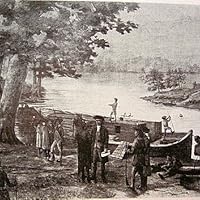
July 19, 2023
I have been a student and researcher of the Civil War era, particularly that of Union soldiers both during and after the war, for a very long time. This is one of the best books I have ever read on the subject, and fills a much-needed gap in how returning soldiers were treated after returning home. Excellent, compelling writing. The only negatives about this book is that Jordan spends little time focused on returning African American soldiers, and that the book is too short - I didn't want it to end!
Displaying 1 - 30 of 61 reviews