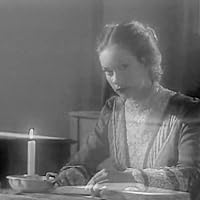
'Held me completely in its thrall until the very last line’ SUSAN STOKES-CHAPMAN, bestselling author of Pandora SOME HOUSES ARE HAUNTED BY THE LIVING June, 1878. The body of a boy is pulled from the depths of the River Thames, suspected to be the beloved missing child of the widely admired Liberal MP Ralph Gethin. Four months earlier. Harriet is a young maid newly employed at Finton Hall. Fleeing the drudgery of an unwanted engagement in the small village where she grew up, Harriet is entranced by the grand country hall; she is entranced too by her glamorous mistress Clara Gethin, whose unearthly singing voice floats through the house. But Clara, though captivating, is erratic. The master of the house is a much-lauded politician, but he is strangely absent. And some of their beautiful belongings seem to tell terrible stories. Unable to ignore her growing unease, Harriet sets out to discover their secrets. When she uncovers a shocking truth, a chain of events is set in motion that could cost Harriet everything, even her freedom…
An interesting voice in the genre so popular nowadays, namely Gothic novel set in Victorian period. I enjoyed the plot albeit it was rather predictable. Some motifs are a little overdone. Still, atmospheric and a decent read for fans of such fiction. *Many thanks to Hester Musson, 4th Estate and William Collins, and Netgalley for arc in exchange for my honest review.*
Hester Musson’s debut is set in late nineteenth-century England where a young housemaid Harriet Watkins finds herself caught up in an unexpected web of deceit and intrigue. What starts out as a fairly standard pastiche of a conventional, nineteenth-century novel unexpectedly morphs into something closer to the sensation fiction made famous by writers like Mary Elizabeth Braddon. But Musson also displays the influence of authors like Sarah Waters and Michel Faber in her reframing of Victorian society, as she exposes its lurking depravity and hypocrisy: from wealth that’s the legacy of slavery to child sexual abuse and the exploitation of those without money or power.
Harriet finds herself working at Finton Hall, a great house in rural Hertfordshire, where she becomes fascinated by its mistress the enigmatic and melancholy Clara Gethin who’s the subject of unsavoury rumours, not least her inexplicable coldness towards her young child Edward. As Harriet becomes closer to Clara, she becomes increasingly aware of the secrets that surround Clara and her husband, a member of parliament who’s absent more often than not. There’s a general sense of unease surrounding the household and a mystery concerning the countless servants who’ve abruptly left its employ. Harriet confides her thoughts to her diary, a blow-by-blow depiction of her everyday life which beautifully conveys the claustrophobia and isolation of life in service, tied to one building day after day, not even free to wander its grounds. Musson also teases the reader by introducing a fleeting reference to what might be to come, the possible, brutal murder of Clara’s baby son.
I had mixed reactions to this one, there are Sapphic undercurrents that ultimately led nowhere, and these – along with a subplot involving a young Black servant – felt grafted on and awkwardly tokenistic. The pacing of the narrative could definitely be tighter and more even, the early sections are particularly slow moving. Some elements would be unlikely to stand up to close scrutiny, the exploits of Clara’s husband and his band of male followers seemed overblown at times, but I responded to Harriet’s voice and as Musson’s plot unfolded, I was increasingly gripped and desperate to know what was really going on.
Thanks to Netgalley and publisher 4th Estate for an ARC
When I finished The Beholders, I lay awake in anger at how I had wasted several hours of my life reading this garbage. I was so incredibly bored the entire book, every time I picked it up I kept hoping it would just end but it never did, and to much to my detriment I refused to not finish it. This was primarily for two reasons, the first being that I had already DNFed a previous NetGalley request and didn't want to DNF again, the second being that it was driving me up the walls trying to figure out if Harriet and Clara were sapphic or not. It turns out they weren't, which made the book an even bigger waste of my time. I honestly cannot believe this got a six-figure book deal. If I ever decided to write a book I'd be a millionaire.
I had no idea what direction this book was going in and even after reading I still have no idea what this book was trying to do - I was really confused at how Clara having a magical singing voice brought anything to the story, and it felt like random things were thrown in to make some semblance of a plot. I also have no clue how the content in this book relates to the title at all.
I also hated the terrible attempt at queer representation - a male character, Laurence, was courting a woman but at the same time secretly hooked up with various men. It was stated in the book that he did love her, but his dalliances fulfilled a different need, which could mean one of three things: a) that he was bisexual, playing into the false and harmful stereotype that all bi people are cheaters; b) that he was gay and loved her platonically, but if this were true he could've just said so in the book; or c) that he was heteroromantic and homosexual, but again this could've easily been explained in the book, so my assumption was that the author was trying to write a bisexual character from an extremely biphobic point of view.
When the ridiculous romance (I hesitate to even call it that) between Harriet and Robert came out of the blue at the end of the book I didn't even have the strength to roll my eyes, I was so drained from reading over 300 pages of monotony. The only positive of the book is it was so unmemorable, I'll probably forget about it soon.
Thank you to NetGalley, 4th Estate and William Collins for providing a copy of this book for review. All opinions are my own.
This was a good read. There is a sinister feeling that forewarns the unfolding of the story and the momentum builds slowly. I think in places the story seemed to have too many words or could have been described more clearly- but then obfuscation can also be a useful tool in the gothic genre. Many thanks to Netgalley for an arc of this book.
This is a book of two halves for me, so it's really difficult to rate. I loved the first half. We have a servant traveling to a new job at a remote English mansion. A strange mistress. An absent master. A library filled with interesting objects. I was all in!
And then, it got very dark. Suddenly, there was sexual abuse. Rape. Trauma. Emotional abuse. Mixed in with these elements were several scenes that didn't seem to move the narrative along. I had many questions along the way that didn't really get answered. I really liked Harriet, the main character, and her servant's perspective, but the book just didn't feel cohesive as a whole.
This entire review has been hidden because of spoilers.
The tale of a young housemaid working in a large country house where sinister goings on lurk beneath a veneer of Victorian respectability and philanthropy. I enjoyed the main character Harriet, and sympathised with her frustration of her limited life choices, drudgery, or a combination of both drudgery and marriage. The character of Clara I found merely frustrating, too much ethereal drawn out mystery and staring into the middle distance. The overall story was good, I love a bit of gothic fiction, but the pacing was somewhat slow, I felt it needed to be tighter to sustain the suspense, a solid 3 stars, I'd like to see what this author does next. Thanks to Netgalley and the publishers for the ARC.
The body of a child is pulled from the Thames and the search for the beloved missing child of the widely admired Liberal MP, Ralph Gethin, is finally over. Four months prior, Harriet was a maid newly employed in the MP's home but she rarely saw him or his child. Instead it was his wife, Clara Gethin, who walked the many hallways alone. Harriet became equally as enraptured and fearful of her new employer, as well as the multitude of strange items that filled her home. Harriet filled her days with her duties and her nights with attempting to discover the truths behind them all.
This became a far different story to the one I thought I would be reading, full of many dark subject matters and sordid narrative twists. I did, however, find the setting up of the story and its conclusion to be my favourite aspects, as knowing the tragedy that this centres on led to some middle sections feeling just a little mundane when nothing entirely new felt delivered for some span of pages. The ending, however, had me enamoured with the storyline all over again although, overall, this remained only an enjoyable experience but one I can't see myself revisiting.
I received a copy of this book in exchange for an honest review. Thank you to the author, Hester Musson, and the publisher, Fourth Estate, for this opportunity.
has only 4 days passed since i started this book? goodness 😟 it felt much longer!
this book was unbearably slow. it certainly has pacing issues. the beginning half of the book focused on detailed accounts of unnecessary events, which didn’t really build the characters / world building at all. that really slowed the reading experience and the enjoyment of the book.
also the formatting, i should’ve opened the book and read the first few pages because i *do not like epistolary* stories 😒 i’ve discovered this on account on reading Dracula, but i much prefer it if i am able to ‘see’ and experience stories as they come, not from a recounting of it. but i suppose it is also meant to add depth to the mystery element of the book. i digress and say that it adds to my frustration of it ☹️
the main character was interesting. i’ve always wondered the different reasons why a housemaid would be so loyal to their master/mistress. the story gave one example of it. from Harriet’s point of view, we are able to see the claustrophobia, the longing, the comparison between the rich and poor even more vividly which i appreciate. the other main character, Clara was an even more complex character. i felt that she was meant to be shrouded in mystery and an aloof air, but all i felt at least from the book was that she was purposefully withholding information for the sake of the plot and the book. again, the pacing issues here are evident.
overall, the story had an interesting theme, but the execution would benefit from tighter and refined editing.
on a side note, i was extremely disappointed as i kept telling myself that i needed to like the book on account to such a beautiful cover and spray edges but no. that was completely my fault though 🤦🏼♀️
Okay, this book is just a big ole chefs kiss wrapped in pizza! There something about books that are all about embracing the darkness in life, bonus points when they’re gothic mysteries set in Victorian times. The twists and turns in this one had me absolutely gagged and some of the characters had me questioning me own motives in life. The beautifully simmering plot was only bested by the atmospheric tension that compelled me to keep reading until the books conclusion. The Beholders is definitely a book you’re going to want to read when it’s released early next year, so make sure you get preordering now for your next gothic fix.
You can tell the author knew their time periods and had fully researched this one, holy moly I’m absolutely obsessed with it.
Thank you so much to 4thestatebooks for sending me this stunning proof.
I really enjoy historical fiction, there's just something magical about reading about another time, isn't there? The Beholders is a story that examines the power of men, political and household. It really made me think about just how much power men have had over women, forever really. It was deeply heartbreaking and made me ache for all the women involved.
It really is a shame that male politician's haven't changed in nearly 150 years.
Such a beautifully written story, that although was slow in places had me captivated awaiting the outcome.
‘Beauty is in the eye of the beholder’ and the cover of this debut novel by Hester Musson is certainly a beautiful thing to behold.
We begin in June 1878 with Clara Gethin on trial at London’s Old Bailey for the murder of her own child, whose body has been pulled from the River Thames. As the wife of a highly respected politician who has provided evidence against her, things look very bleak for Clara, but there’s one person who believes – or at least wants to believe – in her innocence. This is Harriet Watkins, her lady’s maid and the only friend she has in the world.
We then go back several months to Harriet’s arrival in Clara’s household following the death of her previous employer. Her mother wants her to return home to marry her fiancé, but Harriet isn’t at all convinced that William is the man she wants to spend her life with, so instead she accepts a new position as housemaid at Finton Hall, the Gethins’ Hertfordshire estate. When Harriet begins her new job, she quickly senses that something is very wrong at Finton Hall. The housekeeper is hostile and unwelcoming, the footman seems to be hiding secrets, and the master, although largely absent, casts a shadow over the entire household. Harriet makes an effort to befriend her new mistress and is rewarded with promotion to lady’s maid, but she is concerned by Clara’s lack of affection for her baby son and her habit of dismissing servants seemingly on a whim.
The story unfolds through the pages of Harriet’s diary as she gives her account of her early days at Finton Hall and the things she experiences and observes there. The diary entries are long and detailed – sometimes more detailed than they really need to be – but otherwise the format is a good way to convey Harriet’s growing sense of unease as she learns more about what is really going on within the Gethin household. However, I think I’ve read too many similar books recently, because I found it easy to guess what was happening and wasn’t surprised at all when it was revealed. It also seemed to take far too long to reach that point – the first half of the book consists of a lot of very slow build-up and there were times when I struggled to stay engaged.
The pace picks up in the second half as the action finally moves outside the confines of the house and we learn more about the fate of Clara Gethin’s baby. This part of the book felt more original and I was less able to predict what was going to happen; I also liked the romantic storyline which developed towards the end – although it felt slightly rushed, the love interest was not the person I’d expected earlier in the book and I was glad the author hadn’t gone in that direction. Overall, I think my feelings about The Beholders are more positive than negative; I just wish it hadn’t taken so long for the plot to emerge!
It is June 1898, and Clara Gethin, wife of highly respected Liberal MP Ralph, is on trial for the abduction and murder of their baby son, Edward. In the public gallery, Harriet Watkins believes that her mistress is innocent. Harriet was a housemaid personally hired by Mrs Gethin and then elevated to Lady's Maid, in defiance of the procedures laid down by the Housekeeper and the Butler and, especially, by her Husband. To the outside world, Gethin is a paragon of charity, friend and patron to the poor and the disabled, a possible Prime Minister in waiting. Within the household, however, he is a cruel and disparaging personage, despite rarely being there. Clara, usually referred to as “the missus” by the servants, has a reputation for being difficult, seemingly unbalanced, constantly dismissing servants chosen by her husband through the agency of the Housekeeper. Harriet is, therefore an anomaly. Part of Clara’s oddness is the fact that she mostly ignores her child, rarely visiting the nursery and avoiding physical contact. Harriet is a buffer against the rest and a close confidant but can she be a buffer against Gethin and how close can she be involved with the missus’s machinations. Harriet, unusually for her time and her status, keeps a diary and the book is told entirely from that, but is a continuous narrative and not at all diary like in the conventional sense. The writing is very strong and the ‘voice’ feels authentic. The plot is ultimately ingenious (which means I didn’t work out all the twists until they were on top of me). Part of the reason for that deficit on my part is the character establishment which takes up the first half (more or less) of the book. This is mostly ‘domestic’ detail, which I found annoying to plough through. In the second half, however, and especially in the last quarter, much of this detail makes sense and explains the reason for the court case and the follow up. Which puts me in a quandary. I think the first half is too long, 3 stars, but in the eye of a historical/domestic beholder that would be too low; on the other hand, in the eye of a crime/mystery beholder (such as I) the ingenuity as the final twists unfold is easily worth 5. That gives an average of 4, but it is ultimately more satisfactory than that, so 4.5, rounded up. I would like to thank NetGalley, the publishers and the author for providing me with a draft proof copy for the purpose of this review.
Oh, my! Harriet must have had time to squeeze some Victorian writing workshops in between her maidly tasks… because despite not being a reader her diary paper self is soooo convincingly detail-oriented and verbose.
The Beholders was recommended to me on Goodreads as a gothic novel, but it proved to be a total disappointment in that regard. The atmosphere is hardly gothic, yet tension is built: not in eerie terror, but in social hypocrisy, which is exactly the book’s strength. The Beholders paints a vivid portrait of the Victorian compromise: outward respectability masks a darker, corrupt reality. The story is narrated by Harriet, the lady’s maid to the enigmatic Mrs Clara Gethin at Finton Hall. She is not the protagonist in the traditional sense, but an observer, someone who sees far more than she understands. I appreciated this choice: Harriet duly records the events in her diary, but she is limited in comprehension. Truth, she reminds us, slips through our fingers. Given this premise, I was ready for sudden reversals and dramatic turns, but the many twists often felt predictable and excessive. What really works, though, is the title: The Beholders captures Victorian society’s tendency to watch and judge, reflects Harriet’s role as an observer rather than an agent, and provocatively exposes us, the readers, as just more beholders.
4⭐️ Well, this was a book of two halves. I was really looking forward to reading this book but became increasingly disappointed and, frankly, a little bored by the time I got about 100 pages through. I honestly thought of putting it aside as it was very slow and a little repetitive. I decided to continue, and I'm glad that I did. It all kicks off midway through the book, and we have a mad, Victorian gothic melodrama jump out and grab us by the throat. I could not put the book down once I passed the midpoint. Yes, it's all a bit gloriously mad, and there's obviously issues with the structure (unless the ponderous, slow first half, hectic second half and weird timeline is on purpose?) but it ended up being a 4⭐️ read for me.
how can there be so much happening all while it felt like nothing was happening?? much potential but missed all the good points, meanwhile making too many boring stereotypes part of the plot with no reason
the beholders is an intoxicatingly atmospheric gothic novel with a sinister underlying tension that slowly unfolds as the plot progresses. i couldn't get enough of the intricate relationship between harriet and clara, her mistress, which was mesmerising in the way it progressed from uneasy acquaintances to tentative friendship, and then intimate allies in the face of adversity. the way the diary format was used in this book was very intriguing, and the writing style flowed so well. everything falls into place in a resolution that was unexpected but wholly satisfying, and i enjoyed seeing how the finer details unravelled in the final moments of the book.
ultimately, a compelling narrative with characters that are never 100% fixed in one place. 4 stars.
thank you so much to netgalley and the publishers for an early digital copy to review!
What starts as an insight to Victorian life through the eyes of Harriet Watkins, quickly turns into a dark mystery in a household shrouded in sinister secrets. Harriet Watkins is engaged as lady’s maid at Finton Hall to the enigmatic Mistress Clara Gethin. Clara is subject to a whole load of unsavoury rumours yet Harriet struggles to know who to trust while she is surrounded by the tight lipped and suspicious staff and villagers. What goes on behind closed doors at Finton Hall?
The Beholders starts off as a slow burn but then sweeps you up in a melodrama full of dark twists and turns half way through. I enjoyed the diary format, following Harriet’s journey and feeling the full force of all the shock and upheaval she endured. Full of mystery and betrayal but also resilience and loyalty, this is a passionate book with a raw message. It doesn’t hold back on showing how power and influence can be exploited, but also how kindness and determination can counter evil deeds.
As the book begins in June 1878, the body of a baby boy is pulled from the River Thames. Suspected of his murder is Clara Gethin, wife of wealthy and respected MP Ralph Gethin.
Four months earlier, young maid Harriet begins as a maid at Finton Hall, the home of Clara, having been looking for a new position after the death of Mrs Berrington. Harriet’s mother is not best pleased, thinking Harriet would be returning home in order to marry her intended, William. Harriet is in awe of her mistress but there are strange goings on – there is a high turnover of staff and Harriet is especially fascinated by the disappearance of the housemaid Helen.
Clara becomes fond of Harriet and asks her to become her lady’s maid. Clara admires her mistress, especially her beautiful singing voice but finds her behaviour around her son strange – she doesn’t really have anything to do with him, and becomes distressed when she hears how her husband has spent time with him. Meanwhile, Harriet feels uncomfortable around some of the other servants and also her master when she discovers some pornographic images in the library.
I really liked the sound of The Beholders when I heard Hestor speak back in November and I wasn’t disappointed. Narrated entirely through the diaries of Harriet, I felt the story was a little slow to get going but it held my interest none the less. I liked Harriet’s voice and it was interesting to hear her torn between a life with a husband as expected and choosing to stay in service. There are some shocking moments including child death and sexual assault and we hear about the practice of baby farming which was prevalent in late Victorian times.
I really enjoyed this engaging and well plotted gothic novel which showed the darker side of Victorian society, and the second half especially was full of adventure and excitement. If you like historic fiction with a gothic twist, then this one certainly needs to be on your radar!
A gothic mystery following a servant (Harriet) and the family she is working for. As with all books set with this premise, there is a larger cast of other household staff all with their own secrets, and unfortunately none of them really likeable. Harriet especially made me mad at so many sections within the story, if she did what she was told and didn’t stick her noise where a servants noise isn’t meant to be than a few more lives would have been kept from getting hurt.
I was also taken aback by some of the content within this novel as it went in a direction that I’ve not seen in historical fiction of this kind before (please check trigger warnings) but it did feel a little “woke” for a novel set in this time period. Maybe it was trying to cover too many bases at once?!
I also felt by the 2/3 mark it was rather predictable, but all in all a decent gothic novel.
This was a very strange book. I very nearly DNF this but I read a few reviews where it said it picked up so I carried on. I kind of wish I hadn’t.
This book is written as a series of diary entries by our main character Harriet who has taken a position as a maid at Finton Hall.
That first 30% is a slog! It was so slow with nothing really notable happening. Things picked up when the Master returns home and then a series of events kickstarts into a somewhat interesting read.
Honestly though I was pretty bored and only finished because I felt I should give it a chance.
I think maybe the pacing just isn’t my vibe. This would be perfect for fans of historical fiction who love a slow pace.
I really didn't like the pacing of this book. Nothing happens for more than the first half....was actually quite tedious. Was getting into DNF territory. Then suddenly all the 'action' starts and the second half was quite good. 3 stars...which is my way of saying that I liked it but didn't love it.
I expected to love this, really I did being in the market for a good Victorian mystery read as I was, but somehow I did not connect with this. It is likely the dark country estate thing, it instantly screams gothic and I have to really be in the mood for gothic which isn't the case right now.
‘Some houses are haunted by the living’ - cover tagline.
My thanks to 4th Estate William Collins for an eARC and to HarperCollins U.K. Audio Fourth Estate for a review copy of the unabridged audiobook edition, both via NetGalley, of ‘The Beholders’ by Hester Musson. The audiobook was narrated by Ashley Tucker, Harriet Carmichael, and Elliot Fitzpatrick.
This debut novel is a Victorian Gothic mystery that focuses upon a sensational crime.
In June, 1878 the body of a five month old boy is pulled from the River Thames. It is suspected to be the beloved missing child of the widely admired Liberal MP Ralph Gethin. On trial at the Old Bailey is his wife, Clara Gethin, indicted for his murder. During testimony a commotion breaks out in the public gallery caused by a young woman.
After this dramatic opening the story moves back four months as Harriet Watkins comes to work at Finton Hall, initially as a housemaid. She is quickly entranced by the grand country house and by her glamorous mistress, Clara Gethin. Yet Clara’s behaviour is quite erratic and her husband, a highly regarded politician, is often absent.
Harriet’s curiosity gets the better of her and she sets out to discover the secrets of the family. She becomes closer to Clara, becoming her lady’s maid and confidant. When Harriet uncovers a shocking truth, it sets in motion a chain of events. No further details to avoid spoilers.
One of the devices used by Hester Musson is to have Harriet confide her thoughts to a diary as well as the occasional report from the police investigation and the trial.
It is quite a slow burn of a novel building up its characters as well as the setting of Finton Hall, which is full of dark crooks and crannies and exotic objects that fascinate the unworldly Harriet. We encounter Clara and her husband through her eyes.
With respect to the audiobook, while there are three narrators, it is Ashley Tucker who takes the lead voicing Harriet. I felt that she did well in embodying the character’s initial naïveté and her growing confidence as time passes.
Overall, I was impressed with ‘The Beholders’ feeling that it was an atmospheric Gothic mystery that sought to explore the more sinister side of Victorian society. It was a promising debut and I shall be looking out for her future projects.
I wanted this to be so much better. I picked this book up thinking it was similar to Stacey halls style so I would really enjoy it but I didn’t. I actually ended up listening to the book via audiobook and found it easier to take in compared to reading it myself.
I don’t think it’s the book I think it’s me. I enjoyed the story, I think, it the writing style and layout really did nothing for my little Brain to keep momentum and engaged unfortunately