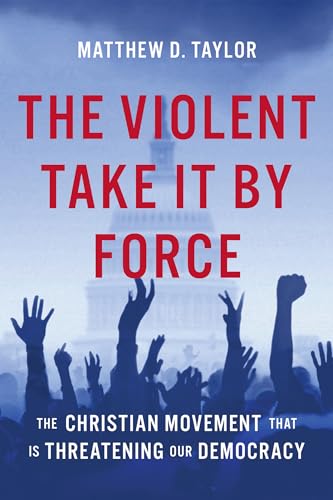
"Required reading for anyone seeking to understand Christian nationalism." —Kristin Kobes Du Mez, author of Jesus and John Wayne
A propulsive account of the network of charismatic Christians that consolidated support for Donald Trump and is reshaping religion and politics in the US.
Over the last decade, the Religious Right has evolved. Some of the more extreme beliefs of American evangelicalism have begun to take hold in the mainstream. Scholar Matthew D. Taylor pulls back the curtain on a little-known movement of evangelical Christians who see themselves waging spiritual battles on a massive scale. Known as the New Apostolic Reformation, this network of leaders and believers emerged only three decades ago but now yields colossal influence, galvanizing support for Trump and far-right leaders around the world. In this groundbreaking account, Taylor explores the New Apostolic Reformation from its inception in the work of a Fuller Seminary professor, to its immense networks of apostles and prophets, to its role in the January 6 riot. Charismatic faith provided righteous fuel to the fire that day, where symbols of spiritual warfare rioters blew shofars, worship music blared, and people knelt in prayer. This vision of charismatic Christianity now animates millions, lured by Spirit-filled revival and visions of Christian supremacy.
Taylor's unprecedented access to the movement's leaders, archives, internal conference calls, and correspondence gives us an insider account of the connection between charismatic evangelicalism and hard-right rhetoric. Taylor delves into prophetic memes like the Seven Mountains Mandate, the Appeal to Heaven flag, and the Cyrus Anointing; Trump's spiritual advisor Paula White's call for "angelic reinforcements"; and Sean Feucht and Bethel Music's titanic command of worship styles across America. Throughout, Taylor maps a movement of magnetic leaders and their uncompromising beliefs--and where it might be headed next. When people long to conquer a nation for God, democracy can be brought to the brink.
Matthew D. Taylor is a religious studies scholar and expert in independent charismatic Christianity and Christian nationalism. He is the creator, writer, and narrator of the Charismatic Revival Fury audio-documentary series on the Straight White American Jesus podcast and author of Scripture People. Taylor holds a PhD in religious studies and Muslim-Christian relations from Georgetown University and an MA in theology from Fuller Theological Seminary. He has served on the faculty of Georgetown University and of George Washington University, and is currently a senior scholar at the Institute for Islamic, Christian, and Jewish Studies in Baltimore.
During my middle school and high school years in the 1990s I went to an independent charismatic church that had reformed theology. I never attended a Sovereign Grace church but they have always sounded very similar, just for context. The gifts of the Spirit such as speaking in tongues, being “slain in the spirit,” holy laughter, and prophecy were on display. I remember when a prophet came to our youth group to prophesy over us. I also remember when people from the church visited the Toronto Blessing and “brought it back” to us. I remember when the pastor was praying for me and pushing on my forehead so I would fall down in the Spirit but I remained standing until he lost interest.
The pastor there claimed an “apostolic spirit” which means, essentially, that he had the same gifts as the Apostle Paul. (And you wonder why I have such beef with Paul.) I was told many years later that one of my guy friends in youth group was told a lot that he might also have that apostolic spirit, that it was kind of dangled in front of him as the pastors mentored him. This was obviously not something the girls were told.
There was a lot of language about spiritual warfare - resisting spirits of adultery and homosexuality. We were tearing down strongholds and enlarging God’s territory.
It is difficult to explain if you haven’t experienced it. And it’s not like I can just pull up evidence from the church website to prove my experiences - besides the fact that there was no internet, the church has definitely shinied up its image and all the leadership from those days now call themselves “mentors, authors, and church planters.” But I remember when they called themselves apostles.
In this book, Matthew Taylor talks about what happened in that movement after I found my way out of it in the late 1990s, who some of the leadership are, and how their spiritual warfare language and alignment with the GOP led to both the support of Donald Trump and DIRECTLY (while working with Trump) led to the events of January 6th. He calls them not Christian nationalists but Christian supremacists and that feels right to me. They want Christianity to rule everything. And they believe they are right to do so.
It isn’t an easy read because explaining a religious movement like this takes a lot of backstory but Taylor does a good job highlighting the main characters (most of whom you have never heard of and yet their videos get millions of views) and then showing how their actions fueled the rage we saw that day. It takes a lot of work to explain the coded language of a spiritual movement like this and Taylor does that work for us in this book.
Late in the book he does a particularly good job explaining the “An Appeal to Heaven” flag that Samuel Alito and his wife flew over their house. Yes, it is a flag flown during the American Revolution but there is a reason it was seen so much on January 6th and those reasons have nothing to do with the American Revolution. It has to do with a vision of the world where these churches are begging God for control of the world. I knew it was dangerous but after reading this book I am truly alarmed by Alito’s continued presence on the Court and his apparent alignment with the people in this book.
I’m very glad I read this - it helped me put some of my own religious history in a broader context. I know I have many friends who are scholars of American religious history who would also appreciate this important addition to a dangerous and broadly overlooked/misunderstood group that continues to believe that they must do whatever they have to do, including violence, to rule America.
Thank you to the publisher and NetGalley for the copy. Out in September.
This is a really fascinating and detailed history of the intersection between charismatic forms of Christianity and Christian nationalism. If you, like me, are nerdy about theology and politics, you’ll want to check this one out.
Christian nationalism is a topic of concern. It also comes in a variety of forms, some of which may be benign and others dangerous. The forms that become dangerous are the ones that seek power over a nation. One name name for this is dominionism. It also comes in different forms, but at the heart of dominionism is Christian supremacy. That supremacy can include the government, education, culture, and more.
The Violent Take It By Force, by Matthew D. Taylor focuses on the forms that emerged out of Independent Charismatic Christianity, with the most prominent version being the New Apostolic Reformation (NAR). This movement is the fast-growing religious movement across the globe. It is built on Charismatic theology and the creation of networks rather than denominations. There are numerous figures related to the movement, most of whom are obscure names. But, they have had a significant influence both on the spread of a specific form of Christianity and on the political and cultural life of the United States and elsewhere. The majority of these figures have aligned themselves with Donald Trump, believing he has been anointed by God, whether he's a Christian or not, to usher in a new apostolic era.
The author of this book, Matthew Taylor is a religious studies scholar and expert on independent charismatic Christianity and Christian nationalism. He holds a PhD in Christian-Muslim Relations from Georgetown University and an MA from my alma mater, Fuller Theological Seminary. He currently serves as a senior scholar at the Institute for Islamic, Christian, and Jewish Studies in Baltimore.
The focus is on the political dimensions of this Independent charismatic movement within Pentecostalism, and more specifically on the Apostolic and Prophetic Movement (or NAR). Taylor makes a distinction here between traditional denominational Pentecostalism and the independent charismatic movement. That is because this latter movement has few if any boundaries or overarching institutions. It is the realm of megachurches, televangelists, prophecy conferences, healing revivals, and the prosperity gospel. The movements under consideration here began to emerge in the 1970s and 1980s as some within this independent charismatic world discovered apostolic and prophetic dimensions of the church. More specifically, Taylor writes that this book "tells the story of how a cohort of respected NAR leaders embraced the candidacy of Donald Trump early on in the 2016 election cycle. By constructing creative theologies and biblical rationales for supporting a debauched real-estate mogul, they prodded and harnessed the latent power of a previously politically disjointed Independent Charismatic world" (p. 8). A central figure in this story is a former mission and church growth professor at Fuller Seminary, C. Peter Wagner. More about that later in the review.
The title of the book is taken from a verse from Matthew 11, where Jesus spoke of the kingdom of heaven suffering violence and "the violent take it by force." Wagner and others in his movement interpreted this in a very unique way such that it gave support to their vision of spiritual warfare, a vision that involved "spiritual violence" but may have spurred on physical violence, especially on January 6.
Taylor begins his story not with Peter Wagner and the NAR, but with Paula White, the prosperity-preaching televangelist who became Donald Trump's spiritual advisor. While not directly involved with the NAR, she served as a mediator between Trump and Independent Charismatic Apostles and Prophets. Trump was attracted to White's prosperity teaching. So, Taylor tells us something of White's story, including her ministry as a woman preacher, and her eventual entrance into Trump's world and his White House staff. The first chapter, "A Televangelist in the White House" introduces us to White and Independent Charismatic Christianity. This prepares the way for the coming together of the NAR and Donald Trump.
In Chapter 2, Taylor speaks of "The Genesis and the Genious of the New Apostolic Reformation. To do this he first introduces us to C. Peter Wagner, who grew up in New York City but studied agriculture in college because he came to love farming while visiting his grandmother and her small farming community. Later he met Doris Mueller, who introduced Peter to evangelical Christianity. Together they chose to become missionaries and did so in Bolivia. Peter would earn his master's degree at Fuller, where Taylor and I also studied. He would later earn a PhD at USC in sociology and take a faculty position in the School of World Mission. While the Wagners started as cessessionists (the spiritual gifts ended with the last of the apostles), they eventually encountered Pentecostals and were drawn in. A key figure early on was John Wimber of the Vineyard. Together they taught a class on Signs, Wonders, and Church Growth (MC510). I was a student at Fuller during those years, and I remember the stories that came of the class. I also remember when they began to limit access. Wagner would get caught up in this charismatic fervor, eventually discovering spiritual warfare, apostolic and prophetic governance, and more. Having spent time within Pentecostalism I was aware of elements of this movement, but Taylor reveals so much more about the creation and building of this movement he came to call the New Apostolic Reformation. It would be a movement marked by strategic spiritual warfare, apostolic and prophetic governance, and efforts to transform society. Thus, a form of dominionism emerged. Wagner wasn't necessarily the creative genius of the movement, but he was the organizational genius, setting up a network that centered on his relationships with other apostles and prophets. Eventually, he would come around, shortly before his death to embrace Donald Trump.
In Chapter 3, titled "Generals of Spiritual Warfare," Taylor introduces us to another central figure, Cindy Jacobs, who sensed a prophetic calling as a child and developed a vision of spiritual warfare that she would eventually introduce to Peter Wagner. Jacobs would become one of the key figures and partners with Wagner in the development of the different spheres of the NAR. In this chapter, we learn of not only Jacobs' ministry but Wagner's departure from Fuller and move to Colorado Springs, which became a center for the NAR. We also learn how Jacobs's vision of spiritual warfare played a role in energizing a certain element of evangelicalism to support Trump. We also get introduced to another future who remains prominent in the Trump orbit, Lance Wallnau.
Chapter 4 is titled "The Second Apostolic Age." Here we encounter the further development of this vision of a new apostolic age and its network of apostles, mostly affiliated with Wagner. Among them is a Korean American pastor who studied at Fuller with Wagner and started a Church in Pasadena - Harvest Rock Church -- that became the center of a huge global network of churches and ministries that stood under the authority of Che Ahn. Here we learn more about the governance of these churches, which are strongly top-down oligarchy. So, we learn about Che and his ministry as a model of this movement, and the other apostolic networks that emerged. Again we see politics enter the conversation as Che challenged the California pandemic restrictions to the Supreme Court. His vision was for all Christians and indeed the entire world to submit to this apostolic vision of authority.
As the movement expanded, new elements emerged, and among them the Seven Mountains (Chapter 5). This element was devised by Lance Wallnau, one of the Apostles connected to Wagner's movement. Again we learn something of this figure who remains important. But for our purposes here, the focus is on a social/political effort that envisioned Christian supremacy. Once again, Wagner bought into this vision and shared it with his networks. Wagner was attracted to dominion theology, and what Wallnau did was develop the framework for instituting this vision. The idea here is that there are seven spheres/mountains that shape nations and control minds. The goal is for Christians to gain control of them. While Donald Trump wasn't considered an evangelical Christian, Wallnau came up with the idea that Trump was Cyrus and that through Cyrus the Seven Mountain Mandate could be instituted, such that Christians could take leadership of government, education, business, media, and culture. Wallnau played an important role leading up to January 6th, offering theoretical guidance for what happened that day.
Chapter 6 introduces another element to this movement, and that is the theme of "Worship as a Weapon." In this chapter, Taylor introduces us to Sean Feucht, a young worship leader connected with NAR and other Apostolic networks, who used his worship leadership skills to challenge pandemic rules and also spread the message of the Apostolic and Prophetic movement. We also learn something of the network he was connected with in Redding California, the Bethel Church. Central to his message was the idea that evangelicals are being persecuted, and thus he urged his audiences to push back.
The next element is described in Chapter 7 "A Governmental War." This chapter focuses on the 2020 election, the response to Trump's loss, and January 6. Here the central figure is Dutch Sheets, an early adopter of the Apostolic and Prophetic idea. Sheets was by Taylor's account, living at the "nexus of all the dynamics we've looked at: modern prophecy, strategic-level spiritual warfare, apostolic governance fo the church, the Seven Mountain Mandate, and the utilization of charismatic worship experiences for right-wing political ends" (p. 206). He also believed he had a unique calling to use prayer and spiritual warfare to influence US elections. So, once again we learn of one of the key figures, and his role in the Trump world. He had gotten involved in such efforts as far back as 2000 and continued from there. He helped create prayer networks across the country in support of Republican efforts. He also introduced a key symbol to the struggle. That symbol is a flag that goes back to the Revolution. It is the Appeal to Heaven flag -- a pine tree with the words Appeal to Heaven heading it. That flag was prominent in the crowd that rioted on January 6th. It is Sheets who introduced it to the right-wing Christian political world. That flag has become connected to the Trump efforts to regain power. It has been flown over the houses of a Supreme Court Justice and on the walls outside the offices of Republican leaders, including Speaker of the House Mike Johnson, who has connections with NAR figures, including Lance Wallnau.
This is a fascinating story, but also a rather scary one. This is a religious movement that largely flies under the radar but has created networks that influence political efforts across the country. Abortion is one of the central issues, but it's not the only one. According to Taylor, this is also a Christian problem because it has taken root in the Christian world. While the leaders condiment the violence of January 6th, many of them were there and encouraged their followers to join the crowd. One of the key conclusions here is that Christian nationalism takes different forms and some forms are dangerous, especially if they have designs of Christian supremacy. Another element of this is that Independent Charismatic Christian movements are growing faster than any other Christian movement. So, while the country is becoming less Christian, these movements are taking up a greater share of the Christian world.
This is an extremely important book, perhaps one of the most important ones I've read when it comes to Christian nationalism. Personally, there is an unsettling dimension, and that is the connection that Wagner had with Fuller Seminary. As one of my former professors lamented, Fuller will never be able to separate itself from Wagner and his legacy. It would behoove Christians to read this book before the coming election.
Taylor, who I think reacted exactly the same way to January 6 as I did, with horror and revulsion at seeing people kneeling in prayer and waving Christian flags during an anti-democracy assault on the heart of the Capitol, set out to try and understand why there were so many obvious Christian symbols along side so much violence. And he did. By tracing the ideas back through the New Apostolic Reformation movement of charismatic Christians, Taylor is able to clarify how evangelical charismatic churches and prophets are shaping American Evangelicalism outside of the traditional bounds of what we conceive of as evangelicals (the Baptist and Pentecostal denominations and their institutions which have been dominant since the Moral Majority days). He traces the leaders of these fringe Christian ideas have become more mainstream, buoyed through the independent mega churches, the internet, and this extremely interesting New Apostolic Reformation network. He also dispels the conventional idea that this is just about Christian Nationalism. Instead he believes, and makes the case that the central idea that supports Trump and the willingness to overthrow democracy stems from their beliefs in Christian supremacy and the practice of spiritual warfare. It's not that God wants us to be a Christian America, it's really a very global movement that promotes the idea that God wants to install christians, or in Trump's case a non-believer but who will work to put Christians, into power in different spheres of influence to bring about Christian revival. There's a great explanation of prophetic memes that have taken hold in these circles as well as a good explanation of the theology built around spiritual warfare, revival, and prophecy.
These preachers and evangelical celebrities are people who are completely unknown to me, in my extremely denominational world of American Christianity, but having Taylor walk through what is an obviously carefully researched and deep investigation into what is happening, was really helpful to me in trying to make sense of our current place in history. It was also really scary. The Victory Network YouTube channel that he discussed - and I happened to attempt to watch but would never have stumbled on it before - is just a wild trip down a rabbit hole into a completely upside down universe where Christianity and Republican conservative ideas blend seamlessly. This book has helped me make sense of some of the weirder theories that I've heard from republican relatives and friends and the way that those overlap with some of the things they find baffling I don't just understand as a Christian.
I'm extremely extremely thankful for Taylor's faith centered call to action. This is not a problem that is going to be solved by ignoring it, and it's a problem for people of Christian faith to step in and solve. Highly, highly recommend this book.
(Audiobook note: this book was only available in Audiobook format from my library and it is one of the worst books I've listened to. I know it listed a reader at the end, but honesty it sounded like it was AI read the whole time and it was painful. If I wasn't so interested in the content it would have been virtually impossible to get through. This book deserves a much better audio version.)
4.5 This book was such an essential insight into the NAR, Christian Nationalism, Charismatic Christian Evangelical circles, and the absolute insanity that is our country. Spiritual leaders can misguide and be corrupt, and this book so effortlessly points out the issues with blindly following, supporting extremism, christian masculinity, and elevating people to a prophetic title to influence. Required reading. This book gave me words and thoughts to put along with my feelings of explaining how weird and wrong the sector of charismatic christianity is and I’m so grateful for that.
I could not put this book down, despite the fact that is remarkably disturbing. There are enough good reviews of the book already. I'll just say here that someone should write a study on the (ab)use of the Bible among evangelicals during the Trump years. One of the most fascinating aspects of the book (and there are many) is the prevalent use of biblical slogans/stories to justify political supremacy and violence amongst the NAR: Jericho Marches, Nehemiah and the walls, Esther and Mordecai, the anointed David hiding in the cave, on and on it goes. Fascinating and disturving that many of the biblical images draw upon are violent ones.
The following is a brief summary of this recently published book, which was authored by a person raised in the Christian evangelical community. Although Jesus famously said “My kingdom is not of this world” (John 18:36) and although mainstream Christianity has long taken the position that revelation ceased with the original apostolic age, a new grassroots evangelical movement has evolved, against the initial opposition of established evangelical leaders, to claim direct and current revelation from God and to tout Donald J. Trump as the new “Cyrus” (the pagan king referenced in Hebrew scriptures) who will, notwithstanding his obvious immorality and scriptural ignorance, be the force that will establish a Christian kingdom to replace the government of the United States. This new movement is profoundly undemocratic and entirely contrary to the principles of the United States Constitution. Its leaders are principal religious advisers to Trump and to leading far-right figures in the U.S. Congress and elsewhere. I recommend reading this book, which is based on the author’s deep knowledge obtained by reading the religious tracts, listening to the oral presentations, and conducting interviews with the architects and currently popular “apostles” and “prophets” of this revolutionary movement Their leaders (though not entering the Capitol building) were present on January 6, 2021, to wage what they call “spiritual warfare” by praying and encouraging those who did break into the Capitol and injure more than one hundred defending police officers.
"The Violent Take It By Force" is an essential read for those unfamiliar with the cultural changing of the guard that's occured within Evangelical Christianity. Matthew Taylor provides an excellent overview of the key players and events surrounding a growing, extreme sector of Christianity with global influence. I appreciated that this was not a rehash of widely-publicized information or polemic in its presentation. I'm not generally a fan of "calls to action" in books that are written in a journalistic style, as they don't trust the reader to make sense of the content. But it's a small complaint for what will be among the best books you read on the subject of this emergent independent charismatic movement in Evangelicalism.
If you are puzzled and appalled as to why a reprobate like Donald Trump would be so throughly embraced by the evangelical community, this is a good place to start. Trying to piece together the many different theological thoughts that created the patchwork that enabled evangelicals to support Trump is astonishing. It is an equal indictment of Christians and Trump. At the end of the book, my question to my fellow Christians is this: Does the end justify the means?
The fact that most of this occurred under the radar should encourage us to look in new places.
De charismatische revival furie en de bestorming van het Capitol Matthew D. Taylor over de democratie bedreigd wordt door Dominion Theology, New Apostolic Reformation en de Seven Mountains Mandate
De bestorming van het Capitool in Washington op 6 januari 2021 door aanhangers van president Trump schokte veel Amerikanen. Voor godsdienstwetenschapper Matthew D. Taylor was de schok extra groot, toen hij ontdekte dat bij die Capitol Riots diverse vooraanstaande voorgangers uit de charismatische pinksterbeweging betrokken waren. Taylor herkende ook diverse symbolen die de bestormers met zich meedroegen, zoals de “Appeal to Heaven”-vlaggen en sjofars.
Taylor besloot te onderzoeken hoe bepaalde evangelicale stromingen en ideeën, zoals de New Apostolic Reformation (NAR) en de Seven Mountains Mandate bijdroegen van het Capitool. Taylor ontdekte dat diverse ingrediënten in met name de charismatisch-pentecostale tak van het evangelicalisme ervoor zorgen dat deze stroming een gevaar kan worden voor de democratie.
Taylor beschrijft hoe er onder Amerikaanse evangelicals vanaf de jaren-’70 steeds meer ideeën opkwamen om de VS weer christelijk te maken. Deze ideeën werden steeds politieker, omdat degenen die deze ideeën uitwerkten steeds nadrukkelijker gingen stellen dat de VS via politieke macht en maatschappelijke invloed terug gebracht moest worden naar de conservatieve christelijke normen en waarden. Het was niet genoeg om individuele Amerikanen tot bekering te brengen. Er moest een maatschappelijke en politieke elite ontstaan, die hun positie en invloed gebruiken om in heel de VS die christelijke normen en waarden weer terug te brengen. Taylor beschrijft hoe met name de structuur van de Independent Charismatics (de niet aan een denominatie verbonden charismatische pinkstergelovigen) bijdroeg aan een klimaat om het Capitool te bestormen. De Independent Charismatics zijn niet via een denominatie aan elkaar verbonden, maar wel via allerlei netwerken. Taylor beschrijft hoe deze variant van de pinksterbeweging een spirituele oligarchie kent: een geestelijke elite die zich door de Geest vervuld weet. Door deze structuur kent de beweging geen interne democratie, zoals dat wel is bij gemeenten die aangesloten zijn bij een denominatie. Degenen die tot deze geestelijke elite behoren zijn vaak voorgangers in megakerken en kennen elkaar vaak persoonlijk. Via deze netwerken is een idee als de Seven Mountains Mandate (7MM) in de afgelopen jaren vrij snel onder Amerikaanse evangelicals verspreid. Een eerdere variant van de 7MM is de Dominion Theology.
Binnen de onafhankelijke charismatisch-pentecostale gemeenten is het idee ontstaan dat denominaties de groei van het christendom tegenhouden. De allereerste christenen behoorden ook niet tot een denominatie. Deze onafhankelijke charismatische pinkstergelovigen zien zich zelf als voortzetting van de eerste christenen. De voorgangers gaan zichzelf dan ook presenteren als apostelen en profeten. Ze geloven in een maatschappijbreed réveil: een New Apostolic Reformation. Het aandeel van de charismatisch-pentecostale beweging binnen het Amerikaanse evangelicalisme is in de laatste jaren snel toegenomen. Binnen deze charismatisch-pentecostale netwerken kon een idee, dat Amerika via politieke macht en maatschappelijke invloed weer tot een christelijk land moet worden omgevormd, snel verspreiden. Een van de eersten die hiermee kwam was C. Peter Wagner, zelf betrokken bij de ChurchGrowthMovement.
Hij bouwde zelf diverse netwerken, waardoor apostelen en profeten elkaar konden vinden en waardoor hij zijn ideeën kon verspreiden. Degenen die bij zijn netwerken en organisaties betrokken waren, bouwden hun gemeenten vaak uit tot megakerken met hun eigen opleiding. Via die megakerken en die opleidingen konden die ideeën worden verspreid onder de Amerikaanse christenen. In de afgelopen decennia is door met name de charismatische pinkstergeloven een specifieke visie op geestelijke strijd gepropageerd. Zij geloven dat demonen zich op bepaalde locaties vestigen. Het is daarom van belang op de belangrijkste posten in de samenleving personen te hebben die bereid zijn de christenen te bevoorrechten en de conservatieve christelijke waarden en normen te bevoorrechten. Bijvoorbeeld via politiek en wetgeving.
Het idee ontstond dat er 7 bergen zijn, die staan voor maatschappelijke en politieke macht en invloed: godsdienst, gezin, onderwijs, overheid, media en kunst. Zolang deze posten niet door christenen bezet zijn, kunnen demonen hun invloed op de Amerikaanse samenleving uitoefenen. Via strategisch bidden en Jericho-marsen probeert men die demonen uit te drijven. Namen die in het boek een belangrijke rol spelen zijn verder oa: Paula White, Cindy Jacobs, Ché Ahn, Sean Feucht, Dutch Sheets.
Kenmerk van de charismatische pinksterbeweging is ook dat de gelovigen intens bezig zijn met een opwekking, een reveil. Ze verlangen niet alleen naar een réveil, ze geloven ook dat een réveil binnen handbereik is. Dit intense geloof en verlangen leidde in de jaren-’90 tot het drama van de Toronto Blessing. Deze Toronto Blessing leidde tot een scheur in het charismatische netwerk. Maar het intense geloof en verlangen naar een opwekking bleef. In het boek beschrijft hoe dit intense verlangen naar een opwekking gecombineerd wordt met het geloof dat de belangrijke posities door christenen moeten worden bezet. De energie waarmee het gepaard gaat noemt Taylor een charismatic revival fury. In 2016 begonnen deze Independent Charismatics achter de kandidatuur van Trump te scharen. Dat Trump geen gelovige was, was geen probleem.
Trump was als de Bijbelse koning Kores, die door God gebruikt werd om het Amerikaanse volk te leiden. De 45e president zou een Jesaja-45-president worden. Trump werd inderdaad president. In de verkiezingen van 2020 werd Trump echter verslagen door Biden. Ondanks alle visioenen van apostelen en profetieën van profeten. Deze charismatische pinkstergelovigen gingen geloven dat de verkiezingen gestolen waren. Het was een demonische invloed waardoor Trump niet gekozen werd. In aanloop naar de inauguratie van Biden ontstonden er diverse bijeenkomsten met charismatische pinkstervoorgangers. Er ontstond contact met medewerkers van het Witte Huis om de beëdiging van Biden tegen te gaan. Diverse pinkstergelovigen en zelfs ook pinkstervoorgangers raakten betrokken bij de bestorming van het Capitool.
Tegelijkertijd moet ook aangegeven worden dat een aantal toonaangevende voorgangers zich afzijdig hielden. Terugkijkend vindt Taylor het opvallend dat de bijdrage van de ‘charismatische revival fury’ compleet door de mainstream media is gemist. Daardoor is het minder duidelijk wat de betrokkenheid van diverse charismatisch-pentecostale gelovigen en voorgangers was bij de Capitol Riots.
Taylor schreef zijn boek uit bezorgdheid. Hij is niet zozeer bezorgd om de charismatische pinksterbeweging als zodanig. Die beweging is volgens hem een legitieme christelijke stroming. Hij maakt zich zorgen over de politieke componenten in deze beweging, die leiden tot een anti-democratische houding: het gaat deze beweging om overheersing van de maatschappij en de politiek. Vaak wordt er onder het mom van te strijden voor godsdienstvrijheid een extreme politieke visie uitgedragen. Het is geen vorm van theocratie, omdat de heersers zelf geen christen hoeven te zijn. Het volstaat wanneer zij de christelijke normen en waarden verplicht stellen. In deze visie op politiek en maatschappij is er geen oog voor de godsdienstige pluraliteit van de Amerikaanse samenleving. Terwijl volgens Taylor de Amerikaanse democratie toch gebaseerd is op deze godsdienstige pluraliteit. Het vraagt om een intern gesprek binnen de kerken, en dan helemaal binnen de Independent Charismatics, om de democratie veilig te stellen. Zijn evangelicale christenen in staat om een godsdienstig plurale samenleving te accepteren? Is er een vorm van patriottisme mogelijk zonder te vervallen in christelijk nationalisme?
Toen ik tijdens het lezen van het boek over de inhoud berichtte, kreeg ik de vraag wat wij er in de Nederlandse situatie van kunnen leren. De charismatisch-pentecostale beweging is niet alleen op de VS gericht. Het is een wereldwijde beweging. Ook in Nederland dringen deze ideeën door. Boeken worden vertaald, ideeën over een geestelijke strijd tegen demonen die maatschappelijk actief zouden zijn neemt steeds meer toe, liederen uit deze charismatisch-pentecostale beweging worden ook in Nederland geluisterd en gezongen. Het grote gevaar is dat er vanwege de behoefte te strijden voor conservatieve christelijke waarden een monsterverbond gesloten wordt met radicaalrechtse politieke partijen. Daarbij begrijp ik de behoefte om tegengas te geven en te strijden voor het behoud van conservatieve waarden en normen. De vraag is echter of een krampachtige poging via maatschappelijke en politieke macht en invloed een samenleving echt herkerstend wordt. De vraag daarbij of het aansluiten bij radicaalrechtse partijen niet te te grote aanslag is op de democratie en de maatschappelijk relevante instituties.
I appreciated this book’s explanatory power for why Evangelical Christians supported President Trump and were part of the January 6th riot. Taylor points to Paula White as an early connection between President Trump and the independent/non-denominational Charismatic/Pentecostal world. Meanwhile, a confluence of ideas surrounding prophecy, spiritual warfare, and dominion theology (worked out and shared by the NAR) worked together to convince these Charismatics/Pentecostals and the greater Evangelical base that Trump’s Presidency January 6th were pivotal in the fight between good and evil.
I did not grow up in the circles that Taylor discusses, but I am familiar with some of the ideas brought up re: spiritual warfare and dominion theology. As far as Taylor talked about moments I was familiar with, the information and thoughts tracked.
Do give this book a read and tell me what you think. I would enjoy continued discussion regarding the connection between Trump’s administration and Christian supporters.
This book is helpful in so many ways personally to me. The connection between C. Peter Wagner and the events of January 6th I found very fascinating. I read many of Wagner's works as I had interest in the church growth movement in the 90's. I also have family and friends who are confused by the seven mountain mandates that this book highlights. Unfortunately I am afraid that regardless of what happens in the 2024 election Christian nationalism is not going away anytime soon.
“So if, as a Christian, you object to the activities and theologies I have outlined, it is your obligation to speak up” (pg 244). I feel the obligation after reading this excellent book by Matthew Taylor. There are many frustrations that I have with aspects of modern Christianity in America that Taylor gives words and historical context to that was deeply insightful to me. Understanding where a lot of the ‘us against them’ rhetoric comes from gives me a better lens to use while approaching various ideas and theologies. Learning more about dominion theology and how aspects of that brings some violent language to the table was significant for me in understand what is going on behind the scenes.
Unfortunately, this incredibly riveting and depressing book is an absolute must-read in 2025 America. If only January 6 had been the wake up call that it could have been.
Woah. While I was aware of the curious connection between charismatic and prosperity preachers and radical right-wing ideology, I never realized just how deep and influential these ties run. The book shines a light on key figures who wield significant influence in these spheres yet often remain overlooked by mainstream media.
By delving into the theology of these speakers and exposing how they conflate political power with the will of God, the book reveals the profound dangers this poses to democracy. Reading it felt like watching a surreal episode of Black Mirror—except it’s all real.
This is the troubling account of how independent charismatic Christians came to support the falsehoods and violence at the Capitol on January 6th, 2021. While I consider myself fairly knowledgeable of the American Christian landscape, I must confess I began reading this book almost entirely ignorant of independent charismatic Christianity in America. Taylor argues that, contrary to the popular and scholarly understanding, "Christian nationalism" has various sources, and it is problematic to equate all of them. Mainstream media and scholars have almost completely overlooked the contribution of charismatic Christians to this theological and political movement.
Independent charismatic Christians are part of a broader societal trend away from trust in institutions. And charismatic Christianity offers people a great deal of hope and meaning for our lives--that God loves us and is actively at work in our lives, and that our lives may substantially contribute to countering the work of the Devil (evil) in the world. So far, so good. This isn't so different from most Christians. And yet, I am continually perplexed how so many Christians can get turned around and embrace lies and violence.
But many of these charismatic Christians have gone beyond finding meaning in life by trying to do good and resist evil. The New Apostolic Reformation (NAR), a network of charismatic Christians, has romanticized violence and provided theological justification for it through the "seven mountains mandate" (in which Christians should seize control from the top of seven cultural authorities, including government, the media, and education and then enforce their values on society). Moreover, these Christian leaders network together and thereby reinforce their ideas while dismissing other Christian opposition or accountability as not of God, or even of the devil. (Frequently, the believe that their "enemies"--including Christians like Joe Biden or Nancy Pelosi--are deeply compromised by or controlled by demons. And how does one compromise with the demonic?) Because they can hear directly from God and appoint themselves prophets and apostles, how can one oppose them? In the end, they are simply embracing the celebrity culture that has eclipsed institutional authority in our country.
One interesting aspect of this movement is their hunger for "revival". Now, many Christians, including within my own tradition, long for "revival" and mean different things by that. In this case, they seem to desire a revival that will counter Christianity's demographic decline, convert many souls, and promote a right-wing politics infused with Christian supremacism. It strikes me however that this hunger for revival reveals a deep immaturity. The kingdom is like a seed which grows slowly over time, and growing into maturity is slow, patient work.
One final theme revealed in this book is the lack of humility of these charismatic leaders. While many come from troubled backgrounds, they are so certain that they are right that they cannot admit they might be wrong. Many have wrapped the meaning of their lives into a story of Christian conquest of American government and culture that they can no longer read the scripture against themselves. They've got turned around and, without humility, how can they find their way back?
Following up on other books I have recently read about Christian nationalism and supremacy, and their correlation to to the January 6, 2020 insurrection, is this, what I feel might be, definitive work. It really explains the overwhelming feelings of people about what was happening that day and how Donald Trump was chosen, and how he has utilized that choosing by these groups. Crazy scary. The author has fully researched his work and writes in a way that makes the unbelievable actually factual. He also opines that this supremacy is set to continue and fears what could happen unless Christians across all sectors discuss what is happening. Very thoughtful and informative. But very concerning….
I've been building out my understanding of the historical Christian movements in America, and this one is not to be ignored. I had no idea this independent charismatic version of Christianity had so much power in the US. I was raised in the Dobson/MacArthur/etc. bubble and had always assumed they and their peers were the major players in political power. This is important information. I think everyone should know that a major world leader has a flock of faithful advisors pouring prophesies of his own greatness in his ears.
Have you wondered why there was fervent worship, prophecies, prayer and Jericho marches at the Capitol insurrection on January 6? Wondered about the famous pics of Trump being prayed & prophesied over? About the convergence of Independent Charismatics with extreme right politics? About the increasingly violent rhetoric & war imagery you hear from Charismatic leaders? About the Apostolic & Prophetic movement? Seven Mountain Mandate? Dominion (Kingdom Now) theology? Spiritual Authority? Spiritual Warfare? NAR? Bethel? And the list goes on…This is the book for you!!!!
An excellent treatise on the independent charismatic sect of evangelical Christianity and its embrace of Trump and extreme right-wing politics in the United States. Readers unfamiliar with evangelical beliefs and practices may be alarmed at some of the ideas presented in this book. Taylor writes as a researcher and scholar and illumines the interweaving of evangelical Christianity and the politics of Trump. He begins with the early 20th century and ends in the present-day. This book will help readers understand why evangelicals largely support Trump and right-wing politics.
Thoroughly researched, non-sensationalized account of what led to January 6. It’s a scary read, but good to be aware of what millions of people believe.
Excellent read. Leaders from a narrow (but popular) view of the Christian faith have cozied up to the American Empire and bolstered support for some of its biggest lies.
On January 6, 2021, election results protesters gathering at the US Capitol became violent, injuring hundreds as they surged into the Capitol building. This book seeks to understand the spiritual elements at work in bringing Christians to the Capitol and creating an environment where violent rioting occurred. The author does not blame this riot entirely on the charismatic Christians discussed in the book, nor does he portray everyone at the insurrection homogeneously. Instead, Taylor seeks to trace the history and growth of non-denominational charismatic leaders and how their doctrine and spiritual agenda fueled the fire that burst into action on January 6.
Matthew Taylor, an expert and scholar on religious studies, independent charismatic Christianity, and Christian Nationalism, is himself a Christian and grew up in a church environment adjacent to the quadrant of Christianity he discusses in this book. I appreciated the way he explained his terms and limited the scope of this work to a specific sector of Christianity, thereby avoiding overgeneralization or broad-brushing.
Introduction “As Peter Manseau, curator of American Religious History at the Smithsonian, put it, religion was not a piece of the story of that day; it was the story of what happened on January 6, [2021] (p2).”
“In The Violent Take it by Force, you’ll read about a particular form of American Christianity whose escalating radicalization poses a real and imminent threat to pluralism and democracy. … I want to understand the ringleaders, the instigators: the people I’m calling the principal theological architects of the Capitol Riot (p2).”
“Further, the NAR’s (New Apostolic Reformation) theological ideas around politics and spiritual warfare are increasingly setting the agenda for the religious right in America and quickening our polarized, zero-sum political environment (p3).” “But I’m going to argue that NAR’s long-standing alliance with Donald Trump (not to mention their mobilization for January 6) has been every bit as much about theology and biblical interpretation as it ever was about politics (p6).”
Chapter 1: A Televangelist in the White House Covering the placement of Charismatic, non-denominational evangelicals within American Christianity, the revivals in the 20th century that fed this quadrant of Christianity, and Paul White’s personal history, this chapter sets the stage for the rest of the book. “In a turn that no one could have predicted even two years earlier, Paul White and her coterie of televangelists, prophets, and charismatic megachurch pastors were suddenly the Christian face of the Republican presidential ticket (p44).” “This tenacious, talented, tragic, triumphant woman – someone who has broken every glass ceiling she came up against – became the first pastor to offer an official blessing over an attempted American insurrection (p48).”
Chapter 2: The Genesis and the Genius of the New Apostolic Reformation “In this book, we look at the spiritual origins of January 6. Where did the assertive, optimistic, angry, shofar-blowing, worship-music-singing, dramatic prophesying, Christian energy on display that day originate? (p50).” “In May 1996, at this lunch meeting, and in the entire Postdenominational Church symposium, the NAR [New Apostolic Reformation] was born. … This is where, I believe, we can see the first glint of the religiosity that would fuel January 6 (p63).” “These radical theologies were generally emanating from a group of Calvinist theologians called the Christian Reconstructionists, who, in the 1970s, became some of the theological leading lights of right-wing Christianity (p68).”
Chapter 3: Generals of Spiritual Warfare She [Cindy Jacobs] has spent the past four decades ferrying ideas and practices from the realm of controversy on the charismatic margins into the mainstream of American Christianity and American politics (p81).” “Through the course of the 1990s, Cindy Jones and Peter Wagner would become pioneers of a burgeoning prayer and spiritual warfare movement that electrified not only the Independent Charismatic sector but huge swaths of the wider evangelical world (p87).”
“With the ever-growing legion of prophecies about Trump and a handful of influential NAR and Independent Charismatic leaders advising Trump, they believed that God has ordained and anointed Donald Trump for office and opened doors for their influence to spread (p99).”
“Through POTUS Shield, Trump’s Evangelical Advisory Board, and Paula White’s advocacy, NAR leaders had multiple insiders to White House access and influence (p100).” “Almost all the Global Prayer for Election Integrity Zoom meetings were facilitated by NAR leaders, and they were a central organizing space for Christians who wanted to oppose the results of the 2020 election and see Donald Trump reinstated to another term (p102).” “Right-wing activists, pundits, and politicians have adopted a robust good versus evil, angels versus demons, cosmic combat framing of American politics (p108).”
Chapter 4: The Second Apostolic Age “This rally [Rally to Revival on January 5 in the Freedom Plaza], like many pro-Trump events building towards the Capitol Riot, was part prayer meeting, part wild-eyed airing of conspiracy theories, and part campaign speechifying (p111).” “Peter Wagner and his cohort came to view denominations with contempt. They saw them as nitpicking, managerial structures that always keep a lid on revival, squelching the volatile and assertive work of the Holy Spirit (p114).”
“If I had to boil the spiritual genre of the Capitol Riot down to one phrase, I would call it charismatic revival fury. It was a potent mix: charismatic supernaturalism, the craving for revival, and militant fury at an American culture gone morally and spiritually awry (p125).”
“[Ché] Ahn believed that God had ordained Donald Trump to have another term. He believed that literal demons had hijacked the 2020 election, robbing Trump of his rightful win. And he believed that his presence and his words that day could change spiritual realities (p135).” “Ché Ahn and many of the apostles and prophets and adherents of the movement can more helpfully be understood as Christian supremacists. A Christian supremacist, by my definition, occupies the most extreme end of the Christian nationalist spectrum (p138).”
Chapter 5: Seven Mountains “But no evangelical leader has done more to theologically backstop the presidency of Donald Trump than Lance Wallnau (p142).” “It [the evangelical establishment] fails to recognize the insurgent forces that are rapidly redistributing powers within American evangelicalism, and it pushes toward a conclusion that an episode like January 6 was marginal or fringy instead of a searing warning about the state of American evangelicalism (p146).” “The Seven Mountain Mandate is one of the most important prophetic memes in all of global Independent Charismatic Christianity today. … Respondents [to a 2023 survey] were asked if they agree or disagree with the statement ‘God wants Christians to stand atop the “7 mountains of society,” including the government, education, media, and others.’ … Today, more than one-fifth of all Americans recognize and endorse that concept (pp152-153).”
“Dominion theology is an assertive vision of Christianity forecasting Christians taking over whole societies from the control of the devil and structuring society around Christian values and theology (p155).”
“In Wallnau and Wagner’s understanding, the government was a different mountain than the religion mountain. So they needed an anointed government leader, not a pastor – to conquer that mountain (p162).” “This is the real brilliance of Wallnau’s propaganda: for charismatic evangelicals, who prize prophecy and prophetic illumination of scripture, Wallnau’s claims to oracular authority and insight into the spirit realm create a sense that God has a special hand on Trump (p165).” “And by January 2021, the month of the insurrection, they [FlashPoint, with leading voice Lance Wallnau] received 32.4 million views on YouTube (p167).”
“The organization [Truth and Liberty Coalition, run by Lance Wallnau] trains Christians on how to run for office and how to strategically engineer takeovers of local city councils and local school boards, which represent the government and education mountains (p171).”
Chapter 6: Worship is a Weapon “But a shift has occurred over the past decade, accelerating since 2020: worship is now political. … In this chapter we will look at all the ways [Sean] Feucht, by regurgitating and repackaging many of the NAR frameworks we’ve explored in previous chapters – along with a few he picked up at Bethel [Music] – embodies the broader charismaticization of right-wing politics (p174).” “As the Trump presidency was playing out in the nation, Feucht was becoming one of the recognizable faces of Bethel, and he was on a glide path to becoming a very respectable celebrity worship leader (p182).” “Feucht’s worship protest movement was originally framed as a demonstration for religious freedom, arguing that the US Constitution and natural, God-given rights should guarantee worshipers’ ability to gather, even in the face of a global pandemic (p185).” “Recall that Feucht envisaged his Portland crowd of supporters as ‘an army’ and that he explicitly targeted the protester-occupied section of Seattle ‘to declare that Jesus was Lord over their “occupied territory.’ Those hardly sound like peaceful, upbeat religious freedom events (p194).”
“It’s a move from ‘Christians deserve the same rights as everyone else,’ which is a perfectly constitutional and democratic claim, to ‘we are fulfilling America’s prophetic destiny by conquering the Seven Mountains,’ which represents a deeply antidemocratic agenda (p195).”
“Many Trump supporters, particularly right-wing Christians, have become unmoored from reality. … That is, 60 percent of white evangelicals ‘believe that the [2020] election was stolen from Trump’. I would argue that charismatic experiences are playing a starring role in creating this discombobulation about what constitutes truth and how we know it (p198).”
“One takeaway from these two studies is that charismatic experiences and theology – the things that separate charismatic evangelicals from other evangelicals – are accelerants for more extreme political views and behaviors (p200).” “Feucht’s oratory erases the real-world privileges US Christians enjoy, positioning American evangelicals as the perpetually harassed who need champions and defenders (p202).”
Chapter 7: A Governmental War “And what does it signal when religious leaders, invoking prophecies and spiritual warfare, are directly coordinating with elected officials or staffers tasked with running the nation’s government? (p205).” “Stated simply, Wagner and [Dutch] Sheets believed that God relies on prayer warriors and apostolic generals to accomplish God’s will on earth (p211).” “Just as dominion theology and the Seven Mountain Mandate say Christians are supposed to conquer all parts of society, Sheet’s ekklesia concept puts Christians in charge of the earth in the spiritual realm, an authority they can use to ‘legislate’ – that is, change reality – in the natural realm (p216).”
“Sheets is arguing, largely, based on his retranslation of a single word in a single verse that Jesus – the first-century Jewish peasant living under Roman colonial rule, the sacrificial leader who was executed by the Roman Empire and who said ‘My kingdom is not of this world’ (John 18:36) – looked at the pitiless, colonizing model of the Roman Empire and said, ‘That’s the image I want my followers to imitate’ (p217).”
“When lawmakers have been accused of promoting Christian nationalism by flying the [Appeal to Heaven] flag, they’ll often demur that it’s simply a piece of American or Revolutionary War history. But to people on the inside, the flag signals a prayer-and-spiritual-warfare driven form of American Christian nationalism (p219).”
“Watching these videos [from Sheet’s political prayer meetings in November and December 2020], I can’t help but think of the energy in the crowds on January 6. And it’s not just the violent language or religious furor that calls January 6 to mind: it’s the ecstasy and hope, the boundless optimism that this violence, spiritual or otherwise, will bring about the long-awaited revival (p228).”
“Built into their spiritual warfare worldview is a ready-made interpretation of defeat or unfulfilled prophecy; that is, we lost this case, but God promises us victory in the larger governmental war over Planet Earth (p238).” “If we don’t pay close attention to the theologies, prophecies, decrees, and declarations of far-right charismatic Christians, we may sleepwalk into another Christianity-inflected insurrection (p240).”
Conclusion “In the 2020 election, the NAR cohort worked even more hand in glove with the Trump campaign, inspiring and urging Paula White to launch the One Voice Prayer Movement and openly campaigning for Trump in their networks. Through Sean Feucht’s Let Us Worship and Ché Ahn’s anti-COVID-restrictions lawsuit to defy local authorities and fight for Donald Trump (p242).”
“For Ché Ahn, evangelizing people into his form of Christianity and mobilizing for the next election appears to be more or less the same thing (p252).”
My Final Thoughts Having grown up in a charismatic Assemblies of God church, some of the people and activities described in this book resonated with me, and I see how many evangelicals, especially ones from charismatic backgrounds, have leaned into the theologies and doctrines detailed here. I learned that the New Apostolic Reformation segment of Christianity and other non-denominational Charismatic Christians generally view democracy as less important than Christian dominion over government, education, media, science, and other aspects of modern society, even at the expense of love and truth.
The scope of this book was limited to a portion of evangelical Christianity that is both charismatic and non-denominational. The author acknowledged that this was not the entire force behind the January 6 insurrection. I would be interested in reading a follow-up work that looks at the interplay between this quadrant of Christianity and Reconstructionists like Doug Wilson, Pete Hegseth, and the CREC segment of Christianity. There are some significant differences in theology and agendas between the groups, but they overlap in their support of Trump and his policies.
I believe that some Christians who read this book would agree that the doctrines and agendas of these Christian supremacists are extreme, but, sadly, they would still vote for and support politicians with these views because they perceive any “Christian” Republican position, even something as extreme as what is presented in this book, as better than the Democrat platform. Tragically, many in American evangelical Christianity prioritize power and experience over love and truth. I hope this book leads them to repentance and reprioritization.