All groups tell stories about their beginnings. Such tales are oft-repeated, finely wrought, and usually much beloved. Among those institutions most in need of an impressive creation account is the it’s one of the primary ways states attempt to legitimate themselves. But such founding narratives invite revisionist retellings that modify details of the story in ways that undercut, ironize, and even ridicule the state’s ideal self-representation. Medieval accounts of how Norway was unified by its first king provide a lively, revealing, and wonderfully entertaining example of this process.
Taking the story of how Harald Fairhair unified Norway in the ninth century as its central example, Bruce Lincoln illuminates the way a state’s foundation story blurs the distinction between history and myth and how variant tellings of origin stories provide opportunities for dissidence and subversion as subtle―or not so subtle―modifications are introduced through details of character, incident, and plot structure. Lincoln reveals a pattern whereby texts written in Iceland were more critical and infinitely more subtle than those produced in Norway, reflecting the fact that the former had a dual not just the Norwegian court, but also Icelanders of the twelfth and thirteenth centuries, whose ancestors had fled from Harald and founded the only non-monarchic, indeed anti-monarchic, state in medieval Europe.
Between History and Myth will appeal not only to specialists in Scandinavian literature and history but also to anyone interested in memory and narrative.
I'd been hoping, based on the title, that scholars knew the facts of Harald Fairhair's life, so that the datable legends about the first true Norwegian king would provide a case study in how mythmaking works: in effect, following along as generations of storytellers start with the facts, discard some, exaggerate others and conjure large parts of their narrative from thin air (or from an ancestral stock of folktales).
We can't do that kind of precision stratigraphic analysis for, say, King David, who might be considered a sort of Judean Fairhair -- we know nothing, or almost nothing, of the historical David, though plenty of experts have tried to tease out which parts of Samuel and Kings were written when, and for what purpose.
It turns out we don't have the facts about Harald, either. It's disappointing but doesn't detract from the job Lincoln has done explaining the differences between the various accounts of Harald's life -- who wrote them, what audiences were intended (later Norwegian kings? anti-monarchical Icelanders? both?) and how that affected the way the story was told. Interesting stuff, explained clearly enough for an outsider to the field, and it reminded me strangely of John Van Seters' work on pro- and anti-David propaganda in his books "In Search of History" and "The Biblical Saga of King David. " ("Saga," by the way, was not a term Van Seters, who was familiar with scholarship on Norse legends, chose randomly.)
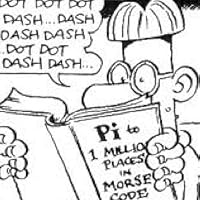
Postmodernists will be annoyed to learn that Lincoln regrets having written his most famous line, in "Theorizing Myth": "If myth is ideology in narrative form, then scholarship is myth with footnotes." Too glib, he says here, and "Between History and Myth" is partly an attempt to "do better." Even French public intellectuals, however, should enjoy the brief digression on the trope of the long-haired and/or long-bearded hero, illustrated by four pages of portraits of (among others) Harald himself, St. John the Baptist, King Mswati III of Swaziland, John Brown, Che Guevara, Blackbeard the pirate, Rasputin and Rabbi Menachem Schneerson. Nothing like a company Shutterstock account to make an editor's job more fun.
Accomplishes what it set out to do - but not what I was hoping they'd do
The author's basic premise is that the various medieval authors who wrote about Norse King Harald Fairhair (ca 850 - 932 AD) had different motivations for their work based on who was going to be the recipient of the work. For example, Icelanders who lived in a republic would appreciate seeing monarchs in a bad light while the rulers of the kingdom of Norway wanted the founders of their royal dynasties to be glorified. Sounds quite reasonable and I certainly wouldn't dispute it. Actually I'm not sure anybody has a problem with that conclusion.
But for me personally I'd have preferred that if the surviving primary writings about Harald were going to considered in depth like this (the appendix, footnotes, bibliography, and index make up 47% of the book) they could have been compared to the latest findings in Scandinavian archeology instead. Just a thought.
Well, I have not actually read it, but skimed through & checked it out, so to speak -- and find it lovely & fascinating & very well done, also when it comes to the book's layout and style.
Herlig også å se språksiteringene. Oss lizk illr at kyssa! Men hvorfor er det bilde av Einstein på sie 92, tro? Denne skulle du sett, Harald Hårfagre!