So I have this friend (yes, really a friend, not me in disguise, promise). She lives like a character in a novel. I don’t mean to say that she’s acting in some sort of pantomime. I mean that things happen to her, she thoroughly absorbs them and contemplates them, and then acts as if she’s had herself a two chapter period of long walks in the park and insightful inner monologues before each choice is made. All of her choices seem to make sense, as if chosen by an author skilled in characterization, with enough experience that she isn’t likely to make inconsistent character choices in her world, thank you very much. She’s got the trick of coherence in her life, whether good or bad. I don’t mean to say she is predictable (she is not), but all of her stories have a wonderful clarity to them.
Now, this may sound like just the normal process of being human to many people reading this. I hope it does. I wish it did for me.
In both my own life and in the lives of those around me, I see a ridiculous amount of randomness. I’ve known my closest friends a very long time now, and even if I can sometimes predict the words about to come out of their mouths with perfect accuracy, I'm not satisfied I know why. I don't have a sense of a whole character. We’re all very young, a lot of us are still choosing who it is that we want to be- thus, many choices appear inconsistent, silly, incomprehensible, off the wall. I know at least one friend who has been trying to become a character for over six years- and his choices are the craziest of all of them. I’ve decided it is because he’s trying to live in a novel that no longer corresponds to real life. Save her, no one I know, least of all myself, has that sense of being fully fledged to themselves. I do spend a decent amount of time weighing my options whenever I’m faced with a choice, agonizing that if I were, “really a (insert perceived good quality here) type of person, I really would do this, wouldn’t I?” or “that really does make me (insert lame quality here), can I live with that?” I have tried to make my own decisions make sense in some kind of overarching narrative, but all I see is quixotic choices, based on, I don’t know, taking a random dislike to someone’s shoes. So yeah, I do wish that I had more of that coherence thing going on in my life.
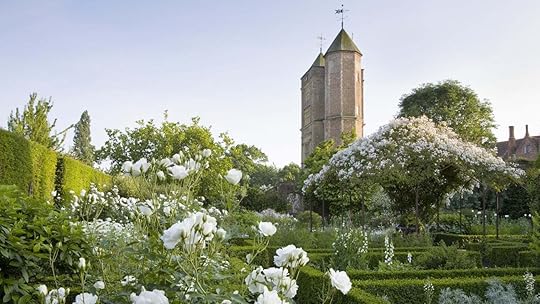
Portrait of a Marriage shows me that I’m not the only person who has really wanted that. Nigel Nicolson is the son of Vita Sackville-West, the endlessly fascinating (sorry, mind the brain gap while I fangirl) woman who was so many things to so many people that not even Virginia Woolf could pin down her essence inside one sex, location, or even century for that matter. And yet, despite this elusiveness being one of her most attractive qualities, nearly every person she knew throughout her life tried to make her into some image or other that suited the particular fantasy they wanted to her to be a part of.
Having now read three different portraits of Vita right in a row, I can tell you that this battle over who she was, and especially what she represents, is still going strong. I could not have felt more strongly these last few weeks that all history is indeed narrative. In this case more than most, since everyone involved was literary, wrapped up in their own individual stories (often several at once: the invented ones, the temporary ones, the permanent “real” ones), and everyone attempted to control the script from the very beginning. It almost seems natural that Nigel Nicolson should do the same.
On the surface, Portrait of a Marriage is actually rather an odd title for this work. The central piece of the work is a manuscript that Nigel Nicolson discovered in his mother’s writing room after her death. It was locked away in a leather bag, hidden from view- he had to cut away the lock in order to get to it. Inside was a “confession,” written in 1920. In it, his mother Vita recounts her version of her affair with Violet Trefusis, the daughter of King Edward VII’s mistress Alice Keppel. The affair was both unmentionable and scandalous at the time, and the two women came inches from running off together permanently, abandoning their husbands and families to live together openly as lovers. No one seemed to know of this manuscript’s existance other than Vita herself and perhaps Virginia Woolf (though no one can prove that).
However, this ‘confession’ is broken up into two parts, contained before, between, and after by Nigel Nicolson’s own perspective on the situations she is describing, further detail on surrounding issues Vita only glancingly mentions, and finally the last chapter gives us a sort of extended epilogue on the rest of Vita and Harold’s marriage.
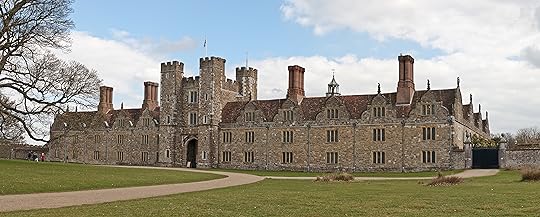
Vita’s story is powerful. She provides us with her background: the isolated childhood at Knole, her difficult, alluring mother, her wandering gentleman father, her constant writing, her lack of friends, and her growth into full maturity, showing us how she became the person who made the choices she did in her affair with Violet. It is in some senses a justification, but the second half of the story, which describes the actual affair itself, offers no justifications, tells the reader awful things that show Vita to no advantage, things that would have utterly disgraced her both in her time and now. She does cast herself as Violet’s (admittedly willing) seduction victim, an unknowing innocent in the ways of love following her heart, her mother as the source of much of her unhappiness and fucked up view of life, and Harold as a fairly perfect angel. She thus claims this story to be a painful plea for understanding of her divided nature, lesbian love, and why she could not deny herself it- she seems to both be addressing her own inner guilt and also Harold, who she expects may read this one day.
Nigel Nicolson has a different agenda. He claims Violet and Vita’s passionate story as part of Vita and Harold’s overarching narrative. In his eyes, the Violet/Vita incident was the ultimate testing ground for the very modern, liberal idea of marriage that his parents had agreed to live by (lovers if they chose, but they would always come back to each other and speak honestly about what was going on at all times), and since in the end Vita did return to England with Harold, he sees it ultimately as a triumph of their solid, loving relationship over the temporary passions of her wild relationship with the “evil” Violet. It is all very coherent indeed.
Now, some people find this a sad denial of same-sex relationships and passion, but surely we can all understand why a son would want to show his parents’ love as paramount, and the lengths he might be willing to go to to paper over as many faults as possible. He spends a whole lot of time talking up his father’s virtues and his mother’s distortions of the truth, but then, what did you think this was going to be? In fairness to him, though he seems unable to forgive Violet, he does understand her appeal. He quotes from some of her most alluring letters, which paint her in a very sympathetic light, and he even he can’t deny his mother’s love for Violet:
“Now that I know everything, I love her more, as my father did, because she was tempted, because she was weak. She was a rebel, she was Julian, and though she did not know it, she fought for more than Violet. She fought for the right to love, men and women, rejecting the convention that marriage demands exclusive love, and that women should love only men and men only women.. Yes, she may have been mad, as she later said, but it was a magnificent folly. She may have been cruel, but it was cruelty on a heroic scale. How can I despise the violence of such passion?”
It was interesting to hear his thoughts on why their compact worked. Sort of ironic to me that had they lived in the 21st century, there would have been no possibility of these two people marrying, given their completely different sexual tastes and lifestyles, and yet, according to him, it worked because of these things: “… it was fortunate that they were both made that way. If only one of them had been, their marriage would probably have collapsed. Violet did not destroy their physical union; she simply provided the alternative for which Vita was unconsciously seeking at the moment when her physical passion for Harold, and his for her, had begun to cool…Vita once put her little creed for Harold in these words: “To love me whatever I do. To believe my motives are not mean. Not to credit tales without hearing my own version. To give up everything and everybody for me in the last resort… The basis of their marriage was mutual respect, enduring love, and a “'common sense of values.'"
It is also worthwhile noting that Vita and Harold conducted most of their relationship on paper- not even discussing the most important issues unless one of them was forced to force the issue. (One of the times Vita and Violet were to run off together, Harold begged Vita to stay with him for two weeks while he recovered from a severe sickness. She consented and went home with him. They said nothing about the fact that she was leaving until the very last day. Harold did not like conflict.) As Nigel Nicolson noted when discussing his mother’s complete refusal to fulfill any sort of official wifely role (political wife at rallies, diplomatic hostess), his mother’s behavior might:
“…sound selfish, but neither of them thought it so. She cared so deeply for her independence that for both of them it outweighed everything else, even their agony at being parted for months on end. There is no suggestion in their hundreds of letters that their misery could be ended at any moment by her joining him permanently (at one of his postings). Instead they exchanged commiserations on his ‘bloody profession’…”
… and chose to deal with their pain of separation rather than give up their chosen paths. The one time Harold did give in to what Vita wanted for him rather than what he wanted turned out to be a bad choice- one he made the best of, but nonetheless- he always regretted it. I wonder if a relationship like theirs might work in the 21st century after all, in a world where contact is ever more virtual, and a need for contact can be solved in 140 character bursts before we go back to work.
Vita and Harold’s relationship was not sexual after Violet. Nigel Nicolson calls that the inevitable cooling of passion, Victoria Glenndinning blames it on Harold’s revelation to Vita that he had a venereal disease from one of his gay lovers after five years of total fidelity on her part, Diana Souhami on Harold’s infidelity giving Vita implicit permission to let her own lesbian tendencies and Wanderlust out into the opening. Whatever the reason, though, and whatever their passions were: I guess what I’m saying here is that though Vita and Harold themselves lived many stories, and told even more, theirs was the story they kept coming back to, again and again. As Vita herself said: “my infinitely dear Hadji, you ought never to have married me. I feel my inadequacy most bitterly. What good am I to you?”…and he replied, What good was he to her? She should have married Lord Lascelles. (The man who could have given her a castle and a more "traditional" aristocratic life.) If Nigel Nicolson’s interpretation of the situation is a bit on the fairy tale side, that doesn’t devalue the deep bond these two people had, and the amazingly high value they placed on their life together. Vita stated many times she would no longer want to live if Harold died, Harold refused to acknowledge the possibility until she actually did die. Then faced with life without her, withdrew into silence and decline until he died six years later. It did seem to be their home base, their safe haven, the place they needed to know existed in order to venture out into the world.
Does anyone watch Mad Men? There’s a scene in the first season where Don Draper is talking to a Jewish lover of his about Israel, asking her what it means to her, why she isn’t there. She responds with something like: “It’s more of an idea than a place to me. My life is here in New York. I’ll never go there- knowing it exists is all I need.” Yeah- in the end, what I see of this extremely complicated mess is kind of like that. Whatever story we might want out of whatever narrative we’re reading, sooner or later we’re going to run up against a core of what matters that isn’t going to alter for any theoretical –ism you’ve got out there.
People are what they are, and you can’t force them to be anything else, however hard you try. That was the real triumph of this book. Nigel Nicolson tried, Harold tried, Violet tried, Vita’s mother tried, even Vita herself tried- all of them failed. Whatever else drowned in the mess of these people’s lives, that gloriously survived.
Or that's my narrative, anyway.