Jump to ratings and reviews
Rate this book

A Useless Man: Selected Stories

Rate this book
Sait Faik Abasiyanik was born in Adapazari in 1906 and died of cirrhosis in Istanbul in 1954. He wrote twelve books of short stories, two novels, and a book of poetry. His stories celebrate the natural world and trace the plight of iconic characters in society: ancient coffeehouse proprietors and priests, dream-addled fishermen adn poets of the Princes' Isles, lovers and wandering minstrels of another time. Many stories are loosely autobiographical and deal with Sait Faik's frustration with social convention, the relentless pace of westernization, and the slow but steady ethnic cleansing of his city. His fluid, limpid surfaces might seem to be in keeping with the restrictions that the architects of the new Republic placed on language and culture, but the truth lies in their dark, subversive undercurrents.

Sait Faik donated his estate to the Daruşafaka foundation for orphans, and this foundation has since been committed to promoting his work. His former family home on Burgazada was recently restored, and now functions as a museum honoring his life and work. He is still greatly revered: Turkey's most prestigious short story award carries his name and nearly every Turk knows by heart a line or a story by Sait Faik.

240 pages, Paperback

Published January 6, 2015

39 people are currently reading
481 people want to read

About the author

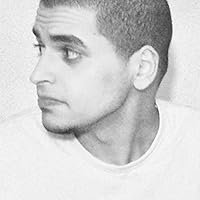
Sait Faik Abasıyanık

70 books515 followers
Sait Faik Abasıyanık (18 November 1906 - 11 May 1954) was one of the greatest Turkish writers of short stories and poetry. Born in Adapazarı, he was educated at the Istanbul Erkek Lisesi. He enrolled in the Turcology Department of Istanbul University in 1928, but under pressure from his father went to Switzerland to study economics in 1930. He left school and lived for three years in Grenoble, France - an experience which made a deep impact on his art and character. After returning to Turkey he taught Turkish in Halıcıoğlu Armenian School for Orphans, and tried to follow his father's wishes and go into business but was unsuccessful. He devoted his life to writing after 1934. He created a brand new language and brought new life to Turkish short story writing with his harsh but humanistic portrayals of labourers, fishermen, children, the unemployed, the poor. A major theme was always the sea and he spent most of his time in Burgaz Ada (one of the Princes' Islands in the Marmara Sea). He was an honorary member of the International Mark Twain Society of St. Louis, Missouri.

Sait Faik mostly published under the name Sait Faik, other pen names being Adalı ("Island dweller"), Sait Faik Adalı, and S. F..

There is an award for his name which is given every year on his death anniversary: Sait Faik Hikâye Armağanı

Ratings & Reviews

What do you think?
Rate this book

Friends & Following

Create a free account to discover what your friends think of this book!

Community Reviews

5 stars
52 (33%)
4 stars
50 (32%)
3 stars
45 (29%)
2 stars
7 (4%)
1 star
0 (0%)
Displaying 1 - 22 of 22 reviews
Profile Image for Caroline.
910 reviews310 followers
April 7, 2016
These little pieces grow on you bit by bit until you enter the world of Istanbul in transition from Ottoman to modern. For the most part they are not really short stories, but range from vignettes, to images, to character sketches, to late hallucinogenic phantasms.

Sait Faik Abasiyanik turned to writing after failing to satisfy his father’s wishes that he enter business. He spent a few years in Switzerland and Grenoble France, which is said to have influenced him significantly. He is revered as a sort of Chekhov for Turkey. The most important short story prize in Turkey bears his name.

The translator’s note says that Sait Faik was part of the Garip or First New Movement in the late 1940s, which ‘called for a language that was lighter, brighter and less reverent...And so his prose is a ...blend of the lyrical and rough vernacular.'

This selection includes many of his most famous pieces. It proceeds chronologically, so you can see the stylistic changes over time, and in particular the turn to the fantastic, chaotic almost psychotic world of his late work. The one that struck me most is titled ‘Fire Tongs and a Chair on a Winter’s Night’. It simply records a man’s thoughts as he sits alone staring at various items in his room, and thinks about the woman who sold him the fire tongs, and the meaning of a chair that seems almost menacing in its unmet need for a visitor to occupy it. Which sounds like a losing proposition for a story, but somehow this compulsive thinking pulls you in.

Sait Faik was very concerned with the poor and marginalized, and they populate his stories. Many are set in the Greek neighborhoods of Istanbul, and the sea, boats and fishing are a constant.

I include two quotes: one from his own work, and one from a poem by Bedri Rahmi Eyuboglu that celebrates Sait Faik’s place in Turkish culture. (The poem is from A Brave New Quest: 100 Modern Turkish Poems, translated and edited by Talat S Halman.)

From ‘Fire Tongs...'

The wind jumps from roof to roof, slipping over the lead domes. A shadow takes shape in the sky. Growing in the mist on the windowpane, the shadow is now a crow. Now it is perched on top of the church across the street. Now why did it have to go and land right on top of the holy cross?
...
I might leave the house, I might go to a coffeehouse; I might think about whether or not I should go to Istanbul. I might miss the boat back and when night has fallen over the city I might stagger home on a cane. I might sit and read. I might read love stories. We might assume that human love starts here. We might close our minds to our lives, and life itself and think only of ourselves. We might need stick our heads outside. We might drive away all thoughts of hunger and sickness and people without heating or fire or wood-burning stoves; we might lose ourselves in love stories as we unravel into dreams.


From Eyuboglu's poem ’The Saga of Istanbul':

Say Istanbul and Sait Faik comes to mind:
Pebbles twitter on the shore of Burgaz Island,
While a blue-eyed boy grows up in circles of joy
A blue-eyed fisherman grows younger and tinier,
When they reach the same height they turn into Sait
And they roam the city hand in hand,
Cursing beast and bird, friend and foe alike!...

Say Istanbul and Sait Faik comes to mind
All over this town’s rock and soil and water,
A friend of the poor and the sick,
Whose pencil is as sharp as his heart is wounded,
Bleeding for the lonely and yearning for the pure and the good.


Profile Image for Sue.
1,438 reviews650 followers
February 21, 2015
(Being reviewed as Selected Stories of Sait Faik Abasiyanik)
I have finished the final story of this collection today and find myself smiling and making notes about the writing on my kindle. The book, author and stories have all grown on me over the course of reading, as I have come to know him a little through his works, his views of his surroundings and his life, the culture which he apparently loved. There was a description I found in the afterword that I feel is especially important for the reader who does not know Turkey and has never encountered Sait Falk before. (Apparently he is somewhat of a folk hero in his own land and is still revered so long after his death.)

Though his stories are often opaque, fragmentary
and oddly plotted, they never fail to conjure up a
mood that lingers in your mind for days. They are
fleeting meditations, blurred pictures full of explosive
creativity; intimate portraits, odes to beloved
individuals or avatars...; slices of everyday life, a
casual remembrance, a crystallized childhood memory,
a veiled and deeply personal confession. [He}..depicted
the lives of lovers, deviants, idlers and the working
class: fishermen, builders, off-the-wall philosophers,
penniless widows, lost souls pocketing dreams in old
countryside coffeehouses.
(loc 2411)

Among my favorite stories are several of his later ones, "The Boy in the Tünel", "Kalinikta", and "In the Rain". but there are whole or partial poems that captured me throughout with their sadness, the beauty of a quickly created scene among the islands, the silliness of a dog or the playing of children. Even in those stories, however, there is almost always a background of sadness, some nostalgia for other times, a feeling of loss already experienced or sure to come.

I was initially hesitant about these stories but came to see their power as I continued reading. The only thing I would do differently as a publisher is change the afterword to a forword for the benefit of those who are new to Turkish writing and to this author. I think it would give a well deserved hint before beginning the collection.


A copy of this book was provided by the publisher through NetGalley in return for an honest review.

I also note that a future edition of this book is being published with a slightly different title, [book:A Useless Man: Selected Stories|24474355].
Profile Image for Kathryn.
4 reviews
February 8, 2017
This collection of short stories by one of Turkey's greatest writers (Turkey's Chekhov, if you will) is already pushing to be one of the best books I've read in a while. Dappling in the strange and familiar, Sait Faik Abasiyanik gives us a very personal snapshot of his home, Turkey.
The hardships and hidden wonders are revealed as each story unfolds, with Sait Faik's meta-narration bringing moments of humor and reflection and laughing on the subway (the last one might just be me). In the shortest amount of paper and words, Sait Faik creates another world and allows you to stay with him there for a little while, observing the characters, the terrain (both emotional and physical), before he gently closes that particular chapter, and shows you the next.
Beautifully translated and laid out, everyone read this book please, thank you.
Profile Image for Anna.
37 reviews
Read
October 6, 2025
hmmmmm a więc! Niektóre z tych historii zostaną ze mną na dłużej, jedne dlatego, że mi się spodobały a inne dlatego, że były? wystarczająco dziwne? (w jednej np. gość chodzi za dziewczyną i jej gada jakiś monolog po francusku).
Mój problem był taki, że jeśli historie nie złapały mnie na samym początku to nie mogłam się skupić na tym co czytam i umykały mi. Wydaje mi się, że też trochę kwestia języka, bo ten jego styl był często bardzo opisowy i ekspresyjny i po polsku pewnie łatwiej by mi się to przyjęło.
Profile Image for Kari Ni.
148 reviews1 follower
January 30, 2018
I fell in love with the stories of Sait Faik! The autor is really talented as well as pretty sensitive about the surrounding world and its people. His short stories radiate poetic tenderness, for which I have been yearning for a long time. All of them, even the apparently jouful ones, leaves a slight bittersweet taste, but their melancholia keeps on lingering in the bones long after the book has been finished. This book also depicts the duality of the Turkish mantality - from the profanity of the workday till the desperate devotion of a unrequited love. And these are only a few examples. Sait Faik's stories are hidden treasures for real book lovers.
Profile Image for Daniel Polansky.
Author 35 books1,249 followers
Read
November 21, 2022
A collection of short stories from the decades long career of (apparently?) Turkey’s most beloved short story writer. I really only have the back cover to speak to that but if it’s true, it’s not undeserved. These are really stellar, vibrant, curiously written portrayals of a lively, multi-ethnic, pre-WWI Istanbul, and of the long shadow left by the tragic loss of that existence. It reminded me a little bit of Robert Walser in its depictions of the strange of an urban setting, but there’s a seriousness and a darkness at play here which is very much it’s own thing. Lovely. Good on Archipelago books for bringing this, and a lot of other stuff I’ve been reading lately, to a larger audience.
Profile Image for Vilis.
705 reviews131 followers
April 15, 2023
Agrīnie reālistiskie stāsti drīz vien atkāpjas skaisti melanholisku impresiju priekšā, un tā arī ir labāk. Foršākie gabali vienmēr ir tie, kur saskumušam vīram viss atgādina par labākiem laikiem.
Profile Image for Rhys.
904 reviews138 followers
April 26, 2025
Quirky and endearing short stories. A turkisk Calvino.
Profile Image for Meghan.
Author 1 book12 followers
July 1, 2015
(I love getting to write the dotless ı in Turkish. When I'm done Irish on Duolingo, I might learn Turkish just because of that letter.)


Though his stories are often opaque, fragmentary and oddly plotted, they never fail to conjure up a mood that lingers in your mind for days.

Translators' Afterword

Sometimes you don't know what to say, and then the Translators' Afterword says it for you. Most of what we have in this collection are odd little scenes with, from a plotting perspective, leave one saying So what? but from a mood perspective, give one a clear sense of Turkey from the 1930s to the 1950s. There are scenes of his neighbourhood, his island, fishermen, night watchmen, thieves, young boys in love (sometimes rather homo-erotically). There are a few stories just about fish, one from the fish's perspective, one from a man watching a fish die. The stories skip lightly but at fairly earthy, concerned as they are with the minutiae of existence. If I were to pick a colour for this book, I'd pick a mundane sort of light brown, like soil a bit wet, but not drenched.

I don't really mind reading no-plot little scenes, so I didn't really mind reading A Useless Man, but a fair number of stories start with a few paragraphs that seem to have minimal consequence to the rest of the story. I guess they're building the scene, but having to go back after a page or two because the transition to the actual story was so awkward, made me a sad and confused panda. Strangely, one needs focus for stories without traditional notions of plot, and I kept losing mine.

Line of awesome dotless ı's: ıııııııııııııııııııııııııııııııııııııııııııııııııııııı.

A Useless Man: Selected Stories by Sait Faik Abasıyanık went on sale January 6, 2015.

I received a copy free from Netgalley in exchange for an honest review.
Profile Image for Ned Entrikin.
37 reviews
July 20, 2021
I had this next to my bed for several months, dipping into it early in the morning or late at night. Sait Faik's Istanbul of the 1930s-1950s is a very different place from the Istanbul of today, but the moods in his stories are ones that I still recognize in the city. He captures the feeling of the locations that he returns to again and again--Beyoglu, the Princes Islands--in such a way that they are instantly recognizable, even when their surfaces have changed. There are other corners of the city (like Mecediyeköy, which he describes as open farms and orchards) which bear no resemblance to the present, and so in the stories in which they appear, the reader gets a chance to see an Istanbul that has disappeared completely.

These stories are more like vignettes, set in little coffee houses or on ferries, always dealing with working class people, revolving around the intricacies of small moments or minor epiphanies in the lives of their characters rather than anything like a plot. There are wonderful turns of phrase in which Sait Faik describes something in a way that is completely unexpected and original:

"He had a face like a bombed-out European city."
"I was as happy as a child shaking a tambourine for the first time."

This is a great collection of his stories and an excellent translation.
Profile Image for Tonymess.
486 reviews47 followers
February 24, 2015
We are off to Turkey and the latest release from the independent not-for-profit publisher Archipelago Books, “A Useless Man – Selected Stories” by Sait Faik Abasiyanik.

Turkey’s most prestigious short story award is named after Sait Faik Abasiyanik, the Sait Faik Prize, and there is a museum you can visit on Burguzada Island dedicated to celebrating the “father of Turkish short stories”. When he died in 1954 he left his entire estate to a foundation dedicated to looking after orphaned and disadvantaged children the Darüşşafaka School, which maintains the museum. Dying aged 46 from cirrhosis of the liver, this book contains thirty seven short stories presented in chronological order.

Unlike some of my reviews where I touch on each of the short stories contained in a collection, this review will present a few “highlights” and although being representative of the collection do not cover the full length and breadth of this wonderful collection.

Our book opens with “The Samovar”, our main character dreaming in the opening and closing of the story. It is a simple tale of an electrician who works in a factory, his mother wakes him each morning so he can go to work. She suddenly dies:

For my full review go to http://messybooker.blogspot.com.au/
120 reviews
October 30, 2025
This collection of many very short character pieces is an absolute gem, both in the ways certain stories depict, as a baseline, various fairly "universal" emotions, but also for the ways in which it captures Turkish culture and history in a way which is somewhat legible to an outsider (e.g. one can often infer the meanings of cultural references from context). It distinctly seemed to me that many stories were meant to invoke much more *specific* emotions that I did not have the cultural knowledge to understand, while simultaneously (by making said emotions the crux of some very short story) serving as a guidepost to said piece. In that way, the existence of this translation strikes me as having wondrous merit on multiple accounts: merit on account of who Sait Faik was, merit on account of the beauty of the translated stories (I cannot comment on whether or not they accurately capture the beauty of the originals), and merit as a cross-cultural artifact.
Profile Image for Nedislav.
87 reviews9 followers
August 24, 2022
I starter the book on the train to Istanbul. My hope was that I will get an idea of Istanbul and Turkish atmosphere, people’s mindset and humour. The book has a very pleasant amount of great short stories that can keep you occupied while waiting for the bus or in the queue at a museum.
The first half of the book was super entertaining and very easy to read. At some point it became very intense however. Lots of metaphors, abstract descriptions and generally too loose of a narrative to follow. At least for me that is.
I imagine it is a translation issue as Turkish could be very ornamentally rich language and perhaps some of this adornment is lost in translation.
Overall, I would recommend it as there are numerous gorgeous description of the city, traditions and beautiful conversations. If you don’t like a story, skip it and you will be fine.
Profile Image for Samran Akhtar .
96 reviews20 followers
April 13, 2022
The earlier ten or twelve stories are so well-written and focus on the nuances of every day life. However, I wasn't too fond of the rest of the stories as some of them were just musings or a spoken thought. Sait Abadiyanik writes as he speaks, which often gets a bit redundant. There are some stories that really stood out to me.

The Silk Handkerchief
The Hairspring
A Useless Man
The Samovar
The Barges
The Bocha
Papaz Efendi
The Little Coffeehouse
Milk
Fire Tongs and a Chair on a Writers Night

I wouldn't compare him entirely to Chekhov but I can see the resemblance.
Profile Image for عائشة.
Author 9 books135 followers
January 27, 2015
"رجل عديم الجدوى" قصص قصيرة للكاتب التركي سعيد فائق. صدر الكتاب عن دار أزمنة بترجمة لصفوان الشلبي. القصص الأولى تقليدية نوعا و طويلة بعض الشيء.. بينما جاءت القصص الأخيرة مكثفة و تجريدية اعتمدت على الرمزية لذلك يقال أن سعيد فائق هو أب القصة التركية الحديثة. الرابط بين القصص كلها هو ثيمة الوحدة .. الوحشة.. عجز الإنسان وخذلانه.
Profile Image for gwayle.
668 reviews46 followers
May 12, 2020
Atmospheric but plot-driven stories set mostly among the hoi polloi of a modernizing Istanbul. Arranged chronologically, the later stories grow increasingly experimental and fragmented, almost feverish. There was a freshness and abruptness—almost fable-like—to the earlier stories that I particularly enjoyed.
117 reviews
May 20, 2017
for a book club. He's apparently greatly revered in Turkey. The book club liked it better than I did.
Profile Image for Ahmed.
13 reviews12 followers
July 1, 2020
These stories felt like a walk in the streets of Istanbul.
Profile Image for Justin.
186 reviews1 follower
September 5, 2022
An interesting collection of strange short stories, Abasiyanik is apparently revered in Turkey
Displaying 1 - 22 of 22 reviews

Can't find what you're looking for?

Get help and learn more about the design.