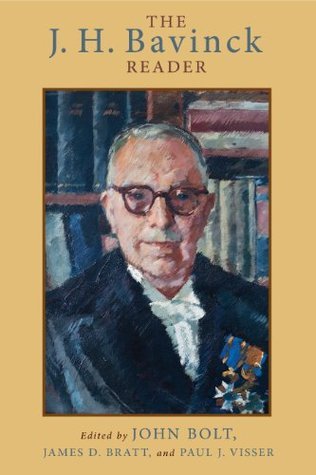
Crucial themes and issues explored by a premier missiologistJohan Herman Bavinck (1895-1964) was a prominent twentieth-century Dutch Calvinist missiologist who wrestled with the tension between religious absolutism and relativism, as many Christians do in today's pluralistic context.The J. H. Bavinck Reader gathers together a choice selection of Bavinck's significant writings that are essential for understanding his theology of missions, his approach to world religions, and his religious psychology. His treatment of religious consciousness and Christian faith expands on the brief treatment of it in his own work The Church Between Temple and Mosque. The concluding chapters show how Bavinck's theoretical reflection on religious consciousness was rooted in his close observation during his years as a missionary in Indonesia.Offering a constructive way forward, Bavinck affirms both the particularity of salvation in Christ and the universality of the Christian hope. A substantial introduction enhances the book with the most thorough biographical sketch of Bavinck available.
John Bolt is an American-Dutch Reformed theologian. He is a professor emeritus of systematic theology at Calvin Theological Seminary in Grand Rapids, Michigan. He is the author and editor of several books. He edited Herman Bavinck's Gereformeerde Dogmatiek into English as Reformed Dogmatics. Bavinck influenced him into theological method.
Read primarily for an implicit rebuttal of C.S. Lewis' The Abolition of Man argument concerning the Tao, to get a grip on the Reformed perspective of a 'universal religious consciousness'. Read Calvin's perspective, what he terms the sensus divinitatis, two years back, and that was still pretty fresh in my mind, considering Calvin devotes a lot of Book I of The Institutes to it. I enjoyed reading the nuances between Bavinck and Calvin's positions, as well as getting further into why Lewis is misdirected in appealing to the Tao as the source of moral objectivity (though The Abolition of Man is still a fine volume).
Bavinck - religious consciousness arises from man's glimpses of God's self-disclosure. All these factors, 'something bigger out there', desire for redemption, and tension between free will and being caught along by destiny, point to, and have been shown throughout history, to be the ways that men find God or redirect their religious impulses into other elements of life. The Tao as moral order might encompass one of the points of the religious consciousness, but it does not encapsulate it.
Exceedingly dry at times. Bavinck isn't just covering religious consciousness in this volume, but discusses foreign missions and how to reach Eastern nations with the Gospel when their cultural framework is entirely different. Some really interesting material in those sections, but not what I was reading for.