Horror manga legend Junji Ito has fascinated the world with his beautiful and strange tales, starting with his debut story “Tomie,” and followed by Uzumaki, Gyo, and many other famous works.
In this memoir/horror manga analysis, he tells all and digs into dark recesses—reflections on influences from his childhood, thoughts on manga, next-level idea generation techniques, character design, craftmanship, and more. Chock-full of never-before-told insider anecdotes and behind-the-scenes stories, this is a must-have book for fans to immerse themselves completely in the world of Junji Ito.
Junji Itō (Japanese: 伊藤潤二, Ito Junji) is a Japanese cartoonist and illustrator, best known for his horror manga. Ito was born in Gifu Prefecture, Japan in 1963. He was inspired to make art from a young age by his older sister's drawing and Kazuo Umezu's horror comics. Until the early 1990s he worked as a dental technician, while making comics as a side job. By the time he turned into a full time mangaka, Ito was already an acclaimed horror artists. His comics are celebrated for their finely depicted body horrors, while also retaining some elements of psychological horror and erotism. Although he mostly produces short stories, Ito is best known for his longer comic series: Tomie (1987-2000), about a beautiful high school girl who inspires her admirers to commit atrocities; Uzumaki (1998-1999), set in a town cursed with spiral patterns; Gyo (2001-2002), featuring a horde of metal-legged undead fishes. Tomie and Uzumaki in particular have been adapted multiple times in live-action and animation.
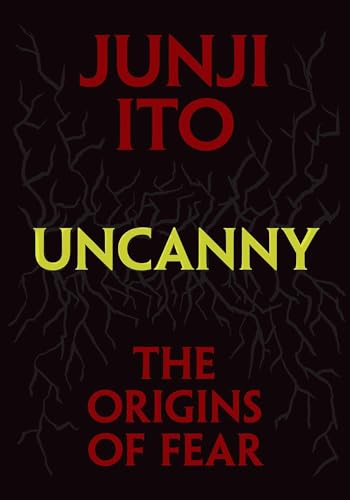
They didn't even try with the cover of the English version, did they? I thought it was a placeholder for the longest time. And please stop coming to my comment section and saying that it's so much better underneath the dust jacket. Goddamn Binzo is the opposite of nice-to-look-at and you know it. Anyway, I thought that this was an interesting look into Junji Ito's creative process. I especially liked his notes on certain characters, stories or art pieces, but I would only recommend this to people who have read the majority of his works.
this is EXACTLY what I wanted from a Junji Ito memoir. he did a phenomenal job giving us insight into his twisted mind & sharing where he finds inspiration, whether it's childhood memories, dreams, other stories, world events, etc.
highly recommend NOT reading this unless you've read ALL his work under Viz Media. I'm so glad I have because he spoils so many stories of his & dives into the breakdowns of why characters look the way they do and stories went the directions they did.
I especially love how self aware he is when it comes to knowing he's better at short-form stories than long-form and that his characters are purposely flat, as he prefers to put his energy into the world-building aspects.
he is such a talented human and I hope to get the privilege of meeting him and giving him a firm handshake one day.
4.0 Stars As a long time fan of Junji Ito, I was very excited to learn that he had written this memoir. It was interesting to learn more about his personal life and also reflect on the inspiration and meaning behind many of his classic themes and imagery.
If you are a long time Junji Ito fan like me, definitely pick up Uncanny when you get a chance. Uncanny is a memoir and horror manga analysis by Junji Ito of both his life and his various works.
What I loved 😍
It’s very charming. We get a lot of interesting insight into Junji Ito’s life, the various horror, science fiction, and manga artists that influenced him, and how he became the prolific artist we know and love. I thought it was really interesting to read about his perspective of the supernatural and science fiction concepts that he writes about and how it’s important to him to ground everything firmly in reality.
The book itself is beautiful. There are a lot of glimpses of notes and doodles behind the stories we love and panels of his various manga interspersed throughout. When he speaks about how eyes are important to conveying character emotions, we are presented with an overview of various character eyes throughout his manga. When he does a breakdown of his approach to creating characters, we also get a great spread of all those characters. Despite being heavily prose, it is a very visually appealing book.
What could have been better 🤔
I think this is much more an autobiography than an analysis of horror manga. Ito speaks about his approach to manga through the lens of his background, his influences, and his life. If you’re looking for more of an instruction manual, this is not it. It was really interesting to read about his idea inceptions (Ito is very afraid of sharks!) and how moments from his childhood and scenes from his life were the seeds for various stories.
Favorite Quotes! 🧠
“I wanted to draw strange, but real worlds.” – page 95
This quote is particularly interesting because the root of Ito’s works is his strange, but real worlds. As he goes on to detail in this memoir, he grounds things in bizarre reality.
“People are most afraid when the mysterious intrudes on their own safe places.” – page 137
So much of Junji Ito’s work takes place in small towns and homes. It really embodies normal lives being impacted by weird and bizarre occurrences to generate fear. I think this is such a great quote that encapsulates the root of fear for many of us.
“There is the fear that comes from not knowing exactly how other people see you, and the fear of not understanding the point of your own existence.” – page 196
As Ito discusses throughout his memoir that he himself is central to his horror, the fear of self is often depicted through doppelgangers in his works. I don’t think there’s a more relatable quote in this book than this one.
This is a fairly quick read. It’s a nice autobiography from Ito that gives you a little bit of information about his childhood and how he became a Manga artist.
He talks about other artists that influenced him growing up, and there are examples of Manga pages he drew as a child. It’s pretty cool to see the progression of his talent, and I can see this being encouraging for anyone who wants to pursue comics as a career path or even as a hobby.
I loved reading about how supportive his mother and sisters were throughout his life. Ito comes across as very modest and down to Earth despite his immense talent and success, but best of all, he’s also brilliantly clever. My favorite part of this book, (besides the gorgeous illustrations), was the section in which Ito discussed his thought process behind crafting a story. He’s so smart when it comes to his ideas.
Longtime fans of Ito will specifically appreciate the chapter in which he addresses his published works and talks about how many of those came to be. I was especially interested to learn about how he came up with “The Enigma of Amigara Fault,” because that comic is creepy AF.
As a (sometimes) writer, I appreciated the section about generating ideas. He was mostly talking about writing Manga, but good storytelling is universal.
I couldn’t properly see it in the electronic version, but there’s even a little series of drawings in the corner of many of the pages that will turn physical copies of this publication into an animated flip book.
I recommend this mostly to established fans of Junji Ito. It’s a fairly succinct and organized book for anyone who would like to learn more about the man and his creative process. 3.5 stars.
Thank you to Netgalley and to the Publisher for this ARC in exchange for an honest review! All opinions are my own.
when he said having to take math every day was his own “personal vision of Hell” and changing his school path from science to art was a narrow escape from death… very real of him
4.25 - I have never felt so inspired reading someone's memoir as I did reading this. Junji Ito is one of my favorite authors and he just seems like such a chill and awesome dude. This book was perfectly written, formatted, and contains some beautiful works of art to support it. I really loved the structure of this too because we started with him as a kid and what inspired him and we ended with him talking about how he formulates stories, ideas, and art. I really enjoyed and appreciated this look into the world of Junji
As an autobiography, this is very interesting and offers some good insight into Ito's process and thoughts. As a craft manual, it's less helpful, although he does spell out some good observations about horror.
uma autobiografia muito interessante em que, ao invés de comentar sobre a história de vida, o autor reflete sobre suas influencias literarias, seu percurso formativo e seu processo criativo e também compartilha seus rascunhos, bastidores e dicas de criação; muito interessante pra compreender algumas coisas do seu pensamento e aprofundar suas obras - com um destaque bastante grande pra sua relação com o corpo e a criação do medo
F*CK I love Junji Ito. After reading his work for so long, I get a sense of him having fun, especially with something like his Cat Diaries or his newer anthologies. Reading about his life in his own words is fascinating, and the work that inspired him, mixed in with Gekiga artists, Katsuhiro Otomo, science fiction, and classic Japanese horror manga artists. Junji Ito seems both rattled by existential fear of death, and yet, seems to laugh at it as well.
besides being another beautifully-designed viz edition - they're really killing it vis a vis the likes of marvel and dc, just beating their brains out (understandably so given that they control a far larger share of the comic book market now) - this is up there with araki's "manga in theory and practice," maybe a bit better because junji ito is so deeply modest and unassuming. the book is part autobiography, part guide to the work he's done, and he's certainly a practical man (an interesting contrast with araki) when it comes to explaining his career as a dental technician, body horror fears, manga and sci-fi influences, effects and tricks, etc. he's also put some serious work into uncanny's layout, including a flipbook on the bottom right corner. highly recommended if you're into this sort of thing.
what a treat this was! i’ve always taken a liking to junji ito from what i got to see in brief interviews & clips… but now i can say with certainty that i like junji ito for not only just his work, but him as a person. he seems much shyer & more introverted than i realized, as well as very thoughtful. he was very concerned in this book with giving credit to all his inspirations, even admitting when he was worried he may have not been original enough with certain ideas. i found that to be really endearing. he gives credit where credit is due. the only thing i wish we got more of was his life story! there was good chunks in there, just was hoping for some more detail cause i love the guy so much. anyways, lots to learn from him & i found there to be many cool quotes & words of advice that i found very inspiring. really enjoyed learning more about the horror master!!!
This was a charming insight into Junji Ito, who does seem to be a pretty nice guy who happens to draw some wild and fucked up shit. I really enjoyed the little introspection on his stories and where he got inspirations for them; for this reason I recommend reading Uncanny after you've gone through his catalogue first rather than just the big works like Tomi, Gyro and Uzumaki.
If you're a fan of Junji Ito or have read some of his works, Uncanny: The Origins of Fear takes you inside the mind of one of horror manga's well-known artists. Here's a quick takeaway:
-He reminisces his childhood and how his hobbies, the place he's from, and the people around him have shaped who he is and his future of being a horror manga artist. Personal anecdotes and experiences also often inspired his works (ex: working as a dental technician, looking at his own tongue in the mirror, one of his colleagues having a stalker, etc,.)
-He talks about the different artists and creators as well as movies, books, and games he grew fond of and have inspired him through the years
-Answers the question of: "Do I follow my dream or pursue the practicality of making a living? Can I do both?"
-Dissects some of his earlier works, complete with sketches, character breakdown, and storylines (Watch out for potential spoilers if you haven't read any/some of the works mentioned in Uncanny).
-Uncanny also serves as a point of reference for aspiring horror manga artists as Junji Ito talks about his processes and how he comes up with the grotesque images and horrific yet realistic plot in all of his works. He provides really good insights as an artist on how mentally tedious and physically taxing this job is no matter how passionate he is about it. At the end of the day, if he wants to make a living, he has to beat deadlines and pull all-nighters even when uninspired. Main chapters of the novel include Ideas (ways on how he comes up with ideas), Creation (how his characters are born), and Production (how he creates traumatizing pictures).
-He also gives a detailed look on some of his iconic characters like Tomie and how he conceptualized and envisioned them
-Refreshing to see how in all of Junji Ito's works, it reflects the real horror set in unrealistic worlds: humans. "In the end, the scariest thing of all is people"
-He also has opposing but interesting opinions about horror as a genre and what constitutes as horror. Ex: "I think the less personality a character has and the more neutral they are, the more fitting they are as a guide to lead the reader into a fantastical world." You would think that a fleshed-out character would be preferred, but in Junji Ito's works, this quote of his is reflected on how some of his characters are merely "guides" in the stories versus being the spotlight.
Overall, I loved having a more detailed look into his works and inside his mind!
QUOTES:
*"If you sincerely wish from the bottom of your heart to deceive people, then you must doggedly pursue reality."
*"I think terror comes from those moments that stir up anxiety and imagination, the feeling that maybe this could happen to me."
*"There is the fear that comes from not knowing exactly how other people see you, and the fear of not understanding the point of your own existence."
*"Narcissism is a distortion of the recognition of individual worlds."
*"In order for the reader to look at the pictures and feel fear, we need enough of a sense of reality to allow the reader to believe that the characters in the manga are living in the same space and with the same rules as those of us in the real world."
*"It's really the complex thoughts and emotions human beings have that scare me--hatred, jealousy, narcissism, bloodlust, despair. The domain in this world where human understanding fails completely is perhaps in the unfathomability of desire and volatility that can't be checked with reason or logic."
I love Junji Ito. I feel so lucky to live in a time when he is still active in creative manga and writing a nonfiction piece about his life and process of approaching both creating art and horror. Uncanny is a wonderfully crafted nonfiction piece, and you can feel Junji Ito's love and care. The flipbook of Soichi at the bottom with Hanging Balloon is so much fun, and I am obsessed with that little addition. As much as I love being in the mind of Junji Ito and learning his creation process, the first chapter and a half are a little hard to get into and push through. Once we got deeper into Ito's work, thought process, and inspirations, I was more invested. It just took me a second to get into the momentum/writing style.
Uncanny was an inspiring look into the mind of Junji Ito. It was interesting to learn about Junji Ito's life leading up to him becoming a horror manga artist, and how he created his stories and art. I particularly liked his stories from when he was a dental technician and his childhood fear of the basement leading to the bathroom. Overall, I found the book layout fun and engaging, and it was enjoyable to see the mix of illustrations and writing.
Very good and fascinating biography. I like seeing Junji Ito’s sense of humor shine through, and it’s interesting to know a bit about his life before pursuing manga as a career and to get to know his writing/drawing process. Also, I loved it when he ended the book with “oh yeah, here’s a flipbook animation in the corner of this book, as a treat :).” Absolute treasure of a guy.
interesting, but I would have loved it more if it had been a manga itself! His casual style of writing shows he is out of his comfort zone in writing this. It feels like he is writing his thoughts honestly. I appreciate that he is willing to talk about all, even things he finds he didn't do properly.
Junji Ito's Uncanny. The Origins of Fear, and why we are drawn to it. This book has a pretty bland cover and this was under the dust jacket. Much cooler! I am a huge fan of Ito's manga work, this is not a Manga btw, this is a memoir of his life, and more of a analysis on how he works. I loved the parts about his come up, and his influences, i took many notes and have some weird old japanes stuff to watch ! The technical stuff is not really my cup of thee, but it was pretty well done. I love that they made this book in the same style of the manga's so i put it together with the rest of the Ito collection. One minor thing, i read it while it was very hot and the pages started to fall apart, terrible binding. But a must for Junji Ito fans.
“I do think perhaps it was a good thing that, when I was younger, I was able to seriously believe so many mysteries remained in the world.”
“There’s just something funny about the juxtaposition of surreal situations and mundane exchanges of dialogue.”
After reading so many Junji Ito stories I was naturally interested in reading more about him. How did he get into drawing horror manga?? It was really interesting to read about his life. From the early years he watched/read stories that interested and inspired him and I liked how this work including examples of what he was reading and also some of his own work from a very young age. It was so cool to compare to what he is drawing now. He shared how he roller skated with friends at a cemetery, how he had to go to the bathroom as a kid by going through an underground tunnel that creeped him out. All of these sorts of things echoed in his horror work. He also grew up in the 60s and 70s following WWIi where households were generally more wealthy than they had been previously and was surrounded by rich artistic culture and he talked about how he was lucky to have that. He also had appendicitis when he was in middle school and it really opened him up to “the horrors of the human body.” He also talked about many writers who were inspirations to him. I’m not familiar with the Japanese artists he discussed but he mentioned he was also inspired by HP Lovecraft’s works. He was also interested in writing science fiction and flash fiction until he entered a story into a horror manga contest and it became meaningful to him. He actually perused dentistry for a while until he started to hate it and focused on manga. He entered a contest where he came up with Tomie. He actually had a classmate die when he was younger and this jump started Tomie’s story. And he made the compelling beautifulness of Tomie because otherwise people wouldn’t understand why people would kill a girl. He also loves imbedding dark humor in his works: “There’s just something funny about the juxtaposition of surreal situations and mundane exchanges of dialogue.” There were also moments in his stories that he intended to be very serious but readers found funny: I have these too in some instances in his story. But instead of trying to correct people he embraced how they felt. That maybe the root feelings of humor and fear are a lot closer than we think. Tomie got a special recognition in a magazine and he started submitting more stories and got more attention. He was still working in the dental industry too. But he eventually quit to do manga full time. Ito then moves on to talk more about how he got his ideas for his stories, including Tomie, Deserters, Hanging Blimp, Uzumaki and others. He also has notes when he was brainstorming which were cool to read. They felt really similar to how I brain storm; sort of random sentences of plot and bullets. He said he always thought of details to make the stories creepier — readers shouldn’t just be able to say “they should do this” to get out of a situation. Things should always seem dire. For Uzumaki, which is a personal favorite of mine, he first had the idea and image of the row houses that eventually became the spiral. Inspired by how he used to live in connecting row houses as a kid. For the Enigma of Amigara Fault, inspiration came from seeing his shadow and knowing it was uniquely his. The holes in the mountain stretches people’s bodies in the story, based on old torture devices. The inspo for Gyo was because Ito has a fear of sharks, but that would never be a problem as long as he couldn’t swim. But what if they came in land? He was also inspired by an artist who worked on the film Alien. Ito does mention in here that a lot of his stories start with an image in his head, which totally makes sense. I’ve thought this was the case as I read his stories. He also talks about Remina and how it was sort of his editor’s idea for a torture scene? Which, weird. I didn’t much like that scene either. Ito also talks about how I’m horror, he leaves the climactic scene and image for the last. This makes sense because what’s scarier than not fully understanding what happened? And that final visual packs a punch. But Ito is a writer who struggles with ideas and story just like any writer. He talks about some ways to get stories: taking something mundane and considering its exact opposite, for example. Put two things together that shouldn’t be together. Also, putting animal abilities on humans, like Tomie being able to regenerate like a lizard. He also says to tell “one big lie” but then to really bring truth into the story: “I think an accumulation of small facts and plausible supplementary details is necessary to pull readers into the world of the big lie of the story.” He says this “delusional desire” to have something mysterious happen to him in real life drives him to tell stories, which I totally relate to. There’s also something to be said to build up the horror in a reader’s mind before you reveal it to them (like Jaws, he said, where we never really see the shark that much, but we know he’s there). Then, of course, the self is also inherently scary to humans. Not knowing what or why we are. And Ito talked about his fear of death from a young age in hearing about the war. He was a very intelligent child, I feel like. He talked a lot about how humans are scarier than monsters, which really makes sense to me. I feel that to my core. Humans can be the scariest. That’s why a lot of his evil characters are humans — Tomie, the model, Soichi, etc. He also talked about how he intentionally doesn’t give some of his characters personalities in order to bring out more wider universal feelings or expressions. I thought that was interesting because I feel like I’ve seen that in his work and it’s interesting to know it’s intentional. He focuses more on plot and world than character. His characters don’t “grow” like in most stories. This is in part due to the horro genre because Ito says that his pattern is that his characters go on a journey and don’t come back from it. Often times I hear that if your characters don’t grow then there’s no point to the story or it’s a bad story. It’s refreshing to hear from Ito about a different genre and how there’s actually no right way. At the end of the book he described his art process, which I understood less in terms of manga art technique, but it was still intriguing. He said that now that he’s older he has less stamina in drawing than he used to. His stories take longer, but deadlines don’t change. This book gave me so much respect for Ito. I can read one of his collections so quickly, but it must have taken him so long to create. Not just drawing the art but creating the story, and then having that story fit on the page and panels in a balanced way. It must take a lot of trial and error. He shares more tips about creating horror manga art and then gives examples from his own work, which was fun. Balancing reality with the non-real makes for good horror, according to Ito. He said one of his favorite drawings was the spiral of the dad in Uzumaki, which was definitely disturbing. Ito ends with the fact that human beings are the scariest in their complexity, which is why the human body is a motif in his work. And then he mentions that this book has a flip book story at the end of its pages which is SO COOL and I have the ebook but I should have gotten the physical book because I want to see that! Next time I get my hands on a copy I will look. But honestly I had so much fun reading through this to get some insight into the author of all of this horrifying works. It’s just like with Stephen king, it’s like, what goes on in that brain of yours to create all this stuff??? Anyway, I highly recommend if you enjoy Ito’s work. You’ll walk away enlightened!
This entire review has been hidden because of spoilers.
It’s always fun to get some insight into the creative process of an iconic writer and especially the unique and disturbing stories and images that come from the mind of Junji Ito
I always love that Junji Ito is one of the sweetest people you'll ever meet, and he draws the most nightmarish horrorscapes in modern literature. Compare that to Hayao Miyazaki, whose art is some of the most delicate and beautiful ever crafted, but who is as curmudgeonly and difficult as they come.
Uncanny is a fascinating look into the life and works of Junji Ito, penned by the man himself. Any fans of the horror genre, or manga more widely, will find something to enjoy here.
Super cool new look into the mind of Junji Ito. Part-memoir, part guide to the craft, this book is a good mix sure to excite fans of Ito’s work. I didn’t realize how long ago his work was originally penned. The memoir part is lackluster, but the explanation of the craft has some gems for horror writers and illustrators alike.
4.5 - honestly what a treat to get an inside peek of the process of such an iconic horror manga creator—absolutely loved this.
The book starts out sort of autobiographical, which I was pleasantly surprised by. I love reading craft books where the writers detail their own inspirations and explore how they started down the path of writing, and Ito’s look into his childhood and how his interests shaped his writing style was both interesting and comedic. His voice is somewhat unexpected from what you typically see in his manga—he seems both very self-aware and willing to make a joke. (This second part I think is perhaps present in his manga, but perhaps overshadowed by the usual gruesomeness of his stories). While I wasn’t really expecting this autobiographical element, I do think it added a lot to his later discussions about his ideas and creation process, as the insight into his life outside of being a manga writer brought clarity to the way in which certain ideas were born.
The actual “writing advice” section was also really great. Ito broke down his most popular plots, explaining how he got them to their finished products, his most popular characters, and discussed how he got those ideas onto the page, and even if you’re not an artist, even just plain old writers can still learn from his process. For example, I found his tips about applying naturalistic animal traits to humans to give them a new flavor of uncanny (which he revealed is where the idea for Tomie came from) as well as ensuring your horror has a healthy dose of realism to be quite illuminating. His explanations into how he built up the horror of his works was really reminiscent of advice I’ve read from other writers, but his alternate and more visual perspective added new things to think about. I only wish that he’d gone a bit more in depth with some of the creation aspects of his most famous stories. He discussed Tomie somewhat thoroughly, but didn’t reveal as much about Uzumaki for example. Regardless, I still found all the tidbits he did provide to be quite interesting and I really got a sense of how he personally approaches his craft.
The art, as usual, was great and I especially enjoyed looking at some of his older (as in middle school aged) work and the storyboards/idea stages of stories he’s now known for. These inclusions really gave both a flavor of growth as an artist as well as an additional insight into his process that perhaps wasn’t discussed in the actual text. The flip book at the bottom of the pages he included was also very fun and added another layer of charm to the book.
Overall, I really enjoyed this look into such an iconic writer’s head and process. If you’re a fan of Ito’s work, this novel will only make you appreciate it that much more, as well as pick up on some common themes he utilizes that may usually fly under the radar. I also recommend this book for anyone interested in writing horror—even if you’re not an artist, there’s still a lot of solid advice about how to master the nature of suspense and utilize the inherent disgust that unsettles humans. I think Ito is one of the most important horror writers of the contemporary landscape, so I recommend taking a delve into this book to see what you can learn from him. I definitely enjoyed it!
Thank you to VIZ Media and NetGalley for the eGalley to review!
What a fascinating life Junji Ito has lived! It was so neat getting to read about his life with his own words. I absolutely loved that he included some of his oldest manga from when he was a kid, as well as some select art from the media that shaped his own. He also included the history behind his most famous works, from the inspiration to the process. This is then summarized into common ideas that surround his entire body of work. There are even illustrations he has made just for this autobiography. It's just so cool to see how his mind works and to see where his inspirations lie!
Some things were so surprising to me, like the fact that he was aiming to be in dentistry when he was in high school because he was convinced that even if he did make it into art school he would only become an art teacher. He was supposed to get on the science track in the twelfth grade but it was full, so he ended up on the arts track anyway--which sounds like the universe was adamant about him becoming a king of Japanese horror we know today! He did attempt a job as a dental technician sculpting teeth, but it took such an awful toll on his mind and body that he gave it up to draw manga instead. In his own words, if he was going to die at forty like he saw himself doing while being a dental technician, then he was going to do what he enjoyed until that time came. I admire his resolve and it was quite inspirational reading about how he overcame all the struggles he had getting his start as such a prolific mangaka.
If you are curious about the man behind some of the most famous horror manga, there's nothing better than an autobiography written by himself and this is a great one. Definitely pick it up if you love Ito's work!
A very fun biography! I loved hearing about the stories he would come up with during his elementary school days and how parts of his life inspired different stories. Like his fear of sharks inspiring both Gyo and Fashion Model. I do think it is also interesting that one of the things he highlights is how his protagonists as normal people and don't change in order to emphasize the weirdness they encounter. Which both makes sense but made me think, ah, that does explain how there's a certain kind of...uniformity to his work after reading a ton of them.
This part about Uzumaki in particularly tickled me, "...in the beginning, I had this image of a spiral pattern being somehow idiotic and funny. But as I drew all kinds of varied spirals with my pencil, I cam to feel that the shape had a particular creepiness to it, and I arrived at the conclusion that it could very well be a subject of horror depending on how I drew it."