

What do you think?

超人X [Chōjin X] #7
Choujin X, Vol. 7
Best friends Tokio and Azuma do everything together, even if most of the time it feels like Tokio is just stumbling along in Azuma’s cooler, more talented footsteps. But when they’re attacked one night by a superhuman mutant called a choujin, Tokio finally has a chance to shine—by turning into a choujin himself!
Tokio is back from his training just in time to help Ely and Azuma deal with some troublesome choujin. But tearful reunions will have to wait as Yamato Mori dedicates all its resources to preparing for an all-out war against Zora and her forces. As Tokio and his friends get caught up in strategy sessions and reconnaissance missions, they are viscerally reminded that there’s one experience all choujin have in common—pain.
Tokio is back from his training just in time to help Ely and Azuma deal with some troublesome choujin. But tearful reunions will have to wait as Yamato Mori dedicates all its resources to preparing for an all-out war against Zora and her forces. As Tokio and his friends get caught up in strategy sessions and reconnaissance missions, they are viscerally reminded that there’s one experience all choujin have in common—pain.
236 pages, Paperback
First published September 19, 2023
About the author
Sui Ishida
326 books2,601 followersAlso known as 石田スイ.
Sui Ishida (石田スイ, Ishida Sui), born December 28, Fukuoka Prefecture, Japan, is a Japanese manga artist
In 2010 he won the Young Jump 113th Grand Prix award with Tokyo Ghoul (東京喰種, Tōkyō Kushu). In March 2011, the same oneshot was published in the 2nd Issue of Miracle Jump. And later in September 2011, Tokyo Ghoul started as a series in Weekly Young Jump 2011-41 Issue. In December 2011, he made another oneshot about Rize that was published in December 2011 in Miracle Jump 6th Issue, which was later collected in the 6th volume of Tokyo Ghoul.
In 2013, he also started Tokyo Ghoul: Jack in the digital magazine Jump LIVE.
Sui Ishida is his penname; nobody knows his real name or what he looks like.
Sui Ishida (石田スイ, Ishida Sui), born December 28, Fukuoka Prefecture, Japan, is a Japanese manga artist
In 2010 he won the Young Jump 113th Grand Prix award with Tokyo Ghoul (東京喰種, Tōkyō Kushu). In March 2011, the same oneshot was published in the 2nd Issue of Miracle Jump. And later in September 2011, Tokyo Ghoul started as a series in Weekly Young Jump 2011-41 Issue. In December 2011, he made another oneshot about Rize that was published in December 2011 in Miracle Jump 6th Issue, which was later collected in the 6th volume of Tokyo Ghoul.
In 2013, he also started Tokyo Ghoul: Jack in the digital magazine Jump LIVE.
Sui Ishida is his penname; nobody knows his real name or what he looks like.
Ratings & Reviews
Friends & Following
Create a free account to discover what your friends think of this book!
Community Reviews
Displaying 1 - 30 of 37 reviews

December 21, 2024
This zombie-making baddie on the cover is going to cause so many problems for our protagonists with her experimentation, but she's such a cool character I can't even be mad about it. Her and noh mask working together is also... concerning.
The poppy plantation heist and the ploy to take down Zora is a really gripping plot arc. I'm even more interested in the rest of this story now that there's been a time skip with our boy Tokio all grown up and settled into his role at Yamato Mori. Love Ishida's art as always!
The poppy plantation heist and the ploy to take down Zora is a really gripping plot arc. I'm even more interested in the rest of this story now that there's been a time skip with our boy Tokio all grown up and settled into his role at Yamato Mori. Love Ishida's art as always!
April 5, 2024
Its always "Choujin this, Choujin that"
They all should "CHO"ose some therapy
They all should "CHO"ose some therapy

July 24, 2024
WTFFFF Q LASTIMA ME DIO EL FINAAAL

October 28, 2024
Time skip! And things have been HAPPENING and we are ramping up for the final conflict! Love that I never know quite where this series is going. It’s not predictable and the characters continue to be the best thing in it.
March 20, 2026
This vol was crazy btw THAT ENDING TOO

January 18, 2025
Reminder that this is the same guy who wrote Tokyo Ghoul.
-----------------------------------------
I sort of feel like that's become one of this series' detriments actually.
In the beginning of the story I did see a lot of parallels, but hey, this is only Ishida's second manga series so it didn't bother me. But it's really been showing a lot in these later volumes.
There is an organization against evil Choujin. There are a bunch of lengthy time skips. The psychic Choujin is basically just Naki (who I like but still, not even Tokio and Azuma's relationship reminded me too much of Kaneki and Hide to the point that it became distracting). Choujin powers change arbitrarily and the exact abilities are hard to follow (What was "framing out"? Can you explain why kagune forms changed throughout the series?)
Most of the Choujin stuff is reminiscent of the Ghoul stuff. You can be born that way or created that way artificially (but it's super super super super rare [except is still happens a lot {because p l o t}]).
And the thing is none of those things about Tokyo Ghoul bothered me. It's just that while I'm reading this and I notice all the similarities I'm like...why am I not just reading Tokyo Ghoul?
On top of the fact that no one in this series ever communicates and I'm not very interested in the main characters anymore...
(And also yeah, the art is amazing, but it's Sui Ishida and I'm sure 99% of the people reading this series already read Tokyo Ghoul, so like, what else did we expect? That it wouldn't be fantastic?)
-----------------------------------------
I sort of feel like that's become one of this series' detriments actually.
In the beginning of the story I did see a lot of parallels, but hey, this is only Ishida's second manga series so it didn't bother me. But it's really been showing a lot in these later volumes.
There is an organization against evil Choujin. There are a bunch of lengthy time skips. The psychic Choujin is basically just Naki (who I like but still, not even Tokio and Azuma's relationship reminded me too much of Kaneki and Hide to the point that it became distracting). Choujin powers change arbitrarily and the exact abilities are hard to follow (What was "framing out"? Can you explain why kagune forms changed throughout the series?)
Most of the Choujin stuff is reminiscent of the Ghoul stuff. You can be born that way or created that way artificially (but it's super super super super rare [except is still happens a lot {because p l o t}]).
And the thing is none of those things about Tokyo Ghoul bothered me. It's just that while I'm reading this and I notice all the similarities I'm like...why am I not just reading Tokyo Ghoul?
On top of the fact that no one in this series ever communicates and I'm not very interested in the main characters anymore...
(And also yeah, the art is amazing, but it's Sui Ishida and I'm sure 99% of the people reading this series already read Tokyo Ghoul, so like, what else did we expect? That it wouldn't be fantastic?)

February 12, 2024
2025
Bless there now being more volumes and I know where the volumes end. But I won’t be so lucky for the next volume bc this is the last one on viz!
Anyways, Tokio is back and there is this clear separation between him and the rest of the group. Where some people are like who is he and others were friends with in before and obviously miss him and want to know where he’s been and who he is now. I think this dissonance is setting up for something.
Ely has really become such a badass in her own right and really so has Azuma.
Palma! My love! She has such a cool character design also I just love her personality. She is so fun. I hope nothing bad happens to her.
The idea of raising and being able to survive death by doing the raising is very TG. In the sense that they can cheat death but they can’t cheat pain and At some point that pain really fucks with their brain. That’s why Kaneki after being tortured for only two weeks had his hair turn white. Why Takizawa went absolutely insane. The idea of being able to feel everything and then just living would drive anyone mad.
2024
Going based off chapters and no volumes is difficult to see where exactly I’m at… Anyways. I hate the time jumps. There’s so many jumps. I don’t know where we are at this point. Also, too many parallels between Tokio and Eren right now… ugh I just need to step away from aot
Bless there now being more volumes and I know where the volumes end. But I won’t be so lucky for the next volume bc this is the last one on viz!
Anyways, Tokio is back and there is this clear separation between him and the rest of the group. Where some people are like who is he and others were friends with in before and obviously miss him and want to know where he’s been and who he is now. I think this dissonance is setting up for something.
Ely has really become such a badass in her own right and really so has Azuma.
Palma! My love! She has such a cool character design also I just love her personality. She is so fun. I hope nothing bad happens to her.
The idea of raising and being able to survive death by doing the raising is very TG. In the sense that they can cheat death but they can’t cheat pain and At some point that pain really fucks with their brain. That’s why Kaneki after being tortured for only two weeks had his hair turn white. Why Takizawa went absolutely insane. The idea of being able to feel everything and then just living would drive anyone mad.
2024
Going based off chapters and no volumes is difficult to see where exactly I’m at… Anyways. I hate the time jumps. There’s so many jumps. I don’t know where we are at this point. Also, too many parallels between Tokio and Eren right now… ugh I just need to step away from aot

July 13, 2024
I like the fact that Tokio is growing and questioning things. He’s starting to think perhaps he’s not on the so good side of history, and that nothing is really black and white. That’s pretty nice.
I’m a bit lost in the plot. The story feels blurry sometimes, and I never even realised Tokio had gone on training for so long.
Felt kinda bad for that medicine girly, I hoped she could have gotten her way out of this somehow.
Looking forward to the character development that seems to be on the way!
I’m a bit lost in the plot. The story feels blurry sometimes, and I never even realised Tokio had gone on training for so long.
Felt kinda bad for that medicine girly, I hoped she could have gotten her way out of this somehow.
Looking forward to the character development that seems to be on the way!

May 17, 2026
i like this plot and where we are heading - the idea of the opium and trying to cut off the supply and tokio taking some real lead. also i hella resepct azuma for giving tokio the cold shoulder like yeah he did ditch your ass. LOVE PALMA SHE SEEMS LOVELY and i hope she is okay ... (also yes sato IS sus as fuck)

May 13, 2025
4.5/5.
I like the new character. Plus, Tokio’s actually cool asf now so that’s a big plus.
I like the new character. Plus, Tokio’s actually cool asf now so that’s a big plus.

April 23, 2025
Volume 7: Mind the Zombies!
This volume picks right up where we left off in the middle of a chilling (literally!) fight scene, and starts us on our journey into Part II of the tale of X and all his friends.
Things are starting to get more serious, which is good. Post-timeskip Tokio has gained a lot of strength and maturity, and has evolved into a quite capable fighter and leader, but he's still the idealistic, painfully indecisive young man we've all come to know and love. (He's also a bit less horny this time around, though the adolescent lust will be back with a vengeance soon enough). The plot is starting to feel more focused as well, as we join Tokio and Yamato Mori in the early stages of a scouting mission to find the source of Zora's opium. The dark take on immortality in this -- essentially, immortality is a curse because you have to feel the pain of dying over and over again and all the psychological damage that brings -- recalls modern classic manga like Ajin and To Your Eternity. It's all very thought-provoking, and, of course, stunningly illustrated.
It doesn't help, though, that the narrative chooses to dedicate a kind of inordinate amount of time to psychic chojin Michael's telepathic antics and the team's frustration with Tokio's leadership style. Coming off of a life-threatening battle and jumping straight into a planning arc and a scouting operation of seemingly little importance feels weirdly anticlimactic, and the pacing is janky and uneven, particularly in the first several post-timeskip chapters. It takes a while for the story to reach the same heights as it did in volumes 3 and 6, but to be fair, the tone and quality are a lot more consistent on the way there.
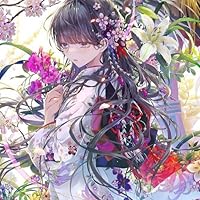
In this volume, we are introduced to a new character, our cover girl Palma Shishinegura, who even from what little we see of her is a really intriguing new addition. Honestly, compared to the other cast members, Palma feels like she walked straight out of the main cast of Tokyo Ghoul with her absolutely heartbreaking story of loss and abandonment and her seriously terrifying necromantic powers, oddly (but adorably) combined with an almost Tohru-Honda-like ability to see the best in everything and everyone. Our girl is threatened with a fate genuinely worse than death in the last few pages, which makes continuing on to volume 8 an absolute necessity for the reader's peace of mind. No spoilers, but zombies are heavily involved.
Review for Series as a Whole: Volumes 7-13 (so far)
Choujin X is ... really weird. I think I like it? It's an acquired taste for sure, but I feel like Sui Ishida's latest series, despite some of my misgivings, is one of the more creative and intellectually interesting manga I've read.
At first glance, Chojin X (or Choujin X, depending on which Romanization you prefer) shares a lot of surface similarities with the mangaka's previous smash hit, Tokyo Ghoul . An every-boy protagonist dealing with sudden, grotesque changes to his body, themes of alienation and injustice, rival organizations of super-powered folk with their own mysterious goals ... it's all here, too. At the same time, though, it isn't really fair to compare this series to TG. It is its own beast (or rather, its own bestial Chojin) and there are several key differences.
For one, Chojin X is a far more humorous, and tonally inconsistent, affair than its predecessor. While Tokyo Ghoul was intense and deadly-serious with only occasional moments of lightheartedness, Chojin X swings wildly between graphic violence, serious philosophical musings, and high tomfoolery. For some readers, this is one of the highlights of the series, though I personally saw it as more of a weakness (I'll get to that in a bit...). Another key difference is that while Tokyo Ghoul, even with its excellent supporting cast, was mostly laser-focused on Kaneki's psychological journey, Chojin X isn't as clear-cut on its protagonist and toggles between a trio of main characters (plus one villain who emerges from the shadows over time). And, while Tokyo Ghoul was a psychological drama, a war story, and ultimately a love story, with challenging questions to ask about the nature of right and wrong, Chojin X tackles a different set of questions: fate vs. free will, adolescence, and what it means to be a "hero."
As I said in prior reviews, Chojin X feels pretty shonen-y for a seinen. Now, granted, even Tokyo Ghoul in its early arcs wouldn't have felt out of place in Jump+ alongside the likes of Chainsaw Man, Heart Gear, Spy x Family, and other "mature shonen" titles, but early CX handily out-shonen-ed most shonen in sheer youthful energy (and, alas, horniness) plus a liberal sprinkling of shonen tropes and cliches. But it was always clear that Ishida wasn't just being tropey for tropes' sake, but because he had something meaningful to say about the shonen genre as a whole.
In this latest batch of volumes, it has become abundantly clear to me that Chojin X is not just a particularly creative spin on the new-gen shonen, but something of a deconstruction of the shonen genre entirely. Much as Madoka Magica and Neon Genesis Evangelion used the vocabulary of the magical girl and mecha genres, respectively, to tell very dark and grown-up stories that seriously challenged and re-evaluated the core assumptions those popular genres are built on, Chojin X is shaping up to be the anti-battle-shonen of our era. All the standard-fare shonen elements are here, from the idealistic hero to the extended training arc to Naruto/Sasuke-esque best friend rivalry to the improbably successful talk-no-jutsu, but things consistently end up taking much deeper, and darker, turns than they would in a standard-issue Shonen Jump story. The meta aspect is genuinely interesting, but I feel it comes somewhat at a cost to the accessibility of the story and the relatability/likeability of the characters. Still, seeing the fantastically creative spins Ishida puts on the genre more than makes up for it.
I'm still not entirely connecting to the main cast, and I still feel like even the secondary cast of Tokyo Ghoul were far more interesting to me than any of the mains in Chojin X, but I have to say that in this new phase, post-timeskip, I am enjoying them a little more than before. Tokio has matured into a thoughtful, circumspect young man who is not afraid to march to the beat of his own drummer, which makes him a far more interesting, and likeable, character than before. Palma, a kindhearted necromancer and potential love interest for Tokio, is also a fascinating addition to the cast (at least, until she devolves into more of an ongoing fanservice gag than an actual character). Other than that, the individual characters are about the same as before. But where Chojin X really shines is in its character dynamics. The ways that Tokio, Ely, and Azuma play off one another in both casual and serious scenarios is what gives the series much of its charm. Each member of the leading trio has a distinctive and fascinating interpersonal dynamic with each of the others, and watching them work together and clash, whether in battles, quiet slice-of-life moments, or big moral dilemmas, is a real treat.
The art is incredible, with cute but distinctive and detailed character designs and bold, sketchy strokes bringing the run-down world of Yamato, the Chojin body horror, and the subtle facial expressions of the human characters beautifully to life. The fight choreography, it should be mentioned, is also a head and shoulders above that of Tokyo Ghoul :re and is not just readable but quite cool-looking. The artwork feels more stylized and shonen-y than Tokyo Ghoul, but it is still recognizably Ishida, and it is a cut above the typical manga illustration style. It's well-worth paying $15 each for the oversize tankobon volumes for the cover illustrations and artwork alone.
I think if there was one word I would use to describe Chojin X so far it would be "indulgent." That's both a criticism and a compliment. On the plus side, Ishida seems to be having a lot of fun with the process this time around, and his enthusiasm is infectious. An artist this talented being given this much freedom to let his imagination run wild is a joy to behold. The experimental art style yields some lovely surprises at every flip of the page. The sheer coolness factor of the Chojin powers and transformations (as well as the intricate worldbuilding that undergirds Chojin physiology and history) is pretty enjoyable. And even some of the sillier, what-the-hell-even-was-that sequences are at least visually fun. But on the other hand, the wild tone shifts between deadly-serious and sophomoric are way too frequent for my taste, and while some people would say this is a strength of the series, to me it just screams that Ishida needs to start listening to his editor. It's kind of impossible to take the story seriously, for me at least, when it is always undercutting itself with jokes and fanservice, and while that can be done, Chainsaw Man did it so much better. Ishida, and Choujin X, are really at their best when Ishida leans into the darkness, tragedy, and heartfeltness of his story rather than playing tricks with meme humor and cool visuals.
Oh and speaking of indulgent ... I feel obliged to say that the fanservice in Chojin X is absolutely heinous. Like I do not know how Sui Ishida managed to make the boob jokes in CX feel dirtier than the literal chapter-long sex scene in TG: re, but, somehow, he pulled it off. What's worse is when the fanservice jokes are at the expense of the younger female characters -- Ely, Maiko/Momo, and, eventually, Palma -- who are minors (Ely is stated to be 16 but looks like she's about 13. Momo is 18 and very much still in high school, Palma is 16). I would say that compared to Part I, the fanservice is a bit less frequent ... but when it hits, it hits BAD. It also has a way of coming at the WORST possible moments and completely undermining moments of serious emotion and dramatic tension, to the detriment of the manga as a whole. Sure, it may not be completely beyond the pale for manga and anime, but coming from an author like Ishida who has shown himself in Tokyo Ghoul and Jack Jeanne to be fully capable of writing about sexuality with the maturity and restraint befitting an actual, y'know, grownup, it is deeply disappointing.
Chojin X shines with its endless barrage of interesting ideas and clever deconstruction of the superhero/battle shonen genre, and especially in the climactic Zora Elimination arc, it consistently tops itself with new, wildly creative spins that leave the reader gasping for air and counting down the days until the next installment (the series is, as of this review, ongoing). But unfortunately, with its weaker characters, uneven tone and pacing, and constant undercutting with jokes and fanservice, it lacks the raw emotional intensity that made Tokyo Ghoul such a fan favorite and masterpiece. It's self-aware, highly experimental, extremely visually inventive, and remarkably adept at turning philosophical axioms into relevant dialogue and plot points ... but it just doesn't have the heart or raw emotional sincerity of Tokyo Ghoul, and it's a series that I feel like I kind of have to convince myself to like, rather than just straightforwardly enjoying.
Still, I have to say that the last three volumes (12-14) have been insanely creative, and also a lot more emotionally engaging than most of the series, with long-running Chekov's guns starting to fire all at once in the climactic final battle (or is it ... ?) . The last 10 or so chapters have just been packing peaks upon peaks with new, ever more inventive and unexpected plot twists that truly push the boundaries of the manga genre. It feels like Ishida has truly hit his stride and may yet create something to rival Tokyo Ghoul, and I at least am excited to see how the series goes from here.
This volume picks right up where we left off in the middle of a chilling (literally!) fight scene, and starts us on our journey into Part II of the tale of X and all his friends.
Things are starting to get more serious, which is good. Post-timeskip Tokio has gained a lot of strength and maturity, and has evolved into a quite capable fighter and leader, but he's still the idealistic, painfully indecisive young man we've all come to know and love. (He's also a bit less horny this time around, though the adolescent lust will be back with a vengeance soon enough). The plot is starting to feel more focused as well, as we join Tokio and Yamato Mori in the early stages of a scouting mission to find the source of Zora's opium. The dark take on immortality in this -- essentially, immortality is a curse because you have to feel the pain of dying over and over again and all the psychological damage that brings -- recalls modern classic manga like Ajin and To Your Eternity. It's all very thought-provoking, and, of course, stunningly illustrated.
It doesn't help, though, that the narrative chooses to dedicate a kind of inordinate amount of time to psychic chojin Michael's telepathic antics and the team's frustration with Tokio's leadership style. Coming off of a life-threatening battle and jumping straight into a planning arc and a scouting operation of seemingly little importance feels weirdly anticlimactic, and the pacing is janky and uneven, particularly in the first several post-timeskip chapters. It takes a while for the story to reach the same heights as it did in volumes 3 and 6, but to be fair, the tone and quality are a lot more consistent on the way there.
In this volume, we are introduced to a new character, our cover girl Palma Shishinegura, who even from what little we see of her is a really intriguing new addition. Honestly, compared to the other cast members, Palma feels like she walked straight out of the main cast of Tokyo Ghoul with her absolutely heartbreaking story of loss and abandonment and her seriously terrifying necromantic powers, oddly (but adorably) combined with an almost Tohru-Honda-like ability to see the best in everything and everyone. Our girl is threatened with a fate genuinely worse than death in the last few pages, which makes continuing on to volume 8 an absolute necessity for the reader's peace of mind. No spoilers, but zombies are heavily involved.
Review for Series as a Whole: Volumes 7-13 (so far)
Choujin X is ... really weird. I think I like it? It's an acquired taste for sure, but I feel like Sui Ishida's latest series, despite some of my misgivings, is one of the more creative and intellectually interesting manga I've read.
At first glance, Chojin X (or Choujin X, depending on which Romanization you prefer) shares a lot of surface similarities with the mangaka's previous smash hit, Tokyo Ghoul . An every-boy protagonist dealing with sudden, grotesque changes to his body, themes of alienation and injustice, rival organizations of super-powered folk with their own mysterious goals ... it's all here, too. At the same time, though, it isn't really fair to compare this series to TG. It is its own beast (or rather, its own bestial Chojin) and there are several key differences.
For one, Chojin X is a far more humorous, and tonally inconsistent, affair than its predecessor. While Tokyo Ghoul was intense and deadly-serious with only occasional moments of lightheartedness, Chojin X swings wildly between graphic violence, serious philosophical musings, and high tomfoolery. For some readers, this is one of the highlights of the series, though I personally saw it as more of a weakness (I'll get to that in a bit...). Another key difference is that while Tokyo Ghoul, even with its excellent supporting cast, was mostly laser-focused on Kaneki's psychological journey, Chojin X isn't as clear-cut on its protagonist and toggles between a trio of main characters (plus one villain who emerges from the shadows over time). And, while Tokyo Ghoul was a psychological drama, a war story, and ultimately a love story, with challenging questions to ask about the nature of right and wrong, Chojin X tackles a different set of questions: fate vs. free will, adolescence, and what it means to be a "hero."
As I said in prior reviews, Chojin X feels pretty shonen-y for a seinen. Now, granted, even Tokyo Ghoul in its early arcs wouldn't have felt out of place in Jump+ alongside the likes of Chainsaw Man, Heart Gear, Spy x Family, and other "mature shonen" titles, but early CX handily out-shonen-ed most shonen in sheer youthful energy (and, alas, horniness) plus a liberal sprinkling of shonen tropes and cliches. But it was always clear that Ishida wasn't just being tropey for tropes' sake, but because he had something meaningful to say about the shonen genre as a whole.
In this latest batch of volumes, it has become abundantly clear to me that Chojin X is not just a particularly creative spin on the new-gen shonen, but something of a deconstruction of the shonen genre entirely. Much as Madoka Magica and Neon Genesis Evangelion used the vocabulary of the magical girl and mecha genres, respectively, to tell very dark and grown-up stories that seriously challenged and re-evaluated the core assumptions those popular genres are built on, Chojin X is shaping up to be the anti-battle-shonen of our era. All the standard-fare shonen elements are here, from the idealistic hero to the extended training arc to Naruto/Sasuke-esque best friend rivalry to the improbably successful talk-no-jutsu, but things consistently end up taking much deeper, and darker, turns than they would in a standard-issue Shonen Jump story. The meta aspect is genuinely interesting, but I feel it comes somewhat at a cost to the accessibility of the story and the relatability/likeability of the characters. Still, seeing the fantastically creative spins Ishida puts on the genre more than makes up for it.
I'm still not entirely connecting to the main cast, and I still feel like even the secondary cast of Tokyo Ghoul were far more interesting to me than any of the mains in Chojin X, but I have to say that in this new phase, post-timeskip, I am enjoying them a little more than before. Tokio has matured into a thoughtful, circumspect young man who is not afraid to march to the beat of his own drummer, which makes him a far more interesting, and likeable, character than before. Palma, a kindhearted necromancer and potential love interest for Tokio, is also a fascinating addition to the cast (at least, until she devolves into more of an ongoing fanservice gag than an actual character). Other than that, the individual characters are about the same as before. But where Chojin X really shines is in its character dynamics. The ways that Tokio, Ely, and Azuma play off one another in both casual and serious scenarios is what gives the series much of its charm. Each member of the leading trio has a distinctive and fascinating interpersonal dynamic with each of the others, and watching them work together and clash, whether in battles, quiet slice-of-life moments, or big moral dilemmas, is a real treat.
The art is incredible, with cute but distinctive and detailed character designs and bold, sketchy strokes bringing the run-down world of Yamato, the Chojin body horror, and the subtle facial expressions of the human characters beautifully to life. The fight choreography, it should be mentioned, is also a head and shoulders above that of Tokyo Ghoul :re and is not just readable but quite cool-looking. The artwork feels more stylized and shonen-y than Tokyo Ghoul, but it is still recognizably Ishida, and it is a cut above the typical manga illustration style. It's well-worth paying $15 each for the oversize tankobon volumes for the cover illustrations and artwork alone.
I think if there was one word I would use to describe Chojin X so far it would be "indulgent." That's both a criticism and a compliment. On the plus side, Ishida seems to be having a lot of fun with the process this time around, and his enthusiasm is infectious. An artist this talented being given this much freedom to let his imagination run wild is a joy to behold. The experimental art style yields some lovely surprises at every flip of the page. The sheer coolness factor of the Chojin powers and transformations (as well as the intricate worldbuilding that undergirds Chojin physiology and history) is pretty enjoyable. And even some of the sillier, what-the-hell-even-was-that sequences are at least visually fun. But on the other hand, the wild tone shifts between deadly-serious and sophomoric are way too frequent for my taste, and while some people would say this is a strength of the series, to me it just screams that Ishida needs to start listening to his editor. It's kind of impossible to take the story seriously, for me at least, when it is always undercutting itself with jokes and fanservice, and while that can be done, Chainsaw Man did it so much better. Ishida, and Choujin X, are really at their best when Ishida leans into the darkness, tragedy, and heartfeltness of his story rather than playing tricks with meme humor and cool visuals.
Oh and speaking of indulgent ... I feel obliged to say that the fanservice in Chojin X is absolutely heinous. Like I do not know how Sui Ishida managed to make the boob jokes in CX feel dirtier than the literal chapter-long sex scene in TG: re, but, somehow, he pulled it off. What's worse is when the fanservice jokes are at the expense of the younger female characters -- Ely, Maiko/Momo, and, eventually, Palma -- who are minors (Ely is stated to be 16 but looks like she's about 13. Momo is 18 and very much still in high school, Palma is 16). I would say that compared to Part I, the fanservice is a bit less frequent ... but when it hits, it hits BAD. It also has a way of coming at the WORST possible moments and completely undermining moments of serious emotion and dramatic tension, to the detriment of the manga as a whole. Sure, it may not be completely beyond the pale for manga and anime, but coming from an author like Ishida who has shown himself in Tokyo Ghoul and Jack Jeanne to be fully capable of writing about sexuality with the maturity and restraint befitting an actual, y'know, grownup, it is deeply disappointing.
Chojin X shines with its endless barrage of interesting ideas and clever deconstruction of the superhero/battle shonen genre, and especially in the climactic Zora Elimination arc, it consistently tops itself with new, wildly creative spins that leave the reader gasping for air and counting down the days until the next installment (the series is, as of this review, ongoing). But unfortunately, with its weaker characters, uneven tone and pacing, and constant undercutting with jokes and fanservice, it lacks the raw emotional intensity that made Tokyo Ghoul such a fan favorite and masterpiece. It's self-aware, highly experimental, extremely visually inventive, and remarkably adept at turning philosophical axioms into relevant dialogue and plot points ... but it just doesn't have the heart or raw emotional sincerity of Tokyo Ghoul, and it's a series that I feel like I kind of have to convince myself to like, rather than just straightforwardly enjoying.
Still, I have to say that the last three volumes (12-14) have been insanely creative, and also a lot more emotionally engaging than most of the series, with long-running Chekov's guns starting to fire all at once in the climactic final battle (or is it ... ?) . The last 10 or so chapters have just been packing peaks upon peaks with new, ever more inventive and unexpected plot twists that truly push the boundaries of the manga genre. It feels like Ishida has truly hit his stride and may yet create something to rival Tokyo Ghoul, and I at least am excited to see how the series goes from here.
May 28, 2026
"No sé si puedo sentirme orgullosa del poder que tengo y de aquello que he hecho para poder sobrevivir. Simplemente quería seguir viendo el sol. Pero, aunque no pueda enorgullecerme, tampoco voy a arrepentirme de haber sido una herramienta. Ahora solo me queda seguir adelante."
Nuevo arco, nuevos personajes y cierto desarrollo para los protagonistas tanto a nivel de poderes como a nivel personal. Y es que con los acontecimientos de los anteriores tomos ya se solicitaba un desarrollo visible para los que iniciaron esta historia desde cero. Aunque tampoco ha sido algo excesivo, sino que ha sido un avance realista con respecto al tiempo y al personaje del que se hable en cuestión.
Aún así, siento que hay personajes secundarios con bastante potencial que, por el momento, están bastante olvidados y, por ende, desperdiciados. Y es que creo que se han creado demasiados secundarios que están o van a caer en el olvido. Aunque el nuevo personaje, protagonista de este arco, tiene bastante carisma y siento que no va a ser olvidada como el resto.
La trama se ha enrevesado bastante, aunque con una explicación tan compleja y densa que hace que, sino lees los tomos algo seguidos, puedas perderte fácilmente en la trama. Aparte los nombres de muchos secundarios, al tener poco protagonismo, son difíciles de establecer en la mente. Por tanto, cuando te hablen de Periquito te preguntarás quién es.
En general una obra con buen dibujo y diseño de personajes, con una trama que se va enrevesando pero que por su forma de estar contada hace que el tomo se vuelva algo lento y pesado de leer.
Nuevo arco, nuevos personajes y cierto desarrollo para los protagonistas tanto a nivel de poderes como a nivel personal. Y es que con los acontecimientos de los anteriores tomos ya se solicitaba un desarrollo visible para los que iniciaron esta historia desde cero. Aunque tampoco ha sido algo excesivo, sino que ha sido un avance realista con respecto al tiempo y al personaje del que se hable en cuestión.
Aún así, siento que hay personajes secundarios con bastante potencial que, por el momento, están bastante olvidados y, por ende, desperdiciados. Y es que creo que se han creado demasiados secundarios que están o van a caer en el olvido. Aunque el nuevo personaje, protagonista de este arco, tiene bastante carisma y siento que no va a ser olvidada como el resto.
La trama se ha enrevesado bastante, aunque con una explicación tan compleja y densa que hace que, sino lees los tomos algo seguidos, puedas perderte fácilmente en la trama. Aparte los nombres de muchos secundarios, al tener poco protagonismo, son difíciles de establecer en la mente. Por tanto, cuando te hablen de Periquito te preguntarás quién es.
En general una obra con buen dibujo y diseño de personajes, con una trama que se va enrevesando pero que por su forma de estar contada hace que el tomo se vuelva algo lento y pesado de leer.
July 31, 2026
A good continuation of the story. Palma Shishinegura, Michelangelo, and Mike made good first impressions as characters we are likely to see for the rest of this arc. The characters in this series are why I love it so much and this volume was no exception. The time skip was an interesting choice at the end of the last volume, but my gripes with it are minimal and personal (I just wanted to see what Tokio would do away from his friends and meet his compatriots).
Sui Ishida’s artwork is still amazing and the body horror of ChoujinX is a highlight of the series for me, volume 7 being the peak so far. The volume’s plot slows to show us Tokio’s map of characters and plans, but the artwork could have served as our visual storytelling. The panel showing everything was easy to read and follow without Tokio needing to explain everything to us for several pages. But the action does pick up a lot by the end, and the combat encounters of ChoujinX are interesting and flow effortlessly to the point I can ignore my tiny nitpicks.
Sui Ishida’s artwork is still amazing and the body horror of ChoujinX is a highlight of the series for me, volume 7 being the peak so far. The volume’s plot slows to show us Tokio’s map of characters and plans, but the artwork could have served as our visual storytelling. The panel showing everything was easy to read and follow without Tokio needing to explain everything to us for several pages. But the action does pick up a lot by the end, and the combat encounters of ChoujinX are interesting and flow effortlessly to the point I can ignore my tiny nitpicks.

March 30, 2024
Tokio è tornato, molto più maturo e forte di quando ci aveva lasciato. Spero che quest'atmosfera adulta e vissuta che lo avvolge accompagni sempre il suo personaggio d'ora in poi, sinceramente mi ha fatto sbarellare! Certo, vorrei sapere come siamo arrivati a questo punto… spero ci siano dei flashback con Sato durante il loro periodo a Iwato.
Shishinegura è stata una rivelazione. Dopo quell'apparizione inquietante nel volume precedente, in un solo volume mi sono affezionata a lei e sono rimasta senza parole per il doloroso destino che le ha riservato l'autore. Quale sarà la sua fine (o inizio)?
La storia continua a scorrere bene, arricchita da tavole di choujin sempre più disturbanti. Vorrei già avere tra le mani il volume 8.
Shishinegura è stata una rivelazione. Dopo quell'apparizione inquietante nel volume precedente, in un solo volume mi sono affezionata a lei e sono rimasta senza parole per il doloroso destino che le ha riservato l'autore. Quale sarà la sua fine (o inizio)?
La storia continua a scorrere bene, arricchita da tavole di choujin sempre più disturbanti. Vorrei già avere tra le mani il volume 8.

April 6, 2025
Ely almost dies in her fight against rogue choujin I.C. Ice (yes, that's his name) but Tokio has appeared like a superhero just in the nick of time to save her! Freshly back from an adventure that got time-skipped over, Tokio has gotten taller and stronger.
And then there's a meeting about the next step for Yamato Mori in their quest to defeat Zora. AND EVERTHING GETS EXPLAINED!!! There's even an info dump page that my stupid brain could actually understand! I think I finally get the plot (or at least the underlying drive of the plot)!
Anyway, Tokio forms a strike team to go undercover and find the source of Zora's drugs. Meanwhile, there's a girl making a zombie army that may end up becoming a zombie choujin army. So uh... trigger warning for gore.
And then there's a meeting about the next step for Yamato Mori in their quest to defeat Zora. AND EVERTHING GETS EXPLAINED!!! There's even an info dump page that my stupid brain could actually understand! I think I finally get the plot (or at least the underlying drive of the plot)!
Anyway, Tokio forms a strike team to go undercover and find the source of Zora's drugs. Meanwhile, there's a girl making a zombie army that may end up becoming a zombie choujin army. So uh... trigger warning for gore.
June 18, 2026
This was a roller coaster for me. There were a few parts that felt like history lessons and those can be hard for me to follow with the names, dates, and locations. But the last chapter got my HYPED. We also finally get to see some of what Tokio did while he was away. I appreciate the recaps given here and there for the reader. We get to see more variations of Choujins and their powers. A bit of progress to the story with a sting operation which leads to some morality reflection. As a zombie lover, Palma is immediately my favorite character.
This volume is chapters 37-40.
This volume is chapters 37-40.
This entire review has been hidden because of spoilers.

October 17, 2024
Somehow made me care about a new character introduced in this volume despite the fact that I still don’t really care about what happens to any of the other characters. This series is wildly inconsistent so far.

June 2, 2025
This is so funny, deep, and action packed. I Feel like if I had to define manga I would show them this series. It so good at every aspect, nothing feels cut short and yet it doesn't feel over exerted.

August 11, 2025
Una parte está lenta al inicio pero luego se aliviana. Me gustó el 'nuevo' poder de hablar con las palomas del Tokio, y la morra científica loca que hace pruebas con humanos.
La historia va bien, si fuera anime sería de los primeros episodios de la 2da temporada, ajustando la nueva trama.
La historia va bien, si fuera anime sería de los primeros episodios de la 2da temporada, ajustando la nueva trama.
April 18, 2024
Urghh, am such a bitch for a time skip 🤤
May 29, 2024
Fabbrica di zombie e il ritorno di tokio🫨

June 19, 2024
The ending??????

September 19, 2024
PALMA NO

October 1, 2024
Holy hell the last two chapters were absolute treats that i ate up.
Tokio is so cool!!
And i love MichaelAngelo <3
Tokio is so cool!!
And i love MichaelAngelo <3
December 5, 2024
Reading this made me realize how similar the art style is similar to Jack Jeanne ... but duh.

January 9, 2025
I’m honestly tempted to let volumes build up so I can binge read a few. I just want to keep consuming this series.

May 15, 2025
3.5 stars.

July 30, 2025
Tokio, the man that you are :P!!
Displaying 1 - 30 of 37 reviews