There is an appetite for God. And it can be awakened. I invite you to turn from the dulling effects of food and the dangers of idolatry, and to say with some simple fast: "This much, O God, I want you."
Our appetites dictate the direction of our lives--whether it be the cravings of our stomachs, the passionate desire for possessions or power, or the longings of our spirits for God. But for the Christian, the hunger for anything besides God can be an arch-enemy. While our hunger for God--and Him alone--is the only thing that will bring victory.
Do you have that hunger for Him? As John Piper puts it: "If we don't feel strong desires for the manifestation of the glory of God, it is not because you have drunk deeply and are satisfied. It is because we have nibbled so long at the table of the world. Our soul is stuffed with small things, and there is no room for the great." If we are full of what the world offers, then perhaps a fast might express, or even increase, our soul's appetite for God.
Between the dangers of self-denial and self-indulgence is this path of pleasant pain called fasting. It is the path John Piper invites you to travel in this book. For when God is the supreme hunger of your heart, He will be supreme in everything. And when you are most satisfied in Him, He will be most glorified in you.
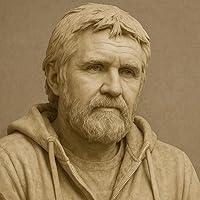
John Piper is founder and teacher of desiringGod.org and chancellor of Bethlehem College & Seminary. For 33 years, he served as senior pastor at Bethlehem Baptist Church, Minneapolis, Minnesota.
He grew up in Greenville, South Carolina, and studied at Wheaton College, Fuller Theological Seminary (B.D.), and the University of Munich (D.theol.). For six years, he taught Biblical Studies at Bethel College in St. Paul, Minnesota, and in 1980 accepted the call to serve as pastor at Bethlehem.
John is the author of more than 50 books and more than 30 years of his preaching and teaching is available free at desiringGod.org. John and his wife, Noel, have four sons, one daughter, and twelve grandchildren.
In almost every way this is the best book I've read on fasting. Piper really sells the importance of this oft-neglected discipline, particularly for our current satisfaction-obsessed culture.
The only real misstep of this book--and it's a jarring one--is the seventh chapter, in which Piper focuses on the importance of fasting over the issue of abortion. Of course, it makes sense to talk about fasting over a particular issue of world concern. But he doesn't do much to justify the topic's inclusion, and the sudden appearance of a passionate pro-life plea late a book on fasting felt was off-putting, even for someone who doesn't disagree with most of what he said. I can only imagine how others might react to this hot-button topic, hidden like a springy snake in a can and popping into the reader's face with no warning.
Still, despite my concerns about that one chapter, the book is still well worth a read for anyone curious about how fasting might improve their spiritual life.
I would highly recommend this book to any and all Christians.
Fasting is not practiced or taught in most churches today and the Bible speaks very clearly to subject of fasting. It's so helpful to look at fasting as a privilege and joy, rather than a duty and dread. Whether we eat or don't eat, we should be joyful. Joyful eating and Joyful fasting make up the Christian's life.
God rewards those who fast, but it's important to know that it's not in a meritorious way. The reward that comes from fasting comes from the death of Christ and it's because of Christ that we are blessed, healed, strengthened, etc. Fasting, like prayer, is a means that God chooses to bless his children. I would once again recommend this book to be read by every Christian!
Honestly, I was pretty disappointed by this book. It felt like the same things Piper says in his other books, just with "and that's why you should fast" tacked on, and some chapters felt like he forgot he was talking about fasting altogether. Oddly enough, for a book about fasting he literally said nothing about how to fast or any practical advice about fasting. I did appreciate his theology and how he got to the heart behind fasting, but overall this book just wasn't what I was looking for.
An convicting read, especially in our culture of comfort and affluence.
Favorite quote:
“If you don’t feel strong desires for the manifestation of the glory of God, it is not because you have drunk deeply and are satisfied. It is because you have nibbled so long at the table of the world. Your soul is stuffed with small things, and there is no room for the great.”
Honestly enjoyed this book way more than I expected. A really well done work on devotion to God in general, with a focus on fasting and prayer. I especially loved the chapter that commented on Isaiah 58 which is such a beautiful passage of scripture!
Encouraging & challenging!
“So let us trust the Great Physician, the Lord, our healer. Let us accept the fast that he has prescribed for us. It will mean light and healing and guidance and refreshment and restoration and resourceful-ness—and all of this with God himself before us, and behind us, and in the midst of us. And since it is by our good deeds that people will see our light and give glory to our Father in heaven (Matthew 5:16), then this fast too will spread the gospel of the kingdom and hasten the day of the Lord. If we are truly hungry for all the fullness of God, here is a fasting that will fill.”
The more I listen to and read John Piper, the more I appreciate his gift of teaching and preaching. His mastery of bringing various Scripture to bear on a topic is truly wonderful. This book on fasting is no different from his other tomes. What a great encouragement to follow the Lord in this neglected discipline!
A great book on fasting. It covers so much ground: how christian fasting is distinct from other types of fasting, what is its goal and reward, what it protects us from, what makes it God-pleasing (and what are the dangers of this discipline), how it is both and inward and an outward weapon.
The book is deeply rooted in Scripture (well, the author’s name makes this remark redundant).
It motivates one to take this “hungry handmaid of faith” more seriously and also warns one of the many ways one can go off ways with this practice.
I was particularly struck by the contrast of christian fasting (with its heart of joy, its God-orientation, its “dissatisfied contentment in the all-sufficiency of Christ”, its out-reaching loving energy) with asceticism (that has self-mastery as the reward and pride as the danger and if it is pursued as an end in itself, it can even do us more harm than good, as we end up exchanging gluttony for pride, the animal self for the diabolical self. “Only God can mortify”).
Also, I was awakened to my own need to fast on a regular basis given my insatiability, the deadening effects of innocent delights, the danger of turning gifts into gods, the inclination of using food as an anesthetic for sadness or other frustrating feelings and my indisposition to forgo my own needs and ambitions and reach out for the sake of the needy, my assimilation in the consumer culture that has transformed even fasting in a self-seeking experience of losing weight / feeling great / reaching higher consciousness.
Below i leave a motivating quote from Chrysostom that Piper has used in the book: “Fasting is, as much as lies in us, an imitation of the angels, a contemning of things present, a school of prayer, a nourishment of the soul, a bridle of the mouth, an abatement of concupiscence: it mollifies rage, it appeases anger, it calms the tempests of nature, it excites reason, it clears the mind, it disburdens the flesh, it chases away night-pollutions, it frees from headache. By fasting, a man gets composed behaviour, free utterance of his tongue, right apprehensions of his mind”
The spiritual discipline of fasting is pretty straightforward, which is why Piper didn’t write a book on how to fast. Instead, he focuses on the more difficult (and important) matter in fasting — the posture of the heart! This was a great book to read to reconfigure my perspective on fasting as a means to the end of desiring Jesus in increasing measure!
- Desires for other things” — there’s the enemy. And the only weapon that will triumph is a deeper hunger for God. The weakness if our hunger for God is not because he is unsavory, but because we keep ourselves stuffed with other things.” - “The supremacy of God in all things is the great reward we long for in fasting… fasting is God’s testing ground and healing ground… seeking from God the reward of God’s all satisfying supremacy puts all other desires to the test…And when it reveals that the heart is with God and not the world, a mighty blow is struck against Satan”. - “We ache and yearn and fast to know more and more of all God is for us in Christ Jesus. But only because he has already laid hold of us and is drawing us ever forward and upward into “all the fullness of God”.
3 - So I really liked parts of this book. I think it was very eye opening and a different perspective of fasting that I never considered. It really talked about the humility and sacrifice that comes with fasting for the glory of God, but how to position yourself in a fast to glorify God and not just focus on what you can get out of a fast. Overall, there was a lot of good points, but I honestly don't have a lot that I retained. John Piper is so intelligent and smart and I am dumb so I didn't really understand a whole lot and got really confused and lost so many times and I just did not enjoy this reading experience. I would recommend it and I'm glad I read it, but just know it is a brain on type of book.
I love this book. It is a must read for every Christian who is desiring to get a greater hunger for the Lord. Piper calls out many things in our lives that can prevent us from desiring the Lord fully. Things we don’t necessarily think about.
But for starts, Piper really lays a good foundation of what fasting truly means. And throughout the whole book, he gives tons of scriptural examples. Plus examples from trust people in church history.
This book is great. If you hunger to have a greater hunger, this is a must read.
Op gennem hele kirkehistorien indtil kun meget kort tid siden, har faste været en ugentlig og fast praksis. Her er en god bog om, hvad denne praksis kan være og blive for os i dag, og hvordan Gud kan bruge den til at føre sit rige ind i verden. Bogen er gratis tilgængelig på desiringgod.org
3.5 stars but I’m rounding up bc no half stars ! Some parts were excellent! I just found it repetitive at times / think it could’ve been shortened a good amount and maintained the same level of effectiveness. That being said, this book is convicting & gave me lots of things to consider that weren’t on my radar.
This was a fantastic book! It really helped me understand why fasting is important and what sets Christian fasting apart. I would recommend it to anyone who wants to better understand and practice this spiritual discipline! I do wish it had more practical tips for the actual mechanics of fasting. That would be my one major complaint.
I found this book to contain motivations to fast, rather than a theology of fasting, but it was very motivational (as well as challenging), thus succeeding at its aim!
Has fasting been abolished in the New Covenant? John Piper argues that it has not, and what's what more that it is an essential and expected spiritual discipline. Fasting, he posits, is a means of drawing near to God and of saying, through physical hunger and weakness, "I am utterly dependent on You." As always, Piper approaches this subject with passion. He searches for opposition to his claims, then shows how those oppositions fail when held before God's word. This book gave me a new passion for fasting and a clearer understanding of what its purpose is in the Christian's life.
“If you don't feel strong desires for the manifestation of the glory of God, it is not because you have drunk deeply and are satisfied. It is because you have nibbled so long at the table of the world. Your soul is stuffed with small things, and there is no room for the great.”
I had been thinking about fasting in the Bible and this book is a helpful resource for developing your doctrine of fasting. Not only addressing the facts of fasting, but how you can worship God through fasting and the heart behind doing it.
I also liked his point to make sure you’re not loving, loving God (ie in fasting, singing, the things associated with enjoying God) instead of actually loving God.
4.5 “If you don’t feel strong desires for the manifestation of the glory of God, it is not because you have drunk deeply and are satisfied. It is because you have nibbled so long at the table of the world. Your soul is stuffed with small things, and there is no room for the great.”
Rightfully challenging and insightful. The comforts and extreme riches of 21st Century America so easily drowns my zeal for the Lord. We’re just apathetic. We don’t care that the Bridegroom is gone. We don’t care that there’s hundreds and hundreds of millions of people who have not heard the gospel, heading straight to a Christless eternity. We don’t care that babies are slaughtered daily in our “modern” world. We can talk all day about the wars in Israel or Ukraine, but there is no natural tendency in us towards praying for drastic change. We don’t care about our personal holiness. We don’t care about our unbelieving friends. We’re too busy worrying about our next meal.
Even if we say we care about these things, how much faithful, fervent prayer do we personally dedicate to these issues? Is God’s hand shortened that he can’t sway national laws, bring rulers to himself, and soften hardened hearts? I personally am extremely embarrassed at my lack of confidence in God to perform marvelous deeds (which is a direct correlation to my faithfulness in prayer). Fasting has recently helped me deny my selfish desires and is the physical way of saying,
“This much, Oh Lord, I want you.” “This much, Oh God, I desire your kingdom.”
It is not natural for us to want him and desire his kingdom. That’s the point. Fasting is the way we directly deny the sinful flesh. We are forced to focus on the Giver and ask if we’ve been making his gifts into gods (we have). It is an acknowledgment that there is something so much greater than our natural appetites.
I've read so many Piper books that they begin to sound like a broken record in my head. "John Edwards...blah...blah..." I skimmed through this book until I got to his chapters explaining Isaiah 58. Reading these chapters came as an unexpected splash of cold water in the face. I had wanted to read a book on fasting because of this very passage I'd stumbled across in my own Bible study! I went back and reread this book; taking notes and the time to digest (hah!) it all. I loved his explanation of Isaiah since this is what had inspired my further study on the subject in the first place. This book has been a good reminder for me to engage in fasting and to do it with pure heart and motives. I read this as a READS library book for the Kindle and do not own it. Notes are in my S-note, book notes.
I’m not sure what happened here. Piper’s understanding of the passages he cites is bizarre. In other works, writers make the clear link between fasting and intense emotional experience. You don’t need to think about fasting because you WILL fast when extreme emotion overtakes you. In the examples Piper cites, he doesn’t seem to acknowledge this link and instead turns the practice into something akin to the works of the Pharisees. Fasting is used as a kind of prayer strong-arming of God or as a way to ‘increase our experience of Him’. Either way, it becomes just another work we can be ‘doing’ instead of being a natural response of the regenerate heart.
I don’t want to be guilty of ‘leaning on my own understanding here’ so I welcome any counter criticism.
Overall, fasting is a gift from God that can help us glorify Him more in so many aspects.
“Fasting is birthed by a homesickness for God”. This homesickness is threatened because our physical appetites are too intense. Fasting is a weapon against this!!
The greatest adversary of love to God is not his enemies but his gifts. Fasting is a test to see what desires control me.
Bread magnifies Jesus in 2 ways: 1- eaten with gratitude for His goodness 2- forfeited out of hunger for God Himself
Fasting says I value having more of the giver than the gift!!
The only authentic fasting is if it includes a spiritual attack against our own sin.
This was truly a great book. It is one of those books that needs to be reread. I plan to do that. A great quote (there were many) is "Jesus is the light of the world. Living near him is the brightest place in the universe. To find out where he lives, read the gospels and follow his path." The main focus of the book is fasting/going without food in order to hunger for God. An intimate relationship with God is worth it! If you want a more intimate relationship with God, I recommend this book. In fact, I recommend many of the books written by John Piper!
This book caused a personal revival for me and filled many theological gaps that would have been left blank without a solid understanding of fasting.
Questions this book helped me answer:
What is the purpose of fasting? (obviously) What do you want most and how can you be sure it is Christ? What should you do when you really wish Jesus was physically in the room? What is the balance between our role and the work of the Holy Spirit in our battle with sin?
I revisited this book to remind myself of the importance, purpose and rewards of fasting. It is a great book to start this new year. Piper says, “It is a paradoxical spiritual principle in Scripture: as you pour yourself out, you become full. As you give away, you get more.” That is true. This book is probably the most comprehensive work on the topic.
This book has been a treasure to read. Every chapter is rich with gems, and I intend to reread it several times. Fasting is something that’s not very talked about, and although I’ve kept an eye out for it for years, I don’t feel like my understanding has been very deep at all. Piper digs very deep into fasting from every angle. Each chapter I read, I walked away more and more thankful for this gift of God to those willing to hunger and thirst and be weak before him.
Perhaps the most valuable thing I’m taking away is this list of all the things fasting says. When I read the book again, I expect the list will grow. For now, this is what I’m taking away to chew on. Fasting says: - This much, oh God, I want you! - This much, Lord, you satisfy me! - Oh God, make me a means of your conquering the nations and your coming again! - This much, O God, this much, we long for your fullness in the church and your glory in the world! - Oh God, show us your glory! - Oh God, we are not able on our own!
This is the book that I discovered the reason that Piper has such a fanatic emphasis on world missions. He follows George Ladd’s belief that Christ wouldn’t return until the gospel has reached every nation and people. So a desire to hasten the coming of Christ is behind this pressure for world missions. While I don’t disagree with that, it’s easy to overlook the command to also disciple the nations, not merely the people who convert, but the nations themselves. The call of the gospel is to go into all the nations and make them all Christian nations. Piper is right on the edge of postmillennialism