Młody flamandzki rysownik, stworzył niezwykłą opowieść w klimacie pastiszu komiksów z początku XX wieku. To opowieść o relacjach ojca i syna.
Ojciec i syn zwiedzają Belgię. Od muzeów w Brugii po zoo w Antwerpii, ich egzystencja zdaje się być ciągle o włos od przemienienia się w koszmar.
Olivier Schrauwen, zapożyczając styl graficzny od amerykańskich mistrzów początku dwudziestego wieku, proponuje serię niesztampowych historii z widocznymi silnymi wpływami surrealizmu belgijskiego. Oryginalny ton opowieści powoduje wybuch śmiechu, ale i budzi trwogę.
Olivier Schrauwen is a Belgian cartoonist and musician, currently based in Berlin. Schrauwen was born in 1977 in Bruges, a city in the Dutch-speaking part of Belgium. He studied animation at the Academy of Art in Gent, then obtained a master degree in comics at the 'École superieure des Art Saint-Luc' in Brussels. His works include the surreal Arsène Schrauwen (2014), the six sci-fi stories collected in Parallel Lives (2018), the pirate story Portrait of a Drunk (2019) in collaboration with French cartoonists Ruppert and Mulot, and his slice-of-life magnum opus Sunday (2024).
this book is great - its got a real winsor mccay-ish feeling to it. my best find at mocca, by far. i urge you all to track it down because the fact that i had to add it to goodreads.com myself means not enough of you are reading it. and no fair borrowing mine.
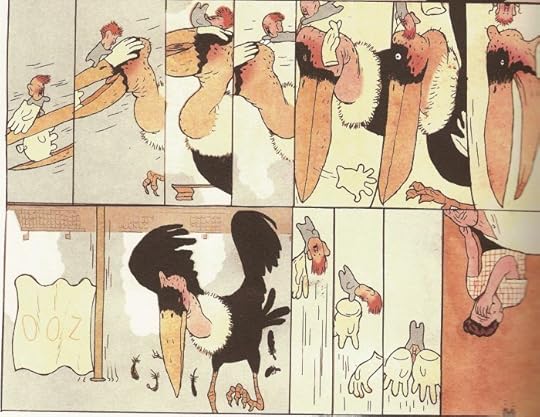
oh, and i wrote this so long ago that it was before i even knew how to add pictures to reviews, but now i know, so to sweeten the request, here are some images from the book! which is probably still hard to find (but worth it), but fortunately, he has a new book out:
Una segunda lectura le ha sentado estupendamente para apreciar algunos matices de su particular surrealismo que se me habían pasado en la primera. Sin menospreciar el guión, de este tomo destaco el dibujo y el color, ambos maravillosos y fieles a la tradición europea.
El debut del genio del cómic belga, aunque menos propositivo y con una visión de lo colonial mucho menos desarrollada que en trabajos siguientes (véase su brillante "Arsene Schrauwen"), hace evidente ya su talento para el tratamiento de la figura humana y la expresión facial, además de tener una historia entrañable y un personaje principal simpatiquísimo.
Schrauwens debuut uit 2006, hier in een Engelstalige herdruk uit 2014. Een absurdistisch en bevreemdend verhaal over een jongetje dat niet mag opgroeien van zijn overbezorgde en neurotische vader. De klare lijn overheerst, de kleuren zijn met opzet vaag maar steeds subliem gebruikt.
This is one of Olivier Schrauwen’s earlier works, originally published in 2006, and it employs what I believe was his signature art style at the time: gloriously old-fashioned, reminiscent of US newspaper strips and Franco-Belgian comics from the first half of the twentieth century. I absolutely love this aesthetic, which is similar to (but less varied and ambitious than) the art in The Man Who Grew His Beard (which remains my favourite of the Schrauwen comics I’ve read). I much prefer it to the cruder, more stripped-down style that he uses in his more recent work.
My Boy consists of six short comics about an oafish aristocrat and his miniscule, indeterminately aged son. They’re basically surrealist humour comics, gently amusing and pleasingly bizarre, but not really connecting with me on any deeper level – at least not on first read. There are some hints of underlying existential dread, and of seriously exploring father-son relationships, but they feel less developed than the intellectual and emotional themes in The Man Who Grew His Beard and Parallel Lives. That said, I could see it growing on me with a second read.
Olivier Schrauwen is one of my new favorite comic book artists, but I've only read three of his stories: this book, two connected stories in MOME 12 and MOME 14, and a story in (the ridiculously awesome) Glomp 9. Oh, and he's also got a blog. And the blog and each of those stories are damn perfect. Schrauwen changes styles from heavy metal notebook-drawings to Winsor McCay impersonations to I-don't-know-what-the-hell-that-is. He's damn awesome. Gocheckhimout.
En mi opinión la calidad de su guion es muy variable y va más o menos in crescendo: lamentablemente la historia de apertura no me gustó nada (nacimiento, 1 estrella), la segunda me dejó frío (vida diaria, 2 estrellas), la tercera me pareció desternillante en su segunda parte (zoo, 4 estrellas), y la última es muy típica pero tiene un detalle realmente genial (crecimiento, 3.5 estrellas). El dibujo es muy bueno en su estilo, que es una copia del viñetismo americano clásico, pero yo prefiero un dibujo detallado y realista, o en su defecto que al menos presente cierta originalidad.
A bizarre, wonderful, and strangely sweet collection of stories that's also an homage to the great American strip masters Feininger and McKay, through Schrauwen's own eccentric lens. This one is a favorite of mine. [Disclaimer: I was the translation editor of the English edition.]
Impresionante primer encuentro con este Windsor del s. XXI que conjuga lo mejor de la estética de Little Nemo con un humor negro 100% ingenioso y efectivo. A ver qué más encuentro de este señor.
"Mein Gott, ist der Junge hässlich." Wunderbare Illustrationen die den absurden Humor dieses leider viel zu kurzen Graphic Novels perfekt unterstreichen.
A series of bizarre short stories about a man and his young son, ranging from trips to the zoo and leaving the boy in the care of a babysitter as the man goes out on a date. The entire set of stories are highly surreal and have a dream quality to it, and reminscent of what its like reading many early newspaper strip comics like Winsor McCay's Dreams of the Rarebit Fiend and Little Nemo in Slumberland or George Herriman's Krazy Kat strips. Schrauwen adds his own twist to the strip format to great effect, with expert panel layouts and color separations. My Boy isn't as fully realized as some of Schrauwen's later works, but it's still a masterful display of creativity in the comics medium.
Z absurdalnej i utrzymanej trochę w poetyce snu opowieści można wyłapać kilka obsesji, jakie każdego rodzica kiedyś w końcu dopadną. Jest obawa o to czy dziecko będzie "ładne" i jak jest postrzegane przez innych, chorobliwy strach przed czyhającymi niebezpieczeństwami, panika na myśl, że kiedyś dorośnie czy w końcu przelewanie na nie naszych fascynacji, zainteresowań i upodobań. Nic się jednak nie stanie jeśli ktoś odczyta to po prostu jako odjechany strumień nonsensownych wydarzeń powstałych w chorej wyobraźni autora. Nasz komiksowy rynek potrzebuje więcej Schrauwena
Tasteful dark humour, smart arrangement of pannels and intriguing dynamic, ironic take on Begian culture yet still not far from historic accuracy, sensitive use of imagery and clues, deeply haunting plot twist.
Una maravilla absoluta tanto en dibujo como historia, me encanta la pareja protagonista que forman padre e hijo, lástima que sea tan corto, solo espero que haya más. Indagaré.
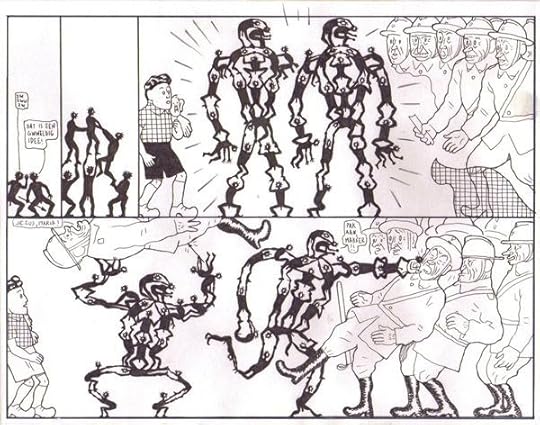
São sempre marcadas pela surpresa as minhas visitas a alguns portais de banda desenhada espanhóis. A surpresa advém da diversidade e qualidade das coisas que lá encontro. É que os "nuestros hermanos" cultivam um mercado editorial de bd que não acusa a sua proximidade geográfica à nossa "mercearia de bd". Há dois anos recebi como prenda de aniversário um volume massudo do Little Nemo, de Winsor McCay, uma obra-prima do início do século XX, nos primórdios da arte, que primava pela sua estética deslumbrante e o seu assunto surrealista. Confesso que mal toquei no tomo, não por falta de interesse mas pelo medo de o estragar, até hoje mantém o plástico que o envolve, de vez em quando tiro-o religiosamente e faço os possíveis para não danificá-lo com um olhar demasiado abrasivo. Embora aparentemente sem ligação, os parágrafos anteriores têm em comum este "Mi Pequeño". Passo a explicar. Olivier Schrauwen é belga, não como as bolachas mas como os nativos da Bélgica, mas em vez de recorrer ao longo e nuclear património da bd belga (não é à toa que usamos o termo franco-belga para falar de um tipo de bd), decidiu atravessar o oceano para encontrar a sua inspiração para este livro. Winsor McCay, Richard F. Outcalt e George MacManus são os nomes citados na nota biográfica do autor e, para além de serem alguns dos grandes pioneiros da bd americana, parecem também ter possuído Schrauwen, notoriamente, pelo aspecto e estrutura desta bd. A esta "pureza" de estilo gráfico contrasta-se o seu conteúdo, esse sim, de Schrauwen, que chega ao ponto de ser macabro, com mortes inúmeras e violência gratuita. A intercalar (aqui exagero) o mórbido, a história de um pai e um filho e da sua relação através de aventuras episódicas que mimetizam na perfeição os velhos mestres: no traço, nas cores esbatidas, na ausência de calhas e até nos balões rectangulares. Há pequenos pormenores como o capítulo inaugural, referência a uma era anterior da bd e como entre cada capítulo, as ilustrações esquemáticas que parecem pertencer a manuais ou revistas científicas dos anos cinquenta. E o humor, de um absurdismo hilário a um sadismo delicioso que faz rir à gargalhada. A caricatura de criança que é o filho, imutável desde o nascimento e que leva ao desespero do seu pai no último episódio quando começa a crescer e envelhecer sem freio. A narrativa atinge o seu clímax na ida ao jardim zoológico, Schrauwen aumenta a parada e continua até à genialidade, surpreendendo com a sua capacidade para ligar vinhetas e personagens, literalmente neste último caso. É igualmente curioso que consiga notar semelhanças físicas entre o bebé e Jimmy Corrigan, personagem de Chris Ware - que mais que autor é um estudioso da bd -, será partilha de herança memética? Em suma, uma bem conseguida e bem-humorada homenagem a um passado que poucos, mas em número crescente, vêm a recordar com saudade.
This entire review has been hidden because of spoilers.
el estilo y el color <33 No soy fan de las historietas cortas en el punto medio entre lo surreal y tener sentido, se debe eligir un bando (no es un deber pero a mi me gustaría)
Lo revisitaré porque me estoy sintiendo culpable ahora mismo