1999 Winner of the Miles Franklin Award and the Commonwealth Writers Prize.
On a property in western New South Wales a man named Holland lives with his daughter Ellen. Over the years, as she grows into a beautiful young woman, he plants hundreds of different gum trees on his land. When Ellen is nineteen her father announces his she will marry the man who can name all his species of eucalyptus, down to the last tree . . .
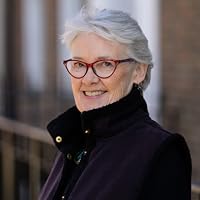
Murray Bail (born 22 September 1941) is an Australian writer of novels, short stories and non-fiction.
He was born in Adelaide, South Australia. He has lived most of his life in Australia except for sojourns in India (1968–70) and England and Europe (1970–74). He currently lives in Sydney.
He was trustee of the National Gallery of Australia from 1976 to 1981, and wrote a book on Australian artist Ian Fairweather.
A portrait of Bail by the artist Fred Williams is hung in the National Portrait Gallery in Canberra. The portrait was done while both Williams and Bail were Council members of the National Gallery of Australia
I found this to be an enjoyable modern day fairy tale written in a rather unusual way. The prose is outstandingly beautiful and needs to be read slowly and carefully but at the same time the central story demands the reader's attention and there is an urgency to get to the end and find out what happens! Then the author introduces a character who tells stories. These are necessary to the overall story but at the same time I was a little annoyed at having to take constant diversions. But then there was the delightful twist to the tale at the very end and I forgave Mr. Bail everything. I can see why this book won awards.
Nothing else, I guess Eucalyptus lives up to its title. It’s about a man whose wife dies while giving birth to their daughter. The man collects the life insurance, moves to a small town in western New South Wales, and plants eucalypts… lots of them. Apparently there are over 200 specie of this plant. Once his daughter is of a marriageable age he makes an Atalantan (as in the golden apple/race myth) deal to marry her off to the first suitor who can name all the various eucalypts on his land. That process is basically Act II of the book, and it’s about as exciting as it sounds. Oh, and each chapter is named for a specie of Eucalypt.
This was ultimately a very frustrating book. I mean I love eucalyptus trees about as much as a kola bear does. But, we’re talking a predictable plodding plot. And, sexist?—oh honey, it’s all that—in a way that defies direct implication (beautiful inactive frequently naked daughters, grotesque obsessive delinquently powerful men, arranged marriages, little snipes here and there like in speaking of the outback “…let’s not forget the isolation, the exhausted shapeless women…” which as a hiccup might almost appear benign but consolidated turns into this constant goat-getting action, etc).
What’s truly maddening is that Murray Bail is a capable writer. He has a great ear for tone and a masterful ability with sentences. Sentences. This is the tragedy of the sentence. In other words, I feel like I’m circling a beef with, like, sentences critically, and I suppose it is this… when all else fails—theme, conscience, geometry, plot—as readers, we fall back on the sentence. If the writer can lay down an inviting sentence… we tend toward trust. The problem is great sentences have been called on to propound dreadful stuff. There’s a tangle that results between sentence as sign and sentence as signifier—or something along those lines. See, the Noun Verb Object trick can actually wind up implicating writer and reader both in as far as they become complicit with said sentence’s nefarious values. I don’t know. I suppose I’m only saying this: a series of great sentences cannot be an end in itself… somewhere along the line ethics slips in, and in the absence of their careful weight even the best grammatical clauses fall to pieces.
If ya need an example, check these Bail-isms out: “It may not be exaggerated to say that the formidable instinct in men to measure, which is often mistaken for pessimism, is counterbalanced by the unfolding optimism of women, which is nothing less than life itself; their endless trump card. It is shown in miniature by the reverence women have for flowers, at its most concentrated when they look up and in recognition of their natural affinity accept flowers.” Lovely sentences, rotten meaningless ideas.
There go those blurbs again, tricking me into thinking that I could actually enjoy the book.
"Best courtship story", it said. "New York Times Notable Book of the Year", it said.
Holland acquires a land, and then eventually becomes obsessed with planting eucalyptus trees in it. His daughter, Ellen, grows up to be a beauty, and he decides he will let the man who can name all species of eucalypti in his land marry his daughter. Dozens of suitors tried to no avail. Until Ellen meets a mysterious man under a eucalyptus tree, who proceeds to tell her stories and thus, a curious courtship begins. Sounds like a fairy tale to me, and boy do I love fairy tales.
That's not what I got.
Maybe I could have enjoyed the courtship story, if I weren't being constantly bombarded with facts and passages about eucalypti, which I've never seen in my life. It's a story with lots of stories in it, and sometimes the author steps out of line and discusses the book itself. I just couldn't like the writing style.
I just wanted to know what the courtship was! So I skimmed through the pages and gathered that:
*This book literally is about eucalyptus. *Murray Bail writes like an old man who writes for old men, which I guess he is, *I finally met the mysterious man (young man, the synopsis said, but he's really into his 30s. seriously, that's a young man?), who I think remains unnamed until the end of the book. *The man tells stories to Ellen that are inspired by the species of eucalyptus he happens to see, thus naming all eucalypti and winning Ellen's hand in marriage.
It would've been such a good love story if only it weren't written the way it is. *Severe frustration*
After getting a hefty insurance cheque because he wagered his wife would have twins (one is still born), Holland buys an almost treeless property in western New South Wales. His wife has passed away; he has only his little girl, Ellen.
He's no farmer. He starts planting eucalyptus trees on the farm and it soon turns into a hobby, then an obsession. Holland, son of a baker and a boiled-lolly-maker, becomes a "leading expert in the field", and has managed to get a specimen of all the species, and got them to grow.
As Ellen grows up, she becomes stunningly beautiful, her face "speckled" with freckles, moles, so that the eye wanders all over. She gets more and more attention from the lads in town, until Holland makes a decision. The man who can name every tree on the property will win his daughter's hand in marriage.
So begins an amusing charade of suitors failing to get past the first few trees, up until Mr Cave, who names them all. Meanwhile, an unnamed man courts Ellen amongst the trees with stories woven in and inspired by the names of the different trees, and in doing so names them all before Mr Cave.
This is a book of stories within stories, as well as snippets of information, facts, history, and cultural conundrums. One of my favourite stories is about the green grocer in Carlton who makes pictures out of fruit to attract the attention of a pretty but vain woman.
A lot of the stories have connections to people in the town - some made up, some maybe not - and it's almost like a puzzle to figure them out.
Ellen is a slightly disappointing character, almost as if Bail doesn't know how to write female characters, or doens't understand them enough to really flesh them out. The men were so neatly, perfectly described with some simple brush strokes, the short-comings in Ellen were made noticeable by comparison. The ending, too, was not quite as satisfying as it could have been, though it works and fits with the rest of the book.
It is set some time after the Second World War, I think in the 40s or 50s though it doesn't actually say, and so can get away with the main concept, plus some others. I don't think this story could be transferred so well into our current time.
One of the more provoking scenes is where Ellen, coming upon her only tree, E. Maidenii, she finds a nail driven into the trunk. You can guess her feelings there. Then she hears Mr Cave and her father approaching, and hides, only to see them start pissing against the trunk of her tree. Great imagery and symbolism there!
I love this book, regardless of any flaws. It will forever be one of my utmost favourites. But not everyone gets what I get out of it, so I feel the need for a personal kind of context.
I never truly appreciated my native country until I started studying some of our literature at uni. I did two courses focusing on Australian literature, and by the time I graduated (for the second time, as these things are done there) at the end of 2001, I was in hopelessly, helplessly, head-over-heels in gut-clenching love with the land.
When, the following year, I left and went to Japan to teach English for nearly three years, I would suddenly smell the shearing shed on my parents' farm, in the middle of the supermarket. (My boss tells me, whenever I mention smelling something that "isn't there" that I probably have a brain tumour - I call him an alarmist.) I missed the smell of Australia so much, the smell of the land, where all the trees, the plants, the grass, the soil, has such a distinct smell. In Japan, nothing smelt, which means you can smell 3-day-old exhaust fumes, the grime coating the walls of buildings, the smell of ramen and yakiniku and, strangely, snow - but never the trees or plants, because they didn't smell. My first cherry blossom time, I went up to a tree and sniffed the blossoms, expecting the same sweet scent as my mother's specimen in her big, beautiful garden. Nothing. I was supremely disappointed.
I recommended Eucalyptus to my book club and, almost unanimously, they agreed on it. I hadn't read it in several years, but it all came back as I delved in once more. The trees are my favourite characters. Skimming through the reviews on Amazon, written by Americans mostly, I noticed they all said "yes it uses trees as a tool to construct the stories, but that's not important" and "trees don't interest me, but that's not what this is about." (I'm paraphrasing here, don't hit me.)
I beg to differ. The trees are everything in Eucalyptus. You could almost say it's a book about trees disguised as a fairy tale, but I don't think that's the case either. The trees figure prominently, as characters not as background. All the different species, described not just visually but with personality too. The gum trees are described as selfish, offering little shade, and unsympathetic. After reading that the first time, I saw eucalypts in a whole new way.
In the midlands of Tasmania, which you drive through to get to Hobart from the north where my parents' farm is, you can see a quite unique, oddly disturbing but very memorable scene: round, hilly, very yellow, dry farmland, bare but for the grey skeletons of eucalypts, their silvery arms reaching out like a scarecrow, completely leafless. As a child, this view disturbed me, and I still don't know if the Midlands has always been like that or if it is the resutl of excessive farming, as in so many other places. I suspect the latter. In it's own way, it is stunning, beautiful, the stark colours, the dead trees still standing like grave markers, their branches lined with large crows and magpies and kookaburras. The dusty yellow grass, like a dry carpet, cropped short by sheep.
The book is full of beautiful imagery, using words to tell multiple layers of a story, like bark on a tree. I was so surprised and disappointed to find that the people in the bookclub didn't like it and were confused, thinking that Australia was just desert. They had no idea there were trees, bush (forest) and even grass!
For me, I can smell Australia when I read this book - not just the country, but the suburbs of Sydney and other places. I am transported home by this book.
This entire review has been hidden because of spoilers.
Eucalyptus is a fairy tale and contains all the elements you would expect in a fairy tale, recast in a rural Australian setting – there’s mythical beauty, a princess trapped in her castle, suitors from distant lands and an enchanted forest. Whether it’s the Australian setting or Bail’s cleverly created characters, the story comes across as wholly believable (which in itself is magical).
Each chapter is named after a species of eucalypt and includes a string of short, intricate and seemingly inconsequential stories which link to varying degrees to the name, characteristics or habitat of particular eucalypt species. The stories are told from the point of view of different characters – achieved most successfully through the character known only as ‘the stranger’. His stories begin with enticing opening lines such as “Off the coast of Victoria was a wife of a lighthouse keeper who became addicted to kite-flying.” How can you not keep reading when presented with that?!
Any book that truly ‘finishes’ on the very last page in a way that is so unexpected, so surprising and so intensely satisfying, wins me. I did not see where the story was heading until the last page and I closed the book smiling and amazed at the cleverness of the conclusion.
Jan 2015: I've recently read this for the third time and relished the opportunity to slow down and enjoy Bail's language, and the slow and intricate windings of the multiple stories which make up this treasure of a book. The main narrative line is a clever and gentle adaptation of a traditional folk tale form transformed in its relocation to an isolated Australian farm. The seemingly impossible quest set by a father for suitors of his daughter is to name all the Eucalyptus trees he has planted on his property. Unwelcome suitors arrive and fail. No heads lost, they are just sent packing. All the while, the unassuming eventual winner is present, and sets out to woo the daughter herself rather than the father by telling stories inspired by the trees. Very nicely, I thought, the father has previously warned his beautiful daughter to ‘beware of any man who deliberately tells a story. …’it’s worth asking, when a man starts concocting a story in front of you. Why is he telling it? What does he want’ (pp52-53). When the stranger appears and starts to tell stories, they are so unlike anything Ellen has heard before that she is entranced. The stranger’s stories are all inspired by the eucalyptus trees, - their names (ironbark, bloodwood, fuchsia gum), their flowers, the shapes of their leaves and their habit – drooping/weeping, upright, a guard or sentinel. Ellen ‘took little notice of the eucalypts behind the stories; she allowed the world, which was his and far beyond, to come to her. His roundabout way of telling one story after another depended on imagination and a breadth of experience, and meant he was spending hours with her and her alone, revealing a little of himself at a time – only to disappear whenever he felt like it. Sometimes with just a brief wave. To be then left surrounded by nothing but grey trunks, and a near-absence of anything stirring, added a scratchy, unsatisfied quality to the silence. Eucalypts are notorious for giving off an inhospitable, unsympathetic air’.p159.
But as the determined, unwanted suitor approved of by her father nears the end of his task, Ellen becomes ‘overwhelmed with an elaborate, flowing looseness’ and turns to her bed; lies there for days, gradually fading. She turns over the stories told her by the still unnamed stranger. ‘The way the stories began in a time-worn way had relaxed her. “There was an old woman who lived at the foot of a dark mountain…” “The quality of miracles has declined over the years…”…”Off the coast of Victoria was a wife of a lighthouse keeper who became addicted to kite flying.”(p219).
The stories are elaborate, elliptical, unexpected in their twists and turns. Ellen sees that ‘Many were about daughters; or women almost requiring a man for themselves. A woman finds a man and something unfortunate happens. It doesn't last. There were certainly more stories about women than men, she could see. It wasn't necessary to count them up. A daughter can never become a separate woman, not really. Fathers had strong and impassive positions in the world of stories too. Many of his stories concerned a father, or how he’s clean forgotten his daughter, thereby introducing a note of real sadness…. The women seemed to be searching or waiting for something else, something almost indefinable but extra nevertheless, such as a solution somewhere else or with someone, she at once saw and recognised. These were women who followed the idea of hope. It seems to be their greatest obedience.
None of the stories is conventional. Some are poignant, some simultaneously unhappy and funny (the couple who dislike each other, and speak to each other only through their dog). Some are about women trapped in a situation they wish to escape, and sometimes a means of escape is offered. They are integral to the progress of the central story, the story of Ellen, her father and the suitors.
Michael Hulse in the Spectator called 'Eucalyptus' a masterpiece. Of the other review comments I have read, this comment from the Judging Panel of the Miles Franklin Literary Award is beautifully succinct: 'In his characteristically elegant and deceptively sparse manner, Bail demonstrates the importance of narratives, of story telling, as a way of acquiring and learning about one's self and one's place. It reconstitutes traditional romance conventions (the father setting an impossible task for those who would win the hand of his daughter) and rewrites them for Australia, so that it is simultaneously local and universal in its orientation.' http://www.milesfranklin.com.au/about...
Eucalyptus won the 1999 Miles Franklin, which is Australia's major annual literary award.
“A person meets thousands of different people across a lifetime, a woman thousands of different men, of all shades, and many more if she constantly passes through different parts of the world. Even so, of the many different people a person on average meets it is rare for one to fit almost immediately in harmony and general interest. For all the choices available the odds are enormous.The miracle is there to be grasped.” ― Murray Bail, Eucalyptus _______________________________________________________
From Wikipedia: Meaning of EUCALYPTUS:
"Eucalyptus is a genus of over seven hundred species of flowering trees, shrubs or mallees in the myrtle family, Myrtaceae. Along with other genera in the tribe Eucalypteae, they are commonly known as eucalypts."
I would so like to rave about this book. Why? Because it has been sitting on my "to read" list for years. And now I decided to get to it. It was..frankly..one of my biggest letdowns..well..ever. Not because of the quality of the book but because it was nothing like what I thought it would be. To understand, see quote below.
"I am Mealeger. I belong to Atlanta".
No. That quote is not from this book. That is from another book about Mythology. It is about the story of Mealeger and Atalanta. Without going into to much detail....they fell in love but Mealeger died. Atalanta was devastated and refused to ever love another. Her father was worried about this and eventually made a deal with her that she should marry the first man who could beat her in a foot race. This was crazy be cause Atalanta was known as one of the fastest and nobody had ever beaten her at that.
Now to this story..the description was of a father who decides to marry his growing daughter off to the man who knows the most about and can plant the most, Eucalyptus trees. It seemed a fairy tale, a different spin on the Atalanta tale and I thought it sounded enchanting and sweet. I was really looking forward to reading it.
Well..I did not get a fairy tale. In fact this was a DNF. I just could not go on. I was as so let down as this was nothing like what I thought I was getting.
There is so much info on Eucalyptus trees. It seems an ode, a love letter to those trees which is fine, just not what I had really wanted to read about When I stopped reading, the daughter, Emily was still a a young girl, running about free and sometimes naked and this was not whimsical or a Fairy Tale. It was also slow moving, a bit dry and honestly I do not want to say anything bad about this book. It was just so far away from what I'd actually read and as I had been so looking forward to it , it was extremely disappointing.
But if anyone knows of some takes on good Mythological stories that are charming and a bit magical, send em my way!
There's a very fairy-tale-like quality about this book that I liked a lot, and the very Australian flavor of the narration made it a highly unusual read for me as well. I have some issues with the passivity of the heroine (which isn't a terribly surprising thing given the heavy fairy-tale flavor of the story), but found it a worthwhile read anyway.
This novel's all about how a man named Holland in Australia has planted hundreds of species of eucalyptus trees on his ranch, and how he proclaims that the man who names them all will win the hand of Ellen, his beautiful daughter. Very definitely a fairy-tale sort of task, and with that laying the groundwork for the plot, we get several other things you'd expect in a fairy tale as well--the remote location, the nearby tiny village, dozens of dauntless suitors who fall by the wayside, a challenger at last who Ellen does not want and who breezes through the task as if he were born to it. And of course we have a mysterious wanderer, who captures Ellen's heart by spinning her dozens of stories, and whose disappearance sends Ellen spiraling into a decline until he finally returns at the end to prove himself victorious over her father's challenge.
All very nice, and overall I really had only two small issues with the story. One was that sometimes the narration was too self-aware, making comments about paragraphs and full stops and such. While it was generally to make a point about something going on in the story, such as comparing paragraphs to paddocks, more often than not it came across to me as too roundabout. At least twice, it made me think "for fuck's sake, get on with it!" And I'm generally a very patient reader.
Now that said, it did indeed eventually Get On With It, and I also acknowledge that there was a certain art and style to Bail's prose that I do have to appreciate. It fit in with the whole idea of Telling a Story, an art which he clearly loves, since the hero of this tale was himself a storyteller. Telling stories orally is an art in and of itself, even separate from telling them in the written word, and Bail blended them well here. It helped me a lot, I think, to start imagining the voice of the narrator with an Australian accent, and suddenly the rhythm of the words started coming together for me.
My other quibble was with Ellen, who had a passivity about her that irritated me. Sure, this is kind of classic when you're dealing with fairy tales--certainly Cinderella, Sleeping Beauty, Snow White, and even my beloved Rapunzel don't do much to uphold the virtues of feminine spine. And sure, the setting of the story, fairly modern though it came across, had a sort of timeless quality about it that seemed to encourage the fairy tale tropes. But not once did Ellen ever actually object to her father's scheme of marrying her off to a man who could name all of his trees. Not once did she actually vocalize any objections to Cave, the challenger who systematically worked his way through the entire plantation, rattling off the names of the trees and proceeding closer and closer to the prize--her. Instead of actually telling her father, "Look, Dad, about this whole marriage thing--I actually really like this guy I've been talking to out in the trees," instead of telling anybody anything, she just lays down and pines herself sick. Very classic fairy tale princess behavior. But to me, a modern feminist-inclined reader, irritating nonetheless.
There are remarks made here and there all throughout the story about how Holland is rumored to "have his daughter locked up", but really, he's done nothing of the kind. Ellen's movements aren't constrained, and Holland in his way comes across as a father who's just anxious to make sure that if he has to hand off his daughter to anybody, it'll be to a man he can respect. I just wish that once Ellen would have asserted herself, because while I wanted to like her, I didn't respect her.
Now as to stuff I really, really liked... the Storyteller (we never get his name) was very, very cool. I loved how he wove stories to capture Ellen's fancy, and I loved the way he wandered in and out of them, sometimes leaving off just when your attention is hooked and you're anxious to know what the hell happens next. I liked his interactions with Ellen even when he wasn't actively telling a story as well, and I especially liked the scene where he comes across her naked, and very solemnly, very respectfully helps her back into her clothes. Every word in that scene was charged with tension, and the beauty of it is that at no point does Bail ever come right out and say that our boy would really rather be taking Ellen's clothes off of her. It doesn't need to be said. The words chosen to describe his actions convey that beautifully.
And I did not see it coming that he actually won the challenge before Cave did--because he was the one who brought all the nameplates for the trees to the plantation. I loved that. And I loved that the Sprunt sisters (fancifully referred to in passing as 'witches', adding to the fairy tale nature of the story) clued him in about where Ellen would be likely to wander, and that he went looking for Ellen to win her directly rather than going to her father first.
Even aside from the limp dishrag of a heroine, I'm glad I read this book just to enjoy Murray Bail's prose, very full of character, and very much an example of the art of telling a Story.
This entire review has been hidden because of spoilers.
This peculiar, unique book really appealed to me, and when I finished, I considered starting it all over again.
It's a physically short book (I don't know how many words), but the mix of short anecdotes, little stories and botanical information that pop up unexpectedly actually don't interrupt the flow of the main story, they add depth.
I'm never going to remember all the interesting bits - I WILL have to read it again someday.
Disclaimer: I have lived among the eucalypts of NSW for most of my adult life, so I'm probably biased towards enjoying the discussion of various varieties, but I think I'd have enjoyed a similar story by a writer this good that used English Oaks (about which I know zilch).
I was given this by Kirsten after she’d spent some time wandering around the suburban streets in our area. They still feature many beautiful specimens of the eucalyptus, developers and other anti-tree people not withstanding. It would help me know them, she said.
This is a botanic guide, embedded with a fairy story, which, like all fairy stories, I guess, is hard to pin down. I felt like it was ‘olden’ and yet from time to time modernity sneaks in. Did this matter? Probably not, maybe it’s the point, fairy stories can be now.
Spoiler….
I was scared this was going to be some sort of modern anti-fairy story with an unhappy ending. But that isn’t the case! All that exquisite writing by Bail comes together in an ending which will please any lover of fairy tales. For whom this book is highly recommended.
Eucalyptus is the third novel by prize-winning Australian author, Murray Bail. A man called Holland comes into money and buys a property in NSW, west of Sydney. The previous owners spent much time clearing paddocks (“On the curvaceous back paddocks great gums slowly bleached and curled against the curve as trimmings of fingernails. Here and there bare straight trunks lay scattered and angled like a catastrophe of derailed carriages.”), but Holland soon changed that.
His young daughter, Ellen, came to live with him. “The news quickly jumped the long distances out of town, and from there spread in different directions, entering the houses Holland had sat and eaten in, the way fire leaps over fences roads, bare paddocks and rivers, depositing smaller, always slightly different, versions of itself.” Ellen grew to be a beauty and Holland made a decision about her future that spread across continents and oceans.
This novel is filled with gorgeous prose (“An unpainted shearing shed floating on its shadow in a paddock, moored to the homestead by the slack line of a fence.”), fascinating anecdotes, stories, tales, and legends, and many facts about eucalypts. There are parallels between the snippets of stories and the plot of the novel, and there is a marvellous twist at the end. Readers may find the writing reminiscent of Kate Grenville’s. This luminous novel is deservedly the winner of the 1998 ALS Gold Medal, the 1999 Miles Franklin Award and the 1999 Commonwealth Writers' Prize.
The author obviously knows nothing of women. I personally do not know of any women who stand around naked holding their breasts all the time. I mean all the time!! And what is this fascination with peeing? I mean really! I did not like this book at all! And by the end you would think that maybe the ending would even be a bit satisfying? Nope!
Oh this book disappointed me. I read the first half with such joy - looking up each Eucalyptus tree mentioned in my tree reference book and enjoying the planting of all of these trees as if I was there. And then we moved into the supposed love story and that was when I realised that the lovely tree talk was the only thing holding me to this book.
The major lack of character depth is my real problem with this book. And because I felt like I didn't know the whys behind the two main characters, I didn't care about the other stories that were being told. I also felt there was a barrier to this author writing the female character of Ellen and her just releasing herself naked in the water wasn't really enough to connect me to how she was coping with quite a strange situation.
Ultimately I will remember this book for the lovely tree chat but definitely not for the characters.
A very nice read. The story almost gets lost in the stories. A book like Damascus Nights by Rafik Schami where the stories teach us about the character. I enjoyed this a lot.
This was a reread for me and I loved it just as much as I did some years ago when I first read it. Funny and charming - it is entrancing. I can't recommend it highly enough.
Several years ago, a good friend in Australia sent me a package of Bush Tea. When I opened it, the pack contained a number of bags of black tea and a bunch of eucalyptus leaves. The idea being to brew a pot of tea and add a leaf to the pot. These were about 4 inch long skinny leaves. I have no idea what type of eucalyptus they were from, but there sure were aromatic. I loved the tea. No one else in my house did, so I didn't have to share.
Shortly after relating this story to my sister, so sent me a copy of the book Eucalyptus by Murray Bail. my mouth watered the whole time I was reading it, wishing I had a pot of bush tea sitting beside me.
This is the story of Holland and his lovely daughter Ellen. When Ellen is young, Holland moves to a rural area in Australia and for some un-explained reason, he begins to plant assorted Eucalyptus. By the time Ellen is of marriagable age, there are over 500 different eucalypts growing on the property. One day Holland announces that his daughter will marry the man who can correctly name all the eucalypts growing on his property. This is a challenge taken up by men from near and far.
While this may seem an unusual method of determining the suitability of a potential mate, people have used worse. Parents have arranged marriages when their children are but infants. Others defer to a matchmaker etc..
The story is also filled with short, unfinished tales. These are told by one of the suitors. I likened them to the trees. There are all yet unfinished; they have much growing and unfolding to do. Ellen listened to all these tales and was left wondering, how did they end, who were all those people and how did they relate to each other. I still don't really understand the inclusion of all those tales.
I did enjoy reading about the variety of the eucalypts. Some as tiny of shrubs and others some of the largest trees on earth. Colours that ranges a whole spectrum and truncks that could be as smooth as a baby's skin or a rough and ragged as a stone field.
It seems to me that Holland related better to his trees than he did to his daughter. Neither of them were much for conversation. I enjoyed reading this unusual story even if I didn't understand all the parts of it. I am left wanting to know more about eucalyptus.
A friend of mine recommended this book to me because she knows just how much I love stories within stories. And I loved it. It's a fable, or a fairy story, but in the real sense (not airy-fairy but psychologically accurate about the way we are which is, of course, the reason so-called fairy tales have lasted down the ages). And the fact that the young woman's suitor has to earn his right to ask for her hand by learning the names and attributes of one hundred different kinds of eucalyptus makes for an entrancing (and informative and delightful) modern tale.
Bajo la apariencia de una especie de fábula de trasfondo naturista, Bail intenta gestar el gran relato patriarcal de Australia, en el cual diversas resonancias mitológicas y antiguas aparecen en formato actualizado, con apariencia trivial, buscando así la conexión del presente con el pasado. En un movimiento para insuflar cierta impronta nacionalista en su relato, Bail recurre a los eucaliptos, simbólicos del continente, y despliega una red arborescente de micro-cuentos, que se conjuntan con el tronco principal, que consiste en una historia de Holland, un padre, que dice que concederá la mano de Ellen, su única hija, al primero que demuestre conocer todas y cada una de las miles, quizás millones, quizá billones de variedades de eucaliptos que Holland plantó tiempo atrás en su gran finca, con lo cual se demuestra que Holland es un monomaníaco sin remedio. Esta decisión debe entenderse en clave poética y sin embargo yo sólo podía pensar que es la clase de decisión que tomaría un zumbado sin marcha atrás, así que es imposible cuantificar cuanto me chirría la moraleja final (papi siempre tiene razón). Así que resumiendo mucho (y quiero decir mucho, mucho, mucho) se podría decir que el personaje del padre es un tronado y el autor quiere erigirlo como la voz de la razón.
La impronta retrógrada del relato también se ve afectada por las pequeñas historias que Bail desliza aquí y allá, algunas son pasables, otras son inanes y otras una tremenda memez. A eso también hay que añadirle el contratiempo que son los personajes. Todos parecen unos tarados. Bail se esfuerza en representarlos con colores simpáticos, pero su conducta es cuanto menos extraña, errática, gente dispersa que se focaliza en cosas de dudoso provecho o interés, cosas que ni siquiera son divertidas, quizás sólo sean un intento malogrado de su autor de sostenerse en personajes excéntricos y llamativos. No es más que otra decisión de pobre ejecución. Y no es la única: el ritmo narrativo, forzado para que sea el triple de lento, no favorece en absoluto el interés lector. O la variedad temática: lejos de resultar inspirada o brillante parece aleatoria.
Mientras lo leía no dejaba de preguntarme qué libro habría resultado si Richard Powers hubiera manejado estos mismos materiales. Probablemente algo maravilloso y emocionante, una historia poderosa sobre las raíces de los seres humanos y de los eucaliptos, todo edificado sobre una estructura ingeniosa, hubiera culminado todo lo que Bail se propone pero no alcanza, como mínimo, para empezar, habría dotado de interés a los personajes. Pero lo que tenemos a mano es la novela de Bail, que demuestra no ser el más ameno de los narradores. Los eucaliptos parece que sólo tiene tres tipos de lectores potenciales: los despistados, los obsesionados con los árboles o los estudiantes de filología australiana.
I learnt more about the different types of eucalypti than I thought possible. Interesting modern day fairytale. Struggled to follow at times with the constant changing POVs.
I enjoyed listening to this rambling modern fairytale, with the narrator’s strong ocker accent, but did wonder during some of the long lists of eucalypt names whether it might have been more approachable in written format. The lists ultimately aren’t the point, however, and like all good fairytales this story has a satisfactory conclusion.
I listened to this book. I really enjoyed listening to it, but I don't think I would have kept up with it had I read it. It did remind me of the beauty of the Eucalyptus and that I need a few more up in the backyard. The Corymbia (Eucalyptus) ficifolia is flowering around Wodonga at the moment; I think I will have to plant a few.
Years ago, I'm talking 1989 so my memory is a little sketchy, I travelled a few countries with a couple of mates. We spent 2 days in Rawalpindi, Pakistan. I don't recall the pollution (car fumes) being as bad in Rawalpindi as it was in Lahore, but it was pretty bad. We stayed in a little 2 story motel. Our room was on the 1st floor. At the end of the corridor was a little balcony overlooking the City/smog. From the dirt below grew a small eucalyptus that struggled to raise its head beyond the smog. At that time, it branches reached up to the balcony. I would go out there and pluck some of its leaves and rub them between my hands and allow my mind to be driven back home. I don’t recall getting particularly homesick, but it did give me warm serenity: Oh Alex and Marie, I hope you both have a eucalyptus in your respective homes of Japan and France.
Warrick and I locked ourselves out of that motel room. The motel didn’t have a spare key, and it took two hours before the staff managed to break in, using a hammer and chisel, and allow us back into the room. I recall the poor tree lost many a leaf at that time as the aroma gave a ‘Calm Green Bush, Calm Aussie Bush’ composure.
A lovely Australian fairytale pitting facts against storytelling. The premise is brilliant in its simplicity but it’s the embedded narratives sprouting up, down, and around that make Eucalyptus feel entirely unique.
The taxonomy of eucalypts forms an intelligently rigid structure - fleshed out with a rural landscape populated by a trapped princess, travelling suitors, and an enchanted garden - all then beautifully undercut by the undulating anecdotes of the storyteller. Murray’s language is so intricate and yet also so easy; especially shown through the storyteller’s tangents. I loved how he abruptly halted and wandered. The ending felt delightfully satisfying but equally makes one entirely question the novel’s central dynamic of objectivity versus mythmaking… I wouldn’t do it justice by describing here, it was perfectly done.
Ultimately Murray tells of the eucalyptus (funnily enough). How man defines and categorises into subspecies and strata. And how by peeling back the stringy bark, new perspectives can be unveiled full of imagination and personality. Best read of this year!
Keista knyga. Ir įtraukia savo istorijomis, ir supainioja savo žodžiais, sakiniais, mintimis, kai negali jų pagauti ir suprasti. Viena vertus, istorija apie jauną merginą, jos tėvą, jų piršlybų iššūkį ir bandančius jį įveikti vyrus, tačiau kartu ir istorija apie Australiją, apie eukaliptus, ir dar daugybės žmonių gyvenimo istorijų atkarpos pabarstytos šen ir ten pasakojimų intarpais. O šalia viso to žodžių ir minčių žaismas, toks, kaip saulės zuikutis, lyg ir matai, bet negali pagauti. Ir dar visame tame įpintos detalės, paminėtos lyg tarp kitko, bet, kaip vėliau paaiškėja, itin svarbios, puoliau ieškoti jų norėdama dar kartą perskaityti vos tik pabaigusi knygą. Nelengvai įveikiau, bet džiaugiuosi perskaičiusi.
This book is beautifully written. However, I imagine that the aspects of this book that I found whimsical and charming may seem dull and arduous to those that are not biologist or lovers of the Australian landscape. If you are neither of these, I invoke you to work past these to find an enchanting story. I particularly loved the stories told within the main story.
This book was not an easy read. In the beginning I did not appreciate the style jumping here and there and requiring an immense amount of concentration to follow the story. But somehow it all came together in the middle, when the stories took over and were better woven into the main plot. And thank you Murray Bail for the ending, anything else would have been a disappointment.