

What do you think?

A Few Words in Defense of Our Country: The Biography of Randy Newman
'Randy Newman is our great master of American song and storytelling' Bruce Springsteen
'At last, the biography that Randy Newman has long deserved. The emotional precision, the humour and sweep, the truths and secrets behind his remarkable body of work . . . it's all here in Robert Hilburn's heartfelt and indispensable account of America's finest songwriter. Leave it to Hilburn to pull back the curtain on the incredible life of Newman, a shy genius who clearly trusted him enough to point him in all the right directions. It's more than a great read, it's an invitation to re-visit Randy Newman's work with renewed appreciation for the man who uniquely defined the American Experience just when we needed it most' Cameron Crowe
Randy Newman is widely hailed as one of America's all-time greatest songwriters, equally skilled in the sophisticated melodies and lyrics of the Gershwin-Porter era and the cultural commentary of his own generation, with Bob Dylan and Paul Simon among his most ardent admirers. While tens of millions around the world can hum 'You've Got a Friend in Me', his disarming centrepiece for Toy Story, most of them would be astonished to learn that the heart of Newman's legacy is in the dozens of brilliant songs that detail the injustices, from racism to class inequality, that have contributed to the division of our nation. Rolling Stone declared that a single Newman song, 'Sail Away', tells us more about America than 'The Star-Spangled Banner'. And yet, his legacy remains largely undocumented in book form - until now.
In A FEW WORDS IN DEFENSE OF OUR COUNTRY, veteran music journalist Robert Hilburn presents the definitive portrait of an American legend. Hilburn has known Newman since his club debut at the Troubadour in 1970, and the two have maintained a connection in the decades since, conversing over the course of times good and bad. Though Newman has long refused to talk with potential biographers, he now gives Hilburn unprecedented access not only to himself but also to his archives, as well as his family, friends, and collaborators. Bob Dylan, Paul Simon, John Williams, Linda Ronstadt, Don Henley, Bonnie Raitt, Chuck D, James Taylor, and New York Times' Pulitzer-winning columnists, Thomas Friedman and Wesley Morris, among others, contributed to the book. In addition to exploring Newman's prolific career and the evolution of his songwriting, A FEW WORDS IN DEFENSE OF OUR COUNTRY also dives into his childhood and early influences, his musical family that ruled Hollywood movie scores for decades, the relationships that have provided inspiration for his songs, and so much more.
As thought-provoking and thorough as it is tender, this book is an overdue tribute to the legendary songwriter whose music has long reflected and challenged the America we know today.
'At last, the biography that Randy Newman has long deserved. The emotional precision, the humour and sweep, the truths and secrets behind his remarkable body of work . . . it's all here in Robert Hilburn's heartfelt and indispensable account of America's finest songwriter. Leave it to Hilburn to pull back the curtain on the incredible life of Newman, a shy genius who clearly trusted him enough to point him in all the right directions. It's more than a great read, it's an invitation to re-visit Randy Newman's work with renewed appreciation for the man who uniquely defined the American Experience just when we needed it most' Cameron Crowe
Randy Newman is widely hailed as one of America's all-time greatest songwriters, equally skilled in the sophisticated melodies and lyrics of the Gershwin-Porter era and the cultural commentary of his own generation, with Bob Dylan and Paul Simon among his most ardent admirers. While tens of millions around the world can hum 'You've Got a Friend in Me', his disarming centrepiece for Toy Story, most of them would be astonished to learn that the heart of Newman's legacy is in the dozens of brilliant songs that detail the injustices, from racism to class inequality, that have contributed to the division of our nation. Rolling Stone declared that a single Newman song, 'Sail Away', tells us more about America than 'The Star-Spangled Banner'. And yet, his legacy remains largely undocumented in book form - until now.
In A FEW WORDS IN DEFENSE OF OUR COUNTRY, veteran music journalist Robert Hilburn presents the definitive portrait of an American legend. Hilburn has known Newman since his club debut at the Troubadour in 1970, and the two have maintained a connection in the decades since, conversing over the course of times good and bad. Though Newman has long refused to talk with potential biographers, he now gives Hilburn unprecedented access not only to himself but also to his archives, as well as his family, friends, and collaborators. Bob Dylan, Paul Simon, John Williams, Linda Ronstadt, Don Henley, Bonnie Raitt, Chuck D, James Taylor, and New York Times' Pulitzer-winning columnists, Thomas Friedman and Wesley Morris, among others, contributed to the book. In addition to exploring Newman's prolific career and the evolution of his songwriting, A FEW WORDS IN DEFENSE OF OUR COUNTRY also dives into his childhood and early influences, his musical family that ruled Hollywood movie scores for decades, the relationships that have provided inspiration for his songs, and so much more.
As thought-provoking and thorough as it is tender, this book is an overdue tribute to the legendary songwriter whose music has long reflected and challenged the America we know today.
544 pages, Hardcover
Published October 22, 2024
Ratings & Reviews
Friends & Following
Create a free account to discover what your friends think of this book!
Community Reviews
Displaying 1 - 30 of 78 reviews

January 31, 2025
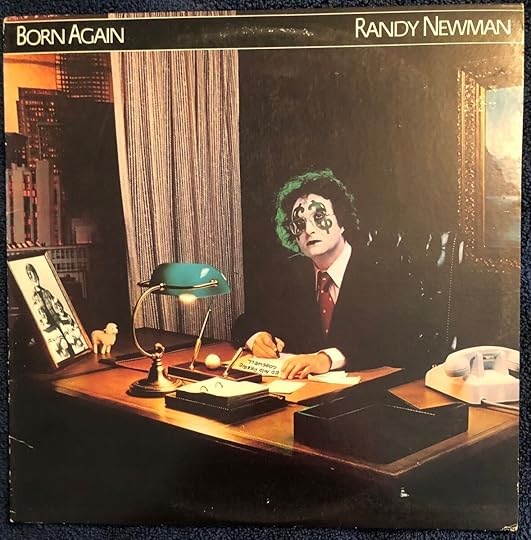
Finally, a very solid enjoyable biography of one of the greats. I could have done without the pages of complete lyrics quotes, including all the repeated lines – didn’t see the need for that; and the amount of endless praise that showers down on Randy on every other page, and his unbroken run of brilliant successes, does possibly get a little grating by the time Toy Story 3 comes into view – but heck, he deserves it! Robert Hilburn only allows that he made one bad record, Born Again, and really, the record wasn’t that bad, it was the cover, which was Randy in KISS makeup with dollar signs, a little heavyhanded maybe, and apparently no one got the joke so didn’t buy the record.
Aside from that it’s all good – no, wonderful.
Fans might complain about the ten or twelve years Randy spent doing movie soundtracks and not albums, but when you consider that, as we read here, every album was like pulling teeth and all the soundtracks were strictly professional assignments to be turned in on time and no dillydallying and getting paid one cool million dollars or thereabouts per soundtrack, then you can see Randy’s reasoning.
Randy had to steer a unique path between other kinds of singer-songwriter types – he wasn’t like Bob Dylan, had no folk roots, had no blues roots; he wasn’t like Joni Mitchell or Leonard Cohen – I can only see two songs you could call autobiographical in all his stuff – I Miss You (addressed to his first wife, I guess he must have got clearance from his second wife) and Memo to my Son, all about how aggravating little kids are but you still love them. All his other songs are written in character, which allows him to include a lot of horrible stuff in his songs other more romantic types wouldn’t touch with a bargepole. And of course he wasn’t a rocker like Neil Young. And he wasn’t Elton John or Billy Joel neither. He was more of a rebooted Cole Porter type but not really, didn’t go in for fancy rhyme schemes. He was different. Maybe the only comparison is with another guy who deals in songs sung by characters, Tom Waits.
SOME LISTS
THE SIX NASTIEST CHARACTERS IN RANDY NEWMAN SONGS
The pyromaniac in Let’s Burn Down the Cornfield
The stalker in Suzanne
The slavemaster in Sail Away
The Southern racist in Rednecks
The child killer in In Germany Before the War
The street thug in Mr Sheep
THE SIX MOST BEAUTIFUL SONGS
Louisiana 1927
Marie
Texas Girl at the Funeral of her Father
In Germany Before the War
I’ll be Home
When She Loved Me
MY SIX FAVOURITES
Birmingham
Baltimore
Jolly Coppers on Parade
Old Man on the Farm
Same Girl
Shame (I love the moment when he turns round to the backup singers who are chanting "Shame shame shame" and yells SHUDDUP!)
A FEW TIMES WHEN HE PICKED TOO OBVIOUS TARGETS
God’s Song (everyone praises this but Randy is shooting fish in a barrel here, too easy)
Yellow Man (the criticism of racism can get too oblique at times)
Old Kentucky Home
Political Science (Let’s drop the big one) – closest he came to Tom Lehrer (“Who’s Next?”)
SOME EARLY RANDY NEWMAN SONGS MADE THE CHARTS!
I’ve Been Wrong Before by Cilla Black (this former Cavern cloakroom attendant friend of the Beatles who turned into one of Britain’s most beloved family entertainers freakishly got the first Randy Newman song into the charts – we suspect George Martin picked it for her)
Just One Smile by Gene Pitney
Nobody Needs your Love by Gene Pitney
Simon Smith and his Amazing Dancing Bear by Alan Price
The Biggest Night of her Life by the Nashville Teens
IN CONCLUSION
This is a shoo-in for all you Randy Newman fans.
Aside from that it’s all good – no, wonderful.
Fans might complain about the ten or twelve years Randy spent doing movie soundtracks and not albums, but when you consider that, as we read here, every album was like pulling teeth and all the soundtracks were strictly professional assignments to be turned in on time and no dillydallying and getting paid one cool million dollars or thereabouts per soundtrack, then you can see Randy’s reasoning.
Randy had to steer a unique path between other kinds of singer-songwriter types – he wasn’t like Bob Dylan, had no folk roots, had no blues roots; he wasn’t like Joni Mitchell or Leonard Cohen – I can only see two songs you could call autobiographical in all his stuff – I Miss You (addressed to his first wife, I guess he must have got clearance from his second wife) and Memo to my Son, all about how aggravating little kids are but you still love them. All his other songs are written in character, which allows him to include a lot of horrible stuff in his songs other more romantic types wouldn’t touch with a bargepole. And of course he wasn’t a rocker like Neil Young. And he wasn’t Elton John or Billy Joel neither. He was more of a rebooted Cole Porter type but not really, didn’t go in for fancy rhyme schemes. He was different. Maybe the only comparison is with another guy who deals in songs sung by characters, Tom Waits.
SOME LISTS
THE SIX NASTIEST CHARACTERS IN RANDY NEWMAN SONGS
The pyromaniac in Let’s Burn Down the Cornfield
The stalker in Suzanne
The slavemaster in Sail Away
The Southern racist in Rednecks
The child killer in In Germany Before the War
The street thug in Mr Sheep
THE SIX MOST BEAUTIFUL SONGS
Louisiana 1927
Marie
Texas Girl at the Funeral of her Father
In Germany Before the War
I’ll be Home
When She Loved Me
MY SIX FAVOURITES
Birmingham
Baltimore
Jolly Coppers on Parade
Old Man on the Farm
Same Girl
Shame (I love the moment when he turns round to the backup singers who are chanting "Shame shame shame" and yells SHUDDUP!)
A FEW TIMES WHEN HE PICKED TOO OBVIOUS TARGETS
God’s Song (everyone praises this but Randy is shooting fish in a barrel here, too easy)
Yellow Man (the criticism of racism can get too oblique at times)
Old Kentucky Home
Political Science (Let’s drop the big one) – closest he came to Tom Lehrer (“Who’s Next?”)
SOME EARLY RANDY NEWMAN SONGS MADE THE CHARTS!
I’ve Been Wrong Before by Cilla Black (this former Cavern cloakroom attendant friend of the Beatles who turned into one of Britain’s most beloved family entertainers freakishly got the first Randy Newman song into the charts – we suspect George Martin picked it for her)
Just One Smile by Gene Pitney
Nobody Needs your Love by Gene Pitney
Simon Smith and his Amazing Dancing Bear by Alan Price
The Biggest Night of her Life by the Nashville Teens
IN CONCLUSION
This is a shoo-in for all you Randy Newman fans.

November 5, 2024
Randys, Randy’s
Dropping the needle down on an album, there are a rare few artists who you know are going to kill it. The closer you listen, the more you are bound to be moved. Leonard Cohen does this, Dylan does this, Neil Young does this when he chooses, Tom Waits– well, brace yourself. Randy Newman performs the magic every time.
“You’ve Got a Friend in Me” from the Toy Story franchise is a loveable, warm, huggable song. That is the Newman tune most people are familiar with. Midway through his career, Randy took on writing for movies, following in the footsteps of his hugely successful uncles. With scores to “The Natural,” “Ragtime,” “Avalon,” and a slew of Pixar movies, he put together an impressive portfolio.
Before all that (and since), there are provocative releases unlike anything else. As quoted at the opening, Bob Dylan mused, “Sadness and cynicism, it’s a strange combination but Randy always manages to pull it off.... King of the mountain, that’s who he is and always was.” With “Short People,” “Mama Told Me Not to Come,” and “I Love L.A” among his most played tunes– the list also includes heartbreakers like “I Think It’s Going to Rain Today,” “Living Without You,” “Baltimore,” and “Marie.”
Just as you are seduced by the lush orchestration and Americana promise of “Sail Away,” you realize this comes from a slave trader, as tempting as any timeshare pitch. “Rednecks” is, of course, an indictment of a racist southerner… and then the table is turned to expose the very real northern hypocrisy. Randy wrote “Louisiana 1927” in 1974 about The Great Mississippi Flood of 1927 which killed 500 people and left 700,000 homeless. Lyrics including “Louisiana… They’re trying to wash us away,” struck a deep chord more than 30 years later when Katrina’s disaster swept the song center stage– the New York Times tabbed it as “Louisiana’s unofficial anthem in the wake of the 2005 tragedy.”
Author Robert Hilburn was the LA Times chief music critic for over 30 years and has written biographies of Paul Simon, Bruce Springsteen, Johnny Cash, and John Lennon. At 544 pages, this is an extensive study, with more revealed of Randy’s work than of the man himself. We do get background into the artist’s insecurities and lack of social ease, along with details of his processes, but there does not seem to be much more revealed than what you might already assume from the surface.
That he is a witty lyricist is obvious, but the book also emphasizes the complexities of his musical compositions. “A Few Words in Defense of Our Country” (the title of a brilliant song of his) is well worth the journey through the nuts and bolts of Randy’s catalog. Enjoy the latest installment of Monster’s Inc or Toy Story, but do not deprive yourself of his albums… that ain’t no way to have fun…
Thank you to Hachette Books and NetGalley for providing an advance reader copy in exchange for an honest review.
Dropping the needle down on an album, there are a rare few artists who you know are going to kill it. The closer you listen, the more you are bound to be moved. Leonard Cohen does this, Dylan does this, Neil Young does this when he chooses, Tom Waits– well, brace yourself. Randy Newman performs the magic every time.
“You’ve Got a Friend in Me” from the Toy Story franchise is a loveable, warm, huggable song. That is the Newman tune most people are familiar with. Midway through his career, Randy took on writing for movies, following in the footsteps of his hugely successful uncles. With scores to “The Natural,” “Ragtime,” “Avalon,” and a slew of Pixar movies, he put together an impressive portfolio.
Before all that (and since), there are provocative releases unlike anything else. As quoted at the opening, Bob Dylan mused, “Sadness and cynicism, it’s a strange combination but Randy always manages to pull it off.... King of the mountain, that’s who he is and always was.” With “Short People,” “Mama Told Me Not to Come,” and “I Love L.A” among his most played tunes– the list also includes heartbreakers like “I Think It’s Going to Rain Today,” “Living Without You,” “Baltimore,” and “Marie.”
Just as you are seduced by the lush orchestration and Americana promise of “Sail Away,” you realize this comes from a slave trader, as tempting as any timeshare pitch. “Rednecks” is, of course, an indictment of a racist southerner… and then the table is turned to expose the very real northern hypocrisy. Randy wrote “Louisiana 1927” in 1974 about The Great Mississippi Flood of 1927 which killed 500 people and left 700,000 homeless. Lyrics including “Louisiana… They’re trying to wash us away,” struck a deep chord more than 30 years later when Katrina’s disaster swept the song center stage– the New York Times tabbed it as “Louisiana’s unofficial anthem in the wake of the 2005 tragedy.”
Author Robert Hilburn was the LA Times chief music critic for over 30 years and has written biographies of Paul Simon, Bruce Springsteen, Johnny Cash, and John Lennon. At 544 pages, this is an extensive study, with more revealed of Randy’s work than of the man himself. We do get background into the artist’s insecurities and lack of social ease, along with details of his processes, but there does not seem to be much more revealed than what you might already assume from the surface.
That he is a witty lyricist is obvious, but the book also emphasizes the complexities of his musical compositions. “A Few Words in Defense of Our Country” (the title of a brilliant song of his) is well worth the journey through the nuts and bolts of Randy’s catalog. Enjoy the latest installment of Monster’s Inc or Toy Story, but do not deprive yourself of his albums… that ain’t no way to have fun…
Thank you to Hachette Books and NetGalley for providing an advance reader copy in exchange for an honest review.

January 13, 2025
Well, if Randy Newman's been hoping for a new dog that won't stop licking his face, this book is it.
I figured I was in good hands with L.A.'s top music critic, but there's hardly a critical thought in this 500-page wedding toast that skims the surface at best, then pads it out with lyrics and annoyingly tangential trivia.
As Hilburn is too buddy-buddy with his subject, here's my two cents: Randy Newman has made three must-have albums: SAIL AWAY (1971), BAD LOVE (1999), and TROUBLE IN PARADISE (1983). There are certainly gems scattered throughout everything else he's released, but I'm baffled by anyone claiming they actually enjoy FAUST, GOOD OLD BOYS, or his self-titled debut album. At the very least, I was hoping to find out who "The Girls in My Life" were.
I met a girl at the bakery
She wanted to borrow my car from me
I said, "Take it, Baby."
She took it down to Mexico
Ran over a man named Juan
I figured I was in good hands with L.A.'s top music critic, but there's hardly a critical thought in this 500-page wedding toast that skims the surface at best, then pads it out with lyrics and annoyingly tangential trivia.
As Hilburn is too buddy-buddy with his subject, here's my two cents: Randy Newman has made three must-have albums: SAIL AWAY (1971), BAD LOVE (1999), and TROUBLE IN PARADISE (1983). There are certainly gems scattered throughout everything else he's released, but I'm baffled by anyone claiming they actually enjoy FAUST, GOOD OLD BOYS, or his self-titled debut album. At the very least, I was hoping to find out who "The Girls in My Life" were.
I met a girl at the bakery
She wanted to borrow my car from me
I said, "Take it, Baby."
She took it down to Mexico
Ran over a man named Juan
August 28, 2024
This is a simply phenomenal overview of the peerless career of Randy Newman, written by author Hilburn with the full cooperation of Newman, his family, friends and admirers.
This biography is simple, in many respects - starting with Newman's famous family of film composers, we then follow Newman's life and work chronologically up to early 2024. Each major album or film score has its own chapter, and Hilburn's long tenure in the field has given him access to key participants, all of whom contribute their own insight to fleshing out the story. (I'm shocked but pleased that critic Robert Christgau provided an open-hearted pocket appreciation to open one of the book's sections (as do many other luminaries.)
Don't come to this book if you want inside-baseball details on what equipment was used or how a particular song evolved. But this will give you true insight into how Newman's insecurities battled with his world-class skills to create a catalog of consistent excellence.
There have been a few artists in my life that expanded my notion of creativity, all in my early-to-mid teens.. Martin Scorsese taught me that film had a vocabulary of its own - it wasn't just photographed stories. Hunter S. Thompson showed me the violence you could do with the written word. And Randy Newman - via my first exposure, a concert broadcast I stumbled onto on FM radio - exploded the idea of what you could write about and how much history, humor and heart music could hold.
Like many recording artists whose vast catalog is distilled for modern audiences to a single song (Aretha is more than "R-E-S-P-E-C-T" and Al Green is more than "Let's Stay Together"), to the uninitiated, Randy Newman is "Short People" (and to little people, "You Got a Friend in Me"). Hilburn's thoughtful and thorough biography is a widescreen appreciation of a catalog that needs to be heard to take the true measure of Newman's greatness.
If you're wondering why Randy Newman is considered a giant by every songwriter you care about, start with this wonderful book and listen along to his albums while you do.
Many thanks to Hatchett and NetGalley for the advance reviewers copy.
This biography is simple, in many respects - starting with Newman's famous family of film composers, we then follow Newman's life and work chronologically up to early 2024. Each major album or film score has its own chapter, and Hilburn's long tenure in the field has given him access to key participants, all of whom contribute their own insight to fleshing out the story. (I'm shocked but pleased that critic Robert Christgau provided an open-hearted pocket appreciation to open one of the book's sections (as do many other luminaries.)
Don't come to this book if you want inside-baseball details on what equipment was used or how a particular song evolved. But this will give you true insight into how Newman's insecurities battled with his world-class skills to create a catalog of consistent excellence.
There have been a few artists in my life that expanded my notion of creativity, all in my early-to-mid teens.. Martin Scorsese taught me that film had a vocabulary of its own - it wasn't just photographed stories. Hunter S. Thompson showed me the violence you could do with the written word. And Randy Newman - via my first exposure, a concert broadcast I stumbled onto on FM radio - exploded the idea of what you could write about and how much history, humor and heart music could hold.
Like many recording artists whose vast catalog is distilled for modern audiences to a single song (Aretha is more than "R-E-S-P-E-C-T" and Al Green is more than "Let's Stay Together"), to the uninitiated, Randy Newman is "Short People" (and to little people, "You Got a Friend in Me"). Hilburn's thoughtful and thorough biography is a widescreen appreciation of a catalog that needs to be heard to take the true measure of Newman's greatness.
If you're wondering why Randy Newman is considered a giant by every songwriter you care about, start with this wonderful book and listen along to his albums while you do.
Many thanks to Hatchett and NetGalley for the advance reviewers copy.
December 17, 2024
This was a surprisingly terrible biography of one of the more interesting songwriters of the rock era. I've never read one of Robert Hilburn's books before, so I was unpleasantly shocked at how bad the writing is, not just on a stylistic level but in terms of claims he makes without any support. For example, Hilburn writes that Newman's album Trouble in Paradise "would have finished higher [in the Village Voice end-of-year poll] except for the likely lingering critical backlash against Born Again [Newman's album released 4 years earlier] that caused some critics to dismiss the follow-up outright." Hilburn supplies no evidence of critics dismissing the album, let alone for the reason he alleges.
The book overall fells rather lazily assembled, with about 100 pages of direct quotes, testimonials from other musicians (at the beginning of each new part), and extensive quotations from Newman's lyrics (the lyrics to "A Few Words in Defense of Our Country" are presented in 2 different versions!). When Hilburn discusses Newman's film scores, he keeps referring to the Rotten Tomatoes scores for the films, which gives the book a real amateur flavor.
Hilburn doesn't really scrutinize Newman's work at all, with almost every album or song regarded as a masterpiece. It seems that Hilburn might be too close to his subject to cast a more critical eye at some of Newman's output. For example, to me, some of Newman's satirical songs fall flat, but to Hilburn, all of these songs are Swiftian masterpieces of wit and subtlety. Hilburn writes a lengthy defense of Newman's use of racial epithets (to condemn racist attitudes, most famously in "Rednecks"), but the questions about the utility and good taste of this approach remain, especially since Newman uses slurs in other songs. (Interestingly, Newman hasn't performed "Rednecks" or "Christmas in Cape Town" much in recent years, which may indicate he sees the problematic nature of these songs.)
The biography's primary failure is that it doesn't really get below the surface in examining Newman's life or personality. There isn't really much insight into Newman's songwriting process, and the analysis of the songs is rather superficial (mainly consisting of lots of superlatives and extensive quotations of lyrics). Overall, there's a real lack of depth to the book, which keeps Newman at arm's length. Frankly, what we do learn of Newman's personal life makes him a little less likable, but really he just remains a rather unknown quantity even at the book's end.
The book overall fells rather lazily assembled, with about 100 pages of direct quotes, testimonials from other musicians (at the beginning of each new part), and extensive quotations from Newman's lyrics (the lyrics to "A Few Words in Defense of Our Country" are presented in 2 different versions!). When Hilburn discusses Newman's film scores, he keeps referring to the Rotten Tomatoes scores for the films, which gives the book a real amateur flavor.
Hilburn doesn't really scrutinize Newman's work at all, with almost every album or song regarded as a masterpiece. It seems that Hilburn might be too close to his subject to cast a more critical eye at some of Newman's output. For example, to me, some of Newman's satirical songs fall flat, but to Hilburn, all of these songs are Swiftian masterpieces of wit and subtlety. Hilburn writes a lengthy defense of Newman's use of racial epithets (to condemn racist attitudes, most famously in "Rednecks"), but the questions about the utility and good taste of this approach remain, especially since Newman uses slurs in other songs. (Interestingly, Newman hasn't performed "Rednecks" or "Christmas in Cape Town" much in recent years, which may indicate he sees the problematic nature of these songs.)
The biography's primary failure is that it doesn't really get below the surface in examining Newman's life or personality. There isn't really much insight into Newman's songwriting process, and the analysis of the songs is rather superficial (mainly consisting of lots of superlatives and extensive quotations of lyrics). Overall, there's a real lack of depth to the book, which keeps Newman at arm's length. Frankly, what we do learn of Newman's personal life makes him a little less likable, but really he just remains a rather unknown quantity even at the book's end.

May 6, 2026
Not knowing much about Mr. Newman this was a good introduction to his life story. The only real criticism is the inclusion of complete song lyrics for many songs. This is more forgivable in the print version but as an audiobook it wore very thin hearing them like spoken word poetry, especially when there would be repeated sections like “goodbye goodbye goodbye goodbye goodbye goodbye”

December 22, 2024
Randy Newman is not your typical rock star or singer-songwriter. He's a product of Hollywood, coming from a family of composers who scored films during the Golden Age, and he's continued in that vein himself (even if you don't know who he is, you've heard his work). But his albums of original songs are a huge part of his legacy, and since he emerged in the Seventies as a more detached and cynical chronicler of the American scene, his music has been a critical cause and eventually a commercially viable form. Newman is, for all that, a humanist who cares deeply about his country, especially when it fucks up.
"A Few Words In Defense of Our Country," by Robert Hilburn, documents Newman's life, his work, his insecurities, and his status as an artist almost without parallel in our modern environment. Hilburn shows that while Newman may not have the usual requirements of a rock-star biography (some drug use, yes, but no excess), his life is fascinating for how it's influenced his approach to his art. From "Rednecks" to "You've Got a Friend In Me," Newman has left an impact that, when he is no longer here, will continue to entertain and provoke generations to come.
Hilburn quotes Newman's songs, sometimes in full, over the course of the book to highlight how his lyrical concerns have evolved but also continued along thematic lines; Newman's subject is America, its history (and the nasty parts as much as the good ones). Newman isn't a MAGA person, by any means (no one who could write "Sail Away" or "The Great Nations of Europe" would be a bigoted Trump supporter). No, Randy Newman has always stood up for the oppressed, but he's also a witty commentator on our hypocrisy, often targeting religion and politics for their divisive nature. He's also serious about the racial and class inequality that has stained our collective history, and when he highlights racism in "Rednecks," he shows how it's not just a Southern issue. Hilburn, a music writer of long standing, shows Newman's many sides, and doesn't shy away from detailing how Randy has been at odds with his own talent, in need of reassurance that his work has meaning.
I really loved this look at Randy Newman's life and work, I'm not extensively familiar with his music (I have a best-of, "Little Criminals," "Sail Away," and the first volume of the "Songbook"), but I'm a huge fan of what I know. And I got a lot out of reading this book. It's a damn fine music bio that is respectful but honest, admiring without being fawning. It is, in short, worthy of its subject. And it's a fun read.
"A Few Words In Defense of Our Country," by Robert Hilburn, documents Newman's life, his work, his insecurities, and his status as an artist almost without parallel in our modern environment. Hilburn shows that while Newman may not have the usual requirements of a rock-star biography (some drug use, yes, but no excess), his life is fascinating for how it's influenced his approach to his art. From "Rednecks" to "You've Got a Friend In Me," Newman has left an impact that, when he is no longer here, will continue to entertain and provoke generations to come.
Hilburn quotes Newman's songs, sometimes in full, over the course of the book to highlight how his lyrical concerns have evolved but also continued along thematic lines; Newman's subject is America, its history (and the nasty parts as much as the good ones). Newman isn't a MAGA person, by any means (no one who could write "Sail Away" or "The Great Nations of Europe" would be a bigoted Trump supporter). No, Randy Newman has always stood up for the oppressed, but he's also a witty commentator on our hypocrisy, often targeting religion and politics for their divisive nature. He's also serious about the racial and class inequality that has stained our collective history, and when he highlights racism in "Rednecks," he shows how it's not just a Southern issue. Hilburn, a music writer of long standing, shows Newman's many sides, and doesn't shy away from detailing how Randy has been at odds with his own talent, in need of reassurance that his work has meaning.
I really loved this look at Randy Newman's life and work, I'm not extensively familiar with his music (I have a best-of, "Little Criminals," "Sail Away," and the first volume of the "Songbook"), but I'm a huge fan of what I know. And I got a lot out of reading this book. It's a damn fine music bio that is respectful but honest, admiring without being fawning. It is, in short, worthy of its subject. And it's a fun read.

November 22, 2024
Randy Newman is a national treasure - one of the top two or three singer-songwriters-composers of his generation. He is unquestionably a brilliant wordsmith, social satirist, musician and orchestrater. The only songwriters comparable in my opinion are Paul Simon, Bruce Springsteen and perhaps Joni Mitchell. (Bob Dylan is in a league of his own.) So why do I feel so ambivalent about Robert Hillburn's biography? This book reads like a discography - a forced march through each and every song, album or soundtrack Newman has authored. What's missing is an adequate exploration of Newman's inner life and how it informed his artistry. It's all about the songs, the albums, the film scores and how the public received them. There is virtually nothing about Newman's two marriages, his five children, his evolving relationship with his own complicated and demanding family of musicians and physicians, what fueled his periodic bouts of deep depression and how his use of amphetamines and barbiturates affected his life and his work. Interviews with admiring friends and colleagues are annoyingly hagiographic and limited to Newman's songs, his genius, his influence, his output, his work ethic with very little about what drove him. Newman's first marriage, during which he wrote and recorded his best albums, gets little attention. His divorce is mentioned only in passing. We're told that Newman cherished his family life, but his first wife seems to have shared little in common with him and the birth of his second son gets just one sentence. What little Hillburn tells us about Newman personally comes from published interviews conducted by others. It's a big miss for a biography as ambitious as this one. It also helps to have more than a passing familiarity with Newman's impressive catalogue of songs and film scores. I know all the albums but not all the soundtracks. Reading about them without having seen the films or listened to the scores was a challenge and not very rewarding.

September 29, 2024
As a long time fan of Randy Newman's music and Robert Hilburn's writing, I had high expectations for this book and was excited when they were exceeded. I am predominately a fiction reader and I find nonfiction usually takes me a lot longer to read (I guess because there isn't a mysterious plot line to discover.) In this biography of Randy Newman, Robert HIlburn writes such an engaging book that I blew through it in two days. Focusing on the music, lyrics, and Newman's writing process, the book covers every song, album and soundtrack throughout his fifty plus year career. With full access to Randy Newman, his family, friends and colleagues, Hilburn takes the reader behind the scenes of his life. Cue up the playlist and delve into the music of one of America's greatest songwriter. Highly recommended
Thanks to NetGalley and Hachette Books for an advanced reader copy.
Thanks to NetGalley and Hachette Books for an advanced reader copy.

April 15, 2025
5 stars
Randy Newman has been one of my favorite songwriters for decades.
A lot of negative book reviews don't like how much Robert Hilburn loves Newman's music. He's a music critic, but he wasn't critical enough? He doesn't scold Newman for using racist language when skewering racists?
I don't know, man. Write your own damn book.
This is a look at Newman's entire career. He had a relatively slow, but steady rise to fame. He had a little drug abuse and divorced his first wife, but there isn't a lot of dirt. He spent most of his life writing music, and that's it. His music is what it is. You either get it or you don't.
I was in middle school in 1977 when "Short People" came out. I thought it was funny, but my best friend hated it. (As adults, I'm 6-foot-4. My friend is 5-foot-4.) Middle schoolers aren't really known for their ability to recognize satire.
Newman often writes from the perspective of the racist, the arrogant, the bigot, the cruel, the rich, the dumbest people among us. Some of those people champion his music, even though he's obviously making fun of them.
Ugh. Many humans just aren't as smart as your average middle schooler.
This is a wonderful book.
Randy Newman has been one of my favorite songwriters for decades.
A lot of negative book reviews don't like how much Robert Hilburn loves Newman's music. He's a music critic, but he wasn't critical enough? He doesn't scold Newman for using racist language when skewering racists?
I don't know, man. Write your own damn book.
This is a look at Newman's entire career. He had a relatively slow, but steady rise to fame. He had a little drug abuse and divorced his first wife, but there isn't a lot of dirt. He spent most of his life writing music, and that's it. His music is what it is. You either get it or you don't.
I was in middle school in 1977 when "Short People" came out. I thought it was funny, but my best friend hated it. (As adults, I'm 6-foot-4. My friend is 5-foot-4.) Middle schoolers aren't really known for their ability to recognize satire.
Newman often writes from the perspective of the racist, the arrogant, the bigot, the cruel, the rich, the dumbest people among us. Some of those people champion his music, even though he's obviously making fun of them.
Ugh. Many humans just aren't as smart as your average middle schooler.
This is a wonderful book.

December 27, 2024
❤️❤️❤️
February 21, 2025
What a wonderful book about one of the best songwriters and musical composers alive today. Most people think of Randy Newman as the man who wrote songs and music for the Toy Story movies. That he did. I challenge you to seek out his albums.

May 19, 2025
As a rough contemporary and long-time fan of Newman’s, I found this a fun way to reflect on the man’s genius and appreciate the person behind the music. Hilburn is a skilled guide through the Newman life and songbook, and Hilburn’s son does a fine job reading the audiobook with its many lyrics.

April 23, 2025
An unusually generous and readable musician biography. However much you like Randy Newman, you'll appreciate him more after absorbing this book.

December 6, 2024
*DNF
While I commend Hilburn for turning the spotlight on one of the most quietly influential and deeply creative songwriters of our lifetime, his actual research and writing was a disappointment. While the book does provide interesting insights into Newman’s early life, career, and creative process, Hilburn seems wholly unable to critically engage with his subject or the music.
Rather than presenting the reader with the facts and his own interpretation of events or songs based on them, he simply recounts often contradictory interpretations of reporters and Newmans collaborators.
While not as significant of an issue to my mind, the chapter format left something to be desired, as Hilburn first reported the commercial impact and release history of a given album or project, followed by its origins, evolution, and process.
TL;DR Definitely worth a read because of Newman’s fascinating life and career, but your mileage may vary with this author
While I commend Hilburn for turning the spotlight on one of the most quietly influential and deeply creative songwriters of our lifetime, his actual research and writing was a disappointment. While the book does provide interesting insights into Newman’s early life, career, and creative process, Hilburn seems wholly unable to critically engage with his subject or the music.
Rather than presenting the reader with the facts and his own interpretation of events or songs based on them, he simply recounts often contradictory interpretations of reporters and Newmans collaborators.
While not as significant of an issue to my mind, the chapter format left something to be desired, as Hilburn first reported the commercial impact and release history of a given album or project, followed by its origins, evolution, and process.
TL;DR Definitely worth a read because of Newman’s fascinating life and career, but your mileage may vary with this author

December 17, 2024
Up until about 18 months ago, I, like I think many people my age, only knew Randy Newman as the guy from Toy Story. Then I discovered his 70s albums and it completely blew my mind. I couldn't believe it, this guy was writing music unlike anything I'd ever heard. Fearlessly targeting social issues like racism, sexism, colonisation, a broad scope of American and global politics, history, family, faith, class, discrimination; things some songwriters don't even think to write about, always with wit and humour and always with genius musical invention. Using irony and character in ways I'd never heard before, narrating his songs from the perspective of despicable characters, seemingly unafraid of being misinterpreted, never watering down his art to be more commercial.
When he holsters his weapons he can also write some of the most poignant and emotional songs about love, death and grief and other more traditional musical topics better than just about anyone. I am now a complete Newman convert and love all of his albums, but his two consecutive masterpieces, Sail Away and Good Old Boys, I think of as some of the finest collections of songs ever written about America.
I couldn't believe I wasn't aware of this stuff, why wasn't he talked about on the same level as other great American songwriters. There have been hundreds of books written about Dylan, and now we finally have the first biography of Randy Newman.
Unfortunately it's a pretty straightforward, unenlightening hagiography. The absence of a book like this may justify some of its overstuffed quality but too much time is spent analysing Newman's family life and relationships which is of little interest to me. It chronologically goes through all of his works, including the more tedious film scores, without really offering any new insights. Newman's music is so full of ideas and blink and you'll miss it references, that they should be ripe for analysis but Hilburn offers little more than lengthily reciting lyrics to entire songs. There is also weirdly a lot about Donald Trump in this book, it starts with January 20 and bookends with Hilburn eliciting some brief comments from Newman about Trump, which just felt so weird and shoehorned in there. Newman's written a lot of political songs and has never shied away from commenting on political issues but hasn't really ever said much about Trump or written a song about him, except for one he never released, so why structure the whole book around that? I suspect it's to try to justify the title, taken from a song which was written about the second Bush administration, just unnecessary.
5 stars for Randy Newman
A generous 3 for this book.
When he holsters his weapons he can also write some of the most poignant and emotional songs about love, death and grief and other more traditional musical topics better than just about anyone. I am now a complete Newman convert and love all of his albums, but his two consecutive masterpieces, Sail Away and Good Old Boys, I think of as some of the finest collections of songs ever written about America.
I couldn't believe I wasn't aware of this stuff, why wasn't he talked about on the same level as other great American songwriters. There have been hundreds of books written about Dylan, and now we finally have the first biography of Randy Newman.
Unfortunately it's a pretty straightforward, unenlightening hagiography. The absence of a book like this may justify some of its overstuffed quality but too much time is spent analysing Newman's family life and relationships which is of little interest to me. It chronologically goes through all of his works, including the more tedious film scores, without really offering any new insights. Newman's music is so full of ideas and blink and you'll miss it references, that they should be ripe for analysis but Hilburn offers little more than lengthily reciting lyrics to entire songs. There is also weirdly a lot about Donald Trump in this book, it starts with January 20 and bookends with Hilburn eliciting some brief comments from Newman about Trump, which just felt so weird and shoehorned in there. Newman's written a lot of political songs and has never shied away from commenting on political issues but hasn't really ever said much about Trump or written a song about him, except for one he never released, so why structure the whole book around that? I suspect it's to try to justify the title, taken from a song which was written about the second Bush administration, just unnecessary.
5 stars for Randy Newman
A generous 3 for this book.
December 30, 2024
This was kind of a disappointing book, for all it promised in length and access granted by Newman. Some of the patterns in the writing are comforting, as you systematically work through the solo albums and get to absorb the lyrics (they’re often reproduced in full although they’re not explored in much depth). Randy’s status as every songwriter’s favorite songwriter is well established by testimony, and there’s a warmth to passages focusing on Randy through his children’s eyes, but the book ultimately needed an additional level of critical depth, and maybe a bit more neutrality.

January 29, 2025
Finally, a decent book on Randy Newman! Before this one, there were only a handful of works either about the cultural relevance of his music or half-hearted attempts to tell his story as a songwriter. This is the first that does Randy justice.
Before getting into the book, I need to delineate five different types of biographies: 1) the fawning "fan bio," lacking in critical distance, where the subject is glorified, 2) the hit-piece that “takes’em down a notch,” 3) the overly detailed 1,100-page “loose, baggy monster” (to quote Henry James) that tells you what the person was eating for breakfast on any given day, 4) the all-too-brief “Wikipedia bio” that condenses a life into 120 pages, and 5) the well-rounded, relatively neutral bio that balances career and personal life, with good detail and a strong voice and critical eye. I wish I could say this bio was number 5, but I’m afraid it’s firmly in category number 1. Hilburn is an unabashed fan, and his book portrays Newman as an artist who can do no wrong. As a Newman fan, I love that. But as a reader, I was hoping for a bit more critical distance.
That being said, it’s refreshing to encounter a personality so damn nice and likable that family and friends all love him and praise him. And I appreciate that Hilburn took on the task of arguing that Newman has never had a bad album. His defense of Born Again was so effusive that I feared I may have been too harsh on the album back in the day, so I gave it a spin for the first time in years and … well, it’s still absolutely dreadful! But I admire Hilburn for being so enthusiastic that I was actually inspired to go back and give it another shot.
Now, for some minor criticisms (warning: if you’re not a hardcore Newman fan, you may want to skip this…)
I felt there were details that Hilburn overlooked. The list:
1) More information was needed on the creation of Newman’s album covers, the photo sessions/photographers involved, and his music videos. At best, these are mentioned in passing, but I would have loved more details. As with film scores in film reviews, photo sessions for album covers in particular are often overlooked in critical reviews. Who is on the cover of Good Old Boys? Who made the decision to rotate the cover image of Sail Away sideways, and why? What about the the Bad Love cover image, which both harkens to his self-titled album but also shows his eye condition point-black in a way that previous covers have not?
2) More was needed on his time in NOLA – or lack thereof – as a child. The truth is that the influence of NOLA on Randy was more in the music, and perhaps in his mother’s stories, than in Randy’s actual experiences, which he was likely too young to remember ("Don't remember much about my baby days / But I been told ..."). I wish Hilburn would have just come out and said this rather than continuing the quasi-myth, perpetrated by Newman himself in “Dixie Flyer” and "New Orlans Wins the War," that his early memories of NOLA shaped him. And if those memories DO exist, then I wish Hilburn had done the background work to bring them to light. We essentially get one sentence of Newman’s childhood visits to the city (“ … Randy would revisit the Crescent City enough as a youngster to have memories …”), but we get zero details of those visits, beyond a repetition of the line in “New Orleans Wins the War” about segreated ice cream wagons.
3) Much more was needed on Newman’s co-writing the script for Three Amigos, which is his most popular film work after the music in Toy Story. The film has achieved cult status, and has been the subject of articles and even books (see the chapter in Nick de Semlyen’s Wild and Crazy Guys ), but here, it’s barely mentioned. And even worse: not a single mention of the song “My Little Buttercup,” a Newman fan favorite, and his second-most-famous film song after “You’ve Got a Friend in Me.” Ask the average Millennial what they think of “Real Emotional Girl,” and you will receive a blank response (“Never heard of it …”); but sing “My little buttercup…” and watch their faces light up as they throw up jazz hands and sing “... has the sweetest smiiiiiile…”
4) More was needed on his resurgence in popularity (and softening of image) post-Pixar. Toy Story not only introduced Newman to a new generation, but did so in a way that was entirely different from his previous image as a darkly sardonic wit. Suddenly, the guy who wrote razor sharp social critiques on par with Brecht and Kurt Weill – such as “Sail Away" and “God’s Song” – was now known as a composer for children’s movies(!), including lampoons on MadTV and Family Guy (both not mentioned in the book), which were in a mean spirit and might connect to his sensitivity to his ridicule as a kid. Newman's image shifted dramatically at this time along with his new introduction to a younger generation, and that's not really discussed at all. And a discussion of the softening of Newman's image leads me to Number 5 …
5) The sanitized version of “I’m Different” from all those commercials in the '90s, which isn’t even mentioned! That song was used in commercials by Apple, a bank, and a diaper company(!), and in TV shows like The Wonder Years – but, incredibly, as a sanitized/reworked version! Gone were the lines “I ain’t sayin’ I’m better than you are … but maybe I am! … I ain’t gonna play your goddamned games … Ain’t gonna play no boss-man’s game”! For commercials, it was now more like a Toy Story song, while the original was sharply sarcastic, and even mocking the kind of sentiment expressed in the reworked commercial versions in the '90s! None of this is mentioned. In fact, “I’m Different” isn’t even discussed in the Trouble in Paradise section, much less its second life as a happy-go-lucky anthem of individuality rather than an ironic satire on rationalization and denial. To me, that song stands as the touchstone for the transition from Newman’s early career (radio unfriendly satirist of dark American themes) to his later career (lovable composer of family-friendly Disney tunes).
6) Finally, the use of “I Love L.A” at the end of Dodger wins (mentioned in passing, but not in the context of this flip in public perception), which is also ironic, considering the song is a jibe at the obliviousness of the denizens of L.A. There was no discussion of how this song, like "I'm Different" from the same album, essentially changed meaning/softened (along with Newman’s image) in his later career, mainly due to the '90s Pixar boost. That sea-change in image along with his resurgence in popularity is pretty striking, and I don’t think it gets enough attention or contextualization in this book.
OK, fan rant over. This is still a wonderful book that Newman fans will enjoy, and the Appendix of songs, books, and media was much appreciated. The ending is particularly poignant, not only for Randy’s misguided upbeat hope that people will be wise enough not to reelect Trump, but also for the fact that he was living in the Palisades at the time, only 400 yards from his childhood home. This takes on a somber new meaning when we understand that in 2025, either house may have burned down. I have heard no update of this in the news. Newman’s social media posted that he and his family were safe, but no word was given on his home. Maybe the paperback edition can give a brief coda to update us on Randy's status as we enter the dark days of 2025.
Before getting into the book, I need to delineate five different types of biographies: 1) the fawning "fan bio," lacking in critical distance, where the subject is glorified, 2) the hit-piece that “takes’em down a notch,” 3) the overly detailed 1,100-page “loose, baggy monster” (to quote Henry James) that tells you what the person was eating for breakfast on any given day, 4) the all-too-brief “Wikipedia bio” that condenses a life into 120 pages, and 5) the well-rounded, relatively neutral bio that balances career and personal life, with good detail and a strong voice and critical eye. I wish I could say this bio was number 5, but I’m afraid it’s firmly in category number 1. Hilburn is an unabashed fan, and his book portrays Newman as an artist who can do no wrong. As a Newman fan, I love that. But as a reader, I was hoping for a bit more critical distance.
That being said, it’s refreshing to encounter a personality so damn nice and likable that family and friends all love him and praise him. And I appreciate that Hilburn took on the task of arguing that Newman has never had a bad album. His defense of Born Again was so effusive that I feared I may have been too harsh on the album back in the day, so I gave it a spin for the first time in years and … well, it’s still absolutely dreadful! But I admire Hilburn for being so enthusiastic that I was actually inspired to go back and give it another shot.
Now, for some minor criticisms (warning: if you’re not a hardcore Newman fan, you may want to skip this…)
I felt there were details that Hilburn overlooked. The list:
1) More information was needed on the creation of Newman’s album covers, the photo sessions/photographers involved, and his music videos. At best, these are mentioned in passing, but I would have loved more details. As with film scores in film reviews, photo sessions for album covers in particular are often overlooked in critical reviews. Who is on the cover of Good Old Boys? Who made the decision to rotate the cover image of Sail Away sideways, and why? What about the the Bad Love cover image, which both harkens to his self-titled album but also shows his eye condition point-black in a way that previous covers have not?
2) More was needed on his time in NOLA – or lack thereof – as a child. The truth is that the influence of NOLA on Randy was more in the music, and perhaps in his mother’s stories, than in Randy’s actual experiences, which he was likely too young to remember ("Don't remember much about my baby days / But I been told ..."). I wish Hilburn would have just come out and said this rather than continuing the quasi-myth, perpetrated by Newman himself in “Dixie Flyer” and "New Orlans Wins the War," that his early memories of NOLA shaped him. And if those memories DO exist, then I wish Hilburn had done the background work to bring them to light. We essentially get one sentence of Newman’s childhood visits to the city (“ … Randy would revisit the Crescent City enough as a youngster to have memories …”), but we get zero details of those visits, beyond a repetition of the line in “New Orleans Wins the War” about segreated ice cream wagons.
3) Much more was needed on Newman’s co-writing the script for Three Amigos, which is his most popular film work after the music in Toy Story. The film has achieved cult status, and has been the subject of articles and even books (see the chapter in Nick de Semlyen’s Wild and Crazy Guys ), but here, it’s barely mentioned. And even worse: not a single mention of the song “My Little Buttercup,” a Newman fan favorite, and his second-most-famous film song after “You’ve Got a Friend in Me.” Ask the average Millennial what they think of “Real Emotional Girl,” and you will receive a blank response (“Never heard of it …”); but sing “My little buttercup…” and watch their faces light up as they throw up jazz hands and sing “... has the sweetest smiiiiiile…”
4) More was needed on his resurgence in popularity (and softening of image) post-Pixar. Toy Story not only introduced Newman to a new generation, but did so in a way that was entirely different from his previous image as a darkly sardonic wit. Suddenly, the guy who wrote razor sharp social critiques on par with Brecht and Kurt Weill – such as “Sail Away" and “God’s Song” – was now known as a composer for children’s movies(!), including lampoons on MadTV and Family Guy (both not mentioned in the book), which were in a mean spirit and might connect to his sensitivity to his ridicule as a kid. Newman's image shifted dramatically at this time along with his new introduction to a younger generation, and that's not really discussed at all. And a discussion of the softening of Newman's image leads me to Number 5 …
5) The sanitized version of “I’m Different” from all those commercials in the '90s, which isn’t even mentioned! That song was used in commercials by Apple, a bank, and a diaper company(!), and in TV shows like The Wonder Years – but, incredibly, as a sanitized/reworked version! Gone were the lines “I ain’t sayin’ I’m better than you are … but maybe I am! … I ain’t gonna play your goddamned games … Ain’t gonna play no boss-man’s game”! For commercials, it was now more like a Toy Story song, while the original was sharply sarcastic, and even mocking the kind of sentiment expressed in the reworked commercial versions in the '90s! None of this is mentioned. In fact, “I’m Different” isn’t even discussed in the Trouble in Paradise section, much less its second life as a happy-go-lucky anthem of individuality rather than an ironic satire on rationalization and denial. To me, that song stands as the touchstone for the transition from Newman’s early career (radio unfriendly satirist of dark American themes) to his later career (lovable composer of family-friendly Disney tunes).
6) Finally, the use of “I Love L.A” at the end of Dodger wins (mentioned in passing, but not in the context of this flip in public perception), which is also ironic, considering the song is a jibe at the obliviousness of the denizens of L.A. There was no discussion of how this song, like "I'm Different" from the same album, essentially changed meaning/softened (along with Newman’s image) in his later career, mainly due to the '90s Pixar boost. That sea-change in image along with his resurgence in popularity is pretty striking, and I don’t think it gets enough attention or contextualization in this book.
OK, fan rant over. This is still a wonderful book that Newman fans will enjoy, and the Appendix of songs, books, and media was much appreciated. The ending is particularly poignant, not only for Randy’s misguided upbeat hope that people will be wise enough not to reelect Trump, but also for the fact that he was living in the Palisades at the time, only 400 yards from his childhood home. This takes on a somber new meaning when we understand that in 2025, either house may have burned down. I have heard no update of this in the news. Newman’s social media posted that he and his family were safe, but no word was given on his home. Maybe the paperback edition can give a brief coda to update us on Randy's status as we enter the dark days of 2025.
September 7, 2024
My thanks to Netgalley and Hachette Books for an advance copy of this biography and study of one of the most overlooked musical songwriters, known more for novelty songs, and a soundtracks, a performer popular both with his peers, and more importantly music critics.
The music industry is a strange place, where one-hit wonders, novelty acts and bands without original members can be famous or even more famous than people who know their craft, craft great songs, and yet their touring riders don't even offer craft services. Chuck Berry is a giant in rock, with a reputation both good and bad to prove it. Cited by many as an influence his biggest song is a dirty little ditty that I used to listen to on the back of the bus years ago. Randy Newman is one of these artists. Known throughout the industry for his skillful songwriting, his artful lyrics, and his anger at the status quo Newman is more known for his songs dealing with, and reminiscing with people much smaller and younger than himself. Newman's catalog of songs have been unfairly ignored by the public, but enjoyed by performers and those in the know for years. With this book, more people might be in the know. A Few Words in Defense of Our Country: The Biography of Randy Newman written by journalist and music critic Robert Hilburn is a biography and look at the oeuvre of this talented man, with a career full of songs that touch on social, political and issues of the heart.
The biography is written chronologically, with input from both the subject, friends, critics, fans and others. Each chapter has quotes from others about Newman dealing with the time the chapter is writing about. Randy Newman was born into a family that had music in the blood, especially film music. Four of Newman's uncles worked in the movie business creating soundtracks for various studios. Newman's father was pushed away from music, and into a medical career, one which his father was quite skilled at, but music was still his first love. Something that might have caused friction as Newman entered the music industry. Newman was a child who took to things, stats for baseball, piano, and being by himself. Though his best friend Lenny Waronker was quite helpful in getting Newman's foot into the door of the music industry. Newman went to college for music, but found classical harder than he felt like dealing with at the time. Slowly with the help of his friend Lenny he began to write songs, songs that people thought were good, but not really recordable. Slowly Newman worked on his songs, and began to trust in his own voice, becoming more comfortable writing songs that looked at the world with a different point of view. And though his first albums were never high on Billboard charts, others began to pay attention.
Working in music stores I knew Randy Newman from his songs "Short People" and "I Love L.A>", which seemed to be in every fish out of water story set in California movie ever. Also his songs for Pixar's Toy Story. I knew little about his earlier works, works that looks at racism, the rising gaps in economies, and other songs. Songs that other singers swore by, even covered, but never seemed to give Randy Newman that edge in fame or on the radio. This is a really excellent book, a perfect introduction for a person like myself, or a great study for fans who have known the work that Newman was up to. The book starts right at the beginning, and when entering the musical career devotes entire chapters to the album, the songs and the recording. Working with Newman allows for better insight from both the subject and his associates, with a great mix of stories, a little bit of tall tales, and strangely enough a lot of truth. Which can be rare in music books. Hilburn is a very skilled writer, able to write about the music, the scene and the man equally, a story that never drags, or gets bogged down like many music biographies do after a certain point.
A book for fans of this underrated musician, and for people like myself who knew little, but now have a whole lot of catching up to do. A very well-written study of a complicated man and the art that he created.
The music industry is a strange place, where one-hit wonders, novelty acts and bands without original members can be famous or even more famous than people who know their craft, craft great songs, and yet their touring riders don't even offer craft services. Chuck Berry is a giant in rock, with a reputation both good and bad to prove it. Cited by many as an influence his biggest song is a dirty little ditty that I used to listen to on the back of the bus years ago. Randy Newman is one of these artists. Known throughout the industry for his skillful songwriting, his artful lyrics, and his anger at the status quo Newman is more known for his songs dealing with, and reminiscing with people much smaller and younger than himself. Newman's catalog of songs have been unfairly ignored by the public, but enjoyed by performers and those in the know for years. With this book, more people might be in the know. A Few Words in Defense of Our Country: The Biography of Randy Newman written by journalist and music critic Robert Hilburn is a biography and look at the oeuvre of this talented man, with a career full of songs that touch on social, political and issues of the heart.
The biography is written chronologically, with input from both the subject, friends, critics, fans and others. Each chapter has quotes from others about Newman dealing with the time the chapter is writing about. Randy Newman was born into a family that had music in the blood, especially film music. Four of Newman's uncles worked in the movie business creating soundtracks for various studios. Newman's father was pushed away from music, and into a medical career, one which his father was quite skilled at, but music was still his first love. Something that might have caused friction as Newman entered the music industry. Newman was a child who took to things, stats for baseball, piano, and being by himself. Though his best friend Lenny Waronker was quite helpful in getting Newman's foot into the door of the music industry. Newman went to college for music, but found classical harder than he felt like dealing with at the time. Slowly with the help of his friend Lenny he began to write songs, songs that people thought were good, but not really recordable. Slowly Newman worked on his songs, and began to trust in his own voice, becoming more comfortable writing songs that looked at the world with a different point of view. And though his first albums were never high on Billboard charts, others began to pay attention.
Working in music stores I knew Randy Newman from his songs "Short People" and "I Love L.A>", which seemed to be in every fish out of water story set in California movie ever. Also his songs for Pixar's Toy Story. I knew little about his earlier works, works that looks at racism, the rising gaps in economies, and other songs. Songs that other singers swore by, even covered, but never seemed to give Randy Newman that edge in fame or on the radio. This is a really excellent book, a perfect introduction for a person like myself, or a great study for fans who have known the work that Newman was up to. The book starts right at the beginning, and when entering the musical career devotes entire chapters to the album, the songs and the recording. Working with Newman allows for better insight from both the subject and his associates, with a great mix of stories, a little bit of tall tales, and strangely enough a lot of truth. Which can be rare in music books. Hilburn is a very skilled writer, able to write about the music, the scene and the man equally, a story that never drags, or gets bogged down like many music biographies do after a certain point.
A book for fans of this underrated musician, and for people like myself who knew little, but now have a whole lot of catching up to do. A very well-written study of a complicated man and the art that he created.

November 24, 2024
How much do we want to know about the private lives of celebrities? In some cases, we want all the dirt. If that’s what fans of Randy Newman are looking for, they won’t find it in Robert Hilburn’s latest work, A FEW WORDS IN DEFENSE OF OUR COUNTRY.
The title itself is quite relevant, given the state of the nation right now, as is the photo on the back of the dust jacket that shows Newman with his head in his hands, exhausted by current affairs. The lyrics to “Bigger Boat,” a 2020 tune that he performs with country artist Brandy Clark, reflects the current situation:
We're springing a leak, we're coming apart
We're on the Titanic, but we think it's the ark
Sharks in the water got me thinking 'bout a movie quote
Yeah, we're gonna need
A bigger boat
But perhaps that’s just my interpretation.
None of this, by the way, is meant as a knock on Hilburn. He is well-qualified to write about musicians; his previous bios look at Paul Simon, Johnny Cash and Bruce Springsteen. Rather than concentrating on the popular singer/songwriter/film scorer’s personal life, Hilburn focuses on Newman’s work --- in great detail. He basically goes song-by-song and album-by-album to discuss the choices the ambitious Newman painstakingly made, whether it was in thematic tone, actual tone or language.
Newman --- who was born with a tuning fork in his mouth (his uncles were famous for their movie music) and knew he wanted a career in music from an early age --- was at once outspoken and introverted. He took on such topics as racism, injustice, political malfeasance and just plain stupidity. He wasn’t afraid to use the N-word in “Rednecks,” which came out 50 years ago on his Good Old Boys album. One wonders if he would incorporate that taboo word now. I think he would because he still would want to make that point. Many of Newman’s songs employ humor, even if they might offend some. This was the case in one of his most famous songs, “Short People.” Yet he was uncomfortable in being described as a political activist or a satirist.
Other tunes are overwhelmingly sad, such as “Texas Girl at the Funeral of Her Father.” In fact, several songs convey a sense of a father lamenting over the lost connection with his children. Although born into an upper-middle-class family (Newman’s father was a doctor), Hilburn writes about his sometimes contentious relationship with his dad, which may have been a factor in some of his compositions.
In addition to his own songs, Newman was the genius behind the scores for movies such as Toy Story, Avalon, Ragtime and The Natural, among many others. Just those projects alone would make for an interesting in-depth examination.
It is only on occasion that Hilburn includes the kind of life story that makes up the usual basis of biography. He barely mentions the failure of Newman’s first marriage or the effects of Epstein-Barr syndrome, which came at roughly the same time. Or the problems that afflict him in his senior years.
Which brings us back to that original question of what readers are looking for. If they’re huge fans of Newman’s musical work, A FEW WORDS IN DEFENSE OF OUR COUNTRY is a perfect fit.
Reviewed by Ron Kaplan
The title itself is quite relevant, given the state of the nation right now, as is the photo on the back of the dust jacket that shows Newman with his head in his hands, exhausted by current affairs. The lyrics to “Bigger Boat,” a 2020 tune that he performs with country artist Brandy Clark, reflects the current situation:
We're springing a leak, we're coming apart
We're on the Titanic, but we think it's the ark
Sharks in the water got me thinking 'bout a movie quote
Yeah, we're gonna need
A bigger boat
But perhaps that’s just my interpretation.
None of this, by the way, is meant as a knock on Hilburn. He is well-qualified to write about musicians; his previous bios look at Paul Simon, Johnny Cash and Bruce Springsteen. Rather than concentrating on the popular singer/songwriter/film scorer’s personal life, Hilburn focuses on Newman’s work --- in great detail. He basically goes song-by-song and album-by-album to discuss the choices the ambitious Newman painstakingly made, whether it was in thematic tone, actual tone or language.
Newman --- who was born with a tuning fork in his mouth (his uncles were famous for their movie music) and knew he wanted a career in music from an early age --- was at once outspoken and introverted. He took on such topics as racism, injustice, political malfeasance and just plain stupidity. He wasn’t afraid to use the N-word in “Rednecks,” which came out 50 years ago on his Good Old Boys album. One wonders if he would incorporate that taboo word now. I think he would because he still would want to make that point. Many of Newman’s songs employ humor, even if they might offend some. This was the case in one of his most famous songs, “Short People.” Yet he was uncomfortable in being described as a political activist or a satirist.
Other tunes are overwhelmingly sad, such as “Texas Girl at the Funeral of Her Father.” In fact, several songs convey a sense of a father lamenting over the lost connection with his children. Although born into an upper-middle-class family (Newman’s father was a doctor), Hilburn writes about his sometimes contentious relationship with his dad, which may have been a factor in some of his compositions.
In addition to his own songs, Newman was the genius behind the scores for movies such as Toy Story, Avalon, Ragtime and The Natural, among many others. Just those projects alone would make for an interesting in-depth examination.
It is only on occasion that Hilburn includes the kind of life story that makes up the usual basis of biography. He barely mentions the failure of Newman’s first marriage or the effects of Epstein-Barr syndrome, which came at roughly the same time. Or the problems that afflict him in his senior years.
Which brings us back to that original question of what readers are looking for. If they’re huge fans of Newman’s musical work, A FEW WORDS IN DEFENSE OF OUR COUNTRY is a perfect fit.
Reviewed by Ron Kaplan
January 22, 2025
When it comes to singer-songwriter Randy Newman, there's probably not much middle ground. His devoted coterie of fans love and honor most, if not all, of his work. And there are those so annoyed by "Short People" -his only hit - that they covered their ears and closed their minds in self-righteous dismissal. Of course, generations of families loved "Toy Story," "Monsters Inc.," "The Natural," "Parenthood".(I could go on and on), but they may not know the music for those beloved movies was written by none other than that "Short People" guy.
Obviously, Robert Hilburn's great new biography is aimed at the former group, but the latter might find themselves giving Newman's body of work another chance. Hilburn makes a strong case for Newman's place in the pop pantheon. While short of hagiography, the author had access to Newman, his family, friends and peers. And they rarely have an unkind word. Jeez, even his ex-wife loves the guy. Safe to say this is not one those take-no-prisoners hatchet jobs.
A recurring theme of Hilburn's rollicking saga is how few were listening. Apart from the aforementioned music, Newman's brilliant body of work - over six decades worth - has been largely ignored by the music-buying/downloading public. Hilburn reminds us there are a few clear-cut reasons for this, led by the all-too-frequent confusion between the song and the singer. As he tells it, this is the result of what literary critics refer to as an "unreliable narrator."
Most songwriters are storytellers. But the story doesn't always reflect the feelings of the singers. The great ones create (fictional) characters who sometimes do or say terrible things. thereby turning off listeners who assume the singer is echoing his or her own thoughts. "Short People" is just one example in Newman's musical musings. Through the voice of these "unreliable narrators," he's written songs about racial hatred, domestic violence, misogyny and more general ugliness. Hilburn's book makes it clear that Newman's merely channeling unsavory characters in these songs. He's not speaking for himself, any more that opera composers are endorsing matricide or fiction writers are making the case for serial killers. Songwriters should be given the same benefit of the doubt - but they seldom do are.
But back to "A Few Words in Defense of Our Country" (the title refers to a fairly recent song in which Newman IS offering his own opinion about the state of things). Hilburn spins a compelling yarn recounting the life of a great artist respected by his peers but seldom accorded the audience he deserves. One notes of dis-chord: Hilburn pads the book with pages and pages of song lyrics (sometimes entire songs). While Newman's words are crucial to his work, fans already know most of them by heart. A few excerpts would have sufficed.
That said, this is a musical biography that hits all the right chords. Great stuff.
Obviously, Robert Hilburn's great new biography is aimed at the former group, but the latter might find themselves giving Newman's body of work another chance. Hilburn makes a strong case for Newman's place in the pop pantheon. While short of hagiography, the author had access to Newman, his family, friends and peers. And they rarely have an unkind word. Jeez, even his ex-wife loves the guy. Safe to say this is not one those take-no-prisoners hatchet jobs.
A recurring theme of Hilburn's rollicking saga is how few were listening. Apart from the aforementioned music, Newman's brilliant body of work - over six decades worth - has been largely ignored by the music-buying/downloading public. Hilburn reminds us there are a few clear-cut reasons for this, led by the all-too-frequent confusion between the song and the singer. As he tells it, this is the result of what literary critics refer to as an "unreliable narrator."
Most songwriters are storytellers. But the story doesn't always reflect the feelings of the singers. The great ones create (fictional) characters who sometimes do or say terrible things. thereby turning off listeners who assume the singer is echoing his or her own thoughts. "Short People" is just one example in Newman's musical musings. Through the voice of these "unreliable narrators," he's written songs about racial hatred, domestic violence, misogyny and more general ugliness. Hilburn's book makes it clear that Newman's merely channeling unsavory characters in these songs. He's not speaking for himself, any more that opera composers are endorsing matricide or fiction writers are making the case for serial killers. Songwriters should be given the same benefit of the doubt - but they seldom do are.
But back to "A Few Words in Defense of Our Country" (the title refers to a fairly recent song in which Newman IS offering his own opinion about the state of things). Hilburn spins a compelling yarn recounting the life of a great artist respected by his peers but seldom accorded the audience he deserves. One notes of dis-chord: Hilburn pads the book with pages and pages of song lyrics (sometimes entire songs). While Newman's words are crucial to his work, fans already know most of them by heart. A few excerpts would have sufficed.
That said, this is a musical biography that hits all the right chords. Great stuff.

February 15, 2025
The book’s title comes from a quintessential Newman song from 2006. Like most Newman songs, the full lyrics are provocative, pithy and incisive. The “Defense” is that the people of the US are better than their president who is the worst president ever, but not the worst leader the world has ever seen (i.e. He's better than Stalin.)
The book has a reporting style and is like a readable reference book. It begins with Newman's uncles who were composers, musicians and orchestra directors for Hollywood movies. While Randy’s success is independent of theirs, it did not hurt to be part of this respected family in the industry.
After the family intro, Hilburn continues the chronology, song by song. He shows the genesis of the songs, be they for a “hit”, an album, for another performer or for a film. There is a bit on promotional tours, reviews and the work’s acceptance by its place on hit charts, sales, awards and/or nominations and/or the artists who cover it.
There is not a lot on Newman’s personal life. You can conclude that he had a dour and cynical (towards his son) father and a mother who somewhat balanced that. He had a serious eye problem requiring several surgeries which made it difficult to make friends at school. He loved his first wife, then his second and the blended family that resulted. There is not much in the way of detail.
In his childhood he made a lifelong friend with a neighbor. Larry Waronker, his playmate, was two years older and also loved music. Hilburn shows how their careers intertwined. Waronker is present at the beginning of the book and in the middle and through to the the last pages where he is encouraging Randy to make a new album.
Throughout the text Hilburn quotes lyrics to demonstrate the style, depth or any controversy regarding Newman's lyrics. When there were songs I did not know, I was particularly glad for these.
There are several pages of B&W photos some with very dark exposures.
The Appendix includes the following lists that show the depth and breadth of Newman’s accomplishments:
--- a full discography
--- major film work
--- notable TV performances
--- notable documentaries and interviews
--- significant cover treatments (culled from over 500 covers) of 1) songs from Newman’s 13 studio albums and 2) songs not in the 13 studio albums.
The notes go chapter by chapter. They list the interviewees who contributed to the chapters; include places to look for “Further Study” (YouTube sites, magazine articles, historical background sources); and “Side Lights” which have footnote type information.
There is a several page Bibliography and an Index that I did not use.
Fans and the music industry will rely on this well written and seemingly comprehensive biography for now while they wait for an (undoubtedly eventual) interpretive biography that may be a decade or so away.
The book has a reporting style and is like a readable reference book. It begins with Newman's uncles who were composers, musicians and orchestra directors for Hollywood movies. While Randy’s success is independent of theirs, it did not hurt to be part of this respected family in the industry.
After the family intro, Hilburn continues the chronology, song by song. He shows the genesis of the songs, be they for a “hit”, an album, for another performer or for a film. There is a bit on promotional tours, reviews and the work’s acceptance by its place on hit charts, sales, awards and/or nominations and/or the artists who cover it.
There is not a lot on Newman’s personal life. You can conclude that he had a dour and cynical (towards his son) father and a mother who somewhat balanced that. He had a serious eye problem requiring several surgeries which made it difficult to make friends at school. He loved his first wife, then his second and the blended family that resulted. There is not much in the way of detail.
In his childhood he made a lifelong friend with a neighbor. Larry Waronker, his playmate, was two years older and also loved music. Hilburn shows how their careers intertwined. Waronker is present at the beginning of the book and in the middle and through to the the last pages where he is encouraging Randy to make a new album.
Throughout the text Hilburn quotes lyrics to demonstrate the style, depth or any controversy regarding Newman's lyrics. When there were songs I did not know, I was particularly glad for these.
There are several pages of B&W photos some with very dark exposures.
The Appendix includes the following lists that show the depth and breadth of Newman’s accomplishments:
--- a full discography
--- major film work
--- notable TV performances
--- notable documentaries and interviews
--- significant cover treatments (culled from over 500 covers) of 1) songs from Newman’s 13 studio albums and 2) songs not in the 13 studio albums.
The notes go chapter by chapter. They list the interviewees who contributed to the chapters; include places to look for “Further Study” (YouTube sites, magazine articles, historical background sources); and “Side Lights” which have footnote type information.
There is a several page Bibliography and an Index that I did not use.
Fans and the music industry will rely on this well written and seemingly comprehensive biography for now while they wait for an (undoubtedly eventual) interpretive biography that may be a decade or so away.
January 24, 2025
Randy Newman is one of my favorites. I was excited to learn more about him through this book.
While Newman’s story is interesting I don’t like the authors style. I’ve read a lot of other biographies and memoirs of other musicians and this author puts too much of himself into it. He has some questionable descriptions, especially considering a lot of readers are probably musicians.
For example the author describes one song as “being in the major key of A.” No one speaks like that, it’s A major.
On page 131 he describes the verse of Sail Away as having “open fifths that repeat.” A more accurate description is a repeating pentatonic riff throughout the verse. There’s 4 repeating chords in the verse. The notes he’s talking about are only open fifths for 1 of those chords, plus there’s other notes in the riff.
I’m not going to get political but the author chose to open the prologue with a statement about Donald Trump. I’m not saying there isn’t a place for that in this book but it’s pretty wild to start a biography of a musician in his 80’s, whose last album was in 2017 with that.
While Newman’s story is interesting I don’t like the authors style. I’ve read a lot of other biographies and memoirs of other musicians and this author puts too much of himself into it. He has some questionable descriptions, especially considering a lot of readers are probably musicians.
For example the author describes one song as “being in the major key of A.” No one speaks like that, it’s A major.
On page 131 he describes the verse of Sail Away as having “open fifths that repeat.” A more accurate description is a repeating pentatonic riff throughout the verse. There’s 4 repeating chords in the verse. The notes he’s talking about are only open fifths for 1 of those chords, plus there’s other notes in the riff.
I’m not going to get political but the author chose to open the prologue with a statement about Donald Trump. I’m not saying there isn’t a place for that in this book but it’s pretty wild to start a biography of a musician in his 80’s, whose last album was in 2017 with that.

April 22, 2025
Randy Newman's songs have always intrigued me. Through parody and humor, he revealed a side of America that many people did not want to see. But who was this man?
For those who are interested in answering that question, this book does just that. Newman was born into a musical family where two of his uncles had successful careers writing musical scores for Hollywood films. Newman's parents hoped he would follow that legacy. Although he eventually did, he took a roundabout way to accomplish that. First, he wrote songs for others. Later, he wrote songs for himself and was encouraged to perform. Eventually, he developed a career both as a song writer and as a very talented composer writing scores for a variety of movies.
For many years, Newman's talents were recognized by other musical artists but ignored by the general public. He always had a niche following, but not much more.
Although I have always admired his songwriting, I was unaware of his prodigious body of work in both films and later albums. The full extent of Newman's accomplishments are revealed in this book.
For those who are interested in answering that question, this book does just that. Newman was born into a musical family where two of his uncles had successful careers writing musical scores for Hollywood films. Newman's parents hoped he would follow that legacy. Although he eventually did, he took a roundabout way to accomplish that. First, he wrote songs for others. Later, he wrote songs for himself and was encouraged to perform. Eventually, he developed a career both as a song writer and as a very talented composer writing scores for a variety of movies.
For many years, Newman's talents were recognized by other musical artists but ignored by the general public. He always had a niche following, but not much more.
Although I have always admired his songwriting, I was unaware of his prodigious body of work in both films and later albums. The full extent of Newman's accomplishments are revealed in this book.

February 27, 2026
Given Randy Newman’s place in the pantheon of great twentieth-century American songwriters and the consistently high quality of his recorded work over six decades, this is a story which has long deserved to be told and Robert Hilburn’s book does that very thoroughly.
It’s an interesting read if, like me, you’re a fan, even though you might need to skim more quickly through the Toy Story years and possibly avoid altogether most of the final chapter and its strange preoccupation with the subsequent career paths of other Newman family members.
Others ⬆️ have rightly pointed out the extent to which Hilburn’s unremittingly effusive account shies away from critical scrutiny and it’s true that there’s not much light and shade here to help us contrast the relative merits of the different albums and songs.
I would have particularly liked some discussion of some of the language in earlier songs (most obviously the N-word in “Rednecks” and “Christmas in Cape Town”). Yes, we are hearing the bigoted views of an unreliable third-person narrator but surely this kind of vocabulary like this is just not acceptable to modern-day audiences, whatever their political standpoint? So has Newman stopped performing such songs in recent years? Does he ‘bleep out’ the offending words? Does he change the lyrics? What does he think about this? It seems to me like an obvious omission.
It’s an interesting read if, like me, you’re a fan, even though you might need to skim more quickly through the Toy Story years and possibly avoid altogether most of the final chapter and its strange preoccupation with the subsequent career paths of other Newman family members.
Others ⬆️ have rightly pointed out the extent to which Hilburn’s unremittingly effusive account shies away from critical scrutiny and it’s true that there’s not much light and shade here to help us contrast the relative merits of the different albums and songs.
I would have particularly liked some discussion of some of the language in earlier songs (most obviously the N-word in “Rednecks” and “Christmas in Cape Town”). Yes, we are hearing the bigoted views of an unreliable third-person narrator but surely this kind of vocabulary like this is just not acceptable to modern-day audiences, whatever their political standpoint? So has Newman stopped performing such songs in recent years? Does he ‘bleep out’ the offending words? Does he change the lyrics? What does he think about this? It seems to me like an obvious omission.
Read
October 27, 2024Randy Newman is one of the greatest songwriters in popular music. That is the opinion of most of his peers and of a few tens of thousands enthusiastic fans around the world. The "tens of thousands" in this instance is meant to seem diminutive, as Newman's performing career started in step with those of such seventies stars as James Taylor and Elton John. Considering Newman inspires characterizations like that by the late rock critic Lester Bangs of "a moralist disguised as a sarcastic misanthrope", his failure to attain mass popularity is not hard to justify. Bangs adroitly described the special quality of the Randy Newman canon. "Newman allowed us to wallow in our need to relegate anybody to the status of baboon,” he writes, “to feel the repugnance, the naturalness, and a kind of curious kind of objectivity all at the same time."
You can find the rest of my review here:
https://openlettersreview.com/posts/a...
You can find the rest of my review here:
https://openlettersreview.com/posts/a...

October 31, 2024
A comprehensive methodical hagiography, but a well deserved one. Randy Newman is a genius with a long list of accomplishments. An avid reader it's reflected in his lyrics, which are quoted extensively in the book. Any biography misses some things. You can't include everything. A few nit picks. There was a show/revue of his music staged in Seattle that I went to many years ago. I think it was "The Life and Times of Randy Newman." It was good and funny. Had an actor in a Duck costume giving Randy a bag of money for selling out to Disney. Also great was the Ally McBeal episode he played in which featured many of the actors singing his songs. It also glossed over the long stretches between albums. While many singers pump out albums every year or two, Randy can take 7, 8, 10, 11 years between albums. At least it gives hope at the end that another one is in the works. The book is a great tribute to a great singer/songwriter.

March 15, 2025
I would give this biography 7 stars if I could. The author's commentaries on Newman's albums, songs, and film scores are interesting and place them in the context of the eras they were written in. They point out and illuminate the wit and irony (and sometimes heartfelt emotion) contained therein with a laudable amount of restraint, not imbuing them with the biographer's biases or desires but truly appreciating their originality and clarity (although clarity might be pushing it a bit...)
The fact that he prints the lyrics to illustrate his points was helpful, and I found my last 50 years passing before my eyes, reliving the first time I heard "Sail Away," "Louisiana," "Good Old Boys," and other gems.
A very inspiring book, especially for songwriters: the way Newman portrays unsavory characters, as if in a play, while revealing their humanity-- he truly has always had a gift for inhabiting the skin of the "other ."
500 pages never went so fast.
The fact that he prints the lyrics to illustrate his points was helpful, and I found my last 50 years passing before my eyes, reliving the first time I heard "Sail Away," "Louisiana," "Good Old Boys," and other gems.
A very inspiring book, especially for songwriters: the way Newman portrays unsavory characters, as if in a play, while revealing their humanity-- he truly has always had a gift for inhabiting the skin of the "other ."
500 pages never went so fast.

August 25, 2025
This is a very detailed but very good biography of the songwriter, singer, and composer Randy Newman, from his childhood through 2024. One learns how difficult is has been for him to write songs, as he has a fierce streak of perfectionism in him. He seems to have been very happy writing scores and songs for movies, which enabled him to more easily write songs for his later albums.
It's not quite a joke, but a repeated refrain in the book is how many Oscars he was nominated for since he began writing for movies in categories such as "Best Score," 'Best Song," etc. I think he was nominated for 17 before he won an Oscar; we should not take this as a judgement of his work, but as the result of other movies sweeping several categories, which made the voters more likely to vote for the blockbuster in the musical categories.
music: Randy Newman, esp. Bad Love, Trouble in Paradise. mekons, OOOH!, and Solomon Burke, "A Diamond in Your Mind."
It's not quite a joke, but a repeated refrain in the book is how many Oscars he was nominated for since he began writing for movies in categories such as "Best Score," 'Best Song," etc. I think he was nominated for 17 before he won an Oscar; we should not take this as a judgement of his work, but as the result of other movies sweeping several categories, which made the voters more likely to vote for the blockbuster in the musical categories.
music: Randy Newman, esp. Bad Love, Trouble in Paradise. mekons, OOOH!, and Solomon Burke, "A Diamond in Your Mind."

December 14, 2024
Excellent book documenting Newman’s life and work. We live in a time where songwriters tend to write self confessional work. Working in this environment has lead to Randy Newman often being misunderstood. With a few exceptions, he tends to work on writing himself out of songs. The songs are often from the perspective of an unreliable narrator. Hence the misunderstandings.
Hilburn’s book goes deep into the songs and what Newman was going for. The author interviewed Newman, his friends, family, and colleagues. The result is a thoughtful analysis of Newman’s work and a glimpse into his family life.
Overall a very good read. Personally I would have liked a little more detail on his soundtrack work and what it was like working with and arranging for orchestras. A little more about the technical side of things. This may have made the book twice as long.
Hilburn’s book goes deep into the songs and what Newman was going for. The author interviewed Newman, his friends, family, and colleagues. The result is a thoughtful analysis of Newman’s work and a glimpse into his family life.
Overall a very good read. Personally I would have liked a little more detail on his soundtrack work and what it was like working with and arranging for orchestras. A little more about the technical side of things. This may have made the book twice as long.
Displaying 1 - 30 of 78 reviews