

What do you think?
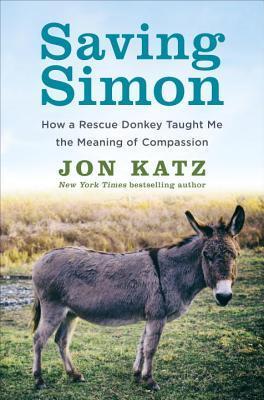
Saving Simon: How a Rescue Donkey Taught Me the Meaning of Compassion
In this heartfelt, thoughtful, and inspiring memoir, New York Times bestselling author Jon Katz tells the story of his beloved rescue donkey, Simon, and the wondrous ways that animals make us wiser and kinder people.
In the spring of 2011, Jon Katz received a phone call that would challenge every idea he ever had about mercy and compassion. An animal control officer had found a neglected donkey on a farm in upstate New York, and she hoped that Jon and his wife, Maria, would be willing to adopt him. Jon wasn’t planning to add another animal to his home on Bedlam Farm, certainly not a very sick donkey. But the moment he saw the wrenching sight of Simon, he felt a powerful connection. Simon touched something very deep inside of him. Jon and Maria decided to take him in.
Simon’s recovery was far from easy. Weak and malnourished, he needed near constant care, but Jon was determined to help him heal. As Simon’s health improved, Jon would feed him by hand, read to him, take him on walks, even confide in him like an old and trusted friend. Then, miraculously, as if in reciprocation, Simon began to reveal to Jon the true meaning of compassion, the ways in which it can transform our lives and inspire us to take great risks.
This radically different perspective on kindness and empathy led Jon to a troubled border collie from Ireland in need of a home, a blind pony who had lived outside in a pasture for fifteen years, and a new farm for him and Maria. In the great tradition of heroes—from Don Quixote to Shrek—who faced the world in the company of their donkeys, Jon came to understand compassion and mercy in a new light, learning to open up “not just to Simon, not just to animals, but to the human experience. To love, to risk, to friendship.”
With grace, warmth, and keen emotional insight, Saving Simon plumbs the depths of the bonds we form with our animals, and the rewards of “living a more compassionate, considered, and meaningful life.”
In the spring of 2011, Jon Katz received a phone call that would challenge every idea he ever had about mercy and compassion. An animal control officer had found a neglected donkey on a farm in upstate New York, and she hoped that Jon and his wife, Maria, would be willing to adopt him. Jon wasn’t planning to add another animal to his home on Bedlam Farm, certainly not a very sick donkey. But the moment he saw the wrenching sight of Simon, he felt a powerful connection. Simon touched something very deep inside of him. Jon and Maria decided to take him in.
Simon’s recovery was far from easy. Weak and malnourished, he needed near constant care, but Jon was determined to help him heal. As Simon’s health improved, Jon would feed him by hand, read to him, take him on walks, even confide in him like an old and trusted friend. Then, miraculously, as if in reciprocation, Simon began to reveal to Jon the true meaning of compassion, the ways in which it can transform our lives and inspire us to take great risks.
This radically different perspective on kindness and empathy led Jon to a troubled border collie from Ireland in need of a home, a blind pony who had lived outside in a pasture for fifteen years, and a new farm for him and Maria. In the great tradition of heroes—from Don Quixote to Shrek—who faced the world in the company of their donkeys, Jon came to understand compassion and mercy in a new light, learning to open up “not just to Simon, not just to animals, but to the human experience. To love, to risk, to friendship.”
With grace, warmth, and keen emotional insight, Saving Simon plumbs the depths of the bonds we form with our animals, and the rewards of “living a more compassionate, considered, and meaningful life.”
224 pages, Hardcover
Published October 7, 2014
About the author
Jon Katz
58 books477 followers Jon Katz is an author, photographer, and children's book writer. He lives on Bedlam Farm with his wife, the artist Maria Wulf, his four dogs, Rose, Izzy, Lenore and Frieda, two donkeys, Lulu and Fanny, and two barn cats. His next book, "Rose In A Storm" will be published by Random House on October 5.
He is working on a collection of short stories and a book on animal grieving.
He is working on a collection of short stories and a book on animal grieving.
Ratings & Reviews
Friends & Following
Create a free account to discover what your friends think of this book!
Community Reviews
Displaying 1 - 30 of 351 reviews

September 11, 2014
For someone who loves animals as much as I do, I don't read a lot of animal stories, because they make me too sad. So I was aware of Jon Katz as an author but had never read any of his books. I was attracted to this one because of the adorable donkey on the cover and because of the subtitle: "How a Rescue Donkey Taught me the Meaning of Compassion." Compassion is one of my favorite topics, so despite my fear of reading about horrific cruelty that would give me nightmares, I decided to give it a try.
And horrific cruelty I got. I won't go into detail, but the first chapter of this book made me literally sob in a hair salon. But I made it through the really terrible parts and I don't think it's a spoiler to tell you that Simon survives and gets well, and I thought the rest of the book would be a happy story about how this beautiful, forgiving, resilient creature teaches humans what life was really all about. And that's kind of what happened, but I also found myself getting increasingly frustrated and perplexed by attitude of the author, an animal lover and rescuer, who despite owning numerous animals and writing dozens of bestselling books about them, seems to know so little about them. Also, he continually contradicts himself and makes nonsensical arguments. For example...
He has compassion for the farmer who cruelly neglected his donkey so severely he was on the verge of death, AND WHO FELT NO REMORSE FOR IT, but has bitter contempt for the animal rescue community.
He accuses animal advocates who feel anger toward animal abusers of hating all people. As someone who loves animals and is involved in the rescue community, I am offended by this completely inane generalization. The people that I know who love animals and are involved in rescue are the most compassionate people on earth, and feel compassion toward both animals AND humans. He seems to confuse anger with hatred. I would expect an educated person with much life experience to understand the difference between these two things.
He asks, (this is a direct quote) "why do we feel so much for the animal who is mistreated but so little for the human beings who mistreat them?" Um, really? Does that question even need to be asked? I understand the need to find forgiveness for even the most horrible sins, but this is still an idiotic question.
In one paragraph he expresses sadness at people who are reluctant to get another dog after losing one because so many animals languish in shelters, and then two paragraphs later, talks about contacting breeders about acquiring his next dog.
It goes on and on...
I expected so much more from such a prolific author of books about animals, and from someone who claims to be such an animal lover. I will definitely not be reading any more books by Jon Katz and I wouldn't recommend this one to anyone. I did fall in love with Simon, and later a blind, elderly pony named Rocky (don't even get me started on what Mr. Animal-Lover Katz does to that poor animal), so I'm giving this book 2 stars just for them. Jon Katz gets zero.
And horrific cruelty I got. I won't go into detail, but the first chapter of this book made me literally sob in a hair salon. But I made it through the really terrible parts and I don't think it's a spoiler to tell you that Simon survives and gets well, and I thought the rest of the book would be a happy story about how this beautiful, forgiving, resilient creature teaches humans what life was really all about. And that's kind of what happened, but I also found myself getting increasingly frustrated and perplexed by attitude of the author, an animal lover and rescuer, who despite owning numerous animals and writing dozens of bestselling books about them, seems to know so little about them. Also, he continually contradicts himself and makes nonsensical arguments. For example...
He has compassion for the farmer who cruelly neglected his donkey so severely he was on the verge of death, AND WHO FELT NO REMORSE FOR IT, but has bitter contempt for the animal rescue community.
He accuses animal advocates who feel anger toward animal abusers of hating all people. As someone who loves animals and is involved in the rescue community, I am offended by this completely inane generalization. The people that I know who love animals and are involved in rescue are the most compassionate people on earth, and feel compassion toward both animals AND humans. He seems to confuse anger with hatred. I would expect an educated person with much life experience to understand the difference between these two things.
He asks, (this is a direct quote) "why do we feel so much for the animal who is mistreated but so little for the human beings who mistreat them?" Um, really? Does that question even need to be asked? I understand the need to find forgiveness for even the most horrible sins, but this is still an idiotic question.
In one paragraph he expresses sadness at people who are reluctant to get another dog after losing one because so many animals languish in shelters, and then two paragraphs later, talks about contacting breeders about acquiring his next dog.
It goes on and on...
I expected so much more from such a prolific author of books about animals, and from someone who claims to be such an animal lover. I will definitely not be reading any more books by Jon Katz and I wouldn't recommend this one to anyone. I did fall in love with Simon, and later a blind, elderly pony named Rocky (don't even get me started on what Mr. Animal-Lover Katz does to that poor animal), so I'm giving this book 2 stars just for them. Jon Katz gets zero.

January 1, 2015
Once again, as he did in Second Chance Dog, Jon Katz has managed to make a story about an animal mostly about him instead of the animal. I enjoyed reading about Simon and his amazing recovery from unbelievably horrific neglect. But Katz's boring diatribes on compassion that he thinks should extend to animal abusers as well as the abused animals turned me off completely. Some deeds are unforgivable. What that farmer did to Simon is one of those deeds. I also don't like that Katz talks about getting his dogs from breeders. He purports to care about animals, yet he supports the breeding of even more animals when hundreds of thousands are euthanized in shelters every year. And I'm not sure I agree with what he did to Rocky the blind pony. I'm on the fence with that decision.

April 8, 2020
Jon Katz, is an author, journalist and photographer known primarily for his books on dogs. He has for years kept the Bedlam Farm Blog Journal. Bedlam Farm, in Washington County, Upstate New York, is where he lived with his second wife Maria and their donkeys, dogs and chickens.
Having enjoyed the author’s books on dogs, border collies being his favored breed, I thought I’d check out what Katz had to say about donkeys. Here he writes not only about donkeys, but all the animals on the farm and himself too. He writes of his move from the farm. A string of events, one leading to the next, result in the move. We follow his taking in of the abused donkey Simon, the nursing of him back to health and the strong attachment that grows between the two. Two border collies die in quick succession and Katz takes in Red, a border collie trained and bred in Northern Ireland. We meet Florence, an elderly woman of one hundred and two. She’s living alone and has a pony. That pony is Rocky, a thirty-three-year-old Appaloosa pony. He is blind. Simon, Red and Rocky, and Katz too, are the four who take center stage in this book. The relationship between Rocky and Red is remarkable. It is this relationship that will stand out for me when years from now I think back on this book.
Simon, Red and Rocky-- a donkey, a border collie and a pony--have found a place in my heart. I guarantee, reading about their time together will both tug at your heart and have you perched on the edge of your seat. Why? Because you will come to care very much for all three.
So, I definitely like this book. I like it a lot. I went into it to learn more about donkeys. I did learn more about donkeys. I learned not only about donkeys in general but also about a handful in great detail. We learn of Carol, the first donkey Katz ever had, and of Lulu and Fanny, two others living on the farm when Simon arrived.
Katz sat and talked to Simon. He opened himself up to Simon. In spilling his guts to Simon, his thoughts take a philosophical turn. Katz asks why it is so easy to feel compassion for an abused animal and yet so difficult to feel any compassion for that human being, who due to their own dire situation often coupled to financial difficulties, caused that abuse. He urges us to have more compassion for fellow humans. He may even be asking us to forgive them their mistakes. It is in this vein, he seeks out the man who mistreated Simon.
Katz looks at his own behavior too; he looks at his own troubled relationship with his mother, that is to say the difficulties he has had in forgiving her. In my view the author takes his talk about compassion a little bit too far. I wish he had just stuck to the animals and skipped the philosophizing.
I like this book for what it says about animal human relationships. I do think communication can occur without words. I agree with his view on euthanasia. Katz draws animals with a depth usually only given to human beings. I do NOT understand why there could not be found a way to . Read the book; you will see what I am taking about.
I recommend this book. It is very good. I am in agreement with much but not all that is said. Slowly but surely, I am learning more and more about donkeys. The more I read of them, the more I like them.
Tom Stechschulte narrates the audiobook perfectly. He is a narrator that I have come to count on. He always renders the best performance possible. Five stars for the narration.
****************************
Donkey Books:
My book ratings might seem to indicate I don't like donkeys, but I do. This is why I keep searching for a really good donkey book!
*Saving Simon: How a Rescue Donkey Taught Me the Meaning of Compassion by Jon Katz 4 stars
*The Wisdom of Donkeys: Finding Tranquility in a Chaotic World by Andy Merrifield 2 stars
*Travels with a Donkey in the Cévennes by Robert Louis Stevenson 2 stars
*Running with Sherman by Christopher McDougall 2 stars
*Don Quixote by Miguel de Cervantes Saavedra 1 star
*Down Among the Donkeys by Elisabeth D. Svendsen
*Last of the Donkey Pilgrims by by Kevin O'Hara
*Donkey Work by Doreen Tovey
*Platero and I by Juan Ramón Jiménez
Having enjoyed the author’s books on dogs, border collies being his favored breed, I thought I’d check out what Katz had to say about donkeys. Here he writes not only about donkeys, but all the animals on the farm and himself too. He writes of his move from the farm. A string of events, one leading to the next, result in the move. We follow his taking in of the abused donkey Simon, the nursing of him back to health and the strong attachment that grows between the two. Two border collies die in quick succession and Katz takes in Red, a border collie trained and bred in Northern Ireland. We meet Florence, an elderly woman of one hundred and two. She’s living alone and has a pony. That pony is Rocky, a thirty-three-year-old Appaloosa pony. He is blind. Simon, Red and Rocky, and Katz too, are the four who take center stage in this book. The relationship between Rocky and Red is remarkable. It is this relationship that will stand out for me when years from now I think back on this book.
Simon, Red and Rocky-- a donkey, a border collie and a pony--have found a place in my heart. I guarantee, reading about their time together will both tug at your heart and have you perched on the edge of your seat. Why? Because you will come to care very much for all three.
So, I definitely like this book. I like it a lot. I went into it to learn more about donkeys. I did learn more about donkeys. I learned not only about donkeys in general but also about a handful in great detail. We learn of Carol, the first donkey Katz ever had, and of Lulu and Fanny, two others living on the farm when Simon arrived.
Katz sat and talked to Simon. He opened himself up to Simon. In spilling his guts to Simon, his thoughts take a philosophical turn. Katz asks why it is so easy to feel compassion for an abused animal and yet so difficult to feel any compassion for that human being, who due to their own dire situation often coupled to financial difficulties, caused that abuse. He urges us to have more compassion for fellow humans. He may even be asking us to forgive them their mistakes. It is in this vein, he seeks out the man who mistreated Simon.
Katz looks at his own behavior too; he looks at his own troubled relationship with his mother, that is to say the difficulties he has had in forgiving her. In my view the author takes his talk about compassion a little bit too far. I wish he had just stuck to the animals and skipped the philosophizing.
I like this book for what it says about animal human relationships. I do think communication can occur without words. I agree with his view on euthanasia. Katz draws animals with a depth usually only given to human beings. I do NOT understand why there could not be found a way to . Read the book; you will see what I am taking about.
I recommend this book. It is very good. I am in agreement with much but not all that is said. Slowly but surely, I am learning more and more about donkeys. The more I read of them, the more I like them.
Tom Stechschulte narrates the audiobook perfectly. He is a narrator that I have come to count on. He always renders the best performance possible. Five stars for the narration.
****************************
Donkey Books:
My book ratings might seem to indicate I don't like donkeys, but I do. This is why I keep searching for a really good donkey book!
*Saving Simon: How a Rescue Donkey Taught Me the Meaning of Compassion by Jon Katz 4 stars
*The Wisdom of Donkeys: Finding Tranquility in a Chaotic World by Andy Merrifield 2 stars
*Travels with a Donkey in the Cévennes by Robert Louis Stevenson 2 stars
*Running with Sherman by Christopher McDougall 2 stars
*Don Quixote by Miguel de Cervantes Saavedra 1 star
*Down Among the Donkeys by Elisabeth D. Svendsen
*Last of the Donkey Pilgrims by by Kevin O'Hara
*Donkey Work by Doreen Tovey
*Platero and I by Juan Ramón Jiménez

November 8, 2018
Donkeys, Dogs, Chickens and a Dead Rooster
We first came to Tahlequah in 2006, bringing with us our 4 month old border collie that I named Mocha. The plan was to see if we wanted to move here.
In searching for a house we drove over to Hulbert because I had seen a photo of a house on Realtor.com that I liked, and it sat on 5 acres, which I also liked.
We drove down a long gravel road for maybe 5 minutes and pulled up to the house. I loved it. It was my dream house. It was just like the ones I saw in books I read as a teenager that was about mountain people, like maybe The Shepherd of the Hills. It had a front porch with a chimney on one end, but most of all it was painted a moss green. I love moss green. $35,000.
My husband said, “NO.” The house was falling apart and had been patched with plywood. My husband was a Jack of all trades, a master carpenter, plumber, etc. He could fix anything. “NO,” he said again, “You can’t fix this unless you tear it down.” “But it is green, and it has a chimney and a front porch,” I pleaded, “Plus, we have the money to fix it up,” I continued. We found another house, and my husband built me a back porch and for a compromise on the chimney we got a woodstove.
Well, the reason why I am telling you this story is so that you will know that I have no taste in homes. My tastes are rugged. I can do shacks. Actually, the reason I am telling you this is because there was a donkey on the property, and he was standing near us, and this is the only story of a donkey that I have to tell, and it needs telling:
Our dog got out of the car along with us, and while I was taking photos of my dream house, I was not paying any attention to her. She went under the fence and began sniffing the donkey’s rear end. Not good. I saw her and yelled, “Mocha! Get over here!” She came back to me immediately. Border collies are smart, and they mostly do what you ask, and I was grateful that she minded me then. I should have been paying more attention to her, I know, because donkeys can be mean; they can kick. But the donkey in this book doesn't seem to be mean at all, not until the very end. But if you have ever been kicked by a horse or a donkey, you will not wish to be around them either, not unless there was a fence between you. I like fences.
Well, as of July 3, Mocha is no longer with us. She had to be put to sleep. So, when reading this book, I thought of her, and I was fighting back tears. I should have known better than to read a rescue book so soon after losing her, but hey, this was a donkey, not a dog, so it should not have reminded me of her. Well, it did, and I can tell you now, I will not read this author’s books about his dogs, nor will I read any other dog book for a very long time. Unlike the author, I will not go out and get another dog. We are old now and can’t really care for one.
I really liked the author of this book, Katz, more than I did Simon, whom he had rescued, but that is because he cared for him and cares for all animals. He doctored the animals and fed them well, but more than that he played Willie Nelson songs to one of his donkeys because he believed that he enjoyed his soothing voice. Maybe he did. He then read “Platero and I” to Simon, a book about a man and his donkey traveling together and enjoying nature. This helped them bond. Maybe I should have read that book instead of this one, but I imagine that the donkey will die in the end. They always do.
I learned some things about donkeys. For one thing, I learned that they are used to protect sheep from predators. One day a fox decided he wanted some of Katz’ chickens, so he came into the corral and Simon created such a ruckus that Katz came running out of the house and was able to save them. One of the hens ran into the bushes to hide, as they do when frightened, I was told, and this because they can’t fly. Maria, Katz’ wife, called to her, and she came out of the bushes and ran up to her for protection. I wondered then if they finally eat their chickens, and I thought of how that would really be a betrayal of trust. Now, I am worried about their chickens.
So Katz took a rifle up to the fox’s den, but then he realized that he couldn’t kill it. Yet, he did kill a rooster that attacked his wife. Well, I will go along with him here.
We have a fox, well, actually two, and they come around the house, but they have never killed any of our cats. I consider that fortunate for the cats. One day a fox began walking up to two of our cats, and the cats got up and hissed at him, but before I could run out our own door to save them, the fox went away. Cats have teeth up front and claws underneath. Don’t mess with cats.
So now we have Simon pacing the fence line. He can see the fox whenever he leaves his den, and if the fox goes left, Simon goes left, if he goes right Simon goes right. He is such a good guard donkey, and one of the hens who knew this got up on his back for more protection. And the stories go on.
Katz finally puts Simon into the corral with his two female donkeys, and one of them begins kicking him in the head, over and over and for months and months. I learned then that donkeys have hard heads, and I think that their hardheadedness must filter into their personality.
Sometimes, this story is more about how Simon caused Katz to become more compassionate, but I believe it was because he had read Thomas Merton, which was only one of the books he listed. He tells us how he had tried to learn to have compassion for Simon’s last owner, the man who almost did him in. So, he went to see that man, and he learned that he was poor and could hardly feed his own family. Knowing these things caused him to have compassion for the man. “Who is to care for them? he asks. I say the man should have called the Humane Society like his 10 year old son finally had the sense to do. While I can have compassion for the family because they are suffering, I can’t have compassion for the man who did what he did to Simon.
I have also read Buddhist books on compassion. I sat in a monastery for 3 ½ years learning compassion by meditating, listening to the Abbot and reading. Years later, I learned that more often than not, compassion is just a belief, a feeling that you get when you meditate, when you listen to lectures or read books. But these feelings can go right out the window when you are confronted with violence or real evil. Yet, this doesn’t make it a bad teaching in my mind, but it can prevent a person from taking action when it is really needed. Sometimes the most compassion thing to do is to shoot the rooster.
We first came to Tahlequah in 2006, bringing with us our 4 month old border collie that I named Mocha. The plan was to see if we wanted to move here.
In searching for a house we drove over to Hulbert because I had seen a photo of a house on Realtor.com that I liked, and it sat on 5 acres, which I also liked.
We drove down a long gravel road for maybe 5 minutes and pulled up to the house. I loved it. It was my dream house. It was just like the ones I saw in books I read as a teenager that was about mountain people, like maybe The Shepherd of the Hills. It had a front porch with a chimney on one end, but most of all it was painted a moss green. I love moss green. $35,000.
My husband said, “NO.” The house was falling apart and had been patched with plywood. My husband was a Jack of all trades, a master carpenter, plumber, etc. He could fix anything. “NO,” he said again, “You can’t fix this unless you tear it down.” “But it is green, and it has a chimney and a front porch,” I pleaded, “Plus, we have the money to fix it up,” I continued. We found another house, and my husband built me a back porch and for a compromise on the chimney we got a woodstove.
Well, the reason why I am telling you this story is so that you will know that I have no taste in homes. My tastes are rugged. I can do shacks. Actually, the reason I am telling you this is because there was a donkey on the property, and he was standing near us, and this is the only story of a donkey that I have to tell, and it needs telling:
Our dog got out of the car along with us, and while I was taking photos of my dream house, I was not paying any attention to her. She went under the fence and began sniffing the donkey’s rear end. Not good. I saw her and yelled, “Mocha! Get over here!” She came back to me immediately. Border collies are smart, and they mostly do what you ask, and I was grateful that she minded me then. I should have been paying more attention to her, I know, because donkeys can be mean; they can kick. But the donkey in this book doesn't seem to be mean at all, not until the very end. But if you have ever been kicked by a horse or a donkey, you will not wish to be around them either, not unless there was a fence between you. I like fences.
Well, as of July 3, Mocha is no longer with us. She had to be put to sleep. So, when reading this book, I thought of her, and I was fighting back tears. I should have known better than to read a rescue book so soon after losing her, but hey, this was a donkey, not a dog, so it should not have reminded me of her. Well, it did, and I can tell you now, I will not read this author’s books about his dogs, nor will I read any other dog book for a very long time. Unlike the author, I will not go out and get another dog. We are old now and can’t really care for one.
I really liked the author of this book, Katz, more than I did Simon, whom he had rescued, but that is because he cared for him and cares for all animals. He doctored the animals and fed them well, but more than that he played Willie Nelson songs to one of his donkeys because he believed that he enjoyed his soothing voice. Maybe he did. He then read “Platero and I” to Simon, a book about a man and his donkey traveling together and enjoying nature. This helped them bond. Maybe I should have read that book instead of this one, but I imagine that the donkey will die in the end. They always do.
I learned some things about donkeys. For one thing, I learned that they are used to protect sheep from predators. One day a fox decided he wanted some of Katz’ chickens, so he came into the corral and Simon created such a ruckus that Katz came running out of the house and was able to save them. One of the hens ran into the bushes to hide, as they do when frightened, I was told, and this because they can’t fly. Maria, Katz’ wife, called to her, and she came out of the bushes and ran up to her for protection. I wondered then if they finally eat their chickens, and I thought of how that would really be a betrayal of trust. Now, I am worried about their chickens.
So Katz took a rifle up to the fox’s den, but then he realized that he couldn’t kill it. Yet, he did kill a rooster that attacked his wife. Well, I will go along with him here.
We have a fox, well, actually two, and they come around the house, but they have never killed any of our cats. I consider that fortunate for the cats. One day a fox began walking up to two of our cats, and the cats got up and hissed at him, but before I could run out our own door to save them, the fox went away. Cats have teeth up front and claws underneath. Don’t mess with cats.
So now we have Simon pacing the fence line. He can see the fox whenever he leaves his den, and if the fox goes left, Simon goes left, if he goes right Simon goes right. He is such a good guard donkey, and one of the hens who knew this got up on his back for more protection. And the stories go on.
Katz finally puts Simon into the corral with his two female donkeys, and one of them begins kicking him in the head, over and over and for months and months. I learned then that donkeys have hard heads, and I think that their hardheadedness must filter into their personality.
Sometimes, this story is more about how Simon caused Katz to become more compassionate, but I believe it was because he had read Thomas Merton, which was only one of the books he listed. He tells us how he had tried to learn to have compassion for Simon’s last owner, the man who almost did him in. So, he went to see that man, and he learned that he was poor and could hardly feed his own family. Knowing these things caused him to have compassion for the man. “Who is to care for them? he asks. I say the man should have called the Humane Society like his 10 year old son finally had the sense to do. While I can have compassion for the family because they are suffering, I can’t have compassion for the man who did what he did to Simon.
I have also read Buddhist books on compassion. I sat in a monastery for 3 ½ years learning compassion by meditating, listening to the Abbot and reading. Years later, I learned that more often than not, compassion is just a belief, a feeling that you get when you meditate, when you listen to lectures or read books. But these feelings can go right out the window when you are confronted with violence or real evil. Yet, this doesn’t make it a bad teaching in my mind, but it can prevent a person from taking action when it is really needed. Sometimes the most compassion thing to do is to shoot the rooster.

November 8, 2014
Although, or perhaps because, I am an animal lover, I often avoid books, especially nonfiction, centering on animals. They are too hard to read, and too often, I just don't “get” some of the author's attitudes.
However, I gave in to temptation and read this book about saving Simon, a donkey left to die.
Of course, the rescue part was so hard to read – the horrible conditions from which Simon was rescued. But I expected that. What I did not expect, but perhaps should have because of past reading experiences, were the attitudes and voice of the author.
For me, I loved that Simon was rescued and that he was given a good life. But the author, especially in the last half of the book where he wrote more about compassion, became a little too sanctimonious for my tastes, a little too preachy.
Okay, he took care of a rescued donkey, Great! But on multiple occasions, he and his wife “often” took back to a neighbor their dog that would chew through its tether while it was tethered outside, 24x7, rain, snow. Couldn't this compassionate person find a better solution, since he claims to care about the well-bring of animals, than taking it back to the owner to be tied up again? (By the way, I wish authors, professional writers, would learn the difference between “bring” and “take.”)
He denigrates animals rescuers who have denigrated him on his blog because of some of his actions. He doesn't understand why these people seem more judgmental, less compassionate of humans than of animals. He doesn't seem to understand that humans have CHOICE that the animals in their care do not.
If someone is responsible for an animal, but puts it to suffer and die out of sight just so they don't have to look at it while it is dying, dang right I am going to judge that person. That person had a choice; the animal did not. The one who eventually did the right thing was a child.
The author was responsible for a blind pony being shocked by an electrical fence he turned on, and yet his rage goes towards the animal that attacked the pony, the animal that was just being an animal and protecting what he considered his.
“I was furious. I felt nothing but rage for [the animal]....”
“Sometimes, he thought, I am ashamed to be a human.”
Yeah, me too.
He knows how many dogs need to be adopted, how many languish or die in shelters, yet he has an excuse for buying from a breeder. Really?
While many will probably love this book, it upset me more than it pleased me, and I'm going back to avoiding most animal books.
I was given a copy of this book for review.
However, I gave in to temptation and read this book about saving Simon, a donkey left to die.
Of course, the rescue part was so hard to read – the horrible conditions from which Simon was rescued. But I expected that. What I did not expect, but perhaps should have because of past reading experiences, were the attitudes and voice of the author.
For me, I loved that Simon was rescued and that he was given a good life. But the author, especially in the last half of the book where he wrote more about compassion, became a little too sanctimonious for my tastes, a little too preachy.
Okay, he took care of a rescued donkey, Great! But on multiple occasions, he and his wife “often” took back to a neighbor their dog that would chew through its tether while it was tethered outside, 24x7, rain, snow. Couldn't this compassionate person find a better solution, since he claims to care about the well-bring of animals, than taking it back to the owner to be tied up again? (By the way, I wish authors, professional writers, would learn the difference between “bring” and “take.”)
He denigrates animals rescuers who have denigrated him on his blog because of some of his actions. He doesn't understand why these people seem more judgmental, less compassionate of humans than of animals. He doesn't seem to understand that humans have CHOICE that the animals in their care do not.
If someone is responsible for an animal, but puts it to suffer and die out of sight just so they don't have to look at it while it is dying, dang right I am going to judge that person. That person had a choice; the animal did not. The one who eventually did the right thing was a child.
The author was responsible for a blind pony being shocked by an electrical fence he turned on, and yet his rage goes towards the animal that attacked the pony, the animal that was just being an animal and protecting what he considered his.
“I was furious. I felt nothing but rage for [the animal]....”
“Sometimes, he thought, I am ashamed to be a human.”
Yeah, me too.
He knows how many dogs need to be adopted, how many languish or die in shelters, yet he has an excuse for buying from a breeder. Really?
While many will probably love this book, it upset me more than it pleased me, and I'm going back to avoiding most animal books.
I was given a copy of this book for review.

March 22, 2017
The subtitle should be changed from "How a Rescue Donkey Taught Me the Meaning of Compassion" to "How a Rich White Man With Way Too Much Time on His Hands Becomes A Total Twat."
When the book stays with Simon, it was okay. But then Katz has to kill a good thing by going into long, chest-beating navel-gazing soliloquies on compassion. Katz wants us to have compassion for all animal abusers -- and wife and child abusers, too. Wonder if he'd "have compassion" for Hitler?

He asks why is it okay for people to have compassion for abused animals like Simon the donkey and not their abusers? Gee -- maybe because that's how life in the real world works, Jon. Compassion is earned for those who deserve it. I had compassion for my abuser. Know where it got me? Beaten up and left for dead with every penny stolen from me and a burnt-out home. Yeah -- compassion for abusers makes a whole lotta sense.
Let's keep in mind that this is a guy who describes why he had his dog euthanized because he "bit three people" (and does not mention why the dog bit) and shot his own rooster because it once scratched up his wife. Some compassion there, Jon. He mentions once in the entire 319 page book that he has a daughter. She does not appear anywhere else in the book except as a passing remark in one sentence. I guess he shot the daughter, too, when she pissed him off.
And for a book marketed to the animal lovers, Katz writes of his resentment and fear of animal lovers and what he called the "animal rights culture." Culture? SERIOUSLY? Can we be MORE pretentious? He whines about nasty comments on his blog. Oh, please. You're rich and successful and can't take the meanies on the Internet? Grow up.

A book written by Simon would have been better than this.
When the book stays with Simon, it was okay. But then Katz has to kill a good thing by going into long, chest-beating navel-gazing soliloquies on compassion. Katz wants us to have compassion for all animal abusers -- and wife and child abusers, too. Wonder if he'd "have compassion" for Hitler?
He asks why is it okay for people to have compassion for abused animals like Simon the donkey and not their abusers? Gee -- maybe because that's how life in the real world works, Jon. Compassion is earned for those who deserve it. I had compassion for my abuser. Know where it got me? Beaten up and left for dead with every penny stolen from me and a burnt-out home. Yeah -- compassion for abusers makes a whole lotta sense.
Let's keep in mind that this is a guy who describes why he had his dog euthanized because he "bit three people" (and does not mention why the dog bit) and shot his own rooster because it once scratched up his wife. Some compassion there, Jon. He mentions once in the entire 319 page book that he has a daughter. She does not appear anywhere else in the book except as a passing remark in one sentence. I guess he shot the daughter, too, when she pissed him off.
And for a book marketed to the animal lovers, Katz writes of his resentment and fear of animal lovers and what he called the "animal rights culture." Culture? SERIOUSLY? Can we be MORE pretentious? He whines about nasty comments on his blog. Oh, please. You're rich and successful and can't take the meanies on the Internet? Grow up.
A book written by Simon would have been better than this.

March 24, 2015
This is a very thought-provoking book that goes beyond what I thought was going to be a more simplistic animal rescue story. It is that, but Katz really delves into what compassion is, why we in modern times have more compassion for animals than for people, how seeing yourself and everyone/everything else as connected is so crucial and so difficult for having compassion, and why animals can disappoint us when we assign them human feelings. I enjoyed this book very much and I loved hearing about the animals who were rescued (now I have to have full sized donks to go along with my minatures!) but at the same time it made me uncomfortable to see myself in many of Katz's issues, such as being furious with Simon for just doing what donkeys do, and having difficulty with the concept of compassion sometimes meaning letting go. Very recommended.
*I made another surprising discover. Carol loved music and, more than anything, she loved Willie Nelson.
...When I played "Georgia on My Mind," Carol's lip quivered - this is how donkeys show contentment - and her eyes closed and she just seemed calm and serene.*
*I think Simon decided from the first that he would live. It's what donkeys do: endure hard times and keep going. That is surely their history.*
*The rabbi says that donkeys are sacred messengers of God, and that children and donkeys talk to one another.*
*He was not impressed with the posturing of dogs. He had seen too much, and I suspect he considered dogs a vastly inferior life form.*
*I saw that this contemplation of what measure of compassion is owed to the farmer was a dialogue between Simon and me. It wasn't that he had the words, language, or emotion to join in the discussion or have theories about it. But he had opened up this vein in me. As a person with a lot of anger and judgement inside of him, I found this to be new and challenging terrain.*
*He got on with life. He did not waste his precious time angry at the farmer or complaining about his fate. His call to life was very real. He seemed to me set on enjoying every second of his time here.*
*...God had never been involved in my choice of dogs, at least as far as I knew. The idea made me nervous.*
*I made another surprising discover. Carol loved music and, more than anything, she loved Willie Nelson.
...When I played "Georgia on My Mind," Carol's lip quivered - this is how donkeys show contentment - and her eyes closed and she just seemed calm and serene.*
*I think Simon decided from the first that he would live. It's what donkeys do: endure hard times and keep going. That is surely their history.*
*The rabbi says that donkeys are sacred messengers of God, and that children and donkeys talk to one another.*
*He was not impressed with the posturing of dogs. He had seen too much, and I suspect he considered dogs a vastly inferior life form.*
*I saw that this contemplation of what measure of compassion is owed to the farmer was a dialogue between Simon and me. It wasn't that he had the words, language, or emotion to join in the discussion or have theories about it. But he had opened up this vein in me. As a person with a lot of anger and judgement inside of him, I found this to be new and challenging terrain.*
*He got on with life. He did not waste his precious time angry at the farmer or complaining about his fate. His call to life was very real. He seemed to me set on enjoying every second of his time here.*
*...God had never been involved in my choice of dogs, at least as far as I knew. The idea made me nervous.*

February 13, 2015
(2.5) I didn’t enjoy this quite as much as Katz’s dog books. Simon the donkey, rescued from a horrible situation of neglect, joins the rest of the Bedlam Farm menagerie, later supplemented by Red the collie and Rocky the blind pony. I enjoyed hearing about everyday life with donkeys and the bonds formed between different species. It’s a perfectly pleasant read, if nothing special.
However, from that subtitle onwards, Katz completely over-eggs his argument about donkeys teaching compassion. Even Simon’s later violence towards another animal doesn’t seem to completely dissuade Katz from believing Simon is gentle and pure at heart. At the very least, it’s an anthropomorphic stretch.
Related reading: Christmas at Battersea and To Travel Hopefully by Christopher Rush (it has a donkey!). Meanwhile, Katz recommends Platero and I; he read it aloud to Simon.
However, from that subtitle onwards, Katz completely over-eggs his argument about donkeys teaching compassion. Even Simon’s later violence towards another animal doesn’t seem to completely dissuade Katz from believing Simon is gentle and pure at heart. At the very least, it’s an anthropomorphic stretch.
Related reading: Christmas at Battersea and To Travel Hopefully by Christopher Rush (it has a donkey!). Meanwhile, Katz recommends Platero and I; he read it aloud to Simon.

October 16, 2014
This book is charming, relevant and thought provoking. In our days of living with terror and bad news on the TV daily it is wonderful to escape with a book about relations between man and animals and one that also helps us be introspective about our own demons and suggested ways to get rid of same. i.e. get a donkey :-)

April 7, 2015
I did not delve into this book expecting to like it as much as I did. I mean, really, a rescue DONKEY?
But from the moment I met Simon, my heart was won over. Of course any story about a rescue animal is going to wrench my heart, but this story was so unexpected. The way Jon Katz captivated me with his tale of how he met all his animals, came to meet Simon, and came to love him, it was all amazing.
And moreover, the story wasn't just about Simon. It was about compassion all around, not just for animals, but for humans. I found myself totally wrapped up in Katz's words regarding compassion not just for animals, but for those who love them, and perhaps even compassion for those who don't.
I think the only thing that stopped me from giving the book a full 5 stars? The lack of pictures. I longed to see the photos of Simon, Red, and Rocky as I read along. Granted, I could have easily looked them up in Katz's blog, but I wanted to see them next to the words as I lay in bed flipping through the pages, not tearing myself away to go scroll through the internet for them. So, right after I post this review, you know I'll be visiting his website.
But from the moment I met Simon, my heart was won over. Of course any story about a rescue animal is going to wrench my heart, but this story was so unexpected. The way Jon Katz captivated me with his tale of how he met all his animals, came to meet Simon, and came to love him, it was all amazing.
And moreover, the story wasn't just about Simon. It was about compassion all around, not just for animals, but for humans. I found myself totally wrapped up in Katz's words regarding compassion not just for animals, but for those who love them, and perhaps even compassion for those who don't.
I think the only thing that stopped me from giving the book a full 5 stars? The lack of pictures. I longed to see the photos of Simon, Red, and Rocky as I read along. Granted, I could have easily looked them up in Katz's blog, but I wanted to see them next to the words as I lay in bed flipping through the pages, not tearing myself away to go scroll through the internet for them. So, right after I post this review, you know I'll be visiting his website.

September 11, 2014
What more can you say for a book that brings tears to your eyes at the beginning with sorrow, tears in the middle from loss, and tears at the end due to compassion.
A marvelous work of Nonfiction. A chronicle of merged existence and self discovery showing that broken pieces coming together can mend holes and hearts.
From the first wrenching paragraph through recovery, familiarization, cohabitation, loss, gain, and healing this story while short in size makes your heart swell.
This goes beyond A Big Little Life where Koontz showed us the impact one animal can have on it's owner, and instead shows how all animals, both hearty and frail can create a web that captures all who come near.
A marvelous work of Nonfiction. A chronicle of merged existence and self discovery showing that broken pieces coming together can mend holes and hearts.
From the first wrenching paragraph through recovery, familiarization, cohabitation, loss, gain, and healing this story while short in size makes your heart swell.
This goes beyond A Big Little Life where Koontz showed us the impact one animal can have on it's owner, and instead shows how all animals, both hearty and frail can create a web that captures all who come near.

November 15, 2017
I enoyed reading about the rescue and rehabilitation of Simon, as well as about the relationship that developed between him and the author (and between Simon and anyone who brought him food!) The story of Simon and the other animals on Bedlam Farm was charming. However, I found the book to be very redundant to the point that it occasionally disrupted the continuity of the story. Katz would often circle back and mention something that he'd mentioned before....like about Rocky getting used to Maria pulling the burrs out of his mane, for example. It seemed like he was often starting to tell the same story over again. Other times he'd drop something in out of nowhere. At one time he circled back and talked about how unhappy he'd been and was hoping to find love again. I was taken aback - Oh, no - he and Maria seemed like such a great couple! It turned out he had backtracked and was talking about a 1st marriage that ended in divorce. Later he mentions that he wouldn't let his mother near his daughter. What?? He has a daughter? She was mentioned only in that one sentence. I guess we are to assume that she was from his previous marriage? Wonder if she ever spent time on the farm with the animals.
Loved Simon, Red, and Rocky...just wish the book had been a little better pulled together in spots. But who am I to judge? I couldn't write a book if my life depended on it!
Loved Simon, Red, and Rocky...just wish the book had been a little better pulled together in spots. But who am I to judge? I couldn't write a book if my life depended on it!

February 14, 2016
I have read many of the books by Jon Katz. He has written many books about his life on Bedlam Farm and all the animals he has there. This one is about Simon A donkey he rescued. It starts out pretty sad. Simon was severely neglected and near death. The farmer refused to take care of him and left him for dead. Jon Katz was called and asked if he would be willing to rescue Simon and give him a home.Simon was in terrible shape almost near death, his condition was horrible. Jon Katz got him home and took the best of care of him. Slowly Simon got better and he bonded with Jon and his wife Maria. Jon had two other donkeys that Simon had to meet. Along with dogs and other animals.
A lot of the book is about Simon but also about a new dog he got called Red. His decision to move from the farm he and lived on for about a decade and to a smaller farm about fifteen miles away. He also inherited a blind horse named Rocky that already lived on the farm. There are some happy endings along with some sad. I enjoyed reading this book. If readers have read some of Jon Katz's other books, they may also enjoy this most recent book.
A lot of the book is about Simon but also about a new dog he got called Red. His decision to move from the farm he and lived on for about a decade and to a smaller farm about fifteen miles away. He also inherited a blind horse named Rocky that already lived on the farm. There are some happy endings along with some sad. I enjoyed reading this book. If readers have read some of Jon Katz's other books, they may also enjoy this most recent book.

February 8, 2015
Charming book, with a glaring flaw... While the subtitle of the book references 'the meaning of compassion', Katz appears to have a blind spot toward the actions of his fellow farmers. His curious lack of concern for a dog that is tied up outside in all kinds of New York weather is troubling as is reluctance to condemn the actions of the farmer who couldn't be bothered to even look to see how his little donkey was doing.
While compassion is a wonderful, even essential human attribute, one must also understand that actions (and omissions) have consequences. Thank you Mr. Katz for your rescue of the little half dead donkey. But don't forget that sometimes the most ethical thing is to punish people who would knowingly mistreat animals to deter others from doing the same.
While compassion is a wonderful, even essential human attribute, one must also understand that actions (and omissions) have consequences. Thank you Mr. Katz for your rescue of the little half dead donkey. But don't forget that sometimes the most ethical thing is to punish people who would knowingly mistreat animals to deter others from doing the same.

December 29, 2014
A few sad and happy tears over this one.


October 21, 2014
I want to begin with my favorite passage from Saving Simon:
“When an animal guides you, emotionally and spiritually, it is not an obvious thing. Rather, they open doors indirectly, and then a domino effect sets in. They open up one part, and then that experience opens up another.”
As someone whose life has been positively changed for the better and enriched in ways I never saw coming because of caring for a dachshund that was paralyzed, I can closely relate to how the experience opens many facets of deepening in our understanding of love and compassion.
It was difficult to begin the story and read of the conditions in which Simon lived, so close to death when he was found and Jon, and his wife, Maria brought him to their farm. It brought me to tears and I had to set the book down for a moment.
But Simon was now in a place where he could heal and begin to live again. And in the process, as animals often do, they heal the humans around them, oftentimes without us even suspecting what is happening to us.
Another passage from the book that touched me was this one:
"And again, there was Simon’s spirit in my head. I can’t speak for what’s inside of his genial consciousness, but I can speak to what was inside of mine. From the first, I was struck by what I saw as the great trait of acceptance in Simon. People always spoke of him as being abused, rescued or neglected, but I saw no sign that Simon thought of himself in that way. Simon immediately got down to the basics of life—eating, walking, pursuing the girls, getting his ration of carrots and apples, getting brushed and fussed over."
This is what I’ve come to love deeply about animals. Their adversity to getting on with life despite what they’ve been through. Their ability to love again also speaks volumes.
Jon beautifully shares how Simon opened up a new world for him of understanding compassion in a way I’ve thought the same way in caring for special needs dogs.
He describes Simon as a magical helper, a spirit guide to help him on his hero journey. His helper appeared in the form of a donkey. Who’d of thunk, right?
But I believe our animal friends are calling out to us to be open to these important lessons to help heal our planet. Simon was just what Jon’s heart needed in opening to a new way of understanding. And when we open our hearts, we also open ourselves more deeply to understanding our fellow humankind.
Jon’s honesty in sharing how he wished to understand the farmer that had Simon before him, I found, to be extraordinary. In one aspect he wanted the farmer, who was so far down into despair after all he endured the past years of hardship, to snap out of it, he realized the farmer was beyond reach.
If we don’t feel for the human being who is so far into this dark place, how can we care for, and be open to the animals and planet around us?
To feel compassion for all living beings is what helps each of us to heal, just as Jon so beautifully shares through his story of Simon.
Simon, as I believe all animals are, are the definition of compassion. To now know Simon through the written word of Jon has opened another part in me that I welcome and am forever changed for the experience. Thank you, Simon….and Jon.
“When an animal guides you, emotionally and spiritually, it is not an obvious thing. Rather, they open doors indirectly, and then a domino effect sets in. They open up one part, and then that experience opens up another.”
As someone whose life has been positively changed for the better and enriched in ways I never saw coming because of caring for a dachshund that was paralyzed, I can closely relate to how the experience opens many facets of deepening in our understanding of love and compassion.
It was difficult to begin the story and read of the conditions in which Simon lived, so close to death when he was found and Jon, and his wife, Maria brought him to their farm. It brought me to tears and I had to set the book down for a moment.
But Simon was now in a place where he could heal and begin to live again. And in the process, as animals often do, they heal the humans around them, oftentimes without us even suspecting what is happening to us.
Another passage from the book that touched me was this one:
"And again, there was Simon’s spirit in my head. I can’t speak for what’s inside of his genial consciousness, but I can speak to what was inside of mine. From the first, I was struck by what I saw as the great trait of acceptance in Simon. People always spoke of him as being abused, rescued or neglected, but I saw no sign that Simon thought of himself in that way. Simon immediately got down to the basics of life—eating, walking, pursuing the girls, getting his ration of carrots and apples, getting brushed and fussed over."
This is what I’ve come to love deeply about animals. Their adversity to getting on with life despite what they’ve been through. Their ability to love again also speaks volumes.
Jon beautifully shares how Simon opened up a new world for him of understanding compassion in a way I’ve thought the same way in caring for special needs dogs.
He describes Simon as a magical helper, a spirit guide to help him on his hero journey. His helper appeared in the form of a donkey. Who’d of thunk, right?
But I believe our animal friends are calling out to us to be open to these important lessons to help heal our planet. Simon was just what Jon’s heart needed in opening to a new way of understanding. And when we open our hearts, we also open ourselves more deeply to understanding our fellow humankind.
Jon’s honesty in sharing how he wished to understand the farmer that had Simon before him, I found, to be extraordinary. In one aspect he wanted the farmer, who was so far down into despair after all he endured the past years of hardship, to snap out of it, he realized the farmer was beyond reach.
If we don’t feel for the human being who is so far into this dark place, how can we care for, and be open to the animals and planet around us?
To feel compassion for all living beings is what helps each of us to heal, just as Jon so beautifully shares through his story of Simon.
Simon, as I believe all animals are, are the definition of compassion. To now know Simon through the written word of Jon has opened another part in me that I welcome and am forever changed for the experience. Thank you, Simon….and Jon.

October 1, 2014
I love donkeys and had one of my own, and I normally love Jon Katz, but this book just fell a bit short for me. There were many repetitions of information, as though it was assembled from other writings and even an editor never made a pass through the manuscript before publication. A central theme of the book was compassion, but I wasn't sure where we ended up with that, and the ending was rather abrupt. I have great respect for Jon Katz and his writing and have had many of the same rural experiences with animals that he writes about, so it's hard for me to give it only three stars but it's harder for me to give it four. Still, we need more donkeys in our lives, so any book about donkeys is welcome, especially one like that that describes their characteristics so perfectly.

October 10, 2016
Not your typical rescue book in that one of the main characters is a donkey. More importantly, the author explores what true compassion means. He discovers that he not only should have compassion for the donkey (much easier than having compassion for humans) but also the farmer who left him to die in a pen. Interesting discussions on what compassion means and how to further develop in that area.

October 28, 2014
A charming read. Animals really do teach us so many things and not all of them easy.
April 7, 2024
3.5 stars
Simon was a donkey close to death in a tiny enclosure with no shelter when he was rescued. Jon Katz had a small farm and offered to take Simon in and, along with his wife, bring Simon back to health and happiness. Jon indicates in this book that he also benefitted from having Simon, learning about compassion along the way.
I really liked the parts about Simon and the other animals on Jon’s farm (and neighbouring animals, particularly the 101-year old’s elderly blind pony, Rocky). When he philosophized about compassion, though, I didn’t agree with him. Yes, I am more compassionate toward animals than (some) people; I feel like animals are more like kids or babies, in that they are dependent on humans and aren’t always able to change their circumstances, whereas humans are more likely to be able to have the power to do that for themselves (or they can ask for help). He doesn’t address this when he insists that we should still be compassionate towards the humans who abuse animals. He did tend to repeat himself at times, though I think that’s a small thing. The stories about the animals were great, though, and that really was the bulk of the book.
Simon was a donkey close to death in a tiny enclosure with no shelter when he was rescued. Jon Katz had a small farm and offered to take Simon in and, along with his wife, bring Simon back to health and happiness. Jon indicates in this book that he also benefitted from having Simon, learning about compassion along the way.
I really liked the parts about Simon and the other animals on Jon’s farm (and neighbouring animals, particularly the 101-year old’s elderly blind pony, Rocky). When he philosophized about compassion, though, I didn’t agree with him. Yes, I am more compassionate toward animals than (some) people; I feel like animals are more like kids or babies, in that they are dependent on humans and aren’t always able to change their circumstances, whereas humans are more likely to be able to have the power to do that for themselves (or they can ask for help). He doesn’t address this when he insists that we should still be compassionate towards the humans who abuse animals. He did tend to repeat himself at times, though I think that’s a small thing. The stories about the animals were great, though, and that really was the bulk of the book.

February 14, 2019
Reading this book, first I wanted a donkey, then there was no way I wanted a donkey, then I wanted dogs and chickens and sheep. I'm just a softy when it comes to animals. The author is sort of an animal whisperer. He sometimes puts human emotions on animals, which made me wonder. Anyway, the author goes into great detail of the suffering this animal endured before he took him to his farm and nursed him back to health. He also tells stories about other animals on the farm which usually tied into the donkey. It was sometimes hard to read and, be warned, not everything had a happy ending. The main idea of the book is that we shouldn't be so quick to judge when someone cannot take care of their animals. It may be a situation out of their control and they may just be having some hard circumstances that we know nothing about.
February 18, 2026
Simon, the donkey, is saved from imminent death and conditions that no animal should suffer. Abandoned in an enclosure by his owners that didn't want him to start with. His situation reported to the authorities by the son of the owner. All are the plight of Simon, the donkey.
What comes next is the story of Simon's recovery, his adoption by the author of the book and a narrative of the author's compassion for animals and humans alike.
A steady paced book, with stories of other rescued animals woven throughout and the light the author shines on how people perceive, treat and learn from animals in their care.
What comes next is the story of Simon's recovery, his adoption by the author of the book and a narrative of the author's compassion for animals and humans alike.
A steady paced book, with stories of other rescued animals woven throughout and the light the author shines on how people perceive, treat and learn from animals in their care.
February 22, 2023
Das Buch ist sowohl von der Sprache als auch von Inhalt und Aussage vor allem eins: schlicht. Und was will der Autor mit seinem Werk aussagen? Viele Wiederholungen, Anekdoten und Mutmaßungen über die Bedeutung von Tieren für uns Menschen. Zum Ende hin denkt man sich zudem, dass der Typ echt keine Ahnung von Eseln und Pferden hat. Zudem geht es im Laufe der Geschichte im Großteil nur noch um den Autor und nicht mehr um die Tiere. Am Anfang hat mich das Buch noch gefangen genommen, auch wenn ich die detaillierte Beschreibung, wie sehr der Esel geschunden war, nicht gebraucht hätte. Das war furchtbar zu lesen. Am Ende war das Buch einfach nur noch belanglos und noch dazu langweilig erzählt.
July 29, 2026
A wonderful book. I loved the way the author described donkeys and showed a real understanding of their nature. He had a lot of interesting and thoughtful things to say about the lessons Simon taught him. Definitely going to add this one to my collection of donkey books.
April 1, 2017
Simon was rescued from absolutely deplorable conditions, saved by the bravery of a small boy, defying his parents. Jon Katz took him in, and Simon changed lives all around him.

January 19, 2021
Loved this book! The bond that forms between a human and an animal is incredible. They love you unconditionally and will do anything to please and support you. I think I need a donkey! This book was so moving I even cried at the end.

May 19, 2022
Absolutely amazing.

October 26, 2014
The beginning of this book is not for anyone who gets squeamish when it comes to animal abuse and neglect. It's extremely detailed and makes you both sad and angry.
This is the story about how Simon the donkey is nursed back to health by Jon Katz and his wife Maria. When we first meet Simon, he is nearly dead and suffering greatly. As the book progresses, Simon not only heals, but thrives in his new life. In fact, he probably thinks he's in donkey heaven compared to his previous existence.
However, it's also the story about how the author comes to bond with the donkey on a very deep, nearly spiritual level. It examines how we as a society view and treat, or in this case mistreat, animals. There is a lot written about compassion. Do only animals deserve compassion or do we extend that to people, too, when they do something we find repugnant?
It's an interesting story and I might have given it more stars, but there were sections on compassion that I found a bit too repetitive. Plus, I was very upset toward the end about what happened to Rocky the blind pony. I didn't agree with the decision to put him down rather than rehoming or finding a safer place to keep him on their farm. It made it difficult to finish the book and made for a sad ending.
This is the story about how Simon the donkey is nursed back to health by Jon Katz and his wife Maria. When we first meet Simon, he is nearly dead and suffering greatly. As the book progresses, Simon not only heals, but thrives in his new life. In fact, he probably thinks he's in donkey heaven compared to his previous existence.
However, it's also the story about how the author comes to bond with the donkey on a very deep, nearly spiritual level. It examines how we as a society view and treat, or in this case mistreat, animals. There is a lot written about compassion. Do only animals deserve compassion or do we extend that to people, too, when they do something we find repugnant?
It's an interesting story and I might have given it more stars, but there were sections on compassion that I found a bit too repetitive. Plus, I was very upset toward the end about what happened to Rocky the blind pony. I didn't agree with the decision to put him down rather than rehoming or finding a safer place to keep him on their farm. It made it difficult to finish the book and made for a sad ending.
This entire review has been hidden because of spoilers.

January 25, 2015
Maybe 1.5 stars.
I saw this book at the library, thought I'd give it a try. Gave up on it though. I read of the neglect - terrible stuff - but agree with other reviewers that Katz' inconsistent attitude toward the farmer who had Simon, the mother of Bryan (left their tethered dog when they moved away) and the animal control staff was more off-putting.
His very repetitive "good boy, loved children, wanted to live" became tedious, and it seems the story is way more about Katz (perhaps that's the point?) than about animal rescue.
I have a donkey, he's a good fellow who has not had hardships, is a fine guardian for our sheep and is a source of love and entertainment. I live on a farm, and have *never* seen a donkey offered up as an unasked-for part of a trade. This confused me more than anything in the book. I'm not much into animal rescue (I feel I don't have the time to do a good job) but am appreciative/impressed by those who do save the neglected.
Neighbors do love Mr. Katz' dog books, I'll look into them. But while I'm glad Simon is in a safe place now, I'll not bother any more with this book.
I saw this book at the library, thought I'd give it a try. Gave up on it though. I read of the neglect - terrible stuff - but agree with other reviewers that Katz' inconsistent attitude toward the farmer who had Simon, the mother of Bryan (left their tethered dog when they moved away) and the animal control staff was more off-putting.
His very repetitive "good boy, loved children, wanted to live" became tedious, and it seems the story is way more about Katz (perhaps that's the point?) than about animal rescue.
I have a donkey, he's a good fellow who has not had hardships, is a fine guardian for our sheep and is a source of love and entertainment. I live on a farm, and have *never* seen a donkey offered up as an unasked-for part of a trade. This confused me more than anything in the book. I'm not much into animal rescue (I feel I don't have the time to do a good job) but am appreciative/impressed by those who do save the neglected.
Neighbors do love Mr. Katz' dog books, I'll look into them. But while I'm glad Simon is in a safe place now, I'll not bother any more with this book.
Displaying 1 - 30 of 351 reviews