3.5 ??
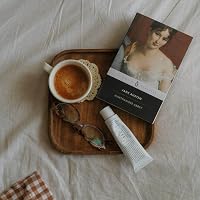
i love sylvia plath and loved some of these stories. every story on this list gets 5 stars, but the others i did not enjoy as much bring down the overall rating of the book.
standouts/personal faves:
“the daughters of blossom street”
billy was clearly doing sketchy things in the hospital throughout the entire story, but when he dies, the female workers of the hospital remember him as a hero. this shows how death and tragedy can change one’s entire perspective, perhaps as a coping mechanism.
“ocean 1212-w”
nostalgia and change described in the most accurate, somber way. “whereon those nine first years of my life sealed themselves off like a ship in a bottle - beautiful, inaccessible, obsolete, a fine, white flying myth”
“sunday at the mintons”
this story made me sickkkk. a perfect demonstration of the fear of domesticity and need for escape. it doesn’t even have to be marriage that locks someone up. it is devastating when the reader realizes that elizabeth’s inner desires of her brother dying and her flying to freedom are nothing but a daydream.
“cambridge notes”
she thinks exactly like me. “knowing i could not be big, refusing to be small” and “why is it that the man must so often take the lead? women can do so much” and “frozen inertia is my worst enemy; i get positively sick with doubt” and “if i sit and don’t do anything, the world goes on beating like a slack drum, without meaning” and more.
“the green rock”
this story reminds me of “ocean 1212-w,” as it deals with childhood nostalgia. a pair of siblings returns to the beach town where they grew up, only to find that it is not as magical or exciting as they remember it. it is inevitable that childhood happiness is lost as one grows up. “there was an emptiness that rose to meet them and a queer silence above the lapping of the waves. it was like entering a familiar room after a long absence and finding it vacant, desolate”.
“among the bumblebees”
as many of these stories are, this one is autobiographical. i love the way plath writes about grief. this story in particular deals with the loss of her father at a young age, before she was able to understand death or what was going on, which makes it even more devastating to read. “that was the last time that alice denway saw her father. she did not know then that in all the rest of her life there would be no one to walk with her, like him, proud and arrogant among the bumblebees”.
“tongues of stone”
possibly my favourite story in this collection. it seems to connect to the bell jar, written about plath’s time spent in a mental health facility. there are too many quotes that i loved in this story for me to type here, but she truly captures the feeling of hopelessness that nothing will ever get better and lying to others (“words that could begin a world: ‘i feel different. i feel quite different.’”) so they will think you are getting better. “she had long ago lost track of all the days and it really didn’t matter because one was like another and there were no nights to separate them because she never slept anymore. there was nothing to her now but the body, a dull puppet of skin and bone that had to be washed and fed day after day after day” and “hating the small insect because it seemed to have a creative place in the sun while she had none, but lay there like a parasitic gall on the face of the earth. she hated the sun too because it was treacherous. yet it was only the sun that talked to her still, for all the people had tongues of stone”.
“stone boy with dolphin”
the first chapter to plath’s unfinished novel “falcon yard”. i remember reading that she wanted her second novel to be a sort of sequel to “the bell jar” where, after the struggle comes the sunshine. this chapter captures that in an older coming of age way. “life is a tree with many limbs. choosing this limb, i crawl out for my bunch of apples. i gather unto me my winesaps, my coxes, my bramleys, my jonathans. such as i choose. or do i choose?” is a perfect sister quote to plath’s famous fig tree quote in the bell jar. esther greenwood worries that if she does not pick her branch (path in life) soon, the fruits will all fall and shrivel at her feet. dody ventura collects her fruit and wonders if she ever really had a choice in the first place. this novel died with plath and there is something haunting about that. she never healed and neither did this autobiographical protagonist. “i can take care of myself because when i give, i never really give at all. always some shrewd miser dody sits back, hugging the last, the most valuable crown jewel. always safe, nun-tending her statue. her winged stone statue with nobody’s face” and “black sky spaces spoke of the hugeness, the indifference of the universe. greaning pricks of stars told her how little they cared” and “how we pass and repass ourselves, never fusing, never solidifying into the perfect stances of our dreams” and “must shoulder the bundle, the burden of my dead selves until i, again, live” are just a few of my favourite quotes.
“above the oxbow”
i liked this, but not as much as the others on my favourites list. discusses how perspective plays a role in who is the “hero” and the “villain” in certain scenarios.
“the shadow”
i love when a story ends with the most haunting line: “‘i don’t think there is any god, then.’ i said dully, with no feeling of blasphemy. ‘not if such things can happen’”. this story deals with how prejudice affects small-minded people (which can actually be the majority of people), and “however such a breakdown of cause and effect may illuminate a sequence of events, it doesn’t alter the events”. told through a child’s eyes, it makes prejudice seem even more silly, as the child fails to understand why other people hate her just because her father is german. everyone around her uses this as an excuse to place blame on her for “bad behaviour”.
“sweetie pie and the gutter men”
it is clear that plath dealt with both the fear of domesticity and the desire to be loved/do what society expected of her (i get you, sylvia). in this story, a childless woman visits an old friend who is married with two children. the older child wreaks havoc while the husband is at work as an obstetrician and the wife stays home, tending to household duties. the protagonist thinks of the anaesthesia used during childbirth: “although erased from the mind’s surface, the pain was there, somewhere… deceived by the waters of lethe into coming back again, in all innocence, to conceive child after child! it was barbarous. it was a fraud dreamed up by men to continue the human race; reason enough for a woman to refuse childbearing altogether”. she also says, “‘you must be kept pretty much occupied just being a mother.’ she hadn’t meant to say ‘just’, which sounded disparaging, but there it was”. this shows plath’s desire to escape the patriarchy and continue to work, even after having children, at a time when women were expected to be “just” homemakers. i also love how plath titles her stories from just one line or concept in the story. “sweetie pie” is the eldest child’s doll who represents happiness in domesticity, although she is described to be a menace, just as the eldest child is herself. “the gutter men” that sweetie pie “knocks down” represent the dark side of this domestic life.
i love reading sylvia plath. it always gives me so much to think about.