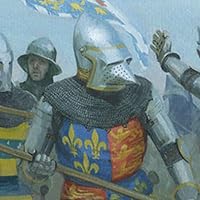
The essential introduction to the Middle Ages by the author of The Time Traveller's Guide series—“the most remarkable medieval historian of our time” (The Times, UK).
We tend to think of the Middle Ages as a dark, backward and unchanging time characterized by violence, ignorance and superstition. By contrast we believe progress arose from science and technological innovation, and that inventions of recent centuries created the modern world. But as Ian Mortimer shows in this fascinating book, we couldn’t be more wrong.
In this revelatory history, Mortimer shows how people's horizons—their knowledge, experience and understanding of the world—were utterly transformed between 1000 and 1600, marking the transition from a warrior-led society to that of Shakespeare.
Medieval Horizons sheds light on the enormous cultural changes that took place—from literacy to living standards, inequality and even the developing sense of self. Mortimer demonstrates why this was a revolutionary age of fundamental importance in the development of the Western world.
Dr Ian Mortimer is a historian and novelist, best known for his Time Traveller's Guides series. He has BA, MA, PhD and DLitt degrees from the University of Exeter and UCL. He is a Fellow of the Royal Historical Society and a Fellow of the Society of Antiquaries, and was awarded the Alexander Prize by the Royal Historical Society in 2004. Home is the small Dartmoor town of Moretonhampstead, which he occasioanlly introduces in his books. His most recet book, 'Medieval Horizons' looks at how life changed between the eleventh and sixteenth centuries.
He also writes in other genres: his fourth novel 'The Outcasts of Time' won the 2018 Winston Graham Prize for historical fiction. His earlier trilogy of novels set in the 1560s were published under his middle names, James Forrester. In 2017 he wrote 'Why Running Matters' - a memoir of running in the year he turned fifty.
At present he is concentrating on writing history books that have experimental perspectives on the past. One example is a study of England as it would have appeared to the people living in his house over the last thousand years. This is provisionally entitled 'The History of England through the Windows of an Ordinary House'. It is due for completion in December 2024 and publication in 2026.
As a medievalist, I have to admit I’m partial to a book seeking to re-assert medieval history’s supremacy, and this book, with its central metaphor of broadening horizons, does much to challenge the popular understanding of ‘medieval’.
Although Mortimer did outline his own rationale for defining the Middle Ages as 1000-1600, I felt some of the chapters, in particular the chapter on the English bible, stretched the limits of medieval a bit much for my tastes, as I would instinctively categorise that period as early modern.
Overall, an important book which challenged many misconceptions about the Middle Ages, written with Mortimer’s trademark warmth.
1.5⭐️ This was, unfortunately, not a gem. I have a huge interest in how we interact with the past and how it's perceived, which means this should have been the perfect book for me! However, I've also studied the Medieval and Early Modern periods in some depth, which means this book wasn't really aimed at me at all. I agree with Mortimer's premise; the intro and conclusion are pretty decent, but the rest of the book is awful. He makes some good points but they're often blown way out of proportion or not explored fully, not only diminishing Mortimer's overall argument but undermining it. The built in bias that the world is improving and the reader agrees with this (and all Mortimer's worldviews) is frustrating. The historical arguments Mortimer's trying to make do have some evidence to support them, but too often they're taken completely out of their context, minimizing any impact they could have had towards a cohesive argument. It's things like: comparing the number of soldiers participating at Agincourt (1346 during the Hundred Years War) vs. how many more could be brought to muster in 1461 during the Wars of the Roses. A major issue with this comparison is the logistics- Agincourt was in a foreign country. You had to get English soldiers across the Channel, fed, paid(?), and arriving at the field together. By comparison numbers during the Wars of the Roses could swell and ebb quickly because it was a civil war. Farmers could muster out one day and (hopefully) go home within the week. Forget the hundred year gap, Mortimer's numerical comparison relies on completely different situations in terms of commitment, availability, and logistics. Another example would be the chapter on literacy. His points about Tyndale are really interesting, but blown far out of proportion. Mortimer touches on issues that were likely impacted by Tyndale's work, but didn't develop exclusively because of it; for example, the increased rates of female authorship and literacy. Medieval women did read and publish before the 16th century (Christine de Pizan would be the foremost example here, though not the only). The growing number of female authors in the 16th century might also be attributable to the growing number of authors period- a glover's son wasn't your typical writer in the early Middle Ages either and yet by the 16th century we have Shakespeare. However, Mortimer doesn't correlate women's literacy even in passing to the fact England was being ruled by queens in their own right for the first time. I'm not totally sure but I think Mary and Elizabeth Tudor might have been visible examples of the heights an educated well-born woman could rise at that time (not to mention the international plethora of powerful women including the Medici queens of France, Mary Queen of Scots, Marguerite of Savoy, Katherine Parr who wrote the first published English book by a woman...). I also have to add how insane I found the conclusion of this chapter which suggests Henry VIII's break with the church is part of the impact of translating the Bible to English. Might Henry VIII owe something to Tyndale? Yes, possibly, that's something you could develop in a well researched argument. But to not mention Henry's first language was French, he was originally headed for a career in the church, had published religious commentary before, and England had a strong precedent for fighting with Popes already (please see Henry II and Thomas Beckett), seems like a pretty big oversight in your argument. The final chapter on individualism I found grossly offensive as well as overreaching and inaccurate. The value judgements implied about communal living, individualism stemming from vanity, individualism being represented by what people acquire rather than who they are and what they can do, and that the lives of people in the early medieval period were virtually devoid of decoration or ornament; are some of my major criticisms. Finally, my biggest issue with this book is the methodology. First, it relies on the reader being unfamiliar with the period to push a mediocre analysis off as insightful, and it strikes me as pretty sad if you're relying on your audience's ignorance to flog an idea this interesting. Second, Mortimer's choice of events reaches beyond what his scope needed to be. In the introduction Mortimer breaks down what the Middle Ages encompasses for him, which includes part of what is typically ascribed to the Early Modern period. That's totally fine! Periodization is a tool and it's great that Mortimer laid out clear expectations of what years he'd be examining. The problem is that he consistently relies on highlighting the breadth of difference between the 12th century and the 16th to make his points. If you have to rely on the 16th century to explain why the Middle Ages matter pack it in. We used to have a name distinguishing the changes that happened around this time because they were so clearly a departure from Europe's medieval culture. Before it was re-envisioned as part of the Early Modern period it was called the ✨Renaissance✨. This book might as well have been called: 'Why the Renaissance Matters (in England)'. It would have been a more honest title for what this book is actually about and might have excused some of the more hand-wavy history throughout.
How can anyone today associate ‘medieval’ with ‘backward’ or ‘innocent’? So asks this author in his final section of this vastly interesting book. The blurb on the the cover expands on this: ‘We tend to think of the Middle Ages as a dark, backward and unchanging time characterised by violence, ignorance and superstition. By contrast, we believe progress is the consequence of science and technological innovation, and that the inventions of recent centuries created the modern world. We can’t be more wrong.’ In this book, he sets out to disprove a few other well known authors such as A. C. Grayling and Yuval Noah Harari, who dare to suggest that the five hundred years of the Medieval Age were all too similar from its start to its end, compared to the following five hundred years. He seems particularly incensed by Harari’s suggestion that someone from 1000 AD would find the world of 1492 AD quite familiar (due to little change and advancements in life) yet someone from 1492 AD ‘would find himself in a world strange beyond comprehension’ if aroused by the ringtone of an iPhone. A lot of what follows was genuinely interesting and engrossing yet I couldn’t help reflecting that the author doth protest too much, methinks. The iPhone certainly was mentioned a few times in, what seemed to me to be, a barbed rebuttal of Harari’s statement, and this spoiled an otherwise absorbing read. As to the central premise of the book, I wasn’t totally swayed by the arguments for it. Yes, I do appreciate life had changed vastly in the five hundred years covered and many discoveries were made that enabled our current lifestyle to be as it is e.g. English is more recognisable to us now as at the end of this period than at the start, the printing press certainly revolutionised intellectual thinking, and the foundations of a caring society were definitely laid, but I kept coming back to the author’s supposition that the mirror was one of the major forces for change in the Medieval Age: ‘With regard to people’s self awareness, the importance of the mirror cannot be overstated’. And this I found to be spurious at best. I was not convinced by his arguments and it was this that caused my rating to be four stars and not five. In general, his idea that the period is underappreciated for the advances made holds true but without the author trying to disprove others’ views of the Medieval Age all the time, this would have been a much better book.
A nice perspective of looking at the past in relation to inventions being slow: where the shadow meant the time. I liked the adventurous aspect, my favourite being the sailors scurvy and beards. He really likes mirrors in this book. Im afraid I gave up reading some of the old English as it had loads of g's.
Mortimer is a good narrator of his book on Medieval England, and I really enjoyed his historical approach of examining how different events broadened the views of people from that time. Since there are famously few documents from that period, Mortimer examines the behaviors of people as different events occurred. It really is a great way to view history. Fascinating!
Mortimer makes the case that, far from being a stagnant period of no changes or developments, the Middle Ages was a revolutionary time that laid the foundations for the modern world. Through a series of contrasting "horizons" focusing on war, inequality, literacy, comfort etc., he compares Europe in 1100 to 1600 to trace how dramatically things changed on each measure in this crucial 500 years.
Mortimer's book is another addition to attempts by modern historians to debunk the Englightenment view of the Middle Ages as a benighted "dark age". This view, cemented in popular history during the nineteenth century, persists in popular culture to this day. Perhaps, slowly, books like this one and others by James Hannam, Seb Falk, David Perry and Matt Gabriele will begin to dilute this outdated idea and open up more people to this fascinating and crucial period of European history. Though I suspect this will be a long, long process.
Interesting read, but rather too much special pleading to make the author's case convincingly. Also falls into the same trap of broad brush generalisation that he accuses others of - e.g. serfdom wasn't the same everywhere, or all the time, and his view of early medieval Europe (i.e. pre 11thC) is precisely the kind of dismissive hand-wave he rails against when used for later periods.
Five stars easily earned. I took my time with this book because I wanted to appreciate the message. Never again will I look at the 'Middle Ages' as some stagnant, backward age, void of intellectual curiosity. Five stars.
This book cements Ian Mortimer as one of my very favourite historians. His enthusiasm for Medieval history is infectious, and his passion for detail is astonishing. I have a new found appreciation of the advances made from 1000 - 1600 in England but suspect that the entire inspiration for this book was utter indignance at Yuval Noah Harari's outlandish suggestion in Sapians that someone from the year 1000AD would be more impressed with the sound of a modern mobile ringtone than with any of the changes that occurred before the Reformation. Mortimer is quite hung up on this but presents a thoroughly engaging and iron-clad argument as to why Harari's postulatuon is absurd. Mortimer presents a revised context for how we view progress. Instead of using technological development as the measuring stick for progress, we should view social developments just as highly. It is this particular stance that made the book so interesting. I loved the discussion on how plague drove social change, how the translation of the bible into English drove independent thought, and how the reintroduction of mirrors transformed people's sense of identity. All in all, a fascinating and eye opening book.
This was such a great read. It’s a perfect diving in point for anyone interested in the medieval era, and separating fact from fiction when it comes to the preconceptions and ideas we have about the Middle Ages.
I found the structure to be particularly helpful when thinking about the different ways progress occurs - as Mortimer says, “horizons”. I loved that this history focussed just as much on the experience of the peasant, slave or serf as it did on the nobility, reflecting on how they each may have experienced different points in time, and the role different social classes played in shaping their societies.
Mortimer is adamant that we see the Middle Ages not through our modern, tech-focussed ideas of what society should be, instead seeking to understand attitudes, values, and “horizons” as they evolved throughout the era. This is really useful for those, like me, interested in understanding medieval literature and art, and the context it emerged from.
I listened to the audiobook, which I highly recommend, mostly because the way Mortimer says “me-diEE-val” is hilarious and once you notice it, you can’t not.
More thoughts can be found on my book Instagram @excali.books ✨
Frustrating book. I can't really disagree with its central premise, there in the very title, that the middle ages matter. I do disagree with almost every point of detail though. Much of the arguement relies on changes, for example, in period 1450-1600. But that's not defined as the medieval period, it's the early modern period. Mostly due to historians consciousness of those very changes!
I'd also disagree with a lot of the characterisation of the earlier period, the 1000s. Personal self awareness and decoration, love of beautiful objects, were all strong Saxon characteristics. Maybe not of every peasant, but the society as a whole.
Mortimer writes well and provides the reader with many interesting ways (both theoretical frameworks and types of evidence) to measure the technological, social, architectural, and cultural advances that took place between 1000 and 1500CE. I’m not exactly sure why the author eschews the use of the terms “Renaissance” and “Early Modern.”
This book has a clear aim: to prove the importance of social, political and economic developments during the Middle Ages, especially in light of the widespread ideas that "mediaeval" is a synonym for backwardness and that nothing really happened by way of "progress" for more than 500 years. This attitude has even crept into works by notable historians - Yuval Noah Harari has a particularly egregious example which is heavily referenced throughout the book - so there is a clear need for the author to redress the balance.
For me the book fundamentally succeeded in its aim, right from the outset. From the literal horizon of buildings growing in height to changes in the economy, warfare and even individual self-conception, the book offers a compelling case for looking beyond a purely technological view of historical change and appreciating how much the Middle Ages laid the groundwork for the subsequent technological developments which characterise the rise of industry and technology in the 400 years from 1600. What's more, it does this while remaining readable and accessible for a layman like me.
Unfortunately, being so convincing so early on also brings downsides. Having convinced me of the thesis in the first chapter, it began to feel later on that the book was overly labouring the point, even while it was making decent arguments. For example, the author continues to 'dunk on' the quote from Yuval Noah Harari mentioned above, to the extent where I actually found it a little tiresome to see it brought up over and over again.
The chapters also varied in how well they held my interest. This was particularly true for the middle chapters, where I felt the chapters on 'Comfort' and 'Speed' were overly bogged down in lists of what chattels people owned and averages of how many miles people could travel in a day, respectively.
As a result of both these points I was considering giving the book a 3* rating at one point. However, the final two chapters (on 'Literacy' and 'Individualism') and the conclusion salvaged this book for me. Gone were the dreary lists of chattels and the ad nauseam take-downs of Harari's throwaway line, replaced with a clear narrative on developments during the Middle Ages which prove (conclusively, in my opinion), that the Middle Ages really do matter.
For such a convincing and engaging book (mediaeval speed discussions notwithstanding) anything less than 4* would be unfair. Much better than I was expecting when I picked it up in a museum bookshop.
Ian Mortimer's Medieval Horizons: Why the Middle Ages Matter presents an engaging and well-structured journey through the Middle Ages, aiming to overturn the common perception of this era as the "Dark Ages." Mortimer effectively uses his narrative skills to argue that significant cultural and societal changes took place between 1000 and 1600, setting the stage for modernity. However, the book sometimes oversells its thesis by stating that the common belief is that nothing changed during this period. This point of contention might not hold as strongly as Mortimer suggests, considering the "Dark Ages" term more accurately applies to the period following the fall of Rome up to the 11th century, and that the Renaissance is commonly recognized as a time of considerable change.
Furthermore, while the book offers intriguing insights and narratives about the era, some sections, such as the one discussing the concept of speed, might not engage all readers and seem slightly out of place. The concluding chapter's exploration of the rise of individualism also raises questions, especially without comparing these developments in Western Europe to other regions that maintained their technological advancements and collectivist societal structures.
Despite these criticisms, Mortimer's work remains a valuable and accessible entry point into Medieval history, offering readers new perspectives on a period that is often misunderstood or overlooked. His narrative brings to light the complexity and dynamism of the Middle Ages, even if some of the broader claims may benefit from additional nuance and comparative analysis.
Ian Mortimer’s primary argument is to look at England in the years 1000 through 1599 as a lens to view each subsequent medieval century as well as our life today. He breaks down the monumental changes that happened in society during that chunk of time and compares and contrasts the earlier years to the later years of the Middle Ages to show how far we came as a civilization. He also pushes back against the idea that everyone was basically a dumb, violent bumpkin.
So much of what he discussed was mind blowing to me. I am admittedly still new to (but very much loving!!!) the finer intricacies of medieval history, so I really appreciated how the focus was more on society and life as a whole rather than a handful of individuals. He did a fantastic job at contextualizing the way people thought and acted for things that we view so differently today (such as gender equality or selling your children into slavery or even pillows). (Side note: Make sure you look at your pillow tonight and thank it for not being a log.)
The book was a little more serious and impassioned than his usual Time Traveler series but still had the trademark Ian Mortimer wit. I highly recommend the audiobook version, which he does a wonderful job narrating himself. He makes it feel as if you’ve sat down for coffee with him and asked him to talk about something he’s excited about.
If you are like me and new to the world of nonfiction books on history, this is a great place to start. It’s compelling, easy to understand, and pretty short. Ian Mortimer is a trustworthy researcher who looks at primary sources as much as possible which he references in the text itself. He also has a clear, honest love for this time in history that shines through.
Finally my favorite thing about this book was that it made me feel a lot better about the state of the world today. Upheaval and change, inflation and fighting… it really is just Fortune’s Wheel ever turning. At least this time we have antibiotics and pillows!
Overall, this provided some interesting insight into the Middle Ages. Note however that this is mostly written from an England/English point of view and does not discuss continental Europe in any meaningful way.
My main issue with this work is that he spent the first 3rd of the book complaining about other historians, some by name, and trying to prove them wrong. In doing so it came off as spiteful.
Once you get through that part he does give you some good information and thoughtful points to reconsider how important this time period truly was for the advancement of civilization.
This book is full of interesting facts and perspectives that really explain how medieval people thought differently about things and how changes between the 11th and 16th centuries led to the modern world and modern ideas that we completely take for granted and can't imagine being any different. It's a book to read more than once as it's impossible to take everything in on the first read. Highly recommend to anyone interested in history and how our modern society came about.
I'm not quite on the same page as the author regarding his views on the Middle Ages, particularly in how far forward he stretches the time line. However, I would say that he does add to the growing feeling that we treat medieval times as a cliche at our peril. It was a very easy read, and while I don't view the era as a "revolutionary" one in the manner of the author, I would go so far as to say he makes a better case for how "evolutionary" it is, and that the transition between the ancient in modern is a series of consecutive waves. Much to think about.
Very good read. Enjoyed its thematic structure and frequent slagging off of other prominent historians. Think the idea of a ‘horizon’ was a bit overdone though.
I really enjoyed this one. Iam Mortimer write in an engaging, almost conversational tone, and did a great job with his research. The book was engaging and easy to get into.
A must-read for those stepping into medieval history
As someone who (as of right now) has only read one medieval book prior to this one, I’m not an authoritative voice on the matter. However, Medieval Horizons illustrates a depiction of the period that helps provide scope for the development in Europe between 1000 and 1600. Ian Mortimer shows how the Middle Ages wasn’t just a period of stagnancy and ignorance but a gradually evolving era that influenced the modern era that came after. I believe I’ll keep this book in mind whenever I take another dive into the Middle Ages to see how well Mortimer’s perspective lines up with history.
Author decides that the Middle Ages are 1000-1600 and proceeds to argue for progress (“horizons”) in that period (eg look at Michelangelo!), but historians already recognize that modern history fades in around 1400. Argues that technological progress is not the most important factor (eg critices Harari and Graylings), while it certainly is, along with art I’d argue (medicine, physics, biology, science in general, engineering – including eg Roman bridges, built without calculus –, etc are “technology”, and please don’t say that gothic cathedrals are an horizon of progress, they are precisely a sign of backwardness, both aesthetically and technically – eg see competition for Florence duomo where they explicitly forbid the use of buttresses, considered as a barbaric practice).
Overall an enjoyable book (especially the chapters on speed and individualism) but part of an unconvincing medieval revisionism. I still consider the middle ages a reminder that progress is not linear nor for granted, and that on the contrary humanity can regress.
Das dunkle Mittelalter – the dark ages, wie es im Englischen häufig heißt – ist ein gern genutzter Topos, um eine Zeit zu umschreiben, in der es besonders derb, brutal und zünftig zuging. Eine Zeit, in der die Gesellschaft brutalisiert war, man eher noch den Barbaren glich, denn gesitteten, gar zivilisierten Menschen. Eine Zeit, über die wir angeblich kaum etwas wissen, da es nur wenige Zeugnisse gäbe, die uns Auskunft über den Zeitraum zwischen ca. 500 n. Chr. und dem Jahr 1500 geben könnten. Dass solch ein Topos eine Zeit umfasst, die ca. 1000 Jahre gedauert hat und nolens volens unterstellt, in diesen Zeiträumen hätte sich quasi nichts entwickelt, die Menschen seien auf ein und derselben Entwicklungsstufe stehengeblieben, sollte mittlerweile allerdings Allgemeinbildung sein.
Für all jene, die das vielleicht nicht glauben wollen und bereit sind, sich eines Besseren belehren zu lassen, und für jene, die das Thema tatsächlich interessiert, hat der britische Historiker, Publizist, BBC-Journalist und Autor Dr. Ian Mortimer ein sehr unterhaltsames weil gut lesbares, vor allem aber äußerst informatives Überblickswerk vorgelegt: ALS LICHT DAS DUNKEL DURCHDRANG (THE MEDIEVAL HORIZONS, Original erschienen 2023; Dt.2024), so der etwas sperrige deutsche Titel.
Mortimer greift einen von dem israelischen Historiker Yuval Noah Harari geprägten Satz aus dessen mittlerweile zu einem Bestseller und Standardwerk avancierten Buch EINE KURZE GESCHICHTE DER MENSCHHEIT (2011/2013) auf, der besagt, dass, wäre ein spansicher Bauer im Jahr 1000 eingeschlafen und im Jahr 1600 erwacht, dieser eine kaum veränderte Welt vorgefunden hätte; wäre hingegen ein Matrose des Jahres 1600 eingeschlafen und in unserer Zeit erwacht, so verstünde er die Welt aufgrund all der technischen Neuerungen nicht mehr. Mortimer stößt sich an diesem Satz, er verhakt sich geradezu darin und so wird er nicht nur zum Ausgangspunkt seiner Untersuchung, sondern – gelegentlich etwas penetrant – er kommt immer wieder darauf zurück. Denn Mortimer ist der Meinung – und belegt dies auf den folgenden knapp 300 Seiten eindrucksvoll – dass sich in diesen 600 Jahren zwischen dem Jahr 1000 und dem Jahr 1600 enorm viel ereignet und entwickelt habe. Und keineswegs sind damit nur technische Neuerungen gemeint, im Gegenteil. Diese hat es gegeben und sie waren prägend, doch gebar dieser von ihm im Einführungskapitel sehr genau umfasste und definierte Zeitraum sehr viel mehr, als die eine oder andere technische Erfindung. Im Grunde, so legt Mortimer es nah, wurden in diesen Jahrhunderten die Grundlagen geschaffen, auf denen die Neuzeit und später die frühe Moderne fußten und ihren Siegeszug beginnen konnten.
Mortimer spricht – und darauf nimmt der Originaltitel seines Buchs Bezug – von Horizonten, die sich in diesem Zeitraum von gut 600 Jahren erweiterten. Grundsätzlich ist das erst einmal wortwörtlich zu verstehen. Denn der Mensch des Jahres 1000 hatte einen Bewegungsradius von wenigen Meilen. Das hatte sich bereits 500 Jahre später deutlich verändert, Menschen reisten mehr; dadurch, dass es bspw. feste Marktplätze gab und feste Markttage, waren auch Bauern und Händler gezwungen, weitere Wege zurückzulegen als ihre Vorfahren. Meilen übrigens deshalb, weil Mortimer sich stark auf England und die dortigen Entwicklungen bezieht, allerdings auch immer wieder mal auf den Kontinent schweift und Vergleiche anstellt. Die Entwicklungen in diesen Jahrhunderten, die Geschwindigkeiten, mit denen sich Dinge, Bedingungen, Bewusstseinszustände änderten, waren indes sehr unterschiedlich.
Der Begriff „Horizonte“ bezieht sich hier aber nicht nur auf die tatsächlichen Horizonte, die die Menschen in ihren Bewegungsräumen erblickten, sondern Mortimer nutzt den Begriff vor allem metaphorisch. Aufgeteilt in sieben Kapitel untersucht er den Krieg, die Ungleichheit, den Komfort, die Geschwindigkeit, Bildung und schließlich den Individualismus und die jeweiligen Entwicklungen in diesen Feldern. Und gibt neben etlichen erwähnten, erklärten und immer ausgesprochen interessanten Details – die Wiederentdeckung des Spiegels und sein Einfluss auf die Selbstwahrnehmung; die Einführung kategorischer Zeiteinheiten; technische Neuerungen wie der Langbogen (dies eines der bekannteren Details unter den angeführten Beispielen) und ihr Einfluss bspw. auf die Kriegführung; Entwicklungen am Bau und deren Auswirkung auf die Art des Lebens, aber auch darauf, wie sich Herrschafts- und Machtverhalten dadurch änderten etc. – tiefere Einblicke, welch entscheidenden Wandel das Mittelalter mit sich brachte. Immer wieder verweist Mortimer darauf, dass Hararis Bauer des Jahres 1000 enorme Schwierigkeiten gehabt hätte, wenn er nur 200, 300 oder 600 Jahre später aufgewacht wäre und sich in einer dann schon massiv veränderten Welt hätte zurechtfinden müssen.
Es ist Mortimers Schwerpunkt, der sein Buch so interessant macht. Denn es stimmt, was er zu Beginn, in der Einführung und vor allem auch im ersten der sieben Kapitel, in welchem er sein Konzept der Horizonte erklärt, anführt: Zumeist konzentrieren sich Historiker und deren Beschreibungen des Mittelalters auf die technischen Errungenschaften und dabei vor allem auf jene, die sich auf die Kriegführung, bzw. Wehrhaftigkeit (Burgen und Schlösser etc.) bezogen und auswirkten. Gerade der weiter oben bereits angesprochene Langbogen, der immer wieder als Erklärung dafür angeführt wird, weshalb und wie Henry V. die Schlacht von Azincourt am 25. Oktober 1415 trotz nummerischer Unterlegenheit seiner Truppen so überwältigend gewinnen und das Heer des französischen Königs und seiner Alliierten so verheerend schlagen konnte, ist das Paradebeispiel einer solchen Errungenschaft. Sicher waren die Änderungen in der Kriegführung wichtig und sicher spielten dabei auch die technischen Neuerungen eine wesentliche, gar entscheidende Rolle, doch andere, „weichere“ Entwicklungen und Errungenschaften waren möglicherweise noch viel wesentlicher dafür, dass sich im Laufe des 12. Und des 13. Jahrhunderts das Selbstverständnis vor allem der adligen Krieger grundlegend änderte. Je größer bspw. die Reiche wurden, die Könige regierten, desto weniger waren ihre Fähigkeiten auf dem Schlachtfeld gefragt, dafür gab es bald Spezialisten. Nicht mehr Heerführung war entscheidend für einen Herrscher, vielmehr war es sein Blick für sein Reich und die Bedürfnisse seiner Untertanen. Und dazu trug auch eine neue, sich verändernden Staatsphilosophie wie die des Thomas Hobbes bei, der mit seinem LEVIATHAN (1651) nicht nur über den Souverän und das Wesen seiner Macht, über die Souveränität als solche nachdachte, sondern auch einen Gesellschaftsvertrag entwarf, der diesen Souverän in Pflichten einband.
Für Mortimer sind genau solche Entwicklungen und die daraus hervorgegangenen Änderungen – eher Fragen der Geisteshaltung, politische wie philosophische Erweiterungen des Bewusstseins, gesellschaftliche Veränderungen wie bspw. das zunehmende Spezialistentum – die entscheidenden Ansätze, das Mittelalter wahrzunehmen, es zu analysieren, es zu untersuchen und letztlich zu verstehen. So ist die Einführung des Buchdrucks, mehr noch die darauf fußende Einführung der Bibel in der Übersetzung von William Tyndale für Mortimer eine, wenn nicht sogar die entscheidende und weitreichendste Neuerung des Mittelalters. Denn ähnlich wie Luthers Bibelübersetzung im deutschen Sprachraum, war Tyndales Übersetzung maßgeblich nicht nur für ein zunehmend einheitliches Englisch, sondern auch dafür, dass mehr und mehr Menschen Lesen lernten, dadurch ein vollkommen anderes Verhältnis zu Gott und damit zum Glauben fanden und dies massiv die späteren Entwicklungen in der anglikanischen Kirche hin zum in England herrschenden Protestantismus und dem später daraus hervorgegangenen Puritanismus förderte.
Es sind eben genau solche Spuren, denen Mortimer nachspürt und die er ausgesprochen gut erklärt, die die Lektüre seines Buchs so spannend machen. Doch kommt zu der Fülle der Details und dem spannenden Ansatz auch Mortimers Fähigkeit zu schreiben, zu erzählen hinzu. Denn man kann das nicht nur gut lesen, nein, es ist tatsächlich spannend. Man folgt den Überlegungen des Autors gern, er nimmt seine Leser*innen mit, er versteht es, immer wieder neue – um in seinem Duktus zu bleiben – Horizonte zu eröffnen, so dass auch Leser*innen, die sich bereits in der Materie ein wenig auskennen überrascht werden dürften.
ALS LICHT DAS DUNKEL DURCHDRANG ist eines jener seltenen historischen Bücher, denen es gelingt, nicht nur Wissen zu vermitteln, sondern die Vermittlung selbst schon zu einem Vergnügen zu machen. Ein unbedingt empfehlenswertes Werk, das Grundlagen schafft und seinen Leser*innen doch auch immer wieder weiterführende, nein, erweiternde Erkenntnisse bietet. Und das man getrost als Aufforderung verstehen kann, selbst tiefer in die Materie einzutauchen und sich immer wieder mit dem Mittelalter – oder sollte man gar sagen: Den Mittelaltern? – zu beschäftigen.
Das ist es, was Ian Mortimer seinen Lesern mit diesem Buch bietet. Nach dem Reiseführer in die Regency-Zeit wird hier jetzt ein Einblick in 1000 Jahre europäische (meist englische) Geschichte geboten, die uns als Leser einmal mehr klarmacht, dass Mittelalter nicht eine homogene Phase war. Die Lebensweise der Menschen des Frühmittelalters unterscheid sich zu denen des Spätmittelalter deutlich mehr als die zwischen den Bewohnern des Spätmittelalters zu uns heute. Mit vielen Beispielen aus unterschiedlichsten Lebensbereichen zeigt und erklärt uns Mortimer genau diese Unterschiede. Dabei schafft er es wieder mal, Geschichte so unterhaltsam und anschaulich darzustellen, dass sie keineswegs langweilig rüberkommt. Ich habe wieder einmal so viel Neues gelernt und so viele interessante Einblicke erhalten, dass ich mir sicher bin, dass das nicht mein letztes Buch dieses Autor gewesen ist.
Mein Fazit: das "dunkle" Mittelalter war keineswegs dunkel, sondern spannend und innovativ. Und Ian Mortimer ist es gelungen, diesen Fakt auf leicht zu lesende Art und Weise dem Leser nahe zu bringen. Unbedingt empfehlenswert!
Skewers the modern arrogance that we stand at the pinnacle of progress. Progress is measured in peoples' social experience of the world around them, not just technology, and here the middle ages appears (rightly) as a period of rapid change.
The five centuries from 1000-1500 saw more consequential change than the following centuries between 1500-2000. We can read Shakespeare because he's not as far removed from us as a late medieval peasant was from their turn-of-the-millennium ancestor. More changed and more foundations for future change happened in the medieval period than anything after.