¿Alguna vez te has preguntado por qué te atraen determinadas personas, ideas o cosas y otras te repugnan? ¿Buscas constantemente algo inalcanzable o te preguntas si llevas la vida que deberías llevar?
Los arquetipos son modelos universales de comportamiento que, una vez los hayas descubierto, te ayudarán a entenderte mejor y a comprender cuál es tu lugar en el mundo. En pocas palabras, conocer tus arquetipos puede cambiarte la vida.
No nacemos sabiendo quiénes somos o por qué somos como somos. Para adquirir ese conocimiento hace falta una búsqueda concienzuda. El primer destello de curiosidad sobre uno mismo da pie a una búsqueda ¿Quién soy? ¿Cómo puedo sentirme más realizado? ¿Qué propósito tiene mi vida?
No son preguntas habituales ni se responden encontrando el trabajo conveniente o la pareja adecuada. Son llamadas desde lo más profundo de tu ser para que descubras tu verdadero yo, ese que anhela que se lo acepte sin dudas ni temor. En tus arquetipos está la huella de ese yo.
Eres mucho más que tu personalidad, mucho más que tus costumbres, mucho más que tus logros. Eres un ser humano tremendamente complejo con historias, mitos, sueños... y ambiciones de proporciones cósmicas. No pierdas tiempo infravalorándote.
Sueña a lo grande, usa la energía de tu arquetipo para expresar el verdadero motivo por el que viniste al mundo. La vida nunca ha sido segura.
La vida es para vivirla plenamente hasta el final.
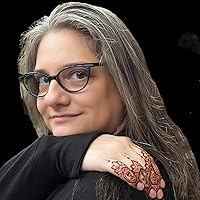
Caroline Myss was born on December 2, 1952 in Chicago, and grew up with her parents, and two brothers, one elder and one younger, in the Melrose Park, Illinois neighbourhood near Chicago. Caroline was raised a Catholic, and attended the Mother Guerin High School, River Grove, Illinois, run by the Sisters of Providence of Saint Mary-of-the-Woods. She completed her Bachelor of Arts degree in journalism from the Saint Mary-of-the-Woods College in Indiana in 1974, and started her career in journalism in Chicago.
In the course of her career, she interviewed Elisabeth Kübler-Ross, M.D., the author of the famous book, On Death and Dying, which inspired her to pursue a Master's degree in theology from Mundelein College, Chicago, which she completed in 1979. She also claims to hold a Ph.D in "intuition and energy medicine", but the degree was granted by Greenwich University, a now-defunct correspondence school that was never accredited to deliver higher education awards by any recognized government accreditation authority.
She started giving medical intuitive readings in 1982 and co-founded a small New Age publishing company, Stillpoint Publishing in Walpole, New Hampshire, where she also worked as an editor in 1983, next she began consulting with holistic doctors, which in 1984, led to her extensive collaboration with Dr. Norman Shealy, an M.D. schooled at Harvard, and the founder of the American Holistic Medical Association, with whom she later co-authored, "Aids: Passageway to Transformation," in 1987, followed by "The Creation of Health: The Emotional, Psychological, and Spiritual Responses that Promote Health and Healing," in 1988. Deriving from her practice as a medical intuitive, she started writing books, in the field of energy medicine, and healing, all of which became New York Times Best Sellers.[18] Starting with Anatomy of the Spirit: The Seven Stages of Power and Healing (1996), which overlapped seven Christian sacraments with seven Hindu chakras and the Kabbalah's Tree of Life to create a map of the human "energy anatomy"; this was followed by Why People Don't Heal and How They Can (1998), which explored the reasons people do not heal through her concept of "woundology." Her next book, Sacred Contracts: Awakening Your Divine Potential (2002) dealt with the issue of finding "Life Purpose," while describing Sacred Contracts as "a set of assignments that our soul had formed around before incarnation". She has since appeared on the The Oprah Winfrey Show numerous times.
By 2000, she discontinued doing private medical intuitive readings, and instead started teaching it, through her workshops, seminars, radio shows and guided tours. She tours internationally as a speaker on spirituality and mysticism, and lives in Oak Park, Illinois, near Chicago. In 2003, she started the Caroline Myss Educational Institute, with Wisdom University in San Francisco.
Her 2007 book, "Entering the Castle" draws upon the writings of Saint Teresa of Ávila, a 16th century Carmelite nun, who wrote her most important work, The Interior Castle, towards the end of her life.
Anyone looking for Archetypes to serve up a scoop of Jung or Greek mythos is going to be sorely disappointed. Anyone expecting deep thought about what makes people tick will be equally disappointed. Anyone looking for the kind of no-nonsense straight talk Myss dished out in Why People Don't Heal or Anatomy of Spirit is really going to be disappointed.
This book seems to exist primarily as a lead-in to yet another social networking site -- as if the world really needs another one of those -- based on an absurdly superficial "archetype test" that would make a serious psychology student's head explode. The idea is that you take the (very predictable) "test", then set up your very own personal page emblazoned with oh-so-cute graphics to tell the world that you are a mix of X, Y, and Z "archetypes." Then, of course, you "share" with your "friends" all your interests and life details. In other words, yet another opportunity for you to become some company's data-mining product so they can sell data to advertisers. We all know the routine.
I was pretty sure Myss had jumped the shark with Entering the Castle. With this book, she has completely sold out. Either that, or she's being held hostage by someone wanting to use her loyal audience to launch the Next Big Thing in Social Networking.
So, why two stars if I thought it such a flagrant marketing ploy? Because, in spite of all that fluffy stuff, Myss manages to include a few meaty bits about how, regardless of how we identify, we are all capable of self-sabotage, and the means of that self-sabotage is often very predictable based on how we identify. (She would say "according to our archetype," but it really is self-identification.)
Probably the most salient point to the book is that archetypes are not set in stone. As our culture changes, new types emerge and archaic ones fade away. There's been a lot of criticism for Myss calling "fashionista" a modern archetype. That's not something I really have a problem with. Myss has made a reasonable argument that the pattern of behavior associated with "fashionistas" is predictable and prevalent enough that I'm willing to go with it.
The book is a fast, light read. It's not particularly enlightening, but might be useful to someone who has never read Myss' earlier works or just wants a very fast overview of traits, strengths, weaknesses and shadow side of a handful of modern types.
The website, on the other hand, is completely lame.
I didn't care too much for this book. Prior to reading the book, I visited the website www.archetype.com to see what the test consisted of and what archetypes I possessed. Taking the archetype test was no more complicated than a Cosmopolitan quiz that tells you where you rank on the kinky scale. I thought that the test was obvious and poorly created. Also, I felt that the archetypes themselves didn't allow ENOUGH wiggle-room for other personality traits to exist within any specific archetype. I remember reading in the "artist/creative" chapter about how the artist is a person who walks into a room and envisions what the room should look like. The archetypes also focus a little too much on physical adornment. Not all artists will look like a work of art. Environmental and nature/nurture influences were not even mentioned. Please excuse these examples; my qualms with this book are difficult to put into words. There were a few introspective sections of the book that switched on some lights in my head, but I wasn't too impressed. At least, not as impressed as I am with Carl Jung's Briggs-Myers typologies. But I may be comparing apples to oranges. I'm no psychologist...
In "Archetypes" Myss provides some interesting broad categories of personality types. She aims her book toward women. The categories make sense and provide some insight concerning what motivates people. She also gives her thoughts on the pitfalls inherent in each orientation as well as what their strengths are.
There's nothing terrible or wrong thinking about the book but I think others have provided better information for instance enneagrams especially as outlined by Risso in Personality Types: Using the Enneagram for Self-Discovery give a clearer, more precise picture of personality drives and how they interact with others, what the healthy side of each drive is and the pitfalls. Myss's use of the term archetype feels wrong to me since, in my mind, an archetype denotes a much more esoteric spiritual meaning beyond and independent of a personality type. To sum up there's nothing harmful about "Archetypes" but there's also nothing tremendously insightful or helpful about it.
This review is based on an advanced readers copy supplied by the publisher. (Disclaimer given per FTC requirement.)
Eh. I don't want to choose my personality type from a list where "Fashonista" is an option. (Isn't 'Fashonista' the absence of personality - or at the very most a hobby?) Would rather have a more scientific basis. But it may be good for some people who are just starting the journey.
I was wondering why all recent reviews were 3- stars. Now I understand. The author is not stupid, but she's not that smart either. I wish this was written by someone with a bigger picture in mind. This was too shallow for my taste. Before writing about percentages and possibilities, the author should take a lession in probability theory lol. This was ridiculous.
Disclaimer: I received an eARC of this book from netgalley.com.
Carl Jung defines archetype as an ancient, or archaic image, which derives from the collected unconscious. Archetypes help us identify themes and learn ways to connect to the world around. I'm a tarot reader, and in tarot, archetypes are important. Which is why I was curious to read Archetypes by Caroline Myss. This book introduces the reader to archetypes "and how they affect every aspect of our life." Myss describes 10 core families of archetypes and asks the reader to figure out whether or not they self identify with any of these. Rather basic stuff, if you ask me.
The core audience for this book are women, as women are the ones who tend to delve deeply into these aspects. However, each archetype has a specific section catering to our male counterparts. I think this does the archetypes a dis-service because they are truly universal and know no gender typing.
I also found a few other things Myss says in this book disturbing. In her introduction, she describes a situation where a client was divorced and had cancer. She tries to say that perhaps the disease was not the thing killing her, but her disconnection from her archetype (or mythic influence). Later on, in the section on describing The Visionary archetype, she writes about how she cautions people from receiving personal readings from psychics. That they give "bogus information" and "drain your bank account." This is hypocritical coming from someone who is at the same time teaching women how to use their archetypes to get in touch with their intuitive side.
The biggest thing about Archetypes is that the book feels rushed and unfinished. It only introduces the 10 families of archetypes, giving small lists of how to recognize their power and integrate it into our lives. The book mentions being a guide for a business called archetype.me. I dug a bit deeper and found out that this website/company never fully off the ground and is defunct. It doesn't lessen the material in the book but it does make me wonder about the validity of the information. Is this book really useful or just a infomercial to hook women into buying scents or clothing?
Kitabı arka kapak yazısından etkilenip almıştım açıkçası beklediğim gibi çıkmadı. Yazar arketipleri güzel ele almış ancak bazı arketipler biraz sığdı, sanki biraz daha üzerine uğraşılmalıydı. Arketipler düzenliydi ve güzel anlatılmış özellikle önerilerde yazar çok güzel kısımlara değinmiş. Dili akıcıydı, yazarın örneklerle konuyu anlatması da kitabı sıkıcı olmaktan kurtarmış. Kolay okudum, sıkılmadım, özellikle hoşuma giden yerlerde basit bulduğum yerler de oldu. Eğer arketiplere ilginiz varsa okuyabileceğiniz bir kitap.
I was introduced to the concept of archetypes through writings of the man who made known both the term and a role for it in psychology, the renowned Swiss psychiatrist Carl G. Jung (1875-1961). He linked the term to primeval mythic-figure patterns that have been identified through ethnographic & historical research across widely diverse cultures. And, many years later, in a lending library I was drawn to Myss’s book by its title.
Jump to a personal memory: Once, in a class in high school, my class mates & I were given a career-aptitude test. It was essentially a questionnaire intended to identify the respondent’s preferences; hence the result led to a particular sort of personality profile or categorization. Caroline Myss has conceived of archetypes partly in terms of personality designation or typing; you may essentially be an Athlete, an Artist, an Explorer, a Visionary, etc. I find her approach to be possibly closer to the “types”, identified by literary & film critics, of certain sorts of characters in fiction. Predominately, she treats the ten main “archetypes” she presents as essences or self images, socially positive ones. She doesn’t offer substantial discussion of frowned-upon categories — one could imagine some, like Deflater, Thief, Femme Fatale, etc.
Jung found primeval archetypes in people's dreams. A one-time student and colleague of Sigmund Freud, Jung interpreted Freud’s “Oedipus Complex” and “Electra Complex” as being, in actuality, expressions of two archetypes discovered by Freud: sexually based archetypes that influence the behavior of some people to live on their terms. Jung felt that he himself had identified numerous other tenable ones.
Jung asserted that a person can be gripped by an archetype, and the results aren’t always positive. The god Wotan (as he was called by ancient Germanic tribes) Jung viewed as a force all its own, a “personification of psychic forces” that in the 20th century moved like a wave through the German people. By 1933, toward the end of the Weimar Republic, Jung perceived this archetype manifesting, for instance, in the marches of unemployed thousands of Germans. Wotan, Jung wrote, is the archetype “of storm and frenzy, the unleasher of passions and the lust of battle.” Here was an instance of a powerful archetype bound up, in a civilized nation, with fanaticism. Jung assessed the German psyche of the ’30s & ’40s to have been under the sway of this furious god. After the end of World War II, he questioned the bare notion that the Germans were responsible agents, since “perhaps it would be nearer the truth to regard them also as victims.” Victims of an archetype welling up, and grown strong once again, from their “collective unconscious”.
Usually, Jung identified archetypes through conversation and a client’s or patient’s dream reports. He didn’t believe, by any means, that all archetypes are detrimental to those affected by them. But, after many years of clinical psychiatric practice, research & contemplation, in his view an archetype was something different from either some chosen self-image or a bundle of personal preferences. An individual might be affected for a time by one archetype, and later by a very different one; so these might represent personal developmental stages.
I did find Myss’s book interesting, and would give it two-and-a-half stars. The book could be helpful to a person uncertain about her (or his) identity or preferences, in an ordinary sense, or wanting to revise a self-image. I consider her subject to be a sort of "archetype lite." She does offer some advice worthy of consideration. I believe the book of less usefulness for those interested in the sort of depth understanding that concerns Jungians and people along a similar line of self-exploration.
Nepýtal sa ma niekto na túto knihu nedávno? Archetypy: Zistite svoj typ a pochopte, kto ste. od Caroline Mess. Ono ten názov všetko vysvetľuje, škoda aj čítať. Autorka sa pohybuje v oblasti energetického liečiteľstva - jednotlivcom ohodnotí zdravie ich energetického anatomického systému (úprimný job, kde hovorí, čo si myslí, že prečo si ktorú chorobu zaslúžite :)). A ak neviete, aký archetyp ste, prečítajte si jednotlivé popisy. Ak prikyvujete často, tak ten typ ste! (Na testy z Brava asa to síce nechytá, ale snaha sa cení). Samozrejme, autorka myslí aj na nás, ktorí knihu síce prečítali, ale neprikyvovali, my si máme vraj urobiť test. Keďže linka z knihy nefunguje, takže namiesto www.archetypeMe.com skúste www.archetypes.com. Ja som podľa toho väčšinou poskladaná až z troch tretín (34%, 33% a 33%). Jeden test mi nikdy nestačí, spravila som si ich viackrát (že to potom spriemerujem) a vždy mi vyšla trochu zmenená kombinácia. Všetky moje archetypy, mimochodom, najviac som ich mala 6! (nie šesť faktoriál, ale len obyčajných šesť s výkričníkom), sa tešili, že sa dozvedia, skadiaľ čerpať energiu. Nedozvedeli. Lebo okrem týchto desiatich archetypov, ktoré ona spomína, sa môžu vytvoriť mrte nových (ešte krátko spomína 22 ďalších). Prečítané (rýchlym čítaním) a zhrnuté, pre mňa tento typ knihy nie je. Radšej si navarím lek(t)var marhuľový, malinový a jahodový. A ak sa rozšupnem, tak to bude aj džem a džemovanie, ako všetky moje archetypy vedia, dobíja energiou na 100%!
This was disappointing. It doesn’t provide the further depth I hoped for. She seems to just outline pop culture stereotypes, two dimensional outlines, entities not amenable to growth. It seems so superficial. Her approach seems a far cry from what Carl Jung intended!
Perhaps one needs to go back to source and read Carl Jung. I thought I’d opt for something lighter. But this was too light and inconsequential.
I am left wondering whether another author out there might explore these concepts better than Myss?
HIGHLIGHTS: 1. ADVOCATE: - to be an effective advocate, you must use discernment in deciding where your talents and limitations are a fit. - commitments change your life. They represent an investment of your time, energy, attention, and funds that by definition require you to re-order your priorities.
2. ARTIST / CREATIVE: - People invest enormous energy and explore their feelings but seldom put the same time and energy into exploring their potential talents. - The artist/creative has the potential to develop any talent to the next level, as long as you’re willing to invest the time and energy required.
3. ATHLETE: - Stay aligned with your natural center, pay attention when you are off-center, and do what you need to do to get back to your core power zone.
4. CAREGIVER: - Has the ability to sense the needs of other people. - A key aspect of this is learning discernment: who do care for, who do not care for, and how to care for others without sacrificing yourself? - Caregivers won’t allow themselves to slow down. - The caregiver archetype wasn’t born to care, it was born to care too much. - The caregiver needs to be reassured that if she takes off a day or two or even a week, the world will not fall apart and neither will the people. - You come to see that in caring for yourself you are not short-changing others but rather making sure you have the stamina to care for them. - A big part of embracing the power of the caregiver is understanding what empowers you to move forward in your life and what can hold you back.
5. FASHIONISTA: - archetypes hold the key to your fashion comfort zone because they are the engines of your imagination. - Empty shelves are not capable of honesty and self-reflection.
6. INTELLECTUAL: - you thrive on good conversation and sharing ideas with other lively minds. Communication is vital to you. - It takes courage to give your word and then keep your word, even to yourself. You have to identify your values and spiritual beliefs and make certain your daily choices are in alignment with them. It is precisely through these choices that you build self-esteem. - You can’t meditate or diet or exercise your way into this refined level of consciousness you must become a congruent person by consciously deciding to confront what is incongruent about you, and then choosing to bring that part of you into alignment. - To find the truth, don’t rely so much on logic, and learn to listen to your gut. - Wisdom calls you to think twice before doing harm to another person. It is that voice inside whispers, “are you sure you want to say that?”. Wisdom inspires you to consider the consequences of your choices. - wisdom is often hidden underneath our greatest hardships and is the intellectual who understands that the search for wisdom is the true path to healing. - A well-balanced intellectual relates to people through the heart as well as the mind. - All that’s required of you is to say yes to the opportunity are being offered. - If you are an intellectual you are your own best teacher, the one who holds the key to higher learning and the vast riches of the human mind. - Stalk the wisdom seekers. - Read aloud do. - Do something shocking. - Intuition is the voice of wisdom. Keep quiet and listen. - Opinions aren’t the truth but simply emotional offerings, statements of how you feel about things. - Knowledge comes from discerning thought. A true intellectual knows how to listen and learn from others.
7. QUEEN/ EXECUTIVE: - you were born to put your creative power out in the world, no matter how small your world. - It is your capacity to be a change agent in someone else’s life, to open doors for other people or help in ways they couldn’t help themselves. - You simply need to have reached a level of self-empowerment that enables you to recognize that empowering others is your finest achievement and not a threat to your own power. - At some point, the power you will be asked to trade is the power of your own character and values. You can sense the presence of a challenge to your integrity by a feeling of insecurity arising in your gut, accompanied by a downward shift in your behavior. - Queens are custom to taking up all the oxygen in the room. Your greatest power and authority come from doing all you can for those who rely on you. - Money and status are illusory. They could disappear in a flash. The real power comes with enlightened self-awareness. - You can be as much of a queen at home with your partner as you are in running a business. You bring your queen into whatever room or situation you enter.
8. REBEL: - people understood that noble rebels were taking on hardship so that the lives of many people could be better, not so that they themselves could become famous or wealthy. - Social/civil rebels are the guard dogs a society that any government should rightly fear. - Break away from concern with what others think about your life.
9. SPIRITUAL SEEKER: - A congruent person is dedicated to living in harmony with truth. A congruent person doesn’t say one thing and mean another or compromise her integrity by denying her feelings. - Congruence demands that how you feel and what you believe be aligned. Live in harmony with truth, it is a lifelong journey, a lifetime commitment. - You can only find lasting happiness when you have the courage to be honest with yourself about who you are, what you feel, what you believe, and how you want to live your life. - The consequences of your choices, no matter how minute or grand, eventually find their way into the details of your daily life. - A spiritual path focuses you inward, to discover your interior qualities and confront your inner obstacles. You turn to your spiritual self in order to come into alignment with your values, your beliefs, and your core truths. - The goal is the liberation of your spirit, of your capacity to love without fear and receive love, and to rise to your fullest creative potential. - One of the greatest sources of personal suffering is self-betrayal, feeling or thinking one way but acting another, with the full awareness that you’re going against yourself. - Humility is a protective shield: it speaks to you as a soft voice in the midst of the worst arguments. - The role of spiritual practice is not to give you the ability to transcend the natural order of life but rather to help you learn how to flow with it. - Every book on self-development you read, every seminar you attend, and every meditation practice awakens your inner resources. Your intuition in particular becomes highly active. - Intuition is a subtle faculty that picks up data from the energy fields around you converting it to a gut feeling. - Intuition is a built-in guidance system that is meant to keep you in Inner Balance. - Speaking truth to others is being truthful to yourself. - Spiritual commitment is empowering. With self-discovery comes the ability to realize your full potential. Find out how you gain power and how you can regain it if you lose it.
10. VISIONARY: - not fitting in becomes your best asset as an adult.
Addict: the shadow aspect of addiction is the struggle between willpower and lack of self-control.
Interesting to listen to the author about archetypes and how we can encompass more than one and how our archetypes attract certain other archetypes. Myss talks about generational archetypes. Overall the perspective of archetypes is from one person so if you want to play along you have to imagine for yourself what a fashionista or princess, prince, rebel, visionary, the advocate, the Queen, the intellectual, spiritual, the caregiver, the victim, the savior etc.
I will add the note that this is a white woman writing from a white perspective. It’s very clear in not only the examples but the judgements of how the archetypes control, or influence or oppress other archetypes. Mostly it’s her perspective that feels judgmental in this book but not as much in the last two books.
Obviously, that’s not the easiest question to answer, and one that hangs in the background for much of our lives. Although self-discovery is an infinite and ongoing process, many systems and approaches have been created to help us define and understand just who the heck we are. This book looks at how archetypes have contributed to that self-discovery quest: “The language of archetypes is the universal language of the human soul, psychically uniting us all through what the Swiss psychiatrist Carl Jung called the collective unconscious. Jung saw archetypes as the quintessential navigational tool of the psyche, providing a gateway between the conscious mind and the unconscious that could help us in becoming integrated human beings...Archetypal patterns filter into every aspect of your life, so it’s important to discover how they express themselves in your everyday decisions and routines…They influence the quality of your relationships, and who you are attracted to and why. And they influence recurring issues: arguments you seem to have over and over, difficulties at work that keep cropping up, and other patterns that repeat themselves. Anything that repeats is a clue to what archetypes are operating in your life.” (pp. 4, 10)
In a nutshell, learning about the archetypes that you most closely identify with can be so helpful for becoming who you (really) are, navigating your life challenges, harnessing your key strengths, and accommodating for your unique vulnerabilities.
Curious about your archetype(s)? Here’s a sampling of the behavior patterns and characteristics of the ten archetypes featured in this book:
The Advocate: • You are naturally drawn to social, political, or environmental concerns. • You feel a need to make a difference in the world. • You are committed to doing something worthwhile with your life. • You are dedicated to fixing what isn’t working in society. • You are moved to take action when you see or hear about the mistreatment of people or animals in the environment. [p. 40]
The Artist/Creative: • You see beauty everywhere. • You come alive in front of an audience. • You listen to music and your heart soars. • You dream of seeing your name on the bestseller list. • You’re ready to make art, not read about it or talk about it. [p.60]
The Athlete: • You exercise regularly; staying fit is a vital part of your lifestyle. • You take great care of your body. • You listen to your body and respond to physical signals like pain. • You hold nutrition sacred and make sure you eat right. • You get your kicks from physically challenging activities. [p.79]
The Caregiver: • You are naturally compassionate and concerned with the well-being of others, and you feel compelled to act on those feelings. • Your greatest strength is nurturing others. You can’t say no to a request for help. • You are the one friends and family turn to for emotional support. • You often give more than you receive. • You often sense what others need even before they ask. [p. 97]
The Fashionista: • You have a knack for looking fabulous, no matter what you put on. • You wear your clothing, it doesn’t wear you. • You see fashion as a means to develop authentic self-esteem. • You are a savvy shopper and love to try new styles. • You invest in pieces that speak to who you are, not who others think you should be. [p. 120]
The Intellectual: • You relate to your world through the life of the mind—ideas, concepts, and information gathered from myriad sources. • You learn for the sake of learning and the love of pure knowledge. • You make decision using a combination of reason, logic, and intuitive intelligence. • You are on a quest for truth, for a deep understanding of the secrets of the universe and the fundamental laws of how the world works. • You lead a carefully considered life. You look closely before you leap. [p. 141]
The Queen/Executive: • You take charge of situations for the sake of achieving maximum results. • You make things happen for other people. Empowering others is your finest achievement. • You are direct in dealing with others and let people know what you expect of them. • You use your influence to make a difference in people’s lives. • You work hard to uphold your character and values. [p. 159]
The Rebel: • You define your character by your right to challenge injustice. • You speak out against discrimination and oppression. • You resist taking orders and follow your own counsel. • You are unconventional and independent, a free and creative thinker. • You are unconventional and independent, a free and creative thinker. [p. 182]
The Spiritual Seeker: • You feel unsatisfied and are seeking more from your life. • You are looking for a new life direction. • You are searching for insight into who you really are. • You are intent on finding the meaning and purpose of your life. • You are curious about other dimensions beyond the material plane. [p. 203]
The Visionary: • You’re continually coming up with new ideas and thinking "What if...?" • You’re an agent of change. • You approach life in unconventional ways. • You see a problem and right away, you’re thinking up solutions. • You look to the future and see what could be rather than dwelling on what happened in the past. [p. 229]
If you’re up for learning more about who you are—and who you’re not—you’ll likely find this book to be a fun and fascinating read.
Caroline Myss introduces us to the idea of archetypal behaviour in our society. Caroline is a fantastic speaker so I was expecting more from this book. Overall a good introduction.
Although some of the cultural examples given in this book are more dated, the essence of understanding and identifying common (female) archetypes can be a useful tool for understanding ourselves. Sometimes, we see ourselves through such a narrow lens that it can be helpful to step back and place yourself into the context of others. This is essentially what understanding ourselves through architypes can do. This book includes ten common archetypes: the advocate, the artist, the athlete comma the caregiver, the fashionista, the intellectual, the queen, the rebel, the spiritual seeker, and the visionary. Although most of us can probably find something of ourselves in each architype, through closer examination of each and a series of traits and questions, we can begin to understand the themes and deeper aspects of how are archetypal selves play out through our lives. This process of identifying our architects can be reaffirming.
This book is formed on a somewhat incorrect premise. There are personality types, which is what the Meyers-Briggs Test or the Enneagram measure, and there are archetypes, which represent an idea, or blueprint for what we wish to be. We do not fit into archetypes, rather, we choose archetypes. Other people can perceive you as an entirely different archetype than what you would choose for yourself. Actors are often cast in terms of archetype.
In addition, some of the archetypes in this book seem redundant (i.e. the Artist and Fashionista, the Advocate, Rebel, and Visionary). For more insight into personality, I recommend The Wisdom of The Enneagram by Don Richard Riso.
I'm a fan girl of Caroline Myss and make no effort to hide that fact. Anything and everything she says, I'm paying attention. She is my go-to resource for all things archetypes and all things chakra-related. The Audible version is a live presentation in which she discusses her book of the same name, so I have not yet read this book. My comments relate only to the presentation I heard.
The one thing I will say is depending on which presentation you hear, you might think Ms. Myss is angry and/or yelling at you. I don't believe she is :) and please don't let that distract you from the goldmine of information she shares.
I listened to a lecture on this and dove into the archetypes.
I resonated mostly with the following 12: Mother, Storyteller, Guide, Student, Networker, Princess, Detective, Victim, Goddess, Wounded Healer, Heroine, and Lover.
I appreciated the instruction to look at life and archetypes impersonally to gain a better view.
Repetitive, nothing new... I felt a slight twinge of feminism in the writing, and it was all kind of the same for every archetype. There were only a couple that I actually thought were appealing, so obviously, I didn't read all of them. The whole thing feels like it was written in about 2 seconds, mostly copied and pasted, and you would expect better quality for a hardcover book that's popular in current non-fiction. All the information in the book I could have found online for free.
I was looking for a book to understand a word that I was listening a lot during my awakening courses, Archetype. This book brought everything I need to know.
Archetypes are the language of intuition. We connect with them whether we realize it or not. Archetypes are the power images we identify with his children. The athlete or the artist or the actor or the Princess or even, sad to say, the victim or the vampire represents a complex of stories and myths that we somehow imagine happening in our own life. We are drawn to movies, books, and video games with characters that represent our power images. Little girls dress up as princesses and wonder woman, little boys as Batman and warriors. Archetypal identification begins early. These patterns continue in our lives. Whether we are conscious of them or not.
You identify your archetypes in your stories, your patterns, your fears, your talents — all the things that are constant in your nature. We are naturally intuitive. We gather so much information in first impressions. We pick up on body language. Facial expressions. Tone of voice. The wounded healer’s journey is an important initiation that many of you may recognize. The journey of the wounded healer begins with a “wound.” The wound could take the form of a serious accident, an illness, or life circumstances that cause the person to lose most of her earthly possessions, leaving her the choice to collapse under the strain or “take up her bed and walk.” The wounded healer’s wound brings the person to a do or die choice, offering the person the opportunity to completely transform her relation to power. Most of us at some point will encounter this situation. At some point we’ll encounter this situation. Losing the power outside ourselves. That power might be money. Fame. Security. Fame. Status. The wound destroys the illusion we’d lived in. The choice for the wounded healer is to shed all of her beliefs about power and earthly security and discover an alternate healing paradigm. She comes to understand that her wound can only be healed in full partnership with her spirit. In coming through the ordeal healed, the wounded healer is empowered to assist others in healing their wounds.
Most rescuers start out rescuing people in return for love, but if at some point, as often happens, your efforts are rejected, then you will finally rescue yourself from your own agenda and go on to help others freely.
My results were: 60% creative 40% intellectual 10% explorer
The author writes that her personal belief is that we are born with life assignments and those assignments are governed by our archetypal patterns. She calls these assignments “sacred contracts.” BOOK The archetypes contained in your sacred contract govern your relationship to your personal power to spiritual power, and are expressed through every aspect of your life.
The author explains that the laws of nature is ordered and ruled by cycles that interact with each other. Nothing exists without a purpose. And we humans are subject to the laws of nature just as everything else on earth is. Our lives were assigned meaning and purpose as part of the order of life itself.
You cannot change your primary archetypes but you can mature their influences. You can transform a wounded child into a magical child, but the roots of your wounded child will always be with you. That is, the wounds of our childhood never leave us, but we can heal their influence upon us. As we mature in life, we have the option of expanding our reach of understanding to include the suffering of other people, including that of our parents. In this way, you are opening yourself to other aspects of the child archetype beyond the wounded child.
The visual artist comes from the longest line of symbolic expression. Before there was written language, people relied on visual language, telling their stories through drawings and paintings, first on the walls of caves and later on parchment, canvas and other materials.
As a visual artist and writer I believe it is important to break the myth of the creative/artist as that of a drunk or addict. What I have found is alcohol and drugs do not add to my creative ability.
Always remember… You can pretend to be something other then you are but eventually you will run out of energy to continue because that’s not authentically you.
My favourite archetype book of hers is Awakening The Heroes With.
Bogen om arketyper fangede min interesse ved forfatterens indledning, hvor hun i en karriere-/livskrise beskriver hvorledes hun ryddede op i sit klædeskab og så forskellige tematikker bliver synlige i bunkerne af tøj på gulvet. Karrierekvinden, moderen, den visionære osv. Bogen handler om, hvordan man ved at kende sine sande arketyper kan leve et liv i større overensstemmelse med sig selv og opnå sine drømme (og, troede jeg, også visuelt og taktilt, lære hvorledes disse egenskaber kommer til udtryk i vores tøjvalg - det sidste viste sig dog at være ønsketænkning). Det lød interessant, og fik mig til at læse, fordi jeg som designer er interesseret i at lære om forskellige målgrupper og deres valg.
Det første kapitel handler om hvordan begrebet arketyper skal forstås, og hvordan vi er født med nogle ”kort på hånden” som vi skal bruge ”bedst muligt”. Det handler om, hvordan vi aflæser vores omgivelser, andre mennesker, og hvordan vi selv bliver aflæst. Men allerede efter få sider bliver det tydeligt, at bogen er en kliche, og at der mangler substans. Den behandler floskler, som var det videnskab, og det er en pinsel at læse.
Således gennemgås følgende arketyper: Forkæmperen, kunstneren/den kreative, atleten, omsorgsgiveren, den stilbevidste, den intellektuelle, dronningen/chefen, oprøreren, den spirituelt søgende og den visionære. Det er ikke fordi arketyperne ikke findes, for det gør de, og vi kender dem alle, men bogen vil gøre sig til ekspert på de 10 arketyper, med afkodning og gode råd, og det er pinagtigt.
Jeg læste om forkæmperen, og kunstneren, som jeg begge kan relatere til, og læste højt fra kapitlet om kunstneren for min mand, da han sad og malede. Både han og vores søn måbede, og brød ud i latter, over de storladne vendinger bogen benyttede til at beskrive banaliteter og common sense. Jeg læste videre om atleten for min søn, der netop er blevet tredobbelt landsmester indenfor sin sportsgren, og bogen gav så lidt, at min søn gik ud for at skide. Jeg læste om omsorgsgiveren, og kunne se hvordan min svigermor der er sygeplejerske, passer som fod i hose i den kategori, og da jeg kom til den stilbevidste, måtte jeg give fortabt. På side 139 står der: ”Det er tvivlsomt, om der findes modeskabere, som er bevidste om det, men når de laver skitserne til deres nye kollektion, skaber de ikke bare moderigtigt tøj; de giver også form til et psykisk energifelt af kraft og fantasi.” Som designer følte jeg mig virkelig ramt på dette tidspunkt. For nej, ingen designere kan da være bevidst om hvad de laver i deres professionelle virke… Og hun forsætter: ”En stilbevidst er klar til at købe dette stykke psykisk energi og kraft. Helt uden at indse det, er Den Stilbevidste og modeskaberen sammen om at uropføre et kraftritual, som mennesker overalt derpå genopfører.” Det er nedsættende, elendigt skrevet og ganske enkelt sort snak. Af ren fascination over at man kan skrive så dårligt, læste jeg derefter nogle sider om modens historie, og måtte stoppe. Jeg kan med ro i sindet give bogen en enkelt sløj stjerne og sige at jeg sjældent har læst noget så dårligt i hele mit liv. Selv bøger af Jim Lyngvild er bedre end denne bog, og det kan virkelig undre en, at nogen har fundet det interessant at oversætte denne bog til dansk.