

What do you think?

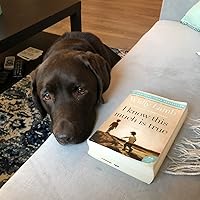
Encounter on the Seine: Essays
"James Baldwin was born for truth. It called upon him to tell it on the mountains, to preach it in Harlem, to sing it on the Left Bank in Paris. . . . He was a giant." — Maya Angelou
This collectible edition celebrates James Baldwin’s 100th-year anniversary, delving into his years in France and Switzerland
Originally published in Notes of a Native Son, the essays, "Encounter on the Black Meets Brown," "A Question of Identity," "Equal in Paris," and "Stranger in the Village" will appeal to readers interested in Baldwin's observations as a Black man overseas.
During his transformative time in Europe, Baldwin uncovers what it means to be American, immersing the reader in his life as a foreigner, his troubling encounter with a Parisian prison, and his unprecedented arrival to a tiny Swiss village.
This final collection in the Baldwin centennial anniversary series raises issues of identity, belonging, nationhood, and race within a global context. Encounter on the Essays showcases Baldwin’s strengths as a storyteller, revealing how his years in Paris transformed his understanding of American identity.
This collectible edition celebrates James Baldwin’s 100th-year anniversary, delving into his years in France and Switzerland
Originally published in Notes of a Native Son, the essays, "Encounter on the Black Meets Brown," "A Question of Identity," "Equal in Paris," and "Stranger in the Village" will appeal to readers interested in Baldwin's observations as a Black man overseas.
During his transformative time in Europe, Baldwin uncovers what it means to be American, immersing the reader in his life as a foreigner, his troubling encounter with a Parisian prison, and his unprecedented arrival to a tiny Swiss village.
This final collection in the Baldwin centennial anniversary series raises issues of identity, belonging, nationhood, and race within a global context. Encounter on the Essays showcases Baldwin’s strengths as a storyteller, revealing how his years in Paris transformed his understanding of American identity.
120 pages, Hardcover
Published August 6, 2024
About the author
James Baldwin
405 books18.8k followersLibrarian Note: There is more than one author in the Goodreads database with this name. See this thread for more information.
Works of American writer James Arthur Baldwin, outspoken critic of racism, include Go Tell It on the Mountain (1953), a novel, and Notes of a Native Son (1955), a collection of essays.
James Arthur Baldwin authored plays and poems in society.
He came as the eldest of nine children; his stepfather served as a minister. At 14 years of age in 1938, Baldwin preached at the small fireside Pentecostal church in Harlem. From religion in the early 1940s, he transferred his faith to literature with the still evident impassioned cadences of black churches. From 1948, Baldwin made his home primarily in the south of France but often returned to the United States of America to lecture or to teach.
In his Giovanni's Room, a white American expatriate must come to terms with his homosexuality. In 1957, he began spending half of each year in city of New York.
James Baldwin offered a vital literary voice during the era of civil rights activism in the 1950s and 1960s.
He first partially autobiographically accounted his youth. His influential Nobody Knows My Name and The Fire Next Time informed a large white audience. Another Country talks about gay sexual tensions among intellectuals of New York. Segments of the black nationalist community savaged his gay themes. Eldridge Cleaver of the Black Panthers stated the Baldwin displayed an "agonizing, total hatred of blacks." People produced Blues for Mister Charlie , play of Baldwin, in 1964. Huey Newton, co-founder of the Black Panther Party, defended Baldwin.
Going to Meet the Man and Tell Me How Long the Train's Been Gone provided powerful descriptions. He as an openly gay man increasingly in condemned discrimination against lesbian persons.
From stomach cancer, Baldwin died in Saint-Paul-de-Vence, France. People buried his body at the Ferncliff cemetery in Hartsdale near city of New York.
Works of American writer James Arthur Baldwin, outspoken critic of racism, include Go Tell It on the Mountain (1953), a novel, and Notes of a Native Son (1955), a collection of essays.
James Arthur Baldwin authored plays and poems in society.
He came as the eldest of nine children; his stepfather served as a minister. At 14 years of age in 1938, Baldwin preached at the small fireside Pentecostal church in Harlem. From religion in the early 1940s, he transferred his faith to literature with the still evident impassioned cadences of black churches. From 1948, Baldwin made his home primarily in the south of France but often returned to the United States of America to lecture or to teach.
In his Giovanni's Room, a white American expatriate must come to terms with his homosexuality. In 1957, he began spending half of each year in city of New York.
James Baldwin offered a vital literary voice during the era of civil rights activism in the 1950s and 1960s.
He first partially autobiographically accounted his youth. His influential Nobody Knows My Name and The Fire Next Time informed a large white audience. Another Country talks about gay sexual tensions among intellectuals of New York. Segments of the black nationalist community savaged his gay themes. Eldridge Cleaver of the Black Panthers stated the Baldwin displayed an "agonizing, total hatred of blacks." People produced Blues for Mister Charlie , play of Baldwin, in 1964. Huey Newton, co-founder of the Black Panther Party, defended Baldwin.
Going to Meet the Man and Tell Me How Long the Train's Been Gone provided powerful descriptions. He as an openly gay man increasingly in condemned discrimination against lesbian persons.
From stomach cancer, Baldwin died in Saint-Paul-de-Vence, France. People buried his body at the Ferncliff cemetery in Hartsdale near city of New York.
Ratings & Reviews
Friends & Following
Create a free account to discover what your friends think of this book!
Community Reviews
Displaying 1 - 30 of 33 reviews
January 22, 2025
A really interesting read, and as another reviewer mentioned, you can hear Baldwin’s voice so clearly while reading. Many moments required that I pause, think, and re-read, which I appreciated greatly.
January 31, 2025
All of the essays are good, but 'Stranger in the Village' was deeply moving in ways I did not expect - even for Baldwin. These should be required reading for any US college students studying abroad in Europe (not just Paris).

February 5, 2026
one of my favorite authors, definitely my favorite essayist. being far from home is maybe the best way to understand your relationship to it. so excited abt this conference project!!!
June 6, 2025
Familiar feelings put succinctly

July 19, 2025
Another strong and powerful book by James Baldwin. Here we have a series of essays written by him published in this book. All the topics are of colour, either personal experience essays or observation essays.
At the heart of each one looks at African Americans in Europe, how African Europeans differ, how colour is viewed in Europe v America and ultimately how White Americans view colour v White Europeans.
Each essay is a very powerful thought provoking commentary for the hear and now and is something that fits into so many time periods, unfortunately with relative ease.
At the heart of each one looks at African Americans in Europe, how African Europeans differ, how colour is viewed in Europe v America and ultimately how White Americans view colour v White Europeans.
Each essay is a very powerful thought provoking commentary for the hear and now and is something that fits into so many time periods, unfortunately with relative ease.

January 14, 2026
An amazing read. Baldwin really had a skill for putting into words what the Black American experience feels like. So many lines stick out in my mind. This is something I will definitely return to many times.

December 12, 2025
4.5/5 could really hear his voice through these essays

March 17, 2026
Part 3 of 3, the third and final section of essays originally from the collection Notes of a Native Son. Baldwin takes a fascinating turn to thinking about being a Black American in Europe, especially France. In doing so, he also reflects on what it means to be a Black American in general, and in turn, what it means to be American at all.
This review is long and is really for me to return to when I return to this collection in the future.
In the short opening essay that carries the title of this book, "Encounter on the Seine," Baldwin offers a sense of two key "encounters" of Black Americans in France; with white Americans, and with Africans in France, typically students living there from French colonies. While he doesn't get too deep into things, he does a lot in a little space still. The core thing I noticed was his focus on the complexity of these encounters. While being abroad and finding a fellow American might be exciting in some ways, it also stirred up a mix of complicated emotions tied to the status of Black folks back home. Similarly, encountering Africans in France stirred a different mixture of complicated feelings about identity for Black Americans. He frames the two as separated by three hundred years and the specifically the history of slavery. At it's broadest, I found this short essay is a fascinating and brief look at the way history impacts the present in very intimate ways, how it can shape and warp identity and social relations across the globe in ways that can be felt and not always well articulated.
The second essay, "A Question of Identity," expands on the theme of Identity from the first, and homes in on American students in Paris to do it. He highlights the first most obvious connecting element of this group of folks, that they are GIs, and quickly shows how that is not really a uniting factor for the group. He also examines the romanticized notions of Paris, and Europe more broadly, in some sense, that Americans bring with them to Paris. Baldwin shows how those who leave often do so because they are disenchanted from this romantic ideal when they finally face the reality of Paris. He moves through a number of other fascinating commentaries on societies in general and the postwar US and France more specifically, too, that I think I'll appreciate more and more through subsequent reads. There's a quote near the end that I think captures much of the meaning quite well:
"...the American confusion seeming to be based on the very nearly unconscious assumption that it is possible to consider the person apart from all the forces which have produced him. This assumption, however, is itself base on nothing less than our history, which is the history of the total, and willing, alienation of entire peoples from their forebears....The truth about the past is not that it is too brief, or too superficial, but only that we, having turned out faces so resolutely away from it, have never demanded from it what it has to give. It is this demand which the American student in Paris is forced, at length, to make, for he has otherwise no identity, no reason for being here, nothing to sustain him. From the vantage point of Europe he discovers his own country. And this is a discovery which not only brings to an end the alienation of the American from himself, but which also makes clear to him, for the first time, the extent of his involvement in the life of Europe."
Like everything Baldwin writes, I imagine there are layers to this I am definitely not picking up on this first read. Still though, the thing that resonates with me about this middle essay is the continued focus on how detachment from history can cause alienation from ourselves and those around us. He frames America(ns) as having a particular problem in this regard given how much it is comprised of a push against history, willingly, as he states here, and unwillingly, as I think he states and alludes to in many other writings. Here, though, the need to confront the past to make sense of the present is the key, and while many of these American students in Paris don't do this, some do, and it is those I think he is most interested in here.
The third essay of this section/book, "Equal in Paris," offers a more straightforward narrative of one particular experience of Baldwin's while living in Paris: being arrested for a petty "crime." He details the fears and frustrations of coming face to face with the French legal system, which was a mess. He winds up there through a tenuous connection with another American living in Paris, who steals a bedsheet from his former hotel and offers it to Baldwin to replace the uncleaned sheets at the hotel where he's living at the time. The story seems to jump between the frustrations and need of having these connections to other Americans, others from your home, essentially. While he ends up in jail because of the actions of one American he's not particularly fond of (although he admits to missing his presence once they're separated and Baldwin finds himself in a jail with only French folks), he also is able to clear up the absurdity of his arrest through the help of a different American friend who happens to be a lawyer. Most intriguing, Baldwin ends this essay saying, "QUOTE" With this, I think he's highlighting this change in his perception around the reality of the world. He came to Paris looking to escape some of the horrific pressures and injustices faced by being Black in America, but encountered yet another version of systems of power being dysfunctional and indifferent about the impacts on people. Rather than him facing these problems because of him being Black, in this instance he faced these problems because he was American. There is no escaping his own history, no matter where he is.
Finally, the fourth and final essay, "Stranger in the Village," I think is my favorite essay in this whole collection that originally was comprised as Notes of a Native Son. Baldwin finds himself staying in a very small Swiss village, where he comes back to a few times, in part because he finds it a distraction free place to work. He reports on how the folks there find his presence fascinating, not only as a Black man, but also as an American. As they react to him, he falls back on the way he reacts to white folks back home, being overtly friendly despite them not treating him as fully human. He does note the distinction that while he is not seen as fully human here or at home, there is a more innocent sense of wonder to the reactions in this Swiss village then there is in the complicated vitriol at home in the US. This is in large part due to the common theme woven throughout this section of essays, which is the way history shapes people. "Joyce is right about history being a nightmare -- but it may be the nightmare from which no one can awaken. People are trapped in history, and history is trapped in them." Even in this village there are telling signs of Europe's brand of racism in the form of slavery and missionary efforts, even if this village in particular only encountered this by proxy. It is, as he says, still the West. And the folks there cannot fully comprehend the rage that is wrapped into the history of Africa and it's descendents due to white, Western conquerors.
From here he shifts back into thinking about the interplay between Black and white identity in America. While he is a stranger in the village of Switzerland, he's never truly a stranger when he's home in the US, no matter the efforts of white Americans to exoticize Black folks. He highlights, in the last dozen subtly dense pages of this essay, how Americans are not so distant from their history of being European, and yet have changed significantly from their experience of instituting chattel slavery, an entirely different version of slavery that made it so enslaved Black folks could hardly imagine what wresting power from white slavers would look like. In this important distinction is the reality of how Black Americans are unique in that their history was more completely taken from them than in the cases of enslaved Black folks in other parts of the world.
The flip side of this is Americans efforts to distance themselves from their European past, which is impossible. In attempting this, though, they ignore that the concept of white supremacy they cling to has older origins in the European imperial notions of "civilization," and yet maintain their efforts to distinguish themselves from their Black American counterparts. Yet, as Baldwin points out, they fight to make this distinction from their past and from their Black neighbors in such a way that white Americans have indeed created a unique identity. In one of the final paragraphs, he sums things up incredibly well:
"American white men still nourish the illusion that there is some means of recovering the European innocence, of returning to a state in which black men do not exist. This is one of the greatest errors Americans can make. The identity they fought so hard to protect has, by virtue of that battle, undergone a change: Americans are as unlike any other white people in the world as it is possible to be. I do not think, for example, that it is too much to suggest that the American vision of the world--which allows so little reality, generally speaking, for any of the darker forces in human life, which tends until today to paint moral issues in glaring Black white--owes a great deal to the battle wages by Americans to maintain between themselves and black men a human separation which not be bridged. It is only now beginning to be borne in on us--very faintly, it must be admitted, very slowly, and very much against our will--that this vision of the world is dangerously inaccurate, and perfectly useless...The time has come to realize that the interracial drama acted out on the American continent has not only created a new black man, it has created a new white man, too."
My thoughts are still coalescing about this essay, and likely will continue to for the weeks to come. This whole things is a bit rambling, but I wanted to at least get the ramble down so I can come back to it when I inevitably revisit this collection. Overall, it is incredible that this is his first collection of essays, his voice is so incredibly sharp and poignant and natural. He fluidly moves through ideas in ways that can feel both disorienting and rewarding, and I can't wait to read more of his work.
This review is long and is really for me to return to when I return to this collection in the future.
In the short opening essay that carries the title of this book, "Encounter on the Seine," Baldwin offers a sense of two key "encounters" of Black Americans in France; with white Americans, and with Africans in France, typically students living there from French colonies. While he doesn't get too deep into things, he does a lot in a little space still. The core thing I noticed was his focus on the complexity of these encounters. While being abroad and finding a fellow American might be exciting in some ways, it also stirred up a mix of complicated emotions tied to the status of Black folks back home. Similarly, encountering Africans in France stirred a different mixture of complicated feelings about identity for Black Americans. He frames the two as separated by three hundred years and the specifically the history of slavery. At it's broadest, I found this short essay is a fascinating and brief look at the way history impacts the present in very intimate ways, how it can shape and warp identity and social relations across the globe in ways that can be felt and not always well articulated.
The second essay, "A Question of Identity," expands on the theme of Identity from the first, and homes in on American students in Paris to do it. He highlights the first most obvious connecting element of this group of folks, that they are GIs, and quickly shows how that is not really a uniting factor for the group. He also examines the romanticized notions of Paris, and Europe more broadly, in some sense, that Americans bring with them to Paris. Baldwin shows how those who leave often do so because they are disenchanted from this romantic ideal when they finally face the reality of Paris. He moves through a number of other fascinating commentaries on societies in general and the postwar US and France more specifically, too, that I think I'll appreciate more and more through subsequent reads. There's a quote near the end that I think captures much of the meaning quite well:
"...the American confusion seeming to be based on the very nearly unconscious assumption that it is possible to consider the person apart from all the forces which have produced him. This assumption, however, is itself base on nothing less than our history, which is the history of the total, and willing, alienation of entire peoples from their forebears....The truth about the past is not that it is too brief, or too superficial, but only that we, having turned out faces so resolutely away from it, have never demanded from it what it has to give. It is this demand which the American student in Paris is forced, at length, to make, for he has otherwise no identity, no reason for being here, nothing to sustain him. From the vantage point of Europe he discovers his own country. And this is a discovery which not only brings to an end the alienation of the American from himself, but which also makes clear to him, for the first time, the extent of his involvement in the life of Europe."
Like everything Baldwin writes, I imagine there are layers to this I am definitely not picking up on this first read. Still though, the thing that resonates with me about this middle essay is the continued focus on how detachment from history can cause alienation from ourselves and those around us. He frames America(ns) as having a particular problem in this regard given how much it is comprised of a push against history, willingly, as he states here, and unwillingly, as I think he states and alludes to in many other writings. Here, though, the need to confront the past to make sense of the present is the key, and while many of these American students in Paris don't do this, some do, and it is those I think he is most interested in here.
The third essay of this section/book, "Equal in Paris," offers a more straightforward narrative of one particular experience of Baldwin's while living in Paris: being arrested for a petty "crime." He details the fears and frustrations of coming face to face with the French legal system, which was a mess. He winds up there through a tenuous connection with another American living in Paris, who steals a bedsheet from his former hotel and offers it to Baldwin to replace the uncleaned sheets at the hotel where he's living at the time. The story seems to jump between the frustrations and need of having these connections to other Americans, others from your home, essentially. While he ends up in jail because of the actions of one American he's not particularly fond of (although he admits to missing his presence once they're separated and Baldwin finds himself in a jail with only French folks), he also is able to clear up the absurdity of his arrest through the help of a different American friend who happens to be a lawyer. Most intriguing, Baldwin ends this essay saying, "QUOTE" With this, I think he's highlighting this change in his perception around the reality of the world. He came to Paris looking to escape some of the horrific pressures and injustices faced by being Black in America, but encountered yet another version of systems of power being dysfunctional and indifferent about the impacts on people. Rather than him facing these problems because of him being Black, in this instance he faced these problems because he was American. There is no escaping his own history, no matter where he is.
Finally, the fourth and final essay, "Stranger in the Village," I think is my favorite essay in this whole collection that originally was comprised as Notes of a Native Son. Baldwin finds himself staying in a very small Swiss village, where he comes back to a few times, in part because he finds it a distraction free place to work. He reports on how the folks there find his presence fascinating, not only as a Black man, but also as an American. As they react to him, he falls back on the way he reacts to white folks back home, being overtly friendly despite them not treating him as fully human. He does note the distinction that while he is not seen as fully human here or at home, there is a more innocent sense of wonder to the reactions in this Swiss village then there is in the complicated vitriol at home in the US. This is in large part due to the common theme woven throughout this section of essays, which is the way history shapes people. "Joyce is right about history being a nightmare -- but it may be the nightmare from which no one can awaken. People are trapped in history, and history is trapped in them." Even in this village there are telling signs of Europe's brand of racism in the form of slavery and missionary efforts, even if this village in particular only encountered this by proxy. It is, as he says, still the West. And the folks there cannot fully comprehend the rage that is wrapped into the history of Africa and it's descendents due to white, Western conquerors.
From here he shifts back into thinking about the interplay between Black and white identity in America. While he is a stranger in the village of Switzerland, he's never truly a stranger when he's home in the US, no matter the efforts of white Americans to exoticize Black folks. He highlights, in the last dozen subtly dense pages of this essay, how Americans are not so distant from their history of being European, and yet have changed significantly from their experience of instituting chattel slavery, an entirely different version of slavery that made it so enslaved Black folks could hardly imagine what wresting power from white slavers would look like. In this important distinction is the reality of how Black Americans are unique in that their history was more completely taken from them than in the cases of enslaved Black folks in other parts of the world.
The flip side of this is Americans efforts to distance themselves from their European past, which is impossible. In attempting this, though, they ignore that the concept of white supremacy they cling to has older origins in the European imperial notions of "civilization," and yet maintain their efforts to distinguish themselves from their Black American counterparts. Yet, as Baldwin points out, they fight to make this distinction from their past and from their Black neighbors in such a way that white Americans have indeed created a unique identity. In one of the final paragraphs, he sums things up incredibly well:
"American white men still nourish the illusion that there is some means of recovering the European innocence, of returning to a state in which black men do not exist. This is one of the greatest errors Americans can make. The identity they fought so hard to protect has, by virtue of that battle, undergone a change: Americans are as unlike any other white people in the world as it is possible to be. I do not think, for example, that it is too much to suggest that the American vision of the world--which allows so little reality, generally speaking, for any of the darker forces in human life, which tends until today to paint moral issues in glaring Black white--owes a great deal to the battle wages by Americans to maintain between themselves and black men a human separation which not be bridged. It is only now beginning to be borne in on us--very faintly, it must be admitted, very slowly, and very much against our will--that this vision of the world is dangerously inaccurate, and perfectly useless...The time has come to realize that the interracial drama acted out on the American continent has not only created a new black man, it has created a new white man, too."
My thoughts are still coalescing about this essay, and likely will continue to for the weeks to come. This whole things is a bit rambling, but I wanted to at least get the ramble down so I can come back to it when I inevitably revisit this collection. Overall, it is incredible that this is his first collection of essays, his voice is so incredibly sharp and poignant and natural. He fluidly moves through ideas in ways that can feel both disorienting and rewarding, and I can't wait to read more of his work.

Read
June 1, 2025getting to read this in paris and in tandem with giovanni’s room added so much
September 24, 2025
how have i never read this before ?!?! she queried at no one and everyone in particular.
read this.
read this.

June 13, 2025
as it is useless to excoriate his countrymen, it is galling now to be pitied as a victim, to accept this ready sympathy which is limited only by its failure to accept him as an american. he finds himself involved, in another language, in the same old battle: the battle for his own identity. to accept the reality of his being american becomes a matter involving his integrity and his greatest hopes, for only by accepting this reality can he hope to make articulate to himself or to others the uniqueness of his experience, and to set free the spirit so long anonymous and caged.
they are all forced continually to choose between cigarettes and cheese at lunch
echoes of a past which he had not yet been able to utilize, intimations of a responsibility which he has not yet been able to face
perhaps it now occurs to him that in this need to establish himself in relation to his past he is most american, that this depthless alienation from oneself and one’s people is, in sum, the american experience
it is really quite impossible to be affirmative about anything which one refuses to question; one is doomed to remain inarticulate about anything which one hasn’t by an act of the imagination, made one’s own.
no people come into possession of a culture without having paid a heavy price for it
i moved into every crucial situation with the deadly and rather desperate advantages of bitterly accumulated perception, of pride and contempt
people are trapped in history and history is trapped in them
the betrayal of a belief is not the same thing as ceasing to believe
they are all forced continually to choose between cigarettes and cheese at lunch
echoes of a past which he had not yet been able to utilize, intimations of a responsibility which he has not yet been able to face
perhaps it now occurs to him that in this need to establish himself in relation to his past he is most american, that this depthless alienation from oneself and one’s people is, in sum, the american experience
it is really quite impossible to be affirmative about anything which one refuses to question; one is doomed to remain inarticulate about anything which one hasn’t by an act of the imagination, made one’s own.
no people come into possession of a culture without having paid a heavy price for it
i moved into every crucial situation with the deadly and rather desperate advantages of bitterly accumulated perception, of pride and contempt
people are trapped in history and history is trapped in them
the betrayal of a belief is not the same thing as ceasing to believe
This entire review has been hidden because of spoilers.

October 28, 2025
Reading James Baldwin's essays, particularly 70 years after they were originally published, evokes so many emotions.
Awe, because his writing is so complex and intricate, and so far from the less literate and far too simplified writing of this part of the 21st century.
Anguish and depression, because, in seventy years, so few have taken their understanding (if they have any) of Baldwin's work enough to heart to make the effort to heal, either themselves or society.
Sadness, because so little has changed, and embarrassment, for being the instrument of little, if any, change.
Baldwin's writing is lyrical. Nobody who ever heard him speak on talk shows in the 1970s or 1980s can be surprised by his mastery of evocative English; except for those who are so far to the Right and so devoid of education and understanding, almost every reader has to be stopped and stirred by how he details the simplest of truths. Even those who could dare to disagree, or who honestly admit that they can't fully understand what he is saying, have to acknowledge the talent with which he expressed himself.
That is not to say that Baldwin's writing is always easily. His long sentences are discursive; his meaning is sometimes clouded a rhetoric which is less flowery than smoky, with tendrils of poetic descriptions leading the dizzied reader away from the main point. In more than one spot in the first two essays, I found that I had to read aloud to make sure I wasn't carried off, too far from the main points. However, unlike when I'm reading an author who has just been too puffed up to stick to cleanly-spoken main matters, I find any difficulty in reading Baldwin to belong to solely to myself as reader.
Of the four essays making up this slim volume, I found Equal in Paris to be the most compelling and the easiest to follow. While it's possible that might be because it involves the least (of the four) effort for deconstruction and uses the most (if possible) plainly spoken language, it is mostly because it is so personal a story.
In 1949, through no fault of his own and for a fairly ridiculous reason, Baldwin was imprisoned awaiting trial in Paris. I have rarely, except when reading Holocaust memoirs, felt so raw an experience in my bones. I'm a straight, cis, white, 58-year-old suburban woman fairly well into the 21st-century, and I carried Baldwin's angst and confusion around with me all day after reading this essay.
I wouldn't want to "spoil" the story by providing details, if such can be said about someone's true, lived experience, but I do imagine that even the most woefully White Nationalist, even whoever sees himself totally at odds philosophically with Baldwin, would be unable to read this essay and not imagine himself in Baldwin's place. Even such an imagined person, and even I (philosophically so much closer to Baldwin) cannot fully comprehend his situation, but if Baldwin's writing were only judged on how evocative this one essay were, his position as a great writer would be established.
The remaining four essays are even more complex, requiring a deeper understanding of history, of sociology, and of humanity. They cover the concepts of alienation, of identity (mostly Black, but also white European and African), of how both Americans and Europeans try (or don't try) to understand, or even perceive, Black identity, and how that understanding and perception is generally superficial.
The first two essays even explore how Black American students in the post-WWII era, studying in Paris, are alienated from their own selves and imperfectly understand their own identities, both as Americans and as Black men. (Baldwin concerns himself almost entirely with men; with the exception of random, non-speaking chambermaids, the only woman Baldwin ever really references is a rural Swiss bistro-owner's wife in the final essay.)
I found myself repeatedly transfixed by Baldwin's turns of phrase. I could not stop reading this part:
The black man insists, by whatever means he finds at his disposal, that the white man cease to regard him as a n exotic rarity and recognize him as a human being. This is a very charged and difficult moment, for there is a great deal of will power involved in the white man's naïveté. Most people are not naturally reflective any more than they are naturally malicious, and the white man prefers to keep the black man at a certain human remove because it is easier for him thus to preserve his simplicity and avoid being called to account for crimes committed by his forefathers, or his neighbors. He is inescapably aware, nevertheless, that is in a better position in the world than black men are, nor can he quite put to death the suspicion that he is hated by black men therefore. he does not wish to be hated, either does he wish to change places, and at this point in his uneasiness e can scarcely avoid having recourse to those legends which white m en have created about black men, the most usual effect of which is that the white man finds himself enmeshed, so to speak, in his own language which describes hell, as well as the attributes which lead one to hell, as being as black as night.
Similarly, the eternal truth of the following is haunting:
The idea of white supremacy rests simply on the fact that white men are the creators of civilization (the present civilization, which is the only one that matters; all previous civilizations are simply "contributions" to our own) and are therefore civilization's guardians and defenders. Thus it was impossible for Americans to accept the black man as one of themselves, for to do so was to jeopardize their status as white men. But not so to accept him was to deny his human reality, his human weight and complexity, and the strain of denying the overwhelmingly undeniable forced Americans into rationalizations so fantastic that they approached the pathological.
Baldwin wrote this essay sometime between the end of the 1940s and 1955 when it was published, and following his thought patterns to the end of the essay would have to tear themselves in knots to deny his truth, as he notes, "People who shut their eyes to reality reality simply invite their own destruction, and anyone who insists on remaining in a state of innocence long after that innocence is dead turns himself in a monster."
These essays will be sticking with me for a long time, and I anticipate reading more Baldwin, in whose oeuvre my education is woefully lacking.
Awe, because his writing is so complex and intricate, and so far from the less literate and far too simplified writing of this part of the 21st century.
Anguish and depression, because, in seventy years, so few have taken their understanding (if they have any) of Baldwin's work enough to heart to make the effort to heal, either themselves or society.
Sadness, because so little has changed, and embarrassment, for being the instrument of little, if any, change.
Baldwin's writing is lyrical. Nobody who ever heard him speak on talk shows in the 1970s or 1980s can be surprised by his mastery of evocative English; except for those who are so far to the Right and so devoid of education and understanding, almost every reader has to be stopped and stirred by how he details the simplest of truths. Even those who could dare to disagree, or who honestly admit that they can't fully understand what he is saying, have to acknowledge the talent with which he expressed himself.
That is not to say that Baldwin's writing is always easily. His long sentences are discursive; his meaning is sometimes clouded a rhetoric which is less flowery than smoky, with tendrils of poetic descriptions leading the dizzied reader away from the main point. In more than one spot in the first two essays, I found that I had to read aloud to make sure I wasn't carried off, too far from the main points. However, unlike when I'm reading an author who has just been too puffed up to stick to cleanly-spoken main matters, I find any difficulty in reading Baldwin to belong to solely to myself as reader.
Of the four essays making up this slim volume, I found Equal in Paris to be the most compelling and the easiest to follow. While it's possible that might be because it involves the least (of the four) effort for deconstruction and uses the most (if possible) plainly spoken language, it is mostly because it is so personal a story.
In 1949, through no fault of his own and for a fairly ridiculous reason, Baldwin was imprisoned awaiting trial in Paris. I have rarely, except when reading Holocaust memoirs, felt so raw an experience in my bones. I'm a straight, cis, white, 58-year-old suburban woman fairly well into the 21st-century, and I carried Baldwin's angst and confusion around with me all day after reading this essay.
I wouldn't want to "spoil" the story by providing details, if such can be said about someone's true, lived experience, but I do imagine that even the most woefully White Nationalist, even whoever sees himself totally at odds philosophically with Baldwin, would be unable to read this essay and not imagine himself in Baldwin's place. Even such an imagined person, and even I (philosophically so much closer to Baldwin) cannot fully comprehend his situation, but if Baldwin's writing were only judged on how evocative this one essay were, his position as a great writer would be established.
The remaining four essays are even more complex, requiring a deeper understanding of history, of sociology, and of humanity. They cover the concepts of alienation, of identity (mostly Black, but also white European and African), of how both Americans and Europeans try (or don't try) to understand, or even perceive, Black identity, and how that understanding and perception is generally superficial.
The first two essays even explore how Black American students in the post-WWII era, studying in Paris, are alienated from their own selves and imperfectly understand their own identities, both as Americans and as Black men. (Baldwin concerns himself almost entirely with men; with the exception of random, non-speaking chambermaids, the only woman Baldwin ever really references is a rural Swiss bistro-owner's wife in the final essay.)
I found myself repeatedly transfixed by Baldwin's turns of phrase. I could not stop reading this part:
The black man insists, by whatever means he finds at his disposal, that the white man cease to regard him as a n exotic rarity and recognize him as a human being. This is a very charged and difficult moment, for there is a great deal of will power involved in the white man's naïveté. Most people are not naturally reflective any more than they are naturally malicious, and the white man prefers to keep the black man at a certain human remove because it is easier for him thus to preserve his simplicity and avoid being called to account for crimes committed by his forefathers, or his neighbors. He is inescapably aware, nevertheless, that is in a better position in the world than black men are, nor can he quite put to death the suspicion that he is hated by black men therefore. he does not wish to be hated, either does he wish to change places, and at this point in his uneasiness e can scarcely avoid having recourse to those legends which white m en have created about black men, the most usual effect of which is that the white man finds himself enmeshed, so to speak, in his own language which describes hell, as well as the attributes which lead one to hell, as being as black as night.
Similarly, the eternal truth of the following is haunting:
The idea of white supremacy rests simply on the fact that white men are the creators of civilization (the present civilization, which is the only one that matters; all previous civilizations are simply "contributions" to our own) and are therefore civilization's guardians and defenders. Thus it was impossible for Americans to accept the black man as one of themselves, for to do so was to jeopardize their status as white men. But not so to accept him was to deny his human reality, his human weight and complexity, and the strain of denying the overwhelmingly undeniable forced Americans into rationalizations so fantastic that they approached the pathological.
Baldwin wrote this essay sometime between the end of the 1940s and 1955 when it was published, and following his thought patterns to the end of the essay would have to tear themselves in knots to deny his truth, as he notes, "People who shut their eyes to reality reality simply invite their own destruction, and anyone who insists on remaining in a state of innocence long after that innocence is dead turns himself in a monster."
These essays will be sticking with me for a long time, and I anticipate reading more Baldwin, in whose oeuvre my education is woefully lacking.

May 12, 2025
An excellent sampling of four of Baldwin's essays. I had not read him in years and enjoyed reading him again. I will admit especially, and I discussed this with some people, the way that some of his prose was a little complicated. He loves a long sentence and tends to be florid, which had me sometimes going back to reread what I had just read. But it was not an issue by the end because I had adapted more to his style. I was incredibly moved by the topics he wrote about.
The common theme among these essays is the American, particularly, the Black man abroad. He is never not an outsider but as Baldwin says, being an American is a big part of it, especially because the concept of the Black man is different is these places than it is in America. Which brings him around to discussing some very interesting things about the way the Black man is perceived and treated in America. It feels especially timely today as America is fighting progress in every sense right now.
The common theme among these essays is the American, particularly, the Black man abroad. He is never not an outsider but as Baldwin says, being an American is a big part of it, especially because the concept of the Black man is different is these places than it is in America. Which brings him around to discussing some very interesting things about the way the Black man is perceived and treated in America. It feels especially timely today as America is fighting progress in every sense right now.

Read
September 28, 2025What a great new collection. 4 essays all about being an American in Europe. JB remains so astute about the unchanging American condition and half of what he writes in the book holds true now (“Many people were eliminated from my orbit by virtue of the fact that they had more money than I did, which placed me, in my own eyes, in the humiliating role of a free loader; and other people were eliminated by virtue of the fact that they enjoyed their poverty, shrilly insisting that this wretched round of hotel rooms, bad food, humiliating concierges, and unpaid bills was the Great Adventure.”). The first essay, Black Meets Brown, missed for me. I loved A Question of Identity and Equal in Paris. JB quotes E Franklin Frazier - find a motive for living under American culture or die. He found a motive. Borrowed from the library but going to purchase my own copy! High recommend.

January 5, 2026
Baldwin is a great technical writer, and as I'd like to read his work of fiction before giving my judgment on his story telling too. His prose I believe is well constructed and flows. I understand his points, and I believe writing was where he best showed it. But above all James Baldwin was an artist, and a damn good one at that. And with all artists, and writers alike. Have their own respective trageties that market themselves as such.
February 15, 2026
In the last essay, Stranger In The Village, I read this take on America that reinforces American exceptionalism not through patriotism but through the cruelty of the American slave trade as a function of geography (i.e. a slavery that was geographically anomalous). Bah, I wish I was smart enough to describe what I’m thinking but all to say, I don’t think I’ve grasped, like really really grasped, how much the geography of the “New World” was so deeply intermingled with its cruelty.

July 7, 2026
Baldwin has a unique writing style. Eloquent yet familiar like he’s personally talking to you. It took some getting used to but his observations as a black man comparing the United States to France are keenly perceptive.
Having spent a lot of time in Paris a decade later as a young artist, I enjoyed making my own comparisons between myself, a young white middle-class artist living in Paris and Baldwin.
Having spent a lot of time in Paris a decade later as a young artist, I enjoyed making my own comparisons between myself, a young white middle-class artist living in Paris and Baldwin.
August 23, 2026
Made me really mull over the complex relationship that Americans have in the European world. We are visitors, and yet long distant cousins, close and far—stupid and somehow free. Hearing the racial turmoil of Baldwin as an American in Europe was horrific but well framed. Americans are all young on the world stage, everything earned by Americans was simply through the gumption to assert ideas they did not create loud enough to be heard.

Read
September 30, 2025At this point, too, it may be suggested, the legend of Paris has done its deadly work, which is, perhaps, so to stun the traveler with freedom that he begins to long for the prison of home — home then becoming the place where questions are not asked.

April 3, 2026
Read it on the train heading into Paris. Love James Baldwin and I think my favourite in this book was his account of being arrested.
However this wasn’t my favourite of his works which I think are a lot better
However this wasn’t my favourite of his works which I think are a lot better


December 5, 2024
two of these are already in the fire next time, but it was nice to reread them. romantic and unromantic realities of paris
December 30, 2024
Have loved every book I’ve read by him so far, but this one was written way too intellectually for me.

Read
December 31, 2024Super interesting analysis & very unexpected. Could hear his speaking voice so boldly in each essay!

March 23, 2025
so glad james baldwin didn’t get guillotined for a crime he didn’t commit in 1949 paris

April 6, 2025
Just realized that this was an essay from James Baldwin’s ‘Notes of a Native Son’, which is a book that I have read and owned. But I’m still marking this as read because why not?🤭

Read
January 21, 2026I’m not quite sure what he was doing in that Swiss village where the kids were calling him the N-word, but it made for a DAMN good essay (Stranger In The Village).

February 28, 2026
Baldwin might be one of the most eloquent authors ever existed. Such profound depth elaborated succinctly. I’ll reread this book of essays again.
March 25, 2026
Quintessential for any member of a diaspora
Displaying 1 - 30 of 33 reviews