

What do you think?

Like Trees, Walking
"A breathtaking debut" based on the true story of the modern-day lynching of a black man in the 1980s American south (A
tlanta Journal-Constitution
).
Michael Donald, a young black man living in Mobile, Alabama, was abducted and lynched by members of the Ku Klux Klan in 1981. It was the last recorded lynching in America, as well as a shocking awakening for a post-Jim-Crow generation that had been lulled into the belief that virulent, violent racism was a thing of the past. Based on this tragic story, Like Trees, Walking follows the lives of Paul and Roy Deacon, teenagers and childhood friends of Michael Donald, as they cope with the aftermath of his hanging. It is Paul Deacon who discovers the body, and the experience leaves him forever changed.
Readers experience the complexities of the American South—the beauty of the landscape mixed with the ugliness of its racial history—as the characters cope with a tragic chapter in the unfolding story of the New South.
"A deeply humane, pitch-perfect story that exemplifies what fiction does it makes us care about one of the too easily abstracted tragedies of our culture." - Debra Dean, author of The Madonnas of Leningrad
"In lilting and haunting prose . . .Like Trees, Walking . . .[takes] us to a historical moment when African Americans could encounter death for daring to be themselves" - Charlotte Observer
"A gripping tale of evil and injustice, and a fine debut from a talented writer." —Shelf Awareness
Michael Donald, a young black man living in Mobile, Alabama, was abducted and lynched by members of the Ku Klux Klan in 1981. It was the last recorded lynching in America, as well as a shocking awakening for a post-Jim-Crow generation that had been lulled into the belief that virulent, violent racism was a thing of the past. Based on this tragic story, Like Trees, Walking follows the lives of Paul and Roy Deacon, teenagers and childhood friends of Michael Donald, as they cope with the aftermath of his hanging. It is Paul Deacon who discovers the body, and the experience leaves him forever changed.
Readers experience the complexities of the American South—the beauty of the landscape mixed with the ugliness of its racial history—as the characters cope with a tragic chapter in the unfolding story of the New South.
"A deeply humane, pitch-perfect story that exemplifies what fiction does it makes us care about one of the too easily abstracted tragedies of our culture." - Debra Dean, author of The Madonnas of Leningrad
"In lilting and haunting prose . . .Like Trees, Walking . . .[takes] us to a historical moment when African Americans could encounter death for daring to be themselves" - Charlotte Observer
"A gripping tale of evil and injustice, and a fine debut from a talented writer." —Shelf Awareness
274 pages, Kindle Edition
First published February 20, 2007
About the author
Ravi Howard
4 books39 followersRavi Howard received the Ernest J. Gaines Award for Literary Excellence in 2008 for the novel Like Trees, Walking, a fictionalized account of a true story, the 1981 lynching of a black teenager in Mobile, Alabama. Howard was a finalist for both the Hemingway Foundation/PEN Award and the Hurston-Wright Legacy Award for Debut Fiction in 2008.
He has recorded commentary for National Public Radio’s All Things Considered, and his work has appeared in The New York Times, Massachusetts Review and Callaloo. He also appeared in the Ted Koppel documentary, The Last Lynching, on the Discovery Channel. Howard has received fellowships and awards from the National Endowment for the Arts, Hurston-Wright Foundation, Bread Loaf Writers’ Conference, and the New Jersey State Council on the Arts.
His television production work has appeared on HBO, ESPN, Fox Sports 1, and NFL Network. He received a 2004 Sports Emmy for his work on HBO’s Inside the NFL.
He has recorded commentary for National Public Radio’s All Things Considered, and his work has appeared in The New York Times, Massachusetts Review and Callaloo. He also appeared in the Ted Koppel documentary, The Last Lynching, on the Discovery Channel. Howard has received fellowships and awards from the National Endowment for the Arts, Hurston-Wright Foundation, Bread Loaf Writers’ Conference, and the New Jersey State Council on the Arts.
His television production work has appeared on HBO, ESPN, Fox Sports 1, and NFL Network. He received a 2004 Sports Emmy for his work on HBO’s Inside the NFL.
Ratings & Reviews
Friends & Following
Create a free account to discover what your friends think of this book!
Community Reviews
Displaying 1 - 30 of 75 reviews

May 10, 2014
Ravi Howard's Novel of Hatred Told by a Man in the Dismal Trade
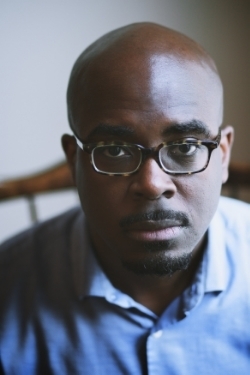
Ravi Howard, Earnest J. Gaines Award for Literary Excellence 2008
I read this fine novel, Like Trees, Walking: A Novel, some months ago. It is a work of historical fiction based on a horrific act of hatred that occurred in Mobile, Alabama, on March 21, 1981. Michael Donald, nineteen years old, a young black man, was brutally beaten and hung from a tree on Herndon Avenue. Curiously, a cross was burned in front of the Mobile County Courthouse the same night. That cross burning is a trademark that the Klan has come calling.
Warning. The following image depicts the body of Michael Donald as it was found on the morning of March 21, 1981.
My reading friends, I urge you to read this book. But I warn you Ravi Howard will break your heart. He broke mine. For more reasons than one. I'll get to it. Some who read this review may not agree with or like some of the things I have to say. However, I do not pull punches.
When I finished this book, I had to have some quiet time. Sip some coffee. Burn a cigarette. I became distracted. I didn't even note the day I finished this book. Thus, the date finished reflects today's date. So you may ask, "Why now?" Ferguson, Missouri.
Ravi Howard's title comes from that story in the Gospel of Mark. It's one of the most curious miracle stories in the gospels. There's not another one like it. Simply put, seeing a little does not mean that we see clearly.
To me, the civil rights movement was a miracle. I thought we had seen clearly. The struggle for equality for all people no matter their race, color, or creed, had been a long and hard one. Good people died. Innocent people died. No. Died is too weak a term. Assassinated. Killed. Murdered. That is Howard's statement. That what we considered accomplished in the struggle for equal rights that no matter what our Constitution might entitle us to as citizens, time and again the human heart is capable of holding an inconceivable degree of evil hatred. Like Trees, Walking: A Novel screams out in rage, "Not again!" Some of us refused to see clearly.
This novel strikes to my very core. Alabama shares its burden of Southern history. Tuscaloosa, my home County bears its burden of Southern history. From 1960 to 1987 the United Klans of America had its headquarters on the shores of Lake Tuscaloosa. The Imperial Wizard of the Ku Klux Klan was Robert M. Sexton who began as a simple tire builder at the B.F. Goodrich Plant just south of town.

Robert M. Shelton, Imperial Wizard. I thought he was a joke. I was wrong.
The narrator of Like Trees, Walking: A Novel is Roy Deacon. His brother is Paul. Their father is the owner of the Deacon Memorial Funeral Home. Their family has buried the dead of the black community for generations. The two brothers bear such a strong resemblance they might be mistaken for twins. Born less than a year apart, for a small period of time each year they are the same age. Their father's dream is his two sons will become the seventh generation to tend to the dead at Deacon Memorial.
Although the two brothers share much in common, they are different in many other ways. Paul resists the idea of joining the family business. From childhood, when he and Roy dared each other to enter the preparation room and saw their first corpse, Paul has been terrified of the dead. Over his father's objection, Paul takes a job at Gulf Land Paper Mill. It's good money, but as their father says, it's "their money, not our money."
This is not only a novel of race relations and tension, it is a novel of family obligation. Roy is the dutiful son who silently follows his father into the family business. It takes its toll on him.
Roy envies Paul. Both were baptized on the same morning. Paul, being older, was baptized first. He was raised from the water, his face transformed. You could see the magic of faith shining from his eyes and the brightness of his smile. Roy anticipated the same experience. He felt nothing. After draining the fluids from human bodies, washing them down the mortuary drains, Roy sees only empty husks. "Dead is dead."
Ravi Howard draws my mind to the fine writing of Thomas Lynch in The Undertaking: Life Studies from the Dismal Trade and Bodies in Motion and at Rest: On Metaphor and Mortality. Roy is truly involved in a dismal trade. It strikes home on the morning of March 21, 1981.
Someone is dead. Michael Donald. Roy's brother Paul found the body, hanging in the tree. Paul had stopped at the Krispy Kreme shop to pick up doughnuts for Roy to share with him as he does each Saturday morning. Almost walking into Michael's body, he spills the box. Both he and Roy knew Michael. Paul and Michael graduated from Murphy High School together. Michael was alive just the day before. They had played a game of basketball the afternoon before.
Roy and his father go to the crime scene. Tears stream down Paul's face. "I'm sorry about your doughnuts. I'll get you some more."
Police officers are everywhere about the scene. Detective Wilcox assures Roy, Paul and their father, "...the Mobile Police Department is going to do all we can to figure this out."
It falls to Deacon Memorial to prepare Michael's body for burial and to conduct the funeral service. Michael's death changes the lives of Roy and Paul forever.
Within a day news spread quickly. The law enforcement angle was an easy solve. There was no evidence to connect the burning of the cross on the Court House lawn and the hanging on Herndon Avenue. There had been drug activity reported in that area. A love triangle. Some boy messing with another boy's girl. Just in the wrong place at the wrong time.
On Sunday morning the old guard of the civil rights movement gathered on Government Street. None believed they had to go through this again, not in 1981. There was Nancy Freed, the head of the NAACP, and Council Ferguson, Preacher Ferguson, who even predated the days of Martin Luther King who returned from World War II and Unionized the Railroad Pullmen. He was the oldest one there. The oxygen mask across his face showed he should have been at home. He spoke softly, his fingers quaking, quoting from John Donne, concluding, "Today, during our hour of worship, I ask you to let the bell toll for Michael Donald."
The two men, the firebrands, were both lawyers, one Lyle Ferguson, the son of Council Ferguson. The other Sonny Waters, Lyle Ferguson's partner. Through almost two years they will fight for justice for Michael Donald.
Sonny Watters tells it true.
Sound familiar? Does to me.
This is a compelling, stirring, emotional read. It will move you. It will shake you. It will remain with you. The conclusion will stun you. Yes, Ravi Howard will break your heart.
And, now, it is time to go into spoiler mode. For the rest of the story. Both literary, actual, and its importance today.

Ravi Howard, Earnest J. Gaines Award for Literary Excellence 2008
A Blind Man Healed at Bethsaida
They arrived at Bethsaida. There the people brought a blind man to Jesus, and begged him to touch him. He took the blind man by the hand and led him away out of the village. Then he spat on his eyes, laid his hands upon him, and asked whether he could see anything. The man's sight began to come back, and he said, "I see men; they look like trees, but they are walking about." Jesus laid his hands on his eyes again; he looked hard and now he was cured so that he saw everything clearly.
Mark, 8: 22-25, The New English Bible, Oxford, Cambridge, UK, 1970
I read this fine novel, Like Trees, Walking: A Novel, some months ago. It is a work of historical fiction based on a horrific act of hatred that occurred in Mobile, Alabama, on March 21, 1981. Michael Donald, nineteen years old, a young black man, was brutally beaten and hung from a tree on Herndon Avenue. Curiously, a cross was burned in front of the Mobile County Courthouse the same night. That cross burning is a trademark that the Klan has come calling.
Warning. The following image depicts the body of Michael Donald as it was found on the morning of March 21, 1981.
My reading friends, I urge you to read this book. But I warn you Ravi Howard will break your heart. He broke mine. For more reasons than one. I'll get to it. Some who read this review may not agree with or like some of the things I have to say. However, I do not pull punches.
When I finished this book, I had to have some quiet time. Sip some coffee. Burn a cigarette. I became distracted. I didn't even note the day I finished this book. Thus, the date finished reflects today's date. So you may ask, "Why now?" Ferguson, Missouri.
Ravi Howard's title comes from that story in the Gospel of Mark. It's one of the most curious miracle stories in the gospels. There's not another one like it. Simply put, seeing a little does not mean that we see clearly.
To me, the civil rights movement was a miracle. I thought we had seen clearly. The struggle for equality for all people no matter their race, color, or creed, had been a long and hard one. Good people died. Innocent people died. No. Died is too weak a term. Assassinated. Killed. Murdered. That is Howard's statement. That what we considered accomplished in the struggle for equal rights that no matter what our Constitution might entitle us to as citizens, time and again the human heart is capable of holding an inconceivable degree of evil hatred. Like Trees, Walking: A Novel screams out in rage, "Not again!" Some of us refused to see clearly.
This novel strikes to my very core. Alabama shares its burden of Southern history. Tuscaloosa, my home County bears its burden of Southern history. From 1960 to 1987 the United Klans of America had its headquarters on the shores of Lake Tuscaloosa. The Imperial Wizard of the Ku Klux Klan was Robert M. Sexton who began as a simple tire builder at the B.F. Goodrich Plant just south of town.

Robert M. Shelton, Imperial Wizard. I thought he was a joke. I was wrong.
The narrator of Like Trees, Walking: A Novel is Roy Deacon. His brother is Paul. Their father is the owner of the Deacon Memorial Funeral Home. Their family has buried the dead of the black community for generations. The two brothers bear such a strong resemblance they might be mistaken for twins. Born less than a year apart, for a small period of time each year they are the same age. Their father's dream is his two sons will become the seventh generation to tend to the dead at Deacon Memorial.
Although the two brothers share much in common, they are different in many other ways. Paul resists the idea of joining the family business. From childhood, when he and Roy dared each other to enter the preparation room and saw their first corpse, Paul has been terrified of the dead. Over his father's objection, Paul takes a job at Gulf Land Paper Mill. It's good money, but as their father says, it's "their money, not our money."
This is not only a novel of race relations and tension, it is a novel of family obligation. Roy is the dutiful son who silently follows his father into the family business. It takes its toll on him.
Roy envies Paul. Both were baptized on the same morning. Paul, being older, was baptized first. He was raised from the water, his face transformed. You could see the magic of faith shining from his eyes and the brightness of his smile. Roy anticipated the same experience. He felt nothing. After draining the fluids from human bodies, washing them down the mortuary drains, Roy sees only empty husks. "Dead is dead."
Ravi Howard draws my mind to the fine writing of Thomas Lynch in The Undertaking: Life Studies from the Dismal Trade and Bodies in Motion and at Rest: On Metaphor and Mortality. Roy is truly involved in a dismal trade. It strikes home on the morning of March 21, 1981.
...the phone rang.
When the phone rang so early in the morning, it oftentimes meant somebody was dead. An elderly person had passed in the night. A Friday night traffic fatality. The families of deceased would set about the task of notifying family and friends, and somewhere among the sad litany of phone calls, they dialed our number.
Someone is dead. Michael Donald. Roy's brother Paul found the body, hanging in the tree. Paul had stopped at the Krispy Kreme shop to pick up doughnuts for Roy to share with him as he does each Saturday morning. Almost walking into Michael's body, he spills the box. Both he and Roy knew Michael. Paul and Michael graduated from Murphy High School together. Michael was alive just the day before. They had played a game of basketball the afternoon before.
Roy and his father go to the crime scene. Tears stream down Paul's face. "I'm sorry about your doughnuts. I'll get you some more."
Police officers are everywhere about the scene. Detective Wilcox assures Roy, Paul and their father, "...the Mobile Police Department is going to do all we can to figure this out."
It falls to Deacon Memorial to prepare Michael's body for burial and to conduct the funeral service. Michael's death changes the lives of Roy and Paul forever.
Within a day news spread quickly. The law enforcement angle was an easy solve. There was no evidence to connect the burning of the cross on the Court House lawn and the hanging on Herndon Avenue. There had been drug activity reported in that area. A love triangle. Some boy messing with another boy's girl. Just in the wrong place at the wrong time.
Familiar words for dead black boys portrayed as complicit in their own demise. Michael Donald's body had been hanged on a Mobile street, and the police were doing the same thing to his name.
On Sunday morning the old guard of the civil rights movement gathered on Government Street. None believed they had to go through this again, not in 1981. There was Nancy Freed, the head of the NAACP, and Council Ferguson, Preacher Ferguson, who even predated the days of Martin Luther King who returned from World War II and Unionized the Railroad Pullmen. He was the oldest one there. The oxygen mask across his face showed he should have been at home. He spoke softly, his fingers quaking, quoting from John Donne, concluding, "Today, during our hour of worship, I ask you to let the bell toll for Michael Donald."
The two men, the firebrands, were both lawyers, one Lyle Ferguson, the son of Council Ferguson. The other Sonny Waters, Lyle Ferguson's partner. Through almost two years they will fight for justice for Michael Donald.
Sonny Watters tells it true.
Unfortunately, honesty hasn't always been a part of the job description for the police force, especially when dealing with our people. Today I must appeal to their sense of integrity, because we need the Mobile Police Department. Before we can do our job, they've got to do theirs...
Ask yourself this question: Of this had been a white child found dead in a black neighborhood, would they be knocking on every door? "Yes, sir." Searching high and low? "Yes, indeed." It this had been a white child, would they paint him as a sinner and not a saint? "Lord, no..."
If there is no justice for Michael Donald today, there may be no justice for any of us tomorrow.
Sound familiar? Does to me.
This is a compelling, stirring, emotional read. It will move you. It will shake you. It will remain with you. The conclusion will stun you. Yes, Ravi Howard will break your heart.
And, now, it is time to go into spoiler mode. For the rest of the story. Both literary, actual, and its importance today.

August 5, 2024
“Help me understand it,” he said.
“Wish I could.”
I picked this up for a challenge without knowing much about it. I only checked the synopsis after the first chapter because I found it harrowing. Like Trees, Walking is the fictionalized account of the lynching of Michael Donald that happened in 1981 in Mobile, Alabama.
The book focuses on the aftermath of the lynching and the African American community in Mobile. The older members of the community are haunted by memories of how things used to be, fearing what may come now. And the younger ones are left astonished reliving things they thought belonged to the past. The story mostly follows Roy Deacon. His family owns a funeral home and they are in charge of taking care of Michael’s body. Most importantly, Roy’s brother Paul is a friend of Michael and the person who finds the body.
I’m European and a big part of my family is black. I can’t imagine anything remotely similar ever crossing anyone’s mind here, let alone happening. Reading about the attack and how it affected the individuals and the community was shattering. Going back to check the book and finding out this was a true story left me dazed. These past few years it seems to be a trend to check Instagram and find yet another case of police brutality or crime committed against Black Americans and it’s just getting to an extreme that I don’t understand. I just don’t get it. A character in the book says how the situation “boggles the mind” and I agree. This book gives a raw and intimate look into the grief, fear, and inhumanity that is forced into the characters and it’s harrowing especially if you notice how it is up to them to keep each other safe as opposed to the police doing their job to begin with.
The police described and dismissed Michael Donald’s killing this way: “Body found in known drug area. Love triangle. Jealous boyfriend. Wrong place at the wrong time.” There was no love triangle, and it had nothing to do with drugs. It was some local idiots who were part of the Klan.
I found the book to be beautifully written, raw, intimate, and devastating. It was a little ‘funny’ to see how everyone was reacting originally ‘someone killed a black man? It’s 1981, this doesn’t happen anymore!’ And yet now we see cases like Sonya Massey in the US and we can only say ‘oh, it must be Tuesday.’ This being said I’m very uneducated when it comes to the Klan and all of this since I’ve only seen them in movies and a couple of books, I’m glad I picked this one up.
PS. Something I really liked was how funny it was at times. Howard wrote conversations that felt very real. Like I’d go from being sad AF to laughing out loud with things like: “Wouldn’t need an autopsy. I’d tell Martha and your children you died of stupidity.”
“Wish I could.”
I picked this up for a challenge without knowing much about it. I only checked the synopsis after the first chapter because I found it harrowing. Like Trees, Walking is the fictionalized account of the lynching of Michael Donald that happened in 1981 in Mobile, Alabama.
The book focuses on the aftermath of the lynching and the African American community in Mobile. The older members of the community are haunted by memories of how things used to be, fearing what may come now. And the younger ones are left astonished reliving things they thought belonged to the past. The story mostly follows Roy Deacon. His family owns a funeral home and they are in charge of taking care of Michael’s body. Most importantly, Roy’s brother Paul is a friend of Michael and the person who finds the body.
I’m European and a big part of my family is black. I can’t imagine anything remotely similar ever crossing anyone’s mind here, let alone happening. Reading about the attack and how it affected the individuals and the community was shattering. Going back to check the book and finding out this was a true story left me dazed. These past few years it seems to be a trend to check Instagram and find yet another case of police brutality or crime committed against Black Americans and it’s just getting to an extreme that I don’t understand. I just don’t get it. A character in the book says how the situation “boggles the mind” and I agree. This book gives a raw and intimate look into the grief, fear, and inhumanity that is forced into the characters and it’s harrowing especially if you notice how it is up to them to keep each other safe as opposed to the police doing their job to begin with.
The police described and dismissed Michael Donald’s killing this way: “Body found in known drug area. Love triangle. Jealous boyfriend. Wrong place at the wrong time.” There was no love triangle, and it had nothing to do with drugs. It was some local idiots who were part of the Klan.
I found the book to be beautifully written, raw, intimate, and devastating. It was a little ‘funny’ to see how everyone was reacting originally ‘someone killed a black man? It’s 1981, this doesn’t happen anymore!’ And yet now we see cases like Sonya Massey in the US and we can only say ‘oh, it must be Tuesday.’ This being said I’m very uneducated when it comes to the Klan and all of this since I’ve only seen them in movies and a couple of books, I’m glad I picked this one up.
PS. Something I really liked was how funny it was at times. Howard wrote conversations that felt very real. Like I’d go from being sad AF to laughing out loud with things like: “Wouldn’t need an autopsy. I’d tell Martha and your children you died of stupidity.”

June 3, 2015
Written in the first person Ravi Howard wraps a fictional rendition around a 1981 lynching in Mobile Alabama. A horrific event. I was 30 yo and did not know of this happening. It was the 80's for Christ's sake. While the event is central the story takes us through wondering where does one fit in the world, where is my place, what does family mean to me, how can i carry on with this evil so close at hand?
An excellent read.
An excellent read.

February 26, 2023
This was an excellent backlist, debut discovery. I highly recommend it! I can't wait to read Ravi Howard's second novel.

September 12, 2019
This book, a debut novel by Ravi Howard, has been languishing on my TBR for 4 years. Finally, I noticed it and began to read. And what a book it is.
In 1981, a young man was lynched in Mobile Alabama. His name: MIchael Donald. Michael was truly in the wrong place at the wrong time. He had done nothing wrong. But a local Klansman had done him in. Bennie Jack Hays was upset over the mistrial of Josephus Anderson, who had killed a white police officer in Birmingham. Hays decided that action was required. He sent his son Henry and Tiger Knowles to find a black man to kill. Missionary work was what they called it. They set out with a box cutter, a gun, and a borrowed rope. Tiger made the noose, thirteen coils, then burned both ends of the rope so it wouldn’t fray.
Ravi Howard took this true event and wrapped it within a story about Roy Deacon and his brother Paul. Paul had found the body of Donald hanging from a tree. He, of course, was devastated by this find. His younger brother Roy helps their father run a mortuary. The Donald family selects this family mortuary to prepare the body for the funeral. The devastation to the body
was extensive. Without the care and talent of Roy and his father, the body would not be 'viewable' at the wake. But Michael's mother INSISTED that the casket be open. I thought it very clever to add the fictional Paul, Roy and father Randall as the fictional characters in this story to make this viewing possible.
An EXCELLENT historical fiction, I recommend this book to any one looking for a well-conceived story based on facts.
5 stars
In 1981, a young man was lynched in Mobile Alabama. His name: MIchael Donald. Michael was truly in the wrong place at the wrong time. He had done nothing wrong. But a local Klansman had done him in. Bennie Jack Hays was upset over the mistrial of Josephus Anderson, who had killed a white police officer in Birmingham. Hays decided that action was required. He sent his son Henry and Tiger Knowles to find a black man to kill. Missionary work was what they called it. They set out with a box cutter, a gun, and a borrowed rope. Tiger made the noose, thirteen coils, then burned both ends of the rope so it wouldn’t fray.
Ravi Howard took this true event and wrapped it within a story about Roy Deacon and his brother Paul. Paul had found the body of Donald hanging from a tree. He, of course, was devastated by this find. His younger brother Roy helps their father run a mortuary. The Donald family selects this family mortuary to prepare the body for the funeral. The devastation to the body
was extensive. Without the care and talent of Roy and his father, the body would not be 'viewable' at the wake. But Michael's mother INSISTED that the casket be open. I thought it very clever to add the fictional Paul, Roy and father Randall as the fictional characters in this story to make this viewing possible.
An EXCELLENT historical fiction, I recommend this book to any one looking for a well-conceived story based on facts.
5 stars
This entire review has been hidden because of spoilers.

February 28, 2023
Based on the true story of a lynching in 1981 in Mobile, AL - if that didn’t stop you, again, this is based on a true story. Of a lynching. In 1981. Great historical fiction not only recounts the events of history (or the recent past) - it also gives you a window into the impact of those events on everyday people, you see how something can ripple as it touches lives directly and indirectly. The narrator of the story, Roy Deacon, is a senior in high school when his brother’s friend is lynched and his brother, Paul, finds the body. When the novel opens, it is Roy’s 40th birthday and he is thinking back about the impact that this event has had on his life and reflecting on how important his relationship with his older brother has been in his life. The story then moves back to 1981 and you see Roy and Paul as young men, trying to find their way in life. Their father is the sixth generation to own the family funeral home and Roy is being raised to take over the family business. As such, grief and the many ways people deal with loss is explored under different conditions, although the overriding grief and loss that is impacting both the boys and their community is the lynching of Michael Donald. You see the impact of racism on the way Michael is portrayed in the media and in the police’s response to the crime. You see a level of grief and shock from the older generations who remember when lynchings were common and now see it happening again. The sense of a community unable to protect it’s youth, exhausted from still fighting the same battles, angered by the loss and failure of the system to respond quickly all feels visceral. While this is definitely a novel with a strong plot, there is also a significant theme of the internal struggles of the characters and their coming of age. This is an exceptionally strong debut and while it is heartbreaking to read - there were a couple of moments I had to close the book for a bit - I highly recommend this one.

October 11, 2009
Like Trees, Walking by Ravi Howard is a solemn tale that opens with Roy Deacon on the cusp of his fortieth birthday reflecting back twenty-two years earlier where as a senior in high school, the lynching of Michael Donald in Mobile, Alabama shocked the nation and affected Roy's life and community forever. From the onset of the novel, we learn that seventeen-year-old Roy is feeling pressured to continue the family mortuary practice and envies older brother, Paul, for having the courage to defy his father's desires to see both sons embrace the business as the seventh generation to do so. His laments seem paltry when Paul finds his friend's broken body hanging from a tree on a seemingly ordinary Spring morning.
The African American community is dazed; the elders from earlier eras suffer from painful memories and haunting images resurrected from a past they never wanted to revisit. The young react in disbelief that a heinous hate crime once commonplace from yesteryear could happen to one of their peers in such modern times. The titans of the black community experience déjà vu when the police offer an ill-fated drug deal, an interracial love triangle gone awry, and other unfounded theories instead of labeling the murder a lynching and admitting to Klan activity in their fair city. The young lose their patience, optimism and trust in the legal system and their futures when the wheels of justice grind ever so slowly toward an arrest and conviction of Michael's murderers.
As the title infers from the Biblical parable, Roy, Paul, their friends, and the community struggle to make sense from it all. Their youthful innocence is prematurely stripped away at a pivotal, crucial moment in their lives. They struggle with their emotions as they prepare for their upcoming high school rites of passage (prom, commencement, senior plays, etc.) amid Michael's murder, funeral (which his family handles), and community outcries for action. Thrown into adulthood, they each compromise and forsake their childhood dreams to face family obligations, reconcile their heartfelt loss, and plot their futures.
The author solidly places the reader in 1981 Mobile complete with a sprinkling of local history and traditions, coastal community life, music, and the social and political climate of the day. Sticking to a chronological timeline, he leans heavily on the title's allegory to move the characters toward an understanding and inner peace. Enhanced by the use of metaphor and iconic figures to deliver timely words of wisdom, he creates some wonderfully detailed scenes with distinct imagery. This is a worthy debut to be enjoyed by fans of historical and/or literary fiction.
The African American community is dazed; the elders from earlier eras suffer from painful memories and haunting images resurrected from a past they never wanted to revisit. The young react in disbelief that a heinous hate crime once commonplace from yesteryear could happen to one of their peers in such modern times. The titans of the black community experience déjà vu when the police offer an ill-fated drug deal, an interracial love triangle gone awry, and other unfounded theories instead of labeling the murder a lynching and admitting to Klan activity in their fair city. The young lose their patience, optimism and trust in the legal system and their futures when the wheels of justice grind ever so slowly toward an arrest and conviction of Michael's murderers.
As the title infers from the Biblical parable, Roy, Paul, their friends, and the community struggle to make sense from it all. Their youthful innocence is prematurely stripped away at a pivotal, crucial moment in their lives. They struggle with their emotions as they prepare for their upcoming high school rites of passage (prom, commencement, senior plays, etc.) amid Michael's murder, funeral (which his family handles), and community outcries for action. Thrown into adulthood, they each compromise and forsake their childhood dreams to face family obligations, reconcile their heartfelt loss, and plot their futures.
The author solidly places the reader in 1981 Mobile complete with a sprinkling of local history and traditions, coastal community life, music, and the social and political climate of the day. Sticking to a chronological timeline, he leans heavily on the title's allegory to move the characters toward an understanding and inner peace. Enhanced by the use of metaphor and iconic figures to deliver timely words of wisdom, he creates some wonderfully detailed scenes with distinct imagery. This is a worthy debut to be enjoyed by fans of historical and/or literary fiction.

April 26, 2012
Ravi Howard wrote this early 80's period novel of a lynching in Mobile, Alabama and its effects on the black community there. It is told from the eyes of a young black man who is struggling with his father's expectation that he continue the family business, a mortuary. This perspective was so honest and real that I assumed this first novel was written by someone who actually had been a mortician.
The reaction of the police was a complete rejection of the incident as a racial hate crime. Good plot and character development. The plot turns tragic in many ways, but does ring true.
The reaction of the police was a complete rejection of the incident as a racial hate crime. Good plot and character development. The plot turns tragic in many ways, but does ring true.
December 28, 2019
Beautiful and haunting.

March 3, 2019
Like Trees, Walking is a novel based on what may be the last lynching in the US: 19-year-old Michael Donald, who was killed then hung in 1981, in Mobile, Alabama. Ravi Howard's teenaged narrator, Roy Deacon is a quietly, compelling character: bright and observant, respectful of the living and dead, wanting to escape the family's funeral home business and yet drawn in.
Roy's older brother was Michael's friend. This murder was personal, due to this friendship, because Roy needed to work on Michael's embalming and "reconstruction," and because, as a black man living in Mobile, he was also vulnerable. It would be his fault of course, as in descriptions of Michael Donald's death: Body found in known drug area. Love triangle. Jealous boyfriend. Wrong place at the wrong time. Familiar words for dead black boys portrayed as complicit in their own demise. (Loc. 676-677).
Roy was more measured in tone than his older brother (direct declarative sentences), but more compelling as a result. His anger and fear and hopelessness were on a slow boil below the surface. He did not throw anything or stay in bed, but observed and considered:
Michael Donald’s body had been hanged on a Mobile street, and the police were doing the same thing to his name. The gathered activists wore their Sunday best, no doubt headed from the press conference to the various houses of worship (Loc. 677-679).
This is historical fiction. Michael was really lynched in the way described. Court outcomes are accurately described, as are other historical events, including that Emmitt Till's mother had not allowed morticians to repair his face: Maybe she’d gotten it right. No restoration. No makeup. Maybe the world needed to see how ugly it really was underneath. (Loc. 2111-2112). Still, most of the characters we hear from were not the people who were really there – which makes sense as this "historical fiction" was less than 30 years old when published.
My complaint about this book is with its ending. Roy Deacon had been a factual, quietly angry teen who took his time to tell us what had happened. The last chapter and epilogue moved more quickly and into fantasy, which did not work well for me and did not seem to fit this otherwise powerful book. Do not try to tie this story up with a bow, pretty or otherwise.
Roy's older brother was Michael's friend. This murder was personal, due to this friendship, because Roy needed to work on Michael's embalming and "reconstruction," and because, as a black man living in Mobile, he was also vulnerable. It would be his fault of course, as in descriptions of Michael Donald's death: Body found in known drug area. Love triangle. Jealous boyfriend. Wrong place at the wrong time. Familiar words for dead black boys portrayed as complicit in their own demise. (Loc. 676-677).
Roy was more measured in tone than his older brother (direct declarative sentences), but more compelling as a result. His anger and fear and hopelessness were on a slow boil below the surface. He did not throw anything or stay in bed, but observed and considered:
Michael Donald’s body had been hanged on a Mobile street, and the police were doing the same thing to his name. The gathered activists wore their Sunday best, no doubt headed from the press conference to the various houses of worship (Loc. 677-679).
This is historical fiction. Michael was really lynched in the way described. Court outcomes are accurately described, as are other historical events, including that Emmitt Till's mother had not allowed morticians to repair his face: Maybe she’d gotten it right. No restoration. No makeup. Maybe the world needed to see how ugly it really was underneath. (Loc. 2111-2112). Still, most of the characters we hear from were not the people who were really there – which makes sense as this "historical fiction" was less than 30 years old when published.
My complaint about this book is with its ending. Roy Deacon had been a factual, quietly angry teen who took his time to tell us what had happened. The last chapter and epilogue moved more quickly and into fantasy, which did not work well for me and did not seem to fit this otherwise powerful book. Do not try to tie this story up with a bow, pretty or otherwise.

January 13, 2016
“He remembered things we had never known. How to dress rope-burned skin. How to wire a neck, broken and distended, to make the bones straight again. Arrange the high, starched collar and necktie so they hid the marks that makeup could not conceal. I watched him as he worked, cradling Michael’s head in his hands. He held it like he held mine in the waters along the bay, on the summer afternoon he tried to teach me to float. I floated for a while, but when I opened my eyes and realized his hands were gone, and what I felt along my neck and back was just a memory of his fingers, I sank like a rock.” (Pg. 101 & 102, Like Trees, Walking, Ravi Howard, Harper Collins)
Ravi Howard’s Like Trees, Walking is a work of fiction carefully constructed around the all too real 1981 lynching of teen Michael Donald. Two brothers, reluctant potential heirs to the family funeral home business and friends to the victim, search for answers and for a way to deal with their loss. The results of this search are heartbreaking.
Although it appears that the incident which Howard poetically presents to his readers is of a specific act carried out in 1981 Mobile, Alabama, sadly, it is a story that represents many acts that have been repeated over and over again throughout history. Repeated over and over again about different towns in the south, north, the east and the west. A story told about our very own Gadsden, Alabama at one shameful time in our history. It is a story that is contemplative, powerful and familiar. A story to which we can no longer turn a blind eye.

August 7, 2016
Best novel I have read in decades!
An explosive plot, with writing to match.
In 1981, in Mobile, Alabama, Paul! a young Black man, finds his best friend hanging from a tree, his body beaten beyond recognition, the skin flayed with a knife, then hung from a tree. Lynched. The Black community is in shock, their assumptions about all the progress made in the Deep South over the prior 40 years suddenly challenged. The white community is indifferent. The police are hostile. Three known drug users, typical "white trash" young men, are quickly charged. The police spin a narrative that the victim was involved with drugs (he wasn't) and this was a drug deal gone bad. No one seems to care that the property where the lynching occurred is owned by a well known leader of the local Klan.
As the town returns to surface normalcy, the novel delves into the inner lives of a multitude of characters--the narrator (Paul's brother), a pair of local civil rights lawyers, several of the victim's friends and, more broadly, Mobile's Black community. Inside, things are far from normal; things will never be normal.
The Author does an amazing job of slowly unfolding the story at the same time she unfolds the inner life of her characters, all reflected against the changes in the larger community.
This is such a powerful novel that I simply lack the skills to do it justice. Read it. I can't recommend it highly enough.
An explosive plot, with writing to match.
In 1981, in Mobile, Alabama, Paul! a young Black man, finds his best friend hanging from a tree, his body beaten beyond recognition, the skin flayed with a knife, then hung from a tree. Lynched. The Black community is in shock, their assumptions about all the progress made in the Deep South over the prior 40 years suddenly challenged. The white community is indifferent. The police are hostile. Three known drug users, typical "white trash" young men, are quickly charged. The police spin a narrative that the victim was involved with drugs (he wasn't) and this was a drug deal gone bad. No one seems to care that the property where the lynching occurred is owned by a well known leader of the local Klan.
As the town returns to surface normalcy, the novel delves into the inner lives of a multitude of characters--the narrator (Paul's brother), a pair of local civil rights lawyers, several of the victim's friends and, more broadly, Mobile's Black community. Inside, things are far from normal; things will never be normal.
The Author does an amazing job of slowly unfolding the story at the same time she unfolds the inner life of her characters, all reflected against the changes in the larger community.
This is such a powerful novel that I simply lack the skills to do it justice. Read it. I can't recommend it highly enough.

April 19, 2007
This was an amazing book.
It takes a real-life event -- the 1981 lynching of young Michael Donald in Mobile, Alabama -- and explores the fictional aftermath of this shocking incident within the black community, as told from the perspective of Roy Deacon, the heir-apparent of one of the local funeral homes.
The outrage, the disbelief, and later the resignation of the community is so well captured; then add to that the twist that it was Roy's older brother Paul who'd found the battered body hanging from the tree; Paul who was best friends with Michael Donald; Paul who was perhaps the one most deeply affected by it all.
And best of all, the book has a rather Sixth Sense-like ending, which will have you going back to the beginning to hunt for the clues you missed the first time around.
A very educational, insightful and satisfying read. Highly recommended!
It takes a real-life event -- the 1981 lynching of young Michael Donald in Mobile, Alabama -- and explores the fictional aftermath of this shocking incident within the black community, as told from the perspective of Roy Deacon, the heir-apparent of one of the local funeral homes.
The outrage, the disbelief, and later the resignation of the community is so well captured; then add to that the twist that it was Roy's older brother Paul who'd found the battered body hanging from the tree; Paul who was best friends with Michael Donald; Paul who was perhaps the one most deeply affected by it all.
And best of all, the book has a rather Sixth Sense-like ending, which will have you going back to the beginning to hunt for the clues you missed the first time around.
A very educational, insightful and satisfying read. Highly recommended!

May 9, 2012
For me, this was a wonderful lesson in point of view and how first person point of view worked to strike a balance between character and subject matter. There is no doubt that this story's subject matter is poignant, but it is the way that Ravi brings us inside the lives of these characters that makes us understand so closely the way such a tragedy can impact lives. Essentially, what I found was that the attention to detail and the attention to the characters in this story created a subtle, yet powerful, image of the Micheal Donald tragedy.

March 3, 2010
I guess I expected more from this book. While the portrayal of life in the south among blacks may have been interesting to some people, I felt it got bogged down in long winded narratives that seemed to go nowhere. Maybe I wanted more about the capture and trial of the culprits who committed the crime.

March 3, 2019
This book was interesting showed how races worked in the south and how by the 80’s still had racial problems! There was some kind of justice but probably not like they probably wanted it to be! I do recommend this book!

February 2, 2011
I confess, I stopped reading this book. There is just NOTHING about this book that hooked me. Unbelievable when you consider the event that is the catalyst to the whole book.

April 22, 2021
On the one hand, Like Trees, Walking is like a slow movie, carefully setting up the scene (Mobile, Alabama, southern black middle class community) and the characters (told from perspective of Roy, the brother of Paul, who was the first one to discover the lynching). There’s an inciting incident, the lynching, which mostly remains very much in the background but works subtle effects on everyone in the community. Then on the other hand, there’s all kinds of apparently irrelevant details about funerals, bbq’s, the school play and prom dance, holiday celebrations, ink-stained clothes. It definitely felt like most of the book meandered around these irrelevant details.
The story might have worked better as a slow movie than in literary format. I think the writing itself, like the putting together of sentences and paragraphs, could be improved, and it did feel like a stretched-out short story.
I felt frustrated at times, looking for a more traditional story structure with inciting incident (lynching) leading to antagonists, conflicts, characters being challenged and changing, resolution. There’s very little antagonism played out in the story — though, again, the lynching always lurks in the background — but nothing directly pushing at the characters and requiring them to change to meet a challenge. The resolution of the lynching is reserved for the epilogue. The sub-plot involving Roy’s desire to break family tradition and no longer work in the funeral home never moves. There’s no conflict, little development in his thinking, no incidents to shake up the problem. It just suddenly resolves in the last pages.
Also, though I understand the story is based on real events, it felt strange that the main characters all assumed they knew who was responsible: Klan members who lived across the street from where it happened. Their certainty about this seemed to rely on nothing whatsoever. On the other hand, it was entirely believable that the police didn’t care about finding the real culprits.
However, all along, there’s a quiet working of the effects of the lynching on everyone. Behind that primary incident, there’s the slowly changing but ever-present racism, Southern history and culture and the relatives who have gone north, the power of family tradition, the role of religion, the way people are drawn into events without really trying, the idea of learning to see clearly (like the biblical trees, walking), the steps involved in change.
In the end, there’s a lot going on in this book. In many ways, Ravi Howard’s choice to make a very oblique study of the lynching makes it a fine read.
The story might have worked better as a slow movie than in literary format. I think the writing itself, like the putting together of sentences and paragraphs, could be improved, and it did feel like a stretched-out short story.
I felt frustrated at times, looking for a more traditional story structure with inciting incident (lynching) leading to antagonists, conflicts, characters being challenged and changing, resolution. There’s very little antagonism played out in the story — though, again, the lynching always lurks in the background — but nothing directly pushing at the characters and requiring them to change to meet a challenge. The resolution of the lynching is reserved for the epilogue. The sub-plot involving Roy’s desire to break family tradition and no longer work in the funeral home never moves. There’s no conflict, little development in his thinking, no incidents to shake up the problem. It just suddenly resolves in the last pages.
Also, though I understand the story is based on real events, it felt strange that the main characters all assumed they knew who was responsible: Klan members who lived across the street from where it happened. Their certainty about this seemed to rely on nothing whatsoever. On the other hand, it was entirely believable that the police didn’t care about finding the real culprits.
However, all along, there’s a quiet working of the effects of the lynching on everyone. Behind that primary incident, there’s the slowly changing but ever-present racism, Southern history and culture and the relatives who have gone north, the power of family tradition, the role of religion, the way people are drawn into events without really trying, the idea of learning to see clearly (like the biblical trees, walking), the steps involved in change.
In the end, there’s a lot going on in this book. In many ways, Ravi Howard’s choice to make a very oblique study of the lynching makes it a fine read.

March 29, 2025
I give this book a 4.75 stars. I came across this book a year ago watching one of my favorite YouTubers. I had just finished 8th grade when this took place. I never heard of anyone talking about this nor did I see it on the news. This horrific act (like all lynchings and/or hangings) took place in Selma, Alabama in 1981. The victim’s name is Micheal Donald. This senseless murder happened because the Klu klux Klan wanted to seek revenge. Tiger Knowles one of the members told what they had done to him that night. Bennie Jack Hayes another member was upset over the mistrial of Josephus Anderson, who had killed a white police officer in Birmingham. They had set out that night looking for victims when they were just about to give up when they crossed paths with Micheal Donald. Not only did they beat, stomp, shoot and kill him they hung him as well.
Justice for Micheal came in pieces as the story states, but honestly there was no justice served. The family was awarded $7 million that the Klu Klux never paid and lives were still destroyed forever. No justice can ever fix that.
Justice for Micheal came in pieces as the story states, but honestly there was no justice served. The family was awarded $7 million that the Klu Klux never paid and lives were still destroyed forever. No justice can ever fix that.

August 8, 2025
I think I wanted to have followed Paul off the deep end, to be honest. He's the one who finds the body of a friend he'd been playing basketball with until the day before, he's the one who tirelessly devotes his time to seek justice for this murder, he's the one who has to digest the fact that the police were not particularly motivated to find the killers and even less motivated to bring them to justice. Instead, we follow his brother, who ordinarily would have had a fine story, as a son struggling to bring himself to tell his father that he wanted no part of the family's mortician's business, but in this case, he's recounting what happened to Paul in a detached fashion. It's enough, but barely. The author has the writing chops, I just wish his narrator was better.
January 28, 2020
I had hoped to read a story about Michael Donald, the effect his murder had on his friends, family, and the community, and how justice was finally served on those responsible. Instead, I read a story about Roy Deacon, a fictional character whose older brother was friends with Michael. I read a story about Roy going to prom, working at his Dad's funeral parlor, and attending his girlfriend's school play. Michael Donald ultimately felt tangential to the novel. It wasn't a terrible book; it just wasn't what I was expecting when I started it.

January 12, 2025
Based on a true story, this is descriptive, funny, sad, and raw. It highlights the South dealing with racism, death, police, blame, dreams of escape, religion, family obligations, legacy and slow change. The main character comes from a long line of funeral directors and so every loss in Mobile, Alabama is known to them first and the bodies treated with reverence. Whenever the phone rang, it was a death knell. It's a reminder that the repercussions and aftermath of murder are drawn out and run deep.

March 3, 2017
Howard explores a compelling and disturbing topic, the lynching of a young black man in 1981 Mobile Alabama, and its ripple effect on teenage Roy Deacon and his family who have owned a funeral home for generations. I understand that the novel was developed out of a short story. It shows. There isn't really enough here for a full novel. Howard is a promising writer, however, and it will be interesting to see what he might write next.
October 31, 2019
Hard, Sad, True
This book covers topics not easy to cover in a relatable even poetic way. The emotion is real and raw.
Update:: I’m not sure how I missed that this was based on a true story!!! Now I must process completely differently!!!!! The emotion as different scenes come to mind is overwhelming. I thought it was hard to reas as fiction. As a true story, I can barely digest it!!
This book covers topics not easy to cover in a relatable even poetic way. The emotion is real and raw.
Update:: I’m not sure how I missed that this was based on a true story!!! Now I must process completely differently!!!!! The emotion as different scenes come to mind is overwhelming. I thought it was hard to reas as fiction. As a true story, I can barely digest it!!

February 11, 2019
Wow. This book is heartbreaking. I don't know how I made it this long without knowing that there was a TWENTIETH CENTURY lynching, but it just goes to show how far we have to go still.
The author does a great job of making you feel as if you were right there alongside him, even though that's a place that no one wants to be.
The author does a great job of making you feel as if you were right there alongside him, even though that's a place that no one wants to be.

October 7, 2023
One of the most devastating, beautiful, haunting books I’ve read in a long time. Ravi Howard has just entered the pantheon of my favorite authors. I was engaged with the story from the first moment and I savored every lyric detail set forth in this historical fiction that was all too recent history.

December 22, 2023
What a fantastic read. By no means an easy one, but absolutely worth it. I recommend picking this one up. Although this is set in 1981, I felt like it translated well to 'now', it didn't feel dated, the writing was superb.
I am consistently impressed with the books that Didi from ReadSoulLit chooses.
I am consistently impressed with the books that Didi from ReadSoulLit chooses.
August 29, 2026
I didn’t know this was based on real events. The subject matter is heavy but accessible.
I like the book title, that’s what peaked my interest.
I liked the explanation of morticians/cometary and funeral homes.
Themes: violence, racism, American history, community, boys and their fathers, religion and the South.
I like the book title, that’s what peaked my interest.
I liked the explanation of morticians/cometary and funeral homes.
Themes: violence, racism, American history, community, boys and their fathers, religion and the South.
July 10, 2017
Great read. RIP Michael Donald. Let us never forget
This book does a great job of telling the story of Roy Deacon while also highlighting some of the real life happenings that surrounded the murder of Michael Donald. Also authentic were many of the descriptions of Mobile,AL.
This book does a great job of telling the story of Roy Deacon while also highlighting some of the real life happenings that surrounded the murder of Michael Donald. Also authentic were many of the descriptions of Mobile,AL.
Displaying 1 - 30 of 75 reviews