

What do you think?
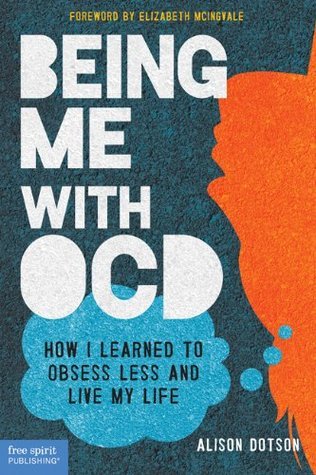
Being Me With OCD: How I Learned to Obsess Less and Live My Life
Part memoir, part self-help for teens, Being Me with OCD tells the story of how obsessive-compulsive disorder (OCD) dragged the author to rock bottom—and how she found hope, got help, and eventually climbed back to a fuller, happier life. In the United States, about 1 in 100 adults and 1 in 200 kids have obsessive-compulsive disorder; the age of onset in more than 50 percent of adult cases is before age 15. Using anecdotes, self-reflection, guest essays, and thorough research, Dotson explains what OCD is and how readers with OCD can begin to get better. The essays in the book by teens with OCD provide additional perspectives of OCD so all readers can see themselves reflected in the book. The eBook format makes content readily accessible for teens seeking information on a sensitive and personal topic. With humor, specific advice, and an inspiring, been-there-beat-that attitude, readers will find the book simultaneously touching and practical.
208 pages, Kindle Edition
First published January 1, 2013
About the author
Alison Dotson
3 books6 followersAlison Dotson is a writer, copyeditor, and proofreader who was diagnosed with OCD at age 26, after suffering from “taboo” obsessions for more than a decade. Today, she still has occasional bad thoughts, but she now knows how to deal with them in healthy ways. She lives in Minnesota with her two dogs, Tuffy and Gracie.
Ratings & Reviews
Friends & Following
Create a free account to discover what your friends think of this book!
Community Reviews
Displaying 1 - 30 of 43 reviews

February 10, 2022
The book is part-memoir, part self-help, and is peppered with personal essays from teens and young adults that provide amazing insight into a number of topics. OCD is a peculiar beast in that, while it operates the same way for most people, it manifests differently for each individual, and the personal essays help the book touch on areas that haven't been a part of Alison's personal path with OCD.
I deeply appreciated her approach to medication. I also appreciated that she spent a significant amount of time addressing exposure and response avoidance, despite the fact that she had never undergone ERP herself. Alison also discusses how to overcome stigma.
I deeply appreciated her approach to medication. I also appreciated that she spent a significant amount of time addressing exposure and response avoidance, despite the fact that she had never undergone ERP herself. Alison also discusses how to overcome stigma.
June 26, 2014
I still kinda feel like I'm going to cry. I've never before read anything that captured the terror of living with pure-o before, and just reading her tell her story makes me feel so not alone. I would whole heartedly recommend this book to anyone who is living with ocd or loves someone who is, especially if you suffer from the less visible kind. wow, is all i can really say about this book. i don't know if i can find the words.

December 13, 2013
This book was provided by Netgalley, free of charge, in return for an honest review.
First of all, I do not have OCD. People sometimes tease me because I like things to be clean, but my pleasure in cleanliness is nothing near OCD. This is one of my biggest pet peeves. People who will say lightly, "Oh, I'm kind of OCD," when they clearly aren't. Somehow, OCD has become this little tick people have when they like things orderly, and it's okay to label yourself like that if you should like to have your books in alphabetical order. That drives me mad, because when you actually talk to someone with Obsessive Compulsive Disorder, or read a book like this, you know that real OCD is nothing to joke about, and that anyone would make light of it and give themselves that label flippantly shows an ignorance that's not very agreeable.
Phew. Now that that rant is out of the way, let's get to the book.
The title of Being Me with OCD is a pretty accurate description of the book. Throughout the work, Alison Dotson tells her story honestly, while giving advice and urging others with OCD to find help. Among all this she has snippets of other's experiences with OCD woven in.
I wasn't Dotson's target audience. It is made clear that she expects that people reading this book will have OCD and will be looking for she managed with her life and got help. I don't have OCD, and was reading purely because I have an interest in the disorder and wanted to know more accurate truths about it.
Dotson's writing is easy to read, honest, and touching. I'm amazed, really, at how openly she wrote and how freely she shared her story. I don't know if I would have been as free. I admire her for that, greatly.
The snippets of essays written by other young sufferers are also touching and add a great deal to the book. For me, this would have been enough, seeing as how I'm not OCD, just trying to learn a bit more about it. However, there is a lot more material.
With every chapter there are tips and signs that help you diagnose yourself, encourage you to find help, and share important information about different medications and what therapy might be like. For me, these were a bit boring, having no relevance, and I skimmed a few of these parts. However, I think that these are important, and though I didn't need them, I think it's important that they are in the book. It's Dotson's motive, clearly, to help others with her disorder, and I believe that these sections could go a way in accomplishing that.
At the end of the day, this isn't the sort of book I'd recommend for enjoyment, or for any of my friends without the disorder. I'd readily recommend it to one with OCD because of the gentle, simple, and honest writing style.
First of all, I do not have OCD. People sometimes tease me because I like things to be clean, but my pleasure in cleanliness is nothing near OCD. This is one of my biggest pet peeves. People who will say lightly, "Oh, I'm kind of OCD," when they clearly aren't. Somehow, OCD has become this little tick people have when they like things orderly, and it's okay to label yourself like that if you should like to have your books in alphabetical order. That drives me mad, because when you actually talk to someone with Obsessive Compulsive Disorder, or read a book like this, you know that real OCD is nothing to joke about, and that anyone would make light of it and give themselves that label flippantly shows an ignorance that's not very agreeable.
Phew. Now that that rant is out of the way, let's get to the book.
The title of Being Me with OCD is a pretty accurate description of the book. Throughout the work, Alison Dotson tells her story honestly, while giving advice and urging others with OCD to find help. Among all this she has snippets of other's experiences with OCD woven in.
I wasn't Dotson's target audience. It is made clear that she expects that people reading this book will have OCD and will be looking for she managed with her life and got help. I don't have OCD, and was reading purely because I have an interest in the disorder and wanted to know more accurate truths about it.
Dotson's writing is easy to read, honest, and touching. I'm amazed, really, at how openly she wrote and how freely she shared her story. I don't know if I would have been as free. I admire her for that, greatly.
The snippets of essays written by other young sufferers are also touching and add a great deal to the book. For me, this would have been enough, seeing as how I'm not OCD, just trying to learn a bit more about it. However, there is a lot more material.
With every chapter there are tips and signs that help you diagnose yourself, encourage you to find help, and share important information about different medications and what therapy might be like. For me, these were a bit boring, having no relevance, and I skimmed a few of these parts. However, I think that these are important, and though I didn't need them, I think it's important that they are in the book. It's Dotson's motive, clearly, to help others with her disorder, and I believe that these sections could go a way in accomplishing that.
At the end of the day, this isn't the sort of book I'd recommend for enjoyment, or for any of my friends without the disorder. I'd readily recommend it to one with OCD because of the gentle, simple, and honest writing style.
January 25, 2023
Being Me With OCD by Alison Dotson is easily one of the most relatable, emotional, and accurate books about Obsessive-Compulsive Disorder.
If you don't know yet, I was diagnosed with OCD when I was 19. But before I had the courage to book an appointment with a psychiatrist for diagnosis, I literally had no one to tell me it was going to be okay. I was alone, scared, and confused. But all of that changed when I discovered this book. Alison Dotson's words were there for me. And for once, I felt like someone finally understood what I truly felt inside—all the compulsions, rituals, and anxieties that I've been keeping during the height of the pandemic.
It was October 2021 when I read the first 70% of this book. Then I stopped, for some reason (but I do have a feeling it was because of how busy I was in college). Fast forward, tonight; I scanned the remaining 30% and finished it. Still can't believe that this book perfectly depicted what OCD felt like. So accurately. With so much vulnerability and comfort.
I'd also like to give extra points of appreciation for the little OCD checklist that was included in the book. I checked almost every symptom presented years back. That was the time I realized I really needed to get help. So I did.
If it weren't for this book, I never would've had the courage to get help and take medications. It'd be an understatement to say that this book helped me. It became my key to have a second shot at life. After the terrible years I've gone through, I'm so damn proud to say that my compulsions already lessened and that I can finally act normally—despite my OCD being here.
It'll never go away, I know. But I'm grateful for the support system that this book provided me when I had none. I wish Ms. Alison Dotson herself could read this review and see how much she helped me.
We need more books like this.
We need more OCD representation.
We need more OCD awareness.
To those who are battling the same illness, my heart forever goes out to you. Please, please get the help you need. You deserve it. 💗
If you don't know yet, I was diagnosed with OCD when I was 19. But before I had the courage to book an appointment with a psychiatrist for diagnosis, I literally had no one to tell me it was going to be okay. I was alone, scared, and confused. But all of that changed when I discovered this book. Alison Dotson's words were there for me. And for once, I felt like someone finally understood what I truly felt inside—all the compulsions, rituals, and anxieties that I've been keeping during the height of the pandemic.
It was October 2021 when I read the first 70% of this book. Then I stopped, for some reason (but I do have a feeling it was because of how busy I was in college). Fast forward, tonight; I scanned the remaining 30% and finished it. Still can't believe that this book perfectly depicted what OCD felt like. So accurately. With so much vulnerability and comfort.
I'd also like to give extra points of appreciation for the little OCD checklist that was included in the book. I checked almost every symptom presented years back. That was the time I realized I really needed to get help. So I did.
If it weren't for this book, I never would've had the courage to get help and take medications. It'd be an understatement to say that this book helped me. It became my key to have a second shot at life. After the terrible years I've gone through, I'm so damn proud to say that my compulsions already lessened and that I can finally act normally—despite my OCD being here.
It'll never go away, I know. But I'm grateful for the support system that this book provided me when I had none. I wish Ms. Alison Dotson herself could read this review and see how much she helped me.
We need more books like this.
We need more OCD representation.
We need more OCD awareness.
To those who are battling the same illness, my heart forever goes out to you. Please, please get the help you need. You deserve it. 💗

August 22, 2018
I’ve struggled with Obsessive Compulsive Disorder for about 6 years of my life, but haven’t actually been diagnosed until two years ago.
I was never classified as pure-o because there are “rituals” I go through on a daily basis but a lot of my OCD has consumed my mind. It’s been incredibly draining for me, especially recently when it has been getting out of hand.
One of the main reasons why it took four whole years for me to get a diagnosis was because I was too afraid or embarrassed to talk about it, like I thought I was weird for having these thoughts or knocking five times on wood or else my mom will die. I never met anyone else with OCD to compare my thoughts and rituals to. Reading this book truly made me feel like I’m not alone.
I thought this book was well written and perhaps an eye opener for those who use the sentence “I am so OCD about this” lightly. It’s not always about having everything clean or tidy or in specific spots; it also involves what happens mentally that is so draining.
I was never classified as pure-o because there are “rituals” I go through on a daily basis but a lot of my OCD has consumed my mind. It’s been incredibly draining for me, especially recently when it has been getting out of hand.
One of the main reasons why it took four whole years for me to get a diagnosis was because I was too afraid or embarrassed to talk about it, like I thought I was weird for having these thoughts or knocking five times on wood or else my mom will die. I never met anyone else with OCD to compare my thoughts and rituals to. Reading this book truly made me feel like I’m not alone.
I thought this book was well written and perhaps an eye opener for those who use the sentence “I am so OCD about this” lightly. It’s not always about having everything clean or tidy or in specific spots; it also involves what happens mentally that is so draining.
January 17, 2024
today i learned lena dunham has ocd. i have no idea who this woman is.
February 10, 2024
CN: diet culture nonsense
Note: I am not the target audience.
I thought the first half of this was really great. I’m struggling to find resources for adults at the library, but there were two books aimed at teens I decided to try. The first I had to DNF because it was so condescending. This book was so much better - nothing was glossed over or over-simplified, nor is the text overly dense. It’s friendly, but factual, and definitely a book parents can also read for more understanding. I learned a lot of basics that I hope will help me figure out where to go from here.
There were a lot of good eye-openers, too - like how we associate hand washing so much with OCD because it’s easy to show visually, so television and movies over-rely on it.
For my complaints - the weight-bias starts about halfway in. Beyond acknowledging the weight gain side effect of medication, mentions of “a flatter tummy” and that you can lose weight on the meds and whatnot are not helpful, especially where eating disorders overlap with OCD.
Also, I understand why the book is optimistic about therapy but some of it is overstated in an absolutist way that isn’t always true to real life. Things you say to school counselors are often not private, so please verify first that they will be if you need them to be. Inpatient care is sometimes poorly done and traumatic. The main suicide helpline is not safe for everyone, as it can lead to arrest and involuntary confinement. There are alternate lines, like BlackLine, The Trevor Project & Trans Lifeline if you feel 988 might not be safe for you.
It’s so hard to know what adults you can trust if your parents aren’t that. I hope books like this get into the hands that need them while waiting out untenable situations.
Note: I am not the target audience.
I thought the first half of this was really great. I’m struggling to find resources for adults at the library, but there were two books aimed at teens I decided to try. The first I had to DNF because it was so condescending. This book was so much better - nothing was glossed over or over-simplified, nor is the text overly dense. It’s friendly, but factual, and definitely a book parents can also read for more understanding. I learned a lot of basics that I hope will help me figure out where to go from here.
There were a lot of good eye-openers, too - like how we associate hand washing so much with OCD because it’s easy to show visually, so television and movies over-rely on it.
For my complaints - the weight-bias starts about halfway in. Beyond acknowledging the weight gain side effect of medication, mentions of “a flatter tummy” and that you can lose weight on the meds and whatnot are not helpful, especially where eating disorders overlap with OCD.
Also, I understand why the book is optimistic about therapy but some of it is overstated in an absolutist way that isn’t always true to real life. Things you say to school counselors are often not private, so please verify first that they will be if you need them to be. Inpatient care is sometimes poorly done and traumatic. The main suicide helpline is not safe for everyone, as it can lead to arrest and involuntary confinement. There are alternate lines, like BlackLine, The Trevor Project & Trans Lifeline if you feel 988 might not be safe for you.
It’s so hard to know what adults you can trust if your parents aren’t that. I hope books like this get into the hands that need them while waiting out untenable situations.

March 31, 2014
Being Me with OCD: How I Learned to Obsess Less and Live My LifeAlison Dotson
I was given this in exchange for an honest review from Netgalley.com.
With devastating honesty, Alison Dotson's book tells of her own experiences with OCD and the very dark places her disorder took her to, as well as her struggle to understand and live fully and happily with her diagnosis.
Equally a memoir relating her own difficulties and a self-help book offering others the wisdom of her own experience, Being Me with OCD is a fascinating and powerful book. In addition to Dotson's own experiences and stories, she includes guest essays and meticulous research. Although written for teens, I think this is a wonderful resource for anyone struggling with a diagnosis -- or a suspicion -- of OCD or anxiety/panic attacks, as well as for anyone with a friend of relative dealing with this issue.
Dotson does a truly exceptional job of helping her readers understand the variety of ways this disorder impacts the lives of OCD individuals, and those who are close to them. She also demonstrates how empowering it is to understand one's diagnosis and come to terms with it. Her own journey to acceptance was long and painful, and she offers the wisdom and empathy of her experience to readers who may be battling the same difficulties.
I think that this book is a remarkable resource for anyone who is discovering themselves and the world they must live in. I highly recommend Being Me With OCD!!
I was given this in exchange for an honest review from Netgalley.com.
With devastating honesty, Alison Dotson's book tells of her own experiences with OCD and the very dark places her disorder took her to, as well as her struggle to understand and live fully and happily with her diagnosis.
Equally a memoir relating her own difficulties and a self-help book offering others the wisdom of her own experience, Being Me with OCD is a fascinating and powerful book. In addition to Dotson's own experiences and stories, she includes guest essays and meticulous research. Although written for teens, I think this is a wonderful resource for anyone struggling with a diagnosis -- or a suspicion -- of OCD or anxiety/panic attacks, as well as for anyone with a friend of relative dealing with this issue.
Dotson does a truly exceptional job of helping her readers understand the variety of ways this disorder impacts the lives of OCD individuals, and those who are close to them. She also demonstrates how empowering it is to understand one's diagnosis and come to terms with it. Her own journey to acceptance was long and painful, and she offers the wisdom and empathy of her experience to readers who may be battling the same difficulties.
I think that this book is a remarkable resource for anyone who is discovering themselves and the world they must live in. I highly recommend Being Me With OCD!!
February 25, 2014
I am a mental health therapist who has worked in the mental health field for 25 years. I highly recommend this book. It is written by an individual who dealt with this issue for years. The writer does an exceptional job of helping the reader understand the myriad ways that this disorder can impact ones life, challenges myths or incorrect beliefs that many have about the disorder, shares writings by many who dealt with this issue, discusses coping skills, how to get help and giving a feeling of hope by showing true stories of individuals who have gotten better.
May 22, 2020
This is one of the few books on OCD that have made me feel validated, hopeful, and less alone. I highly recommend this for anyone who might have OCD (it’s especially geared toward young adults, but at 26 I got a lot out of it) or for anyone with a friend or family member who has OCD.
This book does very well at explaining what OCD is and discusses how to find resources, medication, cognitive behavioral therapy, and personal stories from people who are working to overcome their OCD.
So happy to have picked up this book.
This book does very well at explaining what OCD is and discusses how to find resources, medication, cognitive behavioral therapy, and personal stories from people who are working to overcome their OCD.
So happy to have picked up this book.


April 13, 2018
I definitely recommend this to a teen who thinks that they may have OCD (or knows that they do). It's much more comprehensive and reflective or personal experiences than the Rosen book I reviewed--the audience is teens who really care to know MUCH about this disorder. Dotson's language is straightforward and honest; I tried to put myself in the shoes of the intended audience as I skimmed the 2nd half of the book, and I think she answers all the questions I would have.
For a few moments at the beginning, especially after reading the diagnostic checklist that doctors use, I wondered if I have OCD (mild?), kind of like when you read the symptoms on WebMD and you realize that you must have cancer or some other terminal illness (coughing? sneezing? headaches occasionally? I'm dying!). But Dotson cleared that up immediately. As a result of reading the first 50%, I know how serious this disorder is, what it is NOT, and not to ever joke that a behavior or person "is OCD." Representation is important for people with real issues and concerns so that they get the proper attention, help, and respect that they deserve. This really was a great book; the whole thing wasn't necessary to read, though, for someone who is unaffected by OCD.
For a few moments at the beginning, especially after reading the diagnostic checklist that doctors use, I wondered if I have OCD (mild?), kind of like when you read the symptoms on WebMD and you realize that you must have cancer or some other terminal illness (coughing? sneezing? headaches occasionally? I'm dying!). But Dotson cleared that up immediately. As a result of reading the first 50%, I know how serious this disorder is, what it is NOT, and not to ever joke that a behavior or person "is OCD." Representation is important for people with real issues and concerns so that they get the proper attention, help, and respect that they deserve. This really was a great book; the whole thing wasn't necessary to read, though, for someone who is unaffected by OCD.
September 30, 2017
Alison Dotson is a thoughtful writer with a lot of heart. I enjoyed reading this inspirational book and learning more about OCD. I have heard that she may write a memoir and I would definitely read it. I recommend "Being Me with OCD" How I Learned to Obsess Less and Live My Life to both OCD sufferers or to those that love them and want to learn more. As well as being a skilled writer, Alison, is also a kind and thoughtful teacher. Great read!
March 16, 2025
i liked that the author is honest about the more scary/embarrassing obsessions she has + i like that she doesn't treat weight loss as an unbearable side effect to OCD medication (and even includes a story from somebody else who was HAPPY about gaining weight on it) + i like that the author clearly wrote this for young adults/teenagers without having to force annoying jokes or water down the more dark/scary parts of OCD like a lot of YA authors would have done
March 26, 2023
This book is part memoir, part self-help, and written in a conversational tone that makes it very accessible for teen and adult readers. It gave a good overview of OCD’s multifaceted symptoms and the various treatments available. This would be helpful to anyone with OCD or their loved ones who want to understand the disease better. Note: it is not recommended for children.

January 4, 2024
The author explains how OCD impacted her life and how she learned to cope with it. She provides information about OCD, even comparing it to other disorders to help the reader understand the differences. The author gives examples of ways for a person suffering with OCD to practice calming techniques.
October 27, 2025
This is the book that helped me understand more about my OCD diagnosis when I was 18 years old. It also taught me that I wasn’t the only one suffering with spiraling thoughts that left me crippled with anxiety. I will also be so appreciative to this author for helping me through a very difficult time in my life and being there for me whenever a flare up happens.

January 30, 2022
I read this only because there were limited options for ebooks about OCD from the local library. Pretty basic information, available widely online. The target audience is teens, so I could see how it would be more useful for them.

June 30, 2022
I’m trying to learn more about OCD and this book was really helpful. There were simple explanations, examples from multiple people, and lots of resources to continue learning from. It was also still interesting to read— not text bookish at all.
January 19, 2025
i’ve never read anything like this. knowing that other people are going through the same things and have gotten through it and are able to manage their compulsions is very relieving. i appreciate all the little personal stories in this and found this book to be an incredibly safe space.

June 9, 2017
It was an interesting read for sure, but not quite what I expected the book to be. It's more a how to cope then a story of someone living with it.
April 23, 2020
Great book!
July 5, 2020
There were some parts of this book that were repetitive but overall it has important information presented in an honest and readable way.

August 29, 2020
This book came right on time. Still learning to obsess less and live my life more, but this book is just what OCD sufferers need to not feel so alone.

March 25, 2021
An interesting book about one person's journey with OCD with other stories sprinkled within. It is a good read if someone has OCD or if a loved one has OCD. It puts OCD into perspective.

November 28, 2021
Probably one of the best books I’ve read about tackling OCD.
August 30, 2022
Pretty good! I think if you were just starting on you path with ocd this book would be very helpful
January 15, 2024
To be honest a rather boring read. Didn’t learn anything I couldn’t Google myself. It seemed like an elongated version of a story that could’ve been told in half the words.

August 6, 2024
Great book to learn about OCD and why we should pay attention to those around us.
November 16, 2024
I can relate to this book about OCD!!!
very inspirational.....
very inspirational.....
Displaying 1 - 30 of 43 reviews