Award-winner in the 'Gay and Lesbian: Non-Fiction' category of the 2013 International Book Awards, Trans-Kin is a collection of stories from significant others, family members, friends and allies of transgender persons (SOFFAs). Powerful, thought-provoking and enlightening, this collection will provide for the head and the heart of anyone who has ever loved a transgender person. Trans-Kin is also an essential read for allies of the transgender community and anyone who wishes to become one.
I think this is a good start for someone wishing to learn more about transgender individuals. However it was written in 2012, and it is almost 2021, so I am looking forward to finding more recent resources to continue learning more about transgender issues, and the transgender community.
A moving and thought-provoking book. I learned so much from reading this and I walked away thinking and talking about it for some time. I learned more than I realized there was to learn on the subject of the transgender experience -- but I was also reminded of the need to examine cultural assumptions on a larger scale. In addition to conveying some of the fundamentals about the transgender and transexual experience, it raises so many issues about how we approach everything. For me, it has been a powerful reminder of how the dichotomies and oppositions that our society accepts as norms are artificial and often destructive.
The book editors set this up in sections of essays, or in a few cases interviews, from the partners, friends, and family members of transgender people, and then stories from transgender people themselves. Each section has really basic questions and answers geared for a reader who would be reading this book to help introduce them to these ideas and to help them process an experience they are having with a transgender person close to them.
While my own understanding of these issues is robust enough that those question and answer pages did not speak to me, the vast majority of the book had so much to chew on. I don't have any transgender people close to me (at least not close enough that I know they are transgender) and was reading about being an ally from the perspective of being ally for gay friends. I have a few main takeaways:
First, I really appreciated the emphasis on how coming out and transitioning affects everyone around the transgender person. When someone comes out, so do the people around them. And it follows that when they transition, the same is true. (Being close anyone who isn't fitting into any societies categories affects you, even if it's not about gender.) I think this is incredibly valuable for people -- no matter their role -- to understand.
I also really appreciated the discussions about how even when a person is part of the LGBTQ+ community, there are expectations and pressures and stereotypes that you are faced with. Even when you find your "family," you may still not find that you feel unconditionally accepted or at ease.
Another valuable concept that I'm happy they emphasized was that gender identity and sexual attraction are separate things.
And last, for me, I value having gotten fuller understanding of the concept -- and the utility of the word -- "queer." As a liberal arts college student in the 90s, when I first learned the term in an academic context, it just seemed like sort of a political term. (And in the study of literature, a critical term.) I loved how it was used here as just a way to describe any attractions that don't fit whatever norms. Because the usual categories -- even if not the majority presumptive heterosexual category -- are still reductive and restrictive categories. Queer is an incredibly useful term. But the idea that I've really latched onto is not just that the term "queer" expresses this so well -- it's that it feels like use of the word in and of itself highlights the absurdity of us needing words for any of this at all. The idea that we had to find a label for something because it is something that inherently defies labeling is, well, just crazy.
Not all of the essays will appeal or speak to each individual reader. It will depend on the readers own experience, of course. A handful are even really very academic in tone. But they are all unique and distinct and I think most readers will get something out of most of the pieces. Largely, the essays are from people who are supportive -- it's natural that family and friends who want nothing to do with the subject would not be included. So is it showing all sides of the issue? Probably not. But it's like 16 sides of the 20-sided die, as far as I'm concerned.
Yes, this book looks and feels (reads) as self-published (and, frankly, that's why it's not 5 stars from me), but you will be missing out if you let that put you off. The content is really, really amazing. If you are interested in the topic or if you are looking to learn more about transgender experience -- both from the perspective of transgender people and from those close to them -- this is absolutely something you want to pick up.
I borrowed this book to be supportive of a friend who recently told a small group of friends that they're transitioning but it wasn't what I had hoped.
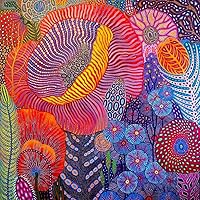
As a "guide for family and friends of transgendered people", I don't understand the direction. This a collection of stories and art work, which feels like an oof approach to me.
Maybe this was more relatable in 2012, when the book was first published. And maybe that's the issue: nearly a decade has passed since publication, and while I don't think that the world has become a safer place for transgender persons, gender, sex, and sexual orientation are open and evolving discussions (including the discussion about the intersection of race with these issues).
The questions that precede each section (Significant Others, Family, Friends, Allies, Transgender Persons) were the most engaging and interesting parts for me.
I feel very lucky to have met transgender persons in my teens. It seemed to follow that if some people weren't attracted to the opposite sex, then some might might not feel at home in their bodies.
Luckily, I have access to wonderful friend and ally resources through my employer. If you don't have this benefit, this book might be a good place to start.
I highly recommend this book to practically everyone. If you are on a journey of your own identity or just want to know how to be a better ally or even if you just want to learn more this book is an excellent resource full of true stories and many different kinds of journeys everyone is sure to find something to relate to in some way.
This is a really useful collection of stories from significant others, family members and friends of transgender people. Based as it is on personal experiences, many of the stories are emotional, thought-provoking and ultimately enlightening.
The book is laid out in a series of sections structured as questions, interviews or stories. The goal of each section is to introduce ideas to the reader to help them understand situations or experiences they may be having with a trans person. The stories from trans people add a nice perspective for trans readers to which don't just allow you to consider a different perspective on your own journey, but also introduce how the transition journey can affect or influence behaviours in those around you.