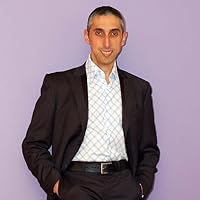
Why is it so difficult to change our beliefs and behaviors even when we know they no longer serve us? How can certain individuals reverse incurable disease while others suffer the effects of childhood wounds despite years of therapy? These are the questions readers will explore in the much-anticipated new book from clinical neuropsychologist and biocognitive science founder Dr. Mario Martinez.
In The MindBody Code, Dr. Martinez challenges us to embrace a radically new paradigm for health and well-being. Readers will not only learn the basics of this fascinating cutting-edge science, but they will also learn to communicate with the body in its own biosymbolic language for results that until this point may have been elusive at best. Martinez reveals the way our cultural beliefs impact our immune system, the pathway to healing the archetypal wounds of shame, abandonment, and betrayal, and much more.
This book is a bit of a tough read because it covers territory most of us aren’t familiar with: how our emotional wounds affect our health. Lots of new vocabulary and some very interesting takes on how the mind and body work together. It’s worth giving it a try though.
The MindBody Code: How to Change the Beliefs That Limit Your Health, Longevity, and Success by Dr. Mario Martinez is a text offering insights toward recontextualizing aspects of one's life through Psychoneuroimmunology which the author defines in the text as "an interdisciplinary field that investigates the connection between behavior and the immune, nervous, and endocrine systems" (Martinez, 278). I like the field of study as well as aspects of contexts concerning epigenetics. The text offers valuable meditative and non-meditative methods toward making/living one's life better/well embracing worthiness in one's life. I greatly appreciate the phraseologies and terminologies within the text which I feel help associate contexts of the text well. I learn about The MindBody Code through Dr. Christiane Northrup's Dodging Energy Vampires as well as Women's Bodies, Women's Wisdom. Even so, I highly recommend reading It Didn't Start With You by Mark Wolynn in tandem with The MindBody Code.
Onward and Upward, Kevin Dufresne www.Piatures.com IG: @Dufreshest
Martinez, Mario. (2016). The MindBody Code: How to Change the Beliefs that Limit Your Health, Longevity, and Success. Sounds True.
In this thought-provoking book, Martinez presents an introduction to the theory and practice of BIOCOGNITION, a new field weaving together psychoneuroimmunology, medical anthropology and contemplative psychology. He covers centenarians, stigmatics, and any number of other interesting subjects, all in service of promoting the idea that it is our beliefs which determine our health, longevity, success, and general well-being. It's a bit frustrating that he presents an entirely new vocabulary of complicated concepts (there's an 11-page glossary at the end). But his arguments are presented scientifically, accompanied with exercises for healing. I heard him on NPR, and he's a super-compelling speaker; it might be worth checking out the CD version of the book in order to have a guided version of the exercises. Here's some quotes:
--"The mindbody code is the language you learn from your culture that enables you to interpret your world, shape your self-concept, and find meaning in what you do. As you learn to access and shift the code that your mindbody uses to make sense of your world, you will find that it is entirely possible to change unhelpful patterns you may have come to think you will never break free of." (p xvi)
--"Psychoneuroimmunology (PNI) investigates how thoughts and emotions affect the immune, nervous, and endocrine systems; medical anthropology observes how cultures shape the concepts of wellness and illness; and Eastern philosophies and Western contemplative psychology explore the deeper dimensions of the mind... With biocognition, I propose a model of mind-body-culture that explores each of these three components within the holism of a single and inseparable entity." (p xvii)
--"three archetypal wounds: abandonment, shame, and betrayal... a healing field for each of the three wounds. Commitment heals abandonment, honor heals shame, and loyalty heals betrayal." (p 21)
--"a wound is a state of helplessness, and healing is a return to empowerment." (p 42)
--We have "a legacy from reductionist medicine that defines health as the absence of illness. Throughout this book, I argue that most illnesses are culturally learned while the causes of health are inherited." (p 55)
--"Mature tolerance means honoring our partner's aesthetics without shaming our own." (p 71)
--"Growing older is a natural process we all experience. Aging, on the other hand, is a dysfunctional concept: an assimilation of cultural portals that define how our biology "should" respond to the passing of time... in a society that does not support growing older for what it is: an opportunity to increase your value and competence." (p 93)
--Within a fascinating exploration of the manifestation of stigmata: "The personal accounts of some stigmatics praying for their wounds support the contention that suffering was a desired state." (p 135)
--"The prayer of quiet teaches you to drop your ego and create a PLACE OF QUIET where God can bestow his wisdom. But the objective is to invite God to the place of quiet, not to seek him." (p 185)
--For contemplative psychology tools to resolve psychospiritual conflicts: "Permit yourself to consider that there is a compassionate alternative to the punishment you were taught to associate with your wrongdoing. You can take responsibility for your wrongdoing and resolve it by making restitution rather than by making yourself sick." (p 187)
--"Allow your mindbody to quiet by paying attention to what the compassionate memory evokes. From that mindbody state of self-compassion, decide what positive action you can take as restitution. For example, you can decide to do anonymous compassionate deeds. But do not do the action out of guilt or fear. Restitution includes reclaiming your worthiness... Look for undulations of love. For example, anytime you feel good about yourself, or someone does something kind for you, or you witness any act of kindness, view it as undulations conveying that your restitution is accepted by the source. The source could be God, nature, honor, compassion, and so on." (p 188)
--"There are psychological benefits to be gained by exploring and learning the wisdom of imperfection: the RESILIENCE to transcend your disillusionments, the PERSEVERANCE to overcome your obstacles, the CREATIVITY to find alternative solutions, and the FLEXIBILITY to navigate turbulence... Your sense of self-worth is the stamp of approval for your journey toward abundance." (p 198)
--"if you learn to navigate imperfection, you can turn your disappointments into discovery. More important, if you navigate with IMPERFECTION AS YOUR GUIDE, the obstacles you encounter on your journey can actually become shortcuts to your goals... if you learn FROM imperfection, you will increase your competence, but if you learn WITH imperfection you will increase your wisdom... mistakes are doorways to the wisdom of my imperfection." (p 199-201)
--"I invite you to see a world that is interwoven with disordered pathways that become available to you when you shift navigational compasses... You can use feedforward to celebrate, in the present, a future event: an entangling, fortuitous, soon-to-unfold event. In other words, simply celebrate in the present without knowing the reason, and wait for the event to unfurl in the future." (p 223)
It's a cute way of looking at trauma, but a needlessly verbose repackage of well-established methodologies that veers suddenly and hard into witchery about 75% of the way through the book.
It's not the kind of a book one can read cover-to-cover in a few attempts. It's more like a textbook and a workbook with a LOT of information to study and process, plus exercises to try. It took me several months to get through it and, I am sure, I will be coming back to this book for reference again and again. Dr. Martinez goes into very meticulous explanations of the concepts and observations he presents, all of which hold fascinating and helpful insights for one's health and wellbeing. I didn't see every single one of them as new to me or exactly applicable to my life, but definitely some concepts became eye-opening and helpful, and all are worthy of examination and consideration. A fascinating and important read - I would definitely recommend it.
Very hard to get into for me. Despite psychology college degrees and decades of reading about science of mind as well as about (term once was new age) mind as attracting or elsewhere influencing our path, his book was not able to engage me. I picked out that to "heal wounds" from shame / abandonment / betrayal one is to replay events where one acted in opposite way (honor / commitment / loyalty) and sort of strobe between memory of perpetrator's wounding and oneself acting positively. Mind can link and mind can heal, but this book would not be strong tool to use alone.
It was kind of confusing and also enriching. The vocabulary is so new to me that I had a hard time remembering his definitions for certain words and concepts, then they would come up over and over. I did like the teaching style of introduction of a concept and discussion and then adding more and more layers. But, I did not do all the exercises and it may have helped with the concepts and seeing if the techniques actually worked.
This book gets bogged down at times, but overall the ideas and writing are clear. It can be read for it's biocognitive theory alone, or if you are willing to invest some time in trying out a few of the many many techniques, it can be a self-help book also.
DNF, the first in a while. The author has some good ideas, but there are more direct self-help books that aren't as kitschy. Something about Martinez's style and articulation really did not sit well --- it felt like I was reading one of my parents' TM books from the 70's.