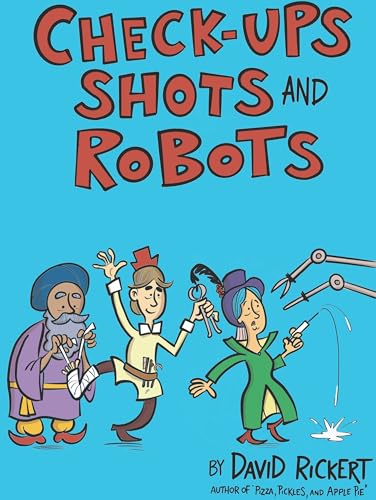
Why do I have to get a checkup? My head hurts—make it better! Kids can explore the science and history behind common medical practices and procedures and learn about health problems, treatments, and medical breakthroughs in this funny and educational graphic-format nonfiction book.Common childhood illnesses and injuries and the methods to cure or treat them can lead to questions. This book offers answers, showing how people learned how to understand and care for the human body, from ancient times to the present day. Young readers will travel back in time—sometimes thousands of years—to cultures all over the globe to learn how and why medical breakthroughs occurred. They’ll meet key people from medical history along the way, including early surgeons working without anesthesia and grave robbers seeking knowledge of human anatomy. The science behind antibiotics and how stitches work are two of many topics in this fascinating book, which includes projects and activities for both the classroom and home.
A comics-version of medical history, well-seasoned with humor and lots of effluents. Using the same approach that he took in Pizza, Pickles, and Apple Pie (2023), David Rickert again mixes scenes of contemporary tweens at school (pondering a classmate’s appendicitis, fretting over vaccines, suffering from a headache, etc.) with the past and future of five main topics: the “well visit”, diseases and infections, vaccines, pain relief, and surgery. In the section on pain relief, for example, he covers ancient superstitions, herbal remedies, and meditation techniques before turning to early chemical pain relievers, such as laudanum and nitrous oxide. This is followed by a diagram showing the impact of such drugs on the body and a short discussion of the future of virtual reality technology in pain management. Despite the prevalence of white men in the history of medicine, Rickert does include patients of diverse ages, genders, and races, and discusses the career of Rebecca Lee Crumpler (the first Black woman to earn a medical degree), the role of Onesimus (an enslaved Black man) in introducing variolation to Massachusetts, and the books of the Women of Salerno, who wrote the first widely consulted treatises on the female body.
Rickert’s loose, clear, and goofy illustrations, which recalls vintage Mad magazine cartoons, will definitely appeal to older elementary and middle school readers. There’s a streak of parody here; when Robert Liston gets ready to amputate in a blood-soaked operation theater (strewn with bones and body parts), the patient yells “The left leg!! The left!!” as the surgeon swings a knife, a toothed saw gripped in his mouth. And groggy green viruses grow weak and die as they are attacked by antibodies wielding swords and shields. Back matter includes guidance on how to conduct research on a famous doctor, how to draw people and create comics, basic first aid techniques and supplies, further reading, and an index. Link to complete review: https://ysbookreviews.wordpress.com/2...
Infused with humor, these comic-book style panels explore the history of medical breakthroughs and look ahead to future innovation, touching upon vaccines, how painkillers work, the advent of surgery, and nanotechnology. I learned from this--it was especially interesting to discover that trepanning was discovered by various cultures around the world at about the same time, and to find that women made valuable contributions to the medical field throughout history despite gender bias--and it passed "The Kid Test": I left this book on a chair in the kitchen where I knew my kid would see it, with no comment nor explanation. Kid picked it up, read it, and freely regaled me with his favorite parts.
Excellent backmatter (Create a Medical History Comic, First Aid You Can Do Yourself, Make Your Own First Aid Kit, Further Reading, Index and Acknowledgements) extends opportunities for additional engagement.
This was a cute book, and it provided a fun background into the history of medicine. I could see children enjoying reading it, but it felt a bit chaotic. The contents explain how the chapters are broken up, into sections. However, when reading through the book if feels a bit erratic as there isn't a linear timeline.
I liked this book about surgeries and doctoring. Instead of being formal, it was informal, funny and nothing like those tough books about math and other stuff. My favorite part was the side story in it. I would rate it a good old 5 star.