

What do you think?

Sartor Resartus
Sartor Resartus (The Tailor Retailored) is ostensibly an introduction to a strange history of clothing by the German Professor of Things in General, Diogenes Teufelsdrockh; its deeper concerns are social injustice, the right way of living in the world, and the large questions of faith and understanding.
This is the first edition to present the novel as it originally appeared, with indications of the changes Carlyle made to later editions.
This is the first edition to present the novel as it originally appeared, with indications of the changes Carlyle made to later editions.
268 pages, Hardcover
First published January 1, 1834
About the author
Thomas Carlyle
1,876 books559 followersThomas Carlyle, Scottish historian, critic, and sociological writer. was born in the village of Ecclefechan, Dumfriesshire, eldest child of James Carlyle, stonemason, and Margaret (Aitken) Carlyle. The father was stern, irascible, a puritan of the puritans, but withal a man of rigid probity and strength of character. The mother, too, was of the Scottish earth, and Thomas' education was begun at home by both the parents. From the age of five to nine he was at the village school; from nine to fourteen at Annan Grammar School. where he showed proficiency in mathematics and was well grounded in French and Latin. In November 1809 he walked to Edinburgh, and attended courses at the University till 1814, with the ultimate aim of becoming a minister. He left without a degree, became a mathematical tutor at Annan Academy in 1814, and three years later abandoned all thoughts of entering the Kirk, having reached a theological position incompatible with its teachings. He had begun to learn German in Edinburgh, and had done much independent reading outside the regular curriculum. Late in 1816 he moved to a school in Kirkcaldy, where he became the intimate associate of Edward Irving, an old boy of Annan School, and now also a schoolmaster. This contact was Carlyle's first experience of true intellectual companionship, and the two men became lifelong friends. He remained there two years, was attracted by Margaret Gordon, a lady of good family (whose friends vetoed an engagement), and in October 1818 gave up schoolmastering and went to Edinburgh, where he took mathematical pupils and made some show of reading law.
During this period in the Scottish capital he began to suffer agonies from a gastric complaint which continued to torment him all his life, and may well have played a large part in shaping the rugged, rude fabric of his philosophy. In literature he had at first little success, a series of articles for the Edinburgh Encyclopaedia bringing in little money and no special credit. In 1820 and 1821 he visited Irving in Glasgow and made long stays at his father's new farm, Mainhill; and in June 1821, in Leith Walk, Edinburgh, he experienced a striking spiritual rebirth which is related in Sartor Resartus. Put briefly and prosaically, it consisted in a sudden clearing away of doubts as to the beneficent organization of the universe; a semi-mystical conviction that he was free to think and work, and that honest effort and striving would not be thwarted by what he called the "Everlasting No."
For about a year, from the spring of 1823, Carlyle was tutor to Charles and Arthur Buller, young men of substance, first in Edinburgh and later at Dunkeld. Now likewise appeared the first fruits of his deep studies in German, the Life of Schiller, which was published serially in the London Magazine in 1823-24 and issued as a separate volume in 1825. A second garner from the same field was his version of Goethe's Wilhelm Meister which earned the praise of Blackwood's and was at once recognized as a very masterly rendering.
In 1821 Irving had gone to London, and in June 1821 Carlyle followed, in the train of his employers, the Bullers. But he soon resigned his tutorship, and, after a few weeks at Birmingham, trying a dyspepsia cure, he lived with Irving at Pentonville, London, and paid a short visit to Paris. March 1825 saw him back; in Scotland, on his brother's farm, Hoddam Hill, near the Solway. Here for a year he worked hard at German translations, perhaps more serenely than before or after and free from that noise which was always a curse to his sensitive ear and which later caused him to build a sound-proof room in his Chelsea home.
Before leaving for London Irving had introduced Carlyle to Jane Baillie Welsh daughter of the surgeon, John Welsh, and descended from John Knox. She was beautiful, precociously learned, talented, and a brilliant mistress of cynical satire. Among her numerous suitors, the rough, uncouth
During this period in the Scottish capital he began to suffer agonies from a gastric complaint which continued to torment him all his life, and may well have played a large part in shaping the rugged, rude fabric of his philosophy. In literature he had at first little success, a series of articles for the Edinburgh Encyclopaedia bringing in little money and no special credit. In 1820 and 1821 he visited Irving in Glasgow and made long stays at his father's new farm, Mainhill; and in June 1821, in Leith Walk, Edinburgh, he experienced a striking spiritual rebirth which is related in Sartor Resartus. Put briefly and prosaically, it consisted in a sudden clearing away of doubts as to the beneficent organization of the universe; a semi-mystical conviction that he was free to think and work, and that honest effort and striving would not be thwarted by what he called the "Everlasting No."
For about a year, from the spring of 1823, Carlyle was tutor to Charles and Arthur Buller, young men of substance, first in Edinburgh and later at Dunkeld. Now likewise appeared the first fruits of his deep studies in German, the Life of Schiller, which was published serially in the London Magazine in 1823-24 and issued as a separate volume in 1825. A second garner from the same field was his version of Goethe's Wilhelm Meister which earned the praise of Blackwood's and was at once recognized as a very masterly rendering.
In 1821 Irving had gone to London, and in June 1821 Carlyle followed, in the train of his employers, the Bullers. But he soon resigned his tutorship, and, after a few weeks at Birmingham, trying a dyspepsia cure, he lived with Irving at Pentonville, London, and paid a short visit to Paris. March 1825 saw him back; in Scotland, on his brother's farm, Hoddam Hill, near the Solway. Here for a year he worked hard at German translations, perhaps more serenely than before or after and free from that noise which was always a curse to his sensitive ear and which later caused him to build a sound-proof room in his Chelsea home.
Before leaving for London Irving had introduced Carlyle to Jane Baillie Welsh daughter of the surgeon, John Welsh, and descended from John Knox. She was beautiful, precociously learned, talented, and a brilliant mistress of cynical satire. Among her numerous suitors, the rough, uncouth
Ratings & Reviews
Friends & Following
Create a free account to discover what your friends think of this book!
Community Reviews
Displaying 1 - 30 of 172 reviews

March 31, 2013
At another point in my life, this would have gotten a full boat. Alas, ensconced within books as I am, ever enveloped with the urge to move on to something new, I'm afraid I became a touch impatient with Carlyle towards the end—but the fault is entirely mine. The age in which he composed this beautifully, lushly written work of great and subtle meta-sartorial humour—satirical, metaphysical, biographical, Goethean, liberally populated with phrases of a poetic entanglement whose surface appeal captivates you sufficient to pry and/or puzzle through unto the thoughts encased within—was one less hurried when it came to the written page: though folk back then do not appear to have overly cared for this particular iteration of Carlyle's prolix, demi-feudalist beard-stroking either. It is what Moldbug vainly aspires towards to this day, without promise—but, then again, precious few could wield a pen with Carlyle's degree of lustrous ribbons and exaggerated flourishes in the era of Twitter.

April 6, 2015
فى البداية علىّ أن أشيد بالترجمة
فالأستاذ طه السباعى جعل الكتاب يبدو
وكأنه مكتوب بلغته الأصلية
حتى أننى تصورت أن النسخة الإنجليزية ماكانت لتكون بهذه الروعة
فلسفة الملابس
توماس كارليل
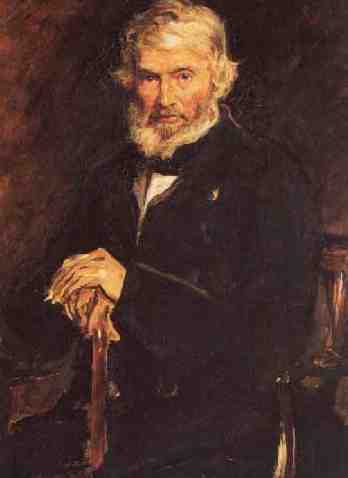
ولدتنا أمهاتنا عراة
ولولا الملاءات والشراشف القطنية التى تدثرنا بها
لما بقينا على قيد الحياة
تحدث عن فلسلفة الملابس لأول مرة
الفيلسوف الألمانى: تيوفلسدروخ
ونظرًا للسباق العلمى وقتها فقد لفتت تلك الفلسفة نظر توماس كارليل
الذى أسمى تيوفلسدروخ بالأستاذ
ونظرًا للأمانة العلمية كذلك،
فإن كاريل أودع ترجمة الأستاذ وأفردها فى باب كامل
وإن كتابه لمكون من ثلاثة أيواب
والباب الخاص بترجمة الأستاذ هو الأوسط
الكتاب عبارة عن موجز لطيف لفلسفة الملابس للأستاذ
وتختلف أصناف الملابس:
فمنها الملابس القطنية وملابس الأوراق المالية وملابس المناصب الحكومية
فلا عجب أن يقال
فلان عليه ثوب من الهيبة والوقار
أوفلان عليه ثوب من غضب الله ومقته
ففلسفة الملابس بحر شاسع
فلا نكاد نخرج من باب حتى ندخل فى آخر
وإن القارئ ليلاحظ ان كل جملة لا تخلو
من دعوة صريحة لإعمال العقل
وترك العنان له
ولو تجاوز القارئ العنوان
وقرأ الكتاب بدون تخصيص
لوجد فيه فلسفة كبيرة
ولخرج منه بأفضل نتيجة
ومما لفت نظرى وأثار إعجابى..
الأستاذ إذ يطلق على عاصمة بلاد الإنجليز،مركز الحياة المتحضرة
وكارليل يصف الألمان بأهل الرأى والعرفان والمثابرة لا يعرفون الونى والكلال
فتأثرت بكيفية احترامهم لبعضهم البعض
حتى عندما ينتقد كارليل أفكار الأستاذ
فإنه ينقده نقدًا لطيفًا كأنما يداعبه
فلا تملك إلا أن تبتسم
:)

December 6, 2011
They simply don't make 'em like they used to...
Sartor Resartus is one of Carlyle's supreme creations, to be sat alongside the towering achievement of his French Revolution. It's a sort of novel-cum-philosophical-treatise-cum-satire, a lumbering behemoth full of ideas and overheated prose. Did I mention that it's also rather funny. This is a great book to read drunk as, presumably, many in the 19th century did.
From out of a cloud of pipe smoke comes Diogenes Teufelsdroeckh, a professor of "Allerley-Wissenschaft" (Things in General) at the University of Weissnichtwo (Who Knows Where) who has affected to form a "Philosophy of Clothes" (Kleider). The narrator has discovered this work, and presents key passages with digressions, as well the story of Professor Teufelsdroekh himself.
As the work progresses, the elements constituting a Philosophy of Clothes are only gradually revealed until nearly the end of the book, when, in high satire, we encounter the dandiacal body:
What Teufelsdroekh would call a 'Divine Idea of Cloth' is born with him; and this, like other such Ideas, will express itself outwardly, or wring his heart asunder with unutterable throes. But, like a generous, creative enthusiast, he fearlessly makes his Idea an Action; shows himself in peculiar guise to mankind; walks forth, a witness and living Martyr to the eternal worth of Clothes. We called him a Poet; is not his body the (stuffed) parchment-skin whereupon he writes, with cunning Huddersfield dyes, a Sonnet to his mistress' eyebrow? Say, rather, an Epos, and Clotha Virumque cano [ha! -ed], to the whole world, in Macaronic verses, which he that runs may read...
Is it a skewering of a sort of materialism? I am not very well-read in philosophy, and therefore am perhaps unqualified to evaluate this work as it pertains to that discipline. It would be a pleasure to enroll in a seminar on Carlyle and German idealism and truly tease out all the references in this dense work.
My opinions of this work, and undoubtedly those of other readers as well, are perhaps best summed up by Carlyle himself.
It were a piece of vain flattery to pretend that this Work on Clothes entirely contents us; that it is not, like all works of genius, like the very Sun, which, though the highest published creation, or work of genius, has nevertheless black spots and troubled nebulosities amid its effulgence,--a mixture of insight, inspiration, with dulness, double-vision, and even utter blindness.
Sartor Resartus is one of Carlyle's supreme creations, to be sat alongside the towering achievement of his French Revolution. It's a sort of novel-cum-philosophical-treatise-cum-satire, a lumbering behemoth full of ideas and overheated prose. Did I mention that it's also rather funny. This is a great book to read drunk as, presumably, many in the 19th century did.
From out of a cloud of pipe smoke comes Diogenes Teufelsdroeckh, a professor of "Allerley-Wissenschaft" (Things in General) at the University of Weissnichtwo (Who Knows Where) who has affected to form a "Philosophy of Clothes" (Kleider). The narrator has discovered this work, and presents key passages with digressions, as well the story of Professor Teufelsdroekh himself.
As the work progresses, the elements constituting a Philosophy of Clothes are only gradually revealed until nearly the end of the book, when, in high satire, we encounter the dandiacal body:
What Teufelsdroekh would call a 'Divine Idea of Cloth' is born with him; and this, like other such Ideas, will express itself outwardly, or wring his heart asunder with unutterable throes. But, like a generous, creative enthusiast, he fearlessly makes his Idea an Action; shows himself in peculiar guise to mankind; walks forth, a witness and living Martyr to the eternal worth of Clothes. We called him a Poet; is not his body the (stuffed) parchment-skin whereupon he writes, with cunning Huddersfield dyes, a Sonnet to his mistress' eyebrow? Say, rather, an Epos, and Clotha Virumque cano [ha! -ed], to the whole world, in Macaronic verses, which he that runs may read...
Is it a skewering of a sort of materialism? I am not very well-read in philosophy, and therefore am perhaps unqualified to evaluate this work as it pertains to that discipline. It would be a pleasure to enroll in a seminar on Carlyle and German idealism and truly tease out all the references in this dense work.
My opinions of this work, and undoubtedly those of other readers as well, are perhaps best summed up by Carlyle himself.
It were a piece of vain flattery to pretend that this Work on Clothes entirely contents us; that it is not, like all works of genius, like the very Sun, which, though the highest published creation, or work of genius, has nevertheless black spots and troubled nebulosities amid its effulgence,--a mixture of insight, inspiration, with dulness, double-vision, and even utter blindness.

August 21, 2020
In an attempt to rescue this one from the doldrums of hated student reads, I picked up the illustrated Canongate edition with an introduction from Alasdair Gray. Alas, a sudden conversion to the genius of this novel never came. I was more open to the humorous passages of ludicrous atiloquence on the apparel of dandies and churchmen, less open to the remainder of the novel, a rambling Greatest Hits package from the fictitious German screed, written in pore-clogging prose that wavers between hyperreferential and erudite and incomprehensible, interrupted every paragraph or so by a Kimbote-esque narrator who fogs the flow. Alas, the very definition of a syllabus chore whose charms still elude with age.

December 15, 2007
Alright, so he's an old bastard. I know. He was generally wrong-headed and entirely conceited. He's also hilarious and witty. I would that all those who disagree with me could do so in such a pleasing fashion.

November 15, 2013
Introduction
Acknowledgements
Note on the Text
Select Bibliography
A Chronology of Thomas Carlyle
--Sartor Resartus
Appendix I: Carlyle to James Fraser, May 1833
Appendix II: Maginn's Portrait of Carlyle, June 1833
Appendix III: Carlyle to Emerson, August 1834
Appendix IV: Carlyle to John Sterling, June 1835
Appendix V: Carlyle's Supplementary Material to the 1869 Edition
Explanatory Notes
Glossary
Acknowledgements
Note on the Text
Select Bibliography
A Chronology of Thomas Carlyle
--Sartor Resartus
Appendix I: Carlyle to James Fraser, May 1833
Appendix II: Maginn's Portrait of Carlyle, June 1833
Appendix III: Carlyle to Emerson, August 1834
Appendix IV: Carlyle to John Sterling, June 1835
Appendix V: Carlyle's Supplementary Material to the 1869 Edition
Explanatory Notes
Glossary

February 7, 2019
Although it was pretty funny at times, "Sartor Resartus" mainly just made me zone out and forget what was happening every other 5 pages or so. The book sort of reads like a conversation you have with a drunk girl, while waiting in line for the bathroom at a party: it starts of with some hot takes on today's society, continues on with the entire life story of the drunk girl (or German philosopher, I guess), and ends with just a whole bunch of philosophical ideas that don't quite make sense. It's not exactly unenjoyable, but it's not the highlight of your night.

May 18, 2020
”No sé de un libro más árdido y volcánico, más trabajado por la desolación que Sartor Resartus.” Jorge Luis Borges
Este es unos de los libros que Borges más admiraba y leía. Lo hacía constantemente, producto de su admiración por Thomas Carlyle, unos de sus escritores predilectos y uno de los más influyentes de la literatura inglesa.
Este volumen es en parte un extenso ensayo filosófico y por otra parte la biografía de un personaje ficticio, el intelectual Diógenes Teufelsdröckch, cuyo nombre es un juego de palabras, ya que Diógenes significa 'de origen divino', mientras que Teufelsdröckh se traduce como 'excremento de demonio', oriundo de la ficticia ciudad de Weissnichtwo (la traducción del nombre de este lugar sería algo así algo así como "No se sabe dónde").
En la biografía llevada a cabo por el mismo autor con un seudónimo conoceremos historia, vida y obra de Teufelsdröckch quien nos hará conocer su "Filosofía del Traje" desde las primeras páginas y por todo el resto del libro.
Puede notarse la influencia que Goethe ha ejercido en Carlyle, ya que por momentos el libro parece ser un sentido homenaje al excelso autor alemán.
El contenido altamente filosófico del "Sartor Resartus", que significa "El sastre remendado" o "El sastre zurcido" escapa a mi pobre entendimiento intelectual y casi inexistente desarrollo de la Filosofía, aunque me ha dado una grata satisfacción su lectura.
Este es unos de los libros que Borges más admiraba y leía. Lo hacía constantemente, producto de su admiración por Thomas Carlyle, unos de sus escritores predilectos y uno de los más influyentes de la literatura inglesa.
Este volumen es en parte un extenso ensayo filosófico y por otra parte la biografía de un personaje ficticio, el intelectual Diógenes Teufelsdröckch, cuyo nombre es un juego de palabras, ya que Diógenes significa 'de origen divino', mientras que Teufelsdröckh se traduce como 'excremento de demonio', oriundo de la ficticia ciudad de Weissnichtwo (la traducción del nombre de este lugar sería algo así algo así como "No se sabe dónde").
En la biografía llevada a cabo por el mismo autor con un seudónimo conoceremos historia, vida y obra de Teufelsdröckch quien nos hará conocer su "Filosofía del Traje" desde las primeras páginas y por todo el resto del libro.
Puede notarse la influencia que Goethe ha ejercido en Carlyle, ya que por momentos el libro parece ser un sentido homenaje al excelso autor alemán.
El contenido altamente filosófico del "Sartor Resartus", que significa "El sastre remendado" o "El sastre zurcido" escapa a mi pobre entendimiento intelectual y casi inexistente desarrollo de la Filosofía, aunque me ha dado una grata satisfacción su lectura.

January 13, 2015
What does the Latin title of this novel mean? The Tailor Retailored. Who is the tailor? Humanity, or, in the old style, Man. Why is he not only a tailor, but a retailored tailor? Because Man is a spiritual being that can recreate himself through use of spiritual signs, such as words, pictures, and material artifacts, thus bringing himself into line with concepts of perfection and godliness—all of which means that God is an idea whose time has not yet come because we have not yet realized or actualized Him through our world-creating abilities to re-tailor ourselves in His ideal image. Why are metaphors drawn from clothing and fashion so helpful in understanding this philosophy of Man-as-God-Recreator? Because we use clothes to cover and thus to transfigure the naked state we share with the brutes; clothes are a special case of all human acts of perception and creation, because the universe itself is clothed (tailored) in divine signs that Man needs to interpret and manipulate (retailor) in order to materialize his potential perfection. And that, in answer to a question I have not yet asked, is why life can only be comprehended through metaphor: metaphor, the linking of concepts across their apparent differences, is the foundation of all thought, because to think at all we must apprehend the universal idea in which all things participate.
The above paragraph is the summed-up philosophy of the fictional German thinker—Diogenes Teufelsdröckh, Professor of Things in General—who is the protagonist of this 1833-4 novel by Thomas Carlyle, a man better known not as creative writer but for his later career as Victorian Sage, secular prophet, historian and pamphleteer, public intellectual.
That Diogenes was a famous cynic, that "Diogense Teufelsdröckh" means "God-born devil's excrement" in English, that Teufelsdröckh's ideas reprise those of the German Romantic and Idealist philosophers (Goethe, Schiller, Hegel, etc.), and that metaphors drawn from fashion are an unusually low and homely way to exemplify such philosophies should all alert us that this is a work of satire and irony, as much a play of language as an earnest novel. The back cover copy of my edition draws appropriate comparisons to Swift, Sterne, Melville, and Joyce; it also calls the novel "enigmatic." Given that I was able to provide a synopsis of the protagonist's philosophy pretty easily (albeit with the help of hindsight and of having read some of the German philosophers alluded to), what makes the novel so mysterious?
The answer is its metafictional form. Carlyle presents his narrative as a long summary work for the British magazine-reader of Teufelsdröckh's masterpiece, Clothes: Their Origin and Influence. Our British narrator portrays himself as a long-suffering annotator to an endless book of philosophy, written in a sometimes impenetrable style; to compound his challenges, he has also been sent, for the purposes of writing Teufelsdröckh's biography, bags of seemingly haphazard scraps from the philosopher's writings and wanderings. Thus, the text we read is, within the novel's fiction, a necessarily arbitrary assemblage of the philosopher's writings by a sometimes hostile or mocking editor. (Perhaps a modern analogue would be less Ulysses than Pale Fire.) Moreover, one of the editor's most characteristic comments is a statement of uncertainty, before or after quoting Teufelsdröckh, as to whether the German thinker is being ironic or straightforward.
Note, then, at least four layers of irony (defined simply as double-meaning) in Carlyle's novel: 1. we encounter serious philosophy presented as a joke (its author is named Devil's Shit and is obsessed with clothes); 2. we read this supposedly coherent and total philosophy in a bewilderingly fragmented form; 3. said form is arranged by an uncomprehending and resentful editor; 4. finally, the text of the philosophy itself may or may not be self-undermining through an ironical tone. This makes for a dizzying and dazzling readerly experience, and should remind us that so-called postmodernism was just a further, and often less sophisticated, pursuit of Romantic irony.
Given all this abyssal irony, can the reader find any stable ground in this novel? I think so, at least in part. Here is my theory: I suspect the novel overall is sympathetic to Teufelsdröckh's ideas—his passionate wanderings, described so lyrically in the central section of the three-part narrative; his furious sarcasm, often completely misunderstood by the editor, at the world's injustices of war and poverty; his awe before the beauty of nature and the capacity of man to participate in its becoming. While I am not one for biographical interpretations, neither am I dogmatic on the subject, and there is no point ignoring Carlyle's well-known apprenticeship to German Romanticism and attempt to popularize it in England. The editor, then, stands for the crudity of the English imagination, its inability to think beyond the merely existent because of its thrall to nihilistic anti-metaphysics such as utilitarianism, empiricism, and capitalism. (The English type the Scot Carlyle sends up here remains very much with us: think of Richard Dawkins, John Carey, Ian McEwan, and that whole ilk of aging intellectuals who scorn so much that is beyond their own insular tradition; and have George Steiner and Gabriel Josipovici not operated as latter-day Carlyles, if only as the Continental opponents of such island-thinking?)
Teufelsdröckh's writing, as relayed by the editor's selections, is so copiously generative—tenderly imagistic in descriptions of nature, full of eloquent and sarcastic invective when assaulting injustice, almost epic in its range when describing the nature and purpose of man's place in the universe. And the editor's comments on it, if occasionally refreshing in their common sense, seem mean-minded and cheap. It is no wonder that Emerson loved this book, for Teufelsdröckh writes not a little like Emerson in full visionary flow, whereas our editor sounds, does he not, like some carping critic biting at the great man's ankles.
"Great man." A worrying phrase. Also worrying is Teufelsdröckh's endorsement of "hero-worship," which Carlyle too will later praise in a book described by no less than Borges as a forerunner of Nazism. And let us not neglect that Teufelsdröckh's ideology is consistently described as sansculottism*, thus associated with the terroristic phase of the beautiful revolution idealist philosophy prophesies. At one point in the novel, Teufelsdröckh writes a Swiftian proposition that the poor should simply be gunned down to thin their numbers in line with Malthus's fears of overpopulation; now I read his tone as unambiguously ironic, a satire on what the rich think of the poor, but the editor takes the proposal literally and is shocked. Another joke at the expense of the stupid English bourgeois? Well, maybe, but the novel also clearly shows Teufelsdröckh's German disciple, Hofrath Heuschreke, taking it very seriously, even to the point of writing a dead-serious Institute for the Suppression of Population. Is it really so easy to separate idealism from contempt for the material? Are we sure we can tell the difference between revolution and reaction, between Jacobinism and fascism?
If we do take Teufelsdröckh's beautiful idealism as having dangerous implications, as potentially tailoring not a new man but a straitjacket for man-as-he-is, then the novel's irony becomes its most redemptive aspect, not a quality to be read around in hopes of finding Carlyle's "real argument," not even if it allows us the facile fun of mocking some of today small-minded Englishmen. For the empirical English imagination in this book may function as a corrective, something like Sancho Panza in relation to Don Quixote, a real ground-level view of things as opposed to the intellectual's assumed stance of revolutionism. Teufelsdröckh, we are told, lives in building from which he can survey his whole city; but this godly perspective neglects the view from the street. The purpose of irony, it seems to me, is to allow us both perspectives at once—the tower and the ground, Sancho and Quixote—so that we have as much knowledge as possible in our attempts to fashion the future. Such irony is the essence of literature, of the novel, of the essay, and I suspect this is why Carlyle mocks the philosophical treatise, which aims at an intellectual closure that irony forbids and fiction—with its multiple perspectives—formally disallows. This is no doubt also why the older Carlyle threw over fiction for more closed forms; I would be lying if I denied that I too sometimes tire of these defenses of literature as that which allows us no conclusions. It all seems so weak, so foolish, the self-congratulation of the naïf, especially now, when we are surrounded by neo-Carlyles left and right urging that we worship new heroes in the hour of crisis. Nobody wants to hear that devil's shit is what we are, and I have no counsel of romanticized weakness, à la Malcolm Bull, to offer, because that too is an arrogant philosopher's pose (vanguardism in assumed rags is still vanguardism). The proper conclusion, if we can come to one, is that whatever else we are or may be, including God-born, we are also devil's shit—and don't you forget it. That is the pedagogy of the essay, of the novel, of irony, of literature.
I have committed a great sin here, a lapse I hypocritically would not tolerate in undergraduate writing, by not quoting from the novel! But it is so complex I thought it best approached at first with a telescope rather than a microscope. In any case, the whole thing can be read at Project Gutenberg, and I recommend dipping in to see if its intensities—which move in very long rhythms and so do not lend themselves to brief quotation—suit you. See especially the grand trinity of chapters at the heart of the novel: "The Everlasting No," "Centre of Indifference," and "The Everlasting Yea." Speaking personally, I loved this novel, but I allow that it is not for everyone. I spent my time in graduate school trying to understand the Marxist theory of the novel, which entailed a lot of mostly unsuccessful attempts to grasp the German Romantic philosophy that underlies Western Marxism and also a lot of worry over the potentially totalitarian nature of this intellectual tradition. For this reason, I very much appreciated Carlyle's intentional burlesque of this philosophy's more rarefied aspects, and his perhaps unintentional warning—a warning that seems to be embodied in his later career—of where it all may lead, of what trouble you may find yourself in, and not only intellectually, if you do not use the shears of irony to tailor your idealism to the human figure's so-far intransigent actual shape.
*A joke from Kafka, quoted from memory because I don't remember where I read it and Google doesn't bring it up, which means I have possibly invented it or am misattributing it to Kafka: "It is said that the members of the sans-cullotes met secretly in the night for the purpose of wearing cullotes." There is a whole theory of politics in that sentence, whoever wrote it.
View all my reviews
The above paragraph is the summed-up philosophy of the fictional German thinker—Diogenes Teufelsdröckh, Professor of Things in General—who is the protagonist of this 1833-4 novel by Thomas Carlyle, a man better known not as creative writer but for his later career as Victorian Sage, secular prophet, historian and pamphleteer, public intellectual.
That Diogenes was a famous cynic, that "Diogense Teufelsdröckh" means "God-born devil's excrement" in English, that Teufelsdröckh's ideas reprise those of the German Romantic and Idealist philosophers (Goethe, Schiller, Hegel, etc.), and that metaphors drawn from fashion are an unusually low and homely way to exemplify such philosophies should all alert us that this is a work of satire and irony, as much a play of language as an earnest novel. The back cover copy of my edition draws appropriate comparisons to Swift, Sterne, Melville, and Joyce; it also calls the novel "enigmatic." Given that I was able to provide a synopsis of the protagonist's philosophy pretty easily (albeit with the help of hindsight and of having read some of the German philosophers alluded to), what makes the novel so mysterious?
The answer is its metafictional form. Carlyle presents his narrative as a long summary work for the British magazine-reader of Teufelsdröckh's masterpiece, Clothes: Their Origin and Influence. Our British narrator portrays himself as a long-suffering annotator to an endless book of philosophy, written in a sometimes impenetrable style; to compound his challenges, he has also been sent, for the purposes of writing Teufelsdröckh's biography, bags of seemingly haphazard scraps from the philosopher's writings and wanderings. Thus, the text we read is, within the novel's fiction, a necessarily arbitrary assemblage of the philosopher's writings by a sometimes hostile or mocking editor. (Perhaps a modern analogue would be less Ulysses than Pale Fire.) Moreover, one of the editor's most characteristic comments is a statement of uncertainty, before or after quoting Teufelsdröckh, as to whether the German thinker is being ironic or straightforward.
Note, then, at least four layers of irony (defined simply as double-meaning) in Carlyle's novel: 1. we encounter serious philosophy presented as a joke (its author is named Devil's Shit and is obsessed with clothes); 2. we read this supposedly coherent and total philosophy in a bewilderingly fragmented form; 3. said form is arranged by an uncomprehending and resentful editor; 4. finally, the text of the philosophy itself may or may not be self-undermining through an ironical tone. This makes for a dizzying and dazzling readerly experience, and should remind us that so-called postmodernism was just a further, and often less sophisticated, pursuit of Romantic irony.
Given all this abyssal irony, can the reader find any stable ground in this novel? I think so, at least in part. Here is my theory: I suspect the novel overall is sympathetic to Teufelsdröckh's ideas—his passionate wanderings, described so lyrically in the central section of the three-part narrative; his furious sarcasm, often completely misunderstood by the editor, at the world's injustices of war and poverty; his awe before the beauty of nature and the capacity of man to participate in its becoming. While I am not one for biographical interpretations, neither am I dogmatic on the subject, and there is no point ignoring Carlyle's well-known apprenticeship to German Romanticism and attempt to popularize it in England. The editor, then, stands for the crudity of the English imagination, its inability to think beyond the merely existent because of its thrall to nihilistic anti-metaphysics such as utilitarianism, empiricism, and capitalism. (The English type the Scot Carlyle sends up here remains very much with us: think of Richard Dawkins, John Carey, Ian McEwan, and that whole ilk of aging intellectuals who scorn so much that is beyond their own insular tradition; and have George Steiner and Gabriel Josipovici not operated as latter-day Carlyles, if only as the Continental opponents of such island-thinking?)
Teufelsdröckh's writing, as relayed by the editor's selections, is so copiously generative—tenderly imagistic in descriptions of nature, full of eloquent and sarcastic invective when assaulting injustice, almost epic in its range when describing the nature and purpose of man's place in the universe. And the editor's comments on it, if occasionally refreshing in their common sense, seem mean-minded and cheap. It is no wonder that Emerson loved this book, for Teufelsdröckh writes not a little like Emerson in full visionary flow, whereas our editor sounds, does he not, like some carping critic biting at the great man's ankles.
"Great man." A worrying phrase. Also worrying is Teufelsdröckh's endorsement of "hero-worship," which Carlyle too will later praise in a book described by no less than Borges as a forerunner of Nazism. And let us not neglect that Teufelsdröckh's ideology is consistently described as sansculottism*, thus associated with the terroristic phase of the beautiful revolution idealist philosophy prophesies. At one point in the novel, Teufelsdröckh writes a Swiftian proposition that the poor should simply be gunned down to thin their numbers in line with Malthus's fears of overpopulation; now I read his tone as unambiguously ironic, a satire on what the rich think of the poor, but the editor takes the proposal literally and is shocked. Another joke at the expense of the stupid English bourgeois? Well, maybe, but the novel also clearly shows Teufelsdröckh's German disciple, Hofrath Heuschreke, taking it very seriously, even to the point of writing a dead-serious Institute for the Suppression of Population. Is it really so easy to separate idealism from contempt for the material? Are we sure we can tell the difference between revolution and reaction, between Jacobinism and fascism?
If we do take Teufelsdröckh's beautiful idealism as having dangerous implications, as potentially tailoring not a new man but a straitjacket for man-as-he-is, then the novel's irony becomes its most redemptive aspect, not a quality to be read around in hopes of finding Carlyle's "real argument," not even if it allows us the facile fun of mocking some of today small-minded Englishmen. For the empirical English imagination in this book may function as a corrective, something like Sancho Panza in relation to Don Quixote, a real ground-level view of things as opposed to the intellectual's assumed stance of revolutionism. Teufelsdröckh, we are told, lives in building from which he can survey his whole city; but this godly perspective neglects the view from the street. The purpose of irony, it seems to me, is to allow us both perspectives at once—the tower and the ground, Sancho and Quixote—so that we have as much knowledge as possible in our attempts to fashion the future. Such irony is the essence of literature, of the novel, of the essay, and I suspect this is why Carlyle mocks the philosophical treatise, which aims at an intellectual closure that irony forbids and fiction—with its multiple perspectives—formally disallows. This is no doubt also why the older Carlyle threw over fiction for more closed forms; I would be lying if I denied that I too sometimes tire of these defenses of literature as that which allows us no conclusions. It all seems so weak, so foolish, the self-congratulation of the naïf, especially now, when we are surrounded by neo-Carlyles left and right urging that we worship new heroes in the hour of crisis. Nobody wants to hear that devil's shit is what we are, and I have no counsel of romanticized weakness, à la Malcolm Bull, to offer, because that too is an arrogant philosopher's pose (vanguardism in assumed rags is still vanguardism). The proper conclusion, if we can come to one, is that whatever else we are or may be, including God-born, we are also devil's shit—and don't you forget it. That is the pedagogy of the essay, of the novel, of irony, of literature.
I have committed a great sin here, a lapse I hypocritically would not tolerate in undergraduate writing, by not quoting from the novel! But it is so complex I thought it best approached at first with a telescope rather than a microscope. In any case, the whole thing can be read at Project Gutenberg, and I recommend dipping in to see if its intensities—which move in very long rhythms and so do not lend themselves to brief quotation—suit you. See especially the grand trinity of chapters at the heart of the novel: "The Everlasting No," "Centre of Indifference," and "The Everlasting Yea." Speaking personally, I loved this novel, but I allow that it is not for everyone. I spent my time in graduate school trying to understand the Marxist theory of the novel, which entailed a lot of mostly unsuccessful attempts to grasp the German Romantic philosophy that underlies Western Marxism and also a lot of worry over the potentially totalitarian nature of this intellectual tradition. For this reason, I very much appreciated Carlyle's intentional burlesque of this philosophy's more rarefied aspects, and his perhaps unintentional warning—a warning that seems to be embodied in his later career—of where it all may lead, of what trouble you may find yourself in, and not only intellectually, if you do not use the shears of irony to tailor your idealism to the human figure's so-far intransigent actual shape.
*A joke from Kafka, quoted from memory because I don't remember where I read it and Google doesn't bring it up, which means I have possibly invented it or am misattributing it to Kafka: "It is said that the members of the sans-cullotes met secretly in the night for the purpose of wearing cullotes." There is a whole theory of politics in that sentence, whoever wrote it.
View all my reviews

November 14, 2013
Read some of this as a freshman at Amherst College, back when it was a great college with my Humanities section prof Rolfe Humphries, the great translator. Read more Carlyle, Past and Present, in grad school, so that when we first went to Europe (bought a VW for $1300 and drove to Edinburgh and down the Rhine to Bern) we visited Carlyle's London house in Chelsea, played a note on the piano Chopin had played. Revisited the house in the 1990's.

February 3, 2019
That sure was a book. It made me laugh occasionally, which is good, but it overall just confused me.

July 25, 2024
A strange book that keeps reminding us that it's a strange book (so let's move on from there). Sometimes funny, sometimes theological, sometimes philosophical, definitely brilliant, so you just have to run with it.
Update: I wrote a fuller review of Sartor Resartus here. https://archipelago7.blogspot.com/202...
Update: I wrote a fuller review of Sartor Resartus here. https://archipelago7.blogspot.com/202...

May 1, 2022
I ought to have enjoyed this very comic novel. Unfortunately I was in a constant state of anxiety as I read because I could nor figure out what it was about. I had started out with the belief the protagonist, Herr Diogenes Teufelsdröckh, a professor of philosophy living in Weissnichtwo (Who knows where), was a parody of Hegel and that "Sartor Resartus" was a manifesto for transcendentalism. In other words Carlyle would present the argument that God could not be known through reason as proposed by Hegel but through intuition or emotions as held by the transcendentalists. This proposed model, however, did not hold up very well once I began to actually read the book.
I saw some connections to Hegel. Teufelsdröckh was indeed a professor at a remote university possessing a great reputation in Germany and an entourage of admirers. His magnum opus was a treatise of clothes. I wondered thus if clothes were the Hegelian phenomenon or apparition whereas the naked man (Adam) was the essence. This theory however did not hold very well. Teufelsdröckh could just as well been Kant or Fichte. The similarities between the garment and the Hegelian apparition diminished rather than increased as the novel progressed.
I soon decided that "Sartor Resartus" was about the broad German culture of the first half of the 19th century not just philosophy. There were references to Jean Paul and Novalis. Most noticeably there was considerable discussion of Goethe. (Carlyle had earlier published a translation of Goethe's Wilhelm Meister's Apprenticeship). The novel even contains a lengthy account of the failed youthful romance of Teufelsdröckh that parodies Goethes' "Sorrows of Young Werther. Finally there was a stream of German words and phrases included in the text with unnecessary English translations. At one point Carlyle explains to the reader that loghead could be used as a translate for dummkopf.
After finishing the novel, I consulted the introduction written in 1908 by William Henry Hudson, which argued that "Sartor Resartus" could be seen as Carlyle's autobiography in that it described the various stages in Carlyle's intellectual development. The tale of the failed romance that was similar to young Werther was a commentary on Carlyle's failed courtship of Jane Baillie Welsh. Hudson's theory now seems to me to be the best of the many that exist.
"Sartor Resartus" is indeed a difficult book. Despite having read some Hegel and a substantial amount of Goethe, I was lost throughout.
I saw some connections to Hegel. Teufelsdröckh was indeed a professor at a remote university possessing a great reputation in Germany and an entourage of admirers. His magnum opus was a treatise of clothes. I wondered thus if clothes were the Hegelian phenomenon or apparition whereas the naked man (Adam) was the essence. This theory however did not hold very well. Teufelsdröckh could just as well been Kant or Fichte. The similarities between the garment and the Hegelian apparition diminished rather than increased as the novel progressed.
I soon decided that "Sartor Resartus" was about the broad German culture of the first half of the 19th century not just philosophy. There were references to Jean Paul and Novalis. Most noticeably there was considerable discussion of Goethe. (Carlyle had earlier published a translation of Goethe's Wilhelm Meister's Apprenticeship). The novel even contains a lengthy account of the failed youthful romance of Teufelsdröckh that parodies Goethes' "Sorrows of Young Werther. Finally there was a stream of German words and phrases included in the text with unnecessary English translations. At one point Carlyle explains to the reader that loghead could be used as a translate for dummkopf.
After finishing the novel, I consulted the introduction written in 1908 by William Henry Hudson, which argued that "Sartor Resartus" could be seen as Carlyle's autobiography in that it described the various stages in Carlyle's intellectual development. The tale of the failed romance that was similar to young Werther was a commentary on Carlyle's failed courtship of Jane Baillie Welsh. Hudson's theory now seems to me to be the best of the many that exist.
"Sartor Resartus" is indeed a difficult book. Despite having read some Hegel and a substantial amount of Goethe, I was lost throughout.

Read
October 2, 2019Apparently, Thomas Carlyle was once a force to be reckoned with. He is often invoked nowadays, especially by defenders of natural hierarchy, but rarely read -- no one will ever guilt you by saying "what, you haven't read Carlyle?"
This is meant to be a satire on German idealism (I think?), and it's frankly hard to discern where Carlyle is being sincere and where he's mocking the Hegelians, as it all turns into same late-Georgian drivel. I applaud the efforts Carlyle took at expanding what a novel could be, but if you're going to read something turgid from this period, please, read Tristram Shandy instead.
This is meant to be a satire on German idealism (I think?), and it's frankly hard to discern where Carlyle is being sincere and where he's mocking the Hegelians, as it all turns into same late-Georgian drivel. I applaud the efforts Carlyle took at expanding what a novel could be, but if you're going to read something turgid from this period, please, read Tristram Shandy instead.

Want to Read
July 31, 2020A favorite of Frederick Law Olmsted (1822-1903).
A novel with philosophy and satire thrown in.
Popular with the Transcendentalists.
A novel with philosophy and satire thrown in.
Popular with the Transcendentalists.

June 2, 2007
"Considering our present advanced state of culture, and how the Torch of Science has now been brandished and borne about, with more or less effect, for five thousand years and upwards... so that not the smallest cranny or doghole in Nature or Art can remain unilluminated, -- it might strike the reflective mind with some surprise that hitherto little or nothing of a fundamental character, whether in the way of Philosophy or History, has been written on the subject of Clothes."
So begins the fictional editor of Carlyle's Sartor Resartus ("The Tailor Re-Tailored"), who proceeds to make it his job to introduce to the British public just such a Philosophy of Clothes which has been written by an largely unknown German, Diogenes Teufelsdrockh (last name translates as "devil's s**t"). The problem for the editor, however, is that he can not simply translate the work and present it to a British audience, as he believes that in order to transplant the work into foreign soil, it is necessary to present the man as well as his work. Thus, the editor must not only present Teufelsdrockh's ideas, but an account of life; however, this project itself is compromised when an associate of Teufelsdrockh's offers to send the editor his autobiographical writings but instead he receives "Six considerable Paper-Bags... the inside of which sealed Bags, lie miscellaneous masses of Sheets, and oftener Shreds and Snips, written in Professor Teufelsdrockh's scare-legible cursiv-schrift; and treating of all imaginable things under the Zodiac and above it, but of his own personal history only at rare intervals, and then in the most engimatic character!"
The editor's attempt to weave together fragments of Teufelsdrockh's Philosophy of Clothes along with fragments of his history is absolutely hilarious. This book is not only funny, but philosophically engaging, as Teufelsdrockh's writings and the editor's challenges engage with problems explored by the German Enlightenment as well as Utilitarianism and other contemporary thought. Sartor Resartus is not for the faint of heart, but it is certainly as rewarding as it is challenging; a truly important work of the 19c, it is an unique and outstanding piece of creative prose in line with Swift, Sterne and Fielding.
Finally, I think it provides what will be my epithet (which Teufelsdrockh's was asked to compose for a Count: "Here lies... Who during his sublunary existence destroyed with lead five thousand partridges and openly turned into dung, through himself and his servants, quadrupeds and bipeds, not without tumult in the process, ten thousand million pounds of assorted food. He now rests from labour, his works following himn. If you seek his monument, look at the dung-heap. He mad his first kill on earth [date]; his last [date]."
So begins the fictional editor of Carlyle's Sartor Resartus ("The Tailor Re-Tailored"), who proceeds to make it his job to introduce to the British public just such a Philosophy of Clothes which has been written by an largely unknown German, Diogenes Teufelsdrockh (last name translates as "devil's s**t"). The problem for the editor, however, is that he can not simply translate the work and present it to a British audience, as he believes that in order to transplant the work into foreign soil, it is necessary to present the man as well as his work. Thus, the editor must not only present Teufelsdrockh's ideas, but an account of life; however, this project itself is compromised when an associate of Teufelsdrockh's offers to send the editor his autobiographical writings but instead he receives "Six considerable Paper-Bags... the inside of which sealed Bags, lie miscellaneous masses of Sheets, and oftener Shreds and Snips, written in Professor Teufelsdrockh's scare-legible cursiv-schrift; and treating of all imaginable things under the Zodiac and above it, but of his own personal history only at rare intervals, and then in the most engimatic character!"
The editor's attempt to weave together fragments of Teufelsdrockh's Philosophy of Clothes along with fragments of his history is absolutely hilarious. This book is not only funny, but philosophically engaging, as Teufelsdrockh's writings and the editor's challenges engage with problems explored by the German Enlightenment as well as Utilitarianism and other contemporary thought. Sartor Resartus is not for the faint of heart, but it is certainly as rewarding as it is challenging; a truly important work of the 19c, it is an unique and outstanding piece of creative prose in line with Swift, Sterne and Fielding.
Finally, I think it provides what will be my epithet (which Teufelsdrockh's was asked to compose for a Count: "Here lies... Who during his sublunary existence destroyed with lead five thousand partridges and openly turned into dung, through himself and his servants, quadrupeds and bipeds, not without tumult in the process, ten thousand million pounds of assorted food. He now rests from labour, his works following himn. If you seek his monument, look at the dung-heap. He mad his first kill on earth [date]; his last [date]."

September 20, 2024
For some odd reason, this book was very difficult for me to read. It is both a philosophical and humoristic work, but where does the humor start or end, and the philosophy? The one thing I learned while reading this book, which was a coincidence, is that the Carlyle Hotel in Manhattan is named after Thomas. Now, that I find fascinating! In a few years, I will re-read this book.

November 10, 2012
One of the strangest books I've ever read. Utterly delirious and totally wonderful.
It probably deserves 5 stars, but I'm giving it four because, well, it's awfully hard. This is probably not fair of me. It requires serious concentration on the reader's part, and even then, it's so bizarre and outlandish that you feel like you're barely skimming the surface of it. A truly remarkable book.
It probably deserves 5 stars, but I'm giving it four because, well, it's awfully hard. This is probably not fair of me. It requires serious concentration on the reader's part, and even then, it's so bizarre and outlandish that you feel like you're barely skimming the surface of it. A truly remarkable book.

August 29, 2013
Absolutely dreadful, incomprehensible book that was the turning point in my master's degree. I decided not to do a ph.D after trying to read this dreck. I wanted a plot, dialogue, and real characters with a happy ending. The day I threw that book against the wall was the first day of the rest of my life :) A bit dramatic, but actually what really happened.

Read
October 26, 2025توقفت في صفحة 61 وسأنتقل لقراءة الكتاب باللغة الإنجليزية فهذه حقا هي أبشع وأسوأ ترجمة إلى العربية قرأتها في حياتي وهذا المترجم لا ينبغي أن يحاول - حتى مجرد محاولة - أن يخوض في مضمار الترجمة بأي صورة ... مأساة

March 31, 2010
Looked into this the other day, and wow. Carlyle is easy to loathe. But I'd forgotten how good this is.

July 18, 2026
Thomas Carlyle's Sartor Resartus is an utterly original work. It outlines the life and thinking of a fictional German philosopher of minor and obscure importance, Diogenes Teufelsdröckh, who wrote a book on the "philosophy of clothes." The book we are reading is the attempt by an English "Editor" (for all intents and purposes, the narrator of the text) to disclose the scattered brilliance of Teufelsdröckh despite the exaggeration, disorganization, and deliberate opacity of his writings. Part one, which is the Editor's wide-ranging selection from Teufelsdröckh's main volume prefaced by brief sketches of the man that he gathered from an acquaintance is a rampaging performance of humor, style, insight, and innovation -- that alone makes Sartor Resartus an essential read for anyone interested in either German Idealism, transcendentalism, and romanticism on the one hand, and metafiction and postmodernism on the other.
The problems begin in part two, which lays out a piecemeal biography of Teufelsdröckh. Influenced mainly by Goethe's novels, this is a programmatic and arid bildungsroman of a very primitive sort that offers little life and few surprises. Part three finds the Editor returning to Teufelsdröckh's philosophy and quoting his works again at length. By this point, Teufelsdröckh has become a bloviating nuisance and the Editor, in his admiring patience, appears to be none the wiser. The luster of his ideas has been buried in cliches and repetition: imagine, if you will, Nietzsche's Zarathustra descending from the mountain and spending the rest of his life happily opining in the beerhalls after humming along at Sunday service. And the high-minded, heavy-handed writing never lets up.
Perhaps the book is a disguised and ironic exploration of Carlyle's worldview, or a subtle examination of the construction of the romantic self... Never a rounded or realistic character, Teufelsdröckh, whose philosophy is a chaotic patchwork, is not, however, a subject fit to support either a compelling novel or a pertinent satire.
"You see two individuals," he writes, "one dressed in fine Red, the other in coarse threadbare Blue: Red says to Blue, 'Be hanged and anatomized;' Blue hears with a shudder, and (O wonder of wonders!) marches sorrowfully to the gallows; is there noosed up, vibrates his hour, and the surgeons dissect him, and fit his bones into a skeleton for medical purposes. How is this; or what make ye of your Nothing can act but where it is? Red has no physical hold of Blue, no clutch of him, is nowise in contact with him: neither are those ministering Sheriffs and Lord-Lieutenants and Hangmen and Tipstaves so related to commanding Red, that he can tug them hither and thither; but each stands distinct within his own skin. Nevertheless, as it is spoken, so is it done: the articulated Word sets all hands in Action; and Rope and Improved-drop perform their work.
"Thinking reader, the reason seems to me twofold: First, that Man is a Spirit, and bound by invisible bonds to All Men; secondly, that he wears Clothes, which are the visible emblems of that fact. Has not your Red hanging-individual a horsehair wig, squirrel-skins, and a plush-gown; whereby all mortals know that he is a JUDGE?—Society, which the more I think of it astonishes me the more, is founded upon Cloth.
The problems begin in part two, which lays out a piecemeal biography of Teufelsdröckh. Influenced mainly by Goethe's novels, this is a programmatic and arid bildungsroman of a very primitive sort that offers little life and few surprises. Part three finds the Editor returning to Teufelsdröckh's philosophy and quoting his works again at length. By this point, Teufelsdröckh has become a bloviating nuisance and the Editor, in his admiring patience, appears to be none the wiser. The luster of his ideas has been buried in cliches and repetition: imagine, if you will, Nietzsche's Zarathustra descending from the mountain and spending the rest of his life happily opining in the beerhalls after humming along at Sunday service. And the high-minded, heavy-handed writing never lets up.
Perhaps the book is a disguised and ironic exploration of Carlyle's worldview, or a subtle examination of the construction of the romantic self... Never a rounded or realistic character, Teufelsdröckh, whose philosophy is a chaotic patchwork, is not, however, a subject fit to support either a compelling novel or a pertinent satire.
"You see two individuals," he writes, "one dressed in fine Red, the other in coarse threadbare Blue: Red says to Blue, 'Be hanged and anatomized;' Blue hears with a shudder, and (O wonder of wonders!) marches sorrowfully to the gallows; is there noosed up, vibrates his hour, and the surgeons dissect him, and fit his bones into a skeleton for medical purposes. How is this; or what make ye of your Nothing can act but where it is? Red has no physical hold of Blue, no clutch of him, is nowise in contact with him: neither are those ministering Sheriffs and Lord-Lieutenants and Hangmen and Tipstaves so related to commanding Red, that he can tug them hither and thither; but each stands distinct within his own skin. Nevertheless, as it is spoken, so is it done: the articulated Word sets all hands in Action; and Rope and Improved-drop perform their work.
"Thinking reader, the reason seems to me twofold: First, that Man is a Spirit, and bound by invisible bonds to All Men; secondly, that he wears Clothes, which are the visible emblems of that fact. Has not your Red hanging-individual a horsehair wig, squirrel-skins, and a plush-gown; whereby all mortals know that he is a JUDGE?—Society, which the more I think of it astonishes me the more, is founded upon Cloth.

July 27, 2009
Sartor Resartus, which means "The Tailor Re-tailored" is ostensibly a book on "The Philosophy of Clothing" by a German author, Herr Diogenes Teufelsdrockh. We're told that this is the English translation from the original German. But, this is much more than a translation. The translator feels that in order to make the book more accessible to his English audience, he should include copious commentary and background. In the end, not only do we get the the translation of the original along with the editor's commentary but we also get a biography of Teufelsdrockh assembled from the strange and seemingly random contents of six sealed paper bags which the editor has come into possession of, and which he plans to deposit later at the British Museum.
This is all great, except that Teufelsdrockh is fictional along with the German version of the book and the six paper bags. So it's a fictional translation by a fictional editor of a fictional book that turns out to actually be a rather hilarious semi-autobiograhical portrayal of Carlyle and his thoughts.
At times it's parody of Hegel, at other times it's religious and existential musings then later it's political and philosophical commentary. All that alone would be enough, but couple it with Carlyle's brobdingagian (big) vocabulary, his dream-like writing style and now obscure references to historical and contemporary (for him) events and you get a fascinating book that is unique in many ways.
I thought it was funny, insightful and memorable. I loved the writing style, and though it took me several months to read it, it was worth the effort. You can find it for free on Google Books, Gutenberg etc.
Here are a couple of existential quotations from the book:
This is all great, except that Teufelsdrockh is fictional along with the German version of the book and the six paper bags. So it's a fictional translation by a fictional editor of a fictional book that turns out to actually be a rather hilarious semi-autobiograhical portrayal of Carlyle and his thoughts.
At times it's parody of Hegel, at other times it's religious and existential musings then later it's political and philosophical commentary. All that alone would be enough, but couple it with Carlyle's brobdingagian (big) vocabulary, his dream-like writing style and now obscure references to historical and contemporary (for him) events and you get a fascinating book that is unique in many ways.
I thought it was funny, insightful and memorable. I loved the writing style, and though it took me several months to read it, it was worth the effort. You can find it for free on Google Books, Gutenberg etc.
Here are a couple of existential quotations from the book:
Are we not Spirits, that are shaped into a body, into an Appearance; and that fade away again into air and Invisibility? This is no metaphor, it is a simple scientific fact: we start out of Nothingness, take figure, and are Apparitions; round us, as round the veriest spectre, is Eternity; and to Eternity minutes are as years and aeons. Come there not tones of Love and Faith, as from celestial harp-strings, like the Song of beatified Souls? And again, do not we squeak and gibber (in our discordant, screech-owlish debatings and recriminatings); and glide bodeful, and feeble, and fearful; or uproar (poltern), and revel in our mad Dance of the Dead,—till the scent of the morning air summons us to our still Home; and dreamy Night becomes awake and Day?Motivational:
'So bandaged, and hampered, and hemmed in,' groaned he, 'with thousand requisitions, obligations, straps, tatters, and tagrags, I can neither see nor move: not my own am I, but the World's; and Time flies fast, and Heaven is high, and Hell is deep: Man! bethink thee, if thou hast power of Thought! Why not; what binds me here? Want, want!—Ha, of what?Do stuff!
A certain inarticulate Self-consciousness dwells dimly in us; which only our Works can render articulate and decisively discernible. Our Works are the mirror wherein the spirit first sees its natural lineaments. Hence, too, the folly of that impossible Precept, Know thyself; till it be translated into this partially possible one, Know what thou canst work at.
May 10, 2022
This whatever-you-want-to-call-it by Thomas Carlyle can lay claim to being world literature's first foray into postmodernism. SARTOR RESARTUS is an alleged introduction to a non-fiction book that may or may not exist. Carlyle fashioned a recursive universe where the author, his subject and the reader are equally responsible for the content, or non-content. The fact that Carlyle claimed to have written the definitive biography of Friedrich the Great and the history of the French Revolution makes this tract doubly ironic. The fact that almost no one reads Carlyle today is triply ironic.

February 3, 2021
i know he's smart i just have no idea what he's saying 40% of the time

Read
May 10, 2024. . .

January 7, 2021
The lower people everywhere desire War. Not so unwisely; there is then a demand for lower people—to be shot!A collection of aphorisms, sketches, and short essays strung together into a Shandy-esque construction purporting to be an English editor’s selection and translation of passages from the writings of a contemporary German philosopher, Diogenes Teufelsdröckh. The work is often heavily ironic in tone, though there are passages of lyricism and, less often, straightforward exposition. Carlyle, the translator of Goethe (unironically seen as almost Godlike by Teufelsdröckh), nominally distances himself from the ideas by fully committing to the idea that the material is a translation from the German, frequently inserting parenthetical German terms in the text as if to mend possible inadequacies in his choices of English equivalents. There’s a subtext throughout that Teufelsdröckh’s thought is essentially un-English and only capable of imperfect representation in the language of that nation. His foreignness also allows Carlyle to indulge in occasional satirical presentations of English society that result from the German’s “misunderstandings”.
The work is divided into three Books: the first book introduces the editor’s project, gives a general account of Teufelsdröckh, including the editor’s personal reminiscences, and provides excerpts from his magnum opus on the Philosophy of Clothes.
The second book contains a roughly sketched life of Teufelsdröckh, based on fragments from a miscellaneous accumulation of autobiographical writings provided to the editor by a German mutual acquaintance. This section provides the most sustained narrative, such as it is, in the book: an account of Teufelsdröckh’s childhood, conventional and unsatisfactory education, abortive career in the law, unfulfilled love affair, Wanderjahre, universal disillusionment, and final reawakening to a sense of meaning and purpose (“my Spiritual New-birth, or Baphometic Fire-baptism”). The supposed quotations from Teufelsdröckh tend to present these experiences as general observations on psychology and society rather than objective events; thus, though a Bildungsroman in outline, the style very much continues the aphoristic tendencies of the rest of the book.
The third book presents extended excerpts from Teufelsdröckh’ s book on Clothing-Philosophy. These tend to be ironical in tone, though in places Carlyle approaches a presentation which seems to strive toward genuine philosophic exposition. This is particularly true of the chapter “Natural Supernaturalism” which attempts to examine the nature of Existence outside its “clothing” of Time and Space. After these speculations with their serious tone and thorny style (“Nevertheless, may not here and there one of a thousand, provided with a discursiveness of intellect rare in our day, have cleared the passage, in spite of all?”, the editor asks afterward) the book climaxes with a savagely ironic chapter on “Dandyism” and its opposing sect, “the Brotherhood of Poor-Slaves”. This is an attack on 19th century income inequality that has only grown sharper with the subsequent years
To me it seems probable that the two Sects will one day part England between them; each recruiting itself from the intermediate ranks, till there be none left to enlist on either side. Those Dandiacal Manicheans, with the host of Dandyizing Christians, will form one body: the Drudges, gathering round them whosoever is Drudgical, be he Christian or Infidel Pagan; sweeping up likewise all manner of Utilitarians, Radicals, refractory Pot-wallopers, and so forth, into their general mass, will form another. I could liken Dandyism and Drudgism to two bottomless boiling Whirlpools that had broken out on opposite quarters of the firm land: as yet they appear only disquieted, foolishly bubbling wells, which man's art might cover in; yet mark them, their diameter is daily widening: they are hollow Cones that boil up from the infinite Deep, over which your firm land is but a thin crust or rind! Thus daily is the intermediate land crumbling in, daily the empire of the two Buchan-Bullers extending; till now there is but a foot-plank, a mere film of Land between them; this too is washed away: and then—we have the true Hell of Waters, and Noah's Deluge is out-deluged!
Words and Pictures
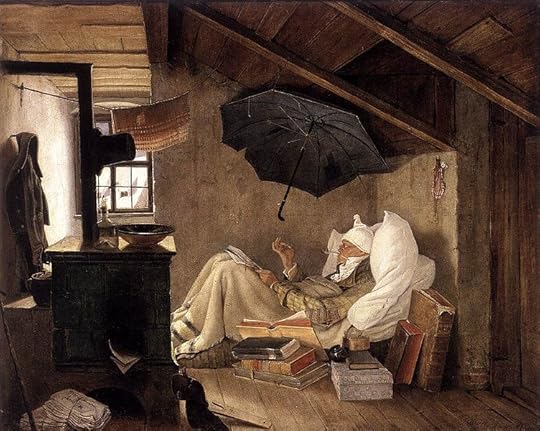
We enjoyed, what not three men Weissnichtwo could boast of, a certain degree of access to the Professor's private domicile. It was the attic floor of the highest house in the Wahngasse; and might truly be called the pinnacle of Weissnichtwo, for it rose sheer up above the contiguous roofs, themselves rising from elevated ground. … It was a strange apartment; full of books and tattered papers, and miscellaneous shreds of all conceivable substances, "united in a common element of dust." Books lay on tables, and below tables; here fluttered a sheet of manuscript, there a torn handkerchief, or nightcap hastily thrown aside; ink-bottles alternated with bread-crusts, coffee-pots, tobacco-boxes, Periodical Literature, and Blucher Boots.
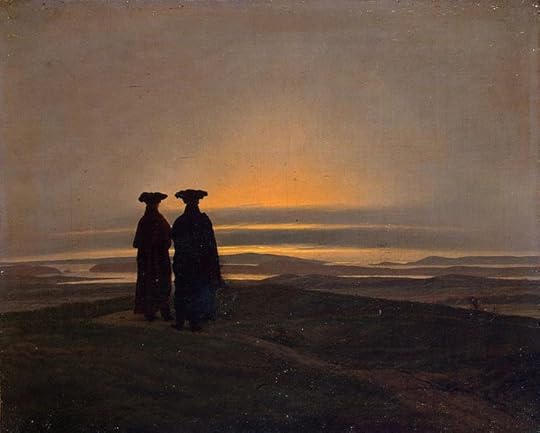
… there, many a sunset, have I, looking at the distant western Mountains, consumed, not without relish, my evening meal. Those hues of gold and azure, that hush of World's expectation as Day died, were still a Hebrew Speech for me; nevertheless I was looking at the fair illuminated Letters, and had an eye for their gilding.
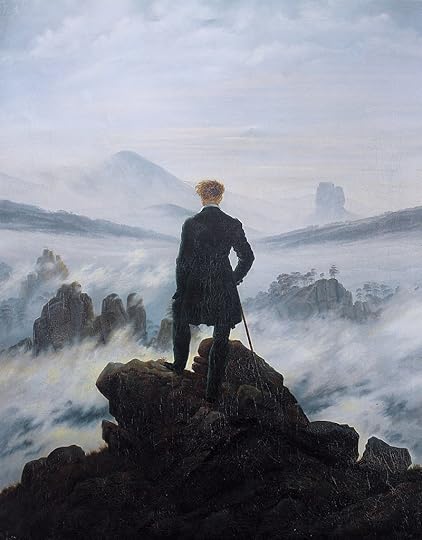
From such meditations is the Wanderer's attention called outwards; for now the Valley closes in abruptly, intersected by a huge mountain mass, the stony water-worn ascent of which is not to be accomplished on horseback. Arrived aloft, he finds himself again lifted into the evening sunset light; and cannot but pause, and gaze round him, some moments there. An upland irregular expanse of wold, where valleys in complex branchings are suddenly or slowly arranging their descent towards every quarter of the sky. The mountain-ranges are beneath your feet, and folded together: only the loftier summits look down here and there as on a second plain; lakes also lie clear and earnest in their solitude. No trace of man now visible; unless indeed it were he who fashioned that little visible link of Highway, here, as would seem, scaling the inaccessible, to unite Province with Province. But sunwards, lo you! how it towers sheer up, a world of Mountains, the diadem and centre of the mountain region! A hundred and a hundred savage peaks, in the last light of Day; all glowing, of gold and amethyst, like giant spirits of the wilderness; there in their silence, in their solitude, even as on the night when Noah's Deluge first dried! Beautiful, nay solemn, was the sudden aspect to our Wanderer. He gazed over those stupendous masses with wonder, almost with longing desire; never till this hour had he known Nature, that she was One, that she was his Mother and divine. And as the ruddy glow was fading into clearness in the sky, and the Sun had now departed, a murmur of Eternity and Immensity, of Death and of Life, stole through his soul; and he felt as if Death and Life were one, as if the Earth were not dead, as if the Spirit of the Earth had its throne in that splendor, and his own spirit were therewith holding communion.
Read
March 10, 2022in a just world, the young adult section of all bookstores would be replaced by that most powerful of genres "i made up a philosopher and now i'm a bit mad at him but also he has some good ideas". it's pretty funny, i think some of the specific humour and parody/commentary aspects have been lost in time but that never really detracts from the overall feel. i had initially intended to read this as a warmup to tackling carlyle's history of the french revolution, but the prose is so ludicrously dense and baroque and decadent that i'm going to have to take a while to chill out with some fucked up surrealism or something
oh also there's an appendix at the end of the gutenberg ebook with a few contemporary reviews of the book itself which i'm fairly certain are actually just carlyle again commenting on what he's done, but i honestly can't be sure and that's really the best praise you can give to fake book books
oh also there's an appendix at the end of the gutenberg ebook with a few contemporary reviews of the book itself which i'm fairly certain are actually just carlyle again commenting on what he's done, but i honestly can't be sure and that's really the best praise you can give to fake book books

October 11, 2026
Don’t ask me what this book was about. That’s none of my business, frankly
September 9, 2026
Absolutely hated this. 1/5 for enjoyment .
Displaying 1 - 30 of 172 reviews