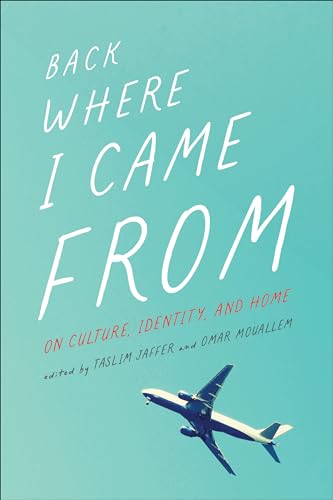
2024 Foreword INDIES Gold Winner for AnthologiesIn this collection of personal essays, twenty-six writers from across North America share journeys back to their motherlands as visitors. Set against mountainous terrain, tropical beaches, bustling cities, and remote villages, these narratives weave socio-political commentary with writers’ reflections on who they are, where they belong, and what “home” means to them.The result is a vulnerable, humorous, and insightful exploration of meanings and contradictions, beginning a conversation waiting to be had by the growing population of first- and second-generation Canadians and Americans, who will find themselves within these pages. Navigating the intricacies of hyphenated identities with nuanced stories of heritage and a redefined sense of home, the essays in Back Where I Came On Culture, Identity, and Home open a door to places around the globe―and within ourselves.With contributions by Omar El Akkad, Nadine Araksi, Ofelia Brooks, Esmeralda Cabral, June Chua, Seema Dhawan, Krista Eide, Eufemia Fantetti, Ayesha Habib, Christina Hoag, Mariam Ibrahim, Taslim Jaffer, Vesna Jaksic Lowe, Kathryn Gwun-Yeen Lennon, Omar Mouallem, Dimitri Nasrallah, Lishai Peel, Omar Reyes, Mahta Riazi, Steven Sandor, Angelo Santos, Alison Tedford Seaweed, Makda Teshome, Nhung N. Tran-Davies, Alexandra C. Yeboah, and Hannah Zalaa-Uul.
What a lovely diverse set of personal stories. This is the only book I've read with mention of the Ismaili community. I was born in Canada but my father and grandparents immigrated from Kenya. It was healing to read these essays specifically, to feel the ache of home that my family must feel.
I loved the variation of storytelling, from connective tissue to butter all the way to barnacles. there is so much heart and creativity in this anthology, very much worth the read. (also a great book to pick up at your local indie bookstore!)
Loved the concept of this collection, loved the different writings. The only downside for me was each essay felt too short. I was just getting into it and the story would end. I would rather have fewer, longer pieces than many short ones.
I narrated this audiobook. Was kinda tricky because of all the different languages, but I hope I did them justice. A pleasure to read. Hits close to home.
This collection of essays, written by diasporic authors, dazzles and transports readers to countries around the world. I’ve read many travel memoirs and collected travel tales where the storytelling draws readers in, which BACK WHERE I CAME FROM absolutely does, but what I loved about this collection, in addition to being true stories well told, is the twist that each contributor has left their homeland and since returned as a visitor. The result is an exploration of identity and cultural norms and expectations; of the shifting narratives of self we create and that others create for us—whether we want them to or not. I found myself longing, grieving, outraged and rejoicing alongside these narrators as they transported me back where they came from in a plethora of beautiful ways.
Once in a while, a book will leave a searing mark on you. This is one of them for me.
A collection of 26 personal essays by 26 different North American authors, this book documents each of their journeys back to their homeland and their reflections. It is a gorgeous collection of personal stories, featuring a wide range of countries, cultural backgrounds and reasons why they left in the first place. Some of my favourite essays were "The Land Remembers All of Its Children", in which Zalaa-uul captured my jumble of emotions and turned them into beautiful prose of grieving for the person she didn't become by leaving. "Foreign Body" took my breath away with Chua lamenting how her departure had changed her fundamentally through narrating about her diet. And Lennon's "Ah-Ling Ge Liu Fan Lai La! Ah-Ling's Girl Has Come Home" was just a personal bias, where I was brought along with her on a reminiscent trip to Cheung Chau Island, where I have spent my childhood for vacation day trips.
I cannot agree more with what was said in the introduction, that "this is a book of dualities: of commonalities and eclecticism, of connection and disconnection, of belonging and alienation". For me, it was both a reaching hug of comfort and affirmation, and an inviting hand to learn the unknown, and one filled with beautiful emotions and ugly facts. Quite often, I found myself rereading passages or having to set the book down because of all my emotions going in all different directions.
Regardless of who you are or where you are from, there will be something here for you. It's an incredible and poignant exploration of life, identity and where we call "home", and I will sing praises for this book to the ends of the world.
What a beautiful collection of stories that has put into words how disconnected yet connected as an immigrant I feel. I cried, laughed, related and I reflect.
As I approach the 11 year anniversary of landing in Canada, I find myself more thoughtful of home. What qualifies as home for a girl, no a woman, so far from home? Coming to a new country at a critical time of development in my life, I longed to go back to my beautiful coconut trees, my sandy hills, my folk songs. For the first 3 years of my tepid assimilation, I entered into a lonely, angsty, homesick existence where I both clamoured at friendship and bonds by erasing anything Guyanese about myself and willing the universe to teleport me to my childhood home. I pushed away my family, refused to learn how to make traditional foods, forced my tongue to take on a new accent, thought lowly of the things that made home home and forged a new identity.
11 years later, while I do choose Canada as my home (that so often refuses to claim me as its child) I reflect on the what ifs of a life- my life- that belonged to the motherland. What if, what if, what if…? I feel untethered. Disconnected from the family and friends that raised me. Forgetful of music, of the rich history and beautiful tapestry that I belong to. Of faces and of places i frequented, and the layout of my childhood bedroom. My sense of identity is adrift and after years of trying to shape myself as someone Canada will accept as her own, I wonder how much of Guyana I have lost.
I am grateful for the love, found family, the husband and life I have found here. But I am longing again. For parts of me that needs to relearn who she is outside of the white hand that forgets me. I am intertwined with the motherland and she with me. Although I forgot her and pushed her away for many years, the motherland knows my name and she does not forget me.
I really like these anthology books where you get to hear from different experiences and I specifically enjoyed this one because no matter the country of origin or the migratory path, the common themes of belonging, dual identity, homesickness and family were brought up by each of the protagonists. I was personaly touched by the story of the guyanese woman who tried to find her roots by learning the kriole even if her mother was not planning on going back, even if she was not born there, even if guyanese kriole is a difficult language to learn in Canada where not many speak it.
The roots run deep…!
A book that will leave you feeling validated and give you a sense of community if you too are dreaming of a place that once was your home or that of your parents. May you go (back) one day and know that no matter how much the people and the places make you feel like a stranger « motherland knows your name » 🫶🏽
I was blown away by the poignancy and the diversity of these essays, speaking on themes that resonate with what it means to move back and forth in the spaces of the diaspora. The stories will rock your soul; some will make you laugh, most will make you cry. But not in a bad way! This is an anthology that will stay with me and I encourage readers to buy it as gifts for anyone who knows what it means to think about belonging and identity from the outside-in.
A very thoughtful collection of essays written by people returning to their homeland. Some of these essays are sad, some are funny, and there is a lot of exploration about race, identity, and the idea of home.
A great idea, but it got lost in focus. Not sure why Can-Con funded works have so many non-Canadian writers included. There are enough immigrants in Canada to support a project. Surprised there is only one Black African, and zero Caribbean folks, though they are a large community in Canada. Some of the short stories set in the Middle East seem redundant.