

What do you think?

Edible
Bread: A Global History
What food is more basic, more essential and more universal than bread? Common to the diets of both rich and poor, bread is one of our oldest foods. Loaves and rolls have been found in ancient Egyptian tombs, and excavated from ovens in Pompeii that were buried when Vesuvius erupted in AD 79. From the sixteenth-century English peasants’ bread made with pea flour and rye, to the grain-wasting, pure white bread of the French court, from the crusty sourdough loaf made by artisan bakers to the doughy ‘sliced white’ found in every supermarket, there is a bread for every time and place in history.William Rubel takes us on a journey to discover breads around the world, from Mexican pan dulce to French baguettes and German pumpernickel, and shows how the kind of bread you eat reveals who you are. He also describes the techniques of bread-making, from ancient recipes leavened with brewers’ yeast to the factory-made sandwich loaf. Containing a glossary of over one hundred different breads from around the world, Bread will be an inspiration for all bakers, as well as anyone who enjoys a simple slice.
180 pages, Kindle Edition
First published September 15, 2011
Ratings & Reviews
Friends & Following
Create a free account to discover what your friends think of this book!
Community Reviews
Displaying 1 - 19 of 19 reviews

April 15, 2019
Every nation in every time in every place on earth eats some form of bread. I like this book, I can smell the bread baking, almost taste it spread thickly with butter or mopping up a curry and my hips increase sympathetically.
As soon as hunter gatherers began to settle down in the areas of the world where grain grew, they built granaries and baked bread. It has been found in pits 8,000 years old (no doubt very stale). The book details just about every single kind of bread and the culture, place and time it was associated with. At the end of every chapter is a recipe. I don't read recipes because I don't cook even though I have a vast collection of cookery books (I like the pretty pictures), but these recipes, being historical re-creations or ones of very unusual breads are interesting.
There's not a lot more to say about bread. It's either flat or risen, brown or white, made from wheat or some other grain, and everyone knows it tastes better fresh, and with butter.
As soon as hunter gatherers began to settle down in the areas of the world where grain grew, they built granaries and baked bread. It has been found in pits 8,000 years old (no doubt very stale). The book details just about every single kind of bread and the culture, place and time it was associated with. At the end of every chapter is a recipe. I don't read recipes because I don't cook even though I have a vast collection of cookery books (I like the pretty pictures), but these recipes, being historical re-creations or ones of very unusual breads are interesting.
There's not a lot more to say about bread. It's either flat or risen, brown or white, made from wheat or some other grain, and everyone knows it tastes better fresh, and with butter.

January 23, 2012
Writing the history of bread in 140 pages is an almost impossibly broad task. Rubel gives it a good shot, and ends up with a book that's fairly interesting. But the subject of bread, including flatbreads, is simply far too broad to do any kind of justice in such a short book.
April 7, 2016
This slim but very interesting volume providing, as promised, a global history of bread. The pictures are fascinating, and the author does a great job of illuminating not just the bread of the elites, which was often the most refined and enriched, but also the bread of the poor throughout history. He describes the social aspects of preparing and consuming bread and how tastes have shaped bread production as far as airy or dense crumb, types of flours and leaveners, and use of bread pans or free-standing loaves and any decorations or additions to the bread. He also explores the current trifecta of industrial bakers, commercial artisan bakeries, and home baking and what he considers the future of baking.
You can read more of my review here: https://thebreadmaiden.com/2016/04/11...
You can read more of my review here: https://thebreadmaiden.com/2016/04/11...

January 6, 2024
William Rubel loves bread, that much is clear, and he has written a short but strong account of bread from its earliest beginnings to (almost) now. A quick google search finds this about William Rubel: “a specialist in traditional cooking, travels the world studying food customs and gathering recipes. He lives in Santa Cruz, California, where he cooks most of his meals on his fireplace.” That’s cool, although I’m not going to do this. I’m also not going to even attempt to bake the bread for which there are recipes at the end of the book. “The recipes are written with the assumption that you already know how to bake bread.” That is very, very true. I can bake bread, barely. If you are reading this, and you baked one of these bread recipes and it turned out, I salute you!
June 15, 2025
The Biochemistry of bread and other starches.
The main provider of ATP (adenosine triphosphate: the energy molecule in biochemistry) is the intracellular organelle, the mitochondrion that converts ADP (Adenosine diphosphate) to ATP (Adenosine triphosphate) by adding the additional high energy monophosphate group to the ADP.
It is this high energy molecule that fuels life.
Homo Sapiens broke the survival barrier by domesticating plants and harvesting them. Wheat, rice, maize, potatoes, etcetera. Incidentally, so did many insects such as termites that harvest cellulose as in wood, then grow a fungus on it, and then, eat the fungus!
The main provider of ATP (adenosine triphosphate: the energy molecule in biochemistry) is the intracellular organelle, the mitochondrion that converts ADP (Adenosine diphosphate) to ATP (Adenosine triphosphate) by adding the additional high energy monophosphate group to the ADP.
It is this high energy molecule that fuels life.
Homo Sapiens broke the survival barrier by domesticating plants and harvesting them. Wheat, rice, maize, potatoes, etcetera. Incidentally, so did many insects such as termites that harvest cellulose as in wood, then grow a fungus on it, and then, eat the fungus!

December 31, 2016
What a wonderful little book. William Rubel examines bread and what it means deeply and has permanently changed the way I think of trends and fashions in bread. That the book is brief is not a problem, because the ideas in it are so large that they transcend the size of the book. Other books are perhaps more authoritative and more comprehensive, but none that I have read is quite so thought provoking.

June 18, 2012
Very interesting read for anyone interested in learning more about the historical and cultural aspects of bread, and trying ancient breads in his own kitchen.
November 3, 2022
As other reviewers pointed out, the topic is too broad to be covered in ~150 pages or so. But think of it this way, this book will tell you what types of bread that exist, a short history and how bread is made today. You will just have enough info to appreciate bread, and most importantly, a great stepping stone to do a deep dive in the future. Start here
November 27, 2025
I actually found this to be an extremely disappointing read. I've read some of the other books in this series, and this was by far my least favourite. William Rubel claims that this is a global history, but after rushing through a fraction of bread's ancient history, he ends up focusing most of his attention on European and Northern American bread traditions.
April 16, 2026
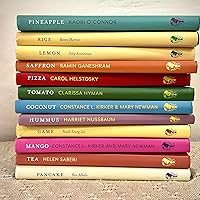
One of the best books of the Edible series. Rubel does a good job covering the history of bread, in a well-written manner.
There are some good recipes at the back, as well as a nice selection describing several types of breads.
There are some good recipes at the back, as well as a nice selection describing several types of breads.

July 9, 2014
Not bad. It's difficult to cover all of bread history in about 110 small pages, with art, so this is a nice overview of the topic.

July 14, 2021
Reading this book was like eating a delicious slice of homemade sourdough. Loved it!
October 1, 2021
dnf and will never pick this book again hahaha

October 7, 2021
Not quite as detailed as i wanted it to be.

December 29, 2025
The writing wasn't my favorite, but I did learn a good amount about bread. I find myself thinking about the history of bread whenever I eat or see it.

November 25, 2016
Le falto cernir y cocción.
Es un libro de historia muy básico, que ni siquiera incluye un apartado con detalladas descripciones y fotografías de algunos panes principales (al final hay un glosario que es un tibio intento pero sin fotos), no ofrece una catalogación más allá de pan con o sin levadura. Se echó de menos la historia de los gremios de panadero en Europa, importancia del pan en distintos aspectos socioculturales de la sociedad actual, como surgieron algunos panes, el desarrollo de distintas harinas y levaduras.
Es un libro de historia muy básico, que ni siquiera incluye un apartado con detalladas descripciones y fotografías de algunos panes principales (al final hay un glosario que es un tibio intento pero sin fotos), no ofrece una catalogación más allá de pan con o sin levadura. Se echó de menos la historia de los gremios de panadero en Europa, importancia del pan en distintos aspectos socioculturales de la sociedad actual, como surgieron algunos panes, el desarrollo de distintas harinas y levaduras.

October 14, 2014
Outstanding book. William Rubel reads the histories of colonialism and class through the history of bread. It was a brilliantly conceived book and well structured. The balance between narrative and analysis is excellent and the exploration of power, injustice and bread is well revealed.
Excellent example of food studies at its best. Rubel is a fine writer.
Excellent example of food studies at its best. Rubel is a fine writer.
November 21, 2014
This little book does many things: The history of bread, the peek at the chemistry that shapes the taste of bread, the cultural constructs surrounding bread and its flavor, and the industrialization of bread making over the last century or two. Sometimes Rubel got too technical in the specifics of shaping bread flavor and made parts of this book more difficult to read.

June 11, 2016
'More essential', 'more universal', one can't expect something good from a book written like that. So there is no surprise here.
Displaying 1 - 19 of 19 reviews