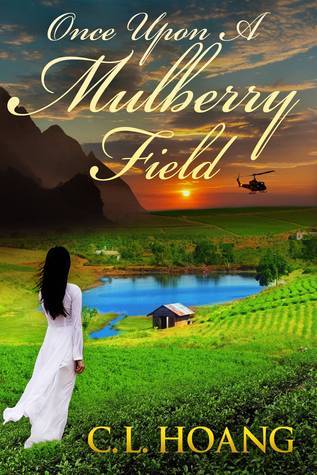
As Roger Connors, a widower with no children, ponders whether to pursue aggressive treatment for his cancer, a cryptic note arrives from a long-lost USAF buddy announcing the visit of an acquaintance from Vietnam. The startling news resurrects ghosts of fallen comrades and haunting memories of the great love he once knew.
Shocking revelations from his visitor uncover a missing part of Roger’s life he never dreamed possible. Peeling back one layer at a time, he delves into a decades-old secret in search of answers and traces of a passion unfulfilled.
From the jungles of Vietnam through the minefields of the heart, "Once upon a Mulberry Field" follows one man’s journey to self-discovery, fraught with disillusionment and despair but ultimately redeemed by the power of love.
C. L. Hoang was born and raised in Viet Nam during the war and came to the United States in the 1970s. He graduated from the University of California, Berkeley, and earns his living as an electronic engineer, with ten patents to his name. Books, history, and travel are his hobbies.
His latest release, a memoir titled "Land of Dreams: An Immigrant's Journey from War-Torn Vietnam to America," is published by the University of Tennessee Press (June 2026). Publishers Weekly calls the memoir “concise and affecting,” noting that it “bursts with hope… a balm.” Pulitzer Prize winner Robert Olen Butler describes it as "a moving and beautifully written book... a truly important book." It is an Amazon #1 New Release in Asian American Studies.
Hoang's first book, "Once upon a Mulberry Field," is an award-winning novel set in Viet Nam at the height of the war. It is followed by "Rain Falling on Tamarind Trees," the travelogue of his 2016 return trip to the ancestral homeland and a former Amazon #1 New Release in Vietnam Travel Guides. "In the Shadow of Green Bamboos" is the title of his next book, a collection of remarkable tales of love and hope, resilience and survival, from the Vietnam War. A former Amazon #1 New Release in Vietnam War History, it won the 2020 Best Indie Book Award in the Short Story category.
This book moved me on two levels. One, I felt myself falling backwards through time as I read the familiar terms: Cam-Ranh Bay. Long Binh. Sh*t hooks (Chinooks), slicks, Puff, and Warthogs. Charlie. Khmer Rouge. And the worst of all: Tet.
This story of Roger Connors takes me back to those days. I was riveted by the account of this young American landing in country and finding his way amid bombings and bloodshed, but also, friendship. Learning to love the local people; one, especially. Finding out what life was really like, there on the ground in South Vietnam. I was disturbed to be reminded of how, upon their return to the USA, our young men were punished for their involuntary participation in an unpopular war. ("Support Our Troops" is now a given, but it was a policy born of remorse for that misplaced hatred.) I was equally disturbed by Roger's personification of a Vet with PTSD after his return. How confusing to come back to one's former beloved country, still caught up in the turmoil of combat, grieving for friends still in harm's way.
But on another level, this is the story of a love affair, and I cried my eyes out toward the end. What a skillful portrayal of the human condition. We're all just fighting to create a good life for ourselves and our loved ones. How wonderful if it all works out, and how bittersweet, if not. The author, C.L. Hoang, a native of Vietnam who moved to America in his youth, manages to craft a tale that portrays the unacknowledged commonalities between warring cultures.
This is a beautifully-wrought story, made richer by the fact that the author began it only as a way of recording his father's history. As he wrote and researched, he began to interact with veterans, who told him their stories. Roger Connors is an amalgam of those veterans, and the book bears heartbreaking witness to the struggles of those on both sides. C.L. Hoang has written a first class debut novel. I hope there will be many more.
This is a beautifully written novel that tells a heartrending tale of American and South Vietnamese love at a time when both countries were torn apart by war. Set at Bien-Hoa Air Force Base near Saigon in 1967, at the height of the Tet Offensive, the novel explores the blossoming romance between a U.S. Air Force doctor, Roger Connors, and Lien, a young Vietnamese widow working as a hostess at a Saigon club. As the war progresses and political offensives set the country in turmoil, Roger and Lien are forced into circumstances that tear them apart.
The story is filled with descriptions of the lush, war-torn Vietnamese countryside, and the turbulent political atmosphere surrounding the war. I liked that the book focuses on the personal sacrifices made by both those who served in Vietnam and those who called the country home. The second half of the book focuses on Roger's return home to his fiancee and his subsequent struggles with PTSD and a country that had turned its back on those who served. Once Upon a Mulberry Field provides us with an inside look at love during wartime and is a thoughtful and hauntingly written reminder of the tragic effects of war.
This is an excellent book that uses 1st person narrative to tell the story of a US doctor serving during the Vietnam war. The story is believable, possible, touching, and compelling. I am very impressed by the author, C.L. Hoang. The narrative voice is so authentic it is hard to believe it's not actually his life story he's telling here.
I listened to the Audible version, which I consider superbly narrated. I am used to reading more swiftly than the pace of this reader, so I bumped the speed up a bit and that worked perfectly for me. I appreciated the effective voice changes that helped me keep straight who was speaking.
Final word on this book: Very little makes me cry, but this book so pulled me in that my tears flowed (for joy) in the final scenes. Well done, C. L. Hoang.
I liked this book very much and could easily see it becoming a movie. It's good, old-fashioned storytelling. Some of it is predictable, but I sure didn't mind because I was carried away by the emotional undercurrents. The most powerful scenes take place in Vietnam, where the author transports the reader to the war-torn country during the 1960s. One can feel the fear that the young men faced every day, not knowing if they would ever live to see their loved ones back home. The fear, anxiety, loneliness, and yearning is palpable. The author provides not only a powerful story of love and loss, but a history lesson as well.
One of the best books I have read this year! The story of innocence in a very difficult time in our country and in Vietnam. A country ravished by war - and the lives and families it touched. The characters were so brilliantly brought to life. I could visually see the young doctor from Minnesota and "The Kid" from Iowa. When an author takes that much time to ensure you get a feeling for the characters you know you have a great novel to read. The book touched me on so many levels, as a veteran myself I could think back and remember saying goodbye to a girlfriend, anxiously awaiting that care package but cannot imagine the pain of being 18 years old and being drafted and set to fight a war you probably didn't even understand. The story was was love, being changed, friendships made and lost, acquaintances discovered and lost for decades. It was about engagements and broken dreans - rediscovered hope, and lost opportunities. I believe this book should be a movie and would be a tremendous read for any High School literature class, because the possiblities for open discussion are endless.
There is a reason and a season for all life and love
I almost don't know what to say...the emotional realism of the words in this book, through war and tragedy and friendship and family and life. It is perfect. No spoilers. Just sincere gratitude to C. L. Hoang for capturing the essence of South Vietnam and the American servicemen who cared and have remembered their entire lives. Also, honor for those from both allied countries, milittary and civilian, who gave the ultimate sacrifice of their lives and to the families and friends who lost loved ones, but hold them close in their hearts. They didn't call it PTSD then, but it is still in the hearts and minds of the young men who returned, wounded, disabled, confused or uninjured, but not whole. They left a part of themselves in South Vietnam as is so beautifully, tragically, lovingly told in this novel. I recommend this book to everyone as a well-written, well-researched, emotional story of humanity. One of the best books I have ever read
As a member of the Baby Boomer generation, in the 1960s I watched the Viet Nam War unfold nightly on my television screen and thought I knew all about it. . In "Once Upon a Mulberry Field" C.L. Hoang presents a new (to me at least) take on the war, using a riveting love story as his vehicle. His protagonist Roger Connors, a physician, is coping with the recent loss of his wife and his own diagnosis of cancer in the 1990s.. Suddenly a figure from his past arrives and brings with him a flood of memories Connors had kept suppressed for decades. Through flashbacks we learn of Connors' days as an army physician during the Viet Nam War. He and his fellow physicians learn to deal with the deaths and horrific wounds they see on a daily basis. How they cope introduces us to myriad unforgettable characters, American and Viet Namese, During the 60s I was a committed antiwar activist. Until I read this I still clung to the belief that US involvement in Indo China was wrong-headed to begin with, and that our pullout was the right thing to do. Hoang, through his characters, presents another point of view. However much damage we might have done had we stayed, our exit and the way we did it, might have been worse. Cambodian Killing Fields was a phrase I had understandably forgotten. Hoang does a wonderful job of describing the emotional joy and despair of his characters, particularly Connors. According to the book notes, Hoang was born in Viet Nam and did not come to the U.S. until the 1970s. He shows a remarkable familiarity with the American culture of that period, not to mention the historical events related to Viet Nam. A master of English, presumably his second language, Hoang keeps us enthralled and informed at the same time. Those who lived through the era will be enriched by the lookback. Those who came later will learn a valuable lesson.
Although I felt at times that the author was providing too much backstory, he kept me engaged. You'd have to be alexithymic if parts of this book don't bring tears to your eyes.
I felt like C.L. Hoang was writing my biography in this wonderful book. It was very emotional and it sent me back in that time and place. When I say emotional I mean in every sense of the word. This book.The laughter, heartbreak, loss of life, and redemption. This book has it all. Highly recommend this stunning book.
C. L. Hoàng was born and raised in South Vietnam during the war and came to the United States in the 1970s. He graduated from the University of California, Berkeley, and earns his living as an electronic engineer, with eleven patents to his name to date. What C.L. Hoang has accomplished in this memorable novel is to reawaken a part of history that so desperately needs to be re-examined. Understanding the Vietnam War -roughly November 1955 with the first American advisors, escalating in 1964 with the Gulf of Tonkin incident, building in 1965 and peaking in 1968 with the Tet Offensive and lasting until the fall of Saigon in April 1975 - is something we all must attempt. For those of us who served in Vietnam in 1968 - 1970 those memories we thought best submerged need to come forth, allowing us to examine them and never repeat them. What Hoàng has provided is a table to which he invites us to see that war form both sides and in doing so understand the trauma inflicted on all involved, lasting into the present for many.
In the preface to Hoàng's book he offers some of the more poignant insights into the effects of the war and these are such fine pieces of writing that they deserve to be shared: `My early memories of my childhood in Sài-Gòn during the Việt-Nam War were filled with tales of a different kind: the real-life stories of struggle and survival and, more often than not, of death and destruction. The tentacles of war had touched virtually every family in our homeland. It was a reality from which no one could hide, not even children. When I came to America in the mid-1970s at the end of the war, those memories were buried under the day-to-day demands of a new life and lay dormant for the next three decades. Until, as a nostalgia project for my dad, who was up in years and ailing, I began to scour the Internet for old photographs and writings about our former hometown-- Sài-Gòn in the 1950s, '60s and early '70s. Before I knew it, a bygone world had reopened its door and pulled me in. Through various websites and published memoirs by American veterans who had served in Việt-Nam and through my conversations with some of them, I caught a revealing glimpse into their experiences. These voices of truth, lost in the political cacophony of the time, all contributed to an oral history that should be heard-- and preserved, for the veterans' families and for those still in search of answers. In my heart, Once upon a Mulberry Field is first and foremost a love story-- an ode to the old and the new homelands, and a celebration of the human spirit and the redemptive power of love. In an attempt to be objective and to view things from a perspective different from the one I had known growing up, I chose to recount the events through the voice of an American soldier.'
The summary of the story as placed on Hoàng's website is telling: `As Roger Connors, a widower with no children, ponders whether to pursue aggressive treatment for his cancer, a cryptic note arrives from a long-lost USAF buddy announcing the visit of an acquaintance from Vietnam. The startling news resurrects ghosts of fallen comrades and haunting memories of the great love he once knew. Shocking revelations from his visitor uncover a missing part of Roger's life he never dreamed possible. Peeling back one layer at a time, he delves into a decades-old secret in search of answers and traces of a passion unfulfilled. From the jungles of Vietnam through the minefields of the heart, "Once upon a Mulberry Field" follows one man's journey to self-discovery, fraught with disillusionment and despair but ultimately redeemed by the power of love.'
But this brief summary doesn't begin to convey the depth of reliving the multifaceted ways he explores in his novel. The story is rich and beautifully told, but the impact is like the afterburn: it is more deeply felt with the passage of time.
C.L. Hoang uses his own family experience and the stories of military veterans to paint this lush tale of love among the tragedy and ruin of the Vietnam War. Dr. Roger Connors, widowed and retired at a senior community, is forced to confront the nightmares and pain of the bittersweet past he had struggled to push aside to live a normal civilian life back in the States. We step into his story as a medical officer at an air force base often under attack in South Viet-Nam, where he lost the fragile love of his life and left the ghost of his former self.
I enjoyed this both as a layered story covering untold aspects of the war and as a lesson in history and culture. The author gives us a clear understanding of the trauma of losing friends to enemy attack and of post-traumatic stress. He shows us the tropical beauty and hustle-bustle of Saigon and the quiet determination of the South Vietnamese people under siege. The story is about relationships, love, loss, and painful decisions amid the backdrop of war – and its aftermath.
Despite including a lot of facts and details that sometimes did make the dialog a bit stilted, many sentences shine and the story did not bog down. I was intrigued and completely drawn into it. A nice little twist at the end gave a disappointing yet ultimately satisfying finish that made me shed some tears. Well worth reading.
I received this as a Goodreads first reads giveaway.
I really enjoyed this book. Other than what I may have read in a history class I haven’t read about the Vietnam War. While the story isn’t about the war itself, a large portion of it takes place during that time and I learned more about it. The story is about the relationships in Roger Connors life. Those he loved, his friends, and acquaintances. I can’t imagine what it is like to be around war whether in the military, those that live there, or the media that is there to report on it. In this story you get to hear about Rogers experience as well as those he met during that time. I always enjoy books where you would like to keep reading about the lives of the characters in the book and this was one of those books. I think it would be interesting to hear the story of the other characters from their perspective for that time.
What a thrill to read this novel from a number of angles. First, the writing was brilliant, and I marveled at his command of the English language. Second, as a Vietnam Vet, I saw another perspective about the war, the personal side between two cultures. Third, the descriptions of the war milieu brought back memories of 45 years. I was amazed at the knowledge that Mr. Hoang possessed about the American military.
Third, once past the character development phase, I was rewarded with a personal and emotional story with twists and turns that affected the American hero and the Vietnamese protagonists. I couldn’t put the book down. At the end, I had leaky eyes which showed the author’s writing skills of story development and of description. As I read, I felt I was placed in the scene itself. Vietnam veterans and others will benefit from this engaging adventure. Well done.
This book was absolutely darling. It weaves a story of a man with cancer once again meeting a soldier he knew from the Vietnam War. It gives him flashbacks from the time he was in Vietnam. He lost many people close to him and by the time he made it back home, he felt that he had nothing to fight for. However, his illicit affair in Vietnam with a girl named Lee Anne had resulted in a child which he found at the end of the book. They reunited in happy tears and a renewed spirit for Roger Conners, the main character, to fight his cancer.
This entire review has been hidden because of spoilers.
C.L. Hoang has woven a beautiful story out of a turbulent time in history. The story moves effortlessly between the present and South Vietnam of yesterday telling us a side of the war that is rarely heard. I appreciated the author's attention to historical detail and inclusion of Vietnamese culture. It feels as though I went back in time as a doctor at an Air Force base in Vietnam and was able to experience Saigon in the 1960s. It's a love story of place, the friends we go through life with, family, and second chances.
Historical fiction is my favorite genre and this love story based in Vietnam during the war was a wonderful read. I learned a good deal about both Vietnam's history and the war from an American's perspective. Some scenes pulled at my heartstrings so I was brought to tears. Others made me sick about our humanity or lack of. This book was so well written I didn't want it to end and I don't believe you will either.
I really loved this book, and was captivated by the incredible war and love stories within, as well as the detailed descriptions and character development. After learning Mr. Hoang is an engineer by trade, I was even more impressed at his creativity and artistry with language. I would love to see more from the author!
I really like this book. To begin with, it has a good storyline. Additionally, there is a lot of historical information about the Vietnam War. During the first part of the book, I was a bit overwhelmed with the detail regarding the type of aircraft, but some might find that interesting. Overall, the book gives a contextual, as well as human, perspective to the war.
I love the historical aspect of this book. I was very young during the Vietnam War. This book helped clear up things that I didn't learn in any school history classes. This book should be added to World History book lists in high school. I can't wait to read another novel by this author.
A tender love story that is both fasicnating and informative. I was eager to learn more about the Vietnam War- especially the reasons for the US's involvement. The characters are fully developed and likeable. The author includes many surprises.
Reviewed this at length on Amazon. The author was on my trip to Vietnam. It's a live story between an American soldier and a Vietnamese woman. Loved it!
Once Upon a Mulberry Field is a beautifully written novel that I think would make a great movie. One thing I especially appreciated is that, unlike much of the discourse surrounding the Vietnam War, C.L. Hoang doesn't shy away from portraying the crimes committed by the Viet Cong or the suffering endured by the people of South Vietnam after the United States shamefully abandoned them. The characters all felt believable and compelling, and I became invested in their lives. My only criticism is that the pacing is a bit inconsistent. At times, I felt like not much was happening, while the ending itself felt somewhat rushed. Even so, it's a moving and memorable novel that I would definitely recommend.
EBK-M, Kindle, @ 2014, Read 8/14/24. Historical Fiction, VietNam War, Soldiers and their families, Civilians in a War-torn Country. A story about an engaged doctor who was sent to Vietnam for a year to help with war casualties for both military and civilian populations. An interesting look at the physical and emotional toll on both the military sent into Vietnam, and the citizens of the war-torn country itself. 4☆'s = Very Good.