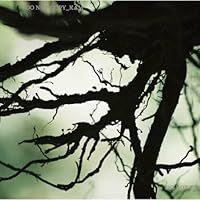
Kathryn Stripling Byer in these poems engages the contradictions inherent in the act of coming home. She explores the step-by-step leaving and returning― and finding “home” transformed because of the journey. Seamless lines of poetry weave together experiences as a daughter and a mother, the challenges of aging, the innate dignity of domestic life, and learning to let go while holding fast to what matters all the while. Byer gathers the trivial things that make up our lives and shows their meaningful connections, our movement toward discovery. In Coming to Rest , she expands upon the great themes of the poetic tradition.
Kathryn Stripling Byer was raised on a farm in Southwest Georgia, where the material for much of her first poetry originated. She graduated from Wesleyan College, Macon, Georgia, with a degree in English literature, and afterward, received her MFA degree from UNC-Greensboro, where she studied with Fred Chappell and Robert Watson, as well as forming enduring friendships with James Applewhite and Gibbons Ruark. After graduation she worked at Western Carolina University, becoming Poet-in-Residence in 1990. Her poetry, prose, and fiction have appeared widely, including Hudson Review, Poetry, The Atlantic, Georgia Review, Shenandoah, and Southern Poetry Review. Often anthologized, her work has also been featured online, where she maintains the blogs "Here, Where I Am," and "The Mountain Woman." Her body of work was discussed along with that of Charles Wright, Robert Morgan, Fred Chappell, Jeff Daniel Marion, and Jim Wayne Miller in Six Poets from the Mountain South, by John Lang, published by LSU Press. Her first book of poetry, The Girl in the Midst of the Harvest, was published in the AWP Award Series in 1986, followed by the Lamont (now Laughlin) prize-winning Wildwood Flower, from LSU Press. Her subsequent collections have been published in the LSU Press Poetry Series, receiving various awards, including the Hanes Poetry Award from the Fellowship of Southern Writers, the Southern Independent Booksellers Alliance Poetry Award, and the Roanoke-Chowan Award. She served for five years as North Carolina's first woman poet laureate. She lived in the mountains of western North Carolina with her husband and three dogs. (from the author's website)
I went from reading Byer's book to reading Rilke. Suddenly, I could hear Byer's voice speaking through Rilke. Perhaps Byer is the South's own Master of verse.
I enjoyed this, but it wasn’t as engaging, evocative, or as diverse in rhythm as some other work by Ms. Stripling Byer that I’ve read. There are some gems in this volume, but in a way, these poems were clearly so personal to Ms. Stripling Byer that they moved beyond any realm in which I could find myself in their words.