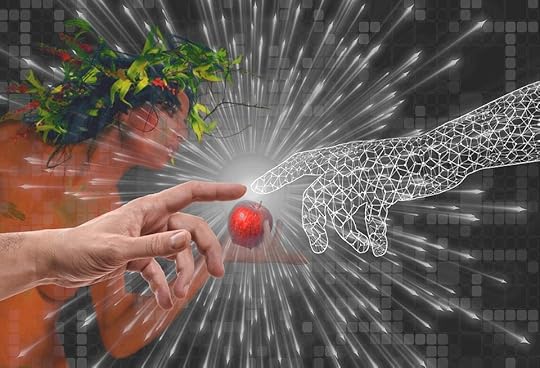
В будущем богатые люди смогут отделить свой мозг от старящегося тела – и станут жить почти вечно в особом "баночном" измерении. Туда уйдут вожди, мировые олигархи и архитекторы миропорядка. Там будет возможно все.
Но в банку пустят не каждого. На земле останется зеленая посткарбоновая цивилизация, уменьшенная до размеров обслуживающего персонала, и слуги-биороботы.
Кто и как будет бороться за власть в этом архаично-футуристическом мире победившего матриархата? К чему будут стремиться очипованные люди? Какими станут межпоколенческие проблемы, когда для поколений перестанет хватать букв? И, самое главное, какой будет любовь?
Victor Olegovich Pelevin is a Russian fiction writer. His books usually carry the outward conventions of the science fiction genre, but are used to construct involved, multi-layered postmodernist texts, fusing together elements of pop culture and esoteric philosophies. Some critics relate his prose to the New Sincerity and New Realism literary movements.
Pelevin attempts to satirise contemporary Russian society, technology culture, and transhumanist philosophy through interconnected stories, but the execution collapses under crude humour and intellectual thinness that mistakes vulgarity for edge.
For readers familiar with his earlier work, it's disappointing evidence that sharp cultural satire can't be phoned in—you need either genuine philosophical insight or masterful technical execution, and this has neither. For new readers, it's a terrible entry point that would obscure why Pelevin mattered in the first place. The themes—transhumanism, technological alienation, Russian societal dysfunction—remain relevant, but require a writer willing to engage them seriously rather than lobbing crude jokes from a distance.
The vulgarity doesn't illuminate anything—it's shock without purpose. The humour doesn't land because it's not clever enough to be funny or dark enough to be disturbing in a meaningful way. You finish feeling like you've been lectured at by someone who thinks being crude equals being honest, when really it's just being crude.
This work shows how far Pelevin has fallen from his earlier work. The intellectual thinness is jarring from a writer capable of real philosophical depth. It reads less like deliberate simplification for effect and more like he couldn't be bothered. This book is a confirmation that vulgar doesn't equal edgy—it's a lazy shortcut when you don't have anything substantial to say.
Disappointing Misfire. Not quite a snooze-fest because there's enough competent technical writing that you can finish it, but intellectually empty enough that you'll resent the time spent. It's the literary equivalent of watching a once-great band play a tired festival set where they're clearly just collecting the paycheck.
**Who should read this:** Pelevin completists who need to track his decline, or Russian literature scholars documenting the evolution of post-Soviet satire. Possibly useful as a contrast text—here's what happens when satirical ambition meets intellectual laziness.
**Who should avoid it:** Anyone looking for an entry point into Pelevin, anyone hoping for substantive engagement with transhumanist philosophy, and anyone who finds crude humour tiresome when it's not in service of larger ideas. If you value your reading time, this isn't worth it.