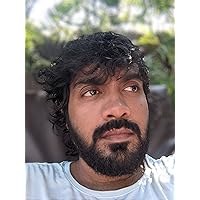
S. Hussain Zaidi is a prominent Indian author, journalist, and screenwriter celebrated for his invaluable contributions to the world of crime reporting, investigative journalism, and storytelling. Born on February 28, 1962, in Mumbai, India, Zaidi has left an indelible mark on the literary and cinematic landscapes of India, particularly in the realm of crime and the Mumbai underworld.
S. Hussain Zaidi embarked on his career as a crime reporter, where he honed his skills in uncovering hidden truths and delving into the intricacies of organized crime in Mumbai. His early experiences as a journalist provided him with a deep understanding of the criminal world and its dynamics.
Over the years, Zaidi transitioned from journalism to writing and screenwriting, bringing his unparalleled insights and storytelling prowess to a wider audience. His unique ability to humanize the characters in his narratives, whether they are criminals or law enforcement officers, sets his work apart.
"Black Friday: The True Story of the Bombay Bomb Blasts" - Zaidi's book "Black Friday" is a compelling account of the 1993 Bombay bombings. It presents a factual and thorough examination of the events leading up to the blasts and their aftermath.
"Dongri to Dubai: Six Decades of the Mumbai Mafia" - This critically acclaimed book stands as one of Zaidi's most notable works. It meticulously traces the evolution of organized crime in Mumbai over six decades. The book offers a comprehensive and gripping account of the city's criminal history.
"Mafia Queens of Mumbai: Stories of Women from the Ganglands" - In this compelling book, Zaidi sheds light on the powerful and enigmatic women who played significant roles in Mumbai's underworld. He tells their stories with empathy and detail, providing a fresh perspective on the world of crime.
S. Hussain Zaidi's influential literary works have transcended the confines of the written word and made a powerful impact on the silver screen. Some noteworthy adaptations of his books include:
"Black Friday" (2007) - Directed by Anurag Kashyap. "Shootout at Wadala" (2013) - Directed by Sanjay Gupta. "Class of '83" (2020) - Directed by Atul Sabharwal. "Gangubai Kathiawadi" (2022) - Directed by Sanjay Leela Bhansali, among many others.
In addition to his contributions to the film industry, S. Hussain Zaidi has harnessed his creative prowess in the realm of film and web series production. His noteworthy productions encompass projects like "Bard of Blood" and "Scoop" on Netflix, as well as the recent addition "Bambai Meri Jaan," available for streaming on Amazon Prime Video.
S. Hussain Zaidi has played a pivotal role in nurturing emerging literary talents within the authorship realm. Notably, individuals such as Bilal Siddique, Neeraj Kumar (Commissioner of Delhi Police), Kashif Mashaikh, and many more have found their path to success as authors under his guidance. This mentoring initiative is facilitated through "Blue Salt Media," an imprint in collaboration with Penguin India.
S. Hussain Zaidi's work, both in literature and cinema, continues to captivate audiences with its gritty realism, engaging storytelling, and insights into the complex world of crime and law enforcement in India. His contributions have not only enriched the true crime genre but have also served as a source of inspiration for aspiring writers, journalists, and filmmakers.
This book immediately caught my attention due to its subject matter, which resonated with me as I had come across the incident through media reports a few years back. While the book certainly presents an intriguing premise and the potential for an enthralling tale, the execution and credibility of the narrative left me with reservations and doubts.
While the narrative attempts to portray Bisht as a skilled and covert operative working for RAW, his public displays of bravado seem incongruous with the secretive and disciplined nature of intelligence agency operations. Such behavior is not only at odds with the expected conduct of a professional operative but also undermines the veracity and plausibility of the narrative presented in the book. It is a well known fact that the nature of intelligence agencies and their operations demands strict confidentiality and secrecy. Therefore, it is highly unlikely that any intelligence agency operative, bound by the principles of national security, would willingly come forward to reveal the intricate details of their covert operations in the public. Moreover, Lucky Bisht's actions and decisions throughout the narrative often lacked the necessary justification or believability. Certain events and circumstances seemed contrived, causing the story to lose its grip on plausibility.
A significant concern regarding the authenticity of the events depicted in the book is the absence of interviews or credible sources from the RAW agency to corroborate the narrative. The inclusion of interviews or statements from RAW agents, former operatives, or other individuals knowledgeable about the agency's operations would have added a layer of credibility and validation to the narrative. While it is understandable that intelligence agencies like RAW operate under strict confidentiality, and obtaining official endorsements can be difficult, it is still crucial for the author to provide some form of verification or evidence to support the claims made in the book.
Lastly, I found myself perplexed by the underlying motivation behind this book, particularly as in the acknowledgments section, S. Hussain Zaidi candidly revealed that he initially had no intention of writing a book about Lucky Bisht. Instead, it was Bisht himself who created the perception that Zaidi was undertaking a book centered around him.
The first thing I want to write about the book is the amount spent on buying fake reviews. Clearly, if the same amount would have been spent in roping in a good author, the story would have been different. This book is a complete waste of time and money. It is poorly conceptualised and terribly written. English words have been just thrown in without context or relatability. The author seems fond of using the word ‘ironically’ without knowing its meaning. Talking about the story, the so called “agency” has nothing better to do than send their “best agent” to kill some small-time goons. These goons, who can be lured by just a Scorpio or cheap guns, are supposedly great threats to national security. So much that the topmost agency has to step in. You seem to laugh at such absurdity, but then you realise that it is the author who is laughing at you for being so stupid and gullible. The “best agent” eliminates the threat and deliberately leaves his holster and bullet casing at the murder site. Why? The author was supposed to tell, but he forgot.
I want to vent more.
If anyone has any idea about processing a refund for this book, kindly share it with me.
PLOT - Raw Hitman is a true crime story about an NSG commando Laxman 'Lucky' Bisht. In September 2011, double murder of Raju Pargai and Amit Arya notorious gangsters from Uttarakhand rocked the country. Pargai had risen up in criminal activities and became a threat to national security due to smuggling of weapons into India. The Indian intelligence agencies brought in an assassin - 'Agent Lima' to put him down. Day after the murder Lucky was arrested for these double murder . He was denied bail and stayed in the prison for more than 5years. Was lucky and Agent Lima' the same person? If lucky was working for government why was his bail always denied and why didn't receive the desired help? MY THOUGHTS - This book will serve as some sort of biography of Lucky esp highlighting his training days before becoming a NSG commando and his ordeals in the prison. In prison false testimony and bribes has become routine where a convict will actually become Scot free in no time. I really enjoyed reading about his hardships and endurance during his training period and how he uses these principles in real life situations. The writing and narration was commendable as once I started was thoroughly invested and couldn't put it down. I however wish the book would give some sort of an insight into why the government didn't step in to help Lucky ( I know the delicate and security matter) but for me as a reader a lot of questions still remained after finishing the book. So if you enjoy True Crimes stories esp with gangsters and the Indian judicial system in play check this out.
Unlike previous books of Hussain Zaidi, this one was a bit off for me and didn't give the usual excitement and thrill! Agent Lakshman alias Lucky alias Lima Bisht works with RAW or the Agency, he is on vacation or on an under cover job for the agency. His mission is killing Raju Pargai who is a criminal and mafia don on the rise. The job is done and Lucky Bisht is arrested for the murder. The book then continues about Lucky Bisht's life in prison, his aura and power in the prison and his trials. And after a period of few years, Lucky Bisht is finally released by the court. So did Lucky Bisht kill Raju Pargai or was it Agent Lima? Why did the Agency not try to get Lucky out from the prison earlier itself and why did Lucky delay his going back to the Agency. So many questions remain! I picked up the book due to the name - Hussain Zaidi - but unfortunately this time it didn't work.
The plot of the book was such that it could have been a thrilling read. Mind you... could have been. The book sets up the story nicely in the first half of the book. However, it loses the plot then. The one reading the book would expect the ace commando (as the book tells us) to employ some really smart tactics and skills to tackle the problems in his path. The books disappoints in that regard. Even if we give it a pass keeping in mind that the book is based on a real-life story (allegedly), some events of the book make you question the veracity of the events. The book also ends with somewhat of an open-ending, which makes you question the motives of the protagonist. The writing feels loose many times during the read.
Have you ever stumbled upon a book so riveting that it not only clutches your attention but also whirls you through a rollercoaster of emotions and intrigues? That's exactly how I felt diving into "R.A.W. Hitman" by S. Hussain Zaidi, a renowned journalist and true crime author famed for his deep dives into the murky underbelly of India. Known for bestsellers like "Black Friday" and "Dongri to Dubai", Zaidi has a knack for unearthing the gritty realities of the criminal world, and his latest offering is no exception.
"R.A.W. Hitman" introduces us to Laxman Bisht, aka "Agent Lima", a commando turned secret agent for R.A.W. (Research and Analysis Wing, India's external intelligence agency). His life takes a dramatic turn when, after successfully eliminating a mafia kingpin, he's wrongly accused of murder. The story that unfolds is nothing short of a cinematic thriller, complete with wrongful accusations, gritty prison life, and an intense courtroom drama that exposes the chinks in the armor of law enforcement and intelligence agencies.
Zaidi’s prose is sharp and relentless. The narrative drives forward with the precision of a sniper’s bullet. His ability to weave complex plots with real-life accounts, supported by newspaper clips and eyewitness testimonies, not only authenticates the narrative but enhances the storytelling, making the scenes vividly cinematic. Short, cliffhanger chapters are Zaidi's specialty, ensuring you're constantly saying "just one more page."
The protagonist, Laxman Bisht, is portrayed with layers that peel away as his journey through the judicial labyrinth unfolds. His transformation from a disciplined agent to a wrongly accused prisoner seeking justice adds depth to his character. The secondary characters, too, from the menacing underworld dons to the corrupt politicians, are sketched with compelling backstories, contributing to the story’s rich tapestry.
The book’s structure is a work of art. Pacing is brisk, with plot twists that hit you like a freight train. Zaidi manages to maintain suspense and intrigue throughout, making the book hard to put down. His portrayal of the prison ecosystem and the interplay of various criminal elements within and outside the prison walls is both fascinating and chilling.
At its core, the book wrestles with themes of loyalty, betrayal, and the blurred lines between duty and morality. Zaidi challenges readers to contemplate the cost of truth and justice, and the moral compromises made in the name of national security. These reflections on patriotism and the grim realities of espionage add a profound layer to the thrilling narrative.
As a reader, you feel every bit of Laxman's despair, his bouts of hope, and his relentless pursuit of clearing his name. There are moments that leave you enraged, others that tug at your heartstrings, making the journey with Laxman profoundly personal and emotionally charged.
However, the book isn’t without its flaws. The extensive detail, while usually a strength, occasionally bogs down the narrative. Some typographical errors and a couple of over-dramatized scenes slightly mar an otherwise meticulous narrative. Also, a deeper introspection into R.A.W.'s operational challenges and failures would have given the book an even more rounded perspective.
Personally, this book resonated with me deeply. The portrayal of an agent whose service to his nation goes unrecognized and is met with suspicion and betrayal hit a nerve. It's a sobering reminder of the unsung heroes in the shadows.
"R.A.W. Hitman" is more than just a crime thriller; it's an exploration of the human spirit against the colossal forces of corruption and injustice. S. Hussain Zaidi, with this book, has not only penned a story that entertains but also one that provokes thought, making us question the very foundation of right and wrong. Whether you're a fan of espionage tales or true crime sagas, this book is a compelling addition to your reading list. Zaidi has indeed set a high bar for narratives in this genre, and I eagerly await his next venture into the dark corners of crime and justice.
Thank you @simonandschusterindia for a media copy of this book.
With R.A.W. Hitman, India's preeminent true crime writer S. Hussain Zaidi has crafted another scintillating page-turner. This time, Zaidi delves into the shadowy world of espionage and national security. The book chronicles the incredible story of Laxman Bisht, an elite commando working for R.A.W. (Research and Analysis Wing) who finds himself ensnared in a dangerous web of cops, criminals and corrupt politicians.
The story begins by plunging us into Laxman's grueling training in Israel that transformed him into a cold-blooded secret agent for R.A.W. - skilled in weapons, ambush tactics, and psychological manipulation. Codenamed "Agent Lima", Laxman is dispatched to assassinate Raju Pargai, a rising mafia kingpin in Uttarakhand with links to politicians. In a gripping sequence, Lima clinically executes the kill. But in a shocking twist, Laxman is falsely accused of the murder by the police and subjected to horrific torture to extract a confession.
The book is a wonderful blow-by-blow narrative of Lucky Bisht’s trial after being accused of murdering two gangsters in Uttarakhand. True to his style, Zaidi delves deep into the crime and the impact it has on Lucky and those close to him. The writing is interesting and keeps you hooked as you go through Lucky’s life, his training as a commando as well as subtle commentary on changing times as the transitions take place in the political world as well. Zaidi’s forte lies in the research and adding minute details to the story to fill the gaps and this is what he does in this book as well. Not one to mince his words, Zaidi’s writing focuses on the case as well as the psyche of Lucky as he awaits the decision from the court and hobnobs around other criminals, both small-time and big in the jails as he is shunted around. It is a book that would impress any one who loves to read a good true-crime book and is interested on the political scenario. One thing that the book lacks, however, is a round of proofreading and editing as there are glaring typographical errors peppered across the book, specially in the names of the characters and that is where the attention of the reader starts dwindling.
Just finished reading this. Breezy read. The story alternates between Lucky Bisht and Agent Lima nicely. Obviously a lot of attention is on Lucky Bisht and how he suffered a long time in prison before finally getting his bail and being let off. Though it resembles in some aspect the case of Jigna Vora , Lucky is no innocent as such.
In the beginning itself , top cop Neeraj Kumar from Delhi shares his contrarian perspective about Lucky and in the end Hussain says he believes that this story has to be told after verifying all the facts.
All this made the book an interesting read. Not his best work like "Dongri to Dubai" but nevertheless a solid story to be told.
He has elaborately explained the details of the training of agent Lima while not overlooking the kind of feelings that run through the minds of such agents who work behind the curtains with no expectations and how they rationalise the situation in their head to not turn against the nation. An exemplary commando who could keep himself from joining ranks of gangsters but rather used his time in jail to help law enforcement authorities with various insider information that he had access to as a jail inmate. This really says a lot about the ability of human beings to manage their emotions and choose to be right despite difficult circumstances that we find ourselves in.
In his inimitable style, Zaidi traces Bisht’s journey from his entry into the agency to jail, and thereafter. Zaidi’s research reveals that an Agent Lima was sent by the agency to assassinate the gangsters, who flourished under the reign of corrupt political friends. And Bisht’s torturous jail term was a result of this friendship. We do find some reservations around Bisht’s narrative in the foreword by Neeraj Kumar, Ex-Delhi Police Chief. After reading the book, one understands why.
There are pros and cons to reading this book, and it leaves you with a lot of questions. Despite the typographical errors and poor proof reading, it's quite an interesting biography, loaded Bollywood style.
I was initially drawn to this book due to its intriguing title and the author's esteemed reputation. While my expectations were high, the overall story fell somewhat short. The plot lacked compelling elements and failed to keep me fully engaged.
A significant portion of the book is dedicated to jail stories, which, over time, became monotonous. This focus detracted from the pacing and left me eager to finish rather than savor the narrative. However, the courtroom scenes, particularly the witness cross-examinations, provided a refreshing change and were the most interesting parts of the book.
I am big fan Mr. Zaidi. He writes in a niche genre that he has mastered. This book, however, was just weak sauce.
I am not sure one could blame Mr. Zaidi altogether though. Because the protagonist of the story in real life is as a confusing as in this book - I am a commando *wink wink*, I am NOT agent Lima *wink wink*, I worked for the agency *wink wink*, I DID NOT kill the gangsters though *wink wink*.
Good lord! If you can't say confidential stuff then don't write a book about it. The said endeavour only ends up irritating the reader to no end.
Picked it up because it was written by Hussain Zaidi; but finished it and throwing it away, because it feels like the author was forced to write this at gunpoint! Found it so lame that the agency (supposed to be R.A.W) one of the most efficient and powerful intelligence and special operations agency on the planet has to use their 'so-called' best agent to off a couple of gangsters and this best agent eventually ends up getting caught and wasted in prison to the verge of becoming a gangster himself and all the countless instances of bravado in the narrative was abhorrent! Disappointing!
I think the title is misnomer may be Lucky Bisht & his adventures is correct title.
The initial pages are engaging but got bored in the proceeding pages due to exaggeraion. The book feels like a fictional commercial Bollywood movie, only praising Bisht adventures. Bisht acts like a messiah whatever he do illegally also correct.
Don't read this book & waste your time it's just one man praising story.
To be honest, I have never heard about this case. It starts of an interesting note but many questions are left unanswered. After sometime I felt Bisht was a local gunda instead of RA&W agent. He indulges in threat and extortion breaks rules and seems to have no regret.
It is clear he wishes to be in limelight considering he wants to be in Bollywood.
Overall Lucky is not someone I will trust when it comes safety of nation.
I had heard many interviews of Lucky Bisht and have also read S Hussain Zaidi’s Dongri to Dubai. The storytelling is definitely gripping and the Commando is inspirational showing how to get your way out in the face of adversity.
I would have given 4 stars, had this been a fiction. But it is claimed to be a true story and because of that this seems to be like a paid "image makeover" attempt.