Jump to ratings and reviews
Rate this book

Leonardo's Brain: Understanding Da Vinci's Creative Genius

Rate this book
Best-selling author Leonard Shlain explores the potential for humankind through the life, art, and mind of the first true Renaissance man, Leonardo da Vinci. The author hypothesizes that da Vinci’s staggering range of achievements demonstrates a harbinger of the future of our species. Da Vinci’s innovations as an artist, scientist, and inventor are recast through a modern lens, with Shlain applying contemporary neuroscience to illuminate da Vinci’s creative process. No other person in human history has excelled in so many areas of innovation: Shlain reveals the how and the why.

Shlain theorizes that Leonardo’s extraordinary mind came from a uniquely developed and integrated right and left brain, and he offers a model for how we too can evolve. Using past and current research, Leonardo’s Brain presents da Vinci as the focal point for a fresh exploration of human creativity. With his lucid style and remarkable ability to discern connections among a wide range of fields, Shlain brings the reader into the world of history’s greatest mind.


240 pages, Hardcover

First published October 7, 2014

94 people are currently reading
1753 people want to read

About the author

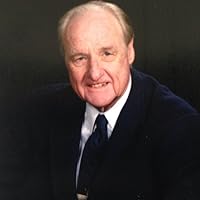
Leonard Shlain

8 books126 followers
Leonard Shlain was an American surgeon, author, and inventor. He was chairperson of laparoscopic surgery at the California Pacific Medical Center in San Francisco, and was an associate professor of surgery at University of California, San Francisco.

Ratings & Reviews

What do you think?
Rate this book

Friends & Following

Create a free account to discover what your friends think of this book!

Community Reviews

5 stars
184 (28%)
4 stars
199 (30%)
3 stars
177 (27%)
2 stars
70 (10%)
1 star
19 (2%)
Displaying 1 - 30 of 83 reviews
Profile Image for Eric.
61 reviews9 followers
November 29, 2014
I received this book for free through Goodreads First Reads.

Leonardo's Brain: Understanding da Vinci's Creative Genius opens in perhaps the saddest way. In the "Note to Reader," the author's children inform us how Leonard Shlain, while in the middle of writing this book, was diagnosed with cancer. He finished the book on on May 3rd and died eight days later. It makes you appreciate the creative drive and passion Shlain had that, even faced with a terminal disease, he was determined to finish this work.

After this opening, I was excited to read the book. Both Shlain's approach - a view of Leonardo da Vinci's creative output through the lens of modern brain science - and his obvious enthusiasm for da Vinci piqued my interest. I have to admit, though, that I found the book underwhelming and lacking in focus and coherence. Reading it felt like there were two books unhappily merged together - one is a book about Leonardo da Vinci's creativity, the other is a book about brain science. Neither handles their topic in-depth and the times the two crossover feels either forced or inadequate. Sometimes the main focus, da Vinci himself, gets lost in tangential explanation. For example, da Vinci is not mentioned once in Chapter 13 (Emotions/Memory) and is more of a footnote in Chapter 14 (Space and Time/Space-Time).

Shlain's main argument, that we can discern the type of brain Leonardo da Vinci possessed based on certain characteristics, is tenuous at best and facetious at worst. He uses da Vinci's left-handedness, his interest in art and science, and his homosexuality to make decisions about how active Leonardo's brain was. But it never feels convincing; rather it sounds like two sets of discrete facts that are held up and some arbitrary connection is created. I appreciate that Shlain was a very well-respected brain scientist and could authoritatively comment on these matters, I'm just not sure the book conveys that authority. Sometimes very odd things are stated as established fact. For example, in Chapter 16 (Leonardo's Brain), where Shlain is explaining the evolutionary advantage of certain characteristics, he says that bald hunters in primitive times would be better able to stalk and confuse game. Why? There's no explanation for this and it feels like an odd attempt to justify his "Theory of Eights" (that 8% oh males have certain traits like homosexuality, left-handedness, and baldness). Even this Theory of Eights comes off as a plug for his other books rather than explaining an aspect of da Vinci's creativity.

This disjunction and oddness may be a function of Shlain's illness and having others complete the book for him, resulting in a different text than he would have crafted, but this is the book that exists and that I have to review. I would not recommend this book to others.
Profile Image for Adam.
18 reviews1 follower
January 28, 2015
I was enjoying this book until I got to chapter 15 that proposes that da Vinci might have had ESP powers and been a remote viewer. The author is not a scientist and it shows with the pseudo-scientific studies he cites for his claim that remote viewing exists. That really killed my enjoyment of the book as it cast everything else the author had said about how the human brain works into doubt. If his standards for what is accepted science are so low, how can I trust that his standards for what we know about the brain are any better?

I read books like this one to learn interesting things about my world and the people in it. Rather then spend my time fact-checking every other claim I rather go read something which cites believable sources.
Profile Image for Eric.
25 reviews2 followers
July 27, 2015
I wish the author had mentioned his theories about Leonardo having psychic powers earlier, so I could have bailed on this book earlier.
Profile Image for Cullen Haynes.
319 reviews11 followers
March 29, 2020
Leonardo da Vinci, possibly this world's greatest polymath, is the focus of Leonard Shlain's one of a kind biography on this one of a kind man. The focus - what made his unique brain work?

Shlain explores the life, art and mind of da Vinci, seeking to explain what made his brain work by looking at his countless achievements in art, science, military strategy (I know right!), psychology through the lens of modern scientific research to explain his revered genius.

What makes da Vinci so unique, is that no other person in human history has excelled in so many different areas as da Vinci - more importantly, is the question, how and why?

Many of us know about the split between right and left brain hemispheres; left primarily controls our rational mind, the right our emotions. The biography looks at refining our comprehension between the split brain model and deepening our understanding of human nature and creativity. In Shlain's book, he argues that Leonardo was unique, in that his level of integration that he showed was unparalleled.

One of the most compelling features of the book, is Shlain's exploration of the question - do the qualities of Leonardo's brain and his creativity presage the future evolution of man?

On that note, I'll leave you to enjoy the rest of your weekend.

Happy reading.

CPH

#ReaderLeaders #Books #Reading #CullenPHaynes #Readers
Profile Image for Emma.
48 reviews9 followers
November 7, 2014
***Disclaimer: I received this book as part of a first-reads giveaway***

This book was well written and well researched. Leonard Shlain definitely presents something for both those interested in modern science (especially neuroscience) and for the history buffs. Although in a few places his argument seems a little stretched or simplified (I have read some more updated research about spatial brain functioning that may complicate his claims), overall Shlain weaves a story that peaks the curiosity. The first and last part of the books were the most intriguing to me (which may simply be my own preferences towards subjects I find interesting), but I would definitely recommend this book to friends. Bravo!
Profile Image for Larry Angus.
Author 2 books3 followers
December 10, 2014
Leonard Shlain is extremely popular but not that widely known. His lectures were standing room only and his former books like Art and Physics are amazing. Yet this was his masterpiece as he worked on it for years. As a brain surgeon, he knew what he was writing about as he studied Leonardo as no one before. His argument that Leonardo was the most brilliant human (yes, ever) makes probable sense when you begin to understand how whole brain thinking was the secret to his success, talent, and amazement. For those who like to learn new things and also want to grow in one's own thinking, this book is a thriller! Larry A. Angus
Profile Image for Vicki Gibson.
234 reviews10 followers
August 21, 2018
My book club decided to give people a choice of this book (Leonardo's Brain) and Walter Isaacson's Leonardo Da Vinci. I decided to read both which was an interesting exercise.

This book was okay, barely. In the preface, we learn that in the middle of writing this book, the author was diagnosed with terminal cancer. He died just eight days after finishing it. Kudos for him for having the persistence to finish. I feel kind of bad giving this such a low rating but I'm trying to be honest. I wonder if the book might have been better if he'd had more time or more rounds of editing.

I didn't particularly like the style. The way it was constructed felt kind of higgledy-piggledy. There are chapters about Leonardo and his life and some chapters about brain science and a few other topics like space/time, remote viewing, and ESP. The connection between these topics are not knitted together very well.

I found it interesting that Leonardo rejected religion basing all of his observations on science, and yet this book has quite a bit of nonscience based woo-woo stuff in it. What would Leonardo think?

If you're looking for a good Da Vinci biography I would highly recommend Walter Isaacson's Leonardo da Vinci instead of this book.
Profile Image for J.S..
Author 1 book67 followers
February 4, 2015
Anything you (or anyone else) can do, Leo can do better

Leonardo da Vinci died nearly 500 years ago, yet Leonard Shlain attempts to examine his thinking through what is known of him and what art and writings he left behind against the backdrop of current left-brain/right brain science. Da Vinci is represented as the greatest and brightest artist that ever lived. In addition, his scientific thoughts and notes were far in advance of anything anyone else had ever thought of at the time. One quote from page 58 is very typical of the recurrent theme of the book:

"Monet strove to capture on canvas the evanescent moment of his first impression, and critics dubbed his technique Impressionism... But should not Leonardo's 1473 sketch of the Tuscan countryside en plein air qualify as the first Impressionist work in Western art history? A full four hundred years earlier, Leonardo had anticipated this great movement of art of the late nineteenth century."



We are told (repeatedly) that Leonardo anticipated nearly every artistic movement or scientific thought that subsequently happened. No one did anything that Leonardo didn't think of first. And it may be true - I don't know enough about him to confirm or dispute - but it certainly didn't make for interesting reading. Especially since all these accomplishments are rarely explained in any kind of depth that would keep you from having to look to a real biography to get more detail and understanding!

By the end of the book Shlain explains his hypothesis - "I realize that what I'm about to make is a highly speculative claim, bordering on the 'woo woo'" - by explaining that Leonardo had ESP and an exceptionally advanced ability to see and comprehend the space-time continuum, and there is some superficial discussion of quantum physics. But by this point he'd mostly lost me and I had to skim some sections just to finish.

I really wanted to like this book. It starts out with a letter from his three children explaining the end of their father's life and how he drove himself to finish the book just days before he passed away. There's also a letter from Shlain himself talking about his diagnosis and illness, and these primed me to sympathize with the family and hope for a reading experience that would be both enlightening and inspiring. But perhaps because of the rush to finish the book, it comes off with a very 'stream-of-consciousness' feel to it - quite well-written, but still. I had really hoped to learn something here, but it was a disappointing experience. (I received a free copy of this book from the GoodReads FirstReads program.)
Profile Image for J R.
613 reviews
May 23, 2025
Read on Hoopla, Leonardo's Brain: Understanding Da Vinci's Creative Genius by Leonard Shlain which was on my reading list since March 9, 2019. Shlain died in May 2009 at the age of seventy-one from brain cancer shortly after the completion of this book.

Dr. Shlain has written 3 bestsellers and Leonardo’ Brain was written in the final years of his life. His daughter Tiffany in 2011 released a documentary about her father, Connected which I was able to watch on Tubi. Highly recommend watching this beautiful movie.

Shlain writes about how brains organize themselves according to two factors: Nature and nurture. Of all the organs of the human body, the brain is the most plastic. Events occurring in the womb, during birth, and in the first few years of life play an enormous role in shaping the brain and the occupant of the body attached. For example, toxic influences-such as a pregnant woman smoking-can have a deleterious effect on how the brain develops. Birth trauma, such as a prolonged period of oxygen deprivation that may last for only minutes, can alter subsequent brain function for a lifetime.

Wonderful quote from Leonardo: “When besieged by ambitious tyrants I find a means of of-fense and defense in order to preserve the chief gift of na-ture, which is liberty.... Death rather than loss of liberty. The goldfinch brings spurge [a poisonous plant] to its young when they are imprisoned in a cage. It is better to die than to lose one's freedom.”

Leonardo provided an insight into his parents' relationship when he departed from the usual impersonal authorial tone he used in his notebooks and let slip an uncharacteristic observation concerning the role of love in baby making. He muses:
The man who has intercourse aggressively and uneasily will produce children who are irritable and untrustworthy; but if the intercourse is done with great love and desire on both sides, then the child will be of great intellect, and witty, lively and lovable.

“Leonardo could not stand to see wild animals in captivity. "He took an especial delight in animals of all sorts, which he treated with wonderful love and pa-tience. For instance, when he was passing the places where they sold birds, he would often take them out of their cages with his hand, and having paid whatever price was asked by the vendor, he would let them fly away into the air, giving them back their lost liberty."

“Leonardo worked on diverse projects in architecture and public hygiene and performed extensive scientific investigations. There are suggestions from his notebooks that one of his lifelong ambitions was to become the first human to fly, although he never accomplished it. None of his writings was ever published. His output of paintings was limited, and most were either unfinished or suffered the ravages of time. Leonardo was consumed by his plans for the design and technical details of casting the largest equestrian bronze ever attempted. Leonardo studied equine anatomy and made the most detailed drawings ever created of this subject. When he finally completed a clay model of the horse made to scale, he unveiled it in the piazza. People came from far and wide to gaze on the magnificent work of art.”

Another area Leonardo focused his interest on was cartography. Beginning with the exquisite jewel of a map that he drew of the town and surrounding countryside of Imola, he went on to create even more detailed maps of northern Italy, from higher and higher vantage points. No one has been able to adequately explain how Leonardo was able to envision the aerial maps of Italy from such staggering heights.

“The desire to know is natural to good men.” LEONARDO DA VINCI

“LEONARDO WAS ARGUABLY HISTORY'S MOST CREATIVE INDIVIDUAL. BuT what does it mean to be "creative"? Where does it originate? How does it manifest? In Greek mythology, Apollo was the sun god, the shining representative of light, reason, and logic. He epitomized the god of intellectual pursuits. His shrines had pithy proverbs over their entrances, like "Know thyself" and "Nothing in excess." But, he was also humorless and imperious. His exploits with the fairer sex were generally a failure. The nymph Daphne was so repulsed by his pursuit of her that she turned herself into a laurel tree rather than fall to Apollo.”

“Because creativity depends to a large extent on the message of the right brain making it over to the left brain, ungarbled, the maturation schedule of the corpus callosum is pertinent. Myelin is a gigantic molecule that binds fat globules within a lattice of pro-tein. Once formed, it serves to sheath individual neurons, the in-formation-transmitting cells of the nervous system. Myelination is the process by which a human brain's nerves receive their myelin coatings, the function of which is similar to the insulation used on copper wires. Disparate areas of the brain and the peripheral nervous system myelinate at different ages during growth.”

“Creativity is at its base a combination of fear and lust. Danger and sex are the fundamental processes that artists traditionally call upon to create a work of art. Of course, he or she is not aware that these are the root causes. Creativity begins with perceiving a pattern, a feature, or an alternative use for a common object. After recognizing something novel, the artist breaks down the observation into its component parts. This is primarily a left-brained function, reductionist and analytic. An artist will reassemble the pieces into a new and compelling manner that others will recognize as art. But the work of art must contain "passion." It must be a work of "love. He or she must be in a nearly "orgasmic" state to produce it.”

“All evil leaves sadness in one's memory, except the supreme evil, death, which destroys memory along with life.”
— LEONARDO DA VINCI

Da Vinci’s exceptional creativity resulted from his ability to access a different way to think. His ESSP-ness put him somewhere between the masculine and the feminine. His left-handedness, ambidexterity, and mirror writing were indications of a nondomi-nant brain. His adherence to vegetarianism at a time when most everyone was eating meat suggests a holistic view of the world. The equality between his right and left hemispheres contributed to his achievements in art and science, unparalleled by any other individual in history. His unique brain wiring also allowed him the opportunity to experience the world from the vantage point of a higher dimension. The inexplicable wizardry present in both his art and his science can be pondered only by stepping back and asking: Did he have mental faculties that differed merely in de-gree, or did he experience a form of cognition qualitatively different from the rest of us?


Good read indeed
Profile Image for Heidi Wiechert.
1,399 reviews1,525 followers
December 11, 2014
I received a free copy of this book through Goodreads First Reads. FTC guidelines: check!

Leonard Schlain has written a comprehensive tome that looks at Leonardo da Vinci from the perspective of a brain surgeon and neuroscientist. This book is as complicated as the man it examines, being part informational art history, part biological treatise, and part evolutionary speculation.

I learned quite a lot from this. I knew that Leonardo was renowned for his artwork but I didn't know the extent of his inventions, map making skills, or observations about nature. Chapters 11 and 12 of Leonardo's Brain were particularly stunning, both being paragraph after paragraph of scientists who were credited with the discovery of phenomena or creation of machines and then evidence of Leonardo having created or hypothesized the same thing centuries prior.

Schlain's idea that Leonardo was capable of remote viewing was also a new idea that I haven't ever considered. If we are all able to remote view (as creators of the process have claimed that we are), then it makes sense that one of the most well-rounded (brain function-wise) men in history would be able to utilize this skill, though he may not have had words to describe what he was doing. Fascinating!

Far from being another dull, intelligentsia's homage to Leonardo da Vinci, Leonardo's Brain is an approachable and unique study of a mysterious and accomplished historical figure, who may just represent the future of humankind. Fans of art, science, and everything inbetween will find something to enjoy in Leonardo's Brain.
Profile Image for Maggie.
4 reviews
Read
December 26, 2016
One of best and most fascinating books Imhave read !
Must read!!!
1,529 reviews22 followers
December 18, 2025
A 3.5

The first half of this was dull. Nothing about Leonardo really piqued my interest. But then when the switch to neuroscience and other ideas was made, it got interesting.

While there is a lot of claims presented by Shlain that could be easily dismissed out of hand, I think his point is to make the reader stop, step back, and consider. He acknowledges his tremendous claims, knows he is treading on thin evidence, but wants people to consider possibilities. Our understanding of how the world around us has been changed again and again by ideas that seemed impossible. We should expect this to continue as we understand the universe more.

Personally, the challenge to ponder future human evolution came unexpected, yet at the perfect time. I have been pondering these ideas for a project I am working on. Kismet.
Profile Image for Nicole.
328 reviews
December 20, 2023
I expected this to be more of a thought experiment on the neurology of Leonardo’s brain, how it likely worked and offered such creativity as well as scientific reasoning. Instead, the author provided some details of Leonardo’s life and some about the brain, but he didn’t quite tie the two together in a way that was evocative or educational. I finished the book, but it took me longer to read than it should have because I wasn’t into it.
Profile Image for Dul Bat.
128 reviews3 followers
December 20, 2025
3.5/5
Some pretty interesting points about Da Vinci and his genius, prescient/visionary way of thinking. Not much neuroscience studies. Mostly a curious guess based on his writings and arts.

Some parts read like the author got side-tracked explaining some of his ideas just to close the chapter with a sentence that contains Da Vinci’s name.
Overall, an alright read, somehow I expected more based on his previous books.
Profile Image for Richard  Williams.
8 reviews
August 8, 2025
Truly enjoyed this book on audible. I know some reviews complained about the author not being realistic, or scientific, but this is one of my favorite books. Da’Vinci, was simply a marvelous contributor to human existence. He was the consummate artist and scientist, who followed his curiosity with massive action and testing. He wanted to know how and why, and by none but himself.
Profile Image for Steven.
1,537 reviews12 followers
December 28, 2024
Might be something if Occam’s razor had been applied. Shlain went to woo woo every chance he had. The funniest line was when he said he was approaching the boundary of woo woo territory when he had be in it’s capital for at least two chapters.
Profile Image for Ambarish.
52 reviews
November 2, 2021
Its a really good book with a lot of information. I was mesmerized by the little details that researchers have found out over a period of time using Leonardo’s books, sketches, paintings etc. This books contains summary of all such research on Leonardo. I was a Leonardo fan even before reading this book, but after reading it I am awestruck with this mans creativity in both art and science. I eagerly want to visit Louvre and Leonardo’s museum in Florence. Also, one important thing this book is not only about Leonardo but also about how our brain functions, which is very very informative. Leonard Shlain the author of this book, while in the middle of writing this book, was diagnosed with cancer. He finished the book on on May 3rd and died eight days later :(.

He was like a man who awoke too early in the darkness while everyone else was still asleep. — Dmitry Merezhkovsky
Nothing vast enters the life of mortals without a curse. — Sophocles, 450 BC

Notes from the book (about brain functions) —
1. If you are left handed, right brain more powerful.
2. Opposite brain grows first (for you left, since you are partial right hander)
3. Things that reside in the Left brain—
1. Cuddling
2. Touching
3. Imagining existential state
4. Emotions like happiness joy and cheerfulness here
5. If for example your left brain is damaged, you cannot speak or do normal things. But you can recite music or any artistic thing that you learned before the stroke…
4. Things that reside in the Right brain—
1. Non logical ( feeling states)
2. Jealousy, patriachy
3. Emotions (fear love jealousy esctasy etc)
4. Spiritual
5. Dreaming
6. Imagining (image recognition)
7. If you meet somebody after a lot of time (20 years) still recognize him, that data is in right side (image recognition)
5. And its criss cross right brain controls left side, left brain controls right side.
6. The right is being and left is with doing
7. Art relates to right side and science to the left side. Hence Leonardo had the greatest brains.
8. Females have more creative part as compared to man. Creativity is female or feminine side thing.
9. How we are evolved to think,
1. Man — there’s a living thing lets kill it
2. Women — there’s a living thing lets take care of it
10. Brain Dominance
1. rhhm (straight, right handed heterosexual men) better (brain specialized) than all women, gays, lesbians. They have left lobe dominated (for 98% of the population)
2. lhhw (left handed heterosexual men) (80 left lobe dominance)
3. Internal brain in left lobe
4. Bigger for rhhm < lhhm < gays/lesbians < women (rh < lh)
11. Diseases in different people
1. Left handers — arthritis, multiple sclerosis
2. Right handers — heart diseases
12. reading music left, playing music right
13. Brain dominance by territory
1. eastern people are mostly left brain dominant (kinda one of the reason why we don’t eat meat) — have more self realization
2. western people enforce right brain (letters, numbers and science). Hence they are scientifically dominant
14. But in nature left brain in bigger and it dominates the right brain. Which could be part of the evolution process
15. Hiesenberg (father of quantum physics) says science started because humans in some way think they can describe certain parts of the world without any connection to them
16. Left lobe does language processing
17. The separation of left lobe from right lobe of braing in evolution kinda stopped our thinking to imagine us as a part of universe
Profile Image for Sherrie.
686 reviews2 followers
May 13, 2015
***I won this book in a Goodreads Giveaway***

I really want to give this book 4 stars, because there is a lot of interesting content...but I just can't because the first 2/3rds of the book drag along much longer than they should. The author spends the majority of the book primarily listing Leonardo Da Vinci's attributes, accomplishments, and various projects. While this is interesting, and obviously necessary when one's goal is to discuss the mind of Leonardo Da Vinci, it was too much in comparison to the rest of the book.

The final 1/3rd of the book, however, was very fun to read. In this section, the author compares Leonardo's traits (possibly gay, left handed, ambidextrous, vegetarian, etc) with what we know about them through modern neuroscience. He then extrapolates that information to what this could mean for the evolution of human consciousness. It was very speculative, but still thought provoking and definitely intriguing.

As an aside, I found the information (and references) concerning the neuroscience comparing the brains of heterosexuals and homosexuals particularly interesting and plan on reading more about that in the future.

Finally, I would forewarn people planning to read this book to keep a very open mind. The author makes some bold statements concerning what scientists have to say about the meaning of quantum mechanics (and how it applies to complex systems like consciousness) that I feel need to be more reserved (there is no scientific consensus on that topic, as well as others). Also, he talks about ESP research and remote viewing as a very commonplace thing, which is somewhat misleading, in my opinion.
Profile Image for Dennis.
3 reviews4 followers
September 18, 2015
Poor Mr. Shlain here has based his whole understanding of how the brain works on the myth of "Left Brained/Right Brained".

This is pretty much a myth; an over-simplified understanding of how the brain works, however, this served as the main explanation for everything that the author claims were the reason for Leonardo's creative genius.

Here is an example of the typical argument found in this book:

"Although he actively engaged in metaphoric phrasing that bordered on poetry, Leonardo considered poetry inferior to painting. He claimed that he was able to render in a single image the emotions that would take a poet pages of words to evoke. Whereas poetry is the mixture of the right brain and the left brain, images are perceived almost exclusively on the right. When we see something, we identify it with our right brain, and then we find a name for it with our left brain.

Stuff like this goes on and on. Every argument is just the same thing - how the right brain does this, and how the left brain does that, and how they are connected to each other by the part in the brain called corpus callosum.

After I saw that the author was wrong about such a central thing, I started distrusting his every argument afterwards - skipping the pages where I saw the phrases "Left Brained" or "Right Brained."

Sometimes, when something Da Vinci has done that Shlain can not find an explanation for, he starts talking about "higher consciousness", "ESP", and "remote viewing." There's a lot of speculation.

Unless you want to truly test your critical thinking skills, I do not recommend this book.


Profile Image for Davina.
799 reviews9 followers
August 12, 2016
The book is extremely speculative. I'm convinced the author didn't understand the physics he was describing. There is a lot that needs to be taken on the authors word. There are numerous problems with this book. First, is, simply, given that Leonardo didn't share his scientific discoveries, it's hard to grant him titles, as he didn't lead to any advancement of the sciences. Second, while he may have "invented" all kinds of things, it seems most never left paper, so can you really have invented something which you were never able to create even a prototype? Would many of those ideas have even worked? His most ambitious schemes seem not to have worked. Third, it's really hard to look at a quote, and be able to say if he really understood modern concepts of space time. Fourth, there are conclusions like that Leonardo used "Remote Viewing" to be able to produce accurate maps, and those conclusions are not the most simple possibility. Perhaps, he was really imaginative and could see what it might look like from high in the sky. Fifth, a lot of the neuroscience may also be debatable. Sixth, the author then makes arguments about a Universal Intelligence, Gaia, and those sorts of things, which are, again highly speculative. The strictly biographical parts were quite interesting, but what he chose to do with that was too speculative. The way I see it, is that as you leap from unproven idea to the next, you build a house of cards. The whole thesis of the book, stands or falls on the flimsiest of foundations. I'll read someone else's take on Leonardo some time, and it will probably be a better use of my time.
Profile Image for PJ Wenzel.
343 reviews11 followers
August 8, 2016
I liked this book because it gave me an insight into the remarkable genius of Leonardo. I also liked the author's approach in that it was 1. unique and 2. intentional. He had a hypothesis (or several of them), and he was seeking to show it through numerous illustrations. I'd say that if you had to sum up the hypothesis it would be: given what we know about all the great men and women of history, Leonardo stands alone as the most well-rounded and remarkable of them all.

Shlain seeks to show WHY this is the case, and let the hypothesis sort of prove itself along the way. The WHY is just as integral to his thesis, and its basically this: Leonardo had a very well developed brain - a balanced brain, a brain that operated strongly on both sides, and had closely connected function, so that the left and right worked better together than any other man we've ever known from history.

This balance, this high level of development and coordination between both sides of the brain, gave Leonardo the ability to function at the highest levels of both math and art (to use broad brush strokes - no pun intended).

What I didn't care for, was Shlain's seeming blind devotion to naturalistic atheism and evolution. He just chalks up to mother nature or to evolution every discovery he's written about. Never have I read such an obvious disparity between an author's subject and their causal attribution. Here was this extremely complex man, and his complexity was chalked up to pure chance and natural selection.
Profile Image for Leif Denti.
Author 3 books8 followers
December 1, 2016
I wanted to like the book but it falls flat on several accounts. First, the premise for this book, that the two halves of the brain are signiticantly different, is outdated. Comparing Leonardo's life and accomplishments to this old model of the brain is therefore bound to flounder.

Second, the whole attempt of even trying to say something about Leonardo's brain from historical records is a gigantic task. Unfortunately, it's not pulled off very convincingly. The book reads like two parallel accounts. One of Leonardo's life, one of the mechanisms of the brain. Some associations are made between the two but the analysis is superficial and based mostly on speculation.

Third, the book really derails toward the end of the book. Not only is Leonardo probably the greatest person who has ever lived (as described by the author), but he was so great that he had supernatural abilities. According to the author, the only conclusion as to why Leonardo drew so detailed maps is that he was endowed with the ability to remote view. To let his consciousness fly up in the air and jot down details of the landscapes. Remote viewing is presented as a "fact" without any analysis of the modern state of paranormal science what so ever. This is a bridge too far and really puts a big dent in the credibility of other conclusions that are made. Somehow I get the feeling that the author is stuck in the sixties and the thinking about the brain that was prevalent then.
Profile Image for Jeff Rudisel.
403 reviews7 followers
June 26, 2015
Human Creativity.
Science and Art.
Especially prominent in one of the most prolific expositors of both: Da Vinci.

Studied through the lens of the left/right duality of the brain, and with great attention to modern understanding of neural-circuitry and evolutionary understanding.
Leonardo seemed to be unique in human history in the degree of left/right integration.
All sounds good, right?
The first half of the book is very scientifically oriented and Leonardo's accomplishments are laid out quite admirably.
And the science of brain evolution and function is very well documented.
Then the author goes right off the rails.
He tries to make a case for Leonardo being a psychic and a clairvoyant remote viewer who could enter a quantum dimension and see into the past and the future, slow down or speed up time through the power of psychic ability.
And somehow make his "consciousness" take flight from his body and hover a mile above the Earth so that he could draw accurate maps. Kookoo.
WHAT A SHAME!
It's as if the two parts of the book were written by two completely different characters: A well-rounded scientist and historian in part one, and a new age woo quack in the second.
Very disappointing after such a promising start.
WOW, WHAT A BUMMER!
Profile Image for Oliver Sampson.
10 reviews1 follower
December 17, 2016
What a great idea for a book! A mixture of History, Art History, Psychology, and Brain Science, Leonardo's Brain is a wonderful attempt to try to get inside da Vinci's head. The book makes a convincing case that da Vinci was the first real scientist in addition to being the greatest artist who had lived up until his time, and details many of the groundbreaking scientific ideas and artistic techniques he originated. Each chapter is an easy read walking through various aspects of what is known about da Vinci with respect to his life at the time, (homosexuality, vegetarianism, etc.) and how that must have been received by his peers and patrons. The chapters also cover various aspects of what is known about brain function and tries to map these onto what is known about da Vinci. Towards the end of the book Shlain starts to reach into a bit of mysticism with claims that da Vinci had ESP in the form of "remote viewing," which diminishes the quality of the book (hence four instead of five stars). Shlain's writing style is very readable and touches on many additional topics, which is sure to fire the imagination of the reader and encourage further reading about the unique genius that was Leonardo da Vinci.
Profile Image for Davis Das.
16 reviews2 followers
September 20, 2015
This is the first book I've ever read on Leonardo ds Vinci. I know, I'm a little late to the party..but at least I'm here now, ok?

While I do admit the information in this book was mind-blowing, being my first time hearing of all his accomplishments; if I had known anything about his history before reading this book, there would only be a few points work noting. Lucky for you, I'll name the more important assumptions the author makes in the book: Leonardo was most likely gay (no surprise there), Leonardo had a very rare ability called "remote vision", where he could see things in detail from thousands of feet (or miles) away, and lastly - that Leonardo was able to alter his vision, in order to make time appear more slowly. The author makes a strong case for all the above points, but at the end of the day, they are all assumptions. You are free to judge for yourself. Personally, I'm not sure what side of the fence I fall on, but there's absolutely no doubt that Leonardo Da Vinci was the most gifted and brilliant creative this world has ever seen.
Profile Image for Catarina Rocha.
69 reviews
April 27, 2022
I've been fascinated by Leonardo da Vinci since I was a teen. I think I was 14 (in the 1990's) when I went to Paris with my school, on a bus, all the way from Lisbon, Portugal. We went to the Louvre museum and I saw the Mona Lisa. I was so underwhelmed! I could not understand why was this man considered a genius, so I started researching and I was hooked.

This book has a very interesting approach to Leonardo - his brain. And because most of us are not brain scientists, the author does give a lot of context, which I think many readers weren't expecting, because we are so eager to know more about Leonardo, specifically, not brains in general. But all the info has a point.

I now lack the vocabulary or the comprehension to explain or even understand how much of a genius he was. You know when astrophysicists talk about the universe, in numbers that you can't understand because of you have no point of reference? That's Leonardo's geniality. And this book helps understand the make up of a brain that can accomplish that.

I really enjoyed this one.
Profile Image for Joey.
192 reviews8 followers
December 18, 2014
I wasn't a aficionade of da Vinci but the author clearly was. He addressed da Vinci by his first name throughout the book and gave him generous praise thoough I found some fairly subjective and debatable.

You can get a feeling that the author had read a lot reference books on the science of brain and critics of da Vinci and curated this book - half on brain science and half on Leonardo.

I like that the author used the aproperiate length and detail to describe how the brain works in general. Too much irrelevant science will bore the readers. However I think the writer did not do a good job in relating these scientific facts to da Vinci. A lot of questions remained unanswered. Impolitely said, the book is more of the writer's musing about da Vinci.

But if readers want to know at beginner level how memory, creativity, speech etc cognitive fucntions work, this book offers a unique perspective.
Profile Image for Tracy Rowan.
Author 13 books27 followers
April 12, 2018
At one point in the narrative, Shlain describes some of what he is about to write as possibly in the "woo-woo" category.  In other words, weird as all get out.  And as interesting as his ruminations on the subject of da Vinci and remote viewing are, I'm not sure he does his book any favors by veering into the realm of psychic phenomena.

It's not the first time he goes there either.  This book, which attempts to explain the genius of a rare human being who excelled both in the arts and the sciences, keeps veering off into pseudo-science territory, to its detriment.  And for the rest?  It's generally rambling, needlessly complicated in some areas, and not awfully interesting overall.  In fact it was something of a disappointment to me.  Leonardo is one of my heroes, and I don't really feel I got any sort of insight from this book.

I'm glad I read it, I suppose, but I doubt I'll ever bother with it again, and I'm not sure I felt that I got too much from it.
Profile Image for Kimberlie.
1,231 reviews
July 25, 2015
I enjoyed this book for the insight into the brain in general (specifically left vs right) and the inclusion of da Vinci was an interesting spin. In the beginning the author mentions his purpose is to study da Vinci's brain based on historical evidence, but I think he fell very short in that aspect. If he'd left that declaration out, the book would have been better for it. In fact, the author spent over 3/4ths of the book talking about da Vinci's works, then brain functions, and about only one chapter on his theory. Putting that aside, I enjoyed the writing style and exploration of the two topics together.

Audiobook note: Grover Gardner is AWESOME! He did an EXCELLENT job of tackling some tough words and pronunciations (in languages other than English) and his voice brought to life the author's words. I'm impressed and will look into more he has narrated!
Displaying 1 - 30 of 83 reviews

Join the discussion

Can't find what you're looking for?

Get help and learn more about the design.