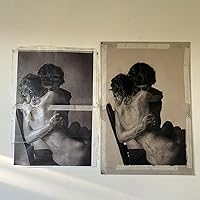
'Miranda slept in the orchard, lying in a long chair beneath the apple tree. Her book had fallen into the grass, and her finger still seemed to point... as if she had fallen asleep just there.' First published in 1923 but failing to gain the same fame as her groundbreaking collection Monday or Tuesday, Woolf's short story In the Orchard is perhaps her most experimental, painting the same picture in three very different ways. Centred on a sleeping Miranda, set in an orchard redolent of her own at Monk's House, Woolf toys with the powerful style of retelling, leaving the reader to read between the lines. Also included in this edition is 'Evening Over Sussex: Reflections in a Motor Car', a short essay that, taken with In the Orchard, contextualises the work and firmly relocates the reader to the Bloomsbury Set's Sussex.
(Adeline) Virginia Woolf was an English novelist and essayist regarded as one of the foremost modernist literary figures of the twentieth century.
During the interwar period, Woolf was a significant figure in London literary society and a member of the Bloomsbury Group. Her most famous works include the novels Mrs. Dalloway (1925), To the Lighthouse (1927), and Orlando (1928), and the book-length essay A Room of One's Own (1929) with its famous dictum, "a woman must have money and a room of her own if she is to write fiction."