

What do you think?

Star Trek: The Original Series
Shadows on the Sun
Since the first Pocket Books Star Trek hardcover, Spock's World, became an eight-week national bestseller, each Star Trek hardcover has been a huge bestseller as well. Now, the publishing phenomenon continues with a new novel by Michael Jan Friedman - the author of the first Star Trek: The Next Generation hardcover, Reunion. Pocket Books is proud to present Shadows on the Sun, a piece of Star Trek history that takes Dr. Leonard McCoy from his first days as a junior Starfleet medical officer to his position as Chief Medical Officer of the Federation's flagship, the U.S.S. Enterprise.
As a young doctor with a beautiful family and a promising medical career, Dr. McCoy thought he had it all. But when the woman he loved betrayed him, McCoy fled to Starfleet hoping to lose his pain in the depths of space. Now, more than forty years later, the U.S.S. Enterprise and her crew are ordered to transport a group of mediators to the planet Ssan, a world where assassination is a long, time-honored tradition.
Dr. McCoy is surprised to learn that his ex-wife, now remarried, is one of the mediators. But before McCoy can begin to face his feelings for his former love, she and Captain Kirk are trapped by a band of deadly assassins. Suddenly, McCoy is in the center of an explosive civil war, where he is the only one with the power to save the woman who once nearly destroyed him. McCoy must now overcome a centuries-long tradition of death, and his own past with the woman he still loves, or else lose her for the second time....
As a young doctor with a beautiful family and a promising medical career, Dr. McCoy thought he had it all. But when the woman he loved betrayed him, McCoy fled to Starfleet hoping to lose his pain in the depths of space. Now, more than forty years later, the U.S.S. Enterprise and her crew are ordered to transport a group of mediators to the planet Ssan, a world where assassination is a long, time-honored tradition.
Dr. McCoy is surprised to learn that his ex-wife, now remarried, is one of the mediators. But before McCoy can begin to face his feelings for his former love, she and Captain Kirk are trapped by a band of deadly assassins. Suddenly, McCoy is in the center of an explosive civil war, where he is the only one with the power to save the woman who once nearly destroyed him. McCoy must now overcome a centuries-long tradition of death, and his own past with the woman he still loves, or else lose her for the second time....
340 pages, Hardcover
First published August 1, 1993
About the author
Michael Jan Friedman
381 books215 followersMichael Jan Friedman is an author of more than seventy books of fiction and nonfiction, half of which are in the Star Trek universe. Eleven of his titles have appeared on the New York Times Best Seller list. Friedman has also written for network and cable television and radio, and scripted nearly 200 comic books, including his original DC superhero series, the Darkstars.
Ratings & Reviews
Friends & Following
Create a free account to discover what your friends think of this book!
Community Reviews
Displaying 1 - 30 of 84 reviews

February 16, 2024
Love me some McCoy, and there's some interesting backstory on his early career and marriage here, but this final diplomatic mission of the Enterprise to a planet where assassination is viewed as an integral part of the culture just seemed silly to me, and the story more than a wee bit melodramatic.

January 31, 2011
A bit of a non-starter. While the history of Dr. McCoy and his ex-wife makes for a sad & elegiac story, it doesn't alter the fact that this novel really seems completely superfluous, and without any imperative reason to exist. It's place post-Star Trek VI is equally unnecessary. Overall, this novel is just...there. Inoffensive, ocassionally sweet...but highly forgettable.

July 17, 2012
This sucked. It had no point. It was poorly written. What a waste of time. And it's most unfortunate because it's a very McCoy-centric book, which I enjoy more than other ST books, since McCoy is my favorite character. I wanted to like this book, but it simply wasn't possible.
Why, you may ask? Well, for starters, the 'resolution' was half-hearted and thoroughly unsatisfying. Jocelyn's death made the emotional investment in the story a pointless waste of effort. We got involved in her and McCoy's history, and picked a side, and got into the Clay-Jocelyn-McCoy love triangle, only to find it was all for naught. We needn't have bothered. She died anyway, so neither one can have her. No one gets to be happy. Suck it, Reader! Or so I imagined Michael Jan Friedman cackling evilly as I read that part.
Secondly, the structure wasn't very good. He constructed the story in an odd way, making the ending seem very rushed and anticlimactic. Also, it was structured in such a way that I made all of the connections except Jocelyn's unnecessary and pointless death. I knew the Ssani assassin from the really long flashback was Shil Andrachis long before we got to the part of the story where it was revealed for sure. Since I never, ever pick up on these things, I can only conclude that Friedman just isn't very good at subtlety.
Lastly, his writing style is like a high schooler's. He tries too hard and ends up just sounding awkward. He's pretty repetitive--I got tired of 'the inevitable sentries' rather quickly. Just say 'the sentries', dude. It's not that big a deal. Your throwing in 'inevitable' isn't that cool. Let it go. Let it go. I'll give you a cookie!
So anyway, this sucked and I'm mad I wasted time on it when I could've read something else. No wonder ST novels have such a bad reputation. I've just hit a slew of bad ones.
Why, you may ask? Well, for starters, the 'resolution' was half-hearted and thoroughly unsatisfying. Jocelyn's death made the emotional investment in the story a pointless waste of effort. We got involved in her and McCoy's history, and picked a side, and got into the Clay-Jocelyn-McCoy love triangle, only to find it was all for naught. We needn't have bothered. She died anyway, so neither one can have her. No one gets to be happy. Suck it, Reader! Or so I imagined Michael Jan Friedman cackling evilly as I read that part.
Secondly, the structure wasn't very good. He constructed the story in an odd way, making the ending seem very rushed and anticlimactic. Also, it was structured in such a way that I made all of the connections except Jocelyn's unnecessary and pointless death. I knew the Ssani assassin from the really long flashback was Shil Andrachis long before we got to the part of the story where it was revealed for sure. Since I never, ever pick up on these things, I can only conclude that Friedman just isn't very good at subtlety.
Lastly, his writing style is like a high schooler's. He tries too hard and ends up just sounding awkward. He's pretty repetitive--I got tired of 'the inevitable sentries' rather quickly. Just say 'the sentries', dude. It's not that big a deal. Your throwing in 'inevitable' isn't that cool. Let it go. Let it go. I'll give you a cookie!
So anyway, this sucked and I'm mad I wasted time on it when I could've read something else. No wonder ST novels have such a bad reputation. I've just hit a slew of bad ones.
This entire review has been hidden because of spoilers.

January 12, 2018
No review of a Star Trek novel can be begin without a clear statement of bias: I am a huge Star Trek nerd. Huge. I love all things Star Trek “prime” universe. I acknowledge that not all Star Trek content created in the prime universe is great. Heaven knows how bad Enterprise and Voyager were, but I love the concept of the fictional universe in which the Star Trek narratives take place.
If that didn’t mean anything to you, the rest of my review, and the repeated casual mentions of characters Trekkies are more familiar with than members of their own family, won’t mean much, either.
While I have watched every episode of TOS and we’re working our way through every episode of TNG, I read so few Star Trek novels. At least 80% of what I read is non-fiction, but every once in a while, I like to spoil myself with science fiction or Star Trek, specifically. I really do use fiction as a treat to reward myself for reading heavier stuff, so it’s important to me that my treat be particularly good.
This one was…forgettable. Looking up Michael Jan Friedman’s author credits, the man has written a substantial library of Star Trek stories, and if presented with another Friedman book, I would probably read it, but this one felt like the script of an episode I wouldn’t have particularly cared for.
Shadows on the Sun does a few things. It fills out and darkens the tone of Bones’ backstory, describing the marriage and divorce that nearly literally drove him into space. The character doesn’t really need to be more morose than Bones already is. All his backstory does is rip a bandaid off a decades old wound that will never heal. Frankly, I thought that what this story does to him is just cold and cruel.
It also sets up a new civilization that, frankly, the Federation probably should never have gotten involved with in the first place. They’re just a mess. Friedman tries to set up some moral equivalency dilemmas with them, and I -get- it, I do. “To explore strange new worlds, to seek out new life and new civilizations,” and all, but this culture is historically a hot mess. If I came across them, I would tell Chekov to plot a course for home and tell Sulu “ahead, warp factor ‘nope’”. As antagonists go, these “baddies” have a badly broken societal moral compass, which is a major thread of the entire plot.
Friedman does a -mostly- good job of making the characters sound like the characters. There are a couple out-of-character moments for Spock, who really has had all the character development that one man can take over the course of his role in the Star Trek universe, considering that the events of this book come after Star Trek VI: The Undiscovered Country. Leave Spock alone. Kirk seems morbidly subdued in this book, although given what he and Bones went through in that movie, that is understandable.
The one thing that drove me nuts about this book was how it jumped through multiple timelines, forward and backward. Yes, I’m aware that that is a thing that authors sometimes do, but authors should know that unless it is absolutely impossible to tell the story any other way, that really irritates me.
Was this book bad? No, that would be an overstatement. It just wasn’t the fun and enjoyable treat that I was looking for.
If that didn’t mean anything to you, the rest of my review, and the repeated casual mentions of characters Trekkies are more familiar with than members of their own family, won’t mean much, either.
While I have watched every episode of TOS and we’re working our way through every episode of TNG, I read so few Star Trek novels. At least 80% of what I read is non-fiction, but every once in a while, I like to spoil myself with science fiction or Star Trek, specifically. I really do use fiction as a treat to reward myself for reading heavier stuff, so it’s important to me that my treat be particularly good.
This one was…forgettable. Looking up Michael Jan Friedman’s author credits, the man has written a substantial library of Star Trek stories, and if presented with another Friedman book, I would probably read it, but this one felt like the script of an episode I wouldn’t have particularly cared for.
Shadows on the Sun does a few things. It fills out and darkens the tone of Bones’ backstory, describing the marriage and divorce that nearly literally drove him into space. The character doesn’t really need to be more morose than Bones already is. All his backstory does is rip a bandaid off a decades old wound that will never heal. Frankly, I thought that what this story does to him is just cold and cruel.
It also sets up a new civilization that, frankly, the Federation probably should never have gotten involved with in the first place. They’re just a mess. Friedman tries to set up some moral equivalency dilemmas with them, and I -get- it, I do. “To explore strange new worlds, to seek out new life and new civilizations,” and all, but this culture is historically a hot mess. If I came across them, I would tell Chekov to plot a course for home and tell Sulu “ahead, warp factor ‘nope’”. As antagonists go, these “baddies” have a badly broken societal moral compass, which is a major thread of the entire plot.
Friedman does a -mostly- good job of making the characters sound like the characters. There are a couple out-of-character moments for Spock, who really has had all the character development that one man can take over the course of his role in the Star Trek universe, considering that the events of this book come after Star Trek VI: The Undiscovered Country. Leave Spock alone. Kirk seems morbidly subdued in this book, although given what he and Bones went through in that movie, that is understandable.
The one thing that drove me nuts about this book was how it jumped through multiple timelines, forward and backward. Yes, I’m aware that that is a thing that authors sometimes do, but authors should know that unless it is absolutely impossible to tell the story any other way, that really irritates me.
Was this book bad? No, that would be an overstatement. It just wasn’t the fun and enjoyable treat that I was looking for.
May 27, 2024
A Star trek book that focuses on McCoy.
The Enterprise is a bout to come in after their 5 year mission, when they are sent to a planet where assassination was an accepted custom until recently, and it appears they are making a comeback.
It is decided to try a diplomatic solution. The reason The Enterprise is utilized, is because McCoy was once stationed on that planet, and may know more about it than almost anybody. And wouldn't you know it, but the diplomats happen to be McCoy's ex-wife and his former friend she left him for. Poor McCoy.
It all goes by the numbers, but McCoy almost seems like a real person here, rather than simply a foil for Spock. I don't think he mentions green blood even once.
The Enterprise is a bout to come in after their 5 year mission, when they are sent to a planet where assassination was an accepted custom until recently, and it appears they are making a comeback.
It is decided to try a diplomatic solution. The reason The Enterprise is utilized, is because McCoy was once stationed on that planet, and may know more about it than almost anybody. And wouldn't you know it, but the diplomats happen to be McCoy's ex-wife and his former friend she left him for. Poor McCoy.
It all goes by the numbers, but McCoy almost seems like a real person here, rather than simply a foil for Spock. I don't think he mentions green blood even once.

June 30, 2013
I didn't think I would like this book as much as I do because I am more a ST:TNG girl than TOS right now. However, when I saw the cover of this book I gasped for joy because it seemed like it would have all the drama I would need in a Michael Jan Friedman book. And I was right. After reading the introduction, I thought, what the hell and dove nose deep into this book and haven't regretted it since.
The story takes place shortly before the retirement of the Enterprise crew (sans Sulu). The novel is based heavily around McCoy's past and includes many wonderful arcs that develop later in which the reader sees the events that have, unfortunately, shaped Dr. McCoy into the venerable smartass that everyone loves (Damn it, Jim. I'm a doctor, not a...). The two main story lines revolve around some heavy tragedies surrounding McCoy: the first of which surrounds the diplomatic mission of Alpha Gederix VI in which his ex-wife and her new husband are involved, and the second which revolves around McCoy's time he spent on Ssan during the war against Li Moboron. Both stories actually tie into a third story in which the climax is revealed and the reader sees how Dr. McCoy prevails after all of the tragedy brought forth in this little, 340 page book.
I was impressed, thrilled, and saddened thoughout this book, but I think MJF did a wonderful job with this rollercoaster ride revolving around McCoy's love, hate, and sorrow, in which McCoy prevails emotionally and starts to move away from his past -- not to mention the ideals and social issues of a Samurai-esque culture within the Ssani Assassins; hinting that they are much more fierce than any Klingon Warrior. This book is an easy, yet unforgettable read - totally worth it!
The story takes place shortly before the retirement of the Enterprise crew (sans Sulu). The novel is based heavily around McCoy's past and includes many wonderful arcs that develop later in which the reader sees the events that have, unfortunately, shaped Dr. McCoy into the venerable smartass that everyone loves (Damn it, Jim. I'm a doctor, not a...). The two main story lines revolve around some heavy tragedies surrounding McCoy: the first of which surrounds the diplomatic mission of Alpha Gederix VI in which his ex-wife and her new husband are involved, and the second which revolves around McCoy's time he spent on Ssan during the war against Li Moboron. Both stories actually tie into a third story in which the climax is revealed and the reader sees how Dr. McCoy prevails after all of the tragedy brought forth in this little, 340 page book.
I was impressed, thrilled, and saddened thoughout this book, but I think MJF did a wonderful job with this rollercoaster ride revolving around McCoy's love, hate, and sorrow, in which McCoy prevails emotionally and starts to move away from his past -- not to mention the ideals and social issues of a Samurai-esque culture within the Ssani Assassins; hinting that they are much more fierce than any Klingon Warrior. This book is an easy, yet unforgettable read - totally worth it!

January 3, 2016
James Doohan is a really good narrator. That's first and foremost here. Just a great person to have doing a bunch of these audio books.
Beyond that, enh. This book isn't BAD, and it tries to do some good things (a lot more depth given to McCoy's history with his ex, Jocelyn), but overall there's too much goofiness ("assassins as a cultural imperative" - no, really) to keep this book held together.
Beyond that, enh. This book isn't BAD, and it tries to do some good things (a lot more depth given to McCoy's history with his ex, Jocelyn), but overall there's too much goofiness ("assassins as a cultural imperative" - no, really) to keep this book held together.
August 26, 2012
Fantastic read. And Mr. Friedman made me a character in the novel. How could I not like it?

Read
November 23, 2025Prose was distractingly bad. Couple solid sci-fi/speculative ideas in here. I wish I had read one of the better-liked Trek novels, and there were many -- but we owned this one, so I read it.
April 15, 2018
The author captured 'Bones' really well and gave a section of his history as a trainee med. student that was entertaining, dramatic and truly fascinating to read. In the end we gain a much better understanding of just how our favorite country doctor became the man that we know and love so well.
The nature of the assassin culture on Ssan provided many opportunities for comparing philosophical views and naturally created moments that challenged McCoy's character and personal ethics.
A fantastic read overall, I really liked it a lot.
The nature of the assassin culture on Ssan provided many opportunities for comparing philosophical views and naturally created moments that challenged McCoy's character and personal ethics.
A fantastic read overall, I really liked it a lot.
March 16, 2017
Took a while to get into (was also reading a bunch of other stuff), but I ended up getting through most of the second half in the last 24 or so hours. Remember that being an issue with multiple previous reads of Friedman's longer/in-depth books, going back 15 years to my first exposure to Trek lit. I actually waited until I finished my TOS and associated movies "binge watch" recently because this was set right after Undiscovered Country, but that turned out to be all but incidental.
McCoy was always my favorite of the original triumvirate, and as the last sentence may have implied I had been looking forward to this one for a while. It wasn't bad or anything; the Ssan world-building was effective (and surprisingly intense/"medically detailed" at points), and Jocelyn's exposition dump to Kirk when they're both imprisoned added a little southern gentry intrigue to her and her husband's backstory (although 22nd century Scarlett O'Hara she isn't). I dunno. Reqiuem by the same author was a lean read that I plowed through in less than 24 hours...maybe Friedman's just more compelling with TNG, although I'm pretty sure I just prefer Diane Duane (and have always preferred Peter David) when it comes to Treklit as an adult.
McCoy was always my favorite of the original triumvirate, and as the last sentence may have implied I had been looking forward to this one for a while. It wasn't bad or anything; the Ssan world-building was effective (and surprisingly intense/"medically detailed" at points), and Jocelyn's exposition dump to Kirk when they're both imprisoned added a little southern gentry intrigue to her and her husband's backstory (although 22nd century Scarlett O'Hara she isn't). I dunno. Reqiuem by the same author was a lean read that I plowed through in less than 24 hours...maybe Friedman's just more compelling with TNG, although I'm pretty sure I just prefer Diane Duane (and have always preferred Peter David) when it comes to Treklit as an adult.

June 21, 2023
This book is in two parts: a flashback to McCoys first mission and an adventure right after Star Trek VI. I dug the flashback. I love McCoy and I read this because of that and I really enjoyed seeing him as a younger man and getting a sort of origin story. The rest was mediocre.
March 12, 2013
I've definitely read worse, but if the ending sucks, it ruins the whole story for me, and this ending was a disappointment - no satisfying resolution, just kill 'em off? Really? Sad and disappointing.
And what was Clay doing in the diplomatic corp anyway? He seems to be the *least* diplomatic person in the entire novel. I can only imagine that any successes he had before his wife joined him were either blind luck or coincidence. I kept expecting a reveal that their success as a team was actually all Jocelyn's doing. And then he says at the end that he plans to continue on? I hate to think of all the conflicts he goes on to screw up. He was worse than useless in that meeting with the Ssana governor. That scene reads like a very not-subtle effort by the author to have the reader dislike him, but he writes him as seeming to be an incompetent jacka** while refusing to actually ever acknowledge his incompetence. Annoying.
And what was Clay doing in the diplomatic corp anyway? He seems to be the *least* diplomatic person in the entire novel. I can only imagine that any successes he had before his wife joined him were either blind luck or coincidence. I kept expecting a reveal that their success as a team was actually all Jocelyn's doing. And then he says at the end that he plans to continue on? I hate to think of all the conflicts he goes on to screw up. He was worse than useless in that meeting with the Ssana governor. That scene reads like a very not-subtle effort by the author to have the reader dislike him, but he writes him as seeming to be an incompetent jacka** while refusing to actually ever acknowledge his incompetence. Annoying.

December 14, 2017
I honestly found this to be one of the best McCoy-centric novels in the entire collection of Star Trek novels I've managed to find and read. It gives us some insight into his past, his family life and we see an interesting glimpse into the life of pre-Enterprise McCoy and it ties into their present dilemma.
Like most ST:TOS novels it is likely not everyone's cup of tea but it does have really good characterization and easily paints the scene in the mind.
Like most ST:TOS novels it is likely not everyone's cup of tea but it does have really good characterization and easily paints the scene in the mind.

May 17, 2012
another reread, this time from the nineties. I see why I kept this book, and I probably will again.
May 20, 2016
Love the original series, and this was a fun, quick read.
December 4, 2018
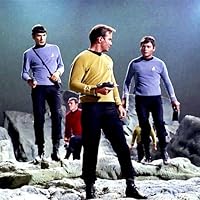
I really wanted to love this because it's one of the few McCoy centric books. I did enjoy the overall story, though I don't feel I know much more about Bones than I did before, aside from the exact temperature he likes his whisky. I did, however, enjoy the "I'm a doctor, not a politician" line. :D
The romantic aspect of the storyline was problematic for me. Firstly, I could have done without it because if I wanted to read romance, I probably wouldn't be reading a Star Trek novel. But that aside I was willing to go along with it and try to learn more about the woman who broke McCoy's heart all those years ago. Because she must have really been something, right? Strong-willed and passionate, just like Bones himself I had imagined. Wrong. She's portrayed as weak, fickle and one-dimensional. I couldn't help but wonder to myself whether the author dislikes Jocelyn in particular or just women in general.
I think the novel needed to be longer to allow Jocelyn the chance to show her skills as an ambassador and to grow into a fleshed out character. I'm really not clear why she was sent as she didn't do anything productive, but then again neither did her husband.
The only redeeming quality the author allows Jocelyn is that she sacrifices herself to save Bones. But just a few pages after her death, her ex-husband and her current husband decide to just forget their decades long feud over her, and enjoy a drink together in a way which makes it hard to believe either one of them really loved her that much in the first place.
It also could have done with more Kirk, who aside from being a sounding board for Bones in one scene and Jocelyn in another, contributes nothing. Literally, if he hadn't had to have been written in to receive the orders from Starfleet regarding the mission on Ssan, he could have been completely written out. The same goes for Spock too really but it didn't bother me as I was far more interested in McCoy than the other characters.
To summarise, I did enjoy this book, but I wouldn't read it again.
The romantic aspect of the storyline was problematic for me. Firstly, I could have done without it because if I wanted to read romance, I probably wouldn't be reading a Star Trek novel. But that aside I was willing to go along with it and try to learn more about the woman who broke McCoy's heart all those years ago. Because she must have really been something, right? Strong-willed and passionate, just like Bones himself I had imagined. Wrong. She's portrayed as weak, fickle and one-dimensional. I couldn't help but wonder to myself whether the author dislikes Jocelyn in particular or just women in general.
I think the novel needed to be longer to allow Jocelyn the chance to show her skills as an ambassador and to grow into a fleshed out character. I'm really not clear why she was sent as she didn't do anything productive, but then again neither did her husband.
The only redeeming quality the author allows Jocelyn is that she sacrifices herself to save Bones. But just a few pages after her death, her ex-husband and her current husband decide to just forget their decades long feud over her, and enjoy a drink together in a way which makes it hard to believe either one of them really loved her that much in the first place.
It also could have done with more Kirk, who aside from being a sounding board for Bones in one scene and Jocelyn in another, contributes nothing. Literally, if he hadn't had to have been written in to receive the orders from Starfleet regarding the mission on Ssan, he could have been completely written out. The same goes for Spock too really but it didn't bother me as I was far more interested in McCoy than the other characters.
To summarise, I did enjoy this book, but I wouldn't read it again.
This entire review has been hidden because of spoilers.

May 26, 2023
Shadows On The Sun by Micheal Jan Friedman
This was easily the best book I’ve read that’s been written by Friedman. I have mixed feelings about Friedman as I always found his writing to be a little lacklustre and he always came up with great ideas, but he never developed them further. But here, he really shines.
I don’t know if it has to do with the fact that McCoy is probably my favorite character in all of Trek or how this is technically another Lost Era novel, taking place after Star Trek 6, but I enjoyed this book very much. McCoy in TOS was a great character but we never got to learn much about his character, but we get a great deep dive into it here. We learn about his marriage falling apart and his assignment on Ssan shaped him into the person he ended up becoming. Probably the best part of the book, was the section dedicated to his first assignment on Ssan and dealing with horrible civil war there. Friedman did an excellent job writing this part and atucally took the proper time to explore it, unlike before in many of his other books. I was not also ready for how dark the book got in that part and Friedman wrote it well. It felt like an allegory for the U.S in Vietnam or when a military operation they have goes horribly wrong like Somalia.
My biggest criticism of the book is the plot. Why in the world would Kirk, Spock and the Treadways beam down to the lair of the assassins? Kirk himself knew what was going to happen, and Clay is a complete fucking moron. There was probably better ways for them to get caught by the assassins but I’m willing to look this over. Also, just reading pages of exposition about how McCoy and Jocyeln’s marriage fell apart wasn’t the best either. I had hoped for a flashback Ala McCoy’s first assignment but it’s fine.
Overall, this book was still very enjoyable and a massive step up for Friedman and my opinion of his writing. It was also great to have a deep dive into McCoy’s character. Probably also the second best McCoy book after Doctor’s Orders for me.
7/10
This was easily the best book I’ve read that’s been written by Friedman. I have mixed feelings about Friedman as I always found his writing to be a little lacklustre and he always came up with great ideas, but he never developed them further. But here, he really shines.
I don’t know if it has to do with the fact that McCoy is probably my favorite character in all of Trek or how this is technically another Lost Era novel, taking place after Star Trek 6, but I enjoyed this book very much. McCoy in TOS was a great character but we never got to learn much about his character, but we get a great deep dive into it here. We learn about his marriage falling apart and his assignment on Ssan shaped him into the person he ended up becoming. Probably the best part of the book, was the section dedicated to his first assignment on Ssan and dealing with horrible civil war there. Friedman did an excellent job writing this part and atucally took the proper time to explore it, unlike before in many of his other books. I was not also ready for how dark the book got in that part and Friedman wrote it well. It felt like an allegory for the U.S in Vietnam or when a military operation they have goes horribly wrong like Somalia.
My biggest criticism of the book is the plot. Why in the world would Kirk, Spock and the Treadways beam down to the lair of the assassins? Kirk himself knew what was going to happen, and Clay is a complete fucking moron. There was probably better ways for them to get caught by the assassins but I’m willing to look this over. Also, just reading pages of exposition about how McCoy and Jocyeln’s marriage fell apart wasn’t the best either. I had hoped for a flashback Ala McCoy’s first assignment but it’s fine.
Overall, this book was still very enjoyable and a massive step up for Friedman and my opinion of his writing. It was also great to have a deep dive into McCoy’s character. Probably also the second best McCoy book after Doctor’s Orders for me.
7/10

August 25, 2018
One of the books I had mixed feelings about. It was slightly dated in the way it told the story. While I quite liked some elements there were a few parts of the story which had one or two of the characters acting a bit out of character. (Notably one of the story lines McCoy was a part of.)
(I'll try to be vague to avoid spoilers.)
I found the ending strangely anticlimactic, though I think most people would disagree with me. The relationship I was most invested in was the young Doctor McCoy and the youthful assassin, and it almost went in the direction I wanted, but then fell by the wayside in favor of the melodrama with McCoy's ex. (Most notably, the part I felt McCoy was out of character was one of his motivations with the assassin. Which was disappointing because otherwise it would have been quite an interesting relationship, and I think the book would have been stronger without that part.)
Despite my complaints there was a fair amount to enjoy. The philosophical discussions were interesting, and though it wasn't ever stated, if you accept this book then McCoy's discussions with the assassin clearly had an effect on him at the end of his father's life. Kirk was a worthy friend. Spock was a steadfast presence and support, though I would have liked to see more of him reacting to McCoy. Uhura knows Spock too well (it was interesting and slightly sweet). McCoy's best friends are almost always people who can and will argue with him, and that might have been my favorite part.
(I'll try to be vague to avoid spoilers.)
I found the ending strangely anticlimactic, though I think most people would disagree with me. The relationship I was most invested in was the young Doctor McCoy and the youthful assassin, and it almost went in the direction I wanted, but then fell by the wayside in favor of the melodrama with McCoy's ex. (Most notably, the part I felt McCoy was out of character was one of his motivations with the assassin. Which was disappointing because otherwise it would have been quite an interesting relationship, and I think the book would have been stronger without that part.)
Despite my complaints there was a fair amount to enjoy. The philosophical discussions were interesting, and though it wasn't ever stated, if you accept this book then McCoy's discussions with the assassin clearly had an effect on him at the end of his father's life. Kirk was a worthy friend. Spock was a steadfast presence and support, though I would have liked to see more of him reacting to McCoy. Uhura knows Spock too well (it was interesting and slightly sweet). McCoy's best friends are almost always people who can and will argue with him, and that might have been my favorite part.

September 16, 2021
This book was....certainly something. I think when you pick up a Star Trek book, especially one from the TOS era, you have to read it with a grain of salt. And that's exactly what I did. I enjoyed the silly dialogue, the shakily thrown-together plot that just made enough sense, everything that makes a ridiculous Star Trek episode a ridiculous Star Trek episode. Or in this case, a ridiculous Star Trek book. I loved reading a book centered around McCoy: I might be biased since he's my favorite character, but regardless, it was a nice change in pace and I loved learning more about his past.
But there's one thing this book....cannot get right. It hurts me to my very core.
You'd think that when you write a book centered around the Chief Medical Officer of a starship that you'd know your medical terminology, right? At least enough to make it seem like you know what you're talking about. And you'd think a basic would be knowing how to abbreviate cubic centimeters. CCs, right? "I need ten CCs of adrenaline" and all that doctor stuff. You'd think that'd be a basic requirement.
But no.
Michael Jan Friedman does an EXCELLENT job at COMPLETELY dropping the ball on this one.
"Ten cee-cees of penthorbaline"
I had to put the book down. I had to double-check to make sure I wasn't going crazy. I couldn't read the book for the rest of the night, and when I did, I covered that bit so I didn't have to read it ever again. I call this book the cee-cees book now. This book, that very sentence, has birthed what we now call the "Book Wall Of Shame" at my school library.
It's a great book. It'd probably be 4/5 stars if not for this....abomination. If you're fine with someone writing CCs as cee-cees, go right ahead, but if not, well....read at your own risk.
But there's one thing this book....cannot get right. It hurts me to my very core.
You'd think that when you write a book centered around the Chief Medical Officer of a starship that you'd know your medical terminology, right? At least enough to make it seem like you know what you're talking about. And you'd think a basic would be knowing how to abbreviate cubic centimeters. CCs, right? "I need ten CCs of adrenaline" and all that doctor stuff. You'd think that'd be a basic requirement.
But no.
Michael Jan Friedman does an EXCELLENT job at COMPLETELY dropping the ball on this one.
"Ten cee-cees of penthorbaline"
I had to put the book down. I had to double-check to make sure I wasn't going crazy. I couldn't read the book for the rest of the night, and when I did, I covered that bit so I didn't have to read it ever again. I call this book the cee-cees book now. This book, that very sentence, has birthed what we now call the "Book Wall Of Shame" at my school library.
It's a great book. It'd probably be 4/5 stars if not for this....abomination. If you're fine with someone writing CCs as cee-cees, go right ahead, but if not, well....read at your own risk.

November 21, 2019
My 1st Star Trek novel and it had every cliche I expected. From the previously unknown security officer who is killed when the main characters beam down to the planet, to the love interest from the past who rekindles an affair. In fact, a most of this book is about McCoy's past. How he met his wife, how he saved the bad guys life and how an acquaintance from school broke up his marriage. All of these characters from his past come together during an expedition to save the population of a planet from killing themselves.
It's an easy read, flows quite quickly and kept my interest for the most part, even when you know what the outcome of the current paragraph is going to be. Despite the occasional mistake by the author (how did the assassin know that one of the party had died and one survived when Spock only announced it after he got both men to sickbay?). Predictable, flawed, fun and well-written - just like the original TV series.
P.S. I was thinking of warning that this review contained spoilers, and then I thought 'why bother?', it's true to the original Star Trek, so you already know how it ends.
It's an easy read, flows quite quickly and kept my interest for the most part, even when you know what the outcome of the current paragraph is going to be. Despite the occasional mistake by the author (how did the assassin know that one of the party had died and one survived when Spock only announced it after he got both men to sickbay?). Predictable, flawed, fun and well-written - just like the original TV series.
P.S. I was thinking of warning that this review contained spoilers, and then I thought 'why bother?', it's true to the original Star Trek, so you already know how it ends.
February 12, 2026
Reads like an afterthought compared to the TOS films, but a decent romp with the original crew.
If you're familiar with the structure of any Trek adventure, this will be no different, but it adds some emotional weight from our favorite medical officer. The Ssani are more or less the Klingons in this case, because I guess even Enterprise was sick of seeing them after the past 5 movies. Their assassin culture is on the brink of extinction thanks to a handful of citizens that would rather see their civilization thrive for once, and when a rogue group of assassins looking to preserve their ideology starts targeting Ssani officials, who else to resolve the issue than the semi-retired NCC-1701 gang? It's not like there's other starships anywhere near Ssan that could've helped, no, it had to be the Enterprise. Funny that's how it's happened for so long.
Anyway, Bones has a connection to the new High Assassin, he reconnects with his ex-wife, doesn't let his wrath overpower his virtues (he's a doctor, not a politician, you know), and he'll be having a long talk with Joanna once she hears the news.
If you're familiar with the structure of any Trek adventure, this will be no different, but it adds some emotional weight from our favorite medical officer. The Ssani are more or less the Klingons in this case, because I guess even Enterprise was sick of seeing them after the past 5 movies. Their assassin culture is on the brink of extinction thanks to a handful of citizens that would rather see their civilization thrive for once, and when a rogue group of assassins looking to preserve their ideology starts targeting Ssani officials, who else to resolve the issue than the semi-retired NCC-1701 gang? It's not like there's other starships anywhere near Ssan that could've helped, no, it had to be the Enterprise. Funny that's how it's happened for so long.
Anyway, Bones has a connection to the new High Assassin, he reconnects with his ex-wife, doesn't let his wrath overpower his virtues (he's a doctor, not a politician, you know), and he'll be having a long talk with Joanna once she hears the news.

June 4, 2020
Nice to listen to. Interesting to also learn more about McCoy, after already having heard of some solo-ish adventures of other less-prominent crew members (Sulu, Chekov, Scott) in the audiobooks that I recently listened to. That is, aside from Kirk and Spock; who often take centre stage, plot- and background-wise.
Doohan really nails Bones' accent and voice, and some of the others' as well.
I enjoyed this abridged novel slightly more than the previous two; not enough to warrant 4*, but enough to mention it.
The planet-of-this-week (a society with an elite assassin cult that is gradually being phased out and doesn't take to that kindly) didn't do much for me. Nonetheless, that culture is only used as a thinly veiled excuse (and I mean that in a good way!) for the ensuing character drama -- rooted in McCoy's past, which we consequently get to know more about. And because the assassin's ideology is decently elaborated upon, it hampered me less in the enjoyment of this novel than I initially feared.
Solid 3*, for a Trek story.
Doohan really nails Bones' accent and voice, and some of the others' as well.
I enjoyed this abridged novel slightly more than the previous two; not enough to warrant 4*, but enough to mention it.
The planet-of-this-week (a society with an elite assassin cult that is gradually being phased out and doesn't take to that kindly) didn't do much for me. Nonetheless, that culture is only used as a thinly veiled excuse (and I mean that in a good way!) for the ensuing character drama -- rooted in McCoy's past, which we consequently get to know more about. And because the assassin's ideology is decently elaborated upon, it hampered me less in the enjoyment of this novel than I initially feared.
Solid 3*, for a Trek story.

March 17, 2024
Reflective and intelligent. Kind of everything you'd hope a Star Trek book would be. The middle of three books reflecting on the Big Three's past, this one focuses on McCoy's past and the woman that drove him to Starfleet and the planet that taught him to be the doctor he wanted to be. I enjoyed his discussions with the Ssan patient of his and where the title comes from as the clash of their cultures is shown on a down-to-earth level between the two of them. Plus the effects on war and triage and who we are put into those situations that would be explored more on that level with Jake Sisko on DS9 with the episode "Nor the Battle to the Strong". Anyway, I really enjoyed the book and the dynamics between all the characters. My one gripe was that I didn't TRULY grasp the Assassination culture of Ssan but maybe I was never supposed to.

July 18, 2026
I can see why a few people love this. More easily, I can see why a lot more were disappointed. The abrupt ending that made everything that had gone before, in both main story-lines, irritated me. I was even more irritated by reading about how McCoy, Clay, and Jocelyn grew up in a community that, as another reviewer has said, was stuck in time in "1955."
The whole book served two things Friedman wanted to do. Convince us that assassinations can be okay, even 'right,' in a different culture, and give us a walloping dose of his (Friedman's) interpretation of McCoy's character and backstory. Neither worked for me.
"... whatever had woken him was still floating around in his system, turning on all the lights and inviting the neighbors over."
Sorry, but the more I write here the less I like the book. Rounding down to two stars.
The whole book served two things Friedman wanted to do. Convince us that assassinations can be okay, even 'right,' in a different culture, and give us a walloping dose of his (Friedman's) interpretation of McCoy's character and backstory. Neither worked for me.
"... whatever had woken him was still floating around in his system, turning on all the lights and inviting the neighbors over."
Sorry, but the more I write here the less I like the book. Rounding down to two stars.
December 31, 2022
Set after the events of Star Trek VI “the undiscovered country “ the enterprise is ordered to detour their trip back to be decommissioned. Due to political and civil war events on another planet and a prize was dispatched due to Dr. McCoy‘s history with some of the personnel on the planet. More history is explored from Dr. McCoy‘s background. Past loves. Past wives. And why he ended up joining Starfleet to “hide in space” slow burn of a story. I found the interpersonal relationships and storylines featuring Dr. McCoy more interesting than the politics of the planet. A decent story worth a read not going to replace the wrath of Kahn anytime soon. But not bad either true score 3.5 out of five.
February 14, 2020
This is a conflicting book for me. Michael Jan Friedman's Star Trek novels are very hit or miss with me... mostly miss. At best his novels leave me going "Meh. It was okay, glad I read it, I'm ready for someone else's Trek now." This is his most outstanding work... and I cannot bring myself to own a copy because it is HEARTBREAKING. The ending made me cry, it was so sad. It's beautifully written, the best of Friedman's work, a masterpiece even... and so gut-wrenching that I can never bring myself to read it again or even own it (I read a library copy). I do recommend the book, just brace yourself to have ALL THE FEELS.

August 25, 2021
Following the events of Camp Khitomer, the 'U.S.S. Enterprise' is diverted to the planet Ssan as a crisis involving the Guild of Assassins has arisen and only Doctor McCoy has any experience of the situation from his earliest days in Starfleet. To complicate matters, the diplomatic team assigned to lead the peace talks are Clay and Jocelyn Treadway: McCoy's ex wife and her new husband.
Friedman works very well with the original crew and this novel showcases the relationship between Kirk, Spock and McCoy very well. The plot is simply a hanger to allow a vicarious peek into McCoy's marriage, but this can be forgiven.
Friedman works very well with the original crew and this novel showcases the relationship between Kirk, Spock and McCoy very well. The plot is simply a hanger to allow a vicarious peek into McCoy's marriage, but this can be forgiven.
June 13, 2024
A slow non-interference story that revolves around the concept of saving an alien civilisation from itself (again) is raised (barely) above mediocrity by a heart breaking and poetically romantic ending.
It’s Star Trek, it’s got the famous trio we all know and love and it’s got the Enterprise for one last hurrah. It’s got goodies (obviously) and it’s got baddies (of course) to balance it all out. It’s got morals, and excuses, and justifications and it’s got philosophy.
Is it deep? Yep.
Is it corny and cliche and tropey? Yep.
Has it got time travel? No but you get well written flashbacks. It’s a story in three parts.
Should a Trekkie read it? Yep.
It’s Star Trek, it’s got the famous trio we all know and love and it’s got the Enterprise for one last hurrah. It’s got goodies (obviously) and it’s got baddies (of course) to balance it all out. It’s got morals, and excuses, and justifications and it’s got philosophy.
Is it deep? Yep.
Is it corny and cliche and tropey? Yep.
Has it got time travel? No but you get well written flashbacks. It’s a story in three parts.
Should a Trekkie read it? Yep.

March 8, 2025
This was a 4-star book most of the way through, but the way the romance angle ended was cheap, lazy, and predictable, which brought the whole thing down. There was also a truly bizarre description of the American south that indicated attitudes there in the mid-23rd century were those of circa 1955, which threw me out of the story and made me wonder what timeline we were in.
But up until that point, the story was engaging, and I really enjoyed it. I loved the McCoy focus and enjoyed the peeks into his past. I thought the culture of the new species was interesting and well explored.
The ending just really mucked it up and left a bad taste in my mouth. I'll settle around 3.25 stars.
But up until that point, the story was engaging, and I really enjoyed it. I loved the McCoy focus and enjoyed the peeks into his past. I thought the culture of the new species was interesting and well explored.
The ending just really mucked it up and left a bad taste in my mouth. I'll settle around 3.25 stars.
Displaying 1 - 30 of 84 reviews