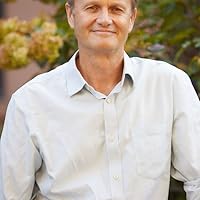
There is a deep chasm between the promises of the new global capitalism and the reality of social breakdown, spiritual emptiness, and environmental destruction it is leaving in its wake. In this important book, David Korten makes a compelling and well-documented case that capitalism is actually delivering a fatal blow not only to life, but also to democracy and the market. Among his startling
Capitalism is a pathology that commonly afflicts market economies in the absence of vigilant public oversight. Since the economy internal to a corporation is a planned economy, the current consolidation of economic control under a handful of global corporations is a victory for central planning-not the market economy. The alternative to the new global capitalism is a global system of thriving, healthy market economies that function as extensions of healthy local ecosystems to meet the livelihood needs of people and communities.
Radical as such proposals may seem, they actually reflect processes that are steadily gaining momentum around the world. The Post-Corporate World provides a vision of what's needed and what's possible, as well as a detailed agenda for change. Korten shows that to have a just, sustainable and compassionate society, concentrated absentee ownership and footloose speculative capital as embodied in the global, for-profit public corporation must be eliminated in favor of enterprises based on patient, rooted, stakeholder ownership limited to those who have a stake in the firm as a worker, supplier, customer, or member of the community in which it is located.
Korten outlines numerous specific actions to free the creative powers of individuals and societies through the realization of real democracy, the local rooting of capital through stakeholder ownership, and a restructuring of the rules of commerce to create "mindful market" economies that combine market principles with a culture that nurtures social bonding and responsibility.
Like Korten's previous bestseller, When Corporations Rule the World, this provocative book is sure to stimulate national dialogue and debate and inspire a bevy of grassroots discussions and initiatives. The Post-Corporate World presents readers with a profound challenge and an empowering sense of hope.
Dr. David C. Korten worked for more than thirty-five years in preeminent business, academic, and international development institutions before he turned away from the establishment to work exclusively with public interest citizen-action groups. He is the cofounder and board chair of YES! Magazine, the founder and president of The People-Centered Development Forum, a board member of the Business Alliance for Local Living Economies, an associate of the International Forum on Globalization, and a member of the Club of Rome. He is co-chair of the New Economy Working Group formed in 2008 to formulate and advance a new economy agenda.
Korten earned his MBA and PhD degrees at the Stanford University Graduate School of Business. Trained in organization theory, business strategy, and economics, he devoted his early career to setting up business schools in low-income countries—starting with Ethiopia—in the hope that creating a new class of professional business entrepreneurs who would be the key to ending global poverty. He completed his military service during the Vietnam War as a captain in the U.S. Air Force, with duty at the Special Air Warfare School, Air Force headquarters command, the Office of the Secretary of Defense, and the Advanced Research Projects Agency.
Korten then served for five and a half years as a faculty member of the Harvard University Graduate School of Business, where he taught in Harvard’s middle management, MBA, and doctoral programs and served as Harvard’s adviser to the Central American Management Institute in Nicaragua. He subsequently joined the staff of the Harvard Institute for International Development, where he headed a Ford Foundation–funded project to strengthen the organization and management of national family planning programs.
In the late 1970s, Korten left U.S. academia and moved to Southeast Asia, where he lived for nearly fifteen years, serving first as a Ford Foundation project specialist and later as Asia regional adviser on development management to the U.S. Agency for International Development. His work there won him international recognition for his contributions to the development of strategies for transforming public bureaucracies into responsive support systems dedicated to strengthening the community control and management of land, water, and forestry resources.
Increasingly concerned that the economic models embraced by official aid agencies were increasing poverty and environmental destruction and that these agencies were impervious to change from within, Korten broke with the official aid system. His last five years in Asia were devoted to working with leaders of Asian nongovernmental organizations on identifying the root causes of development failure in the region and building the capacity of civil society organizations to function as strategic catalysts of positive national- and global-level change.
Korten came to realize that the crisis of deepening poverty, inequality, environmental devastation, and social disintegration he observed in Asia was playing out in nearly every country in the world—including the United States and other “developed” countries. Furthermore, he concluded that the United States was actively promoting—both at home and abroad—the very policies that were deepening the crisis. If there were to be a positive human future, the United States must change. He returned to the United States in 1992 to share with his fellow Americans the lessons he had learned abroad.
Korten’s publications are required reading in university courses around the world. He has written numerous books, including Agenda for a New Economy: From Phantom Wealth to Real Wealth, the international best seller When Corporations Rule the World, The Great Turning: From Empire to Earth Community, and The Post-Corporate World: Life After Capitalism. He contributes regularly to edited books and professional journals, and to a wide variety of periodical publicatio
This is a book about the great journey that is ahead of us as a civilization, the transition to a post-corporate world, more in tune with nature and less obsessive and greedy. This book felt a lot like reading a religious inspirational book, with the religion being liberal politics. It was long on preaching and short on evidence. Here's an example of how this book reads:
"I believe that the task ahead depends even more on our spiritual awakening than on our political awakening for the simple reason that political resistance usually plays itself out through competition for the instruments of money's creation and allocation. Political victory alone merely leads to a shuffling of the power holders and a change in the rules by which money's power is distributed, but the new leaders remain largely figureheads in a world in which money--not life--is the real master. The struggle is played out on money's turf, by money's rules, to realize money's values. Only as we awaken to the understanding that what we really want is life, not money, can we begin to shed the chains of our enslavement to money's values and institutions and open ourselves to finding our place in life's unfolding."
Amen, hallelujah, praise the lord, preach it brother!
Ugh.
The book starts off with some discussion of biology, which is mostly just pseudoscience, based largely on a quack biologist named Mae-Wan Ho. Basically, the claim is that life has an intelligence of its own, and the growth of living things is directed consciously. It seems clear that the author knows this is bunk, admitting it without shame:
"So we come back to our original questions about life's story: Pure chance or purposeful striving? Dumb luck or deep intelligence? The mainstream of science continues to maintain that it is a combination of pure chance and the mechanistic processes of natural selection. It is here that the scientific leaders of the new biology part company with the mainstream. Lynn Margulis and Dorion Sagan put it succinctly : 'Life is matter that chooses.' Life remembers as well, as it strives constantly to maintain and re-create itself."
I guess he thinks that not being a biologist and then going against all of mainstream biology makes him some kind of radical, forward-thinker?
Most of the last half of the book is about how this new revolution is upon us. Everything is changing, and our numbers are massive. He cites a lot of vague data that, to the gullible, might sound like it supports his claim of this pending revolution. 86% of Americans were concerned about the environment. 58% saw a need to teach our children to be less materialistic. So, some very sweeping, generic claims were made that are so vague that most people would agree with, and this is proof that this great revolution is upon us.
The end is a call to arms, urging readers to do Earth-shattering, revolutionary things like voting, writing to congress, and starting meetup groups.
The rhetoric around there are only two choices to living in an economic system, corporate capitalism or communism is dispelled by this book, not only is there a very much superior system ( a market economy) , which people naturally fall into, but you realize that both capitalism and communism share the same problem, being top-down controlled systems that benefit only a few people, and ravage the environment. A very eye opening book.
I read this in Burma and he's got an interesting (albeit outlandish) take on how to build up a locally-focused, modern international economy where people are prioritized over corporations.
THE POST-CORPORATE WORLD is one of those books that I bought when it first came out (in the late 1990s) and it had sat on my shelf unread for years. I read it partly to remind myself of what was consuming us before 9/11; before social media and the iPhone; before the dot-com crash, the Afghanistan and Iraq conflicts, the 2008-9 global recession, the Arab Spring, IS and Syria; and before climate change became inevitable rather than something to be mitigated. It turns out that Korten's concerns are still relevant: corporate hegemony, income inequality, and environmental destruction have only been exacerbated. Korten, as befitting one of the founders of YES: A Journal of Positive Futures, attempts to accentuate the positive as he looks forward to the 21st century and profiles a range of groups making a difference at the grassroots level. But it's striking (and depressing) how that work remains to be done nearly two decades on—even more so, in spite of the insurrections on the left and right in the U.S. presidential campaign.
Wow! A little (ok, a lot) depressing. Especially the first 3 chapters but the concepts are so thought-provoking. Some of the ideas may be a little too revolutionary for some but the more I read, the more they resonate. Second & third parts were a bit more hopeful with concrete ideas of things to do. I liked that.
Fascinating. This puts history in the longest possible perspective -- starting with the formation of planet earth after the big bang. The planet will still be here after our species is extinct. Korten does, as always, bring the injustices and destructiveness of the corporate-dominated world economy sharply into focus.
The Post-Corporate World After Capitalism is predictably baffling due to the author’s viewpoint of capitalism. Capitalism is anti-poverty. If capitalism were to be abandoned across the world, starvation and utter poverty would spread to all parts of the world. If one were to think of Africa, many associate poverty. Why? South Africa is the only capitalist economy in the entire continent while all other countries have some form of centrally planned economies. Korten describes all the actions that would be necessary to rid the world of corporate conglomerates. For the most part, I agree that corporate conglomerates are bad; however, most of the incessant corporate power comes at the hands of crony capitalism. Governments around the world help and assist corporations gain the edge in the marketplace through cronyism with bailouts, subsidies, taxes, regulations and tariffs. Overall, the ideas are quite detailed and intriguing, but they are not feasible until the intertwined connections of government and corporations are broken.
This is a very good reading and people must read this. When i learning about development in my field study,i was wondering why have some people seem criticize about development when the development itself help us to achieve the top rank country in the world so i read many references,do some research and finally i'm still didn't get the best conclusion and answer of what i wonder. At last,i've found this book,after i've finished read this,i can conclude and open my mind that development is good but must be balance on society need and not suppress on society.
buku yang sangat amat bagus. pembahasannya sangat mendalam dan benar2 menggugah kita untuk merubah sistem yang ada di masyarakat saat ini. meskipun begitu, hampir setengah pembahasan dari buku ini belum aku mengerti. mungkin ilmunya belum sampai. biar pun begitu, aku bertekad untuk membacanya sekali lagi... Yudha P Sunandar Sn
If you are seriously pissed about American politics and you believe yourself to be a republican, a democrat, an independent, a conservative, liberal, or a libertarian, read this book. You are not thinking nearly cynical enough. If you're not sure, try to buy a vote in this country and see how far back of the line you are.