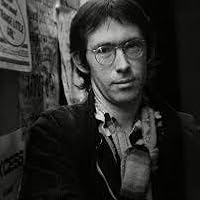
Tuvia Tenenbom, son and grandson of ultra-Orthodox rabbis, left the fold while a very young man. Decades later he comes back, living for over a year in Mea Shearim, Jerusalem, arguably the most authentic ultra-Orthodox community anywhere in the world. Tenenbom, a bestselling author of many books, wanted to know how the Orthodox culture and way of life had changed, if it had, and how restrictive it is these days in an increasingly restrictive world outside of it. To answer this question, and many others, he became one of them again, doing what they praying with them at synagogues and studying with them at yeshivas, eating with them, singing with them, joining them for shabbat meals, driving with them to the graves of their holy rabbis, chatting with their spiritual leaders and all the while speaking God’s language, Yiddish. In time he gained their trust, people opened to him, and their world of faith revealed itself in all its fascination and contradictions. This book is a spiritual journey to the world of faith, packed with Jewish humor, Jewish fears, Jewish wisdom, and Jewish traditions.
Tuvia Tenenbom (Hebrew: טוביה טננבום) is a theater director, playwright, author, journalist, essayist and the founding artistic director of the Jewish Theater of New York, the only English-speaking Jewish theater in New York City. Tenenbom was called the "founder of a new form of Jewish theatre" by the French Le Monde and a "New Jew" by the Israeli Maariv. Tenenbom is also an academic, having university degrees in mathematics, computer science, dramatic writing and literature. (wiki)
This book is a bit strange. Tenenbaum is a former Haredi who knows this world very well, and still insists on presenting it in a rather superficial way. Too many sentences end with "Why? Who knows." He likes the Haredi very much and is mostly full of love for them (with an obsessive emphasis on sex and bland food that at a certain point begins to get exhausting), and despite his questions about faith, this is certainly not a study tour of Haredi and Hasidic theology but impressions of everyday life in the Mea Shearim neighborhood.
I'm not sure who the book is intended for, perhaps for a secular audience with the aim of making them hate the Haredi less, and understanding that their society also has countless problems that suffer from superficial media coverage, if at all.
Book Review Careful, Beauties Ahead 5/5 stars "A 555-page slow, gentle roast of Israeli Haredim." ******* Verdict: Recommended! I see why the price is so high. ******* Whatever this guy is, he is not stupid. He seems to speak/write multiple languages. Hebrew and Yiddish natively. And then German--not that far from Yiddish-- well enough to write books in that language (for some number of years he lived there); and finally, English, well enough to write plays and books.
He writes perceptive gonzo journalism-- in his third language--in a very folksy style ("That's life, and so it goes on, and ain't nobody going to change the course it takes.") He is most certainly a glutton (He eats so much that my A1c went up by full point just reading the book). He also seems to be an aesthete (He is generous with his observations about how nice looking somebody is / is not. Such as the ugly non-binary Progressives of America).
There are a total of 92 short stories / vignettes here over 555 pages. That works out to about 6.03 pages each, and the whole thing takes on a certain ineffable quality. (I really did try to find the word, but just can't.)
It ends abruptly right at October the 7th.
It seems that the author used to be a Hasid many decades ago in his life, and he returned to see how the neighborhood had changed.
It's not that he dislikes the people (I would say that he is actually fond of them), and he skewers them ever so gently in his folksy style.
It is wondrous to this reader that under Jewish sovereignty (and the absence of a foreign sovereign) that the first thing Jews set about doing is torturing one another; dealing with Iran / Hamas/ Arabs is small potatoes compared to dealing with 1 million Haredim--at least if you read between the lines of this book.
In fact, the former may be easier than the latter.
I have chosen about 50-some-odd quotes from the book to give you a flavor of it because:
1. It's probably easier to show what (I think) are the Greatest Hits of the book than to try to tell he reader of this review about the feel of it.
2. The events described in this are so bizarre that any reader might believe only direct quotes.
Read as many (or all) of the quotes as you like.
Other books by the same author:
1. I Sleep in H*****'s Room 2. Catch the Jew! 3. The Lies They Tell 4. Hello, Refugees! 5. The Taming of the Jew 6. Careful, Beauties Ahead!
******* Quotes
(30, in a Haredi neighborhood) Passage for dogs and Zionists is totally forbidden.
(30) Legend has it that there are more opposing groups in Mea Shearim than people.... since the destruction of the Second Temple, there have been more Jewish leaders in the land of Israel than cats.
(35) Litvacks... Love to study, dress simpler than the Hasidim, sing for up to 4 minutes, and collect prohibitions of all kinds because the more that is forbidden, the better it is for their psyche. Sephardim love everything mystical, whatever mysticism means, and dream of catching a Litvak for a spouse, even if that Litvak is sick, ugly, fat, old, or has slight brain damage.
(222) Bottom line, and as strange as it sounds: the very people who have made an oath to dedicate their lives to the Torah, be they Litvacks or Hasids, have no clue what the Torah says.
(219) Do angels get married to one another? Do angels have matchmakers? Does an angel wear white socks or black socks? Do angels serve their beds? Do they do it in the dark? Can I sneak into their bedrooms to see how they do it? Is the average angel a Hasidic or a Litvak?
(217) Moses the Lawgiver, in case you wonder, also wore a shtreimel.
(213) The history of Jews in the diaspora is soaked in blood, Jewish blood, be it York or Rome, Warsaw or Berlin, Bucharest or Kiev. There, the Jews were slaughtered and raped, and yet they celebrate those very lands, cities, towns, and villages as if those places were paradise on Earth, as if Satmar and Belz were holy names.
(210) I hope The Tikvah Fund pays him a heavy salary, because, for the life of me, I couldn't come up with such a set of sentences as he did if you put a gun to my face. Rabbi Pfeffer is a nice guy otherwise; he's just a Litvak.
(208) You've got to be a Litvak to talk like this, let me tell you.
(205) A Rebbe, in other words, is like health insurance, only much cheaper.
(180) It's incredible to watch the proceedings here: these Hasidim, known to be anti-Zionists, can visit the grave of their Rebbe only because the Zionist police, otherwise known as the "Nazi police," risk their lives for them.
(167) She doesn't want that everybody will know that her soon to be daughter-in-law is a Sephardic. Yes, her son is divorced, and who but a Sephardi, or maybe a convert's daughter, would marry him, but why advertise all over the world that her daughter-in-law is a Sephardi?
(161) We are Litvaks, not Hasidim, and we don't eat kugels.
(160) They don't have a clue about singing. They try, but they fail miserably. This family, I quickly learn, is Litvak, not Hasidic.
(151) An older Sephardi Man looks at me, a man of white skin and suspenders, an item he doesn't encounter often. "Are you," he asks me, an Ashkenazi or a Jew?" To him, white-skinned Jews don't exist. At maximum, people like me are Germans, like creatures walking the streets of Prenzlauer Berg.
(144) God, how strange, even likes converts. Perhaps, I'm not sure, we should get the Modesty Guard involved and teach God a lesson once and for all.
(143) An ordinary Haredi Man will never marry a Sephardi woman unless he has cancer and his days are numbered, but a dead Sephardi's book [Shulchan Aruch] is held in such high esteem.
(138) The Sephardim, Jews who came to Israel from Arab countries, usually cannot marry any Ashkenazi either, unless the Ashkenazi is sick, ugly, very old, or an Ashkenazi who comes from parents who are converts.
(136) Yes, there are those who believe what they read in Sabbath bulletins, and those who believe what they read in the secular media. These two are a perfect match, I think, and they should marry one another.
(105) To Reb Israel Meir--I see a pattern--everything is somewhere high up beyond the clouds, in the ether, except for the Zionists, who are always here.
(75) The Jewish agency people offered to smuggle him and others of his community out of Romania in into the soon to be formed state of Israel. He refused. "I would rather be with the Nazis," he said to them "than with the Zionists." When the fascists and Nazis finally arrived at the gate of his town, he welcomed them with bread and salt, the way kings were once welcomed when entering a city. In response, they emptied their bullets on his head, took those of his children who were in town to the nearby Râut River, threw them into the water, making sure they drowned to death, then shot his wife, the mother of the drowned children. His daughter, my mother, never forgave the Zionists for the Nazis' crimes.
(75) Makes sense? No. Man's reality is rarely logic's best friend.
(42) For the most part, the "Taliban" Jewish are newly religious women who, in their past, slept with everybody and walked in bikinis on the streets. Now that they are religious, they cover their bodies as much as possible, believing that this new dress code will purify their sinful bodies.
(313) I'm seated at the [Reform, female] rabbi's sukkah, which in this case is a bit of a depressing place, and the food at the table, may I say, is fit for flies and rats. It has very little taste, if at all, though it's healthy.... Do you want gefilte fish? They have little bites of it, but it tastes like a reformed gefilte fish, nothing any Jew from Mea Shearim would even recognize.
(310) The clock on the wall shows 1 hour earlier than it is. "This is Jordanian time," one Hasid explains to me, "because We don't use Zionist time." These Jews, don't you know, are Jordanians. I checked the time in Amman on my iPhone, and it's the same as in Jerusalem. But who cares? It sounds good, creative, and a bit anti Zionist.
(301) The Rebbe gives a sermon. His manner of speaking is monotonic; This man doesn't get easily excited in life, I think. The ideas he presents in his sermon are almost none. It seems that he doesn't have much to say, and this is not lost on the Hasidim, about half of whom start yawning..... To them, it seems, the Rebbe can do no wrong, even if he's boring them to death.
(286, Ger Hasidim) The Rebbe said that having intimate relations is an ugly part of life, but nature is not perfect, and this is the only way to get children. "I can sleep with my wife twice a month, at a maximum," he said, " and I should never call her by name."
(267-book is set in Jerusalem) When the prayer service is done, Yom Kippur is over. Gone. Done. When this happens, everybody sings "Next year, in Jerusalem," as if we were in Singapore right now.
(249) If you give a donation to an organization called Vaad Harabbonim, the Board of Rabbis, you will have a good year ahead, I read on a big poster hanging there Sabbath Square, signed by Rabbi Chaim Kanievsky. I was under the impression that God decided life and death issues, but perhaps I was wrong. If this poster is correct, the one deciding these issues is Chaim Kanievsky, not God.
(239) What do I see? A prayer called Tikkun Keri, repairing or rectifying the soul from the damage spilled by seed. Lots of men in the area, it seems, are extra busy spilling their seed. Mea Shearim, let me tell you, is packed with stallions.
(325) Rabbi Berland said "The Tzaddik is not a person at all. He is the Holy One Blessed Be He Himself who descends in the form of a man."
(328) David Batsri is a man I've met more than once, and I know him to be a crook who squeezes thousands of shekels from the poorest of people, promising them to "repair their souls" ....... He tells them that unless they pay him and his son [sic] exuberant sums of money, they will burn for eternity in boiling excrement in hell.
(335) -"When you give a Rebbe money, it gives him the power to help you. -How? -"How? This I don't know.
(349) ..."Guide To The Perplexed," I was told that such was forbidden. Then as now, it seems, Haredi Judaism toils hard not to grasp what its faith is.
(358) 30 minutes pass before two police squads finally show up. "Nazis!" Some of the [Haredi] kids shout at an approaching bus, obviously believing that the Egged drivers were the ones who murdered 6 million Jews during the Holocaust. Go prove otherwise.
(377) The Rebbe said "In Poland, the Ger Court didn't have classes, and we don't need them here either."
-No classes? How are the students studying in the Ger institutions?
-They study without classes. They recite the Talmud, page after page after page after page. No analysis of anything.
(380) If I understand this man right, at this very moment, The Rebbe is squeezing his testicles, and he tries to be less critical of the Holy Squeezer.
(389) In an article about the wealthiest rabbis in Israel..... The Belzer Rebbe's estimated worth was 180 million shekels, the Gerer Rebbe's, 350 million shekels, and Rabbi David Abuhatzeira's, 750 million shekels.
(399) Some of these ba'alei Teshuva are former convicts, prone to violence, and at times when they encounter a Haredi Man with a smartphone, they beat the hell out of him.
(401) Some of the Sephardim I chatted with threw in Yiddish words here and there. But the Yiddish they tried to speak was so bad, it was painful to listen.
(411) Did Jews cover their heads with a skullcap in Talmudic times? Not really. A few individuals might have, but the rest of the Jews did not. In fact, as late as the 18th century, such a custom not exist.
(421) These lines are totally convincing when said in Yiddish. In other languages, what this Rebbe just said means the following: all the stories about the Rebbes who have performed miracles are as accurate as any of the tales in "1001 Nights."
(442) Soon enough, a rabbi shows up. He looks at me as one would look at a camel inside a brothel, wondering what a creature like me is doing in a holy place like this.
(451) Do American or European progressors make any sense? If they believe, as they say, that everyone is entitled to their opinion, why can't they tolerate anyone who disagrees with them?
(475) I get off the bus and walk on foot; it's faster. And what do I see? Almost everywhere I walk, I see trash, be it on the streets or in the fronts of many houses, that no garbage truck will collect because it's all over. I'm ashamed for the people living in this city [Bnei Barak]. Do the inhabitants here have no sense of aesthetics?
(500) The guard was beating Akiva in the face, very hard, boom, boom, and the Hasidim were standing around, she told me, cheering him on. They clapped and said: " Beautiful, beautiful. Finish him off!" [This is over a split within the dynasty.]
(501) If I remember correctly, Mormons believe that God was once a man. Ger Hasidim believe comment if I get this right, that a man is God.
(510) This Litvak is a kolelnik, or avreh, a married man who studies in a Yeshiva, and he seems to enjoy his involvement in this story. He has no job, so he has plenty of time on his hands...... A man like him cherishes some action in life, any action. And dealing with the issue of a non-married Yeshiva student wishing to move to another Yeshiva is godsend. He'll squeeze every drop out of it and get ever more rap eyes involved, which will keep him busy for at least a week or a month, whichever comes first.
(522) He sings a few more Hasidic tunes and tells me that their origin is in the Hungarian Gypsy csárdás [tavern] music. Yes, my pure, sacred, and holy Hasidic music comes from Hungarian pub. Yes, the roots of Jewish soul go all the way to Gypsy land.
(525) When the facade moves away, he walks backward. You never, my dear, show your behind to Der Heilige [The Rebbe].
(532) The term "anusim," is now used in Israel for Jews born in the Haredi world who a part of it but no longer believe in God. They still practice the religion, not out of faith but out of fear.
(534) My Ger marriage guide told me before I got married that when I have intimate relations with my husband, I should imagine the Rebbe.
(540) Hundreds of hoseidon start chasing followers of Rabbi Shaul.... They do much more than Chase. They beat them so severely that some of the injured require immediate medical care, even a hospital.
(547) God is more like an afterthought, while the rabbis are supreme, the first in line of holiness.
(548) If you have the right pedigree, if you come from a rabbinical family, your life will be full of honey. Otherwise, may God help you. Oy to you, my dear, if you are Sephardi, oy to you if you are a convert, and oy to you if you are severely wounded Secular Jew lying down on the street in urgent need a medical care on the Sabbath.
Tuvia Tenenbom Searching for Self By Dr. Harold Goldmeier Dr. Harold Goldmeier is an Instructor at Touro University, Jerusalem, a small business owner, and writes about finance, social, and political issues. He is a free public speaker for community groups and consults on matters of commerce and industry. He can be reached at harold.goldmeier@gmail.com.
OVERVIEW The crisis between the Ultra-Orthodox and Zionists has the makings of an existential threat to the Jewish state. My review of Tuvia Tenenbom's new book gives remarkable insight into the workings of this community. Tuvia explores and uncovers segments of the Ultra-Orthodox each following their rabbi. He reveals the good and the bad, contributions to civil society, and narcissistic gangsterism. Tuvia focuses on individuals, one on one, as he seeks to revive memories of youth.
Tuvia Tenenbom’s newly released book in English, Careful Beauties Ahead! My Year With The Ultra-Orthodox (Gefen Publishing House, 2024) is the latest in his oeuvre of witty creative nonfiction. The book is a mix of social anthropology and memoir. Throughout his labyrinthine storytelling, this reader was captivated by Tuvia’s encounters with clandestine Ultra-Orthodox Jewish sects usually viewed as one large community. They are not all alike. They do not observe Jewish law alike, share loyalties to the same rabbis, the women are not all Stepford wives, and some adults live on the brink of walking out of the community. Tuvia brashly encounters Ultra-Orthodox men and women on the streets, in their schools, synagogues, and homes to regenerate his youthful memories. His roots are among the Ultra-Orthodox. Tuvia was born, raised, and educated as one of them for his first 17 years. He dressed in black and spent days and nights learning the Torah. Tuvia left everything behind for adventures in the secular world; he forged a life in journalism and literature, watching the beauties on the streets while fressing in European and American cafés. Tuvia achieved the renown and the pleasure he was after. But his fond memories from Jerusalem and Bnei Brak, home to the Ultra-Orthodox, were indelible. Now he tries to go home in search of roots and community. Tuvia immerses himself for a year among the Ultra-Orthodox. The book is packed with Tuvia’s insights and revelations. We learn a lot about Tuvia but more about the lives and organization of the Ultra-Orthodox. Doors open for Tuvia because of his arcanum, affability, and fluency in ancient Yiddish, the first language of the Ultra-Orthodox. He finds the people friendly and generally happy with their lives; their bellies are full of delicious homemade traditional European Jewish foods made by grateful wives who get pleasure from their roles. Looking back, Tuvia ruminates, “These kids of Mea Shearim, who sometimes look like tough kids, are awesomely sweet.” Know They Enemy Angry secularists hate the Ultra-Orthodox but will gain insights from Tuvia’s 551-page book. Enemies see the Ultra-Orthodox as block voters who portray themselves as victims of the secularists (Zionists) trying to drive Godliness out of them. Ultra-Orthodox generally reject modernism, secular education, most technology, and any language other than old-world Yiddish. Independent thinking is forbidden. He explores how some in the community despise the government, the IDF, and the police. They fear a Satanic cabal is trying to persuade the Ultra-Orthodox to become secularists by threatening to cut off yeshiva subsidies, force religious children to spend time on secular studies, speak Hebrew, chastise religious men to work for a living where they will mix with non-religious people in workplaces, on trains, and buses and be enticed away from Torah study. Drafting Ultra-Orthodox students into the military is to force them to forsake their Godly ways and beliefs. They would rather die at the hands of Jew haters and the Zionists if that is God’s decree. Tuvia writes, “Jews have been saved from total annihilation, they taught me,” by not forsaking Yiddish, black and white clothes, keeping the Sabbath, and believing their rabbis speak with and sometimes holier than God’s word. While not everyone believes to the extreme of many Ultra-Orthodox that “Zionists are not Jews,” the larger community acquiesces and remains silent. Extreme believers garner gravitas and chutzpa from the silent majority who fear for their personal safety, ex-communication, having their children outcast from schools, and daughters and wives shunned. About 130 of Israel’s economists and 73 professors released a letter in May characterizing Haredim as an existential threat to Israel. Haredim scantily contribute to the nation’s economy and its military defense. “There are no dogs…And no Progressives” in this community.
It is important to understand the Ultra-Orthodox because they hold political sway, more or less, over the governments of Israel, the U. S., and the UK. They have extraordinary influence in Russia, Eastern European capitals, and several South American political machines. Second, Haredim, the fur and black-hatted, white shirt, black coat, and black suit-wearing men, and their shadowy, enshrouded women are the fastest growing segment of the Jewish people in every country. Are these the same people Tuvia left behind? Tuvia is amazed four decades later at the political noise and headlines from the Ultra-Orthodox. They launch street protests, turn out by the tens of thousands for funerals of their great rabbis, and are astute at raising millions of shekels to build elaborate houses of worship, live in splendorous homes, and operate an extensive, worldwide network of charitable and money-lending organizations. Nefarious acts Tuvia relates that happen in every community are covered up because “the media in Israel is very weak” and Haredim “have all the money in the world” to sue.
Takeaway His story in Careful Beauties Ahead! is to rejewvinate the sights, sounds, smells, and religious banter he loved as a child. Nostalgia is a desire but not enough of a motivator for Tuvia to live permanently among them. His book is laced with love even as he peels back some ugly and criminal sore spots given cover by the rabbis. His waywardness, i.e., off the derech, was in part due to their sensible philosophies and arguments that led Ultra-Orthodox “to reach the most ridiculous of conclusions.” For instance, as a teen, Tuvia “demanded to know (from his rabbis) why he was not allowed to look at women.” He was told only infidels look at women. Satan must be inside him; some sects believe that man’s desires are inspired by the Satanic wiles of females. One sect allows marital relations once a month, primarily to satisfy the wives and keep men’s focus on the Torah. Tuvia’s greatest accomplishments come forward when he uses his knowledge of Torah Talmud and Yiddish to get male and female Haredim to speak with him and answer his poignant intrusive questions. Quite a feat. But that is meaningless without Tuvia’s gift of great storytelling.
Despite the headwinds, “98 percent of Haredim report being satisfied with their lives, higher than any other segment of the society, and only 11 percent of them say that they feel lonely…” And this is true of the women as well. Tuvia is a Zionist but “The Haredim are my family, whether I want it or not, whether they want it or not. The umbilical cords of our grandmothers attach us, and we can’t separate.” “When I started the journey, I was filled with memories of the sweet boy I once was and thought he had died long ago, forever gone. Today, I know a little better. That boy has never gone…” nor is the sense of community. But now home is in the European cafés and the secular world.
Wavering between 4 and 5. There is a lot of good here - the author is able to be frank without being contemptuous of an extreme, insular religious group - but I feel like there was a bit missing in terms of context and the comparisons he drew to other groups.
It took me a little while to get used to Tenenbom’s very dry humor and style, but after I adjusted to it, I really liked this book. It’s a fascinating glimpse into a society that doesn’t have a lot of contact with the outside world, told through the eyes of someone who was born and raised there but has since left.
The first thing I noticed was his lack of bitterness. People raised in much less extreme communities of other faiths tend to be a lot more upset, frustrated, and hurt when they write about them. But Tenenbom, while he clearly finds various aspects of the Haredi world distasteful or ridiculous and has no desire to go back, describes liking the people and seems remarkably level. This book was clearly written for a Jewish audience, though, and a weakness of his perspective as ex-Haredi is that he doesn’t always do a great job of giving context on how a practice in the book is different from other Jewish groups, or what most people might find bizarre and need explained in general. Perhaps he has never been religious outside of a Haredi context to know how things are different?
It was also striking how in the extreme of the extreme, the strictest sects of Judaism, where a man cannot look at unrelated women and can never see his wife’s full naked body… women have remarkable freedom compared to other extreme religious sects. They go out in public. Without a man, even. They work outside the home, like 80 or 90% of them. More than the men, in fact!
Relatedly, you can feel how ancient Judaism is from this. It’s not the uncomplicated “women dumb baby machines” of many other fundamentalist groups because it predates that specific model of prejudice. Men and women both have various restrictions and for sure it would be harder for a woman to do this kind of interviewing, since a lot of these men would probably avoid talking to her at all, but women can look at men! Women, it is implied, can masturbate (or at least it’s not AS frowned upon). Again: the women work. They see each other. They have a (separate) area at the synagogue, but they don’t need a chaperone. They have a role beyond being impregnated. Though they are blocked from many leadership and religious roles. However, even here Tenenbom notes that many women are in charge of logistics and money so they have a lot of power in some limited spheres. (I’d have loved to see more on that!)
Throughout the book, Tenenbom draws parallels between progressive politics and Haredism. I definitely feel like an interview with one of the many Jews who have historically been progressive but are now breaking from the movement would have added a lot to this book. Not least because I think that’s an important voice to include, but because his parallels were sometimes weak. However, I still think he is right that these groups have more in common than it initially appears. For example, he could have done a lot with rigid black and white thinking - for progressives, oppressor vs. oppressed, POC vs white, antizionist or Zionist - a movement that prides itself on smashing binaries ironically seems to love them! And for Haredim, unkosher vs kosher, white socks or black socks, antizionist or Zionist. Instead, he takes a couple cheap shots at “ugly” progressives. Tenenbom also harps a lot on progressives opposing gendered language at all, and I would’ve loved an example (did he misinterpret an individual asking not to be called “he” or “she” with something that applies to everyone?). As it is, I think the only quote he gives us from anything progressive is some unremarkable concerned parent article about sexy Halloween costumes.
I was really surprised at how different Haredim are from other Jews - not just in magnitude, but also in direction, if that makes sense. They don’t just do the things that other Jews do but moreso. They do different, sometimes opposite things. They scorn converts - interviewees in the book describe being made into “third class citizens” - despite the Bible and the Talmud and basically every other Jewish group in existence emphasizing that Jews through conversion are not to be made to feel less and should in fact be supported, even honored. They worship at graves, despite their Bible refusing to give the location of major figures’ graves explicitly so that people don’t worship at them. They have takunnes (guidelines, I guess?) about not having sex more than once per month, whereas the Talmud actually mandates that a man’s duties to his wife include providing sex at LEAST a certain number of times per month (up to daily and always more than once a month, I just checked, unless he is traveling!). A rebbe holds a wound to his mouth to clean it, despite the Bible and basically every other Jewish group being very clear on avoiding ingesting blood. () One Haredi man even describes riding his motorcycle with his eyes closed to avoid seeing a woman despite heavy emphasis on pikauch necessary - acting to save a life, any human life - by basically every other Jewish text and group in existence.
And yet, I can’t call Haredism or Hasidism empty. Tenenbom describes their joy, the way that they congratulate classmates and raise money for weddings and support the needs of the poor in general. As long as you’re not Sephardi, I guess.
Many quotes stuck with me, by virtue of being funny, insightful, or both. Perhaps this one stood out most of all:
“Haredi leaders were afraid that if Jews were to free themselves from their anti-Semitic enemies in various European countries, the rank and file of European Jewry would turn their backs on Jewish religion, and the Haredi world would cease to exist. This did not happen. Haredi Jews never had it so good as they now have it in Israel, where their numbers reach well above one million.
During World War II, my maternal grandfather was given the opportunity, by members of the Jewish Agency, to save himself and the community he led from the approaching Romanian Fascists, aided and guided by the Nazis, who were about to catch up with the Jews of his town. The Jewish Agency people offered to smuggle him and others of his community out of Romania and into the soon-to-be-formed State of Israel. He refused.
”I would rather be with the Nazis," he said to them, "than with the Zionists." When the Fascists and the Nazis finally arrived at the gates of his town, he welcomed them with bread and salt, the way kings were once welcomed when entering a city.
In response, they emptied their bullets on his head, took those of his children who were in town to the nearby Rut River, threw them into the water, making sure they drowned to death, then shot his wife, the mother of the drowned children. His daughter, my mother, never forgave the Zionists for the Nazis' crimes. Makes sense? No. Man's reality is rarely logic's best friend.”
So Jewish antizionism is about 1) not admitting you were wrong for 80 years and also 2) thinking that people being any other kind of Jew than you is worse than no Jews, or Jews being tortured and brutally murdered. The second one especially isn’t not antisemitic…
Tuvia Tenenbom's "Careful Beauties Ahead!" is very funny. He achieves his humor by mocking the religious practices of very pious Jews as well as sometimes those of Judaism generally. For example, he recognizes that Jews prefer to respect God and do not mention the divine name, even use G-d instead of God, and many substitute Hashem. However, instead of using Hashem, he translates it as "The Name," which makes it seem ludicrous, as in "The Name said...." He ignores that rational Jewish thinkers never understood Hashem to mean "The Name." For example, in the phrase "God is One, and His Name One," the word “name” does not mean what a person is called; everyone knows God is called by more than one name. In the Bible, "name" implies essence. So, "His Name One" means God is not made of more than a single part; He is not three or ten. God is One (a sole deity) and has a single essence. Tenenbom also mocks practices that rational thinkers would consider strange. For example, pious men feel that it is wrong to look at a woman lest they be driven to lust, but women can look at men because they are not so distracted. Also, married women cover their hair so that men do not become attractive to them. However, many buy wigs that make them more beautiful than they ever were before they wore them. Similarly, he sees it ridiculous that some Jews pay enormous sums of money to be buried on Mount Olives because of the tradition that those buried there will be the first to be resurrected when the Messiah comes and that many go to graves of so-called pious bearded men to seek help rather than praying at home to God who is supposed to be everywhere He also mentions other ridiculous ideas that he or others may have invented. For example, he asserts that ancient rabbis cut off the wings of a fly and ordered it to fly. When they saw that the fly did not fly, they concluded that removing a fly's wings made it deaf. He reminds me of a story my rational-thinking father, Rabbi Dr. Nathan Drazin, who had no beard told. A man went to the cemetery, saw a rabbi, and requested that the rabbi say a blessing for him over his mother’s grave. The rabbi asked him, “With or without a beard?” The man asked, “What’s the difference?” The rabbi responded, “Without a beard, it is five dollars. With a beard, it is six dollars.” Thinking he and his mother deserve the best, he said. “With a beard.” Whereupon the rabbi reached into his pocket, took out a beard, put it on, and said the blessing. Aside from its humor, which is effective, Tenenbom’s book's mockery serves as a catalyst for intellectual engagement, as shown in the first example that I mentioned above. This is a positive aspect, provided we maintain respect for those whose beliefs differ from our own, fostering a space for diverse perspectives.
This is a difficult book to review. I almost put it down at first, as I found it difficult to adjust to the author's humor style. At first I thought he was just kind of skeezy with the way he talked about women, but by the end I was used to it and found it pretty entertaining.
Here are my two issues with the book:
- The tirades about New Yorkers and progressives seemed really out of nowhere. It took me out of the story every time because it felt like the author wanted to soapbox for a minute. If the idea was to contrast their black and white thinking against that of the Haredim, it could have been better done and better-integrate. Also, it's hardly as if conservatives are immune (just look at "RINO" rhetoric). I'm not saying that out of personal political affiliation, but because the limited focus on progressives made this feel more soapbox-y and I wonder if an even hand would have made it seem less so...?
- It's disappointing that we only see Haredim through the lens of men. I understand that the author, as a man, couldn't access this world as much. But perhaps this would have been a great time to team up with a female journalist who could speak to this side of things. As someone who has spent a great deal of time in chassidish circles, specifically women's circles, the characterization of most Haredim being happy with their lot seems...limited. Yes, the author interviewed some anusim, but it came across as a super fringe issue. What about frum people who still believe in yiddishkeit but struggle with the gender norms or expectations of women (including not allowing women to study)?
בניגוד לספריו הקודמים של טוביה טננבאום, בספר זה נראה שהוא פשוט בא להתרפק על העבר החרדי שלו אותו עזב כנראה בשנות ה 20 שלו. אפשר להבין את ההתרפקות האובססיבית שלו מכל גפילטע פיש, טשולנט. חלה, סלט ביצים או רגל קרושה אך קשה להסביר אמירות כוללניות על כמה הנשים סקסיות ויפות והילדים מקסימים ומנומסים. בכלל התעמתות היחידה שלו עם הרבנים והחרדים הפשוטים היא על האמונה שלהם ונראה שזו כנראה הסיבה לעזיבתו את העולם הזה. הוא שב ושואל אותם - מיהו אלוהים, מה השם שלו, מה זה רבי בשבילם, איך יבוא המשיח ומה באמת יקרה בתחיית המתים, למה לגברים אסור להביט בנשים, למה הם עולים לקברי צדיקים, ומה זה הקויטל שהם מעבירים לרבי שלהם? כמובן שהוא לא מקבל תשובות אבל המסקנה שלו כפי שהיא מופיעה בפרק בעמוד 442 היא שכל האמונות בעולם מטופשות. רק בסוף הספר בעמוד 540 הוא כותב: "לצערי אין זה מקומי. וכל כך למה? אינני מוכן לזלזל עד כדי כך בתורת משה בעבודה הזרה הזו של כניעה וביטול עצמי לפני רבנים, חיים או מתים, שזה אחד המרכיבים החשובים ביותר בעולם החרדי." - יצא המרצע מן השק! למרות שבין לבין הוא מביא סיפורים ועדויות שמציגות את החברה החרדית באור לא טוב, הוא בעצמו לא שואל אף שאלה בענינים האלה וגם לא מתעניין באופן בו הם מגלגלים הרבה כספים.
הוא גם לא מוכן לקבל את הביקורת שאומרת שהם אוכלי חינם ונצלנים, שעבירות מין בילדים הם גבוהות בחברה הזאת בהשוואה לחברה אחרת וכו.. הוא מסמן את הביקורות האלה כלוקות בריח גס של אנטישמיות. ואת הפרופסור דן שיפטן שטוען שהחרדים הם לדעתו האיום מספר אחת על העם היהודי הוא מתאר באופן גס ומגעיל. למרות שעיניו של טוביה היו עיוורות במובן מסוים בספר זה, עדיין מעניין לקרוא את הספר.
In spite (or due to) his flippant remarks and behavious throughout the book, I found his style to be annoying, but that MAY have been his point. He shows that the Haredi community is really shades of black. There are the high pooins and the loe. The good and the bad. The beautiful and the profane *and they may bot be where yoy u expect. He describes how beauty is not skin, but also not skin deep. He explores his own childhood and comes to some intersting realizations and memories of it. Then (LOOKOUT SPOILER) the books concludes on the 7-Oct. He describes as what we SHOULD all know that all Jews are brothers (Haredi or not) and all on this word together.
True stories about Tuvia's encounters/investigation into the Haredi communities in Israel. He is a journalist, but these very amusing and sometimes horrifying stories are very much written in the style of Sholem Aleichem. I enjoyed this collection immensely. I first found out about this by watching his interview with Frieda Vizel: https://www.youtube.com/watch?v=311WB...
I don't agree with all he says in this interview, and that's OK. I did get a lot out of the book. Would recommend if you are interested in the actual lives and political intrigue of Haredi communities in Israel.
This book was the centerpiece of many family discussions over the recent holiday! The author, born and raised in Bnei Brak, knows the communities he explores, and has great affection for their members (mostly). He's still staunchly anti-Litvak, and draws some humorous and plangent comparisons between insular ultra-ultra groups and the Woke Left today. He sniffs out hypocrisy from any quarter and has no compunctions about calling it out, regardless of its origins. His obsession with food was notable, and his obsession with women and levush was often tasteless. Nonetheless, a worthwhile read!
I loved another book by this author and was very interested in the topic for this book (living amongst and interviewing the ultra-orthodox Jewish communities in Israel). While I liked the book and found much of it interesting, I do think it dragged at times and was longer than it needed to be.
a true glimpse into the haredi, and in particular, the hasidic worlds, written with the honest and critical eye of a family member who truly loves his fellow Yids, warts and all. hazak u'varuk!
Im not sure what to say. He wanders around the ultra orthodox communities in Jerusalem & Bnei Brak. He is sometimes serious but it seems like more often he’s sarcastic or cynical. So Im not sure what to believe. But it certainly was interesting and very long. Definitely NOT for everyone.
also gut 10% sind unnötige Cola Werbung. Dann 15% essen, vorallem Kugel. Dann 30% sexualisierung Orthodoxer Menschen allen Alters und der Rest ist auch noch besonders ansprechend. Also der Dokufilm ist ganz gut, das Buch ist eine Katastrophe.
למרות שיש בו מידע מסקרן והוא כתוב בצורה קלילה והומוריסטית היה לי מאוד קשה לצלוח את הספר הזה, אין ממש נרטיב או התקדמות של סיפור וזה יותר מעין יומן מסע שכולל הרבה פרטים שוליים
Tuvia is a sex-obsessed, disrespectful misanthrope, with no genuine curiosity or understanding of Haredi life. It is truly unpleasant being in his mind for the length of this book.
different from his usual fare. this is a lovefest for mea shearim and some insight to the chasidim and other nuances lost on people who just see jews or black hats.
This is a quite enjoyable -and sometimes infuriating- book.
Enlightening and well researched in Tuvia's inimitable style. I only wish he had devoted more space to explore the topic of military service for the Haredim, only mentioned in passing.
Tuvia Tenebom has a wonderfully acerbic wit and seeing the world through his eyes is always a delight. In this one he spends a year in Meah Shearim and embeds himself in the many different charedi and ultra-orthodox communities. Though he does poke fun of them, he does it with good humor and much more affection than he does for the communities he infiltrates in his other books. i very much enjoyed this book, but it ran a bit long and got a bit boring and i admit I had to skip a few pages:) Still recommend. If you haven't read his other books, i would start with Catch The Jew.