

What do you think?

Deep & Wild: On Mountains, Opossums & Finding Your Way in West Virginia
Essays chronicling the beauty and awe of Appalachia through the eyes of a lifelong West Virginian.
Winner of the 2023 Autumn House Nonfiction Prize, Deep & Wild is the debut essay collection of Laura Jackson. Jackson, a lifelong West Virginian, employs her knowledge of and curiosity for the region to describe life in West Virginia as it actually is while dismantling stereotypes portrayed in popular media with humor and tenderness. Jackson works to describe what is special about her home, looking head-on at all the ways life in West Virginia may be wonderful and terrible, beautiful and ugly. Moving beyond all-too-common Appalachian stories of hardship and poverty, Jackson’s collection revels in joy, family, and nature.
Through her essays, Jackson invites readers to peer under creek rocks for crawfish, look a little more fondly at opossums, a road trip to an annual ramp festival, and learn why not to trust a GPS along West Virginia’s rugged roads. From her living room to Appalachian hollows, Jackson approaches the sublime, seeking truths in the removal of a stump from her backyard and in John Denver’s famous song, “Take Me Home, Country Roads.”
Winner of the 2023 Autumn House Nonfiction Prize, Deep & Wild is the debut essay collection of Laura Jackson. Jackson, a lifelong West Virginian, employs her knowledge of and curiosity for the region to describe life in West Virginia as it actually is while dismantling stereotypes portrayed in popular media with humor and tenderness. Jackson works to describe what is special about her home, looking head-on at all the ways life in West Virginia may be wonderful and terrible, beautiful and ugly. Moving beyond all-too-common Appalachian stories of hardship and poverty, Jackson’s collection revels in joy, family, and nature.
Through her essays, Jackson invites readers to peer under creek rocks for crawfish, look a little more fondly at opossums, a road trip to an annual ramp festival, and learn why not to trust a GPS along West Virginia’s rugged roads. From her living room to Appalachian hollows, Jackson approaches the sublime, seeking truths in the removal of a stump from her backyard and in John Denver’s famous song, “Take Me Home, Country Roads.”
248 pages, Paperback
Published October 18, 2024
About the author
Laura Jackson
1 bookLaura Jackson is an environmental writer and humorist. A lifelong West Virginian, she holds an MFA from Chatham University in Pittsburgh. Her work has appeared in many places, including Terrain, Brevity, Hippocampus, Still, and Bayou Magazine, and she writes regularly for Wonderful West Virginia and West Virginia Living magazines. Laura’s essay, “The Imperfect Aquarist” was listed as notable in Best American Essays 2021. She lives in Wheeling, WV, where she rescues homeless animals and spends time with her sons on mountains and in rivers.
Ratings & Reviews
Friends & Following
Create a free account to discover what your friends think of this book!
Community Reviews
Displaying 1 - 13 of 13 reviews
December 23, 2025
A love letter to West Virginia that I want everyone to read ❤️
September 11, 2026
A sweet love letter to West Virginia, a special place I also recently fell in love with on my travels (and where I picked this up). A few passages were funny enough to make me laugh out loud!

December 14, 2025
4.5 Nice book of essays about wildlife and life in West Virginia. Great descriptions of encounters with bats, snakes, coyotes, opossums and other WV critters.
February 18, 2026
a beautiful and hilarious ode to appalachia and west virginia

January 2, 2025
Rec. by: Roberta, and those hills
Rec. for: Riders on those country roads
I am from West Virginia, born and raised, though I haven't lived there for decades. It's a good place to be from. However, I know many people, several of them quite closely, who still live in the USA's most misunderstood state and love it enough to fight for its future. I do not know Laura Jackson, not at all—but she is one of those people. She loves West Virginia passionately and articulately, with a clear understanding of the state's flaws, and appreciation that's both deep and wide for its many virtues. I'm not going to list every single one of the essays in Deep & Wild: On Mountains, Opossums & Finding Your Way in West Virginia, but know that I enjoyed every one of 'em and laughed along with her at the frequent funny parts. Jackson gets WV.
"To Catch a Craw", the first essay in Deep & Wild, regards the lowly crayfish—although West Virginians generally don't call this small but mighty crustacean by that name. The more common terms are "crawdad" or "mudbug." Jackson prefers "craw" here:
Jackson isn't stuck in the mud of West Virginia's creeks all the time, though; she also throws in a comparison to David Foster Wallace's essay "Consider the Lobster," in his eponymous collection .
In "Being West Virginian," Jackson ponders whether "there's a state more misunderstood than West Virginia" (p.11). (Not really a) spoiler: nope. She doesn't make this point directly, but I'm sure Jackson would agree with my own long-standing contention that the other state—the one we seceded from—should be renamed, willy-nilly, to "East Virginia." That'd clear up a whole lot of confusion.
"Country Roads: A Brief Primer" isn't about John Denver's song—that essay comes toward the end of Deep & Wild. This one's more of a warning about those roads—winding, steep and full of holes—that might keep you from getting home where you belong.
For example, see "Fuel":
"Oh, Possum" is a brief appreciation of North America's only marsupial, a creature as quirky and misunderstood as West Virginia itself.
It's often hard for West Virginians to be taken seriously, even ones who haven't (mostly) smothered our native accents by watching too much TV back in the 1970s (ahem). In "Finding My People," Jackson observes,
Although Jackson's work is—mostly—rather more sedate than Jenny Lawson's, these paragraphs from "Blink, Chirp, Buzz: A West Virginia Invertebrate Index" reminded me a lot of Lawson's manic energy:
My wife met Laura Jackson in Wheeling, West Virginia—their shared hometown—in November, 2024, and got me an autographed copy of Deep & Wild as a Christmas present. This was my final book read for 2024, and an absolutely marvelous note on which to end the year! (Oh, and many thanks to Goodreads Librarian Shim for adding this Jackson to the database so quickly!)
Rec. for: Riders on those country roads
I am from West Virginia, born and raised, though I haven't lived there for decades. It's a good place to be from. However, I know many people, several of them quite closely, who still live in the USA's most misunderstood state and love it enough to fight for its future. I do not know Laura Jackson, not at all—but she is one of those people. She loves West Virginia passionately and articulately, with a clear understanding of the state's flaws, and appreciation that's both deep and wide for its many virtues. I'm not going to list every single one of the essays in Deep & Wild: On Mountains, Opossums & Finding Your Way in West Virginia, but know that I enjoyed every one of 'em and laughed along with her at the frequent funny parts. Jackson gets WV.
"To Catch a Craw", the first essay in Deep & Wild, regards the lowly crayfish—although West Virginians generally don't call this small but mighty crustacean by that name. The more common terms are "crawdad" or "mudbug." Jackson prefers "craw" here:
As you hold the tiny creature up to your face, its legs flail and stretch outward to appear more threatening. Its antennae swirl around, trying to make sense of its position in space. This is an animal on the defense, but only for a second, because the most notable quality of the craw is its supremely shitty attitude. They're the chihuahuas of the rocks, the Napoleons of the river. The craw is the ultimate curmudgeon. It raises its claws and swipes at your face. Come at me! I've never seen an animal so tiny yet so determined to kick my ass. The craw doesn't care how small it is or how big you are—it wants to take you down. Craw defense is craw offense.
—pp.4-5
Jackson isn't stuck in the mud of West Virginia's creeks all the time, though; she also throws in a comparison to David Foster Wallace's essay "Consider the Lobster," in his eponymous collection .
In "Being West Virginian," Jackson ponders whether "there's a state more misunderstood than West Virginia" (p.11). (Not really a) spoiler: nope. She doesn't make this point directly, but I'm sure Jackson would agree with my own long-standing contention that the other state—the one we seceded from—should be renamed, willy-nilly, to "East Virginia." That'd clear up a whole lot of confusion.
"Country Roads: A Brief Primer" isn't about John Denver's song—that essay comes toward the end of Deep & Wild. This one's more of a warning about those roads—winding, steep and full of holes—that might keep you from getting home where you belong.
For example, see "Fuel":
There should be an option for cars in this state that changes the low-fuel warning light—which generally blinks on at twenty miles until empty, accompanied by a polite little ding—to something more attention-grabbing. Like an electric shock on the driver's buttocks. And a foghorn. And it needs to flash when you've got seventy miles until empty, because beyond the city limits, fueling opportunities fade. If you're on country roads and miss your opportunity to fill that tank, there's a decent chance you'll be well and truly screwed. Look at a cell coverage map of West Virginia—the kind of help you'll get will have to come from a passerby.
—p.27
"Oh, Possum" is a brief appreciation of North America's only marsupial, a creature as quirky and misunderstood as West Virginia itself.
Much like Ben Franklin's unsuccessful attempt to make the turkey our national bird, opossums don't have that distinguished look you want in a representative species.(Quick trivia question: in what year did the United States officially designate the eagle our national bird instead? )
—p.35
It's often hard for West Virginians to be taken seriously, even ones who haven't (mostly) smothered our native accents by watching too much TV back in the 1970s (ahem). In "Finding My People," Jackson observes,
Appalachian writers have a foot in two worlds: the world of language, of literature, and the world where we're looked down upon simply because of our area code. It doesn't matter that the last three letters of your name are "PhD" if the first three numbers are 304.
—p.70
Although Jackson's work is—mostly—rather more sedate than Jenny Lawson's, these paragraphs from "Blink, Chirp, Buzz: A West Virginia Invertebrate Index" reminded me a lot of Lawson's manic energy:
We caught them, studied them, and released them. For injured individuals with a misshapen wing or a broken antenna, we created Lightning Bug Regional Hospital, a level one trauma center and skilled rehab facility. Managed by four seven-year-olds, routine insect care consisted of petting them and offering a pep talk: "It's okay, lightning bug. I'll squeeze you tight and love you until you're all better! Let's practice flying. Try to take off. Oh, you fell!"
Our success rate with firefly rehab was depressingly low. It's hard to imagine how a fumbling set of fingers and a heart full of obsessive love could possibly go wrong, but somehow, the more we caught, the more patients had to be admitted to our facility, which really should have been called Lightning Bug Memorial Hospital. Eventually, the CEO—my dad—stepped in and shut us down. Something about ethical violations.
—p.81
My wife met Laura Jackson in Wheeling, West Virginia—their shared hometown—in November, 2024, and got me an autographed copy of Deep & Wild as a Christmas present. This was my final book read for 2024, and an absolutely marvelous note on which to end the year! (Oh, and many thanks to Goodreads Librarian Shim for adding this Jackson to the database so quickly!)

May 25, 2025
We listened to Laura Jackson at our favorite Indie Bookstore, WordPlay .. Wardensville. WV ... and recognized in our recently transplanted selves the contradictions: Feeling at home, wanting to leave .. stunning beauty, and sick forests/mining obscenities .. smart, funny, educated, internationally travelled new friends. and those proud of not needing to read. anything .. Jackson highlights, forgives, enjoys. swears at ... a complete West Virginian presenting us with a thorough introduction ... valuable and fun.
October 21, 2024
Deep and Wild is a compelling debut collection of essays. The stories are funny, thoughtful, and chock full of love for Jackson's home state of West Virginia. If you're from WV, you'll enjoy this deep look at your vibrant state. If you're not, you'll love getting to know WV through the eyes of a Jackson, a constant advocate for the wonders of her landscape and all the creatures in it.

November 29, 2025
I love this so much! It’s such a beautiful and funny work, that perfectly sums up my home of WV. I would tell people from WV and those not to read this! It makes sense of so many things. There are some beautiful and sorrowful moments, but also parts where I laughed out loud to many odd looks from strangers.

December 29, 2024
An ode to West Virginia. Well written. Funny at times, descriptive. Here is one of the strong sentences: "Miners dug their paychecks out of the belly of the Earth."
March 21, 2025
I loved every page of this thoughtful and humorous book of essays. If you love nature and exploring the outdoors, you should definitely read.

April 20, 2025
This was a really fun read. A collection of essays on what life in WV is really like. This was funny and accurate, and if you're not familiar with our state, it's educational.

April 19, 2025
I enjoyed this book as someone who recreates frequently in West Virginia and lives right on the border of the state. The author’s voice was playful, though at times her asides were distracting and I had a difficult time following the narration. Overall a great love letter to a state I hold dear to my heart.
November 1, 2024
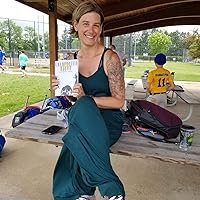
This is a gorgeous book of essays. The writing is funny, sensitive, and insightful. I loved seeing west Virginia through Laura's eyes. Highly recommend.
Displaying 1 - 13 of 13 reviews