

What do you think?
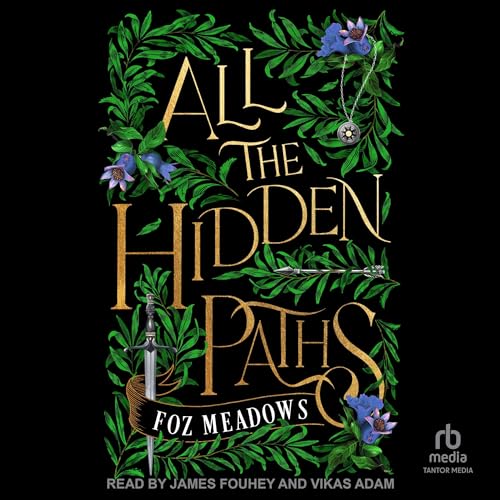
The Tithenai Chronicles #2
All the Hidden Paths
With the plot against them foiled and the city of Qi-Katai in safe hands, newlywed and tentative lovers Velasin and Caethari have just begun to test the waters of their relationship. But the wider political ramifications of their marriage are still playing out across two nations, and all too soon, they're summoned north to Tithena's capital city, Qi-Xihan, to present themselves to its monarch.
With Caethari newly invested as his grandmother's heir and Velasin's old ghosts gnawing at his heels, what little peace they've managed to find is swiftly put to the test. Cae's recent losses have left him racked with grief and guilt, while Vel struggles with the disconnect between instincts that have kept him safe in secrecy and what an open life requires of him now. Pursued by unknown assailants and with Qi-Xihan's court factions jockeying for power, Vel and Cae must use all the skills at their disposal to not only survive, but thrive.
Because there's more than one way to end an alliance, and more than one person who wants to see them fail . . . and they will resort to murder if needed.
19 hrs. 27 min.
With Caethari newly invested as his grandmother's heir and Velasin's old ghosts gnawing at his heels, what little peace they've managed to find is swiftly put to the test. Cae's recent losses have left him racked with grief and guilt, while Vel struggles with the disconnect between instincts that have kept him safe in secrecy and what an open life requires of him now. Pursued by unknown assailants and with Qi-Xihan's court factions jockeying for power, Vel and Cae must use all the skills at their disposal to not only survive, but thrive.
Because there's more than one way to end an alliance, and more than one person who wants to see them fail . . . and they will resort to murder if needed.
19 hrs. 27 min.
20 pages, Audible Audio
First published December 5, 2023
About the author
Foz Meadows
22 books1,228 followersFoz Meadows is a queer SFF author living in California.
Ratings & Reviews
Friends & Following
Create a free account to discover what your friends think of this book!
Community Reviews
Displaying 1 - 30 of 714 reviews
April 10, 2024
With my mid-youth crisis all said and done / I need to be youthfully felt 'cause, God, I never felt young (Jackie and Wilson – Hozier).
Let’s start by ignoring those five beautiful stars up there for a second, because I think it’s important to know that this wasn’t exactly the easiest book to read. It demands your patience in a way that I rarely see in a book, let alone in a sequel to a beloved book. It’s got that stubborn endurance, that’s for sure. And you know what? Good. Because I think this book is wonderful. As taxing as it could be at points (or several, really), I think that in the end, it’s totally worth it. Underneath all the earth-shaking blows and terrible schemes, this book really is a sweet love story about healing. The simple, thematic undercurrent of unlearning the shame that’s forced upon members of the LGBT+ community shines through the cracks and washes away all of my petty criticisms! …Though, for old times’ sake, why don’t I just go ahead and use a couple paragraphs to vent some of my frustrations. Old habits die hard, sorry. Um, about a third of the way into this doorstopper, I had a That’s so Raven vision of the future that told me to watch out. That I needed to temper all those lofty expectations, because there’s a good chance that this installment wouldn’t live up to the first. That it wouldn’t be as much of a crowd pleaser. It seems the muse spoke through me, because it was right… kind of. The first problem I noticed was that despite there being more than enough exciting action set-pieces throughout the story to keep me entertained, both Velasin and Caethari were far too blasé with the threats to their lives for me to really buy into how realistic these attacks were. Never a good sign when there’s a moment of quiet contemplation for our characters and all I’m doing is scratching my head at the logistics. Isn’t Cae supposed to be royalty or something? Why the hell are they traveling the road without some sort of protection or any guards except for Markel? Isn’t Cae a soldier!? Why doesn’t he start swinging his sword (in more ways than one ha ha) until the end of the book!? I don’t know, I just think that a lot of the plot-points had to be contrived in a very specific way in order for this story to even happen. These things didn’t bother me too much… but I noticed. Oh, I noticed. Thankfully, I don’t think the ultimate message of the book is diluted in any way, but it was enough to where some of the emotional weight was lost.
The main problem with me was that, as main characters, Both Vel and Cae were painfully reactive to the events of the story. An awful thing would happen and they'd just be like, "Damn, that's crazy." That's a bit of an exaggeration, but it really did start to feel like that after a while. I know we love these characters, and what makes them special is that they’re simply two good men in a harsh world… but I think the story goes a bit too far in that regard. I think it’s okay to show a more jaded side to these guys. I mean, after the shit they went through in this book alone, it’s definitely warranted. Like, at what point is realism thrown out the door, because after several assassination attempts (like, six!), you’d think these guys would be on red-alert, side-eyeing every smiling face that shows up at their door. The truth of the matter is, I just think that they were too trusting for the story they’re in. So much so, that when the narrative takes a left turn and switches pov's to some sad-sack named Asrien, I felt my shoulders sag in relief. Finally! Somebody who isn’t so pure that they could give the Seven Princesses of Heart a run for their money! Say what you will about his motivations, but at least he’s doing something! It’s why it always feels easier to justify the actions of morally ambiguous protagonists; even if they’re committing all kinds of terrible deeds, at least they’re usually the ones moving the plot along. It sounds silly, but you really can get away with a lot if your main characters are proactive. I know it seems like “forgiveness” is a foreign concept to me, but come on! I feel like I’m justified in my irritation here. Vel and Cae, you don’t have to “see both sides of the story” with every single character that tries to kill you! Not to sound too heated, but all I know is that if I were Velasin, it would be on sight with some of these freaks. And if nothing else, following intensely humble characters doesn’t exactly make for the most entertaining story. I still love these characters, I really do, but if there is another book somewhere down the line, I hope these two are able to get their backs off the wall. Be the driving force in their own story and all that.
Did I say that this is a fantastic book? Oops, sometimes I get carried away, my bad. What a book, though. And even with all that I said up there, a small part of me could never stay mad at Vel and Cae and how they’re written. In many ways, it’s not their fault at how hapless they come across within the narrative. This fantasy world, which often mirrors ours in terms of how it treats marginalized people, is so mean and ugly and demands so many compromises, that I think the example of quiet strength shown in how the characters continue to live on and love each other despite the obstacles is incredibly powerful. Whenever a sequel features an ongoing romantic couple, lot of the times they go out of their way to contrive a reason as to why they suddenly start having relationship troubles. Add a little spice so the narrative doesn’t stagnate. Sorry, but... yawn. A lot of people aren’t fans of this approach (like me), but if it’s done right, it can be quite poignant. There are no real “happily-ever-after’s” in life, only the times when you decide to stop telling the story and close the book. So, it was wonderfully thoughtful how this book chose to explore Vel and Cae’s relationship. They’re clearly in love, but there are circumstances that stop them from being able to communicate properly. Inborn internalized homophobia, grief, assassination plots. Man, I’m glad this book has a happy ending, because damned if they weren’t going through it. What I found ingenious is that this book falls back on the most simplistic and realistic reasons as to why a person would start questioning their relationship; insecurity. “Does the person I love the most secretly hate me?” is a sentiment I’m sure plenty can relate to. But in my opinion, none feel it deeper than queer folk. A lifetime of being treated with doubt and rejection can poison even the purest of loves. So, when Velasin is constantly questioning the strength of his marriage to Caethari (and vice versa), I wasn’t angry, I was just sad, because it’s very real. The thing is, constantly casting your loved ones in a negative light, in paranoia, thinking that they’ll turn on you in a heartbeat and are always secretly talking about you behind your back is only doing a disservice to the people you love. Being a martyr does no one a kindness and there’s nothing more selfish than a selfless act of sacrifice. At the end of the day, martyrdom really only helps to assuage one’s own guilty conscience. Real bravery is allowing yourself to be loved and cared for by the people who want to love and care for you. Because the thing is; believing so easily that your people can be so cruel is a cruelty in and of itself. And this is something Vel and Cae had to learn the hard way, but they learned. I loved this book because it doesn’t just show how hard it is to allow yourself vulnerability, but why it’s so important to do so anyway.
“I knew how to want in secret, but wanting openly was something else altogether.”
Let’s start by ignoring those five beautiful stars up there for a second, because I think it’s important to know that this wasn’t exactly the easiest book to read. It demands your patience in a way that I rarely see in a book, let alone in a sequel to a beloved book. It’s got that stubborn endurance, that’s for sure. And you know what? Good. Because I think this book is wonderful. As taxing as it could be at points (or several, really), I think that in the end, it’s totally worth it. Underneath all the earth-shaking blows and terrible schemes, this book really is a sweet love story about healing. The simple, thematic undercurrent of unlearning the shame that’s forced upon members of the LGBT+ community shines through the cracks and washes away all of my petty criticisms! …Though, for old times’ sake, why don’t I just go ahead and use a couple paragraphs to vent some of my frustrations. Old habits die hard, sorry. Um, about a third of the way into this doorstopper, I had a That’s so Raven vision of the future that told me to watch out. That I needed to temper all those lofty expectations, because there’s a good chance that this installment wouldn’t live up to the first. That it wouldn’t be as much of a crowd pleaser. It seems the muse spoke through me, because it was right… kind of. The first problem I noticed was that despite there being more than enough exciting action set-pieces throughout the story to keep me entertained, both Velasin and Caethari were far too blasé with the threats to their lives for me to really buy into how realistic these attacks were. Never a good sign when there’s a moment of quiet contemplation for our characters and all I’m doing is scratching my head at the logistics. Isn’t Cae supposed to be royalty or something? Why the hell are they traveling the road without some sort of protection or any guards except for Markel? Isn’t Cae a soldier!? Why doesn’t he start swinging his sword (in more ways than one ha ha) until the end of the book!? I don’t know, I just think that a lot of the plot-points had to be contrived in a very specific way in order for this story to even happen. These things didn’t bother me too much… but I noticed. Oh, I noticed. Thankfully, I don’t think the ultimate message of the book is diluted in any way, but it was enough to where some of the emotional weight was lost.
The main problem with me was that, as main characters, Both Vel and Cae were painfully reactive to the events of the story. An awful thing would happen and they'd just be like, "Damn, that's crazy." That's a bit of an exaggeration, but it really did start to feel like that after a while. I know we love these characters, and what makes them special is that they’re simply two good men in a harsh world… but I think the story goes a bit too far in that regard. I think it’s okay to show a more jaded side to these guys. I mean, after the shit they went through in this book alone, it’s definitely warranted. Like, at what point is realism thrown out the door, because after several assassination attempts (like, six!), you’d think these guys would be on red-alert, side-eyeing every smiling face that shows up at their door. The truth of the matter is, I just think that they were too trusting for the story they’re in. So much so, that when the narrative takes a left turn and switches pov's to some sad-sack named Asrien, I felt my shoulders sag in relief. Finally! Somebody who isn’t so pure that they could give the Seven Princesses of Heart a run for their money! Say what you will about his motivations, but at least he’s doing something! It’s why it always feels easier to justify the actions of morally ambiguous protagonists; even if they’re committing all kinds of terrible deeds, at least they’re usually the ones moving the plot along. It sounds silly, but you really can get away with a lot if your main characters are proactive. I know it seems like “forgiveness” is a foreign concept to me, but come on! I feel like I’m justified in my irritation here. Vel and Cae, you don’t have to “see both sides of the story” with every single character that tries to kill you! Not to sound too heated, but all I know is that if I were Velasin, it would be on sight with some of these freaks. And if nothing else, following intensely humble characters doesn’t exactly make for the most entertaining story. I still love these characters, I really do, but if there is another book somewhere down the line, I hope these two are able to get their backs off the wall. Be the driving force in their own story and all that.
Did I say that this is a fantastic book? Oops, sometimes I get carried away, my bad. What a book, though. And even with all that I said up there, a small part of me could never stay mad at Vel and Cae and how they’re written. In many ways, it’s not their fault at how hapless they come across within the narrative. This fantasy world, which often mirrors ours in terms of how it treats marginalized people, is so mean and ugly and demands so many compromises, that I think the example of quiet strength shown in how the characters continue to live on and love each other despite the obstacles is incredibly powerful. Whenever a sequel features an ongoing romantic couple, lot of the times they go out of their way to contrive a reason as to why they suddenly start having relationship troubles. Add a little spice so the narrative doesn’t stagnate. Sorry, but... yawn. A lot of people aren’t fans of this approach (like me), but if it’s done right, it can be quite poignant. There are no real “happily-ever-after’s” in life, only the times when you decide to stop telling the story and close the book. So, it was wonderfully thoughtful how this book chose to explore Vel and Cae’s relationship. They’re clearly in love, but there are circumstances that stop them from being able to communicate properly. Inborn internalized homophobia, grief, assassination plots. Man, I’m glad this book has a happy ending, because damned if they weren’t going through it. What I found ingenious is that this book falls back on the most simplistic and realistic reasons as to why a person would start questioning their relationship; insecurity. “Does the person I love the most secretly hate me?” is a sentiment I’m sure plenty can relate to. But in my opinion, none feel it deeper than queer folk. A lifetime of being treated with doubt and rejection can poison even the purest of loves. So, when Velasin is constantly questioning the strength of his marriage to Caethari (and vice versa), I wasn’t angry, I was just sad, because it’s very real. The thing is, constantly casting your loved ones in a negative light, in paranoia, thinking that they’ll turn on you in a heartbeat and are always secretly talking about you behind your back is only doing a disservice to the people you love. Being a martyr does no one a kindness and there’s nothing more selfish than a selfless act of sacrifice. At the end of the day, martyrdom really only helps to assuage one’s own guilty conscience. Real bravery is allowing yourself to be loved and cared for by the people who want to love and care for you. Because the thing is; believing so easily that your people can be so cruel is a cruelty in and of itself. And this is something Vel and Cae had to learn the hard way, but they learned. I loved this book because it doesn’t just show how hard it is to allow yourself vulnerability, but why it’s so important to do so anyway.
“I knew how to want in secret, but wanting openly was something else altogether.”

May 24, 2024
Cae & Vel 2: Assassination Nation
Wherein our boys traverse harsh landscapes, stare at each other longingly, and are almost murdered like seven different times. There is an obnoxious twerp who somehow manages to also be endearing; a new horsey pal; a lot of titles you’ll get confused; oops accidentally falling in love with one’s spouse, and more. I know what you’re wondering: does Markel the King of Snark(el) appear? You’ll have to read to find out. (Yes he does).
Wherein our boys traverse harsh landscapes, stare at each other longingly, and are almost murdered like seven different times. There is an obnoxious twerp who somehow manages to also be endearing; a new horsey pal; a lot of titles you’ll get confused; oops accidentally falling in love with one’s spouse, and more. I know what you’re wondering: does Markel the King of Snark(el) appear? You’ll have to read to find out. (Yes he does).
August 24, 2023
All the Hidden Paths left me feeling conflicted. I had a lot of fun with it and read the entire book over the span of 18 hours. It was literally the first thing I did when I woke up in the morning. I had a very similar reading experience with A Strange and Stubborn Endurance. These books are compulsively readable with so much drama and tension that you can’t look away.
I was very worried about miscommunication driving the plot. Though Vel and Cae don’t know how to communicate it felt like a realistic problem. They have known each other for a relatively short amount of time and both have a lot of healing and growing to do. That being said, I would have liked a bit more “happily ever after” time in this installment.
I really enjoyed the new setting at Tithena’s capital city, Qi-Xihan. The court system was vast and intriguing with many different kinds of allies and enemies for Vel and Cae to face. Because of this new setting, there was slightly more focus on the court politics of Tithena which I greatly enjoyed. However, both the new setting and the large cast of side characters felt underutilized due to the shockingly repetitive nature of the plot.
Though All the Hidden Paths was an incredibly entertaining book, I am not sure how this book stands as a sequel. When I read ASASE (for the first time) I was under the impression that it was a standalone with the usual plot threads left open so the reader can imagine a future for the characters. Imagine my surprise when the sequel was announced. Do I think this sequel is necessary? Not really, but who doesn’t want more of the characters they love. All the Hidden Paths certainly delivers more of what I loved in ASASE. However, it adds very little.
Vel and Cae reached a new stage of healing and closeness in their relationship which was very heartwarming. The focus of these books, and my main interest as a reader, is the arranged marriage romance. However, the plot is, at times, shockingly similar to the plot of ASASE. From the types of complicating actions to the motivation of the one responsible it all felt very, very familiar. The similarities leave me feeling incredibly conflicted. I loved ASASE and therefore enjoyed all of those plot moments the first time. However, I can’t help feeling like there were many missed opportunities to take the plot somewhere new. The story takes place in the capital, a completely new location, the possibilities are nearly endless. Magic is also—beyond its uses for healing—almost completely ignored in this book.
The most novel element of the book was the inclusion of interlude chapters from a third POV—a Ralian man named Aserian. Unfortunately, these chapters were easily my least favorite part of the book. I genuinely hate Aserian as a character. Maybe I’m being unfair but I feel no sympathy for him. I can appreciate the alternative perspective on Ralia. However, the plot could have easily been reworked to render his POV unnecessary. There is a story to be told about Aserian, but it did not fit in this book.
I devoured this book and was thoroughly entertained. Vel, Cae, and Markel are amazing characters and I love them so much. But when I finally stepped away from the book I felt like something was missing.
I am very interested to see what my friends think of this one. I expect it to be a bit divisive.
Thank you Tor for the eARC
Links to my TikTok | Instagram
I was very worried about miscommunication driving the plot. Though Vel and Cae don’t know how to communicate it felt like a realistic problem. They have known each other for a relatively short amount of time and both have a lot of healing and growing to do. That being said, I would have liked a bit more “happily ever after” time in this installment.
I really enjoyed the new setting at Tithena’s capital city, Qi-Xihan. The court system was vast and intriguing with many different kinds of allies and enemies for Vel and Cae to face. Because of this new setting, there was slightly more focus on the court politics of Tithena which I greatly enjoyed. However, both the new setting and the large cast of side characters felt underutilized due to the shockingly repetitive nature of the plot.
Though All the Hidden Paths was an incredibly entertaining book, I am not sure how this book stands as a sequel. When I read ASASE (for the first time) I was under the impression that it was a standalone with the usual plot threads left open so the reader can imagine a future for the characters. Imagine my surprise when the sequel was announced. Do I think this sequel is necessary? Not really, but who doesn’t want more of the characters they love. All the Hidden Paths certainly delivers more of what I loved in ASASE. However, it adds very little.
Vel and Cae reached a new stage of healing and closeness in their relationship which was very heartwarming. The focus of these books, and my main interest as a reader, is the arranged marriage romance. However, the plot is, at times, shockingly similar to the plot of ASASE. From the types of complicating actions to the motivation of the one responsible it all felt very, very familiar. The similarities leave me feeling incredibly conflicted. I loved ASASE and therefore enjoyed all of those plot moments the first time. However, I can’t help feeling like there were many missed opportunities to take the plot somewhere new. The story takes place in the capital, a completely new location, the possibilities are nearly endless. Magic is also—beyond its uses for healing—almost completely ignored in this book.
The most novel element of the book was the inclusion of interlude chapters from a third POV—a Ralian man named Aserian. Unfortunately, these chapters were easily my least favorite part of the book. I genuinely hate Aserian as a character. Maybe I’m being unfair but I feel no sympathy for him. I can appreciate the alternative perspective on Ralia. However, the plot could have easily been reworked to render his POV unnecessary. There is a story to be told about Aserian, but it did not fit in this book.
I devoured this book and was thoroughly entertained. Vel, Cae, and Markel are amazing characters and I love them so much. But when I finally stepped away from the book I felt like something was missing.
I am very interested to see what my friends think of this one. I expect it to be a bit divisive.
Thank you Tor for the eARC
Links to my TikTok | Instagram
November 11, 2025
can't help but feel that this was a redundant sequel that that just recycled ideas from the first book. at the very least, you get to learn more about caethari as a person. book#1 focused on Velasin so much that what you know about Cae by the end of it was , but much of the book is repetitive and has long-winded descriptions of clothing 😴
for being the heir to a pretty important position, you'd think Cae (and Vel, by relation) would be constantly guarded, right? but no, somehow Markel is the only one they have. HOW do two of the most important people in the kingdom NOT have soldiers with them all the time?? there have been around 5 assassination attempts on them for god's sake!
this is not to say that they don't love each other, but i do feel like Cae and Vel aren't the perfect fit for each other *yet* - there's a lot they need to work on, and i mean it lol. i am so happy that the book does end on a happy note, because damn did they go through a lot of stuff.
── .✦ pre-read 𖹭.ᐟ
jumping into this book immediately after book #1 because I've noticed that I tend to pick up other books in between series, and then I forget way too much. hoping to finally break that habit 🤞🏻
for being the heir to a pretty important position, you'd think Cae (and Vel, by relation) would be constantly guarded, right? but no, somehow Markel is the only one they have. HOW do two of the most important people in the kingdom NOT have soldiers with them all the time?? there have been around 5 assassination attempts on them for god's sake!
this is not to say that they don't love each other, but i do feel like Cae and Vel aren't the perfect fit for each other *yet* - there's a lot they need to work on, and i mean it lol. i am so happy that the book does end on a happy note, because damn did they go through a lot of stuff.
── .✦ pre-read 𖹭.ᐟ
jumping into this book immediately after book #1 because I've noticed that I tend to pick up other books in between series, and then I forget way too much. hoping to finally break that habit 🤞🏻

December 22, 2022
there’s miscommunication and then there’s “I would rather jump off a cliff than tell you a single feeling I have” and the first third leans heavy on the latter. but the tension and drama off the end half are compulsive and wonderful.

December 16, 2023
Thanks to the publisher for providing me with an e-ARC in exchange for an honest review!
I'm a bit conflicted on this one - at face value, I did enjoy it, probably as much as I did the first book, but I'm just not entirely sure it was necessary. The plot beats felt very similar to the first book, and even some of the relationship developments felt recycled. Overall, I'd probably still recommend it for anyone who wants a little bit more from this world and these characters (Markel is my absolute fave, truly), but if you haven't started the series yet, I'd say you could read A Strange and Stubborn Endurance as a standalone and call it a day.
I'm a bit conflicted on this one - at face value, I did enjoy it, probably as much as I did the first book, but I'm just not entirely sure it was necessary. The plot beats felt very similar to the first book, and even some of the relationship developments felt recycled. Overall, I'd probably still recommend it for anyone who wants a little bit more from this world and these characters (Markel is my absolute fave, truly), but if you haven't started the series yet, I'd say you could read A Strange and Stubborn Endurance as a standalone and call it a day.

September 12, 2025
Actual Rating: 4.75, but really close to 5 for this Genre (YA Romantasy)

November 9, 2023
Eeeeeeeeeeeeeeeeeeeee this was really good! I very much enjoyed this book! Frtc when I've my thoughts in order!

March 14, 2024
I think I liked this even better than the first one, A Strange and Stubborn Endurance. I thought one of the strengths of that book was that even though it dealt with some pretty dark subject matter, the relationship between the two main characters, Caethari and Velasin - hell, really between most of the characters - was just so pure and despite challenges, ultimately supportive. This book offered more of the same and I simply lapped it up.
In this entry, Cae and Velasin are in Cae's country estate just beginning to relax into their marriage to each other, when of course politics intrudes once again. Cae's grandmother names him her heir, a position he definitely doesn't want but can't refuse, and together with loyal servant and friend Markel, they must travel to the capital city of Qi-Xihan so Cae can step into that role. They aren't even all that far along when the attacks on their lives begin, and once they get to the capital there's a complicated web of relationships and more attacks to navigate since their marriage - representing the union of their two previously unfriendly nations Tithena and Ralia - is still very controversial.
Like the first book, there's an action-packed sequence toward the end where everything comes out, and I truly don't think it's possible to figure out who's behind it all ahead of that time. But going into this second book I was expecting that approach, and I do think Meadows did a better job this time around weaving the various threads of the story together in the lead-up to that moment.
Anyway, I was mostly reading to see how Cae and Velasin developed their relationship and if you like dummyheads who are head over heels for each other but holding themselves back from expressing it out of, like, politeness and consideration, this book will be your JAM. Even the introduction of an "interloper" character, Asrien, who's literally sent to seduce one or the other of them to break them up, doesn't really challenge the vibe that Cae and Velasin are like ROCK SOLID even though they haven't quite figured out how to be together yet. If you're worried about disruptive cheating vibes, don't be lol. If nothing else, this plotline offers a different take on consent violations - ones that are not so crushing as what Vel experienced in the first book.
So yeah, I found myself drawn back to this world much sooner than I expected to be - because February 2024 was rough for me, ya'll. I reached for this book on my library's shelf because I expected it to be a comfort read - and it was.
I'm pretty sure this series is just a duology, but I think there's room for a third book if Meadows wanted to write it. It would be nice to see Cae and Vel face a challenge after their relationship has had an actual chance to develop. Or maybe I just want more comfort reads, ha.
In this entry, Cae and Velasin are in Cae's country estate just beginning to relax into their marriage to each other, when of course politics intrudes once again. Cae's grandmother names him her heir, a position he definitely doesn't want but can't refuse, and together with loyal servant and friend Markel, they must travel to the capital city of Qi-Xihan so Cae can step into that role. They aren't even all that far along when the attacks on their lives begin, and once they get to the capital there's a complicated web of relationships and more attacks to navigate since their marriage - representing the union of their two previously unfriendly nations Tithena and Ralia - is still very controversial.
Like the first book, there's an action-packed sequence toward the end where everything comes out, and I truly don't think it's possible to figure out who's behind it all ahead of that time. But going into this second book I was expecting that approach, and I do think Meadows did a better job this time around weaving the various threads of the story together in the lead-up to that moment.
Anyway, I was mostly reading to see how Cae and Velasin developed their relationship and if you like dummyheads who are head over heels for each other but holding themselves back from expressing it out of, like, politeness and consideration, this book will be your JAM. Even the introduction of an "interloper" character, Asrien, who's literally sent to seduce one or the other of them to break them up, doesn't really challenge the vibe that Cae and Velasin are like ROCK SOLID even though they haven't quite figured out how to be together yet. If you're worried about disruptive cheating vibes, don't be lol. If nothing else, this plotline offers a different take on consent violations - ones that are not so crushing as what Vel experienced in the first book.
So yeah, I found myself drawn back to this world much sooner than I expected to be - because February 2024 was rough for me, ya'll. I reached for this book on my library's shelf because I expected it to be a comfort read - and it was.
I'm pretty sure this series is just a duology, but I think there's room for a third book if Meadows wanted to write it. It would be nice to see Cae and Vel face a challenge after their relationship has had an actual chance to develop. Or maybe I just want more comfort reads, ha.

Want to Read
December 21, 2022
How dare you make me wait a year for this.... The audacity

February 7, 2024
Much like the first, this was a long book (almost 20 hours in audio), but it flew by because I enjoyed every minute of it!
There was so much emotional struggle between these two men who wanted and cared about each other so much but just didn't know how to deal with their grief and trauma getting in the way. Vel kept being hot and cold and pushing Cae away, all the while worrying Cae just didn't want him anymore or would tire of him. Cae kept putting Vel in bad positions by not being willing to discuss certain political things, but even with his grief, he was trying so hard to be what Vel needed. I feel like this one might've been even more of a slow burn than the first book, in a way. Sometimes they kissed or even had sex, but because of all the angst and distance and tension between them, I was always on the edge of my seat wanting it, cheering them on any time it happened. They do have a beautiful relationship though, despite their struggles. Their issues were more their own personal things, not their treatment of or feelings for each other.
We also got a new POV character this time, in addition to Vel and Cae, and though I felt for him because of his situation, I didn't much like him at first. He won me over by the end though. He was interesting, and just as Vel's and Cae's POVs felt unique, Azrian's did too.
And speaking of Azrian, I sorta got into the potential relationship between Azrian and a certain someone else. I wonder if perhaps they'll be getting a book? *SPOILER* *END SPOILER*
I also love the friendship between Vel and Markle. *MILD SPOILER* *END SPOILER* Anyway, Markle is great.
One thing this author really excels at is showing the complexity of emotion and how even the smallest of things can affect a person in ways you would never realize or understand or consider, ways that seem like they don't even make sense, if you weren't in their head, having lived their experiences. Like how affected Velasin was by seeing a woman casually propositioning another woman and being turned down and everyone just joking and moving on like nothing. He was gay himself. He'd seen plenty of open same-gender couples in this country. It was a totally normal thing. But for him, it brought a sort of sense of grief, that he'd never had that kind of life, that he'd always had to sneak and hide in order to be with other men.
As for the plot, I really didn't know who to trust, who was actually out to get them, who was being framed, etc. It wasn't obvious to me at all, but it did make sense in the end, which is the perfect way for a book like this to be.
The audiobook was once again narrated by James Fouhey and Vikas Adam. I love these two narrators separately, and I love them together. I love that they actually voice characters similarly, like they were either given guidelines or communicated with each other (e.g. this character's voice will be deeper, this one higher, etc.). And they both just gave great, natural, emotive performances.
Overall, this was another fantastic book with lovable characters, a plot that wasn't too action-packed but still kept me on my toes, and lots of personal struggle but also care and kindness in the relationship!
*Rating: 4.5 Stars // Read Date: 2022 // Format: Audiobook*
Recommended For:
Fans of Book 1 in Foz Meadows's Tithenai Chronicles. Anyone who likes m/m fantasy romance, courtly intrigue, kind characters, healthy and understanding relationships, and emotional healing.
Original Review @ Metaphors and Moonlight
There was so much emotional struggle between these two men who wanted and cared about each other so much but just didn't know how to deal with their grief and trauma getting in the way. Vel kept being hot and cold and pushing Cae away, all the while worrying Cae just didn't want him anymore or would tire of him. Cae kept putting Vel in bad positions by not being willing to discuss certain political things, but even with his grief, he was trying so hard to be what Vel needed. I feel like this one might've been even more of a slow burn than the first book, in a way. Sometimes they kissed or even had sex, but because of all the angst and distance and tension between them, I was always on the edge of my seat wanting it, cheering them on any time it happened. They do have a beautiful relationship though, despite their struggles. Their issues were more their own personal things, not their treatment of or feelings for each other.
We also got a new POV character this time, in addition to Vel and Cae, and though I felt for him because of his situation, I didn't much like him at first. He won me over by the end though. He was interesting, and just as Vel's and Cae's POVs felt unique, Azrian's did too.
And speaking of Azrian, I sorta got into the potential relationship between Azrian and a certain someone else. I wonder if perhaps they'll be getting a book? *SPOILER* *END SPOILER*
I also love the friendship between Vel and Markle. *MILD SPOILER* *END SPOILER* Anyway, Markle is great.
One thing this author really excels at is showing the complexity of emotion and how even the smallest of things can affect a person in ways you would never realize or understand or consider, ways that seem like they don't even make sense, if you weren't in their head, having lived their experiences. Like how affected Velasin was by seeing a woman casually propositioning another woman and being turned down and everyone just joking and moving on like nothing. He was gay himself. He'd seen plenty of open same-gender couples in this country. It was a totally normal thing. But for him, it brought a sort of sense of grief, that he'd never had that kind of life, that he'd always had to sneak and hide in order to be with other men.
As for the plot, I really didn't know who to trust, who was actually out to get them, who was being framed, etc. It wasn't obvious to me at all, but it did make sense in the end, which is the perfect way for a book like this to be.
The audiobook was once again narrated by James Fouhey and Vikas Adam. I love these two narrators separately, and I love them together. I love that they actually voice characters similarly, like they were either given guidelines or communicated with each other (e.g. this character's voice will be deeper, this one higher, etc.). And they both just gave great, natural, emotive performances.
Overall, this was another fantastic book with lovable characters, a plot that wasn't too action-packed but still kept me on my toes, and lots of personal struggle but also care and kindness in the relationship!
*Rating: 4.5 Stars // Read Date: 2022 // Format: Audiobook*
Recommended For:
Fans of Book 1 in Foz Meadows's Tithenai Chronicles. Anyone who likes m/m fantasy romance, courtly intrigue, kind characters, healthy and understanding relationships, and emotional healing.
Original Review @ Metaphors and Moonlight

December 10, 2023
2.5 stars rounded up
The plot over all was enjoyable but it was just too long. Where is the editor for this series? Too much time spent describing what people are wearing, what they’re eating etc. You can tell the author loves the world she’s created and wants the reader to know every little detail. It’s a yawn from me though. I would have been skimming a lot if I was reading, to listen to it on audio was torture in places. Also, every character (& there are A LOT) has on honorific in front of their name. That makes it really difficult to follow in places when listening to it on audiobook. Another thing a good editor should have pointed out.
I really liked the first book in the series but this was so meh for me that I won’t be reading any future books
The plot over all was enjoyable but it was just too long. Where is the editor for this series? Too much time spent describing what people are wearing, what they’re eating etc. You can tell the author loves the world she’s created and wants the reader to know every little detail. It’s a yawn from me though. I would have been skimming a lot if I was reading, to listen to it on audio was torture in places. Also, every character (& there are A LOT) has on honorific in front of their name. That makes it really difficult to follow in places when listening to it on audiobook. Another thing a good editor should have pointed out.
I really liked the first book in the series but this was so meh for me that I won’t be reading any future books

May 25, 2023
From the exceptional pen of Foz Meadows comes another masterpiece in fantasy literature – "All the Hidden Paths." This book takes us on a spectacular voyage through worlds both surreal and strikingly human, weaving a tale of adventure, self-discovery, and the intertwined destinies that connect us all. I dare to say this sequel is even BETTER than “A Strange and Stubborn Endurance.” That is saying a lot for me, as that was my top read for 2022!
"All the Hidden Paths" is a masterclass in character development and world-building. Meadows has created characters that are deeply relatable, with unique strengths and flaws that echo the human condition. The protagonists grapple with their fears and doubts, triumphs and failures, in a journey that encapsulates a multitude of human experiences. As we explore the relationships and personal transformations between Cae and Vel, we can't help but feel a profound sense of empathy and perhaps even see reflections of our own experiences. Truly, they have captured emotions and feelings I thought only I ever felt. I’ve never felt this seen before, and having personally experienced some of the trauma dealt with in the story, it was such a cathartic experience to see it handled with such care and in a realistic manner.
The world-building in this book is second to none. Meadows constructs a richly layered universe that feels simultaneously fantastical and real. With deft precision, they paint detailed landscapes that are nothing short of breathtaking, filling them with cultures that are as diverse as they are intriguing. Meadows' world is one where the borders between the real and the imaginary are porous, inviting readers into a magical universe that is begging to be visualized on screen.
This stunning literary work is a complete sensorial immersion, flowing with lyrical prose that is as mesmerizing as it is enlightening. Each page thrums with vibrancy and energy, keeping readers riveted from the first page to the last. The narrative weaves seamlessly between thrilling moments of high-stakes action and quiet introspection, resulting in a book that is as intellectually stimulating as it is emotionally engaging.
"All the Hidden Paths" would be a perfect fit for adaptation into a TV series. The story is ripe with material for gripping episodes, emotionally charged character arcs, and visually captivating set pieces. The rich, expansive universe Meadows has created is begging to be brought to life by the likes of Apple TV, Amazon Prime, HBO, or similar platforms known for their high production values and commitment to storytelling. The adaptation could provide viewers with an immersive experience full of captivating characters, enchanting worlds, and the timeless truths of the human experience.
In conclusion, "All the Hidden Paths" is more than just a fantasy book; it's a thoughtful exploration of the human condition told through a lens of boundless creativity. This book is not just a read but an experience – one that resonates with you long after you've turned the last page. This literary masterpiece by Foz Meadows deserves nothing less than a five-star rating and is wholeheartedly recommended for fans of profound, character-driven fantasy narratives.
"All the Hidden Paths" is a masterclass in character development and world-building. Meadows has created characters that are deeply relatable, with unique strengths and flaws that echo the human condition. The protagonists grapple with their fears and doubts, triumphs and failures, in a journey that encapsulates a multitude of human experiences. As we explore the relationships and personal transformations between Cae and Vel, we can't help but feel a profound sense of empathy and perhaps even see reflections of our own experiences. Truly, they have captured emotions and feelings I thought only I ever felt. I’ve never felt this seen before, and having personally experienced some of the trauma dealt with in the story, it was such a cathartic experience to see it handled with such care and in a realistic manner.
The world-building in this book is second to none. Meadows constructs a richly layered universe that feels simultaneously fantastical and real. With deft precision, they paint detailed landscapes that are nothing short of breathtaking, filling them with cultures that are as diverse as they are intriguing. Meadows' world is one where the borders between the real and the imaginary are porous, inviting readers into a magical universe that is begging to be visualized on screen.
This stunning literary work is a complete sensorial immersion, flowing with lyrical prose that is as mesmerizing as it is enlightening. Each page thrums with vibrancy and energy, keeping readers riveted from the first page to the last. The narrative weaves seamlessly between thrilling moments of high-stakes action and quiet introspection, resulting in a book that is as intellectually stimulating as it is emotionally engaging.
"All the Hidden Paths" would be a perfect fit for adaptation into a TV series. The story is ripe with material for gripping episodes, emotionally charged character arcs, and visually captivating set pieces. The rich, expansive universe Meadows has created is begging to be brought to life by the likes of Apple TV, Amazon Prime, HBO, or similar platforms known for their high production values and commitment to storytelling. The adaptation could provide viewers with an immersive experience full of captivating characters, enchanting worlds, and the timeless truths of the human experience.
In conclusion, "All the Hidden Paths" is more than just a fantasy book; it's a thoughtful exploration of the human condition told through a lens of boundless creativity. This book is not just a read but an experience – one that resonates with you long after you've turned the last page. This literary masterpiece by Foz Meadows deserves nothing less than a five-star rating and is wholeheartedly recommended for fans of profound, character-driven fantasy narratives.

January 3, 2025
We love communication. We do not like self-flagellant characters.
Cae is still grieving and feeling guilty over his sister’s treachery and his father’s death.
Vel is anxious about the future of their marriage. What if Cae gets bored of him? What if he becomes too much or too boring?
We get a new perspective in Asrien who is blackmailed into following Cae and Vel to Tithena to seduce them away from each other to end their marriage and the diplomatic union.
I liked how we got to see Cae develop into his desires. He knew how to want in secret, but wanting openly was something else altogether and now suddenly he is allowed. Having to navigate this is almost as difficult as the constant assassination attempts.
“I love him,” I choked out, cheeks burning with the admission. “I don’t know when it started, but I—I love him, Markel.” I laughed. “It’s terrifying.”
Markel raised an eyebrow. “More terrifying than half a dozen people trying to kill you?”
This was not quite as strong as book one for me.
This was a lot spicer which isn’t my thing and the addition of Asrien felt unnecessary and weird.
This had so much potential for more political machinations and yet this felt hard to follow and rushed when Meadows suddenly wanted the plot to progress to add drama or better pacing to/for the relationship.
There is a shout out to Stray Kids in the acknowledgements and I had to mention that because I snagged tickets to see them and I cannot wait.
Bookstagram
Cae is still grieving and feeling guilty over his sister’s treachery and his father’s death.
Vel is anxious about the future of their marriage. What if Cae gets bored of him? What if he becomes too much or too boring?
We get a new perspective in Asrien who is blackmailed into following Cae and Vel to Tithena to seduce them away from each other to end their marriage and the diplomatic union.
I liked how we got to see Cae develop into his desires. He knew how to want in secret, but wanting openly was something else altogether and now suddenly he is allowed. Having to navigate this is almost as difficult as the constant assassination attempts.
“I love him,” I choked out, cheeks burning with the admission. “I don’t know when it started, but I—I love him, Markel.” I laughed. “It’s terrifying.”
Markel raised an eyebrow. “More terrifying than half a dozen people trying to kill you?”
This was not quite as strong as book one for me.
This was a lot spicer which isn’t my thing and the addition of Asrien felt unnecessary and weird.
This had so much potential for more political machinations and yet this felt hard to follow and rushed when Meadows suddenly wanted the plot to progress to add drama or better pacing to/for the relationship.
There is a shout out to Stray Kids in the acknowledgements and I had to mention that because I snagged tickets to see them and I cannot wait.
Bookstagram

November 18, 2023
I've given this a B+ at AAR, 4.5 stars
When I read and reviewed Foz Meadows’ A Strange and Stubborn Endurance last summer (2022), I was under the impression it was a standalone – the main plotline was concluded and the romance ended on a firm HFN – but now it has a sequel and it seems the author may be writing more books set in this world. I liked but didn’t love ASaSE; the romance was great, I liked the characters and the worldbuilding was fantastic, but the pacing lagged in places so the book ultimately felt overlong and the mystery plot was weak, which dragged it down somewhat. So I was really pleased to discover that All the Hidden Paths not only contains the things I loved about book one, but also fixes a lot of the problems – it’s fast-paced, the plot hangs together well, and I really liked that the central relationship develops in a way that is consistent with the characterisation and events of the previous book.
Note: I’d recommend reading the books in order, because the romance is ongoing and book one contains a lot of important worldbuilding. There are spoilers for book one in this review.
A Strange and Stubborn Endurance introduced readers to Caethari Xai Aeduria, son of the Tiern (Lord) of Tithenia, and Velasin vin Aaro, a young nobleman of the neighbouring land of Ralia. A combination of difficult and unpleasant circumstances saw Cae and Velasin entering into an arranged marriage, something that was not greeted with a great deal of enthusiam by either Tithenai or Ralia. In highly conservative Ralia, which is rigid in its espousal of traditional gender roles and sexuality, Velasin marrying a man caused a huge scandal and widespread disgust; many in Tithenia did not want closer ties with Ralia and were suspicious of the marriage and of Velasin, who very quickly became a target for that discontent. The story culminated in the deaths of Cae’s father and sister, the latter of whom had been behind the plot to foment unrest in the city of Qi-Katai and to murder Velasin.
All the Hidden Paths opens around three weeks after those tumultous events. Velasin is still struggling to work out how to be in Tithenia – how to be a husband and how to be a man who no longer has to hide his sexuality or be ashamed of it – and Cae is full of conflicted feelings as he grieves his father and sister who, despite her nefarious plotting, was, nonetheless, his sister. The couple are still newlyweds, and while Cae has fallen deeply in love with his husband and has confessed his feelings, Velasin isn’t there yet; he and Cae have slept together, have agreed to be friends and to be honest with each other, but Vel’s insecurities and his tendency to self doubt and overthinking are leading him to feel responsible for bringing tragedy and death into Cae’s life and to worry that his lack of knowledge about Tithenian life and customs will reflect badly on him.
Into an already awkward situation is thrown an unexpected complication when Cae is informed that this grandmother (a high-ranking noblewoman) has made him her heir. Knowing himself to be far more suited to swordplay on the battlefield than he is to court intrigue and politicking, he has no wish to inherit her lands and title, but it’s not something he can refuse. Neither is the summons to the capital city, Qi-Xihan, from Tithenia’s monarch, Asa Ivadi. Reluctantly, Cae and Velasin prepare to leave Cae’s country estate for the city, but with so much weighing on their minds, a distance is starting to grow between them that neither wants, but which neither is sure how to bridge.
A couple who struggles to communicate isn’t one of my favourite things in romance, but I didn’t find it too frustrating here because the reasons for it are so well woven into who these two people are and the emotional baggage they bring to the relationship – Cae’s insecurities over his un-suitability to be his formidable grandmother’s heir; the trauma that continues to linger following Vel’s assault and his fears that Cae will want to be rid of him once he realises just how much trouble he has brought to his door. And then there’s the fact that with everything going on – multiple assassination attempts, court intrigue, murder, betrayal – they have enough on their plates simply trying to survive it all while trying to work out who they can trust and who might be behind it all. But I did like the way their relationship progresses – it’s more fragile and prone to misunderstandings and arguments, but even so, the author never lets us lose sight of the fact that Cae and Vel really do care deeply for each other through the little things Cae does to try to make his husband’s life easier, and Velasin’s snarling threats of bodily harm to anyone who hints at harm to Cae.
I enjoyed the change of setting and the accompanying focus on court politics, although I can’t deny that the plotline and motivations behind it are very similar to those of A Strange and Stubborn Endurance. But that didn’t really bother me – the action moves swiftly, the tension builds steadily, and I quickly became completely invested in the romance and in Cae and Velasin working out how to be a couple and what they need and want from each other. We don’t often get to see ‘what happens after the leads get together’ in romances, and although we left Cae and Velasin in a good place at the end of the previous book, the short length of time they’ve known each other left plenty of room for further development, and I loved watching the pair reaching a new closeness and understanding. I also appreciated the exploration of what happens after someone comes out, as Velasin has to work out how to navigate the world as an openly queer person while the customs and mores ingrained in him almost from birth prove difficult to shake off.
As before, the chapters that relate events from Velasin’s PoV are written in first person, while Cae’s are in third – I didn’t find the switch jarring and the sections are fairly substantial so it’s not as though we’re bouncing back between first and third person perspectives the whole time. There are a handful of new secondary characters introduced, one of whom is a third PoV character, a Ralian man named Asrien whose chapters are used sparsely and effectively to provide useful insight into events the main characters aren’t privy to. I was also pleased to see the return of Markel, Velasin’s faithful servant and dear friend, who acts as part-time information gatherer and part-time voice of reason when Cae and Velasin are being, well, them.
Despite my reservations about the repetitive nature of the plot, All the Hidden Paths is a much stronger book than its predecessor and I really enjoyed being back in the world Foz Meadows has created. If there are going to be more Tithenai Chronicles , I’ll certainly be checking them out.
This review originally appeared at All About Romance.
When I read and reviewed Foz Meadows’ A Strange and Stubborn Endurance last summer (2022), I was under the impression it was a standalone – the main plotline was concluded and the romance ended on a firm HFN – but now it has a sequel and it seems the author may be writing more books set in this world. I liked but didn’t love ASaSE; the romance was great, I liked the characters and the worldbuilding was fantastic, but the pacing lagged in places so the book ultimately felt overlong and the mystery plot was weak, which dragged it down somewhat. So I was really pleased to discover that All the Hidden Paths not only contains the things I loved about book one, but also fixes a lot of the problems – it’s fast-paced, the plot hangs together well, and I really liked that the central relationship develops in a way that is consistent with the characterisation and events of the previous book.
Note: I’d recommend reading the books in order, because the romance is ongoing and book one contains a lot of important worldbuilding. There are spoilers for book one in this review.
A Strange and Stubborn Endurance introduced readers to Caethari Xai Aeduria, son of the Tiern (Lord) of Tithenia, and Velasin vin Aaro, a young nobleman of the neighbouring land of Ralia. A combination of difficult and unpleasant circumstances saw Cae and Velasin entering into an arranged marriage, something that was not greeted with a great deal of enthusiam by either Tithenai or Ralia. In highly conservative Ralia, which is rigid in its espousal of traditional gender roles and sexuality, Velasin marrying a man caused a huge scandal and widespread disgust; many in Tithenia did not want closer ties with Ralia and were suspicious of the marriage and of Velasin, who very quickly became a target for that discontent. The story culminated in the deaths of Cae’s father and sister, the latter of whom had been behind the plot to foment unrest in the city of Qi-Katai and to murder Velasin.
All the Hidden Paths opens around three weeks after those tumultous events. Velasin is still struggling to work out how to be in Tithenia – how to be a husband and how to be a man who no longer has to hide his sexuality or be ashamed of it – and Cae is full of conflicted feelings as he grieves his father and sister who, despite her nefarious plotting, was, nonetheless, his sister. The couple are still newlyweds, and while Cae has fallen deeply in love with his husband and has confessed his feelings, Velasin isn’t there yet; he and Cae have slept together, have agreed to be friends and to be honest with each other, but Vel’s insecurities and his tendency to self doubt and overthinking are leading him to feel responsible for bringing tragedy and death into Cae’s life and to worry that his lack of knowledge about Tithenian life and customs will reflect badly on him.
Into an already awkward situation is thrown an unexpected complication when Cae is informed that this grandmother (a high-ranking noblewoman) has made him her heir. Knowing himself to be far more suited to swordplay on the battlefield than he is to court intrigue and politicking, he has no wish to inherit her lands and title, but it’s not something he can refuse. Neither is the summons to the capital city, Qi-Xihan, from Tithenia’s monarch, Asa Ivadi. Reluctantly, Cae and Velasin prepare to leave Cae’s country estate for the city, but with so much weighing on their minds, a distance is starting to grow between them that neither wants, but which neither is sure how to bridge.
A couple who struggles to communicate isn’t one of my favourite things in romance, but I didn’t find it too frustrating here because the reasons for it are so well woven into who these two people are and the emotional baggage they bring to the relationship – Cae’s insecurities over his un-suitability to be his formidable grandmother’s heir; the trauma that continues to linger following Vel’s assault and his fears that Cae will want to be rid of him once he realises just how much trouble he has brought to his door. And then there’s the fact that with everything going on – multiple assassination attempts, court intrigue, murder, betrayal – they have enough on their plates simply trying to survive it all while trying to work out who they can trust and who might be behind it all. But I did like the way their relationship progresses – it’s more fragile and prone to misunderstandings and arguments, but even so, the author never lets us lose sight of the fact that Cae and Vel really do care deeply for each other through the little things Cae does to try to make his husband’s life easier, and Velasin’s snarling threats of bodily harm to anyone who hints at harm to Cae.
I enjoyed the change of setting and the accompanying focus on court politics, although I can’t deny that the plotline and motivations behind it are very similar to those of A Strange and Stubborn Endurance. But that didn’t really bother me – the action moves swiftly, the tension builds steadily, and I quickly became completely invested in the romance and in Cae and Velasin working out how to be a couple and what they need and want from each other. We don’t often get to see ‘what happens after the leads get together’ in romances, and although we left Cae and Velasin in a good place at the end of the previous book, the short length of time they’ve known each other left plenty of room for further development, and I loved watching the pair reaching a new closeness and understanding. I also appreciated the exploration of what happens after someone comes out, as Velasin has to work out how to navigate the world as an openly queer person while the customs and mores ingrained in him almost from birth prove difficult to shake off.
As before, the chapters that relate events from Velasin’s PoV are written in first person, while Cae’s are in third – I didn’t find the switch jarring and the sections are fairly substantial so it’s not as though we’re bouncing back between first and third person perspectives the whole time. There are a handful of new secondary characters introduced, one of whom is a third PoV character, a Ralian man named Asrien whose chapters are used sparsely and effectively to provide useful insight into events the main characters aren’t privy to. I was also pleased to see the return of Markel, Velasin’s faithful servant and dear friend, who acts as part-time information gatherer and part-time voice of reason when Cae and Velasin are being, well, them.
Despite my reservations about the repetitive nature of the plot, All the Hidden Paths is a much stronger book than its predecessor and I really enjoyed being back in the world Foz Meadows has created. If there are going to be more Tithenai Chronicles , I’ll certainly be checking them out.
This review originally appeared at All About Romance.

December 7, 2023
My feelings on this book are a bit complicated. Going into it (after seeing a couple of early reviews), I kinda knew I wouldn't love it as much as the first book, but I still had high expectations.
Side note: this book disappointed me only in the context of it being the sequel to A Strange and Stubborn Endurance, which is one of my favorite books of all time. This was by no means a bad book, and most of my saltiness comes from comparing it to ASASE in my mind.
The first half of this book was a bit rough. It felt like everything I adored about the main relationship in the first book was turned on its head. What I loved about Cae and Vel's relationship in the first book was how natural they felt together - they stood by (and supported) each other and communicated clearly with one another. In this installment, however, there was a lot of miscommunication going on that lead to a lot of awkwardness (especially in the first half). Both Vel and Cae were also dealing with their own sh*t in this book, so neither of them really had the emotional capacity to properly support the other, like how Cae supported Vel in the first book.
Another thing I noticed was that I preferred the characters being in a fixed location - the travelling that took place in the first half wasn't my favorite, but once they arrived at their destination just before the 50% mark, my enjoyment noticeably increased. The second half of the book was much better!
In addition to Vel and Cae's POVs, there were a couple of chapters where we got the POV of another character. This might be controversial, but I really liked Asrien's chapters - they felt like a nice reprieve from the main couple's angst.
Overall, although I didn't love this as much as A Strange and Stubborn Endurance, I still flew through this, and had a good time.
Side note: this book disappointed me only in the context of it being the sequel to A Strange and Stubborn Endurance, which is one of my favorite books of all time. This was by no means a bad book, and most of my saltiness comes from comparing it to ASASE in my mind.
The first half of this book was a bit rough. It felt like everything I adored about the main relationship in the first book was turned on its head. What I loved about Cae and Vel's relationship in the first book was how natural they felt together - they stood by (and supported) each other and communicated clearly with one another. In this installment, however, there was a lot of miscommunication going on that lead to a lot of awkwardness (especially in the first half). Both Vel and Cae were also dealing with their own sh*t in this book, so neither of them really had the emotional capacity to properly support the other, like how Cae supported Vel in the first book.
Another thing I noticed was that I preferred the characters being in a fixed location - the travelling that took place in the first half wasn't my favorite, but once they arrived at their destination just before the 50% mark, my enjoyment noticeably increased. The second half of the book was much better!
In addition to Vel and Cae's POVs, there were a couple of chapters where we got the POV of another character. This might be controversial, but I really liked Asrien's chapters - they felt like a nice reprieve from the main couple's angst.
Overall, although I didn't love this as much as A Strange and Stubborn Endurance, I still flew through this, and had a good time.

December 17, 2023
this was actually soo much better than the first book.
I didn't like book one because I felt it was doing way too much. it wanted to be a romantasy, an exploration of trauma and healing from that trauma, and a complex political fantasy, and for me, it didn't manage to do all of those things.
this one, however! decided to focus more on the relationship and their development than the political fantasy, which worked!
also, I liked the miscommunication in this? it works bc these characters didn't know each other enough by the end of the first book, so it felt realistic for them to have some problems.
I didn't like book one because I felt it was doing way too much. it wanted to be a romantasy, an exploration of trauma and healing from that trauma, and a complex political fantasy, and for me, it didn't manage to do all of those things.
this one, however! decided to focus more on the relationship and their development than the political fantasy, which worked!
also, I liked the miscommunication in this? it works bc these characters didn't know each other enough by the end of the first book, so it felt realistic for them to have some problems.

December 22, 2023
4.5 stars
markel mvp <3
markel mvp <3

December 26, 2023
DNF @ 37%.
Loved the first book, gave it 5 stars. I was looking forward to book 2, was prepared to be equally enthusiastic.
It might have been bad timing, between work and family obligations during the Christmas holidays I never found the time to sit down and read at leisure. With only small chunks of the story at one time I had the increasing urge to throttle the characters. The action seemed to go nowhere and the at times whining introspection and self-recrimination really got on my nerves.
Sorry, author, I'll try again next year.
Loved the first book, gave it 5 stars. I was looking forward to book 2, was prepared to be equally enthusiastic.
It might have been bad timing, between work and family obligations during the Christmas holidays I never found the time to sit down and read at leisure. With only small chunks of the story at one time I had the increasing urge to throttle the characters. The action seemed to go nowhere and the at times whining introspection and self-recrimination really got on my nerves.
Sorry, author, I'll try again next year.

August 7, 2023
they can’t communicate and I love them!!!

September 25, 2026
This one wasn't as good as the first, but it was still enjoyable. I liked seeing more of Vel and Cae, and the plot was different in this one. I don't think it necessarily needed to exist or expanded on anything too much, but it didn't hurt anything either. I'd honestly compare it to the extras you get in danmei. I liked

January 26, 2024
4.5 stars
Sometimes you just find those books that you will never be able to justice in a review, and All the Hidden Paths is exactly that.
A Strange and Stubborn Endurance took me completely by surprise and instantly became one of my new all-time favourites, but I was also a bit nervous about the prospect of a sequel after feeling so satisfied with the story in that first book. However, after reading just the first few pages of All the Hidden Paths, I knew I should never have worried, and now I can't imagine a more sad scenario than if this sequel wouldn't exist.
The continuation of Cae and Vel's love story is by no means a happy and perfect one, but that only makes me appreciate and adore it more. After all, nothing would have felt more disingenuous than seeing these two broken and vulnerable souls suddenly putting on a happy face and pretending that their new-found relationship has fixed all their problems.
We get to see them struggle, doubt, backtrack, and even fight, but through it all their yearning for each other's love and comfort only grows stronger. Seeing them work through their own grief, anxieties, trauma, and inner conflicts was truly so cathartic, and resulted in some of the most beautiful character growth and self-discovery journeys I have ever had the pleasure of witnessing.
And it's not only the prominent romantic relationship that gives this series so much heart, but also the incredibly strong friendships that truly get to shine. Markel especially is one of my favourite side characters I have ever read about, and I loved seeing him tentatively grow closer with Cae in this sequel. Markel just truly deserves to be protected at all costs, though let's be honest, he would probably be better at saving himself than anyone else could ever be, what a legend!!
Now, while I adored the sense of anxiety and fear I felt from the deadly political machinations in this story, I do think that political plot hit a bit too many of the similar beats as in book 1, and I honestly lost some of the threads by the end. At points, I almost found myself wondering if there wasn't already more than enough internal/interpersonal conflict to carry this story without all the extra chaos and tension of the assassination attempts and political schemes. Though ultimately, that was just a teeny tiny nitpick in the grand scheme of things, and I honestly could not stop myself from devouring and savouring every single beautiful word in this gem of a book.
Meadows' lucscious and indulgent prose is just so positively entrancing, which not only created an intoxicating atmosphere that kept me glue to the page, but also made all the heightened emotions in this story all the more intense. I have never before thought of myself as a romance reader, but the way that Cae and Vel's tender love story tugged on my heartstrings and made me reflect on my own (love) life and sexual identity is honestly priceless.
This is without a doubt one of my favourite stories of all time now, and I truly think The Tithenai Chronicles is nothing short of a masterpiece. These characters will forever feel like home now.
Sometimes you just find those books that you will never be able to justice in a review, and All the Hidden Paths is exactly that.
A Strange and Stubborn Endurance took me completely by surprise and instantly became one of my new all-time favourites, but I was also a bit nervous about the prospect of a sequel after feeling so satisfied with the story in that first book. However, after reading just the first few pages of All the Hidden Paths, I knew I should never have worried, and now I can't imagine a more sad scenario than if this sequel wouldn't exist.
The continuation of Cae and Vel's love story is by no means a happy and perfect one, but that only makes me appreciate and adore it more. After all, nothing would have felt more disingenuous than seeing these two broken and vulnerable souls suddenly putting on a happy face and pretending that their new-found relationship has fixed all their problems.
We get to see them struggle, doubt, backtrack, and even fight, but through it all their yearning for each other's love and comfort only grows stronger. Seeing them work through their own grief, anxieties, trauma, and inner conflicts was truly so cathartic, and resulted in some of the most beautiful character growth and self-discovery journeys I have ever had the pleasure of witnessing.
And it's not only the prominent romantic relationship that gives this series so much heart, but also the incredibly strong friendships that truly get to shine. Markel especially is one of my favourite side characters I have ever read about, and I loved seeing him tentatively grow closer with Cae in this sequel. Markel just truly deserves to be protected at all costs, though let's be honest, he would probably be better at saving himself than anyone else could ever be, what a legend!!
Now, while I adored the sense of anxiety and fear I felt from the deadly political machinations in this story, I do think that political plot hit a bit too many of the similar beats as in book 1, and I honestly lost some of the threads by the end. At points, I almost found myself wondering if there wasn't already more than enough internal/interpersonal conflict to carry this story without all the extra chaos and tension of the assassination attempts and political schemes. Though ultimately, that was just a teeny tiny nitpick in the grand scheme of things, and I honestly could not stop myself from devouring and savouring every single beautiful word in this gem of a book.
Meadows' lucscious and indulgent prose is just so positively entrancing, which not only created an intoxicating atmosphere that kept me glue to the page, but also made all the heightened emotions in this story all the more intense. I have never before thought of myself as a romance reader, but the way that Cae and Vel's tender love story tugged on my heartstrings and made me reflect on my own (love) life and sexual identity is honestly priceless.
This is without a doubt one of my favourite stories of all time now, and I truly think The Tithenai Chronicles is nothing short of a masterpiece. These characters will forever feel like home now.

Read
September 7, 2025Well this was … unexpected. To go from book one, which I rated 4.5 stars, to this one as a hard DNF is definitely a choice—but y’all it’s one I’m standing by.
The first book was great. Honestly great, I loved it. I will reread it, even!
But this one? Is just the first book’s beats done almost frame for frame—same emotional hits, same movement in the plot with a different dressing, etc—and it was absolutely boring for it.
I know that’s harsh, but I wanted to share my experience in case it saves someone else the time. Please read book one! And feel free to treat it as a standalone because honestly it is wonderful and deserves the read.
The first book was great. Honestly great, I loved it. I will reread it, even!
But this one? Is just the first book’s beats done almost frame for frame—same emotional hits, same movement in the plot with a different dressing, etc—and it was absolutely boring for it.
I know that’s harsh, but I wanted to share my experience in case it saves someone else the time. Please read book one! And feel free to treat it as a standalone because honestly it is wonderful and deserves the read.

March 16, 2024
3.5 stars

March 1, 2024
This series is such a hidden gem. Foz has a gift for making the reader feel everything that their characters are feeling…I don’t always love reading about this level of angst or miscommunication, but the way things unfolded here was absolute perfection 😚👌🏻
I also love that Cae & Vel’s romance is the heart of the story, but it isn’t our only focus. This is savvy, smart fantasy with plenty of politics, court intrigue, international incidents, and assassination attempts - guaranteed to keep harder fantasy readers intrigued as well.
Foz - please please give us a book 3!!! Not ready to say goodbye to these disaster gays quite yet 🙃
I also love that Cae & Vel’s romance is the heart of the story, but it isn’t our only focus. This is savvy, smart fantasy with plenty of politics, court intrigue, international incidents, and assassination attempts - guaranteed to keep harder fantasy readers intrigued as well.
Foz - please please give us a book 3!!! Not ready to say goodbye to these disaster gays quite yet 🙃
February 8, 2025
february 2025: okay why in all that's holy do caethari and velasin not have any guards? as far as i can tell, caethari is the fantasy equivalent of a ducal heir and velasin is his husband through a contemptuous, politically significant marriage. it was baffling to me, throughout this entire book, that the only 'servant' they have is markel. it is frankly ridiculous that characters of this noble status are just wandering around in the wilderness, completely unprotected.
i know this seems like a really weird jibe to throw at a novel, but if you're going to structure a fantasy world with two separate strictly hierarchical societies then why do your two main characters; heirs to one of the most politically significant roles in the fantasy country, not have any servants or guards? i was really questioning it. there were several circumstances which wouldn’t have been an issue if these nobles had bodyguards or servants.
nonetheless, i really enjoyed this. the introduction of so many new characters was both a positive and a negative, and i found myself wishing we had gotten to spend a bit more time with some of them so that they would have been more fleshed out (qiqa, naza, to mention a few).
loved the vibes, loved the writing, adored the world building. i was willing to forgive the miscommunication as it made sense in the context of vel and cae’s relationship. i wish there had been more magic as it played only a bit part role in this novel, which was disappointing in my opinion.
december 2025: i have been in a big romance mood this whole month, so i reread this duology, and i enjoyed it just as much, if not more than when i originally read it. i totally stand by my original criticism though; why don't they have any staff or guards?
i know that the Asa asks them to travel discreetly, but even after they arrive in Qi-Xihan, they don't have any staff or guards other than markel. it feels like if you're going to create a world that is this type of high fantasy, concerned with politicking and etiquette, then why aren't your aristocratic characters treated like aristocrats?
lots of complaining, but i did adore this. i really like the world-building and the atmosphere that foz meadows creates in this world. it is very evocative and descriptive and lush. cae and vel are awkward and still getting used to each other, but also very endearing and entertaining to follow. would love to read another book in this universe.
i know this seems like a really weird jibe to throw at a novel, but if you're going to structure a fantasy world with two separate strictly hierarchical societies then why do your two main characters; heirs to one of the most politically significant roles in the fantasy country, not have any servants or guards? i was really questioning it. there were several circumstances which wouldn’t have been an issue if these nobles had bodyguards or servants.
nonetheless, i really enjoyed this. the introduction of so many new characters was both a positive and a negative, and i found myself wishing we had gotten to spend a bit more time with some of them so that they would have been more fleshed out (qiqa, naza, to mention a few).
loved the vibes, loved the writing, adored the world building. i was willing to forgive the miscommunication as it made sense in the context of vel and cae’s relationship. i wish there had been more magic as it played only a bit part role in this novel, which was disappointing in my opinion.
december 2025: i have been in a big romance mood this whole month, so i reread this duology, and i enjoyed it just as much, if not more than when i originally read it. i totally stand by my original criticism though; why don't they have any staff or guards?
i know that the Asa asks them to travel discreetly, but even after they arrive in Qi-Xihan, they don't have any staff or guards other than markel. it feels like if you're going to create a world that is this type of high fantasy, concerned with politicking and etiquette, then why aren't your aristocratic characters treated like aristocrats?
lots of complaining, but i did adore this. i really like the world-building and the atmosphere that foz meadows creates in this world. it is very evocative and descriptive and lush. cae and vel are awkward and still getting used to each other, but also very endearing and entertaining to follow. would love to read another book in this universe.

December 23, 2022
I am literally putting in time off to read this book when it comes out. OMG, thank you for a sequel!
Thank you, NetGalley, for the ARC. This is my honest review.
I've been so excited to read the second book in this series since it was announced, and it did not disappoint me in the least. I'm cautiously optimistic to say that I think I enjoyed this one even more than the first?
Vel and Cae are still healing from the events of the first book, visiting a family estate in the country and trying to explore their own marriage when a missive from the capital arrives. They are summoned to the court to report to the Asa and run into so many dangers along the way.
I've seen some people say that this follows a lot of the same plot line of the first one, and I can agree somewhat, but it's not to the detriment of the book. We explore so much more of "what happens after" with character development, healing from trauma, grief, and falling in love. I did think this was a necessary book for the series because you don't often get the story of after coming out, after marriage. Life doesn't stop after the first time you come out, or the first time it's accepted, and life certainly doesn't stop after you're married. I'm so glad that Foz explored all of these avenues and even more ecstatic to visit the characters again. (Especially Markel!)
This book has all the vast representation that the first one does, and more. I did like the new pov from Asrien. He felt to me like what could have happened to Vel if he had not left and married Cae. He has a LOT of flaws, and I found it so interesting to see his very chaotic and immature POV in comparison to the very different Vel and Cae.
Absolutely adored this book. It was a wonderful wrap-up to all the things left open in the first. Thank you, Foz, for writing it. I sincerely hope that maybe maybe maybe we can get a book for Asrien in the future.🤞
Thank you, NetGalley, for the ARC. This is my honest review.
I've been so excited to read the second book in this series since it was announced, and it did not disappoint me in the least. I'm cautiously optimistic to say that I think I enjoyed this one even more than the first?
Vel and Cae are still healing from the events of the first book, visiting a family estate in the country and trying to explore their own marriage when a missive from the capital arrives. They are summoned to the court to report to the Asa and run into so many dangers along the way.
I've seen some people say that this follows a lot of the same plot line of the first one, and I can agree somewhat, but it's not to the detriment of the book. We explore so much more of "what happens after" with character development, healing from trauma, grief, and falling in love. I did think this was a necessary book for the series because you don't often get the story of after coming out, after marriage. Life doesn't stop after the first time you come out, or the first time it's accepted, and life certainly doesn't stop after you're married. I'm so glad that Foz explored all of these avenues and even more ecstatic to visit the characters again. (Especially Markel!)
This book has all the vast representation that the first one does, and more. I did like the new pov from Asrien. He felt to me like what could have happened to Vel if he had not left and married Cae. He has a LOT of flaws, and I found it so interesting to see his very chaotic and immature POV in comparison to the very different Vel and Cae.
Absolutely adored this book. It was a wonderful wrap-up to all the things left open in the first. Thank you, Foz, for writing it. I sincerely hope that maybe maybe maybe we can get a book for Asrien in the future.🤞
January 12, 2024
Really mixed feelings about this one - all of the elements of the first in this series that I disliked or found weakened it in some way felt amplified quite an incredible amount in this one, without the depth and refreshing aspects that were the first novel's saving graces for me. The writing style is overblown and often quite irritating, so many scenes feel overly indulgent, there are far too many indistinguishable secondary characters, the plot is overly convoluted, and I just didn't find a lot of it believable. Still, some elements were compelling and I do appreciate how heartfelt the whole thing is. Probably 2 1/2 stars.

January 15, 2024
I know I’m a bit late after the release for this sequel, which was one of my highly anticipated releases of 2023, but I just wasn’t in the mood for it towards the end of the year. But now that I got the time to dive into the audiobook, I liked being back in this world.
The writing is just as captivating as the first book, sucking me into the world immediately. The one signature element of the author’s writing I’ve found is how emotional the characters’ internal monologues can be - the writing has a way of making us feel the pain and insecurities and uncertainties that the characters are feeling and empathize with them deeply. The plot though is actually very similar to the first book - right from the murder attempts on the characters to them investigating together and separately to finally finding out it’s a very unexpected culprit - it took me a while to start enjoying it but the second half was much quicker read.
Velasin’s character definitely evoked all kinds of feelings in me. I still know how he has PTSD from the events of book one, and it’s actually sad to see him confused about how to build a life and marriage with another man because it was never a possibility he considered when in Ralia, and now he is not sure what to do - which leads to lots of miscommunication and tad bit self destructive behavior on his part. I just wanted to shake him up and make him talk honestly with his husband, but I had to wait till he had his own revelations. But it was also lovely to see him become more confident slowly, not just in his relationship, but also about what the future has in store for him and what kind of role he can play in Tithena.
Cae is dealing with huge amounts of guilt and grief - not a good combo - from all the events that happened in his family. Now being thrust into politics due to his new position as his grandmother’s heir is giving him new headaches because that’s never been his forte. Being not in sync with his husband is also making him unhappy, along with the various murder attempts/suspicions on them. But he is also resolute in his love and trusts his husband, not caring about the wider implications of his show of love and deference at times.
I sometimes feel like Markel deserves his own POV because he is such an important character, a very important person to both our main characters, and someone without whom their relationship wouldn’t be the same. His loyalty is strong and with it now extending to Cae as well, it was heartwarming to see him advising both of them at various times. He is also the only person who can give a necessary talking to to Vel when he is in his self destructive phase. I also liked that there were some moments showing his love story as well, indicating that he does have a life outside of his bond with Vel.
This book brings with it a whole new set of characters, which took me a while to get the hang of. The ruler of Tithena is an enigmatic figure who seems to know more than anyone else and is quite good at making moves to benefit her plans. Qiqa is still a mystery who I would have definitely liked to know more. The three young men who become fast friends with Vel and Cae due to sharing some unfortunate circumstances are just very sweet and supportive. But the one other POV we got of a new Ralian character - Asterian - was the one I wasn’t sure of. Yes, he has his reasons for doing what he is supposed to, but it was hard to sympathize with him initially but I came around towards the end. But his chapters were also pretty kinky (even though there were very few chapters with his POV) and that’s not my cup of tea - and I was oscillating between accepting the kink just as is while skimming it myself, or feeling bored that it wasn’t necessary to any of the plot development.
Overall, I did enjoy this book a lot, especially in the second half when the investigations took interesting turns and there were revelations. My love for the characters remains untouched. It’s just that the joy I felt when I read book one was a tad bit toned down here because of the very similar plot beats and predictability of it all. I still adored the extremely well narrated audiobook by James Fouhey and Vikas Adam and can only hope that if there’s a third book, I’ll get to listen to it again in their lovely voices.
The writing is just as captivating as the first book, sucking me into the world immediately. The one signature element of the author’s writing I’ve found is how emotional the characters’ internal monologues can be - the writing has a way of making us feel the pain and insecurities and uncertainties that the characters are feeling and empathize with them deeply. The plot though is actually very similar to the first book - right from the murder attempts on the characters to them investigating together and separately to finally finding out it’s a very unexpected culprit - it took me a while to start enjoying it but the second half was much quicker read.
Velasin’s character definitely evoked all kinds of feelings in me. I still know how he has PTSD from the events of book one, and it’s actually sad to see him confused about how to build a life and marriage with another man because it was never a possibility he considered when in Ralia, and now he is not sure what to do - which leads to lots of miscommunication and tad bit self destructive behavior on his part. I just wanted to shake him up and make him talk honestly with his husband, but I had to wait till he had his own revelations. But it was also lovely to see him become more confident slowly, not just in his relationship, but also about what the future has in store for him and what kind of role he can play in Tithena.
Cae is dealing with huge amounts of guilt and grief - not a good combo - from all the events that happened in his family. Now being thrust into politics due to his new position as his grandmother’s heir is giving him new headaches because that’s never been his forte. Being not in sync with his husband is also making him unhappy, along with the various murder attempts/suspicions on them. But he is also resolute in his love and trusts his husband, not caring about the wider implications of his show of love and deference at times.
I sometimes feel like Markel deserves his own POV because he is such an important character, a very important person to both our main characters, and someone without whom their relationship wouldn’t be the same. His loyalty is strong and with it now extending to Cae as well, it was heartwarming to see him advising both of them at various times. He is also the only person who can give a necessary talking to to Vel when he is in his self destructive phase. I also liked that there were some moments showing his love story as well, indicating that he does have a life outside of his bond with Vel.
This book brings with it a whole new set of characters, which took me a while to get the hang of. The ruler of Tithena is an enigmatic figure who seems to know more than anyone else and is quite good at making moves to benefit her plans. Qiqa is still a mystery who I would have definitely liked to know more. The three young men who become fast friends with Vel and Cae due to sharing some unfortunate circumstances are just very sweet and supportive. But the one other POV we got of a new Ralian character - Asterian - was the one I wasn’t sure of. Yes, he has his reasons for doing what he is supposed to, but it was hard to sympathize with him initially but I came around towards the end. But his chapters were also pretty kinky (even though there were very few chapters with his POV) and that’s not my cup of tea - and I was oscillating between accepting the kink just as is while skimming it myself, or feeling bored that it wasn’t necessary to any of the plot development.
Overall, I did enjoy this book a lot, especially in the second half when the investigations took interesting turns and there were revelations. My love for the characters remains untouched. It’s just that the joy I felt when I read book one was a tad bit toned down here because of the very similar plot beats and predictability of it all. I still adored the extremely well narrated audiobook by James Fouhey and Vikas Adam and can only hope that if there’s a third book, I’ll get to listen to it again in their lovely voices.

February 29, 2024
This was a satisfying yet imperfect conclusion to this duology.
This is a story about a love story that doesn't end after the first "I love you", especially as both sides of this couple still need healing to be able to actually build a stable relationship. That exploration is intertwined with several mysteries, constant danger, and political intrigue.
This series often puts me in mind of the female-written fantasy from the 90s and early 2000s, like Nightrunner or Kushiel's legacy. It's comforting and weirdly nostalgic, despite being a new release from last year.
I also quite like the romance and how we see them explore each other and slowly figure out how they work together as a couple. There's still conflict between them and a lot of angst, which might take up a little too much space for some readers. One shouldn't forget, though, what these characters went through and how their trauma influences their actions. Still, betimes, their level of miscommunication was a tad frustrating.
The biggest critique I had of this book is how much the first 200 pages (put of ~500) only lead up to our protagonists getting to the royal palace. We know that the real plot would start when they get their and the journey there offered little time for conversations and was mostly reserved for action scenes.
On the other hand, during the last 200 pages, it was extremely hard to put down and had me quite emotional. That finale definitely redeemed the less engaging beginning.
Aside from our protagonists of Vel, Cae, and Markel (which are all just such cinnamon roll), we also get introduced to a new slow burn romance that was quite engaging. I don't want to say too much about them yet, but their relationship is very kinky but also surprisingly touching.
In general, the explicit scenes were great.
Overall, it is a wonderful conclusion, if it truly is a conclusion. While not everything between Cae and Vel is resolved in the end, I feel confident that they will be capable of building something beautiful together.
This is a story about a love story that doesn't end after the first "I love you", especially as both sides of this couple still need healing to be able to actually build a stable relationship. That exploration is intertwined with several mysteries, constant danger, and political intrigue.
This series often puts me in mind of the female-written fantasy from the 90s and early 2000s, like Nightrunner or Kushiel's legacy. It's comforting and weirdly nostalgic, despite being a new release from last year.
I also quite like the romance and how we see them explore each other and slowly figure out how they work together as a couple. There's still conflict between them and a lot of angst, which might take up a little too much space for some readers. One shouldn't forget, though, what these characters went through and how their trauma influences their actions. Still, betimes, their level of miscommunication was a tad frustrating.
The biggest critique I had of this book is how much the first 200 pages (put of ~500) only lead up to our protagonists getting to the royal palace. We know that the real plot would start when they get their and the journey there offered little time for conversations and was mostly reserved for action scenes.
On the other hand, during the last 200 pages, it was extremely hard to put down and had me quite emotional. That finale definitely redeemed the less engaging beginning.
Aside from our protagonists of Vel, Cae, and Markel (which are all just such cinnamon roll), we also get introduced to a new slow burn romance that was quite engaging. I don't want to say too much about them yet, but their relationship is very kinky but also surprisingly touching.
In general, the explicit scenes were great.
Overall, it is a wonderful conclusion, if it truly is a conclusion. While not everything between Cae and Vel is resolved in the end, I feel confident that they will be capable of building something beautiful together.
Displaying 1 - 30 of 714 reviews