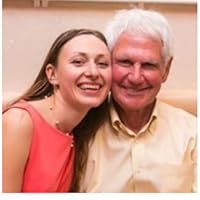
Kevin MacDonald is an American psychologist. He is a retired professor of psychology at California State University, Long Beach (CSULB), best known for his controversial application of evolutionary psychology to characterize Jewish behavior as a "group evolutionary strategy." He is currently the editor of the Occidental Observer, which he says covers "white identity, white interests, and the culture of the West." He is the author of more than 100 scholarly papers and reviews, and he is the author of Social and Personality Development: An Evolutionary Synthesis (1988), A People That Shall Dwell Alone: Judaism as a Group Evolutionary Strategy (1994), Separation and Its Discontents: Toward an Evolutionary Theory of Anti-Semitism (1998), and The Culture of Critique: An Evolutionary Analysis of Jewish Involvement in Twentieth-Century Intellectual and Political Movements (1998). He has also edited three books, Sociobiological Perspectives on Human Development (1988), Parent-Child Play: Descriptions and Implications (1994), and Evolutionary Perspectives on Human Development (2004).
In October 2004, MacDonald accepted the Jack London Literary Prize from The Occidental Quarterly, using the award ceremony as an occasion to argue for the need for a "white ethnostate" to maintain high white birthrates.
In 2010, MacDonald accepted a position as one of the eight members of the board of directors of the American Freedom Party, which declares America a white Christian nation and advocates for limiting "non-white" immigration into the United States.
This masterpiece from Kevin Macdonald gives a thorough analysis of the key Jewish intellectual movements—Boasian anthropology, Freudian psychoanalysis, the Frankfurt School, and neoconservatism—demonstrating how they have shaped modern discourse on race, ethnicity, and social policy. The depth of his research is undeniable, making this a formidable academic contribution to the JQ.
Macdonald builds a compelling case through logical progression, historical evidence, and critical analysis. He does not rely on polemics but instead presents his arguments with academic detachment, allowing the evidence to speak for itself. His discussion of the Frankfurt School’s impact on critical theory, for example, is particularly relevant to the emergence of today's woke ideology.
His tone remains dispassionate and academic. He doesn’t advocate hostility toward any group; he simply traces the historical influence of activist-intellectual networks back to their point of origin. The real question is: Why is this analysis so vehemently suppressed if it’s supposedly baseless?
The Culture of Critique is a bold and indispensable work for anyone seeking to understand the complex interplay between culture, ideology, and ethnic dynamics in Western society. It is a rare example of scholarship that dares to venture where most academics fear to tread, and for that alone, it deserves serious engagement.
Read at your own risk because if there's one thing I'd say is for certain: after reading it, you will never see the world the same way again.
Тази книга е възможно отново ще я изтрият, както подобава на отдаден на прогресивната анти-расистка кауза и доминиран от жени сайт като Goodreads. Така изтриха много книги, които няма какво да се лъжем, са си расистки, като The Turner Diaries, както и много други, които са само "противоречиви" каквото и да значи това.
Понеже бях недоволен от това и смятах, че книги не бива да се трият, сякаш не съществуват, каквито и да са те... вече не съм "библиотекар" лол
Така или иначе, The Culture of Critique: An Evolutionary Analysis of Jewish Involvement in Twentieth-Century Intellectual and Political Movements е чудесен и подробен анализ на една доста щекотлива тема - склонността на еврейската общност и евреите като индивиди ... как да го кажа по-меко (защото като цяло доста се възхищавам на евреите и oсобено на Израел) ... да подриват културата на държавите, в които живеят като диаспора така, че тия държави и култури да станат по-"приемствени" - с отричане на национализма, приемане на мултикултурализъм и емигранти и т.н.
Авторът проследява множество културни и политически движения, организации и институции и водещата дейност на евреите в тях и на еврейското лоби (добре документирано) за приемане на съответните политики. И показва как това влияние не може да се обясни само с факта, че евреите като цяло са по-умни и работливи (което си е факт) и поради това участват във водещи роли практически във всяко интелектуално движение (което също е така, дори в десните движения, че и в крайнодесни).
Държа да кажа, че книгата не е някаква безумна теория на конспирацията тип "Властта на Мамона" или Протоколи на Ционските мъдреци а по-скоро научно-популярна, с множество доказателства и доста умерени изводи.
След нея продължавам да съм фен на евреите и Израел, но и преди нея бях забелязал тенденциите, които тя описва.
Claim that the Britons who colonized, say, India were working for British interests over Indian and nobody will bat an eye. Claim that Mormons are likely to work towards promoting other Mormons in their endeavors and most will find it quite logical. Claim that Muslims are also likely to work to promote their own group interests in the West and you might be suspected of being far right. Claim that Jews have an inclination to promote Jewish interests over those of the nation they live in and you'll be called antisemitic, as MacDonald here has. With many examples, MacDonald points out how many Jewish intellectuals, politicians and activists have been working to undo traditional Western values and norms, from Boasian anthropology to Freudian psychotherapy to Frankfurt school Theory, to Jewish involvement in liberalizing non-western immigration to the USA, Canada and Australia. This in itself is not antisemitic, and MacDonald comes across as empathic for why this makes sense for Jewish interests. Diverse societies might be less prone to carry out pogroms. A tolerant society will tolerate Jews, too. And from a progressive point of view, many of the prominent Jewish figures are indeed morally superior, be it for promoting LGBTQ+ rights or founding the NAACP. The controversial part of MacDonald's work is that he claims that the Jewish intellectuals who worked to pathologize the traditional family for society at large did not want this applied to Jewish groups. Jewish organizations who work for mass immigration to the West want to keep Israel a Jewish ethnostate, etc. They want one thing for the goyim, another for themselves, according to MacDonald. I do find this book relevant in a world where there is a Zionist-driven genocide happening at Gaza, with a fanatically judeophile USA backing it, while there's also an increase in antisemitic attacks across Europe and the USA. Perhaps there would actually be less antisemitism if the points in this book could be discussed openly, and not shushed to the dark corners of the internet where the discussion is taken over by fanatics.
The thrill of the forbidden, like reading Henry Miller in the 1950s.
McDonald's work is important if only because so many people vehemently tell you that you should not read it. Anything that instills that much fear among the intelligentsia, who generally seem quite capable of taking care of themselves, deserves your attention.
McDonald calls himself an evolutionary psychologist. I had never heard of one before, and I think he may have invented the field. His basic thesis seems unassailable. Just as species compete with each other within ecological niches, cultures compete with one another within geographies occupied by humans. An obvious example would be the Roma in Europe. Sarkozy recently kicked them out of France, giving essentially the same reasons for which they get kicked out periodically from almost every other country. They are regarded as a nuisance; they do not produce anything except perhaps entertainment, and they parasitically cheat and steal and siphon welfare from the state. The dominant society tolerates them until they become too numerous, and then reacts by ejecting them.
McDonald examines the relationship between the Jews and their host societies, especially in this book 20th-century America. Individuals in America compete for scarce resources now just as since the dawn of civilization. We compete for money, power, beach frontage in the Hamptons and placement at Harvard.
Moreover, just as our forefathers did, we compete on a tribal basis. Each tribe has its own mechanisms for furthering its own interests. Here is where McDonald has an interesting theory as to the difference between Jews and white Gentiles in the United States. His thesis is that Gentiles evolved highly altruistic societies, which favored their expansion in northern Europe where intertribal conflicts were less of a threat to survival than harsh nature. We developed altruistic genes. For a more thorough analysis, read Sarah Blaffer Hrdy, "Mothers and Others," which I also review. He theorizes that the Gentiles developed a generalized altruism.
McDonald theorizes that the Jewish people evolved in an environment in which intertribal conflicts were a greater existential threat, first in the Levantine deserts and then as a minority people in the diaspora. Their altruism is confined to members of their own tribe, the interests of which they resolutely promote. He proposes that consciously or not, the Jews have promoted social agendas in the 20th century which were inimical to the interests of the previously dominant white gentile population. Specifically, they have weakened and ridiculed the Christian religion in every public domain, advanced feminism and homosexuality, which interfere with the white Christian population's ability to reproduce itself, and championed immigration, both legal and illegal, whereby the voting power of the white Christian population is diluted. He notes that the Jews have been extraordinarily active in supporting black interests, through which they diminish the relative power of white Christians.
This is his third book on Jewish themes, and he responds to some of the intense criticism he has taken from the American intelligentsia. He points out how hypocritical it is for the Jews to mount such an intensive attack on Christian dominance in the United States when they unashamedly promote a similar Jewish dominance over Arabs in Israel. He points out that there were no Jews in Israel as recently as a century and a half ago, and that the native Palestinians disappeared through a process of ethnic cleansing conducted by Jews. Norman Finkelstein documents it in "The Israeli/Palestine Conflict."
These arguments are certainly worthy of discussion in any free intellectual climate. One senses, even from reading other reviews of this book, that the calumny confronting McDonald consists largely of extravagant emotional smokescreens put up in lieu of solid arguments. In other words, the frantic nature and the weakness of the opposition arguments would lead you to believe that he is onto something.
I will close in noting something that McDonald fails to consider. Whether or not driven by cultural competition, the modern notions which has so crippled the white Christian majority's ability to reproduce itself, including diversity, intermarriage, loss of religious faith, feminism, promotion of homosexuality, dilution via immigration, and reducing the ability to raise children by taxing responsible parents to the point that they feel they cannot afford children, affect Jews as much as Christians. Whereas the WASP minority is not producing children at the replacement rate of 2.1 children per woman, Jews in America are doing even worse. Jews are conspicuously at the forefront of feminism and gay organizations, and they are simply not having children. Those whom they do raise are extraordinarily frequent adoptees, and those children simply do not for the most part grow up to be good Jews. It is not in their genes. One would at least conclude that the Jews are not acting out of enlightened self-interest.
It’s odd that the second volume of Kevin MacDonald’s trilogy on Judaism as an evolutionary strategy, Separation and Its Discontents, is not listed on Goodreads, while the first and third volumes are. The second book is a fascinating account of antisemitism as the result of in group/out group competition, while the third deals with Jewish critiques of, and influence on, gentile culture. The controversy raised by these books probably comes from MacDonald’s refusal to depict opposition to Jewish interests as irrational and pathological, and because an outsider is critiquing an in group.
If you had to read one book about the Jews, it would be this. The most based book so far. Folks might paint it as anti-semantics when it is clearly historical, factual, and the truth about the Jews can be gleaned through basic pattern recognition.
A meticulously researched and reasoned explanation of how an ancient conflict played out in the 20th century West and the ramifications for Western society today. Kevin MacDonald dissects the origins of what many are beginning to interpret as the predominant problem in our societies primarily using quotes and material from the very people who carried out the attacks on academia, foreign policy, immigration policy and more.
It's a slow, dense read and it does seem at times that MacDonald is repeating the same points. However, MacDonald is an academic and I'd guess it's prudent to be careful and verbose when dealing with such a thorny subject and with so many potential detractors waiting in the mist.
This book is an absolutely systematic takedown of so many of the lies about Jewish-gentile relations that continue to pervade our societies and is especially relevant today given the ongoing furore surrounding Israel's numerous wars and its seemingly unconditional support from the US and others. Judging by the atmosphere among younger people, I'd bet this book will only gain more attention in the years to come.
Applying an evolutionary biology perspective, MacDonald argues that Judaism functions as a "group evolutionary strategy" aimed at weakening Western Christian cohesion to secure minority survival. The book's merit lies in its thorough, detailed description of radical 20th-century movements (Boas’s anthropology, left-wing radicalism, psychoanalysis, the Frankfurt School, and neoconservatism). However, MacDonald’s central claim—that Jewish actors, without constituting a majority, acted as the decisive tipping point for these movements' success—remains controversial and open to debate. Critique and Analytical Flaws • Overstated Causality: MacDonald underestimates internal Western dynamics. Secularization, post-WWII anti-nationalism, and cultural radicalism have deep native roots in the West, having triumphed even in regions like Scandinavia where Jewish influence was negligible. • Confusing Secular and Religious Judaism: MacDonald’s primary flaw is conflating secular activists with traditional Judaism. While destructive cultural criticism stems from secularized circles, MacDonald falsely portrays modern Judaism as increasingly ethnocentric. In reality, diaspora Judaism—especially Reform—faces severe assimilation, high intermarriage rates, and internal disintegration. • Uncritical Reliance on Shahak: Relying on a tendentious writer like Israel Shahak, MacDonald ignores universalist strands in Jewish tradition (such as Kabbalah) and projects diaspora-driven phenomena onto traditional believers. • Blinded to Self-Destruction: It is hard to imagine that figures like Freud and Adorno did not realize that their ideas would ultimately undermine their own people along with Western culture, as these theories eventually target all traditional structures. Conclusion While MacDonald’s empirical mapping of these movements is rich, I think his overarching theory is overstated by making ethnocentric group strategy an all-explaining force. Ultimately, treating Israel shabbily is deeply ironic, as the Jewish nation-state represents the solution to the very diaspora-related pathologies MacDonald masterfully describes. Adapted from my review in Kristet Perspektiv 4/2013. An English translation is available online.