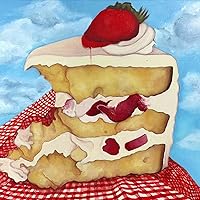
Do you really know what’s for dinner? The Blue Plate is the perfect dinner companion for food lovers who also care about the planet. Ecologist Mark Easter offers a detailed picture of the impact the foods you love have on the earth. Organized by the ingredients of a typical dinner party, including seafood, salad, bread, chicken, steak, potatoes, and fruit pie with ice cream, each chapter examines the food through the lens of the climate crisis. Not a cookbook, but instead, gathered like guests around the table, you will find the stories of these foods: the soil that grew the lettuce, the farmers and ranchers and orchardists who steward the land, the dairy and farm workers and grocers who labor to bring it to the table. Each chapter reveals the causes and effects of greenhouse gas emissions, as well as the social and environmental impact of out-of-season and far-from-home demand.
What can you do to eat more sustainably? Food lovers everywhere will be happy to know that the answer is not necessarily a plant-based diet. For each food group, Easter offers not recipes but low-carbon, in-season alternatives that make your favorite foods not only more sustainable but also more delicious.
The first step, however, is an understanding of how food is grown, produced, harvested, and shipped. In stories both personal and entertaining, the author offers a full understanding of what’s for dinner.
This book is a MUST READ for everyone, but especially anyone who is concerned about the climate crisis.
An optimistic but also critical survey of agriculture’s contribution to carbon emissions.
Mark Easter beautifully weaves stories from his life and heritage (as the descendent of farmers and a greenhouse gas accountant) with explanations around the question “can we eat our way out of the climate crisis?” Easter covers grains, fruit, seafood, beef, dairy, and a chapter devoted to composting vs landfills.
I learned so much from this book such as the potential of regenerative farming—I appreciated that this book started with solutions and then worked back through the problems. I also learned about the carbon emissions associated with dams—which I had assumed were a source of renewable energy (I was wrong)!
I highly highly recommend this book!
I received an e-ARC from the author, but I purchased the audiobook with my own money.
The book has beautiful photographs and diagrams, but the audiobook also stands alone and is read by the author.
A fascinating book committing time to the comparison of ideals to better manage food resources in a warming climate.
I highly recommend this to scientists studying the planet and our food system for analysis and consideration for the future. Also recommended to people interested in learning about promoting a better world and for those seeking to understand.
Great book, I will order a physical copy for my library.
***Thank you to Netgalley, Patagonia and to Mark Easter for providing this book in exchange for an honest review.
This is an informative book that I enjoyed! It's well written and well put together. If you are interested in climate change, I would recommend this. Special Thank You to Mark Easter, Patagonia and NetGalley for allowing me to read a complimentary copy in exchange for an honest review
An excellent book about how our various agricultural systems affect the planet and what we can do to lessen the impact. It was easy to read and very informative. I also appreciated that it wasn’t a doom & gloom book; real solutions were offered on how farms and us as consumers can make positive change.
This was another part of my recent reading slump. I knew I’d be really into this book, because this is the subject matter that I’d say I’m most passionate about… Which meant it was hard for me to start… Cause I was worried it wouldn’t be as good as I hoped. It was great! Really inspiring, and makes me think I need a career shift. Haven’t read a book published by Patagonia, I haven’t liked.
"The Blue Plate" takes readers on a journey to understand the complex world of the food we eat - and the sustainability struggles that are only growing in severity and frequency.
Conservation and environmentalism are at the forefront of many people's minds these days. Choosing sustainable and ethical products is a priority. Often the solution for food is touted as being simple: Go vegan. But this sustainability is not as simple as that, especially as you learn more about agriculture methods/impacts, as "The Blue Plate" informs. Mark Easter does a phenomenal job shedding light on the climate crisis link with agriculture. Not only does he touch on the meat and dairy industry but also grains and fruits. He evokes compassion throughout the book, but doesn't hold back with his criticism. While Mark does encourage readers to make personal changes to their plates to help the planet, he holds the most weight against the systemic issues plaguing the industry and changes that can be made to the way we farm to help the environment.
An aspect of the book I was particularly grateful for was the information on dams - the common misconception as the sustainability of dams and how dam removal is restoration and beneficial to the planet and against climate change.
This book is a must read for folks concerned about the climate crisis and better understanding the role agriculture plays. And if this book, or the topic, interests you, I recommend you watch the 2016 documentary, "Sustainable."
I received a free ARC via NetGalley for this book. Thank you to NetGalley, publisher and author!
Nearly a quarter of the world’s greenhouse gas emissions is created by growing, processing, and transporting food and disposing the waste. Ecologist Mark Easter asked the question “Can we cultivate from the Earth meals that nourish us, a Blue Plate of sorts, rather than the Earth being the meal itself?” Can we “eat our way out of the climate crisis”?
Easter’s book takes us across the country as he shows how modern farming methods negatively impacts the environment and how returning to pre-industrial farming methods maintains the soil and reduces carbon emissions. His broad study includes all aspects of food: vegetable farming, raising cattle and dairy farms, fishing, and animal and food waste management.
He offers suggestions of what we should have on our plate at meals. Eat local. Eat vegetables. Enjoy shellfish. Don’t throw food waste into the trash but compost it. But the book’s emphasis is not on the consumer end, but on the practises that can be changed to reduce carbon output and store it in the soil.
The book has aspects of memoir and travelogue as well as science facts while reporting his findings as Easter delved into how we get our food and the environmental costs of what we put on our plates.
I thoroughly enjoyed how the author dissected the ways in which current agricultural practices and systems add to carbon / greenhouse gas emissions. Topics mentioned in the first part of the book feed into others, and the flow of the book made sense. As someone who is passionate about eating, this is a must read for those interested in ethical consumption or reasons for eating more sustainably.
The author is realistic about the potential impact in an ideal world, but is also encouraging about what steps each individual person can take to enact change. I for one will definitely eat less red meat
A comprehensive accounting of the agricultural sector's contributions to greenhouse emissions. There is some good news about how to reduce these emissions. The bad news is that addressing the problem requires comprehensive, systemic changes to deeply established industrial processes. I don't see this happening 😕
While very technical at times and a steady info-dump, Easter has written a very engaging and easily accessible book on the very important topic of reversing the climate troubles plaguing our planet by considered the food we eat. I learned a lot from this wonderful book.
The Blue Plate is a sobering, occasionally uplifting (and equally terrifying) monograph by Mark J. Easter on the interconnectedness of life on planet Earth, and how we can make good decisions concerning the food we consume given the current issues. Released 17th Sept 2024 by Patagonia, it's 400 pages and is available in hardcover, audio, and ebook formats.
The author, a scientist and researcher, does a fairly good job of explaining concepts such as carbon sequestering, climate change, food production (and its impact on climate change), ecosystems, and some complex earth science/ecology topics. There is no glossary, chapter notes or annotations, and the book doesn't have a bibliography or reference list (which is a notable absence in a book of this type). The author/publishers have included a cross referenced index.
The basic question he posits is: Can humanity's choices about regenerative farming, consumption, and food choices (eat local in season) have a meaningful positive net impact on human driven climate change. He makes a lot of good points, and there are some glimpses of potential actionable ideas throughout, but the overall impression for reasonable readers is "probably not enough, nor soon enough".
There are a number of profiles of professionals and amateur activists throughout which are inspiring and hopeful, from grassroots collectives to larger research entities like the Land Institute. The overall takeaway though is, not enough, not fast enough, and not hopeful.
It's a stark reminder that unfettered consumerism is a juggernaut wrecking the planet we share.
Four stars. The author/publisher have included interactive links and QR code to additional study materials and references for classroom use or discussion. It would be a good choice for public library acquisition and as a support text for agriculture, ecology, earth sciences, and related subjects.
Disclosure: I received an ARC at no cost from the author/publisher for review purposes.
I think Mark Easter's THE BLUE PLATE can rightfully be called a landmark book. Most of us have some sense that the foods we produce and consume have certain impacts on the environment, and quite a lot has been written on this subject. But I doubt if there's another book that addresses this aspect of food as thoroughly and precisely as ecologist and "greenhouse gas accountant" Easter does---and in a very engaging, clearly written, and largely first-person narrative that makes THE BLUE PLATE anything but a dry, technical tome by an expert in his field.
The author describes personal experiences like his visit to the site of his great-grandmother's farm in eastern Colorado, which failed during the Dust Bowl years, to give ecological lessons; and the book presents fascinating and surprising facts throughout. I hadn't a clue that dams and reservoirs produce more methane than some fossil fuel sources, and that farmed shellfish (except shrimp) have a lower carbon footprint than berries and grapes. Great color photos also compliment the text.
Much of what THE BLUE PLATE informs about some favorite foods will not be welcome news to many readers. But at least they'll be able to make informed food choices, even if many decide to continue "eating what they like." Although Mark Easter is personally very committed to making overall food choices that are healthy for the planet, and encourages others and society at large to become committed, his tone is not preachy. And he acknowledges that even if everyone ate all the right foods, we can't just "eat our way out of the climate crisis" because about 75% of the world's greenhouse gases are are not related to the production, distribution, and consumption of food. But taking on the 25% that are would be a huge step in the right direction that a book like THE BLUE PLATE can help guide us toward.
Thoughtful, accessible, and gorgeous photography that highlights the beauty of local Colorado foods.
However, very white-centered and Anglocentric. The blurb declares, "Organized by the ingredients of a typical dinner party, including seafood, salad, bread, chicken, steak, potatoes, and fruit pie with ice cream, each chapter examines the food through the lens of the climate crisis..." However, this "typical" is the typical of white, western European, middle-class (or higher) peoples - not the general "food lover." Easter undergoes distracting contortions to avoid assessing meat as the highest impact food on climate disaster. He assumes "food lovers" love meat and dairy. His examples, foods discussed, interviewees, and folks in those lovely images are almost without exception white- and western European-appearing.
So, not for all "food lovers," and highly biased in its particular (white) slant, which is a shame, because the general message (what we eat is directly linked to climate disaster) is essential.
Loved it, I’ve already referenced this book so many times to support my long running vegetarianism. I love that the author doesn’t shame people for genuinely liking food, as he references his own experiences and the experiences of his family and the history of food on earth. But he also shows what we can do better, and more importantly, what larger systems can do better and how we can support those systems. Everything he writes and tells is supported by science, mixed with personal anecdotes and beautiful descriptions of soil and food and whatever else. Not only is this a good read, but also an important read for anyone who loves food and cares about this planet.
For food lovers with the time, will, and income to ask for change.
If you know the terms no-til, permaculture, or eat a reduced meat diet for eco reasons this may not be entirely new, but still lots of great learning, updated information, and science facts! This isn’t a manifesto on what you must do individually (though there are a few suggestions), but a collection of examples on what IS being done and where we can demand more systematic changes.
I read the audio version, and with such long chapters and so many numbers being cited I'd recommend eyeballing this one.
I really enjoyed the ideas and topics of the book, but I think it could be written better. The pictures and descriptions were beautiful, but it was hard to follow trains of thought between the authors anecdotes and their proposed problems and potential solutions. The idea of climate change being influenced by what we eat is not novel, but I enjoyed how specific choices we make on what to put on our plates can make a bigger difference than others (e.g. farmed or harvested mussels vs. farmed salmon).
Very interesting book. Can be a little slow at times. But I’d say definitely worth a read. Very eye opening. I think the book is radicalizing in the same way the 100 years history of the war Palestine book is. There are a lot of interesting facts and figures that make you think more about what we eat and how that impacts the climate.
Definitely worth a read for anyone who wants to gain a better understanding of food systems and their role in climate change.
Mixing personal stories, important history, cutting edge science, and boundless curiosity, Mark Easter takes the reader on an enlightening journey through the fundamentals of our food systems. This passionate, realistic and hopeful guide is both a good read, a beautiful book and an invaluable reference that you can turn to again and again. Highly recommended!
I liked it because it had a solution-oriented approach rather than a doomsday overlook on the climate crisis but my GOD does it talk about dirt.
Also, the chapter headlines were very confusing and the content often didn't really match? The salmon chapter was a big letdown. I guess I'll have the read The New Fish to get my salmon
A very eye-opening but approachable book on how our food choices impact the environment. Plenty of simple recommended changes to our production, consumption, and waste habits that I’m curious to explore in my “backyard”
On the climate crisis. A little overwhelming, but necessary big picture and great if you’re wondering where your food comes from! Practical tips at the end, like composting and advocating for regenerative farming practices.
🏆Colorful photos plentiful and occasional charts enrich the reading experience. Informative. Full of info about food including the carbon footprint of many food categories/items with explanations. An accessible read.
If you know little about the food systems impact on climate before reading you will learn an immense amount from this book. I both very enjoyed this and have big criticisms. This biggest is he dances around the huge problem of yields and land use. Regenerative ag practices are very beneficial to soil quality, water quality, food quality but the big big problem is you get lower yields. So if we have to produce the same amount of food (I don’t see population shrinking) then we have to clear more land to grow things regeneratively. Clearing more land for farms (aka the Amazon rainforest) is directly counter to helping fight climate change. Ignoring the whole yields things is a real miss
I found The Blue Plate to engage an informative climate-conscious outlook on the future of food through its many forms of plants, fish, and meat. Backed by science, the book travels through these various elements in consideration of the published research thus far tracking our carbon footprints in relation to the food we eat and whether it is in-season. Another aspect to this book that made it an even more exciting read was the beautiful execution of the hard cover published edition. The photographs and postconsumer-waste paper utilized add another exciting layer in the books reading!