Jump to ratings and reviews
Rate this book

The Revenger's Tragedy

Rate this book
"Oh do not jest thy doom"

The Revenger's Tragedy is an intense tragic burlesque. Its hero, Vindice, desires to avenge the death of his betrothed. Operating in disguises he provokes discord among his enemies so that they plot against each other. It is an anonymous masterpiece (the play was entered in the Stationer's Register on 7th October 1607 without an author being named) produced at a crucial phase in Jacobean theatre with Hamlet , The Malcontent , Measure for Measure , Volpone and King Lear all recently performed. Written with vivid imagery, the play contains energetic, high-spirited action and brooding, slow-paced scenes on the subjects of death, revenge and evil, culminating in an unexpected ironic climax.

This new student edition contains a completely re-edited text of the play and a new Introduction examining this unique combination of poetic tragedy, macabre farce and satire, focused on the dark brilliance of the hero Vindice. It also views the play in wider contexts - of contemporary attitudes to women, as well as contemporary debates concerning rebellion against tyranny.

176 pages, Paperback

First published January 1, 1606

38 people are currently reading
1811 people want to read

About the author

Anonymous

791k books3,368 followers
Books can be attributed to "Anonymous" for several reasons:

* They are officially published under that name
* They are traditional stories not attributed to a specific author
* They are religious texts not generally attributed to a specific author

Books whose authorship is merely uncertain should be attributed to Unknown.

See also: Anonymous

Ratings & Reviews

What do you think?
Rate this book

Friends & Following

Create a free account to discover what your friends think of this book!

Community Reviews

5 stars
746 (22%)
4 stars
1,135 (33%)
3 stars
1,017 (30%)
2 stars
352 (10%)
1 star
107 (3%)
Displaying 1 - 30 of 155 reviews
Profile Image for Bill Kerwin.
Author 2 books84.3k followers
October 4, 2019

Vindice, seeking revenge for the death of his betrothed (who has been poisoned by the lascivious Duke she spurned), enlists the aid of his brother Hyppolito, dons a disreputable pimpalicious disguise, and eventually destroys the corrupt world he inhabits together with what little was left of his own innocence.

Unlike the works of that universal genius Shakespeare, this play--which most modern scholars attribute to Thomas Middleton--could never be mistaken for a modern drama, for it is concerned neither with psychological depth nor consistency of tone; rather, it achieves its effects through a combination of impressive symbolic tableaux and highly-wrought language that together produce a complex moral perspective. Sometimes it seems like an absurd black farce in which soulless stick-figures rush toward inevitable destruction, and at others it appears more like a morality play or a Juvenalian satire with Vindice alternatively assuming the masks of the Vice or the Satirist. Underneath these masks, Vindice himself is infected by the evil he excoriates; he is both an avenging angel and a symptom of social and moral decline. Even the darkest corners of this world, however, are illuminated by Vindice's magnificent poetry--more beautiful than anything in Renaissance drama except for Marlowe, Webster and Shakespeare. If you won't take my word for it, check out what T.S. Eliot has to say on the subject.

On second thought, see for yourself. Below is a speech spoken by Vindice to his mistress' skull, which he holds in his hand and soon plans to use as an instrument in his elaborate plan of revenge:
: And now methinks I could e'en chide myself
For doting on her beauty, though her death
Shall be revenged after no common action.
Does the Silk-worm expend her yellow labors
For thee? for thee does she undo herself?
Are Lordships sold to maintain Ladyships
For the poor benefit of a bewitching minute?
Why does yon fellow falsify highways
And put his life between the Judge's lips
To refine such a thing, keeps horse and men
To beat their valors for her?
Surely we're all mad people, and they
Whome we think are, are not; we mistake those,
Tis we are mad in sense, they but in clothes. . .
Does every proud and self-affecting Dame
Camphor her face for this? And grieve her Maker
In sinful baths of milk, when many an infant starves,
For her superfluous outside--all for this?
Who now bids twenty pound a night, prepares
Music, perfumes, and sweetmeats? All are hushed.
Thou mayest lie chaste now! It were fine methinks,
To have thee seen at Revels, forgetful feasts,
And unclean brothels. Sure, t'would fright the sinner
And make him a good coward, put a Reveller
Out off his Antic amble
And cloy an Epicure with empty dishes.
Here might a scornful and ambitious woman
Look through and through herself. See Ladies, with false forms
You deceive men, but cannot deceive worms."
Profile Image for Sean Barrs .
1,120 reviews47.9k followers
March 9, 2016
Well, here’s three things I learnt after reading/watching this play:

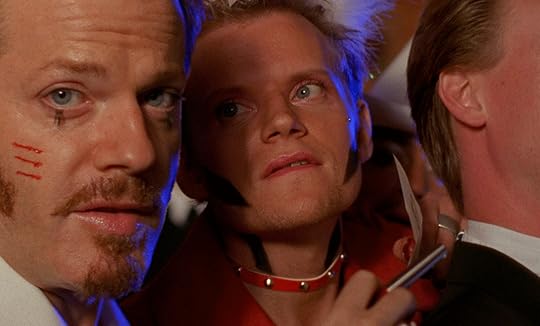
1. Revenge makes you go crazy!

description

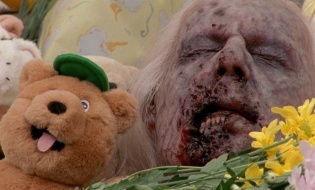
2. Revenge makes everyone power crazed!

description

3. Revenge will get you killed!

description

So my advice is to stay far away from it, that way you may live.
Profile Image for Greg.
654 reviews99 followers
September 25, 2012
Salingar, in a quote found in the introduction, said that The Revenger’s Tragedy “is the last, as well as the most brilliant, attempt to present the emotional conflicts of Renaissance socity within the framework of moral allegory.” This is a fantastic and succinct analysis. Throughout the play, themes of revenge intersect with themes of sin, justice, the role of women, and lust. The play continues to reverse flow, with multiple plot twists that provide layers of understanding for each of these themes. Tourner follows the basic form presented by Seneca, and even quotes him from the lips of his play’s namesake character, Hippolito, by stating “Curae leves loquuntur, majors stupent” (Light cares find speech, greater ones are silent). The play is structured around Vindice, who wants to revenge himself against the Duke for the death of his betrothed. Disaffection with the immorality of James I and his court provided the context for why the play was written. As the primary protagonist, Tourneur puts the best lines in Vindice’s mouth. My favorites are: “Now nine years’ vengeance crowd into a minute!” (67)
“Has not heaven an ear? Is all the lightning wasted?” (89)
“Ah, the fly-flop of vengeance beat ‘em to pieces! Here was the sweetest occasion, the fittest hour, to have made my revenge familiar with him: show him the body of the duke his father, and how quaintly he died like a politician, in hugger-mugger, made no man acquainted with it; and in catastrophe, slain him over his father’s breast, and—O, I’m mad to lose such a sweet opportunity.” (102)
Perhaps the most memorable image, for me, however is the beautiful line spoken by Lussurioso, who states, “Alas, I shine in tears, like the sun in April.” (109) The image is beautiful, and I believe foreshadows a bit of rebirth in the tragedy of the story.
Profile Image for Jenn Mattson.
1,254 reviews43 followers
September 14, 2008
If I had never read a Shakespeare play in my life, I may have found this incredibly bloody and unsubtle play interesting or entertaining. It still may be, and, as I will be seeing a performance of it at the National Theatre in London in a few days, that may change my mind a little. However, it has all the elements of a typical revenge tragedy with none of the beauty or complexity of Hamlet. The characters are named things like Vindice (he's the revenger, if you couldn't tell), and like the evil sons and stepsons of the Duke: Lussurioso (the lustful one), Ambitioso (ahem), and my fave name, Supervacuo (basically breathing air here). Oh, and Spurio, the Duke's bastard. While I often find this kind of playfulness amusing, if not hilarious, I was out of patience with characters making bold statements of their intentions in front of other characters and those characters acting clueless about what they had just heard. Also, I can only suspend my disbelief so far, and it does not stretch to include believing that anyone would be deceived by Vindice's mistress's skull dressed up like a woman and that this "anyone" would believe that it IS a woman long enough to kiss it/her. Could be gross, intense, or funny... or absolutely unbelievable - which one do you think I thought? Actually, I think American cinema-goers as a mainstream, stereotyped body may really dig this play: it's totally obvious and has big neon signs pointing to the funny bits, the tragic bits, the disgusting bits, and the major theme bits. Give me Hamlet any day. I suppose I must give it around 3 stars, though, because it HAS been thought provoking, and it apparently a representative example of Jacobean drama. I think I would have loved going to the theatre then... ahem.
Profile Image for Dfordoom.
434 reviews125 followers
June 18, 2008
If you want murder and mayhem you really can't go past the Jacobean playwrights. This one, originally performed in 1606, is terrific fun. If Quentin Tarantino had been alive 400 years (and if he possessed any actual talent) he'd have written plays like this.
Profile Image for Lucy Barnhouse.
307 reviews58 followers
Read
July 29, 2019
To a novice reader of Jacobean drama, this was astonishing at every turn. Macabre and savagely satirical, it gleefully heaps up absurdities and extremities of conduct. It also made me wonder why, in our own age of hypocrisy and excess, we don't have more productions of revenge tragedies.
Profile Image for macy.
121 reviews11 followers
Read
October 3, 2025
they’re keeping me in a cage where i’m only allowed to read books for school 😕
Profile Image for Roshan Perry.
10 reviews
October 31, 2025
I can't get over this play. It has some pacing and plot resolution issues, not to mention the expectedly high level of misogyny, but somehow I am on the edge of my seat all the way through. The word to describe this play is excess. It is maximalist in all the right ways, satirical in key moments, and haunting throughout. We are left in a state of disarm, questioning the boundaries between life and death, the corporeality of violence, and the point of it all. Gonna tell my kids this was Hamlet.
Profile Image for Matt.
205 reviews9 followers
July 7, 2014
The first time I read The Revenger's Tragedy, I hated it. One has to have an affinity for Jacobean revenge tragedy to "get" this play. Now, after several dozen examples of the genre have passed my eyes, I'm able to appreciate the humor built into this strange, strange play. From Vindice's entrance - skull in tow - to the abrupt and no-nonsense parody of Hamlet's "Mouse Trap," this play takes all the expectations of a revenge tragedy and flips them, comically, on their butts. I get it now, and it may be one of my new favorite plays.
In the words of Gary Taylor, "Middleton is, like, way cool."
Profile Image for Katie Greenwood.
303 reviews11 followers
November 25, 2019
Another play, what a surprise. It seems all I read these days are plays!

The Revenger's Tragedy is what is says on the tin. Everyone in this court has a desire to gain revenge on someone who wronged them, and of course in typical fashion, those characters fall foul to their desires. Nearly everyone dies. I've pretty much prefaced every review of a play with the disclaimer that I simply don't get on well with them when it comes to reading for enjoyment. It still remains. Whilst I found the plot engaging and the characters are utterly insane in the best ways I can't wrap my head around the format. I feel like having to read each name throws me out of the scene but without doing so you haven't got a chance at fathoming out what on earth is going on in the scene. They're difficult to get through but I imagine if I watched them I'd like it far more.

As it stands I think this will be a brilliant play to analyse, but I wouldn't exactly say I liked it.
Profile Image for Mia Steadman.
186 reviews
October 11, 2022
Took me a little while to get into this play really as I found the characters a little confusing. I don’t think this was helped by Vindice’s multiple identities as I had to reread parts thinking they were new characters (I guess you could say I was deceived!)

Aside from the initial confusion, Vindice stood out to me as one of my favourite characters purely through his role as a vigilante - establishing justice for characters to replace the corrupt courts. Of course, his ideology was inherently flawed, it was still enjoyable to follow. In fact, I had a lot of characters I personally enjoyed but I won’t go into detail (I will name-drop the skull of Gloriana, an iconic figure even if she is just a skull aha)

What kept me engaged was the play's exploration of gender and the concepts of tragedy and revenge as a whole. Although an example of parody and meta-theatre, the play still carried deeper meanings and moral messages.

Definitely do recommend it as a great play to study as well as just an enjoyable tragedy to read!
Profile Image for Zoey.
507 reviews5 followers
April 4, 2024
This was basically a play about men hating women and killing each other, while the women dealt with internalized misogyny.

I kinda hated it.
Profile Image for Taryn Gaunce.
17 reviews
May 6, 2024
actually kind of funny beyond the whole mutilation of women thing
Profile Image for AnneMarie.
51 reviews
September 29, 2024
this had the craziest interpersonal drama/murders i’ve ever read lol
Profile Image for meow meow.
2 reviews
Read
April 20, 2025
i don’t think they liked women much in the 1600s
Profile Image for Em Elsmore.
25 reviews
July 8, 2025
Incest and necrophilia is something I never thought would be in the same scene at the same time, but it happened?
This entire review has been hidden because of spoilers.
Profile Image for majoringinliterature.
70 reviews29 followers
May 28, 2016
A man walks onstage holding a skull. He starts to speak.

No, you're not watching Hamlet - though there's little doubt that it is a cheeky reference to one of the most recognisable scenes in English dramatic history.

The play is The Revenger's Tragedy, written either by Cyril Tourneur or crowd favourite Thomas Middleton, depending on which scholar you believe. It is a confusing, bloody, and at times hilarious look at the revenge tragedy genre and, like all good revenge tragedies, there are gory deaths aplenty.

The story's protagonist is Vindice, the aforementioned skull-handler. The skull belongs to his love, Gloriana, who was murdered by an unscrupulous Duke some nine years ago. As you can probably guess (based on the weird and obsessive hoarding of his beloved's bones) Vindice has had a little bit of trouble getting over it. So he devises a scheme to avenge Gloriana by disguising himself as a servant and insinuating himself with the Duke's son, Lussurioso. The usual murder, mayhem, and sexual escapades ensue. So, what to make of this strange play? An interesting suggestion, which I found particularly compelling, is that the play is a subtle critique of the Jacobean court. The play was first performed in 1606, several years after the death of Elizabeth I. Though James I had only been on the throne for a few years, there was already a great deal of discontent with his rule. People suggest that the lustful, small-minded Duke of the play, and his court of cruel, lazy, or just plain useless courtiers is a reflection of the state of English politics at the time. Vindice's beloved, we know, was called Gloriana; is it a coincidence that this is the famous name used to refer to Elizabeth I in the poetry of the Elizabethan period? The first scene could very well signal the kind of decay that has crept into the state since the glorious 'Virgin Queen' reigned.

But if the play is nostalgic for the good old days of the female monarch, it is also quite unfair on women. The first act it filled with crimes against them: Vindice's mother is persuaded to try and sell her daughter off as a mistress to Lussurioso, and the Duke's stepson is charged with raping a lady of the court.

As you can see, there are very few likeable characters in this play. This may be a deliberate choice on the playwright's part; the characters are clearly types, almost like allegorical figures in a medieval morality play (which is demonstrated in their names: Vindice, Gloriana, Ambitioso, Spurio (who is, as his name suggests, an actual bastard)). My preliminary reading probably didn't get past the surface of the play, and I was left with an impression of the play's pessimism. One of my favourite lines reflects exactly this:

LUSSURIOSO
[…]
I know this, which I never learnt in schools:
The world's divided into knaves and fools.

(II: ii, ll. 4-5)
Profile Image for ..
68 reviews
October 4, 2019
I am SO TIRED of being forced to read such misogynistic works for my university classes. The violence to women in this is beyond disturbing.
Profile Image for James Nicolay.
20 reviews13 followers
September 19, 2012
The experience of reading Thomas Middleton's "The Revenger's Tragedy" feels like so many things: there's a sense of guilty pleasure reading about the Kill Bill-esque bloodbath at the end of the play as well as the thickening conspiracy among family members and revengers ala HBO series Game of Thrones; it also feels like I'm reading a more mature and complete upgrade of the revenge tragedy genre that I read in Shakespeare's Hamlet and Titus Andronicus; and finally, it feels rewarding to recognize as well the conventions and literary traditions of the English theater improved all throughout Middleton's spectacular display of plot/conspiracy weaving as well as in the individual character developments--they may not achieve the AC Bradley requirements of the full development of the Shakesperian tragic characters, but the pathos that the audience feels towards the maligned Vindice and his family are ubiquitous and thoroughly felt.

The multiple number of deaths at the last scene (character stabbing another character stabbing another character) sums up the intricate web of karma or cause and effect that we seen in the entire play. While this might seem hilarious to the desensitized modern viewers, it's undeniable that the bloodbath is the most natural way to end the revenge tragedy. The other deaths, on the other hand, such as the unfortunate execution of the Duchess' younger son can seem to be flat out hilarious as it contains the comedy element of mistaken identities, while the actual death of the Duke (with the witnessing of his cuckolding) arouses more pity and fear from the audience as the full magnitude of the wrath and spirit of vengeance are made felt to the Duke by the avenging brothers. The other instances of death which might be more appealing to the audience and readers are the contextual (offstage) deaths of Vindice's betrothed lady Gloriana and the brothers' father whose deaths are all attributed to the Duke: the fact that these are the driving forces behind all the gruesome actions and events in the entire play.   

From reading Doctor Faustus to The Spanish Tragedy to Volpone, the Jacobean theatrical elements have changed dramatically (excuse the pun) as we can see less of the inferior touch of the traditional moral plays and more of the conventions of the classical Senecan and Greek tragedies. We see spectacles after spectacles, intrigues one after another, and the plot becomes ultimately complex that the audience cannot help but feel overwhelmed by the display of both the extreme ends of the morality of the characters, from the virtuous/virginal Castiza to the corrupted, lustful and abhorrent bastard Spurio.

The playwright demonstrates a complex understanding of what it takes for a human to devolve into a monster and yet still seem reasonable due to their circumstances (how Spurio’s birth status explains a lot about his disposition and characteristics). We also see how the play has become ultimately political as it is shown during the reign of James I. Some critics argue that the play is a direct attack on the corruption within the Jacobean court, and it may also explain why the play was notoriously authorless for a very understandable reason. For a Renaissance drama, the play is very modern in its attributes and the style is, I dare say, very forward looking, as the psychological aspects of the major characters are explored vividly in their actions and speech.

The Revenger’s Tragedy is definitely among the most enjoyable and the most realized and masterfully written masterpieces of the English Renaissance literature. With its fantastic show of spectacles and intriguing plot lines, complex display of human emotions and actions and employing of classical and English Renaissance play conventions, this drama should be enjoyed to be seen by everyone today who are curious what the period offers beyond Shakespeare’s plays.
Profile Image for cami.
67 reviews
September 11, 2025
Una hermosa historia de cornudos, misoginia, e incesto. Vindice sos muy boludo.
Profile Image for Esdaile.
353 reviews76 followers
July 7, 2012
There is utter confusion about the authorship of a series of plays, whether they were written principally by Thomas Middleton or the shadowy Cyril Tourneur or a combination. Of the spate of revenge plays which followed in the wake of Thomas Kidd, this is a supreme masterpiece, albeit very limited in scope and intention. It is a relentless allegory of sin and death and it would be better to say of the writer of this play than of Webster as Eliot famously wrote of Webster "much possessed with death and saw the skull beneath the skin". Here everything is reduced to parody and allegory. Hamlet is mocked in the opening scene-the psuedo or ur Hamlet, a man dressed in black holding a skull and his name Vindice, the Italian for Avenger. The reason for doubting Middleton's authorship is that noweher else does he focus his language relentlessly on allegory-hardly a sentence here is "realsitic" does not serve the purpose of the presentation of a world of damned and doomed sinners. In favour of Middleton's authorship, is the same ghoullish and we would say today "pretty corny" punning and black humour "who's head's that then?" "your won brother's" "villain, I'll brain thee with it". On a skull which has been painted with corrosive poison: "she has a somewhat grave look about her".
This is the quintessence of revenge tragedy and likewise a conclusion-what more could one write in the genre after this? Drama is here used a vehicle for a very puritanical political idea: the great ones of the court are corrupt and corrupting, in league with Death and the devil. The plague from the East and the sinner's disease brought back from the New World (syphilis) in the West, were punishments for luxury and laxity, both indulged in with rulers who did not work, such as the old palsy duke of this play. The conclusion wouldbe that it would be pleasing to God if there were no dukes (and no monarchs?) and God's state was established on earth. Calvin in Geneva seems to wink behind this condemnation of luxury, licentiousness and a nepotistic court of panderers and flatterers. This is the supreme and felicitous combination of Italian melodrama and English puritanism. Vindice is condemend and receives news of his condemnantion at the end in such a way as the playright might be prepared to allow his own craft to be condemned. I was the instrument but God must also burn the contaminated instrument. Plato wanted no poets in his Repoublic and the Protectorate closed all theatres. Within the scope of the limied ambition of what this play sets out to do, it triumphantly succeeds. It is the supreme work of the genre and within the confines of that limited ambition, a work of genious.
Profile Image for Simon Mcleish.
Author 2 books142 followers
February 25, 2012
Originally published on my blog here in January 2001.

Originally published anonymously, The Revenger's Tragedy was attributed to Tourneur later in the seventeenth century - but as part of a list of plays others of which were linked to the wrong authors. It is today apparently considered to be by John Middleton, but nobody can really know. Anonymous publication was not particularly uncommon, and the play has political nuances which may provide a motivation for the author to hide their identity.

The plot of The Revenger's Tragedy is sufficiently convoluted that any summary of it seems to invite the rider "Confused? You will be after this episode" which followed the plot reminders in eighties spoof soap opera Soap. Basically, it is set at a decadent Italian court where the Duke's son has attempted to rape a virtuous woman, Gloriana; her death prompts her betrothed Vindice to swear revenge on the Duke's family. His plots are aided by the lusts and ambition of the various members of the family; most of them die flamboyantly before Vindice is led off to face justice at the end of the play.

The political comment is highlighted by the name of Vindice's dead lover - Gloriana, the poetic nickname of Queen Elizabeth, who died three years before the play was first published. The name makes explicit an idea common to several similar plays of the time, that the court of James I was corrupt and depraved.Elizabeth's ministers were hardly better, but it appears to have hardly taken any time before her reign came to be regarded as a golden age.

In the early seventeenth century, there was a genre of rather gothic revenge tragedies; Hamlet is on the fringes of it. They tended to be set in some foreign - usually Italian - court, and have a lot of baroque murders (here, for example, the Duke is killed when he kisses Gloriana's skull, which has had poison smeared on it) in poetic language; there are frequently hints of incest and other crimes. The Revenger's Tragedy is almost a parody of the genre, it is so fantastical and over the top. For a tragedy, it is great fun.
Profile Image for Peter Heavenheld.
8 reviews
April 4, 2011
Vindice’s sister was raped and destroyed by a powerful family of scoundrels. Like a monomaniac, he sets out to bring about the downfall of those responsible, whose names themselves are caricatures Lussurioso [lecherous], Spurio [spurious ie. bastard] with his brother Hippolito’s aid. To achieve his vengeance, Vindice gains employment in their family.

A brilliantly dark and apocalyptic vision, the product of twisted genius. No tragedy is complete without revenge, and this is the most perfect expression of that all-engulfing death. Highlights: the atmosphere of loathing upheld by a carefully formulated “symbol key” of visceral imagery, the symbolic characters, the opening scene with the skull (though very different to Hamlet meeting Yorick), the violent murders, especially at the masque, the trial. The language is spectacularly rich throughout.
Profile Image for Leanna.
40 reviews
October 6, 2014
Let me begin by saying, I hate everything in this play. But I don't hate everything about it. It's one of my favorite Renaissance tragedies even though it constantly makes me cringe. It provides such an interesting look into Elizabethan gender relations and assumptions that I can't help but to enjoy it, if only to better understand what seems to be another world entirely. It's not because I agree, but in order to see how far we've come (and, when I recognize something from the play in my own life, how far we have to go). The examples of misogyny are frequent and voiced by all characters, male and female. Most of the characters were all very well-developed (into horrible people, but whatever) and the plot is intricate to say the least. So, cringe-worthy but worth the discomfort for a peek into sexist Renaissance attitudes.
Profile Image for Barry Pierce.
598 reviews8,930 followers
July 9, 2017
For centuries it was believed The Revenger’s Tragedy was play by Cyril Tourneur, however it is now widely believed to be a work by Thomas Middleton. First performed in 1606, it tells the tale of Vindice whose wife is murdered by the Duke on his wedding day. Set on revenge, Vindice plans on killing the Duke but things go awry and he accidentally kills quite a lot of people. This is a very strange play. For example, at one point Vindice is disguised as Piato, however Piato is ordered to be executed. Vindice is picked as the executioner. So Vindice must somehow execute himself. The play is very playful and clever in these ways. Dipped in a sheen of dark, black comedy The Revenger’s Tragedy is a classic play of revenge that subverts the very genre that it helps create.
Profile Image for Thomas Jancis.
42 reviews17 followers
June 6, 2009
This text was incredibly helpful for a presentation and essay on the comparison between the play and the film “Revengers Tragedy”.
I have to say I feel the film does manage to get the best parts of the play in as well as editing some of the parts that drag. (Much of Vindici’s opening monologue is placed throughout the first act of the film).
I would recommend you have an interest in dark comedy and have tolerance for Jacobian dialogue.
I have to say old Vini is in my “Top Ten Characters Who Monologue to Skulls”.
Okay, “Top Two.” After Hamlet, it kind of falls apart.

Displaying 1 - 30 of 155 reviews

Can't find what you're looking for?

Get help and learn more about the design.