Why do some adults think it’s fine to hit children? Why does the school system fail so many pupils? And when their future is on the line, why can’t children vote?
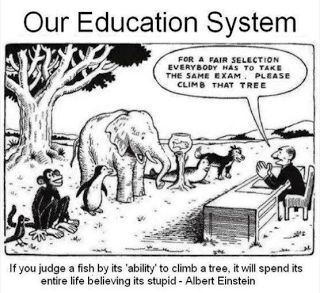
How we treat children isn’t fair. Despite the lip service paid to their rights, children are still discriminated against in every aspect of their rising levels of child poverty, underfunded and outdated education and childcare systems, controlling parenting practices, and political systems that exclude their voices on issues which will affect them most — not least the climate crisis.
Children are not passive victims of oppression, but their resistance and struggle for equality has been largely ignored by the wider social justice movement — until now. In this groundbreaking manifesto, Eloise Rickman argues that it’s time to stop viewing children as less than adults and start fighting for their rights to be taken seriously.
Radical, compassionate, and profoundly hopeful, this powerful new book signals the start of a long-overdue conversation about how we treat children. Featuring practical solutions and the voices of children and adults who are working towards them, It’s Not Fair is a call to embrace children’s liberation and the possibility of a better, fairer world.
Adultismo: um modo de ser no mundo que privilegia o adulto em detrimento da criança e impõe a ela todas as formas de opressão.
Vc já parou pra pensar como a sociedade oprime as crianças? Da relação entre pais e filhos pautada pela hierarquia de poder, onde os pais educam com punições, castigos e recompensas para “disciplinar” a criança que precisa ser “ensinada” a conviver em sociedade; passando pela escola opressora que perpetua práticas atrasadas de ensino e onde as crianças são publicamente envergonhadas e fortemente controladas; e terminando no espaço público e político que ignora a voz das crianças e seus direitos mais básicos.
Eu sempre combati adultismo e me esforço pra criar meus filhos de forma respeitosa. Mas nunca tinha lido um livro que abordasse essa questão de forma tão ampla e bonita como a Eloise Rickman faz em “It’s not fair - why it’s time for a grown-up conversation about how adults treat children”, numa tradução livre seria “Não é justo - porque é hora de ter uma conversa entre adultos sobre como os adultos tratam as crianças”. Não se enganem: esse livro não é um livro sobre criação de filhos. É sobre o tratamento desleal dado as crianças em todos os setores da sociedade, o que é inconcebível! Lembrando que as crianças são aproximadamente 1/4 da população mundial. Diz a autora:
“"Como sociedade, estamos lentamente melhorando em identificar injustiças como sexismo e racismo, mas o adultismo — a opressão estrutural de crianças por adultos — tem sido amplamente ignorado. As crianças sofrem com a falta de direitos de propriedade, barreiras para obter representação legal e a necessidade de ser representada por cuidadores para acessar certos tipos de serviços ou assistência médica. Elas ganham menos dinheiro fazendo o mesmo trabalho que os adultos e, em muitas jurisdições, as crianças são as únicas pessoas que podem ser legalmente agredidas... elas rotineiramente têm sua autonomia corporal violada, por exemplo, ao serem forçadas a usar roupas que não querem usar... a maneira como tratamos as crianças não é justa..”
Um livro absolutamente essencial e revolucionário que convida os adultos a agir em defesa das crianças, seja na política pública, no sistema educacional, na crise climática e traz ainda argumentos fortes para reduzir a idade mínima de voto pra (porque não?) 5 anos. Eu sei, parece absurdo essa questão da idade mínima pra votar tão baixa, mas os argumentos trazidos no livro são muito interessantes e comparam a evolução histórica do sufrágio para outros grupos, como mulheres, analfabetos e negros.
O capítulo sobre o sistema educacional, particularmente, me emocionou. E me revoltou também. Porque o desrespeito à infância infelizmente ainda é regra (e aqui a minha crítica não é ao professor como pessoa, mas a todo um sistema educacional arcaico). Eloise cita o exemplo da proibição das crianças irem ao banheiro livremente durante as aulas na escola. Vcs tem noção do absurdo: crianças tendo que pedir permissão para ir ao banheiro! Quer maior violação a direitos humanos do que essa? “Ah, mas é que se a escola liberar vira bagunça, as crianças pedem pra ir a toda hora, uma atrás da outra, e atrapalham a aula.” Mas aí cabe a escola se perguntar: porque essa aula está sendo tão desinteressante pras crianças que elas preferem ir pra um banheiro público fedido do que ficar dentro de sala de aula? E essa questão do banheiro se aplica a todos os “problemas de disciplina”. Os adultos vêem o comportamento indesejado de uma criança, ou seu descontrole emocional, como algo que tem que ser domado, polido, disciplinado. Quando na verdade deveriam ver como um pedido de ajuda e ter empatia pra descobrir o que está por trás daquele comportamento. Se mudássemos o olhar pra criança (e aqui eu incluo os adolescentes nesse conceito) para reconhecer que elas são intrinsicamente boas, gentis e capazes, e que se não agem de forma correta é porque precisam de acolhimento, afeto e orientação, seria uma revolução na forma como educamos as crianças. A revolução do afeto, a educação para a paz.
No final do capítulo sobre o sistema educacional a autora traz uma pesquisa publicada no jornal britânico Guardian que foi ouvir crianças entre 5 e 18 anos sobre o tipo de escola que elas queriam. Algumas falas das crianças são icônicas: Rowan de 12 anos diz - “Bullying é errado mas as pessoas não percebem que na verdade os professores fazem bullying com as crianças mais do que vc imagina!” E Miriam, de 15 anos, mais sensata que a maioria dos adultos - “Na minha escola ideal, toda a filosofia que domina as escolas seriam derrubadas. Nós não seremos mais tratados como um rebanho de algum tipo idêntico de animal esperando para ser civilizado antes de ser solto no mundo. Será reconhecido que esse é o nosso mundo também”.
Eloise propõe uma profunda mudança na mentalidade da sociedade como um todo e propõe um novo olhar sobre a “desobediência” infantil:
“Mudar a maneira como pensamos sobre as crianças e perceber o adultismo que nos cerca não é fácil. Nós nos ajustamos ao adultismo pela maneira como fomos criados, educados e socializados. É tão normalizado que quando as crianças resistem ao controle e à opressão dos adultos — quando nos dizem que estamos sendo injustos, quando se recusam a ir à escola, quando discutem, quando se agitam, quebram regras e gritam demais, quando desobedecem — nós as rotulamos como necessitadas de correção, treinamento ou punição. Em vez de sermos gratos às crianças por lançarem luz sobre dinâmicas de poder desiguais e práticas opressivas, buscamos acabar com sua resistência em nome do desenvolvimento, boas maneiras e disciplina.”
Eu podia ficar horas falando desse livro que tanto me tocou, mas termino com outra citação do livro:
“As raízes de grande parte da violência que vemos na sociedade podem ser rastreadas até a dominação, humilhação e impotência que muitos de nós vivenciamos quando crianças”. Muito se discute sobre bullying nas escolas, mas 99% dos adultos não enxerga que quem começa e perpetua o bullying são os própria adultos.
Quem lê em inglês, compre pra ontem esse livro! E mandem para quem vcs conhecem, pra pais, educadores, pras editoras brasileiras (esse livro PRECISA ser publicado em português). Vamos juntos combater o adultismo e defender a infância e o direito das crianças de ter voz ativa no mundo.
A really extraordinary book - so well-researched and compellingly argued, and ultimately so hopeful. Made me think about so many things I hadn’t thought about before. It seems to me this is a really crucial read for parents / guardians / educators (but I’m none of those things and I got so much from it!)
This book may serve as a decent introduction to children's rights for people who have never considered the topic before and thus aren't familiar with some of the very basic concepts (the school system is not designed with children's best interests in mind; children are socially and politically voiceless; it is wrong that children are considered property of their parents) but that's about all it is. If you have given any kind of thought to the subject before, then this book is going to seem somewhat facile. Rickman writes with the best of intentions, and she clearly understands the concept of privilege academically, but her own family situation - a two-parent household with one child who does not (from what she writes here) have any kind of social or academic challenges - makes her utopian view of parenthood seem more than a little silly. Never punish your children! Let your children decide what to have for dinner and when to go to bed! Children should vote from birth! I'm glad Rickman has been able to raise her daughter in an environment where she's empowered to learn and explore, but most families simply do not have the kind of resources that would make that upbringing possible. I think of the child I was - mentally ill, learning disabled, socially behind my peers - and know that, if I were raised according to Rickman's principles, I would have simply never emerged from my bedroom or eaten anything but Dunkaroos or learned how to add two plus two. It's a noble goal to want to empower children in all areas of life, but her suggestions fundamentally misunderstand the fact that children require structure and boundaries in order to feel safe, and are not yet cognitively developed enough to understand why it's a bad idea to stay home playing video games all day. At the age of ten, I was not able to mentally connect staying up all night with feeling crabby the next morning. (And no, Eloise, denying the vote to children is not the same as denying it to women or Black people.) There's no real intellectual or political rigour here, just a lot of "wouldn't it be nice." It would be nice! Unfortunately, it is also impossible.
TLDR: • The Blueprint of Domination: Adultism is the foundational "first injustice" that provides the structural template for every other form of systemic control we encounter later in life. • Adultism: We have normalized a culture where children lack basic property or voting rights and are often afforded less bodily autonomy than many household pets. • Historical Parallels: The child’s status mirrors the historical legal erasure of women, using the school as a "veritable barrack" to drill minds into submission. • The Labor Trap: Agriculture and industry murdered free play to transform children into "plastic human dough," preparing them for a lifetime of repetitive labor and obedience.
It has always been striking to me that while contemporary political discourse has increasingly integrated critiques of racial, gendered, and economic stratification, the systematic marginalization of children remains as a constant all over the world. In a way Rickman's critique shows that it is the "first injustice," and thus serves as a template for all subsequent forms of coercive control. She defines adultism as "the structural discrimination and marginalization of children by adults". Going on to explain that this is not a collection of individual parenting failures but as a pervasive political phenomenon that prioritizes adult preferences and ways of thinking over the fundamental rights of the young. Adultism represents an oppressive hierarchy where the status of the child is characterized by a lack of social, legal, and political power.
Adultism: It Is Not Fair It is scary that children are the only group of people who cannot vote, have no property rights, and whose bodily autonomy is routinely violated through legalized corporal punishment and coerced routines. Children can literally say "I don't want to eat this" and the response is "But you need to eat it" or "I don't feel like sleeping" and the response is "But you have to go to school tomorrow", and so on. Even with animals, using just sounds, we understand that they, for example, want more food and give it to them. We don't tell them "you've had enough to eat, now go to your room" (I know of course, animal abuse is real too, but I am talking about how many parents treat their pets as more autonomous than their children). Furthermore, Rickman describes how "hating children" is completely normalized. You can easily find people that say things like: "I just really dislike kids" and no one bats an eye, but replace kids with any other group and it's an instant red flag. Signs can say "No Children Allowed" without any justification for segregation and no one even thinks about it. Children can directly say "I don’t like this" or "this is not fair" and people can proceed to ignore their explicit wishes and opinions nonetheless without anyone thinking about it twice.
Oppressive Hierarchies Are "Normal" Until They Are Not Rickman mentions in the book how this structural marginalization mirrors the historical "coverture" of women, where their legal existence was subsumed by fathers or husbands, effectively rendering them "lesser humans" requiring male management. This idea really brought to mind Emma Goldman, specifically how her anarchist feminism highlights that true liberation can only exist when women are structurally freed on all levels (family, workplace, church, etc.). Goldman points out that the tragedy of woman’s emancipation often lay in its failure to achieve "true freedom", trading the domestic sphere for a professional one that still demanded submission to a "yardstick" of respectability. Similarly, the modern child is caught in a system where their progress is measured solely by "performance that can be scored and compared" across students and nations, rather than true learning. Goldman’s description of Ibsen’s A Doll’s House, where Nora realizes she has been treated as a "doll child" by her father and husband, provides a powerful metaphor for the adultist treatment of children. The child is not seen as a primary existence but as a "satellite" of adult needs. Goldman directly critiques public schools as a "veritable barrack" where the human mind is drilled into submission to "social and moral spooks". This analysis aligns with Rickman’s observation that even "gentle parenting" models often fail to analyze the power relationships at play, assuming it is "normal" for adults to hold total authority and set all the rules. Nowadays if someone says women shouldn't vote because they are lesser than men and thus need their autonomy restricted, we would be shocked (well… maybe not in the current political climate). But, restricting the autonomy of children and teens and enforcing a rigid hierarchy on them is accepted as completely normal.
Dehumanization and Colonization The dehumanization of the child is facilitated by a specific colonial vocabulary. Adults often attribute malicious intent to children's natural behaviors, using descriptors like "manipulative," "attention-seeking," or "spoiled" to justify the suspension of their rights. This process brought to mind Fanon as he describes in the colonial context, the "numerus clausus" applied to the human race: the principle that the oppressed are not quite "fellow men" and thus can be enslaved, managed, or "trained" without violating the universalist values of the dominant group. Here the dominant group are adults, treating their children like colonial subjects. Fanon’s The Wretched of the Earth describes a "compartmentalized world" divided into the zone of the settler and the zone of the native. This divide is strikingly applicable to the relationship between adults and children. The "adult world" is the zone of movement, and of political agency; the "child world" is a place where "truth stands naked," but is constantly cloaked by adultist "bewilderers" and "moral teachers". Rickman’s definition of adultism as the prioritization of adult needs (e.g., wanting the table clear of paints or wanting toast instead of rice) can be seen as an application of the "language of pure force" that Fanon identifies as the only language the settler speaks to the native. Just as the colonial administrator uses the policeman as an "instituted go-between," the adultist world uses the teacher and the school system to "remind the masses constantly that the government expects from them obedience and discipline".
The Educational Industrial Complex When I read Peter Gray's Free to Learn a few years ago, I was already convinced that traditional schooling is oppressive and amounts as a prison. Rickman here, takes this point further, while quoting and expanding on Gray's ideas. Rickman particularly points out how forced schooling amounts to imprisonment and thus "a total violation of autonomy". Gray has already pointed out extensively, how children's natural curiosity will drive their learning and growth. Making an argument that democratic free schools (he uses the Sudbury Valley School as his prime example) are the model that we should aim for. Rickman goes further, pointing out that adultism as an overarching hierarchy doesn't just exist in school but in society at large. The traditional school then is primarily a tool of the oppressor teaching that hierarchy is natural, and that obedience is the highest virtue. Kropotkin observed that in both animal societies and "primitive" human clans (he uses the word not me), the assembly of the young for play was not a "struggle for existence" but an exercise in collective intelligence and solidarity. Adultism, by imposing competitive grading and age-segregation, actively sabotages this evolutionary instinct for mutual aid. I feel like it is important to point out that Gray already discusses in his work that the history of adultism is inextricably linked to the materialist requirements of agricultural and industrial expansion. He discusses how that for 99 percent of human history, during our era as hunter-gatherers, "trustful parenting" was the norm. In small, egalitarian bands, children were free to spend their days in self-directed play and exploration, acquiring the complex skills of hunting and gathering without coercive training. The transition to agriculture approximately 10,000 years ago introduced a profound rupture. Farming required repetitive, unskilled labor, tasks that children could perform but which they naturally resisted in favor of play. Consequently, child-rearing shifted toward "will-breaking" and the cultivation of obedience. During the industrial revolution, poor children were viewed as essential labor assets (sadly, as Rickman does point out this is still the case for many). When compulsory education was finally introduced, it was not purely out of a humanitarian impulse to end child labor, but as a means of social control. This history provides the context for Gray’s "school as prison" thesis: the mandatory nature of education is the direct descendant of the labor laws that once forced children into mines and factories. The school became the secular replacement for religion in the task of maintaining social order, shaping "little plastic lumps of human dough" into an obedient citizenry.
The Abolitionist Imperative for the Child Angela Davis’s Are Prisons Obsolete? challenges the "naturalness" of sequestration as a social response. Davis argues that because the prison is integrated into the "corporate and economic fabric of society," its historical obsolescence is difficult to recognize. The same is true of the public school. Gray asserts that "school is prison" because it is a place of involuntary confinement and restriction of liberty. The only difference, he notes, is that "to get into prison you have to commit a crime, but they put you in school just because of your age". Rickman would take this even further, basically saying that just because of your age, for your entire childhood, you are effectively a prisoner. She argues that the parent-child oppressive hierarchy can continue to exist even after you become an "adult". Rickman’s solution focuses on creating a "rights-respecting culture" and bringing children into the "messiness" of decision-making. This means advocating for an expanded bill of rights, decreasing age limits for voting, allowing for a "Children's Parliament", and many other reforms. Of note, I respect her call for children to have a voice in fixing climate change, which will affect them for longer than any of the politicians deciding the planet's course. I, of course, would argue that these reforms are important but just like other hierarchies our aim (as anarchists, especially) should be to abolish them completely. To achieve this revolutionary outcome, however, we should first understand and acknowledge the injustice and the oppression, the enemy that we are facing.
I think the Epstein Files and other similar news have brought to our attention that teens and children are far from safe in our current world. Basic rights that we all agree on are not even being provided, let alone the equality that Rickman argues for. Challenging adultism will require more than "simple tweaks" to the daily family schedule. It requires what Fanon calls a "program of complete disorder": the total deconstruction of the colonial and materialist boundaries that define the "colonized" as a managed object rather than a human being. We can start in the here and now by shifting our mindset and by utilizing prefigurative politics. This means recognizing that "forced education" is a denial of liberty based on age, and that we must move toward the "fierce egalitarianism" of the hunter-gatherer in every way possible (unschooling, anarchist schools, etc.). Furthermore, we need Kropotkin’s vision of organic organization based on the "creative genius of the masses," where children and adults interact as equals in autonomy and in rights (starting with our own relations and attitudes). Only when we stop viewing children as "plastic human dough" to be shaped by the "social kneading-board" can we build a society that is, in Rickman’s terms, truly "fair". Until then, adultism remains the template for all human dehumanization, the first lesson for a lifetime of managed submission. Everyone needs to read this book.
Difficult to review as the first few pages plus skipping back and forward randomly didn't say anything that resonated with me though I do believe we underestimate the intelligence, inate wisdom, innocence and honesty of the children we are lucky enough to have in our lives. It seemed to understimate just how hard and exhausting and scary it is to be a good parent, whatever that is, and the fact that despite how hard we try we can't avoid hurting or disappointing them sometimes. There is also the role circumstances and/or fate plays. However this is not a conclusive review as I ended up not finishing it. So, two stars missing, one for seeming to oversimplify a hugely complex relationship, and one for being written in a way that failed to keep me reading. But, repeat, I did not finish it.
A well researched and thought out book, enjoyed it very much. A lot of information to take in, I would have some bullet points at the end of each chapter to summarise or a ‘manifesto’ at the end of the book as a key takeaway. There was also one key comment made about the authors own parenting that didn’t need to be in there as I felt it alienated the reader and it was difficult to read on after that, but I’m glad I did as there are some great messages throughout the book
This was a really well researched, fairly balanced insight into something I knew was important to me, but I’d never properly considered. I disagreed with some of Rickman’s arguments, but found lots of them really thought provoking🤓🤓🤓. Sometimes her solutions to problems i.e. increasing funding for certain services etc. seemed much more easier said than done, but as far as non-fiction goes this was an accessible, interesting read.
I bought this for $1 on the kindle store because I needed to hit 5 card transactions in a month xx
I started reading it out of curiosity and was intrigued by the somewhat radical take on the autonomy and freedom suggested we lend to children. I read on, and enjoyed the depth of research and sensitivity given to the intersectional experience of the child.
Reading this has really helped me to feel more empowered in and trusting of my child centred teaching pedagogy and beliefs about child-raising.
“I like the idea that there is no such thing as other people's children; that we must recognise our duty of care towards children and that we should strive to be in solidarity and community with them. As adults, we collectively have the voice and means to challenge adultism and contribute to children's liberation — not just for our children, but for all children.”
The writing did feel more like a persuasive uni essay, as opposed to an honest non fiction book, but I enjoyed it all the same.
"But how often do we really listen to children when they call out injustice – and how often do we make changes to our behaviour based on what they are telling us?" As a child-free woman who is absolutely guilty of adultism, this book has challenged and radicalised me. Everyone who aspires toward a more equal society should read this.
This book made me think. A lot. I started it and felt that “oh dear this is going to be paradigm-shifting” feeling. Well researched and clearly communicated ideas. My first time hearing of “adultism”. Made me question my beliefs about children and informed me about children’s rights.