First, Do No Harm is a coming of age story that follows the journey of April, a gutsy and imperfect teenager facing the harsh realities of the adult world. April's story is one of tender and heart wrenching consequences, forceful and intense truth and a passionate tangle of relationships that show us no passage into adulthood comes without the stinging pain of change.
Content This is adult fiction with mature themes. Please read at your own discretion and ruthlessly DNF if the content (themes of sexual violence) triggers you.
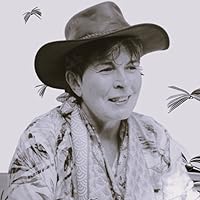
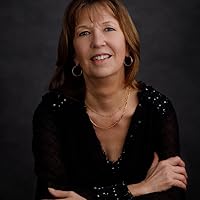
Freya Kissane is the author of First, Do No Harm, a heart wrenching novel about a painful transition from adolescence to adulthood and the hooks that catch you unaware and change the course of your life forever.
First, Do No Harm is Freya’s debut novel and she is currently working on her second novel, a process she documents on her YouTube channel.
Freya lives in Sydney, Australia, where she writes in a room surrounded by books that inspire her. When she isn't writing, she enjoys steaming mugs of green tea, running and the occasional adventure to a new destination.
Sometimes it happens that I read a book by an unknown indie author, and I've often been surprised at how good they are. Some of them are better than popular bestsellers. One such book is First, Do No Harm by Freya Kissane, and it's a story that deserves to be read.
Presented as fiction but reading like a memoir (told in first-person from the perspective of April), the novel follows a young woman's coming-of-age journey through childhood and teenage years into adulthood. Early sections cover relatable territory—feelings of being unlovable, secret crushes, an anorexic episode—alongside more serious experiences of sexual abuse. These "typical" teenage moments serve a clear function: they ground the story in ordinary life before everything unravels.
The writing is straightforward and easy to read, with many short chapters that keep the pages turning. Kissane effectively shifts tenses later on, using present tense for the most traumatic events to heighten immediacy. What stands out most powerfully is the blurring of reality: from the moment of April's breakdown and psychiatric hospitalization onward, it's often difficult to tell what is real and what is imagined. This confusion isn't just plot—it's experiential. You feel April's disorientation, which is both compelling and unsettling.
The book functions primarily as the author's way of processing deep trauma, which makes certain passages raw and potentially very difficult for readers who have similar experiences. Content warnings for sexual violence, suicidal thoughts, and mental health crises are appropriate and should be heeded. Supporting characters often feel more like caricatures (many referred to by nicknames such as "Evil Science Teacher") than fully fleshed-out people, which can make the narrative feel somewhat isolated and focused inward on April's perspective.
While the title suggests a strong critique of the mental healthcare system, that element felt secondary to me compared to the psychological portrait of living with blurred reality and unresolved trauma. The book contains some remarks that leave you thinking, such as this passage:
"Moments that change your life are like that. So mundane, you never blink twice as they’re happening. Nothing about them says sit up and pay attention, I’m going to be important later. They’re glossy, and microscopic but undoubtedly they are there."
The story doesn't offer neat redemption or easy answers, mirroring how real healing is rarely tidy. This honesty is one of the book's strengths, even if it leaves the reader unsettled.
I couldn't help comparing it to *The Boy in the Cellar* by Stephen Smith, which touches on overlapping themes of abuse and institutional failure. Both are raw and impactful, though *The Boy in the Cellar* pushed me harder to examine systemic issues.
In summary, "First, Do No Harm" is a brave, intimate, and at times confusing debut that immerses you in the protagonist's fractured experience. It's not a light or polished read—there are signs of hasty writing—but its emotional authenticity and willingness to sit with discomfort make it memorable. If you're prepared for heavy themes and value stories that prioritize truth over comfort, this is worth your time.
First, I am not a fan of first-person narrative. It’s really popular at the moment and often reads as an unfiltered stream of consciousness. This is not the case for Freya Kissane’s ‘First, Do No Harm’. This is a novel written from the protagonist’s perspective, yes, but it is a psychologically complex coming-of-age story. Kissane presents Australian April Matthews as she navigates the cliched transition from adolescence to adulthood. We start with a fairly raw depiction of everyday life (complex friendships, school tensions, crushes, etc.), but this prosaic scene rapidly descends into something much darker. Kissane does not shy away from childhood abuse and sexual violence and other traumatic accounts (there is an appropriate content warning), leaving the hard-and-fast division between truth and delusion hard to spot, especially when April finds herself in a psychiatric facility. This book does not have a neat story arc; it does not end in redemption. Instead, it is more life-like, more real, leaving the reader with a sense of the possible lack of resolution many survivors face.
April is compelling and almost-painfully believable as she voices the narrative. She is a victim. She is a fighter. She is that survivor. Yet despite her struggles, she is also a redeemer, determined to protect others from similar harm. Her thoughts are introspective and sometimes detached, and her mental illness sometimes makes her unreliable. She is a stark contrast to the other characters, who ghost in and out of her story, leaving us with the merest impression of their physicality. This is to best effect with the nicknames she uses (no spoilers: these are a delight) as April distances herself from their actuality. Kissane does this so well that we almost fail to notice April’s isolation.
This book explores a broad range of unsettling themes head-on. We have no doubt about the many facets of trauma and survival. Kissane examines how early abuse can shape memory, identity and a simple perception of reality. This is about mental health, and we see the whole gambit: hallucinations, paranoia and the blurring of reality and something that only exists inside the hero. April’s coming of age is reflected in a harrowing mirror: it is brutal, full of betrayal and institutional failure, all the while she is learning self-preservation. Kissane does a great job here too: wielding language carefully, almost with surgical precision, as April’s stylistic voice colours our view of her passage.
At its core, ‘First, Do No Harm’ is a powerful, emotionally charged book that will leave a lasting impression. Kissane shows her mettle as she tackles its complex subject with honesty and just enough compassion. I warmed to the journaling style in a few of the short chapters, though I never quite thought I was reading an actual secret diary. I did, on occasion, have to flip back a few pages to be sure I’d read it properly, but that’s probably more a view on my reading hours. I found this to be a bold, thought-provoking and abiding exploration of a theme I am lucky enough to know very little about.
Shattering, Beautiful, and Unforgettable Freya Kissane writes with such unfiltered honesty and emotional precision that you feel every tremor of her journey: the confusion, the longing, the small moments of youthful magic, and the devastating fractures that follow when trust is violated, and institutions fail the people they’re meant to protect. From the opening pages of First, Do No Harm, Kissane captures the fragile intensity of young love and identity. Her reflections on “the moment that mattered” at a train station where hope and possibility spark like a kiss in the rain are tender, evocative, and recognizable. Kissane distils adolescence into its purest elements: the masks we wear, the versions of ourselves others invent, and how a single fleeting experience can become a touchstone for years. But the heart of this memoir lies in the labyrinth of fear, confusion, and gaslighting that descends when a young woman realizes that something in her world is dangerously wrong. Kissane’s descriptions of feeling watched, undermined, or invaded convey the raw psychological toll of not knowing whom to trust. The scenes involving hospital stays, misplaced belongings, and warnings scrawled in marker evoke a deep sense of vulnerability. What is extraordinary is Kissane’s structuring of these experiences as she folds in dark humour, self-awareness, and even surreal adventures, such as her unlikely collaborations with Rosemary and Mark as they “solve problems” from hospital armchairs. These detours into creativity and escapism show how the mind fights to survive when reality becomes unbearable. They also highlight one of the memoir’s central themes: the importance of being taken seriously, especially when you have no proof beyond your own fear. Kissane also touches, with great sensitivity, on the aftermath of violence. Rather than dwelling on the event, she focuses on what follows: the numbness, the disorientation, the loss of innocence, the painful silence. She captures that universal moment victims describe—when the world turns grey and ordinary tasks feel impossible. Her insight that the real wound is often in the aftermath rather than the act itself is quietly devastating. One of the most powerful threads running through the book is the cost—and courage—of telling the truth. Kissane quotes Maya Angelou’s famous line about the agony of the “untold story,” and her entire memoir becomes an act of stepping into the light. She acknowledges the risks, the pressure to stay silent, and the people who tried to ensure she never spoke. Yet she writes anyway. Kissane does not frame herself as a triumphant hero, nor as a figure of tragedy. Instead, she offers a portrait of someone learning to live with the shadows while still seeking colour, hope, and a sense of self-worth. Kissane’s gift for storytelling comes to life in sharp, lyrical, often poetic prose as she captures fleeting sensations with the precision of someone who has spent years examining her memories from every angle. She balances vulnerability with wit, intellect with emotion. The writing is alive. First, Do No Harm is deeply courageous, beautifully written, and unforgettable.
I am torn on what rating to give this book, so I am going with a solid 3.5, which rounds up to 4. Starting with the good, the author has a very distinct voice, and I enjoy her writing style. While there are inconsistencies that another round of editing would have fixed, I was very engaged with the first half of the book. The story was interesting, even though it feels like an anthology of unconnected stories about the same character; it had enough throughlines to make me want to continue reading. The first half, or until we get to the college story with the rich boy, was very enjoyable.
Then the second half goes off the rails. I understand what the author was trying to do; a horrific event clearly happened to the MC, and she becomes an unstable/unreliable narrator. These stories do an excellent job of establishing that she is dealing with a traumatic event, but they would have benefited from more breadcrumbs, leading to a climactic reveal of what actually happened. Instead, we get more of a dreamlike explanation of something terrible that happens to the MC after she has already been committed to a mental ward. As a reader, I was distracted trying to figure out what had happened, which took away from my understanding of what was currently happening.
The book also ends rather abruptly with no real resolution for the character. Now, I understand that in real life, this happens all the time. However, this is a novel, not a biography. I struggled to understand the real impact of the traumatic events on the MC. In fairness to the author, she is only 27, so she might not know what the real impacts are on her and her life, but there is certainly enough material available for her to draw some conclusions.
Strangely enough, this is one of the few books I have read that is simultaneously too short and not long enough. Ultimately, the final chapter was not earned. If this is a work of fiction, it deserves a more concrete ending. If these stories were based on real-life experiences, they would have benefited from a few more years of separation, maturity, and life experiences before putting pen to paper. Either way, these chapters should have included more fleshing out, more world-building. It reads like a second draft, not a final draft.
If this is a true story, I commend the author for having the courage to speak about her life experiences. Her writing is excellent, and I would be interested in reading more of her work. Hopefully, her next book goes through a more rigorous editing process so her words can shine even brighter.
Once in a while, a novel comes along that really makes me think. That’s exactly what happened to me while reading ‘First, Do No Harm’ by Freya Kissane. From the opening pages, we’re introduced to April, a coming-of-age protagonist whose voice is so raw and direct it doesn’t even feel like I’m reading a novel—it feels like a direct translation of actual human experience. The writing is so visceral that I constantly had to remind myself I was reading fiction, not a personal memoir. Well done, Kissane!
At its heart, this short novel explores how holding onto the pain of trauma affects a person from the inside out. Kissane masterfully illustrates that the deep emotional distress linked to childhood abuse is like an iceberg; only a tiny fraction is visible on the surface, while the vast majority remains hidden. We learn early on that April has a deep passion for ice skating, which brings her joy. But she’s also carrying an immense psychological burden from being abused as a young girl and witnessing abuse around her. Disillusioned with the world, she tries to bear the weight of all that cruelty alone, attempting to protect others at the total expense of her own well-being. It’s a moving, heavy depiction of a young person turning past trauma, loneliness, and the pain of others inward. As she grows older, this unresolved pain makes it incredibly difficult for her to connect with others, completely hindering her ability to form normal relationships.
Unable to control the world around her, April tries to control her own life instead, leading to a severe and growing struggle with mental illness. Her journey takes her through a profound psychological breakdown that lands her in a mental health ward. Here, the boundaries of reality become completely blurred. I found it difficult to tell what was actually real and what April was imagining. I’m sure this was deliberate on the author’s part.
Ultimately, it’s a vital story of resilience and surviving dreadful things. April’s motivation for sharing her story is simple: some narratives just must be told, even when they’re painful to confront. The book serves as a powerful reminder of how important it is to listen to and believe survivors. When they aren’t believed, it’s like being re-traumatised all over again. ‘First, Do No Harm’ is a compelling must-read that forces us to acknowledge the hidden depths of human trauma, and it’s a story that will stay with me. Hearing these types of stories is critical to community education on a dark subject.
First off, I have to commend Freya Kissane for the bravery and emotional stamina and bandwidth that it surely took in order to write this novel. I vacillated back and forth so many times during my reading as to whether or not I believed the story was a novel based on true events (aka an autobiography of sorts) or whether it was all fiction but something the author believed could have happened. Either way, this was truly a life-shattering, heartbreaking story. The main character, April, recounts the many experiences she suffers in her life that are unimaginably difficult: from inappropriate sexual encounters with trusted adults from a very young age to a full fledge horrifically violent sexual assault. April has a heart that truly wants to help other girls know how to deal with circumstances they find themselves in that April can relate to. April's wisdom gained from experiences likely helps some of these girls heal from their trauma in ways April herself wasn't able to. April reaches out and tries to protect other girls because she has learned to recognize the signs of a relationship between a perpetrator and a victim. By the age of 18, April has dealt with so much trauma that she is committed to a mental facility. The people she entrusts her life and emotional health to only do further damage. I struggled to understand if what Freya narrated was actually happening during April's confinement or if it was her having dreams or hallucinations as she tried to deal with her PTSD and unmet emotional needs. Clearly, the author presents the mental health system as severely lacking in tools and resources to truly help people who are having mental breakdowns due to childhood trauma. The truth behind this book is frightening and would make me very cautious to every allow someone in the medical mental health field to treat me. The author uses amazing similes and metaphors to describe how April feels throughout the book. This wasn’t an easy or pleasant read, but whether it is fully a work of fiction or an autobiography wrapped in the packaging of a fiction novel, this book should be required reading for anyone who wants to work in the mental health field or anyone who knows someone who has experienced any sort of sexual trauma.
When I first saw this book, I thought it was a non-fiction novel about the Hippocratic oath because of the title and cover. As a fan of both Greek philosophy and history, I decided to take a closer look. However, “First Do No Harm” is not a tale about the history of medicine. Rather, it’s a coming of age story that is beautifully written in a way that is raw and deeply compelling. It’s an honest look back at a teenager’s chaotic hurdle into adulthood through the eyes of April, the narrator. It’s a tale about the harsh realities of adulthood and the stripping away of childhood innocence and naivety that is incredibly relatable to many people. It should be noted that this story deals with rape, sexual assault, and eating disorders. These themes may be triggering to some. But they’re necessary themes for the novel. Because it’s gritty, it’s real. And real life is messy. That being said, there were a couple places where I had to set the book down for a while. The book was magnificently edited and formatted. I could tell that the author put a lot of passion into it. However, I think it needs a new cover that’s befitting of the story inside. The reason I took off a star was because of the Omegle chat scene. it made no sense to me how April was able to get Mark medical help when she was in Australia and all she knew about Mark’s location was “somewhere in the United States.” It’s unclear what happened to him. Also, the time zone difference isn’t clear. Australia is anywhere from 14-20 hours ahead, depending on which time zone you’re in. Mark asks what April is doing up so late. However, assuming that April is talking to Mark at 10:45 PM when his friends leave, it would be between 2:30 AM and 8:30 AM. I might just be nitpicking at this point, but I feel like it’s a detail that should have been clarified. Now I feel like I’m in the middle of one of those math problems involving two different trains. For a section of the book, it becomes way too similar to the movie Mean Girls, which I guess is a good thing if you enjoyed that movie. If you’re wondering why you should take the time to read this book, I’ll let April answer that question for you: “Because this is a story that deserves to be read.”
This book is reminds me of when i was a teen. So it definitely fits in perfectly with the coming-of-age story genre. It's character-driven with a first person POV which immerses you into April's (the main character) feelings and personality. She's flawed, confused, and her internal conflict is understandable in all the right ways living in that that awkward in-between stage of becoming an adult and trying to make sense of who you are intrinsically as a person. Also, even though there is a disclaimer for mature themes, i'd still say with about 95% surety that readers wouldn't have an issue with it... unless the themes themselves are triggering to the reader specifically. There wasn't anything explicit so don't worry about that if you're purchasing as a gift. It's just to be aware that the book talks about certain themes, but this shouldn't be an issue at all for the age group it's advertised for.
I'd say the book definitely needs to be fine tuned and edited... just a little bit further to tweak and weed out any inconsistencies. Some persons might miss it, but i'm an avid reader and I noticed a few grammar issues, tense inconsistencies, and a few awkward sentences here or there, but still nothing too rough. The narrative itself definitely is strong enough to shine through though... but with some polishing, it would refine the book to an even higher level. And the COVER. Oh boy... The cover doesn’t do the story justice in the slightest. I would definitely say this is the biggest thing that needs to change for the most impact. I had no idea what the book was about just looking at it without reading the description. It actually gives off more non-fiction vibes to me. It doesn’t visually represent what the book is about or the emotion behind it, which is such a shame because the writing and character work deserve better presentation. A stronger cover would most assuredly bring in the type of readers this book deserves and calls for.
Despite those issues, the story is pretty good. It’s heartfelt, raw, and brings just the right amount of emotion to any coming of age book. With some polishing and a more fitting cover, this book could really stand out. Nice work!
For a lot of this book, I struggled to work out what it was actually about, not least because the description tells us almost nothing aside from it’s a coming-of-age story about a girl facing the world’s harsh realities. The title implied it would have something to do with the medical profession (and later on, it does), but this isn’t the predominant theme of the book. April recounts her life and all the traumatic things she has experienced, from witnessing the sexual assault of other young girls, to her struggles to form friendships, and ultimately, her own rape. She desperately wants to help and protect others from situations it’s implied she experienced herself, to the detriment of her own mental health. Just when it seems she may be starting to live a more ‘normal’ life, she becomes paranoid and suffers some sort of breakdown, ending up in a mental hospital. We never learn the nature of her condition, but we experience her delusions (hallucinations?) along with her, which makes it difficult to figure out what’s actually happening when a lot of things are going on. When she is assaulted by someone in a position of authority at the hospital, the story feels more grounded again, but it’s still a little difficult to tell which parts are real and which are imagined. The ending is quite bleak but there’s a glimmer of hope, which feels realistic for a story like this.
This book would definitely benefit from a copy edit. There are a number of spelling and grammar mistakes which sometimes took me out of the story. I also found it a little hard to connect with April, as she seemed somewhat distant from everything that was happening, although on another level, this did work well as it showed how she was forced to detach herself from it all in order to survive. It’s certainly a thought-provoking read that covers some difficult topics - it’s not graphic, but the author certainly doesn’t shy away from darker subjects. Although a little too introspective at times, there are also some beautifully written lines, and it’s an unflinching look at how unresolved trauma can break a person, even years after the fact.
This entire review has been hidden because of spoilers.
First, Do No Harm is a fascinating, gritty look at mental health and survival through April Matthews' eyes. Set in Australia, the story follows April from a perfectionist 14-year-old to a young woman battling the shadows of trauma and a literal descent into psychosis. It is a raw, unflinching, and deeply moving look into the mind of a survivor. Though it starts off like one, if you’re looking for a "light" coming-of-age story, this isn’t it. Or at least it doesn't end that way. Initially, the author brilliantly captures the specific, jagged edges of teenage life. Whether April is navigating the social minefield of ice skating with preteens or dealing with her truly Evil Science Teacher, the writing feels incredibly authentic. Mark's "911" sequence, as she tries to call 911 from Australia, particularly struck me; it perfectly illustrates April’s desperate need to fix things, even when she’s just a kid behind a computer screen. The story takes a sharp, dark turn when we jump to April at 18. Her "quest for perfection" masks a deepening struggle with disordered eating, paranoia, and a mental health crisis that eventually leads to a harrowing hospital stay. The chapter "Red Mattress Night" is admittedly very tough to read—it’s a visceral portrayal of assault and trauma—but it’s handled with a level of respect and "unfiltered" honesty that you don't often see. What I loved: The Character Voice: April is complex, witty, and deeply flawed. You really feel like you’re inside her head. The Realism: The author doesn’t sugarcoat anything. From "Burn Books" used to expose a creepy teacher and other repulsive men to the terrifying reality of a mental health breakdown, it feels incredibly real. The Themes: It explores the messy intersection of trauma, justice, and the "self-inflicted quest for perfection." A quick heads-up: The book goes to some very dark places, including assault and self-harm, especially in the later chapters. It’s a mesmerizing read that stays with you long after you finish the last page. If you appreciate raw, psychological fiction that prioritizes truth over "happy endings," pick this up.
In First, Do No Harm, Freya Kissane dismantles the romanticized notion of the "coming-of-age" story, replacing it with a jagged, high-stakes exploration of what it truly costs to grow up. Through the eyes of April Kissane crafts a narrative that is both a tender character study and a brutal indictment of the world’s indifference.
A Protagonist Rooted in Reality April is not your typical literary heroine. She is "gutsy" in a way that feels earned, navigating the transition into adulthood not with grace, but with the raw, stumbling energy of someone trying to survive a storm. Kissane excels at capturing the "stinging pain of change," portraying April’s journey through a lens of intense, forceful truth. The adult world she enters is not a sanctuary of freedom, but a landscape of "heart-wrenching consequences."
The Complexity of Connection At the heart of the novel is a passionate, often suffocating tangle of relationships. Kissane explores how intimacy can be both a lifeline and a weapon. The dynamics between characters are never black and white; they are messy, codependent, and occasionally destructive.
Tone and Atmosphere The prose is evocative and heavy with atmosphere. Kissane doesn’t shy away from "mature themes," and the "adult fiction" label is well-earned. The narrative carries a weight of "forceful and intense truth," making it a demanding read that requires emotional fortitude. It is a story that lingers long after the final page, particularly in its portrayal of how trauma shapes the architecture of one's identity.
Final Verdict First, Do No Harm is a powerful, albeit harrowing, literary achievement. It is a book for readers who prefer their truths unvarnished and their characters deeply flawed. While the themes of sexual violence necessitate a strong content warning, those who feel able to engage with the material will find a story of profound emotional depth and a striking new voice in contemporary fiction. April’s journey reminds us that while the passage to adulthood is often marked by loss, there is a certain rugged beauty in the survival that follows.
Trigger warnings this book contains descriptions of rape and sexual assault I am not quite sure what to make of this book. In part that's because it's not clear to me if this is fiction framed as a memoir, or a memoir passed off as fiction for legal reasons. A times the author makes both claims so it's difficult to be sure. And that's important to me because if this is memoir, and then this is a brave and quite harrowing account of real, or perceived real events from someone suffering trauma, if it is fiction then it is a not completely successful attempt to depict and explore important topics. For me the biggest problem is that the author is trying to tell too many stories. The first part and in my opinion the most successful part of the book starts of as a sort of Nancy Drew story except she is hunting for peadophiles. Here the narrator seems resourceful, brave and tough. There's a lot of good material here, but it's not explored enough in my opinion. I think this should have been to core of the book. I would have liked to have read more of this story. Then I thought, it drifts in to a sort of Donna Tart college girl story. I found that interesting too, but again not very well developed. Characters are introduced and then discarded. Next the story felt like a sort of flow of consciousness descent into paranoia and psychosis. It reminded of one of those sort of gonzo-psycho stories. Then the book changed again and reminded me of One Flew Over the Cuckoo's Nest story about life in a mental hospital, intertwined with a sort of power career girl story. And finally the rape. I felt this was very jarring. I found it is quite graphic and feels a little voyeuristic. Almost like body horror. I think there should be major trigger warnings about this. I found the book more successful when it describes the aftermath. I found all of this confusion and the jump in tone detracted me from the important central themes of the story about how man should treat women. Over all I found it a worthwhile read about how many women feel unsafe in today's society, but could have been much more powerful
First, Do No Harm is a short but deeply affecting novel that unfolds with a kind of quiet intensity—one that lingers long after the final page. From the outset, the story evokes an instinctive, human response: the desire to reach out, to offer comfort, to wrap the protagonist April in the kind of hug that says, I may not understand everything you’ve endured, but I understand your need to be held through it. That impulse becomes the emotional compass for the entire reading experience. For anyone who has witnessed a young person struggle with mental illness, the resonance is immediate and profound. At its core, the novel is a confessional exploration of trauma, survival, and the fragile resilience of a young woman whose life has been shaped—and repeatedly fractured—by violence, neglect, and psychological turmoil. April’s voice is raw, stripped back layer by layer, revealing a narrative that blurs the line between memoir and psychological fiction. Her journey through adolescence and into the sterile confines of a psychiatric ward is rendered with a clinical precision that chills yet never feels gratuitous. The infamous “Red Mattress Night” chapter is a threshold between safety and horror, written with such detachment that the emotional impact becomes even sharper. The novel’s coming-of-age elements are complicated by its darker themes—abusive relationships, predation, paranoia, and a violent assault—making it more suitable for mature readers despite its youthful narrator. Yet the writing remains accessible, immersive, and deeply character driven. April’s confusion, her blurred sense of reality, and her desperate need to be believed are portrayed with heartbreaking authenticity. While the book would benefit from another proofreading pass, its emotional truth is undeniable. It is a story that demands compassion—not just for April, but for every young person navigating trauma without the safety nets they deserve. This is a book that breaks you open, but also reminds you that looking away is a privilege not everyone has.
First, Do No Harm is a page-turner from the get-go. Freya Kissane’s chatty first person narration draws the reader into the story and her fluid writing and well-written, relatable characters sustain the interest. This is the story of April, a seemingly normal girl who encounters more than her fair share of abuse in her youth, particularly from men in authority. The story is written in the style of a biography and the realism suggests that elements are taken from the authors own experiences and/or painstakingly researched. The subject matter is brutal and, at times, extremely difficult to read, especially the horrific rape scene. No doubt the author intended this to be sickening, and she succeeded. It’s firmly planted in my mind. The early chapters of the book document Aprils late childhood and teens. This section doesn’t read so much as a biography, but more an account of the actions of a naive youth gifted with the benefit of hindsight. The chapters read as the story of what April should have done had she not been so immature. The actions depicted are those of a much older, more world wise person than young April could possibly be. This is clever writing, I think, it gives April another layer of vulnerability through her apparent need to idealise her recollection of past traumatic events, and the actions she took. It leaves the reader wondering what really happened, and who it really happened to? Did all this abuse happen to April? I loved this book and would have given it a five had I not been left feeling muddled by the later chapters set in the hospital. I get that April’s world fell apart and the lines between reality and fantasy crossed, but I lost track of characters as well as the plot. It’s not a major criticism, the chapters simply require a second read and I’ll do exactly that once I’ve recovered from the shock of that final vicious assault. Powerful writing, well done. I look forward to reading more from this author.
This entire review has been hidden because of spoilers.
Troubled teenager April faces a series of unpredictable coming-of-age encounters in this engaging, occasionally harrowing fictional memoir.
Abused as a young girl, April is socially awkward, introverted and plagued by neuroses stemming from her trauma. It fuels her relentless drive to better herself—most notably as an ice skater—and keeps her always on the move. It also compels her to act whenever she comes across someone committing sexual abuse. Her methods are sometimes messy, but that desire to stamp out predatory behaviour is in large part an attempt to regain control over her own demons.
It isn’t a simple as that, however. April inches toward romantic relationships with several boys as she grows up, but the spectre of personal disaster perches on her shoulder like a bird of ill-omen. Author Freya Kissane allows April a few years of relative sunshine before plunging her into a nightmare of paranoia, mental illness and hospitalisation. The darkest episode of all lies in there.
Strangely, though, it’s not as depressing to read as it sounds—well, the first two thirds, at least. April’s first-person narration is colourful and insightful. She sees the world through a quirky, very specific lens. Bruised but not beaten, she navigates complex adult situations with pluck and audacity. I didn’t always buy her bravery as an adolescent, but I understood why Ms. Kissane would want to portray her that way.
The writing is very good: lively and easy to read. It could have used a more thorough proofread, though. I felt the stalker subplot was a bit clumsy, and a sequence in the hospital involving extensive outside communication didn’t seem credible. But I found most of the book compelling. Dark and unsettling in parts, it held my attention throughout. I certainly had no idea what was coming next. And though it’s fictional, a great deal of it rings true.
Although FIRST, DO NO HARM by Freya Kissane is described in its synopsis as a “coming of age story,” I would place it instead in the genre of nervous breakdown memoirs. Like Charlotte Perkins Gilman's THE YELLOW WALLPAPER, it finds cause for the unraveling sanity of the protagonist in forms of oppression. In this novel, the protagonist and narrator April is driven to extremes by sexual violence which she both witnesses and experiences.
In the early chapters, this comes across in a fairly straightforward way. The incidents which the author describes are harrowing without being excessive in their details. The effect each has on April is related and forms a progression of traumas that lead convincingly to a detachment from reality.
Later, April becomes less reliable as a narrator, casting doubt on everything she has previously documented. The last chapters, which record incidents that seem to come from the delusions of a schizophrenic, give the reader little to hold onto. Paradoxically, the work simultaneously goes too far and not far enough into this perspective. It holds back in terms of its narrative voice which does not degrade or change in any noticeable way as April degenerates. But it also overreaches in that it lacks signposts to help the reader discriminate reality from hallucination. Salinger’s THE CATCHER IN THE RYE provides the best example of how to provide an objective framework for the reader within the first person point of view of an unreliable narrator.
Even so, the novel ably depicts the sense of threat that comes with being an adolescent girl in today’s world. And if April does not exactly come of age in the novel, Kissane shows her on a journey to a place that is both frightening and enlightening.
To start with, I'd like to say that I'm not surprised few people have picked up this book to review. I believe it might be in the wrong categories on Amazon. It is a coming-of-age story, but I would have also put it into young adult fiction, and although some of the content may be of an adult nature, I didn't perceive anything in the way of erotica or even romance.
In spite of those observations, this is a compelling and difficult read because of the biographical treatment of the main character April. You're drawn into this coming-of-age tale from the very start. April is a troubled teen, trying to get on in life and navigate her way through her challenging world into adulthood. She has friends, but no boyfriend and can't seem to find one. The boys she does encounter start off promising before turning out to be weird disappointments, and in fact some of the characters in the book all turn out to be pretty strange, while others have disturbing traits. It's a good thing they don't stick around long enough in the story. Life at home isn't great, either: April has a fraught relationship with her parents. Despite these obstacles, she manages to work her way through school and into university, until various triggers affect her mental health and send her on a frightening journey.
This book is a reflection of how someone's life can be turned upside down very easily by events and the price they can pay when they have no control. I cared very much what happened to April while trying to overcome the challenges she was forced to face.
A short book with not much in the way of characterisation, but altogether a page-turner.
April, the protagonist in this book, is an unreliable narrator. She admits as much because of her mental health issues, stemming from being abused as a child. So, we know from the outset that this story will not be for the faint-hearted. Are the nasty things that happen to April real or imaginary? That is the underlying thread throughout this hard-hitting tale.
Things begin to get unpleasant from the start. On a Thursday, April consoles a younger girl in her school when she sees her being sexually harassed by a teacher. Later, April saves another girl from being raped in the bathroom of the local ice rink. Although April is still very young, her voice and actions are far more mature than her years, due to her childhood experiences. Her voice is honest and sincere, lamenting a world filled with predators, which helps to create a believable character that the reader roots for.
The novel is written in a very matter-of-fact way, without sentiment but with just enough emotion to give the story a truth that resonates. Since the narrative distances itself from the horrible/sad/unpleasant/eating disorders, and paranoia events that occur, the impact of these heartbreaking episodes becomes sharper because of the detail and unsentimental way they are expressed. That is the power of this author's storytelling. Reserved, yet hugely impactful.
This is a well-written and thought-provoking book that lingers long after reading. A must for anyone young or old who is suffering, or has suffered from mental health issues, has been the victim of sexual abuse, or knows someone who has.
A thought-provoking and compelling psychological fiction
When I started reading this book it simply felt like the personal diary of a teenager moving towards adulthood. Soon there were clues to it being something psychologically darker and the lines between fact, fiction and fantasies became blurred. Author Freya Kissane segued improbable events into the narrative in such a convincing way that even by the end of the book I was still unsure whether I had read a mental health memoir or an unforgettable psychological fiction. As a reader, I could feel the protagonist April Matthews' pain and angst at not being believed or understood, and dismissed as a paranoid teenager. Her mental detachment from the most graphic circumstances made them easier to read.
I agree with other reviewers who have queried the classification as a 'coming of age' fiction as it's questionable whether this book is suitable for readers under 18 years, due to the adult themes of paedophilia, paranoia, and one violent rape scene. However, difficult as those themes are, they were conveyed in a way that felt almost dreamlike, due to the author's accomplished writing skills, which kept me turning the pages of this well-crafted story. Unfortunately, the book badly needs another proofread as there were many issues of typos and sentences with missing or repeated words, and that is why I've rated it four stars rather then the five stars the story and writing deserve. The book would be insightful for anyone working with teenagers or in mental health settings, and it's a thought-provoking and impactful read for those who appreciate character-driven psychological fiction.
I anticipated a simple story regarding youth, but this book offered something intense. Freya Kissane writes with a style that feels raw and unfiltered. It resembles a private journal found under a mattress and lacks the gloss of a polished novel. April Matthews is the protagonist, and she starts as a regular teenager dealing with school tension and complex friendships in Australia. The plot descends into darkness at a rapid pace. The author displays the world through April’s eyes, and the perspective is fascinating. The view is grim. The story explores mental health and trauma in a manner that strikes with force. You begin to question the difference between truth and delusion. I felt like I was losing my grip on reality with her. It is a wild ride through her mind as she navigates the transition from adolescence to adulthood. The way the narrative blurs the lines of reality kept me glued to my Kindle for hours.
The psychological depth in this novel is impressive. This is a somber story with a messy ending, but it feels authentic. April faces tough situations, and the book demonstrates the way memory can twist facts. I liked the way the author handled heavy subjects with respect. It is a solid look at survival and the invisible scars people carry. The way April describes the other characters adds to the mystery and isolation she feels. She is a fighter and a survivor. The writing is sharp and cuts to the bone. I thought about this story for days after I finished the last chapter. You should read this if you want a book that challenges your perception. It is a brave piece of fiction that feels true to life.
The story is gripping and at times emotionally heavy because of how closely it follows the life of the main character, April. From the beginning, the reader becomes involved in her journey as she struggles through her teenage years and tries to make sense of the world around her. April is a troubled young girl attempting to find her place in life while dealing with the many challenges that come with growing up. She has friends, but she doesn’t have a boyfriend and seems unable to form a lasting relationship. The boys she meets often appear promising at first but eventually turn out to be disappointing or simply strange. In fact, several characters in the story have odd or unsettling traits, though fortunately they do not stay in the story for long.
Home life is not easy for April either. Her relationship with her parents is tense and complicated, which only adds to the difficulties she already faces. Still, despite these struggles, she manages to continue her studies and eventually make her way to university. However, certain events and emotional triggers begin to affect her mental health, leading her down a frightening and uncertain path.
The book highlights how quickly life can change when circumstances shift beyond someone’s control. It shows the emotional cost a person may pay when unexpected events turn their world upside down. Throughout the story, I found myself genuinely caring about what would happen to April and hoping she could overcome the hardships she was forced to face.
Although the book is relatively short and does not go deeply into detailed character development, it remains engaging and easy to keep turning the pages.
This book follows a young girl, April, as she moves through some very hard moments while trying to grow up. April feels real, flawed, and emotional, and her reactions to the world around her often felt honest. I found myself caring about what would happen to her, even when I didn’t always agree with her choices. I will say that I didn’t always understand how she ended up in some of the situations she was in. At times, it felt like she was suddenly thrown into a serious situation and explanation of how she got there was very unlikely. There were also moments when information was shared that didn’t seem clearly connected to the main story, and I found myself wondering why it was included or how it would matter later. That confusion pulled me out of the story now and then. Even with that, I kept turning the pages. There is something very compelling about the emotional tone of the book. The feelings are strong, sometimes uncomfortable, and often sad in a quiet way. The relationships are messy and complicated, which felt very true to real life, especially during the teenage years. The story does not shy away from showing that growing up can hurt and that change often comes with consequences. Overall, this was a thoughtful and emotional read. While I didn’t always follow every detail or fully understand every situation, the heart of the story kept me engaged. It’s the kind of book that makes you think about how confusing and painful the step into adulthood can be, even when you don’t have all the answers.
Genre defying novel about a young woman’s journey. “First, Do No Harm” by Sydney author Freya Kissane cannot be easily pressed into categories that modern books are “supposed” to comply with. It is a story about April, a teen who struggles to bury past abuse. It is a coming-of-age story as April grows into a young adult hiding from her childhood trauma with a façade of perfection. It is a story of April’s awkward steps into first love. It is also April’s surreal journey in a psychiatric hospital where pills and her past conspire to bend her reality. It is a story of a broken girl. Real life doesn’t neatly fit into categories either. April’s character also fights against labels. She is far from perfect, can be aggravating, can be a champion of others who are abused, can be unreliable, can collapse under the weight of the life she tries to so carefully construct. This book feels like it might have been written decades ago, such as in the 1960s, when writers were free to create, experiment, and smash through expectations. The author took a risk writing a book that is sure to displease the algorithms. This book is also for readers who are willing to take a risk reading a book that disobeys approved genres, that addresses uncomfortable topics. “First, Do No Harm” is a challenging book. It requires thought. It requires stepping outside safe reading to discover the untamed, yet fascinating books living in the creative wilderness.
Wow. I’m very careful with handing out 5-star reviews. This was a 5-star book. You might be thinking, “But the cover.” Yeah, I thought so, too. I hope the author updates the cover. This story deserves a worthy cover. But okay, on to my thoughts. Um, wow. WOW. I was not expecting to be as absolutely addicted, intrigued, and shocked as I was. Have you ever picked up a book and then had no idea how you stumbled upon something so amazing? And then there’s the experience of having no idea how that story is going to end. It’s a brilliant novel that doesn’t follow an industry-genre formula. It’s fiction. Or is it? Is it really fiction? A combination of non-fiction and fiction? That’s the horror and beauty of this novel. It’s a work of art. I don’t need to tell you about the characters or about the story; that’s what the back of the book is for. But I can tell you I was deeply moved. One chapter is called “Chapter about Nothing.” Another was called “The Chapter that Feels Fake.” Just… incredible writing and creativity. In this novel, there were situations that, unfortunately, I have experienced myself. Not all of them, but enough to know this author has done her thorough research one way or another. I was outraged. I was angry. I was heartbroken and sad. I laughed. I cried. I was crushed. Extreme 5 stars for this amazing experience. Please consider charging more for your book. This story should go places. Well done.
The novel tells April’s story retrospectively and in her own voice. When the story begins, April is still a young schoolgirl, but she has already been abused, although this is never stated explicitly. The reader accompanies her on a traumatic journey through childhood and adolescence. Her perception is shaped by what she has experienced. As a result, you continually find yourself wondering what you are actually being told, what remains unspoken, and what must be inferred from the context.
This is precisely what makes April’s voice so convincing. She recounts what she feels and perceives, and what she herself considers worth telling. Details that an outside or more analytical narrator might explain are missing. These gaps make the novel authentic, compelling, and different from many other books dealing with similar themes.
The physical and sexual abuse is sometimes passed over, merely suggested, or revealed only through context. Nevertheless—or perhaps precisely because of this—the novel can be difficult to endure. The consequences of the abuse, April’s trauma, and her helplessness are experienced directly. Even readers who are comfortable with horror fiction should consider whether they can cope with this kind of psychological terror.
This book will be particularly rewarding for readers interested in psychology and unusual literary perspectives. For anyone able to cope with its disturbing subject matter, it is a clear recommendation.
Wow, what a beautiful, complex, and heartbreaking novel! While this isn’t the longest book, it certainly packs a punch and leaves a lasting impact. Although fictional, this book follows a memoir-style and walks us through the life of the protagonist, April. The story takes us through a variety of April’s experiences from childhood into adulthood that shape her into the woman she becomes, many of which are quite raw and painful. April’s character feels very realistic in the way her mental health is depicted from the trauma and abuse that she’s endured. In fact, I think this story does an excellent job at showing the lasting ramifications and invisible scars of abuse and how it can shape a survivor’s life in numerous ways even years after the event. To echo what others have said, I do believe that this book is currently a bit miscategorized on Amazon, as I certainly wouldn’t categorize it as a romance book. Additionally, there were a few scenes in the story where I had a little trouble figuring out what was real versus what was a potential hallucination of April’s. However, I enjoyed this book overall and I thought the writing style was beautiful. While this book got graphic in some scenes, I believe that it’s a very important read, especially for anyone who works with young adults and/or in the mental health field.
I bought First, Do No Harm because I work with young troubled teens and am always looking for a way to reach my clients. I also want to get into their minds. So I enjoyed this book, and was glad to see another reviewer say “This book is reminds me of when i was a teen.” I am not a teen, but I felt this book was authentic and this comment validates that. It is a unique story with a unique plot and that helps its authenticity. Right from the start the book has a good, engaging tone that draws you into the mystery of who April is. And I think April is many young people. We think of teens as having angst and friendship problems and love troubles. But there are many teens that lead a different kind of life. A life of loneliness and striving to do something (such as April ice-skates). They live in their own world and no one knows what goes on there. And many people have mental health issues. Now I think we should take the author at her word when she says, if reading this triggers you, stop reading. I wouldn’t recommend this for many teens that are struggling. Kissane is authentic in describing mental health issues. She has some realism in describing a mental heal institute. However, some parts go too far, unless I miss the point. And that may be the case. The author makes it clear it is a work of fiction, but adeptly makes it read like a young person’s diary.
This young author can certainly write. She has an easy style that keeps you turning the pages and not wanting to stop. This is a very personal account of a teenage girl’s disturbing experiences of sexual abuse and the sadly familiar scenarios of paedophiles hiding in plain sight. This sounds like a very difficult read when in fact, the opposite is true. Our protagonist April’s quirky and pragmatic attitude to life helps her as she battles abuse, eating disorders, and obsessional thinking. The first half of the book tackles these serious subjects bravely but also with humour. However, her reasoning for punishing innocent people to expose a school predator was puzzling. It did not sit well with the protagonist’s otherwise selfless intent towards others. Meanwhile, the second half of the book changes tack. Although still invested in her character, I was confused about events that took place in the hospital. Some of the events weren’t believable—for instance, the Rosemary and Mark situation, which led me to doubt April’s sanity too! Is she a paranoid schizophrenic due to past childhood traumas? Or is she a creative with amazing inner strength and capabilities in the face of impossible adversity? Either way, First Do Me No Harm is an intelligent, thought-provoking read, and Freya Kissane certainly has my attention!
A Mirror Held to Pain and Survival This book doesn’t whisper, it trembles, bleeds and demands to be felt. Through April’s eyes, we witness the brutal unmaking of innocence and the fragile reconstruction that follows. The first half of the book feels almost like reading someone’s private journal, full of teenage longings, awkward crushes and the subtle cruelties of growing up. But once April enters the mental institution, the tone fractures into something darker, more claustrophobic and deeply psychological. One chapter that haunted me was “The Rat.” It captures April’s paranoia with devastating realism, the creeping dread of being watched, the confusion between danger and delusion. Alec’s conversation with her about the stalker felt both terrifying and symbolic, as if the Rat represented the lingering trauma that keeps clawing back into her mind. The image of the 1950s house, with its hidden crawl spaces, becomes a perfect metaphor for the dark corners of memory that April can’t seal shut. Kissane doesn’t offer comfort or tidy resolutions. Instead, she gives us something braver, a portrait of survival in its rawest form. First, Do No Harm is unsettling, beautifully written and unforgettable. It’s the kind of book that changes the way you breathe for a while.
First, Do No Harm by Freya Kissane is a deeply moving and emotionally demanding coming of age novel that does not shy away from difficult truths. Through April’s voice, the reader is pulled into a life shaped by trauma, survival, and the painful process of growing up too soon. The writing feels intimate and raw, almost memoir like, which makes April’s experiences feel unsettlingly real. Kissane captures the long shadow of abuse with honesty and care, showing how its effects ripple through adolescence and into adulthood in ways that are not always visible or easy to explain. What makes this book especially powerful is its refusal to offer neat resolutions. April is gutsy, flawed, and human, and her emotional struggles are portrayed with sensitivity and realism. The pacing is tight, with every scene serving a purpose, and the prose is both beautiful and devastating. While some moments are difficult to read, they feel necessary and thoughtfully handled. This is not a light story, nor is it a romance, but it is an important one. First, Do No Harm is a courageous and unforgettable novel that will resonate deeply, especially with readers interested in mental health, healing, and the true cost of growing up.