Set in one of Tucson’s first tamal and tortilla factories, The Molino is a hybrid memoir that reckons with one family’s loss of home, food, and faith.
Weaving together history, culture, and Mexican food traditions, Melani Martinez shares the story of her family’s life and work in the heart of their downtown eatery, El Rapido. Opened by Martinez’s great-grandfather, Aurelio Perez, in 1933, El Rapido served tamales and burritos to residents and visitors to Tucson’s historic Barrio Presidio for nearly seventy years. For the family, the factory that bound them together was known for the giant corn grinder churning behind the scenes—the molino. With clear eyes and warm humor, Martinez documents the work required to prepare food for others, and explores the heartbreaking aftermath of gentrification that forces the multigenerational family business to close its doors.
The Molino is also Martinez’s personal story—that of a young Tucsonense coming of age in the 1980s and ’90s. As a young woman she rejects the work in her father’s popular kitchen, but when the business closes, her world shifts and the family disbands. When she finds her way back home, the tortillería’s iconic mural provides a gateway into history and ruin, ancestry and sacrifice, industrial myth and artistic incarnation—revealing a sacred presence still alive in Tucson.
A must-read for foodies, history lovers, and anyone searching for spiritual truth in the desert, this is a story of belonging and transformation in the borderlands.
As a fellow Tucsonan, who grew up in a family with deep Mexican roots, and attended Catholic school around the same time, this writing moved me deeply. It was a trip down memory lane, with beautiful poetry, imagery and writing that involves all the senses. Martinez has a true gift. I haven’t read a piece that wrapped me in so easily and made a meaningful impact in a long while. Inspired me to go make tamales with my kids so they are sure to have the smell embedded in their memories too.
This is a very sentimental memoir about the challenges of family conflict and family-run business. Martinez chronicles, in very short vignettes and poems, her childhood through young adulthood; her prominent family’s long history in Tucson; and the end of her family’s way of life due to gentrification, economic difficulties, the death of downtown in the 1980s; and the obsession over the female form in a family and culture largely focused on food. It’s bittersweet and filled with longing and regret. I am familiar with Tucson and specifically with the neighborhoods she describes, and it was satisfying to have a glimpse into the lives of those who inhabited the adobe homes and fed entire communities. I especially enjoyed the vignette / fable about the metate.
Wonderful memoir about growing up in Tucson at a time of change for her family, and for the city. Read this for my book group and it was a hit. Good bus reading.
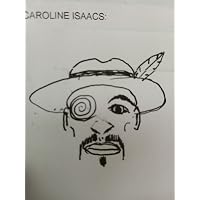
I thoroughly enjoyed this skillfully told family story, despite a bit of narrative fragmentation. Martinez is an excellent storyteller, and her family produces many stories for her to share. The conflict caused between the family's food business at the Molino and the necessity to attain a certain body shape becomes a long-running theme. Of most interest is the Sleeping Man, a stereotypical Mexican figure that appears in a mural outside the Molina causing consternation among many of Mexican heritage. The reader learns that the design began as an imitation of Rodin's "The Thinker," thus the name El Pensamiento, and it was to be a serious piece, representing Mexican heritage. However, its creator was unable to control its use, and it became a cartoonish symbol of the Mexican people, projecting greed and laziness. The poems scattered through the memoir are credited to el pensamiento, as if he speaks silently, reflecting upon the prose chapters that follow. The Molino: a Memoir bravely reflects upon the fully-contained Mexican community in Tucson, the influence of family, both living in the flesh and living in family stories, and the power of art to symbolize a demographic.
Martinez offers up a vibrant picture of life in Tucson, AZ from a native perspective. Seamlessly moving between the material and spiritual worlds through her poetry. prose and narration, she invites the reader into her family's restaurant where one gets to touch, taste and smell the words off the page.
DNF - The story just didn’t capture my attention and I was a not fan of the author’s writing style. As a native Tucsonan, I wanted to learn more about El Rapido and the sleepy Mexican I had passed so many times but I couldn’t bring myself to pick up book anymore. I don’t want to give a memoire a low rating so I’ll go with no rating.
A moving meditation on family stories set in Tucson 🌵 Authoritative prose, captivating dialogue, haunting poems woven throughout, the book is a solid enjoyable read 🫔